What Is Living in Lebanon, Oregon Like?
Maybe you've been priced out of Corvallis and someone mentioned Lebanon as the sensible alternative. Maybe your employer is along the US-20 corridor and Lebanon just made geographic sense. What surprises most newcomers is how much city there actually is here — 19,950 residents, a functioning hospital inside city limits, two higher-education institutions, and more than 300 acres of parks and natural areas. Lebanon sits about 16 miles east of Interstate 5 in Linn County, connected west toward Corvallis by OR-34 and east toward the Cascades by US-20 (Santiam Highway). The drive to Albany is about 20 minutes, and Salem is less than an hour north. This is not a bedroom community that forgot to build anything — it is a working small city that happens to cost far less than its neighbors.
The economic backbone here is healthcare, education, and manufacturing. A major regional health system anchors the healthcare sector and stands as one of the most significant local employers. Western University of Health Sciences operates its College of Osteopathic Medicine campus right in Lebanon — an unusual asset for a city this size. The Lebanon Community School District 9 and the City of Lebanon round out public-sector employment. Linn-Benton Community College, based in nearby Albany, draws Lebanon residents as both students and employees. The Lebanon Strawberry Festival — running since 1909 and filling Cheadle Lake Regional Park with crowds from across the region each June — tells you something about who lives here: people with roots, a preference for community events over nightlife, and a real attachment to the place itself.
Lebanon's typical home price sits at $397,559 (Zillow Home Value Index, July 2026), which puts it noticeably below Corvallis and somewhat below Albany — real money in a region where ownership has become harder to reach. Typical 2-bedroom rent runs $1,440–$1,750 per month. It is worth being honest: the median household income here falls meaningfully short of what's needed to carry that home price comfortably, so buyers often need strong savings or dual incomes. The effective property tax rate is approximately 0.87%, one of the lower rates in the Willamette Valley. The city gets 157 sunny days a year — Oregon reality, not a marketing exaggeration — which means the rain is real, but summers along the South Santiam River corridor are genuinely good.
Whether you're weighing a move or just starting your research, the sections below break down Lebanon's neighborhoods, housing market, commute patterns, local employers, and what day-to-day life actually looks like here.
Lebanon at a Glance
Looking to buy in Lebanon? Estimate your payment.
Enter your numbers to see an estimated monthly mortgage payment.
Estimate only. Excludes HOA fees and mortgage insurance. The interest rate above is a starting point, not a quoted rate — replace it with your own to see real numbers. Insurance is a flat placeholder, not a Lebanon quote.
Why Are People Moving to Lebanon?
The case for Lebanon starts with price and ends with lifestyle. Buyers who spent months losing bidding wars in Corvallis or watching Albany inventory disappear are finding that Lebanon offers genuine ownership at a cost that doesn't require a second mortgage on your life decisions. The population has grown more than 54% since 2000 — not a sleepy town resisting change, but a city actively adding housing, expanding its sewer system, and recruiting businesses through a Long-Term Rural Enterprise Zone that can offer qualifying companies up to 15 years of tax abatement.
Who Actually Moves Here
The largest group tends to be families with school-age children who want a yard, a quiet street, and a community that still holds parades. The Lebanon Strawberry Festival — with its Grand Parade and a procession through downtown that draws participants and spectators from well outside the city — is not a novelty act. It is the clearest expression of what Lebanon values. Retirees come for the affordable cost of living and the walkable Main Street blocks; remote workers arrive for the price point and stay for the South Santiam River trails. Note that no 55+ communities were found in Lebanon, so retirees looking for that specific model will need to look toward Albany or beyond — the retiring in Lebanon page covers the full picture.
The Economic Draw
Healthcare and education employ more Lebanon residents than any other sector. A major regional health system inside city limits, Western University of Health Sciences' osteopathic medicine campus, and the school district together create a stable public-sector employment base that doesn't vanish when a single plant closes. Manufacturing — including the freight rail access to both major Class I railroads that makes Lebanon attractive to shippers — adds a blue-collar layer that keeps wages in the trades honest. For buyers who want a community with real economic diversity rather than dependence on a single industry, that mix matters.
The Crowfoot subdivision, Lebanon's largest development since the 1990s, broke ground with plans for 122 lots across roughly 25 acres — some sized deliberately for first-time buyers — with buildout expected over eight years. That supply, combined with Lebanon's permissive development code allowing everything from cottage clusters to accessory dwelling units, means the city is not standing still on housing production. See the full housing breakdown at Lebanon's neighborhoods page.
What Daily Life Feels Like in Lebanon
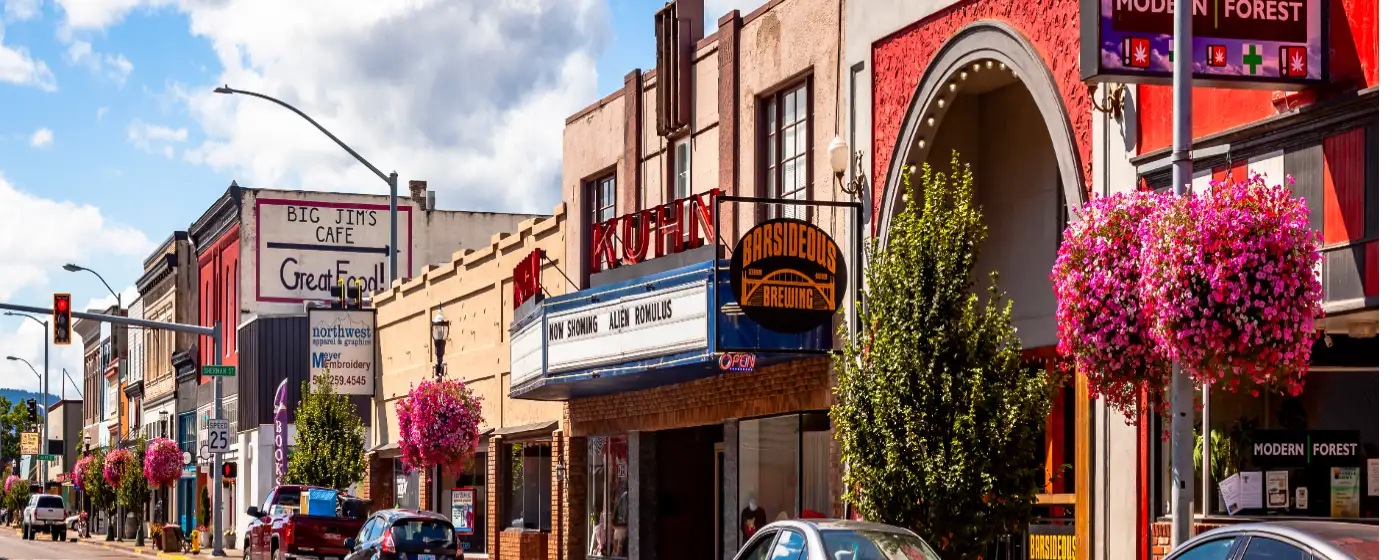
Six months in, most newcomers say the same thing: they expected a small town and got a small city. The distinction matters. Lebanon has a functioning downtown on Historic Main Street with independent coffee shops and local restaurants within a few blocks of each other. Cheadle Lake Park anchors the south side with the kind of green space that actually draws residents — not just joggers, but families spreading out for a full afternoon. The South Santiam River corridor gives the city a natural edge that larger neighbors would pay dearly to have.
The Seasonal Reality
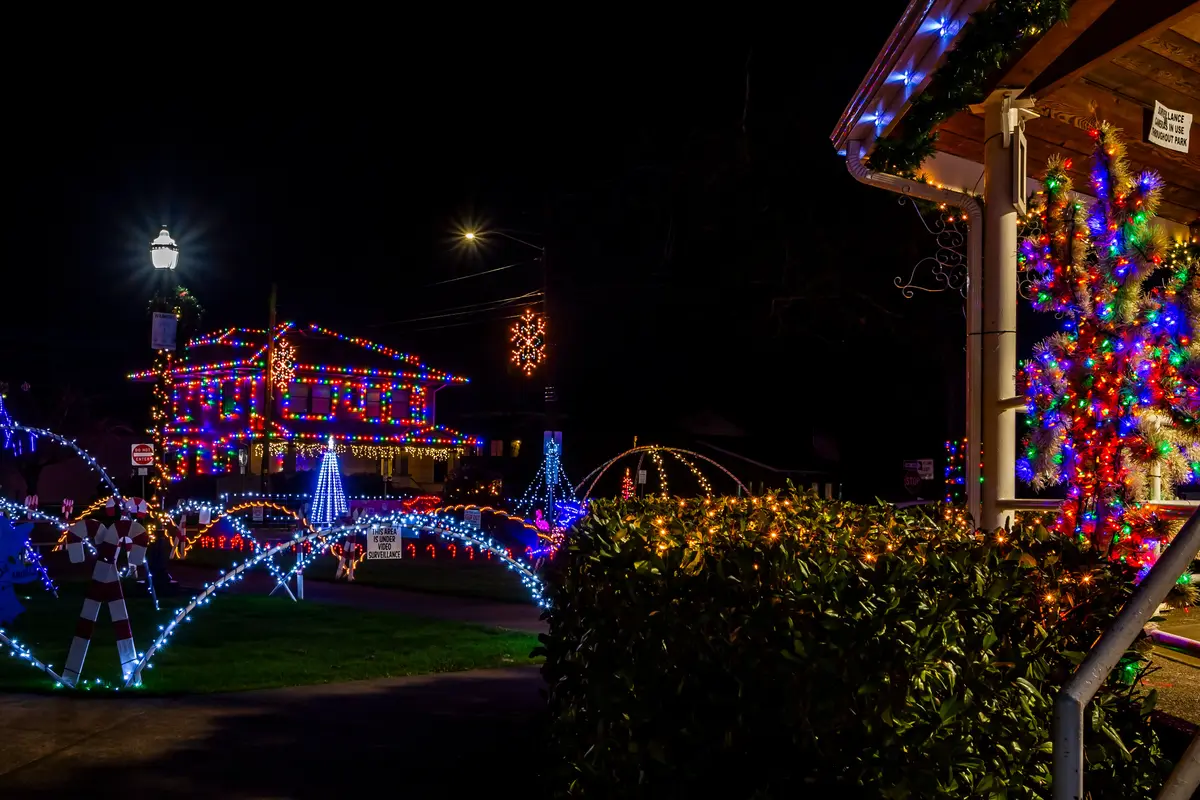
Lebanon gets 157 sunny days a year. That is the number, and it is Oregon — the gray stretches from November through March are real, and anyone who moved here from California expecting Willamette Valley sunshine found out quickly. What locals know is that the payoff comes in June, when the Strawberry Festival fills Cheadle Lake Park and summer evening walks along the river corridor become the actual rhythm of the city. The festival, which has run since 1909, brings a Grand Parade, a 100-foot Ferris Wheel, fireworks, and crowds that pack the park from across the region — it transforms the calendar for a week in a way that genuinely shapes when neighbors meet each other.
The Car Question
Lebanon is primarily car-dependent for most daily tasks. The LINX transit system operates a loop along Main Street with seven stops, plus a Dial-A-Bus option for seniors and people with disabilities. The Linn Shuttle connects Lebanon to Albany and Sweet Home for those making regular inter-city trips without a car. But for groceries, medical appointments, and most errands outside the downtown core, driving is the practical reality. Buyers who prioritize walkable streets will find that the downtown blocks deliver it; buyers who envision car-free suburban living should look at a denser metro first.
The Lebanon Community School District 9 holds a C rating, according to Niche, with 3,888 students enrolled in 2025-26. On 2024-25 state assessments, 29.9% of students reached math proficiency and 40.5% reached reading proficiency — honest numbers that fall below Oregon averages and deserve weight in any family's decision. Lebanon High School fields active OSAA athletics programs, the Warriors mascot is genuinely well-supported, and Friday night football draws the kind of crowd you don't see at more anonymous suburban schools. The full school breakdown lives at Lebanon's schools page.
The Lebanon Housing Market Right Now
Lebanon's typical home price is $397,559 (Zillow Home Value Index, July 2026) — a figure that reads as genuinely affordable by Willamette Valley standards, where Corvallis sits noticeably higher and even Albany runs somewhat higher. The entry point into ownership here is one of the lowest among Oregon cities of comparable size and services. Typical city-wide rent runs approximately $1,565 per month, with two-bedroom units typically landing in the $1,440–$1,750 range depending on condition and location.
What the Market Actually Offers
Lebanon's development code is unusually permissive: the city allows single-family homes, duplexes, triplexes, cottage clusters, townhouses, zero-lot-line construction, and manufactured housing, plus accessory dwelling units in residential zones without an off-street parking requirement. That variety shows up in what buyers actually find — an older ranch on a standard lot, a newer townhouse near the Crowfoot development area, or a manufactured home on a quiet street. The housing stock is diverse in a way that most Willamette Valley cities of this size are not.
The Honest Affordability Picture
Lebanon's median household income of $63,176 falls meaningfully short of what a buyer needs to comfortably carry the typical home price here. That gap is real, and it shapes the buyer pool: most successful purchases involve dual incomes, significant savings, or relocation equity from a more expensive market. For cost-of-living context and the full tax picture, see Lebanon's cost-of-living page.
The city's Housing Production Strategy, adopted in late 2023, formally identifies affordable homeownership as an unmet need and sets implementation targets through 2032 — which means the city is aware of the gap and working on it, even if the timeline is long. The Crowfoot subdivision, designed partly for first-time buyers with smaller lots, represents the most concrete near-term supply addition. Some areas of Lebanon sit above the city median price while others come in below it — the neighborhoods page covers what each part of town actually offers.
Lebanon Neighborhoods
Lebanon has several distinct areas — each with its own character and appeal. Here’s a breakdown to help you narrow down where to focus your home search.
🏡 South Lebanon
South Lebanon sits at the city's median price point and draws buyers who want established residential streets without paying a premium. The area has a mix of older ranch-style homes and newer construction as infill has pushed south from the downtown core.
🏠 Downtown Lebanon
Downtown Lebanon runs along Historic Main Street and offers the city's most walkable blocks — independent coffee shops, local restaurants, and civic buildings within a few minutes on foot. It suits buyers who want to feel like they're in the middle of something rather than commuting to it.
🌳 Santiam Place
Santiam Place is a quieter residential area that appeals to families who want proximity to the South Santiam River corridor without being in the downtown mix. The housing stock trends toward single-family homes on standard lots.
🏘 Cheadle Lake
The Cheadle Lake area anchors around one of Lebanon's most-used parks — Cheadle Lake Park, home to the annual Strawberry Festival and a well-used trail loop. Residents here trade some distance from Main Street for direct access to the city's most active outdoor gathering space.
🏔 Cascade Estates
Cascade Estates sits on Lebanon's eastern side and draws buyers looking for slightly larger lots and a quieter neighborhood feel. It is a natural fit for families who want space and don't need to be on foot to reach downtown.
🌆 Wagon Wheel Estates
Wagon Wheel Estates has a semi-rural character at the city's edge, with larger parcels that appeal to buyers who want more breathing room between neighbors. It suits those who prioritize space over walkable access to the downtown core.
Pros & Cons of Living in Lebanon
The Pros
- Home prices well below nearby Corvallis and Portland
- Strong small-town community identity anchored by the century-old Strawberry Festival
- Close proximity to Cascade foothills, rivers, and outdoor recreation
- Solid base of healthcare and manufacturing jobs
The Cons
- Public schools rank below Oregon state averages in test scores and Niche grades
- Property crime rate runs higher than many similarly sized Oregon cities
- Limited dining/retail variety compared to Albany or Corvallis, requiring a short drive for more options
Getting Around & Commuting in Lebanon
Lebanon's location is both its asset and its mild inconvenience. The city sits approximately 16 miles east of Interstate 5, which means you get small-town quiet without direct freeway access. US-20 (Santiam Highway) and OR-34 (Corvallis-Lebanon Highway) are the two routes that shape virtually every commute out of Lebanon — know them before you buy.
The Routes That Matter
US-20 runs east-west through the city, connecting Lebanon to Albany and the freeway system to the west, and climbing toward the Cascades to the east. OR-34 heads southwest toward Corvallis, a drive that most residents describe as 30–40 minutes depending on traffic through the agricultural corridor. Albany is about 20 minutes away via US-20, making it the practical hub for I-5 access, a wider commercial strip, and the regional employment base. Salem, the state capital, sits less than an hour north once you reach the freeway. The Pacific Coast is about 68 miles west via OR-34.
Where People Actually Work
The top employment sectors for Lebanon residents are health care and social assistance, retail trade, and manufacturing. A meaningful share of the workforce commutes to Albany, Corvallis, or Salem for jobs that don't exist locally at scale. Remote work has also absorbed a real portion of the workforce — at Lebanon's price point, remote workers from Portland or Bay Area companies find the math compelling. Healthcare workers often work locally; educators split between in-city and Albany-based positions at Linn-Benton Community College.
What the Commute Surprises Look Like
The stretch of US-20 between Lebanon and Albany can slow meaningfully during morning rush, especially as more people discover Lebanon's prices. The 16-mile buffer from I-5 adds time that GPS apps consistently underestimate when traffic from the Corvallis or Salem direction stacks up. Buyers who commute daily to Portland should run the actual numbers — it is doable, but the distance warrants a trial run at 7:30 a.m. before making an offer. The Eugene Airport (EUG) is approximately 45 miles away, the nearest major airport option for frequent flyers.
For those without a car, the LINX Loop covers Main Street stops for local errands, and the Linn Shuttle runs inter-city service connecting Lebanon to Albany. These are useful for specific trips, not a replacement for a vehicle if you're working outside the downtown core.
Schools in Lebanon
Families relocating to Lebanon have public, private, and higher-education options nearby. Here’s a quick overview.
🎓 School District
Lebanon Community School District 9 serves K–12 students across Lebanon and the surrounding area. Rated C (source: Niche.com).
🏆 Graduation Rate
The 4-year high-school graduation rate here is approximately 87.8%.
📚 Higher Education
Oregon’s public universities — the University of Oregon, Oregon State University, and Portland State University — offer four-year degrees statewide, with a network of 17 community colleges providing two-year and workforce programs.
🌐 Online Learning
Oregon State University Ecampus and Portland State University Online offer fully accredited online degrees for remote learners across the state.
Safety in Lebanon
A quick look at how Lebanon compares on the numbers that matter most when weighing a neighborhood or a move.
🛡 Violent Crime
Approximately 2 per 1,000 residents.
🔒 Property Crime
Approximately 10.9 per 1,000 residents.
Compared to the most recent national figures from the Bureau of Justice Statistics (2024), Lebanon’s violent crime is below the national average (about 3.7 per 1,000), and property crime is below the national average (about 18.4 per 1,000).
Against Oregon as a whole, Lebanon’s violent crime is roughly two-thirds of the state average, and property crime is roughly half the state average (Bureau of Justice Statistics, Crime Known to Law Enforcement, 2024 (tables 2 and 3)).
Crime rates can vary a lot within a single city, so the citywide numbers above are only a starting point. Some neighborhoods in Lebanon run well below these averages, while others run higher — the kind of block-by-block detail that matters most when you’re actually choosing where to live. The full guide below breaks it down neighborhood by neighborhood.
Working in Lebanon
Lebanon’s largest employers span several industries — here are some of the anchors of the local job market.
🎓 Linn-Benton Community College
Education
🏥 Samaritan Lebanon Community Hospital
Healthcare
🏛 City of Lebanon
Municipal government
🎓 Western University of Health Sciences
Education
🎓 Lebanon Community School District 9
Education
Parks & Recreation in Lebanon
Some of the outdoor spaces that shape everyday life in Lebanon.
🌱 Ralston Park (historic founders' log cabin)
🌱 River Park
🌱 Cheadle Lake Park
🌱 Boulder Falls Inn Japanese Garden
Lebanon residents don’t have to go far for green space — spots like Ralston Park (historic founders' log cabin) and River Park are part of everyday life here, whether that’s a morning walk, a weekend hike, or just somewhere to unwind outside. The full guide below covers more of what Lebanon has to offer for parks and outdoor recreation.
Retiring in Lebanon
Lebanon draws retirees for its balance of amenities, outdoor access, and cost. Here’s what to weigh.
🌤 Climate
Lebanon sits in the Willamette Valley's rain shadow, with 157 sunny days a year and mild temperatures year-round. Summers are warm and dry along the South Santiam River corridor; winters bring persistent gray and rain from November through March. Snow is rare enough to be a minor event when it arrives.
🍴 Lifestyle
Historic Main Street has independent coffee shops and local restaurants within a walkable stretch of downtown. Cheadle Lake Park and the South Santiam River corridor provide low-impact outdoor activity year-round. The annual Strawberry Festival in June is the social centerpiece of the city calendar, drawing the whole community together.
🏚 55+ Communities
No 55+ communities were found in Lebanon. Retirees looking for age-restricted communities will need to look toward Albany or the broader Willamette Valley. The retiring-in-Lebanon page covers local healthcare, daily services, and what the lifestyle actually looks like for older adults here.
✈ Getting Around
Most errands in Lebanon require a car, though the downtown blocks on Main Street are manageable on foot for shorter trips. The LINX Dial-A-Bus offers curb-to-curb service for seniors. The nearest major airport is Eugene Airport (EUG), approximately 45 miles away.
🏛 Oregon Taxes for Retirees — What to Know
- Social Security is not taxed — Oregon does not tax Social Security or Railroad Retirement benefits. Any amount included in your federal adjusted gross income is subtracted back out on the Oregon return.
- But other retirement income IS taxed — This is the trade-off that surprises people moving from Washington or Texas. Pension distributions and 401(k)/IRA withdrawals are taxed as ordinary income at Oregon’s regular rates — there is no blanket retirement-income exclusion.
- Graduated income tax — Oregon has four brackets — 4.75%, 6.75%, 8.75% and 9.9%. The 4.75% rate covers the first $10,000 of taxable income for a single filer ($20,000 filing jointly); the 8.75% rate starts at $125,000 ($250,000 jointly); and the top 9.9% rate applies above $250,000 ($500,000 jointly).
- No sales tax — Oregon levies no general sales tax.
- Property taxes, with senior deferral — Oregon’s Senior and Disabled Property Tax Deferral lets qualifying homeowners have the state pay their county property taxes, with a lien recorded against the home. The 2026 household income limit is $70,000, and deferred balances accrue 6% simple interest — it defers the bill rather than forgiving it.
- Estate tax — the one to plan for — Oregon has its own estate tax with a $1 million filing threshold — far below the federal exemption, and NOT indexed for inflation, so it reaches more estates every year in real terms. Retirement accounts and a long-held home count toward the taxable estate, so estates that feel modest can cross the line without the owner expecting it.
- No inheritance tax — Oregon has no separate inheritance tax and no gift tax.
Tax laws change frequently and individual situations vary. This is general information, not tax advice — always consult a qualified Oregon tax professional or CPA for personalized retirement tax planning.
Weekends & Local Favorites in Lebanon
Lebanon's weekend life centers on the South Santiam River corridor, Cheadle Lake Park, and a downtown Main Street that has held more of its independent character than most small Oregon cities. The city has more than 300 acres of parks and natural areas — Ralston Park carries a historic founders' log cabin, River Park sits along the Santiam, and Waterloo County Park draws residents further east for swimming and picnicking along the river. Boulder Falls Inn's Japanese Garden is one of those local surprises that reads as incongruous until you're in it, and then feels exactly right.
The Food and Coffee Scene
The local dining anchors include Schmizza Public House for pizza and a casual neighborhood atmosphere, 1847 Bar & Grill for a fuller sit-down experience, Alex's Eats for something more casual, Barsideous Brewing for craft beer alongside food, and Appletree Restaurant for a local diner feel that has been part of the community for years. The coffee options are stronger than you'd expect for a city of 19,950: Darkbloom Coffee Company, Mugs Coffee House, Perky Pony Coffee, Sugar Vibes, and Hazella Baking School — which doubles as a café and a place to learn — all operate here. The concentration of independent coffee shops on and near Main Street is one of those things newcomers mention repeatedly once they've settled in.
The Festival That Defines the City
The Lebanon Strawberry Festival has run since 1909, which means it predates most of the city's current housing stock. The first week of June brings the Grand Parade with well over a hundred entries, the World's Largest Strawberry Shortcake, a 100-foot Ferris Wheel, fireworks, live entertainment, and a Strawberry 5K. Parking fills well before showtime, and the crowds that descend on Cheadle Lake Regional Park represent the clearest signal of what Lebanon is actually like as a community. The rest of Lebanon's parks and recreation options fill out the picture year-round.
Local favorites in Lebanon
Restaurants
- Schmizza Public House
- 1847 Bar & Grill
- Alex's Eats
- Barsideous Brewing
- Appletree Restaurant
Outdoors
- River Park
- Cheadle Lake Park
- Ralston Park
- South Santiam River
- Waterloo County Park
Coffee
- Hazella Baking School
- Sugar Vibes
- Darkbloom Coffee Company
- Mugs Coffee House
- Perky Pony Coffee
Top Things Locals Say About Lebanon
The best intel about a city comes from the people who actually live there. Here’s what Lebanon residents say when newcomers ask the questions everyone’s thinking.
“I knew the commute to Albany would add time, but I didn't realize how quickly you stop noticing it — what I didn't expect was how much the city has right inside it. A hospital, two colleges, decent coffee, and a river trail five minutes from my front door. I thought I was compromising. Turns out I wasn't.”
— Recent Lebanon home buyer
“What's the most surprising thing about living in Lebanon?”
Most people expect a basic small town and find out Lebanon actually has its own hospital, a medical college campus, and a Main Street that's still functioning — not just a row of empty storefronts. The South Santiam River corridor surprises people too. You can walk or run it in the morning and feel genuinely removed from everything, then be back in town in ten minutes. That combination of trail access and actual city services is harder to find than people think.
“What do locals love most about Lebanon?”
The Strawberry Festival is the obvious answer, and it earns it — a two-hour parade, fireworks, and a shortcake that requires its own logistics team, drawing crowds from well outside the county. But the everyday version is Cheadle Lake Park on a warm afternoon, or a coffee shop on Main Street that actually knows your order. Lebanon has held onto enough of its independent character that it still feels like a place, not just a zip code.
“What should newcomers to Lebanon know?”
The 16 miles to I-5 matter more than they look on a map. US-20 toward Albany can slow in the morning, and if you're commuting to Corvallis regularly, build in extra time on OR-34 — the agricultural corridor can bunch up behind slow-moving equipment. Also: the rainy season is long and real. The 157 sunny days a year is an honest figure, not a rounding error. Locals invest in waterproof layers early, not later.
“How much do you need a car in Lebanon?”
For almost everything, you need a car. The LINX Loop covers Main Street stops and works well for in-town errands in the downtown core, and the Linn Shuttle connects Lebanon to Albany if you're making regular trips without driving. But grocery runs, medical appointments outside the hospital, and most daily tasks beyond the immediate downtown blocks all mean driving. The good news is that within Lebanon itself, distances are short — most of the city is ten minutes from anything.
Cities Near Lebanon
Other communities near Lebanon worth a look — each with its own character and price point.
| City | Distance | Best For | Vibe | Median Rent | Median Buy |
|---|---|---|---|---|---|
| Albany | 10 mi | Commuters & freeway access | Larger, historic, more commercial | $1,744 | $439,047 |
| Sweet Home | 10 mi | Budget buyers & rural feel | Smaller, quieter, more remote | $1,300 | $320,000 |
| Corvallis | 18 mi | University-town amenities | College-city energy, walkable core | $1,731 | $565,289 |
More Helpful Guides for Lebanon
Going deeper on Lebanon? Our blog series covers everything from first-time buying to retiring here — explore the guides below.
Local Expert Takeaway: Lebanon delivers genuine Willamette Valley ownership at a price point that's becoming rare — but go in clear-eyed. The 16-mile buffer from I-5 adds real commute time that GPS apps undercount, the school district's test scores are below state averages, and the income-to-price gap means most buyers here need strong savings or dual incomes. What you get in return: a working small city with a hospital inside city limits, two higher-education institutions, the South Santiam River corridor out your back door, independent coffee shops on Main Street, and a strawberry festival that has been filling Cheadle Lake Park since 1909. If you're coming from Corvallis or the coast with equity to deploy, the math is hard to argue with.
Quick Takeaways & FAQs
✅ Lebanon's typical home price of $397,559 (July 2026) sits noticeably below Corvallis and somewhat below Albany — genuine affordability in a region where that is increasingly hard to find.
⚠️ The city sits 16 miles east of I-5, which adds meaningful commute time that buyers coming from freeway-adjacent cities consistently underestimate.
📍 Western University of Health Sciences operates its osteopathic medicine campus right inside Lebanon — an unusual higher-education anchor that supports local healthcare employment and community stability.
Is Lebanon, Oregon a good place to live?
How far is Lebanon, Oregon from major cities?
What are home prices like in Lebanon, OR?
What are the schools like in Lebanon, Oregon?
What is the job market like in Lebanon, Oregon?
Helpful Links for Moving to Lebanon
Moving to Oregon?
Tell us what you need help with and we'll connect you with local resources.
