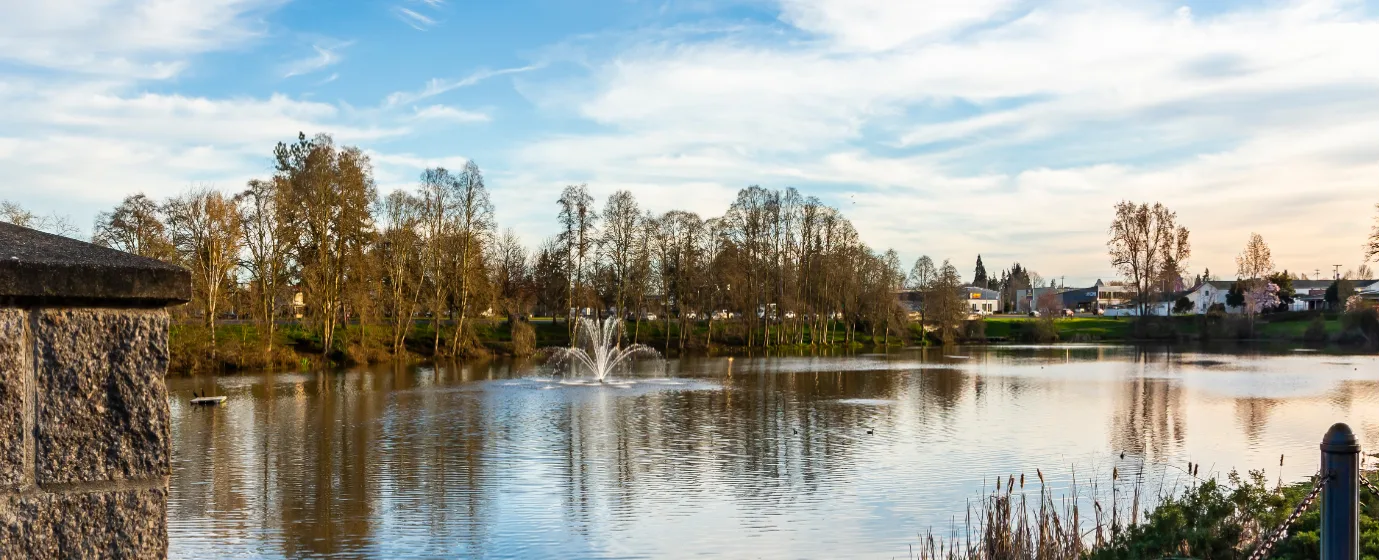
What Is Living in Albany, Oregon Like?
If you're choosing between Albany and Corvallis, the decision usually comes down to price and pace. Albany sits at the confluence of the Calapooia and Willamette rivers, squarely in the middle of the Willamette Valley, roughly 70 miles south of Portland and about 40 miles north of Eugene. I-5 bisects the city north to south, US-20 runs east toward the Cascades and west toward the coast, and OR-99E threads through the historic core. That highway geography makes Albany feel like a mid-valley junction — because it is one — and it shapes everything from who lives here to what the morning commute looks like.
Albany is the county seat of Linn County and the 12th-largest incorporated city in Oregon. Greater Albany Public Schools serves a substantial student population and holds a B rating, according to Niche. The city's economic backbone is more industrial than most people expect: ATI Specialty Alloys and Components has anchored the local rare metals industry for decades, producing titanium and titanium alloys on a campus that represents exactly the kind of manufacturing base Albany built its modern economy around. Linn-Benton Community College, the school district itself, Linn County government, and a Target Distribution Center round out the major employers. People move here from Portland for the price, from Corvallis when they can't stretch the budget, and from out of state for the combination of Willamette Valley access and a community that still feels like a real town rather than a suburb.
Housing in Albany runs well below what buyers find in Corvallis, making it one of the more accessible entry points into the Willamette Valley for families who need a mortgage that doesn't require a second income just to qualify. The typical 2-bedroom rents for roughly $1,600 to $1,950 a month, and the city's effective property tax rate sits at approximately 0.97%. On 155 sunny days a year the valley earns its reputation — but any honest account of Albany's weather includes nine months of overcast skies, persistent rain from October through April, and the kind of gray that surprises people who moved from California. The outdoor scene is real regardless: Monteith Riverpark, Talking Water Gardens, Timber Linn Memorial Park, and Waverly Lake Park give residents green space within minutes of any neighborhood.
Whether you're already in contract or still comparing options, the sections below break down Albany's neighborhoods, housing market, daily commute patterns, local economy, and what people actually do on weekends here.

Albany at a Glance
Looking to buy in Albany? Estimate your payment.
Enter your numbers to see an estimated monthly mortgage payment.
Estimate only. Excludes HOA fees and mortgage insurance. The interest rate above is a starting point, not a quoted rate — replace it with your own to see real numbers. Insurance is a flat placeholder, not a Albany quote.
Why Are People Moving to Albany?
The case for Albany is mostly about value and position. You get a mid-valley address — genuine Willamette Valley, not a fringe suburb — at a price point that Corvallis and Millersburg, both noticeably higher, can't match. For buyers priced out of those markets, Albany is the honest alternative, not a consolation prize.
The Economic Reality
Albany's job base is genuinely diverse for a city of 57,997. ATI Specialty Alloys and Components has been part of the city's economy for decades, making Albany one of the few places in the Pacific Northwest where advanced metals manufacturing is a real career path. Greater Albany Public Schools and Linn-Benton Community College together represent the education sector's significant footprint. Linn County government, a Target Distribution Center in the logistics corridor, and a coordinated manufacturing workforce development ecosystem — linking the community college to local employers — round out the picture.
A lot of residents also commute. Corvallis and Oregon State University are about 20 minutes west, which means Albany functions as a bedroom community for OSU staff, faculty, and contractors who want more square footage for less money. Portland is roughly 90 minutes north on I-5, making Albany workable for remote workers who occasionally need the city.
Who Actually Moves Here
The most common profile is a family with school-age children who want a real neighborhood — a yard, a street with trees, a downtown they can walk — without the price compression of the university market next door. A growing number are remote workers from the Bay Area and Portland metro who discovered that Albany's geography puts two interstates, an Amtrak station, and the entire Willamette Valley within easy reach.
Albany also draws retirees who want a smaller-city feel with genuine civic life. The historic districts give the city an identity that newer suburbs lack, and the Amtrak connections to Portland and Eugene mean you don't need to drive for every urban errand. For a fuller look at the retirement picture, the retiring in Albany page covers that in detail.
The Honest Tradeoff
Albany isn't Corvallis. The downtown is genuine and walkable, but the amenity density — boutique retail, specialty dining, arts venues — is thinner. That gap closes if you treat Corvallis as a 20-minute extension of your own city, which many Albany residents do. The catch is that you're then factoring a regular commute into what felt like a simple lifestyle calculation.
What Daily Life Feels Like in Albany
Albany runs on a rhythm that's hard to categorize. It's not a college town, not a suburb, not quite a small town. At 57,997 people it has enough critical mass to feel like a real city but enough breathing room that you rarely feel crowded.
The Historic Core
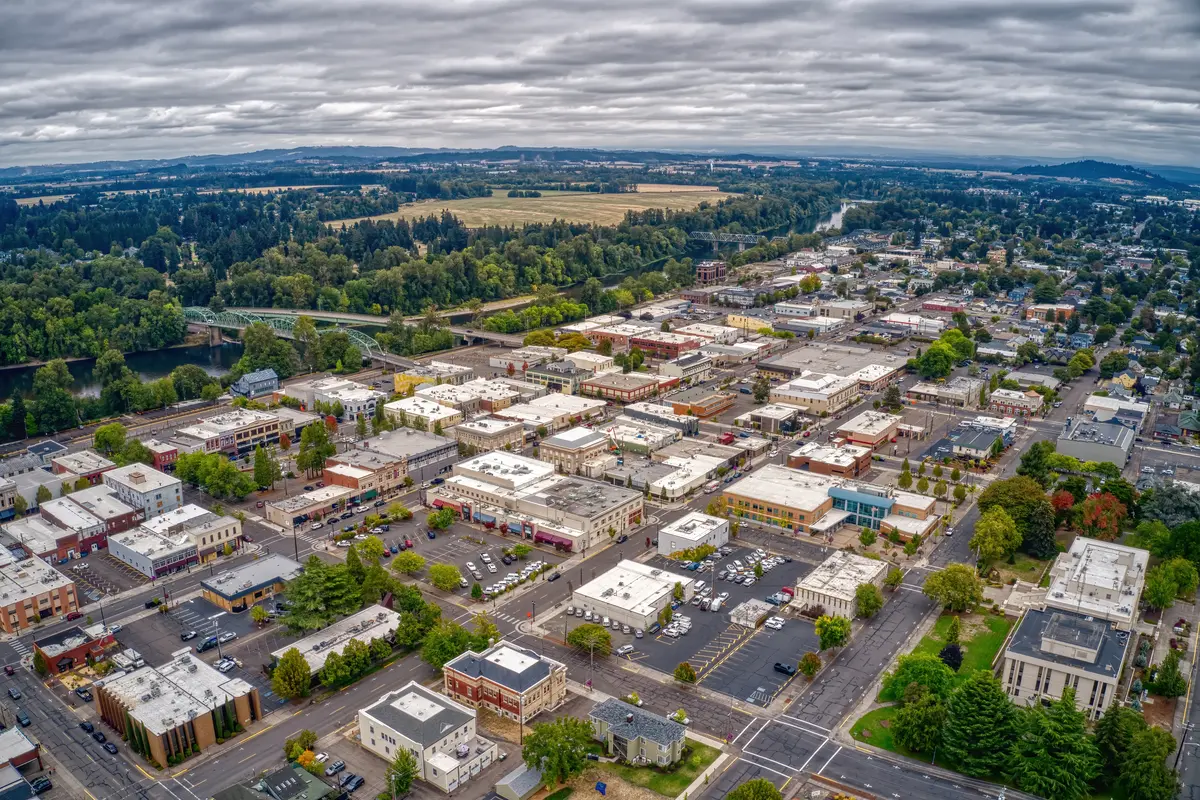
Downtown Albany is the kind of place that surprises people who arrive expecting a forgotten mill town. The Historic Downtown Albany Historic District is anchored by more than 700 preserved buildings — Victorian, Italianate, Craftsman, Queen Anne, Colonial Revival — most of them still in active daily use. The Albany Historic Carousel & Museum, hand-carved by community volunteers over years, sits alongside the Albany Regional Museum in a stretch of the downtown that's genuinely walkable on foot.
Monteith Riverpark gives the downtown its waterfront edge, with the Willamette River right at the city's doorstep. It's where Albany gathers for summer events and where you'll find locals on any dry afternoon.
What Newcomers Don't Expect
After six months here, a lot of people say the same thing: the city feels bigger than it looks on a map, and smaller than the numbers suggest. The historic districts create distinct neighborhood personalities — the Hackleman blocks feel different from North Albany's hillside subdivisions, which feel different from the river-adjacent streets of the Monteith area. Getting a feel for those distinctions before you buy is worth the time; see the neighborhoods guide for a deeper look.
The other thing newcomers miss: Albany is a genuinely civic city. More than 1,750 community members participated in shaping the city's most recent 10-to-20-year strategic plan, presented to City Council in February 2026. That level of engagement shows up in how the city actually functions — active neighborhood associations, a farmers market that draws regulars, and parks that are maintained rather than neglected.
The Gray Season
With 155 sunny days a year, the Willamette Valley's winter reality is not optional. From October through April, Albany is wet and overcast more often than not. Newcomers from sunnier climates — particularly those relocating from California — often underestimate how long the gray stretches. The flip side is that when the valley is green and clear, it's genuinely spectacular, and residents develop strong opinions about which specific stretch of OR-99E is most beautiful in May.
The schools page covers youth sports and activities in detail — active Oregon School Activities Association athletics programs and a strong community around Friday night football at Linn County's stadiums are part of what holds families here through the rainy months.
The Albany Housing Market Right Now
Albany's typical home price sat at $439,047 as of July 2026 (Zillow Home Value Index), which places it well below both Corvallis and Millersburg. That gap is the reason a lot of buyers end up here after touring those markets. For a full breakdown of what that number means for your budget — including taxes, rent comparisons, and utility costs — the cost of living page covers the complete picture.
The city's effective property tax rate is approximately 0.97%, which is moderate for Oregon. One thing worth knowing before you budget: the median household income in Albany is meaningfully below the income threshold typically needed to carry the typical home here. That gap — roughly $36,000 — is real and shapes who can buy without significant outside assets or a dual income.
What the Market Looks Like in Practice
Entry-level inventory skews toward older construction on the east side and in the historic districts. North Albany and Timber Hill carry newer suburban stock — larger lots, more recently built homes — and attract buyers who want the Albany price alongside more contemporary floor plans. Jackson Hill runs below the city-wide typical home price, making it one of the more accessible footholds in the market.
Some areas of Albany carry more upside than others, and the geographic divide created by I-5 is real: neighborhoods west of the freeway have a different character and feel than those to the east. That distinction matters for resale and for daily life. The neighborhoods guide maps those distinctions in detail.
The Affordability Conversation
Albany is often described as affordable relative to the broader Willamette Valley, and in a comparative sense that's accurate. But affordability is relative to income too, and Albany's median household income of $78,114 creates a real stretch toward that typical price. Well-priced homes in desirable areas don't sit — buyers who've done their research and know which blocks they want move quickly when something comes up. First-time buyers should read the buying guide before making an offer.
Albany Neighborhoods
Albany has several distinct areas — each with its own character and appeal. Here’s a breakdown to help you narrow down where to focus your home search.
🏡 North Albany
North Albany sits on rolling hills across the river from the downtown core, with larger lots, newer suburban construction, and quick access toward Corvallis. It attracts families with school-age children who want more square footage and a quieter residential feel without giving up proximity to Albany's amenities.
🏠 South Albany
South Albany offers a mix of mid-century and more recent construction in a conventional suburban pattern, with easy freeway access and proximity to the city's commercial corridors. It suits buyers who prioritize practicality and commute convenience over historic character.
🌳 East Albany
East Albany covers a range of established residential blocks east of I-5, with an older housing stock and a more working-class character than the historic districts. It's one of Albany's more affordable entry points and attracts buyers who want a house and a yard without competing for historic-district inventory.
🏘 West Albany
West Albany sits closer to the historic core and the river, with a mix of established homes and the kind of tree-canopy streets that give the older parts of the city their character. The geography here puts Monteith Riverpark and the downtown within a reasonable bike ride.
🏔 Hackleman Historic District
The Hackleman Historic District is Albany's most architecturally concentrated residential neighborhood — late 19th and early 20th century homes packed onto a grid of tree-lined streets, most of them well-preserved and owner-maintained. It draws buyers who want character and walkability and are willing to take on older construction in exchange.
🌆 Monteith Historic District
The Monteith Historic District is one of Albany's earliest neighborhoods, centered on the 1849 Monteith House and defined by wide tree-lined streets and direct river access at Monteith Riverpark. It suits buyers who want the city's deepest historical layers alongside a genuine waterfront connection.
Pros & Cons of Living in Albany
The Pros
- Home values well below the Oregon state average
- Historic, walkable downtown with a revitalized riverfront
- Easy access to I-5 and Highway 20 for Willamette Valley commuting
- Strong sense of small-city community with year-round festivals
The Cons
- Property crime runs above the national average
- School district test scores and facilities lag some neighboring districts
- Long, wet winters typical of the Willamette Valley climate
Getting Around & Commuting in Albany
Albany's commute story is defined by three things: its position on I-5, its unusual (for Oregon) Amtrak service, and the fact that most daily errands still require a car.
The Interstate Position
I-5 runs directly through Albany, which is both an asset and a source of friction. It divides the city into distinct east and west zones — a division that shapes real estate values as much as commute times — and it gives residents direct freeway access to Portland and Eugene without surface-street detours. The drive to Corvallis via US-20 is about 20 minutes, making Oregon State University a realistic daily commute destination. Drivers heading to Portland on I-5 are looking at roughly 90 minutes under normal conditions; Eugene is closer to 45.
The Amtrak Advantage
Few Oregon cities of Albany's size have an active Amtrak station served by two named lines. Both the long-distance Coast Starlight and a regional passenger rail line stop here, connecting Albany to Eugene, Portland, Seattle, and Vancouver, BC. For remote workers who occasionally need to be in Portland but don't want to drive, this is a genuine quality-of-life asset that doesn't show up in most city comparisons.
The Linn-Benton Loop connects the Albany Amtrak station to Linn-Benton Community College and Corvallis — including the Oregon State University campus — on a regular daily schedule. For households trying to eliminate a second car or reduce the Corvallis commute cost, that connection is worth knowing about before you sign a lease or close on a house.
Local Transit and Regional Options
The Albany Transit System operates local bus routes within the city. A commuter route ties the Albany Amtrak station to the Corvallis and OSU corridor, and regional services link Albany to the coast and to surrounding valley communities including Lebanon and Sweet Home.
That said, most Albany residents drive for most things. The transit network fills real gaps — particularly for OSU commuters and car-free households — but it doesn't replace a car for the majority of daily patterns. OR-99E connects Albany's historic core to the surrounding valley towns and is the route most locals use when I-5 backs up.
What Locals Know About the Drive
The I-5 interchange through central Albany is the city's consistent pressure point. Northbound morning traffic toward Salem and Portland stacks predictably during commute hours, and the interchange where US-20 meets the freeway is where most delays originate. Residents who commute north have learned to leave earlier than the math suggests — a 90-minute trip to Portland on paper is 110 minutes on a Tuesday morning in November.
Schools in Albany
Families relocating to Albany have public, private, and higher-education options nearby. Here’s a quick overview.
🎓 School District
Greater Albany Public School District 8J serves K–12 students across Albany and the surrounding area. Rated B (source: Niche.com).
🏆 Graduation Rate
The 4-year high-school graduation rate here is approximately 82.8%.
📚 Higher Education
Oregon’s public universities — the University of Oregon, Oregon State University, and Portland State University — offer four-year degrees statewide, with a network of 17 community colleges providing two-year and workforce programs.
🌐 Online Learning
Oregon State University Ecampus and Portland State University Online offer fully accredited online degrees for remote learners across the state.
Safety in Albany
A quick look at how Albany compares on the numbers that matter most when weighing a neighborhood or a move.
🛡 Violent Crime
Approximately 2.4 per 1,000 residents.
🔒 Property Crime
Approximately 18 per 1,000 residents.
Compared to the most recent national figures from the Bureau of Justice Statistics (2024), Albany’s violent crime is below the national average (about 3.7 per 1,000), and property crime is about the same as the national average (about 18.4 per 1,000).
Against Oregon as a whole, Albany’s violent crime is roughly two-thirds of the state average, and property crime is roughly two-thirds of the state average (Bureau of Justice Statistics, Crime Known to Law Enforcement, 2024 (tables 2 and 3)).
Crime rates can vary a lot within a single city, so the citywide numbers above are only a starting point. Some neighborhoods in Albany run well below these averages, while others run higher — the kind of block-by-block detail that matters most when you’re actually choosing where to live. The full guide below breaks it down neighborhood by neighborhood.
Working in Albany
Albany’s largest employers span several industries — here are some of the anchors of the local job market.
🎓 Greater Albany Public Schools
Education
🎓 Linn-Benton Community College
Education
🏛 Linn County
Municipal government
💼 Target Distribution Center
Logistics
🏭 ATI Specialty Alloys and Components
Manufacturing
Retiring in Albany
Albany draws retirees for its balance of amenities, outdoor access, and cost. Here’s what to weigh.
🌤 Climate
Albany sits in the heart of the Willamette Valley, which means mild temperatures year-round but a long, gray wet season from October through April. Summers are warm and clear, with 155 sunny days a year. Snow is rare at valley floor elevation, which most retirees consider a meaningful advantage.
🍴 Lifestyle
The historic downtown gives Albany a walkable core that many retirees find genuinely useful: the Albany Historic Carousel & Museum, Monteith Riverpark, the Albany Farmers' Market, and a range of independent coffee shops and restaurants are all within easy reach. Talking Water Gardens appeals to those who want natural scenery without a long drive.
🏚 55+ Communities
No 55+ communities were found in Albany. Retirees moving here typically purchase in the historic districts or in established neighborhoods rather than in age-restricted communities. The retiring-in-Albany page covers the full picture of what the city offers older residents.
✈ Getting Around
Most retirees in Albany drive. The city has local bus service and regional transit connections, but car-free living is challenging for most daily patterns. A regional hospital serves the city. The nearest major airport is Eugene Airport (EUG), approximately 40 miles south.
🏛 Oregon Taxes for Retirees — What to Know
- Social Security is not taxed — Oregon does not tax Social Security or Railroad Retirement benefits. Any amount included in your federal adjusted gross income is subtracted back out on the Oregon return.
- But other retirement income IS taxed — This is the trade-off that surprises people moving from Washington or Texas. Pension distributions and 401(k)/IRA withdrawals are taxed as ordinary income at Oregon’s regular rates — there is no blanket retirement-income exclusion.
- Graduated income tax — Oregon has four brackets — 4.75%, 6.75%, 8.75% and 9.9%. The 4.75% rate covers the first $10,000 of taxable income for a single filer ($20,000 filing jointly); the 8.75% rate starts at $125,000 ($250,000 jointly); and the top 9.9% rate applies above $250,000 ($500,000 jointly).
- No sales tax — Oregon levies no general sales tax.
- Property taxes, with senior deferral — Oregon’s Senior and Disabled Property Tax Deferral lets qualifying homeowners have the state pay their county property taxes, with a lien recorded against the home. The 2026 household income limit is $70,000, and deferred balances accrue 6% simple interest — it defers the bill rather than forgiving it.
- Estate tax — the one to plan for — Oregon has its own estate tax with a $1 million filing threshold — far below the federal exemption, and NOT indexed for inflation, so it reaches more estates every year in real terms. Retirement accounts and a long-held home count toward the taxable estate, so estates that feel modest can cross the line without the owner expecting it.
- No inheritance tax — Oregon has no separate inheritance tax and no gift tax.
Tax laws change frequently and individual situations vary. This is general information, not tax advice — always consult a qualified Oregon tax professional or CPA for personalized retirement tax planning.
Weekends & Local Favorites in Albany
Albany's weekend culture is anchored in two things: its outdoor geography and its historic downtown. The combination gives the city a range that surprises people who expect a small industrial town and find a walkable riverfront, wetlands worth driving to, and a farmers market that operates through the warm season.
The Outdoor Circuit
Monteith Riverpark is the city's social waterfront — a broad stretch along the Willamette where Albany gathers for summer events and where the river is close enough to actually feel present in daily life. Talking Water Gardens, opened in 2010 as a joint project between Albany, Millersburg, and ATI, is an engineered wetland with gravel walking paths and habitat for over 100 species of birds and waterfowl. Birders and photographers treat it as a serious destination, not just a neighborhood park. Timber Linn Memorial Park and Waverly Lake Park fill out the city's park network for families who want trails, open space, and lake access without leaving Albany's boundaries. Takena Landing Park provides river access that locals use seasonally.
Downtown and the Farmers Market
The Albany Farmers' Market draws a consistent local crowd through the growing season and is where a lot of residents do their first meaningful socializing after moving here. The downtown core — walkable from the carousel to the museum to the riverpark — is compact enough to cover on foot in an afternoon. The Albany Historic Carousel & Museum is a genuine local institution: community-built, hand-carved, and the kind of attraction that earns its place in the city's identity rather than being bolted on for tourism.
Coffee, Food, and the Local Scene
Albany's independent coffee and dining scene is concentrated enough downtown to make the neighborhood genuinely useful on foot. Margin Coffee Roasters in the downtown core draws a regular crowd, and Bentley's Coffee, Wild Heart Coffee & Tea, The Brim Coffee Co., and Sidekicks Gourmet Desserts and Espresso round out a coffee landscape that punches above what you'd expect for a city this size.
On the food side, Pop's Branding Iron Restaurant & Lounge is one of Albany's most established local spots — the kind of place that has regulars rather than just customers. Brick & Mortar Café and Sweet Waters Family Restaurant & Oasis Lounge cover the more casual end of the dining scene, while Cascade Grill and The Barn at Hickory Station lean toward the sit-down-dinner occasion. None of these are fine-dining destinations in the Corvallis sense, but taken together they give Albany an independent dining culture that keeps most residents from feeling like they're missing something.
Day Trips and the Valley
The valley's geography puts a lot within reach on a weekend. The Cascade Mountains are roughly 90 minutes east, the Pacific coast is roughly 90 minutes west via US-20, and the Willamette Valley wine country fills in the middle. Residents who move here from Portland sometimes discover — to their surprise — that they actually use the outdoors more from Albany than they did from the city.
Local favorites in Albany
Restaurants
- Pop's Branding Iron Restaurant & Lounge
- Brick & Mortar Café
- Cascade Grill
- The Barn at Hickory Station
- Sweet Waters Family Restaurant & Oasis Lounge
Outdoors
- Monteith Riverpark
- Talking Water Gardens
- Waverly Lake Park
- Takena Landing Park
- Timber Linn Memorial Park
Coffee
- Margin Coffee Roasters (Downtown)
- Sidekicks Gourmet Desserts and Espresso
- Bentley's Coffee
- Wild Heart Coffee & Tea
- The Brim Coffee Co.
Farmers Markets
- Albany Farmers' Market
Top Things Locals Say About Albany
The best intel about a city comes from the people who actually live there. Here’s what Albany residents say when newcomers ask the questions everyone’s thinking.
“I knew Albany was cheaper than Corvallis, but I didn't expect how different the two cities actually feel. Six months in, I realized I'd bought into a real town — with its own identity, its own downtown, its own rhythms — not just a cheaper address on the way to OSU.”
— Recent Albany home buyer
“What's the most surprising thing about living in Albany?”
The historic downtown catches people off guard. Most newcomers expect an industrial city and find instead more than 700 preserved buildings — Victorian, Craftsman, Italianate — packed into a walkable stretch along the river. The Hackleman Historic District in particular looks like a different century when the trees are leafed out. It takes a few weeks before it stops feeling surprising.
“What do locals love most about Albany?”
The geography. You can be at the Willamette River in minutes, reach the Cascades in roughly 90 minutes, and hit the coast in the same time going west on US-20. The Talking Water Gardens draws serious birders from well outside the valley. And the fact that Corvallis is 20 minutes away means Albany residents effectively have access to two city centers — one with the historic character, one with the university energy.
“What should newcomers to Albany know?”
The I-5 divide is real. The freeway creates a psychological and practical split between east and west Albany, and buyers who don't understand it before they make an offer sometimes end up surprised by how different one side of the city feels from the other. Also: budget time for the Corvallis drive. Most Albany households make it more often than they expected when they moved in.
“How much do you need a car in Albany?”
A car handles most of Albany's daily life. The downtown core is walkable once you're in it — the carousel, the farmers market, the riverpark, the coffee shops along the main streets are all on foot. But grocery runs, medical appointments, and trips to the big-box retail corridor all mean driving. The Linn-Benton Loop is a genuinely useful bus connection to Corvallis and Linn-Benton Community College for households that can organize around it, and the Amtrak station makes Portland and Eugene reachable without a car for those specific trips.
Cities Near Albany
Other communities near Albany worth a look — each with its own character and price point.
| City | Distance | Best For | Vibe | Median Rent | Median Buy |
|---|---|---|---|---|---|
| Corvallis | 10 mi | University households, walkable amenities | College-town energy, higher prices | $1,731 | $565,289 |
| Millersburg | 3 mi | Buyers wanting newer construction nearby | Small, quiet, residential | $1,500 | $562,790 |
| Tangent | 6 mi | Rural feel, agricultural surroundings | Very small, pastoral, unhurried | $1,400 | $480,243 |
More Helpful Guides for Albany
Going deeper on Albany? Our blog series covers everything from first-time buying to retiring here — explore the guides below.
Local Expert Takeaway: Albany's strongest asset is its position: Willamette Valley geography, two-interstate access, an Amtrak station, and a historic downtown that's genuinely walkable — all at a price point that Corvallis can't match. The catch is that the income-to-price gap is real, the gray season is long, and anyone who needs urban amenity density beyond what the historic core offers will find themselves driving to Corvallis more than they expected. Buy in the historic districts or North Albany based on what you actually value — the character difference between those two zones is significant — and treat the Linn-Benton Loop and Amtrak as infrastructure worth factoring into your commute math before you settle on a neighborhood.
Quick Takeaways & FAQs
✅ Albany's typical home price of $439,047 (July 2026) sits well below nearby Corvallis and Millersburg, making it one of the more accessible entry points into the Willamette Valley.
⚠️ The income-to-price gap is real: Albany's median household income falls roughly $36,000 short of what's typically needed to carry the city's median home, which means most buyers need strong dual incomes or outside assets.
📍 Albany has an active Amtrak station served by both a long-distance line and a regional passenger rail service — a genuine transit asset that few Oregon cities of similar size can claim, and a legitimate alternative to driving for Portland-bound trips.
Is Albany, Oregon a good place to raise a family?
How far is Albany, Oregon from Portland?
What is the cost of living like in Albany, Oregon compared to Corvallis?
What are the safest neighborhoods in Albany, Oregon?
Do you need a car to live in Albany, Oregon?
Helpful Links for Moving to Albany
Moving to Oregon?
Tell us what you need help with and we'll connect you with local resources.
