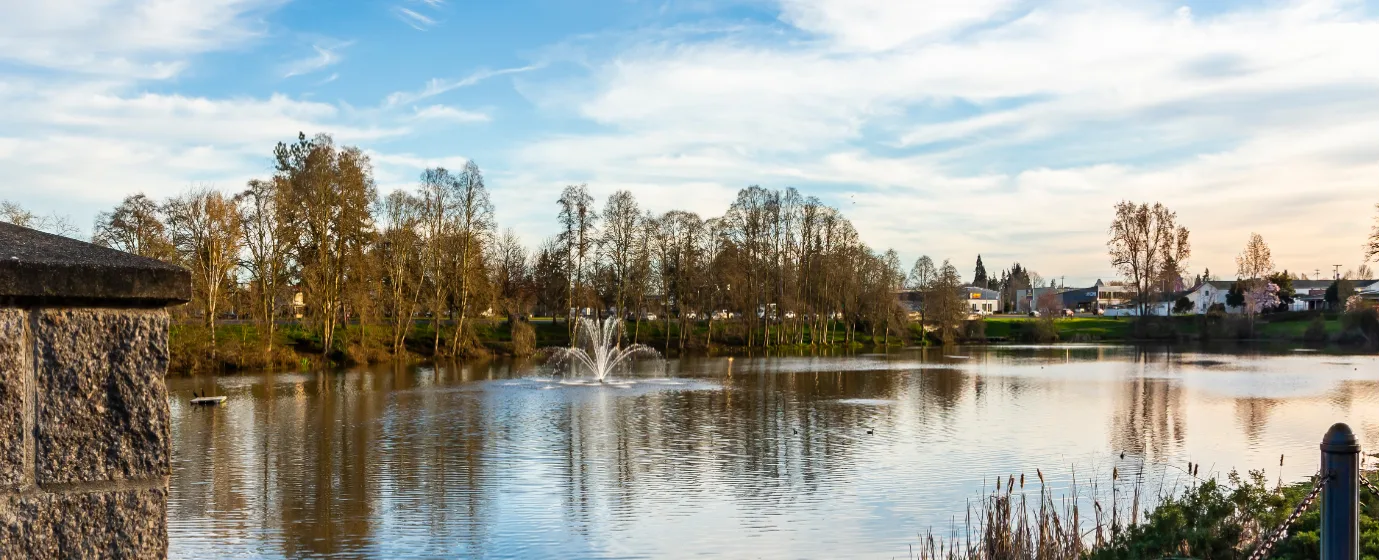
Albany surprises most people who arrive expecting a generic mid-valley town and find instead a city with genuine bones — two intact historic districts, a Willamette River waterfront, and a median home price that looks almost old-fashioned compared to what retirees are selling in the Bay Area or Portland suburbs. The city sits in the heart of the Willamette Valley along I-5, with US-20 and OR-99E feeding in from either direction, and the practical geography of daily life here is shaped by that position: Oregon's two largest university towns, Corvallis and Eugene, are each within comfortable reach, and Salem is not far north. For retirees, that positioning means options — for specialists, for culture, for an airport run — without paying to live in those pricier cities.
Albany has a population of 57,997 and functions as the Linn County seat, which matters because county-level senior services are administered here. The major employers — Greater Albany Public Schools, Linn-Benton Community College, Linn County government, and several industrial manufacturers — give the city a stable, working-community feel rather than the transient energy of a college town. That stability tends to suit retirees well: neighbors are long-term, community organizations are rooted, and the pace reflects a place where people actually live rather than pass through.
On a fixed income, Albany's cost structure is genuinely favorable compared to most of Oregon's larger metros. The typical home price of $439,047 (July 2026) is well below what retirees are leaving behind in many West Coast markets, and Oregon's complete exemption of Social Security income from state tax is a meaningful headline benefit. The everyday budget — groceries, gas, the Albany Farmers' Market on a Saturday morning — runs at a level that lets a modest retirement income go further than it would in Corvallis, which sits noticeably higher on home prices. Rainy winters are real; Albany averages 155 sunny days a year, and that number carries weight if you're coming from a sunnier climate.
Whether you're ready to make the move or still comparing options, the sections below cover Albany's healthcare access, the retiree tax picture, walkability, downsizing realities, and how Albany stacks up against nearby Willamette Valley alternatives.
Why Retirees Are Choosing Albany
Albany fits a specific kind of retiree well: someone who wants small-city life with genuine amenities but doesn't want to pay Corvallis or Eugene prices to get them. The typical home price here is $439,047 (July 2026) — see the full cost-of-living breakdown — and that figure opens doors that are simply closed in much of the Pacific Northwest. For retirees selling equity from California or the Portland suburbs, buying in Albany and arriving with cash left over is a realistic outcome.
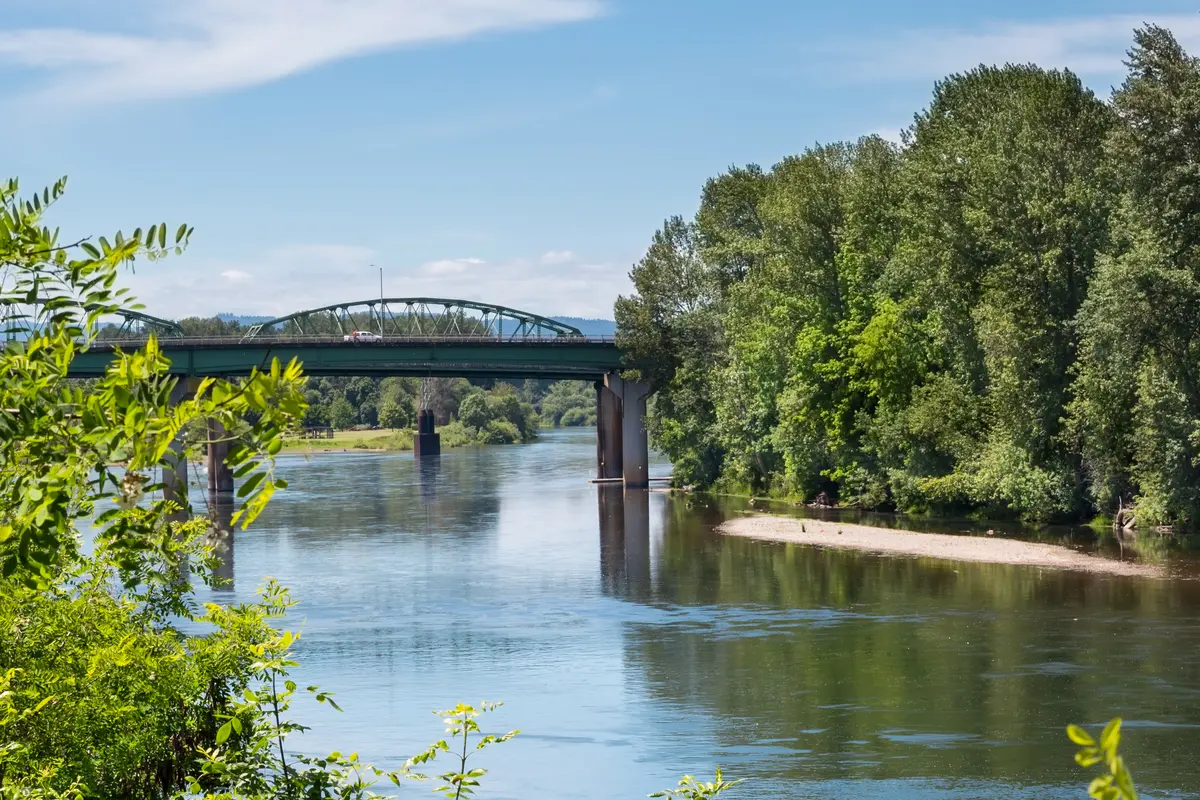
The city also offers something rarer than affordability: architectural character. The Hackleman Historic District and the Monteith Historic District contain some of the most intact Victorian and Craftsman housing stock in Oregon, and retiring into one of those neighborhoods means a daily environment that actually looks and feels like somewhere. The Monteith Riverpark, recently rebuilt with accessible paved pathways and river overlooks, is steps from the historic core — a genuine public amenity, not a promise.
Who should look elsewhere? Retirees who need to walk everywhere will find Albany's car-dependence genuinely limiting — most of the city requires a vehicle for daily errands, and that reality does not change because the downtown is pleasant. Retirees who expect 300 days of sunshine may arrive and quietly struggle. And anyone who relies on highly specialized medical care — complex cardiac surgery, major cancer centers, certain subspecialties — will need to drive to Corvallis or beyond. Albany is a strong fit for active, independent retirees with a car and realistic expectations about Pacific Northwest winters. It's a harder sell for those with significant, immediate medical complexity.
Healthcare & Medical Access in Albany
Samaritan Albany General Hospital sits inside city limits and has served the greater Albany area since 1924. It's a 79-bed acute-care facility, part of the Samaritan Health Services regional network, and its specialty depth is meaningfully broader than what most cities this size can offer: emergency services, cardiology, orthopedics, women's health, rehabilitation, diagnostic imaging, wound care, hyperbaric oxygen therapy, and palliative and hospice care.
For retirees, the orthopedic profile stands out. The hospital has earned recognition for hip replacement and knee replacement — two of the procedures retirees most commonly need — and Healthgrades awarded it an Outstanding Patient Experience Award for three consecutive years (2023, 2024, and 2025). A Stroke Care Excellence Award from the same organization is particularly relevant to an older patient population. These aren't marketing claims; they're external assessments from independent rating organizations.
The honest caveat is specialty depth at the margins. Complex cardiac interventions, major oncology programs, and certain subspecialties that a larger academic medical center would staff full-time are not all available in Albany. When the condition requires it, Corvallis — about 20 minutes away via US-20 — adds meaningful options through a regional medical presence there. Eugene and Salem are each a bit farther but accessible. For the broad range of healthcare needs that retirees actually encounter day to day, Albany's hospital handles them well and close to home. For the outliers, you have viable options within a reasonable drive, and that combination is better than what many similarly sized inland cities can offer.
Linn County's Senior and Disability Services office determines eligibility for Older Americans Act programs beginning at age 60, and the City of Albany directed federal Community Development Block Grant funds in 2024 toward services for seniors and people with disabilities — both worth knowing as you plan a transition here.
The Retiree Budget in Albany
Oregon's most important headline for retirees: Social Security and Railroad Retirement benefits are fully exempt from state income tax, with no income cap on the exemption. That is not a partial credit or a phase-out — it is a complete exclusion, regardless of what else you earn. Other retirement income — 401(k) and IRA withdrawals, most pension distributions — is taxed at Oregon's graduated rates, which start at 4.75% and rise to a top rate of 9.9%. That upper bracket is real, and retirees drawing heavily from tax-deferred accounts should factor it into withdrawal planning.
Oregon's zero-rate sales tax is the other major structural benefit. Every grocery run, home repair purchase, and discretionary buy happens without the 7–10% consumption tax that retirees leaving California or Washington have been paying for decades. On a fixed budget, that savings accumulates meaningfully across a year.
Albany's effective property tax rate is approximately 0.97% — close to the Oregon average and well below what most California counties charge. Homeowners who are at least 62 and meet a household income threshold of no more than $60,000 per year may qualify for Oregon's Property Tax Deferral for Disabled and Senior Citizens Program, which allows taxes to accumulate as a lien and be paid when the home is eventually sold. The five-year ownership-and-occupancy requirement means it's a tool to plan for rather than one available immediately upon moving in.
Day-to-day costs in Albany run at a level consistent with a mid-sized Oregon city — not Portland prices, not rural Oregon either. The Albany Farmers' Market, groceries at local stores, and a modest dining-out budget are all achievable on retirement income in a way that strains budgets in Corvallis or Eugene. The engine below can help you run the numbers on what ownership actually looks like at Albany's typical price point — adjust the inputs for your own down payment and rate.
Looking to buy in Albany? Estimate your payment.
Enter your numbers to see an estimated monthly mortgage payment.
Estimate only. Excludes HOA fees and mortgage insurance. The interest rate above is a starting point, not a quoted rate — replace it with your own to see real numbers. Insurance is a flat placeholder, not a Albany quote.
Walkability, Community & Staying Active in Albany
Albany is a car-dependent city for most daily errands — most of the city requires a vehicle, and there's no softening that reality for retirees who are evaluating whether they can age in place without driving. The local bus network provides some coverage, but it is limited in frequency and geography. The downtown Amtrak station, served by both the Cascades and Coast Starlight lines, is a genuine asset for longer trips and connects to the Albany Transit System, Benton Area Transit, and the Linn-Benton Loop for regional hops.
Where Albany earns its ground is in the quality of its walkable core, even if that core is geographically limited. The Hackleman and Monteith historic districts are genuinely pleasant on foot. Monteith Riverpark reopened in July 2024 after a major renovation that added an amphitheater, rebuilt river overlooks, and accessibility improvements including paved pathways — real infrastructure for older residents, not an afterthought. Timber Linn Memorial Park, Waverly Lake Park, and Takena Landing Park round out the outdoor options for daily walks.
The social calendar in Albany is more active than the city's size suggests. River Rhythms, the free summer concert series at Monteith Riverpark, has run for more than 30 years and draws a genuinely multigenerational crowd — with a vintage trolley providing free rides to the park on concert evenings. Downtown's 1st Friday art walks, wine walks, historic home tours, restaurant week, live theater at Albany Civic Theater, and outdoor movies create a year-round rhythm that gives retirees real reasons to leave the house.
The Albany Historic Carousel & Museum features an active volunteer carving studio where artisans work on-site — the kind of hands-on volunteer community that retirees looking to contribute often find deeply satisfying. The Albany Farmers' Market, described by the city's visitors bureau as the oldest continuously operated open-air farmers market in Oregon, runs every Saturday through the warm months and serves as an informal gathering place for longtime residents. Linn County Senior and Disability Services administers Older Americans Act programs starting at age 60, connecting residents to meal programs, transportation assistance, and in-home support.
One thing newcomers don't expect: how much of Albany's social life organizes itself around the historic districts and the river, and how little of it requires spending money. After six months here, most retirees report that the community is warmer and more participatory than they anticipated — and that the free events calendar is what makes it feel that way.
Right-Sizing: Downsizing in Albany
No 55+ communities were found in Albany. That is worth stating plainly, because it shapes the downsizing landscape here. Retirees looking for an age-restricted neighborhood with a homeowners association, a clubhouse, and neighbors exclusively in their own life stage will not find that product in Albany's current market.
What Albany does have is Mennonite Village — a not-for-profit continuing care retirement community operating on a 275-acre campus within city limits, with more than 75 years of history. It offers independent living homes and apartments, assisted living, memory care, and skilled nursing and rehabilitation on a single connected campus. That full continuum of care under one roof is a significant planning tool for retirees who want to move once and know that their needs can be met as they evolve. Mennonite Village is a CCRC, not a 55+ community — the distinction matters for residents who want a mixed-age neighborhood versus a dedicated care setting, but for those who want the security of on-site healthcare continuity, it is one of the stronger options in the mid-valley.
Outside of Mennonite Village, Albany's single-family housing stock skews toward the older construction that characterizes the historic districts. That means character and space, but it also means stairs, multiple levels, and deferred maintenance in some cases. Buyers specifically seeking single-level living — ranchers, patio homes, or ground-floor units — will find the inventory thinner than in a purpose-built retirement market. It exists, but it takes patience and a buyer's agent who understands what to search for.
Condos and townhomes are a smaller piece of Albany's overall market than in larger Oregon cities, though they do exist and represent one path to lower-maintenance living. For retirees who need more guidance on what the purchase process looks like here, the homebuyer's guide for Albany walks through the mechanics in detail. Neighborhood character and how individual areas feel for older residents is covered on the best neighborhoods page — the Hackleman and Monteith historic districts and the flatter terrain of North Albany each have distinct tradeoffs for retirees.
Albany vs Nearby Retirement Destinations
| City | Cost vs Albany | Primary Hospital | Walkability | Senior Living Depth | Overall Retirement Fit |
|---|---|---|---|---|---|
| Albany | Anchor | Samaritan Albany General — in-city, strong orthopedics and stroke care | Car-dependent; walkable historic core and riverpark | Mennonite Village CCRC; no 55+ communities | Strong value, good in-city hospital, limited age-restricted options |
| Corvallis | Noticeably higher | Regional medical center with broader specialty depth | More walkable; Oregon State campus area very bikeable | More senior living options; some active-adult communities | Better for those needing specialty care or preferring a university-town atmosphere |
| Lebanon | Noticeably cheaper | Samaritan Lebanon Community Hospital — smaller, limited specialty depth | Highly car-dependent; very small walkable core | Very limited senior living inventory | Budget-friendly but less medical depth; better for healthy, car-owning retirees |
| Salem | About the same | Large regional hospital with broad specialty and trauma services | Moderate; more transit options than Albany | Broader range of senior communities and CCRCs | Larger city feel; more options for seniors with complex needs |
| Eugene | Somewhat higher | Major regional medical center with advanced specialty care | More walkable; strong bike and transit network | Wider range of 55+ and senior living communities | Best medical depth in the region; higher cost; university energy suits active retirees |
| Millersburg | Noticeably higher | None in-city; relies on Albany's Samaritan for acute care | Minimal — small incorporated city, essentially car-only | No known senior communities | Residential quiet close to Albany amenities; limited independent senior infrastructure |
On pure cost, Lebanon wins — but its hospital is smaller and specialty-light, which matters more with each passing year of retirement. Corvallis is the strongest option for anyone whose healthcare picture is already complex or likely to become so, and it adds the cultural vitality of a university town; the premium over Albany is real but not prohibitive for retirees arriving with equity. Salem is underrated for retirees specifically: comparable cost to Albany, meaningfully more senior housing variety, and a larger hospital network, though it lacks Albany's historic character.
Eugene makes the most sense for retirees who prioritize medical depth and walkability above all else and can absorb the somewhat higher cost. Millersburg sits adjacent to Albany and draws residents who want a quieter setting while still relying on Albany's hospital and services — it is less a retirement destination in its own right than a satellite of Albany life. For most retirees who want a genuine balance of affordability, in-city medical access, community programming, and Willamette Valley scenery, Albany itself holds up well against every city on this list.

Local Expert Takeaway: Albany is the Willamette Valley's most underrated retirement option for retirees who arrive with equity and realistic expectations. The in-city hospital handles the orthopedic and stroke care most retirees actually need, Oregon's Social Security exemption softens the state's otherwise real income tax burden, and the combination of historic neighborhoods and the rebuilt Monteith Riverpark gives daily life genuine texture. The catch is real: you will need a car, the winters are gray, and age-restricted communities simply don't exist here yet. Retirees who thrive here are the ones who plug into the River Rhythms concert series, volunteer at the Albany Historic Carousel & Museum's carving studio, and make Saturday morning at the Albany Farmers' Market a standing appointment — rather than waiting for a retirement village to organize their social life for them.
Quick Takeaways & FAQs
✅ Oregon completely exempts Social Security income from state tax, and Albany's typical home price of $439,047 (July 2026) remains well below what retirees are leaving behind in most West Coast markets.
⚠️ Albany is car-dependent for daily errands — retirees who cannot or prefer not to drive will find the city's limited transit network genuinely constraining, especially outside the walkable historic downtown core.
📍 Samaritan Albany General Hospital sits inside city limits and has earned recognition for hip and knee replacement as well as stroke care — meaningful in-city medical access that many comparably sized cities cannot match.
Is Albany, Oregon a good place to retire on Social Security?
What hospital serves Albany, Oregon retirees?
Are there 55+ or active-adult communities in Albany, Oregon?
Can retirees walk or get around Albany without a car?
How does Albany's property tax work for seniors?
Moving to Oregon?
Tell us what you need help with and we'll connect you with local resources.
