
Maybe you've been priced out of the Bay Area, Sacramento, or the Southern California coast and someone in a Facebook group mentioned Albany. Maybe your employer went fully remote and you finally have the option to leave. Either way, the first thing that surprises most Californians who look seriously at Albany is how far a dollar goes — not in a theoretical sense, but in the practical sense of what you can actually buy here for what you were spending on rent. Albany is a city of 57,997 people anchored in the Willamette Valley, sitting along I-5 and US-20 roughly midway between Portland and Eugene. It is close enough to Oregon State University's campus in Corvallis to benefit from that energy, but prices noticeably below what Corvallis commands.
The economic backbone is a mix that California transplants don't always expect: specialty metals manufacturing through ATI Specialty Alloys and Components, a strong education sector anchored by Greater Albany Public Schools and Linn-Benton Community College, a Target Distribution Center that anchors logistics employment, and county government jobs through Linn County. The job market here pays below the national average — Albany-area workers earned a mean hourly wage of $28.47 in May 2024 — but that figure exists inside a cost structure that is meaningfully lower than California's. Remote workers who relocate here owe Oregon income tax, not California income tax, which for high earners represents a real structural change.
On cost of living, the comparison is stark. Albany's day-to-day cost of living sits well below California's statewide index — the gap between the two states alone is considerable, and Albany runs below the Oregon state average on top of that. The typical home price in Albany stood at $439,047 as of July 2026, compared with California's statewide typical home value of $773,735 (Zillow Home Value Index). That is not a rounding difference; it is a structural shift in what ownership means. Summers here are warm and dry, July highs average near 83°F, but winters are genuinely wet and overcast — Albany logs 155 sunny days a year, which is a real adjustment if you are arriving from coastal or inland California.
Whether you are trying to understand the tax picture before you make an offer, figure out what neighborhoods suit your situation, or just want an honest read on what changes and what doesn't, the sections below cover Albany's California-to-Oregon price gap, the tax comparison in full, what the climate really demands, where to spend a weekend, and the honest trade-offs that most relocation guides skip.
The Home Price Gap: What California Money Buys Here
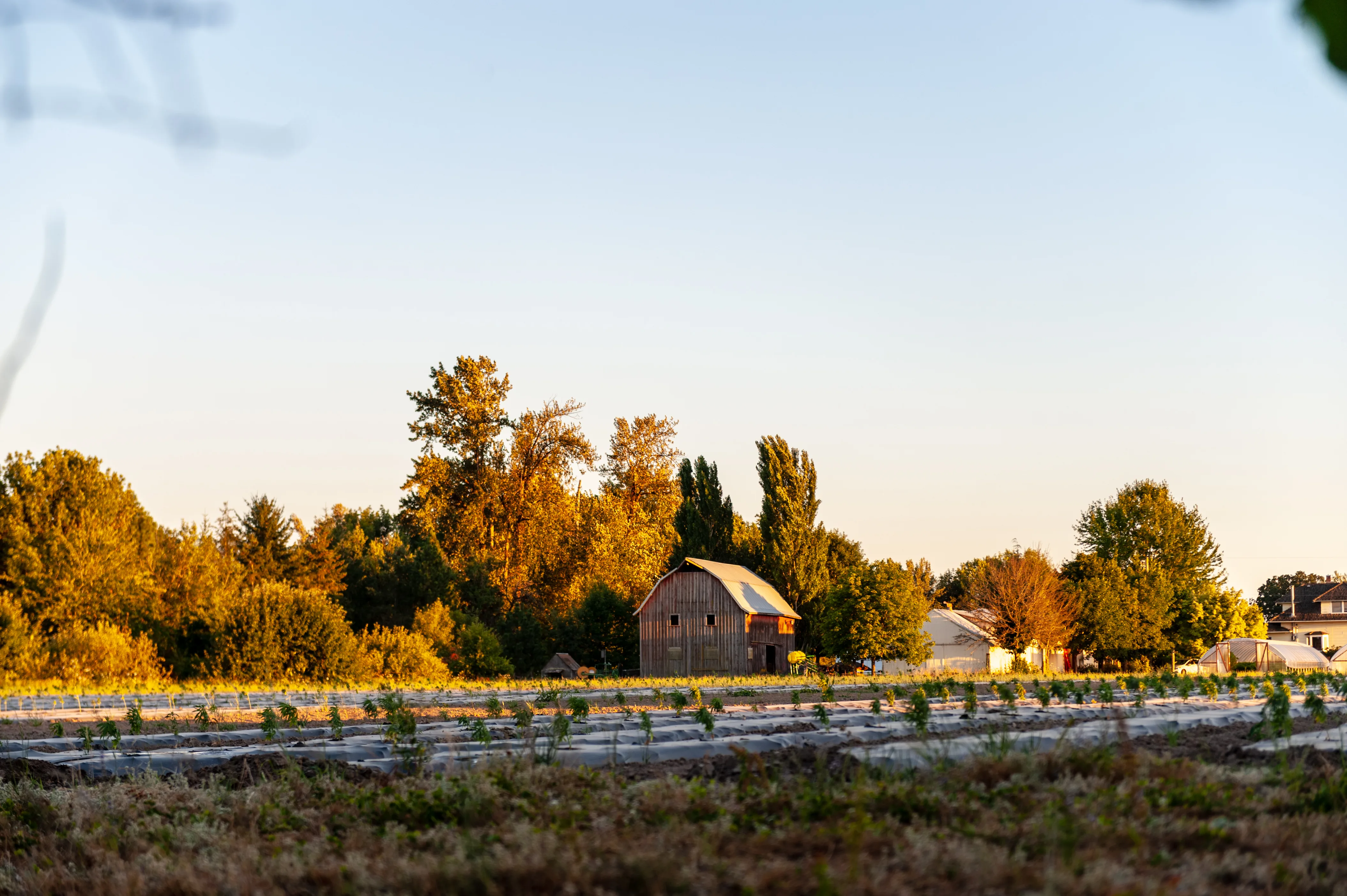
The number that stops most Californians mid-scroll is the home price. Albany's typical home price stood at $439,047 as of July 2026 — compare that against California's statewide typical home value of $773,735 (Zillow Home Value Index) and the difference is not incremental. It is the kind of gap that changes what ownership actually looks like: the difference between a two-bedroom condo with no yard and a three-bedroom house with a garage and a garden.
What that price buys in Albany is older housing stock in many cases, particularly in the Hackleman and Monteith historic districts, where craftsman bungalows and Victorian-era homes have been maintained and restored over decades. Newer construction tends to cluster in North Albany and Timber Hill, where lots are larger and the streets feel more suburban. Each Albany neighborhood has its own character and price position relative to that city-wide figure — some run well above it, some below.
Jackson Hill is the one area that consistently sits below the city median — a trade-off of older stock and steeper terrain for a price point that can work for buyers who need to stretch. The Monteith and Hackleman historic districts attract buyers who want walkable access to the downtown core and are willing to take on the maintenance obligations that come with older homes. North Albany and Timber Hill draw families who want newer construction and more space.
Albany's effective property tax rate is 0.97% — higher than California's effective property tax rate of 0.71% (Tax Foundation), but that comparison carries important context. California's Proposition 13 system keeps assessed values artificially low for long-term owners, which means your California tax bill may have been well below the effective rate on market value. In Albany, assessed values track market value more closely, so the rate you pay reflects what your home is actually worth. For most buyers coming in fresh, this is a modest increase in carrying cost against a dramatically lower purchase price.
One honest caveat: Albany's median household income of $78,114 runs below what is needed to comfortably carry the typical home price. That gap is real, and it means first-time buyers here often rely on down payment assistance or dual incomes. See the first-time homebuyer page for the full picture on financing options in this market. Corvallis runs noticeably higher than Albany on home prices, and Millersburg runs noticeably higher as well — Albany is genuinely the value entry point in this part of the valley.
The Tax Comparison: Income, Sales, and Property
Oregon's tax structure looks like a clear win for Californians on the surface. Look closer and it is more nuanced — but the bottom line still favors most movers.
No Sales Tax — The Most Immediate Change
Oregon has no state sales tax. None on groceries, none on a car purchase, none on a new laptop. California's statewide base sales tax rate of 7.25% (California Dept. of Tax and Fee Administration) is the highest state-level rate in the nation, and most California cities layer local taxes on top. For a typical household, eliminating sales tax is estimated to save $2,000–$4,000 per year — real money that shows up immediately in your monthly budget without any planning required.
Income Tax: The Part People Miss
Oregon's income tax runs from 4.75% to 9.9% across four brackets, and that 9.9% top rate kicks in at just $125,000 of taxable income for single filers. California's top state income tax rate of 13.3% (California Franchise Tax Board) applies only to income over $1 million. Oregon's brackets compress income into the top rate faster, so the income tax savings favor high earners most clearly; many middle-income households pay about the same or more in Oregon than they did in California.
The practical read: the zero sales tax is the primary offset for middle-income movers, and for households with significant spending — a car purchase, home furnishings, home improvement — it can neutralize or more than neutralize a higher income tax bill. For very high earners, Oregon's 9.9% ceiling is meaningfully below California's 13.3%, and the move produces unambiguous income tax relief.
Remote Workers: A Clean Break
If you are working remotely for a California company after relocating to Albany, you owe Oregon income tax, not California income tax, on wages earned after your move date. That is a real structural shift for high earners. The complication is the partial-year return: the year you move, you will file in both states, and the rules around avoiding double taxation on income earned in each period are genuinely complex. A CPA who handles both California and Oregon returns is worth the cost in the year you move — this is not a DIY situation for most households.
Oregon does not tax Social Security benefits at the state level, which matters if retirement income is part of your picture. Oregon also allows a deduction for federal income taxes paid, with limits — a provision that California does not offer.
| Tax Category | Oregon / Albany | California |
|---|---|---|
| State sales tax | 0% | 7.25% statewide base (California Dept. of Tax and Fee Administration) |
| Top income tax rate | 9.9% (kicks in at $125K single filers) | 13.3% (California Franchise Tax Board, applies above $1M) |
| Effective property tax rate | 0.97% (Albany) | 0.71% (Tax Foundation) |
| Social Security taxation | Not taxed at state level | Not taxed at state level |
| Federal tax deduction | Partial deduction allowed | Not allowed |
| Sales tax on vehicles | None | 7.25% base + local |
The table above captures the structure. Your individual outcome depends on your income level and spending patterns — but for most California movers, the net effect is at least neutral and often meaningfully positive.
Climate Reality: What 155 sunny days a year Means in Practice
Albany logs 155 sunny days a year. If you are arriving from the Bay Area, the Central Valley, or Southern California — where 250 to 300 sunny days is the expectation — this is not a minor adjustment. It is a fundamental reorientation of your relationship with the outdoors from roughly November through April.
Winters here are mild in temperature but relentless in cloud cover and rain. December is the wettest month, with roughly seven to seven and a half inches of rain typical, and the grey is not broken by periodic sunshine the way Pacific Northwest marketing might suggest. Locals joke that you stop noticing the rain eventually. Most people arriving from California say they never entirely do.
The honest trade-off: you get summers in exchange. July highs average near 83°F, and the stretch from late June through early September is genuinely warm and essentially dry. The Willamette Valley earns its comparison to wine-country California during those months — Monteith Riverpark fills up, Waverly Lake Park draws families, and Timber Linn Memorial Park becomes the kind of place where people actually linger. The summers are good enough that many California transplants say they stopped minding the winters after their second or third one.
What catches people off guard in year one is how early the grey sets in — typically mid-October — and how late it lifts. A Californian who plans outdoor activities the way they did at home will find February and March genuinely hard. Investing in rain gear rather than waiting for better weather is the most reliable local advice. The people who adjust fastest are the ones who treat the winter months as the season for indoor projects, local restaurants, and weekend drives rather than the season before the season they actually want.
Snow is rare in the valley floor, and when it does fall — a few times a decade in meaningful amounts — Albany essentially pauses. The city is not equipped for sustained snow events, and drivers are not accustomed to them. This reads as charming or alarming depending on where you are coming from.
Looking to buy in Albany? Estimate your payment.
Enter your numbers to see an estimated monthly mortgage payment.
Estimate only. Excludes HOA fees and mortgage insurance. The interest rate above is a starting point, not a quoted rate — replace it with your own to see real numbers. Insurance is a flat placeholder, not a Albany quote.
Daily Life and Weekends in Albany
Albany is not a place that tries to be Portland. It has its own pace, its own gathering spots, and a downtown that has been quietly improving for years without the self-consciousness of a city trying to rebrand itself. The parks and outdoor spaces are genuinely good — Monteith Riverpark along the Willamette, Talking Water Gardens (a constructed wetland that doubles as one of the more unusual public spaces in the valley), Takena Landing Park, and Waverly Lake Park give the city a recreational infrastructure that outperforms its size.
The Albany Historic Carousel & Museum is the kind of thing that gets mentioned in every piece about the city because it genuinely is remarkable — a fully operational, hand-carved carousel built by volunteers over decades, housed downtown. The Albany Farmers' Market runs through the growing season and is a genuine gathering point rather than a tourist attraction. The Albany Regional Museum and the Historic Downtown Albany Historic District give the city a sense of continuity that newer Pacific Northwest cities simply don't have.
For coffee, independent options are well-established: Margin Coffee Roasters in the downtown core, Bentley's Coffee, Wild Heart Coffee & Tea, The Brim Coffee Co., and Sidekicks Gourmet Desserts and Espresso each have their own character and regulars. The dining scene runs toward the casual and local — Pop's Branding Iron Restaurant & Lounge has been an Albany institution, Brick & Mortar Café draws a steady crowd, Cascade Grill and Sweet Waters Family Restaurant & Oasis Lounge round out the reliable middle of the local options, and The Barn at Hickory Station offers a more distinct setting.
Corvallis is about 20 minutes to the south and expands the practical range considerably — Oregon State University anchors a lively food, arts, and entertainment scene that Albany residents treat as effectively local. Eugene is farther but accessible. Eugene Airport (EUG), roughly 40 miles away, is the nearest major airport and serves most regional and connecting flights without the complexity of PDX.
The Greater Albany Public School District 8J holds a B rating, according to Niche, with 8,422 students enrolled in 2025-26. School athletics programs give the community a genuine Friday night anchor. For continuing education and workforce retraining, Linn-Benton Community College is headquartered in Albany — a real asset for Californians who arrive looking to shift industries or credential up for Oregon's manufacturing and technical job market. The full picture on schools is on the Albany schools page.
Honest Trade-offs: What Californians Should Know Before Moving
The financial case for Albany is real. The lifestyle adjustment is also real, and most relocation guides undersell the second half.
What Gets Better Immediately
Every retail purchase is cheaper the moment you cross the state line — Oregon's zero sales tax is not a rebate you apply for; it simply doesn't exist as a line item. Your housing payment drops dramatically against what equivalent ownership cost in California. Health insurance premiums and routine care costs generally run noticeably below what Californians pay, though the honest trade-off is that advanced specialist care requires a longer drive than most California residents are accustomed to. Outdoor access — trails, rivers, and the Cascade foothills within reach — is genuinely excellent for a city this size.
What Takes Getting Used To
The wages are lower. Mean hourly wages in the Albany area ran $28.47 in May 2024, below the national average. If you are working remotely and keeping a California salary, this is irrelevant. If you are planning to find local employment, calibrate expectations accordingly — management and technical roles pay better than the average, but the floor is lower than California's, and the ceiling is lower too.
The job market is also narrow by California standards. Albany's employers are anchored in manufacturing, education, logistics, and government. If your career is in tech, entertainment, finance, or a specialized professional sector, the local market may not have much for you. Remote work is not just a perk here for many California transplants — it is the answer to a structural question about what the local economy can absorb.
What Surprises People After Six Months
Two things catch most California arrivals off guard past the initial honeymoon. First, the social fabric takes longer to crack than expected. Albany is not an unfriendly city, but it is a city with deep-rooted existing networks — the Carousel volunteers, the longtime downtown regulars, the families whose kids have been in Greater Albany Public Schools for two generations. Newcomers are welcomed, but the sense of being an outsider takes longer to fade than it does in higher-turnover California metros.
Second, the grey winter is harder than anyone budgets for. Moving in summer gives a false read on what the city is like for eight months of the year. The people who leave Albany and return to California typically cite the winters as the decisive factor — not the taxes, not the wages, not the job market. If the sun is genuinely non-negotiable for you, that is worth confronting before the offer is signed rather than after the first January.
The full picture on daily life, commuting, and who Albany suits best is worth reading alongside this guide. Albany rewards the move for the right buyer — but the right buyer goes in with clear eyes about both sides of the ledger.

Local Expert Takeaway: The financial math of moving from California to Albany is straightforward: a typical home price of $439,047 as of July 2026 against California's statewide typical home value of $773,735, zero sales tax, and a cost structure that sits well below what most California cities demand. The less obvious part is that Albany gives you a real town with a real downtown — the Albany Historic Carousel & Museum, Monteith Riverpark, a farmers' market, and a coffee scene anchored by places like Margin Coffee Roasters and Wild Heart Coffee & Tea — not just a cheaper version of somewhere else. The winters will cost you something. The summers will pay you back.
Quick Takeaways & FAQs
✅ Albany's typical home price of $439,047 (July 2026) sits dramatically below California's statewide typical home value, giving California buyers real purchasing power they haven't had in years.
⚠️ Oregon's compressed income tax brackets mean the income-tax savings favor high earners most clearly — many middle-income households pay about the same or more than they did in California, with zero sales tax as the primary practical offset.
📍 The Albany Historic Carousel & Museum — a hand-carved, fully operational carousel built over decades by community volunteers — is the kind of local institution that signals this city has genuine roots, not just a lower price tag.
How much cheaper are homes in Albany, Oregon compared to California?
Will I pay less tax after moving from California to Albany, Oregon?
What is the weather like in Albany, Oregon for someone used to California?
Is Albany, Oregon a good place for remote workers coming from California?
What should I know about Albany's schools before moving from California?
Moving to Oregon?
Tell us what you need help with and we'll connect you with local resources.
