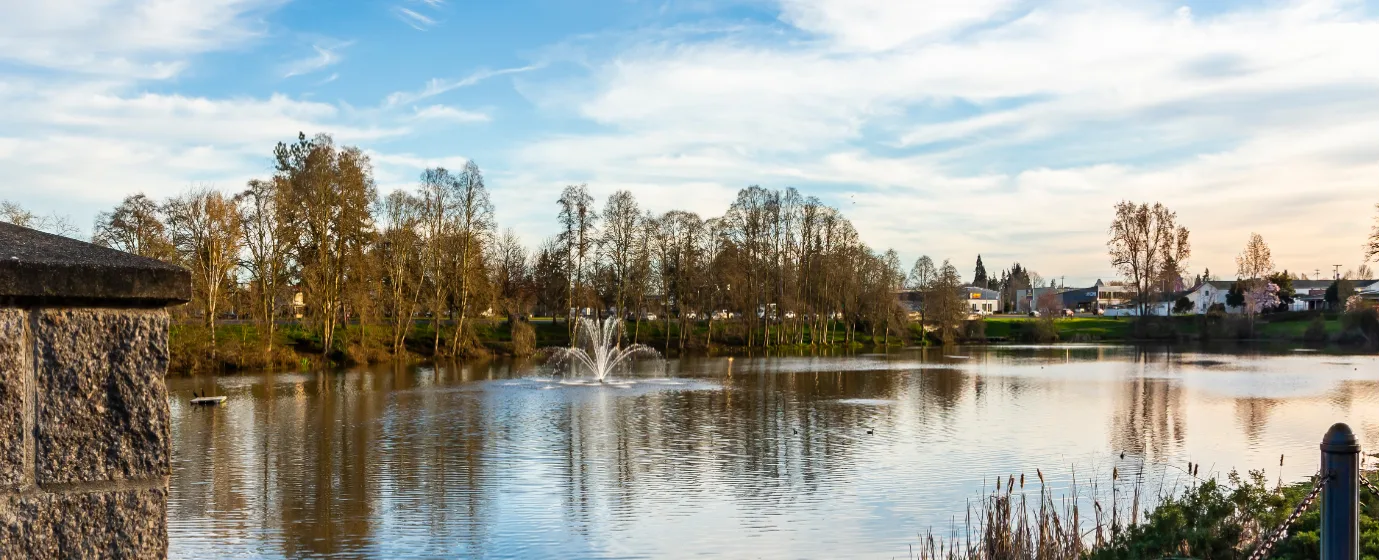
Albany, Oregon has a population of 57,997 spread across neighborhoods that feel genuinely different from one another — and that variety is both the city's strength and its main source of buyer confusion. The Willamette River cuts the city in half, placing North Albany in its own geographic pocket. I-5 and US-20 converge here, making Albany a credible commuter city for people working in Corvallis, Salem, or even Eugene. But the neighborhoods on either side of downtown carry very different personalities, price contexts, and school zone implications, and buying without understanding those distinctions is the most common mistake relocating buyers make.
The economic backbone of Albany runs through institutions rather than a single industry: Greater Albany Public School District 8J is the city's largest employer, alongside Linn-Benton Community College and Linn County. The Target Distribution Center and ATI Specialty Alloys and Components anchor the manufacturing and logistics side. Who moves here? Families priced out of Corvallis, retirees who want Willamette Valley access without Portland prices, and remote workers who want a real house on a real lot. All of them show up in Albany's housing market.
The typical home price sits at $439,047 (Zillow Home Value Index, July 2026) — noticeably below Corvallis and well below what buyers are used to in the Portland suburbs. For a fuller breakdown of what that means for your budget, the cost of living in Albany page goes deeper. Day-to-day life here revolves around the park system, the historic downtown, and the Willamette River. Albany gets 155 sunny days a year, which means the long gray stretch between November and April is real — and the summers, when Timber Linn Memorial Park fills up for the Northwest Art and Air Festival and Monteith Riverpark hosts its River Rhythms concert series, feel earned.
Whether you are buying your first home, upsizing from a condo, or researching a relocation from California or the Portland metro, the sections below break down all eight of Albany's distinct neighborhoods by buyer type, character, trade-offs, and where renters find the best options.
The Albany Reality
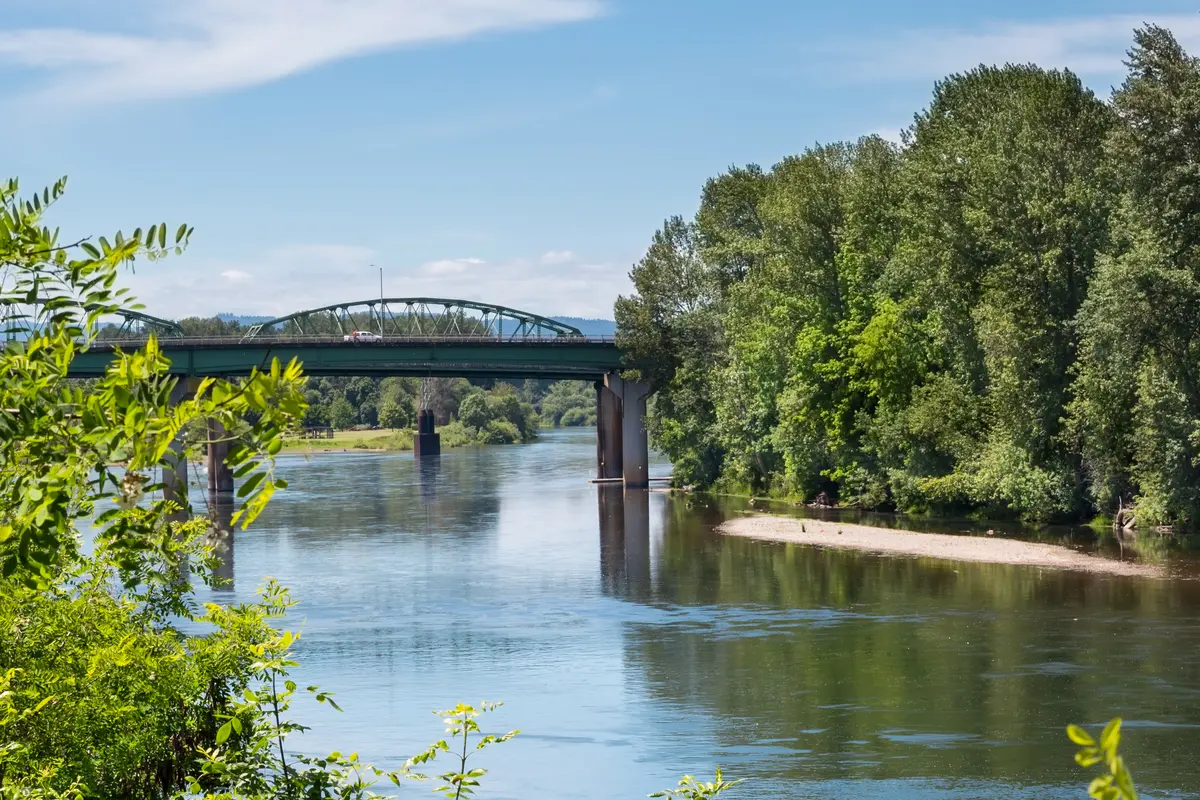
The Willamette River is not a soft geographic boundary — it is the clearest dividing line in Albany real estate. North Albany sits on the far bank, accessed by a limited number of crossings, and that separation shapes everything: school assignments, commute patterns, and the feeling of the neighborhood itself. Buyers who fall in love with North Albany's spacious lots and equestrian properties sometimes underestimate how meaningfully that river crossing adds friction to daily life, especially during the handful of days each year when the Willamette runs high and access tightens.
Within the main body of the city, the second divide is between the historic core and the newer southern and eastern edges. The Hackleman and Monteith historic districts sit at the center and carry architectural character that the newer subdivisions in South Albany and Timber Hill simply cannot replicate. But character comes with older infrastructure, smaller lots, and renovation realities that buyers should price in before making an offer. The school boundary question matters here too: which high school a home feeds into — West Albany High School, South Albany High School, or Albany Options School — is worth confirming before you write an offer, because boundaries do not always follow the neighborhood names on a map.
The third reality is that Albany is a commuter city. A meaningful share of residents drive about 20 minutes to Corvallis for work, which means your neighborhood's position relative to US-20 and I-5 affects not just your morning but your daily quality of life. Buyers focused on square footage sometimes choose the wrong end of town for their actual commute and spend years regretting it.
Neighborhoods at a Glance
| Neighborhood | Best For | Vibe |
|---|---|---|
| North Albany | Families Privacy Nature | Spacious, semi-rural suburban; equestrian properties and newer builds across the river |
| South Albany | Families School Value | Modern and growing; newer subdivisions with a genuine park system and the RedHawks high school |
| East Albany | Families Nature Quiet | Craftsman and New Traditional homes near Timber Linn Memorial Park's 100 acres |
| West Albany | Commuter Families | Established mid-century and Craftsman stock; well-positioned between downtown and the highway |
| Hackleman Historic District | Walkable Renter | Dense, architecturally rich; a nationally registered historic district spanning 28 blocks with twelve distinct styles |
| Monteith Historic District | Walkable Luxury Views | Riverfront character; the city's founding neighborhood with the restored Monteith House and a rebuilt park |
| Jackson Hill | First-Time Transit Value | Bike-friendly and walkable; railroad heritage, Amtrak access, and below-median pricing |
| Timber Hill | Families Quiet School | Quiet cul-de-sacs and 2000s-era builds adjacent to South Albany High School |
Albany typical home price: $439,047 (Zillow ZHVI, July 2026). Typical rent: $1,744/mo (Zillow ZORI, July 2026). Neighborhood tiers on this page are relative to these figures.
Best Neighborhood by Buyer Type
| Buyer Type | Best Neighborhood | Why |
|---|---|---|
| First-Time Buyer | Jackson Hill | The only neighborhood with a confirmed below-median price tier, plus walkable streets and Amtrak access for car-light living. |
| Luxury Buyer | North Albany | Spacious lots, equestrian properties, and newer custom builds give buyers the space and prestige that the historic core cannot match. |
| Walkability Seeker | Monteith Historic District | The rebuilt Monteith Riverpark, the Dave Clark Trail, and the Albany Farmers' Market are all reachable on foot. |
| Families with Kids | Timber Hill | Newer construction, quiet streets, South Albany High School next door, and Timber Linn Memorial Park within reach. |
| Commuter | West Albany | Sits between downtown and the highway corridors, giving workers heading toward Corvallis or I-5 the shortest daily run. |
| Large-Lot Buyer | North Albany | Tree-lined lots and equestrian properties north of the river offer the most land per dollar in the Albany market. |
| Renter | Hackleman Historic District | The dense, walkable grid and mix of older housing stock creates more rental supply than any other central neighborhood. |
Looking to buy in Albany? Estimate your payment.
Enter your numbers to see an estimated monthly mortgage payment.
Estimate only. Excludes HOA fees and mortgage insurance. The interest rate above is a starting point, not a quoted rate — replace it with your own to see real numbers. Insurance is a flat placeholder, not a Albany quote.
Most Popular Neighborhoods
North Albany
North Albany is the go-to choice for buyers who want space, greenery, and a suburban feel without leaving city limits. Spacious lots, equestrian properties, and newer subdivisions define the housing stock here — but the Willamette River crossing adds real friction, especially for buyers who need to reach downtown or I-5 for work daily. The distance from the urban core also means fewer walkable amenities than any other neighborhood on this list.
Best for: Buyers wanting large lots, equestrian use, or a semi-rural character north of the river.
South Albany
South Albany, roughly four miles from downtown, is where Albany's growth has been concentrated — newer single-family homes, a real park system anchored by Waverly Lake Park, and South Albany High School (mascot: RedHawks) with active OSAA athletics programs. The trade-off is a longer drive to downtown and the historic districts, and the neighborhood lacks the streetscape maturity of older parts of the city. Parents with school-age children often prioritize this end of town specifically for the school proximity.
Best for: Families with kids, buyers who want newer construction, and those drawn to the RedHawks school community.
East Albany
East Albany's two-story Craftsman and New Traditional homes sit on well-kept streets within reach of Timber Linn Memorial Park — a roughly 100-acre campus with an 11-acre lake stocked for rainbow trout fishing, a disc golf course, baseball fields, and a war memorial. The Northwest Art and Air Festival draws the whole region to this end of the city each August, which is one of Albany's genuine community highlights. Buyers should know that East Albany can feel cut off from downtown, and the commute to Corvallis via US-20 adds minutes depending on where exactly a home sits.
Best for: Families who value outdoor recreation and a quieter residential feel close to Albany's largest park.
West Albany
West Albany is one of Albany's most established residential areas, with a mix of Craftsman homes and split-levels — including the Fir Oaks subdivision, which dates to 1948. Its position makes it one of the stronger commuter options in the city, with reasonable access to the highway corridors and downtown in opposite directions. The housing stock's age means renovation costs are a real consideration, and buyers expecting turnkey homes at mid-century prices will find the market does not work that way.
Best for: Commuters who want an established neighborhood with access to both downtown and the highway network.
Hackleman Historic District
The Hackleman Historic District was listed on the National Register of Historic Places in 1982 and spans about 28 city blocks, encompassing twelve architectural styles from Queen Anne and Italianate to Craftsman and Gothic Revival. That density of character is genuinely rare at Albany price points, but it comes with the realities of historic ownership: renovation restrictions, older systems, and ongoing maintenance that newer homes simply do not require. Buyers who skip a thorough inspection here tend to be the ones who regret it most.
Best for: Buyers drawn to architectural character and walkable urban living who are prepared for historic homeownership's demands.
Monteith Historic District
The Monteith Historic District is Albany's founding neighborhood — named after Walter and Thomas Monteith, whose 1849 frame house still stands as arguably the most authentically restored Pioneer-era home in Oregon. Monteith Riverpark, the neighborhood's civic anchor, completed a $21.5 million reconstruction and reopened July 4, 2024 with a splash pad, new playground, amphitheater, and access to the 1.5-mile Dave Clark Trail along the Willamette. The catch: riverfront desirability pushes prices toward the upper end of the Albany range, and parking is tight by Oregon small-city standards.
Best for: Buyers who want walkable riverfront living, historic architecture, and the highest concentration of Albany's civic amenities.
Jackson Hill
Jackson Hill sits about a mile from downtown with a distinct railroad character — the historic Albany Station, Albany's Amtrak depot, anchors its edge, and the Albany Transit System provides bus connections that make this one of the few Albany neighborhoods where a car-optional lifestyle is plausible. It is the only neighborhood the fact sheet places below the city median, which makes it the clearest entry point for buyers who want a central location without paying for the historic districts. The trade-off is that the neighborhood's industrial railroad heritage means traffic from freight rail is a daily reality, not a distant rumble.
Best for: First-time buyers, transit-oriented households, and buyers who want central access at below-median pricing.
Timber Hill
Timber Hill is Albany's newest-feeling residential pocket — built primarily from the 2000s onward, with quiet cul-de-sacs, modern floor plans, and larger lots that appeal to professional families who want space without leaving the city. It sits adjacent to South Albany High School and has straightforward access to Timber Linn Memorial Park. The downside is that Timber Hill has little neighborhood identity beyond its housing stock — no walkable commercial corridor, no historic character, and a car-dependent daily rhythm.
Best for: Families with kids who want newer construction, larger lots, and proximity to South Albany High School.
Common Mistakes Buyers Make in Albany
Assuming the River Crossing Is No Big Deal
Buyers who tour North Albany on a clear weekend afternoon often underestimate the Willamette River crossing in practical terms. The limited number of bridges means that any peak-traffic window, especially for commuters heading toward US-20 or downtown, adds real time daily. Talk to residents who make that crossing five days a week before you commit.
Ignoring the High School Boundary
Albany has two comprehensive high schools — West Albany High School and South Albany High School — and the boundary between their zones does not follow neighborhood names cleanly. A home in a neighborhood marketed as "West Albany" may feed into South Albany High School, and vice versa. Confirm the specific address's school assignment through the district before making an offer, not after.
Chasing Square Footage in the Historic Districts Without Budgeting for Renovation
The Hackleman and Monteith historic districts can look like extraordinary value on a per-square-foot basis compared to Corvallis. But older homes in these districts frequently carry aging electrical panels, original plumbing, and renovation restrictions tied to historic preservation standards. Buyers who skip a specialist inspection — or who budget only for a cosmetic refresh — often find the actual cost of ownership is considerably higher than the purchase price suggested.
Optimizing for Corvallis Commute Without Checking the Route
The drive is about 20 minutes to Corvallis under normal conditions via US-20, but where in Albany a buyer lives affects that meaningfully. A home on the east side of Albany can add a noticeable stretch to that run during peak hours. Buyers focused on the Corvallis commute should verify the actual drive time from any specific address they are considering, not just from the city center.
Best Areas to Rent in Albany
| Area | Ideal For | Trade-off |
|---|---|---|
| Hackleman Historic District | Singles and couples who want walkable urban living and architectural character | Older buildings mean smaller units, less storage, and occasional maintenance quirks |
| Monteith Historic District | Renters who want riverfront access and proximity to downtown dining and the farmers' market | Tighter supply pushes rents toward the top of the Albany range |
| Jackson Hill | Budget-conscious renters who need transit access and proximity to downtown | Freight rail traffic is audible from much of the neighborhood |
| West Albany | Commuters who want established residential streets close to the highway corridors | Rental inventory is thinner here than in the historic core; turnover is slow |
| South Albany | Families with school-age children who want newer construction and park access | Car-dependent for most errands; limited walking infrastructure compared to the historic center |
Albany's typical 2BR rent runs $1,600–$1,950 citywide, and the spread across neighborhoods is real — the historic core and riverfront areas skew toward the upper end of that range while Jackson Hill and the outer residential zones hold closer to the floor. Rental supply in Albany is tighter than buyers sometimes expect for a city this size, so locking in a rental before arriving and then taking time to learn the neighborhood geography before buying is a sound approach for relocating households.

Local Expert Takeaway: Albany's neighborhoods are more different from each other than the city's size suggests. North Albany across the river is a different daily life than Monteith's walkable riverfront, and the Hackleman District's 28-block grid of historic properties carries both genuine character and genuine maintenance obligations. The one number that matters before you start touring: confirm the high school boundary for any specific address, because the zone split between West Albany High School and South Albany High School does not follow the neighborhood names on a map. For first-time buyers, Jackson Hill's below-median pricing and Amtrak access make it the most underrated neighborhood in the city.
Quick Takeaways & FAQs
✅ Albany's two historic districts — Hackleman and Monteith — give buyers access to genuine 19th-century architecture at Willamette Valley price points, a combination that is increasingly rare in Oregon.
⚠️ The Willamette River crossing into North Albany adds real daily friction for commuters; buyers drawn to that area's spacious lots should test the drive at rush hour before committing.
📍 Jackson Hill is the only Albany neighborhood with a confirmed below-median price tier, making it the city's clearest entry point for buyers who want central access without paying historic-district prices.
What is the most affordable neighborhood in Albany, Oregon?
Which Albany neighborhood is best for families with school-age children?
Is North Albany worth the premium for space and privacy?
What should I know about buying in Albany's historic districts?
How does the Albany rental market compare across neighborhoods?
Moving to Oregon?
Tell us what you need help with and we'll connect you with local resources.
