Most people sizing up Albany as a place to live focus on the price of housing or the commute to Corvallis. What catches them off guard after moving in is the park system. For a city of 57,997 in the southern Willamette Valley, Albany maintains a surprisingly serious outdoor infrastructure — riverfront acreage, a constructed wetland that doubles as one of the mid-valley's best birding sites, miles of paved trail through the residential core, and a 90-acre event park that hosts a free hot-air balloon festival every late August. These are not afterthoughts.
Albany Parks & Recreation operates toward a specific goal: every resident within two miles of a park. That ambition shows up in the geography. The Willamette River defines the city's northern edge, and two major parks sit directly on it — Monteith Riverpark on the south bank and Takena Landing on the north. The Periwinkle Creek Bike Path threads 3.61 miles through the residential midsection. Waverly Lake Park sits a short distance from I-5, stocked seasonally with trout. The system is broad enough that most neighborhoods can reach green space without much of a drive.
The outdoor calendar matters too. The River Rhythms concert series has drawn people to Monteith Riverpark on summer evenings since 1984. The Northwest Art & Air Festival at Timber Linn draws thousands over three days each August. These are not one-off novelties — they are recurring anchors around which Albany residents structure their summers. Families with school-age children, active retirees, and remote workers who chose Albany for its cost relative to Corvallis all find a version of the outdoor life here that works.
Whether you are weighing a move or already under contract, the sections below break down Albany's signature parks, its trail network, its water-based recreation, and the seasonal events that define outdoor life in this part of the valley.
Albany's Signature Parks: What Each One Actually Offers
The four parks that define Albany's outdoor identity are distinct enough that it is worth knowing what each one is actually for — they serve very different uses and different crowds.
Monteith Riverpark: The Downtown Gathering Point
This six-acre park along the Willamette is where Albany's waterfront life concentrates. It has a children's splash pad, a playground, a covered gazebo, a performance stage, horseshoe pits, and paved paths leading to a marina dock. The grass opens directly to the river, and on a warm evening in July, the park fills with a mix of families, cyclists, and concertgoers who showed up for River Rhythms. It is the most social park in the system — not the biggest or the most secluded, but the one that functions as a civic living room.
Takena Landing: Room to Move
Forty minutes on foot from downtown, Takena Landing operates at a completely different scale. The 72-acre park on the north bank of the Willamette has a boat ramp, disc golf, fishing access, two covered picnic shelters, softball fields, and barbecue grills. The wooded 3.6-mile river loop trail here is the park's defining feature — shaded by large trees, flat enough for most fitness levels, and quiet on weekday mornings in a way that Monteith Riverpark simply is not.
Timber Linn Memorial Park: Albany's Event Anchor
At 90 acres, Timber Linn is the system's largest park and the one that hosts the city's biggest outdoor events. The facility includes basketball courts, softball and ball fields, tennis courts, disc golf, horseshoe pits, a playground, and two covered picnic shelters with bike and pedestrian paths weaving through the grounds. An open-air amphitheater sits adjacent to the park and serves as Albany's primary outdoor performance venue. Most of the year it functions as a well-equipped neighborhood park; in late August it becomes the site of the Northwest Art & Air Festival.
Waverly Lake Park: Casual and Accessible
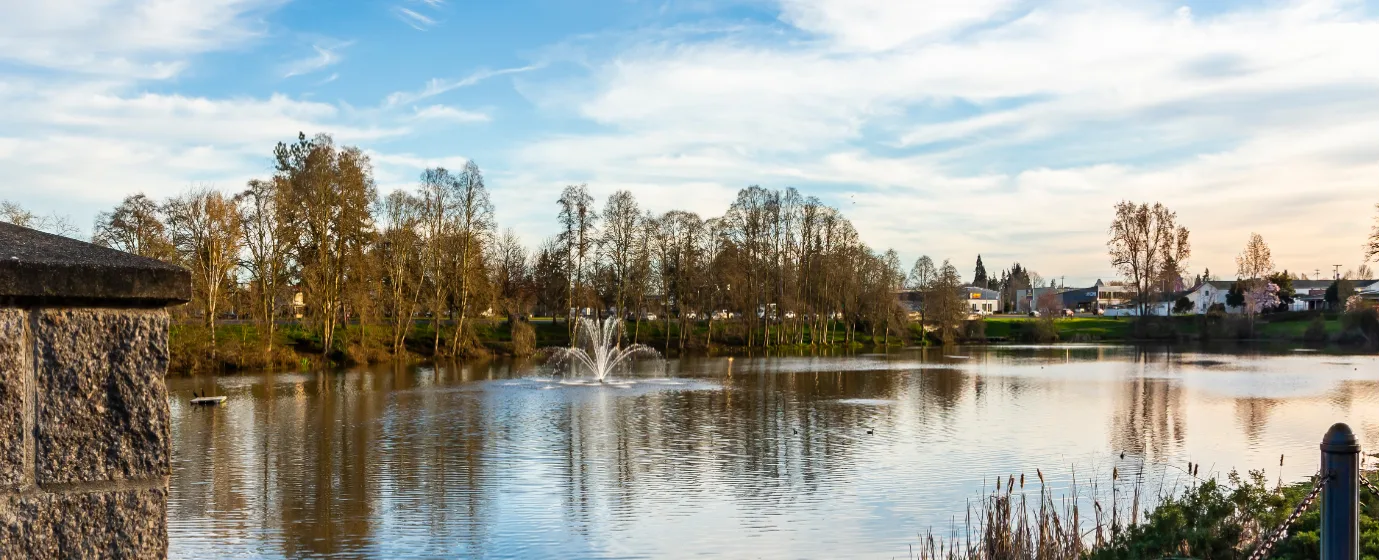
Waverly Lake Park is roughly 20 acres built around a central lake. Albany Parks & Recreation operates paddle boat and kayak rentals there through the warmer months, and the Oregon Department of Fish and Wildlife stocks the lake with trout as part of its urban angling program. It is the park that works best for an impromptu afternoon — close to I-5, easy to reach, and low-key enough that you can show up without a plan.
| Park | Size | Key Features | Best For |
|---|---|---|---|
| Monteith Riverpark | 6 acres | Splash pad, performance stage, marina dock, river access | Families Walkable |
| Takena Landing | 72 acres | Boat ramp, disc golf, 3.6-mi loop trail, fishing, picnic shelters | Nature Quiet |
| Timber Linn Memorial Park | 90 acres | Courts, fields, amphitheater, disc golf, multi-use paths | Families Active |
| Waverly Lake Park | ~20 acres | Paddle boat & kayak rentals, stocked trout fishing | Nature Casual |
| Talking Water Gardens | 37 acres | 2+ mi accessible trails, 9 ponds, 100+ bird species | Nature Birding |
Trails and Getting Around on Foot or Bike
Albany's trail network is not a single long greenway — it is a collection of purpose-built corridors serving different parts of the city, which means most residents have something walkable or rideable close to home without having to drive to a trailhead.
The Periwinkle Creek Bike Path
This is Albany's most-used paved trail: a 3.61-mile flat corridor that threads through the residential middle of the city with multiple access points along the way. It is genuinely flat, which matters in a valley where casual riders and joggers make up the majority of trail users. On a weekday morning in spring, it is the trail where you encounter the most everyday use — parents with strollers, commuter cyclists, and people logging miles before work.
The Riverfront Trail System
Two trails run the Willamette River corridor from different banks. The Dave Clark Riverfront Trail is a 1.5-mile paved path connecting Monteith Riverpark and Bowman Park along the south edge of the river. On the north bank, the gravel trail at Takena Landing extends 3.6 miles in a loop through wooded riparian land. Together they give anyone based near downtown a meaningful riverside route without leaving city limits.
Disc Golf as a Trail Use
Albany has three disc golf courses spread across the park system — an 18-basket course near downtown, a 9-basket course at Takena Landing, and a 9-basket course at Timber Linn Memorial Park. It is a detail worth knowing if disc golf is part of your regular routine, because having three courses within the city is atypical at this population size.
What the trail system does not offer yet is a fully connected network. The Periwinkle path and the riverfront trails serve different parts of the city, and there are gaps between them. If you are evaluating Albany as a car-free or car-light lifestyle, the honest answer is that the trails are good for recreation but do not replace car trips for most errands — a reality worth pairing with the broader commute picture.
Water Recreation and Talking Water Gardens
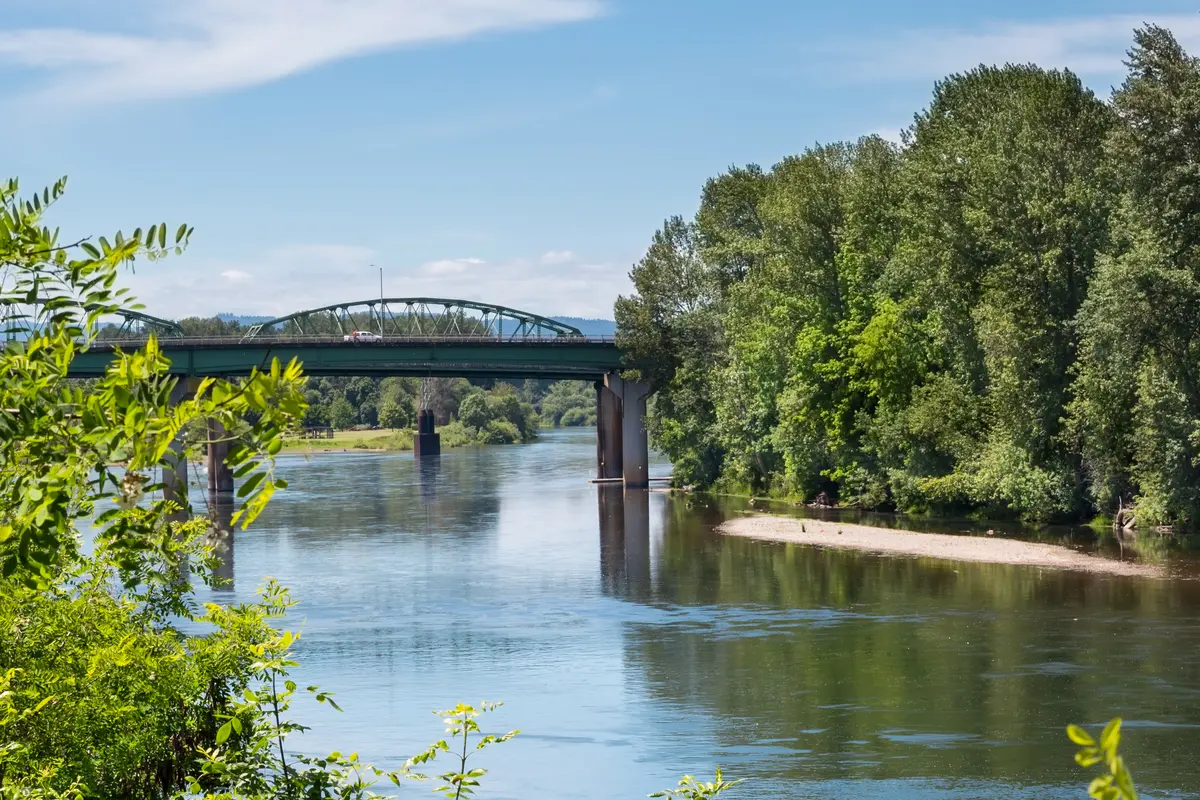
The Willamette River shapes how Albany uses its outdoors more than any single park. It is the reason Takena Landing exists, the reason the Dave Clark Trail has a view worth lingering on, and the reason the city's outdoor calendar revolves around the waterfront in summer. Two distinct water experiences are worth understanding in detail.
River Access at Takena Landing and Monteith
Takena Landing has the most developed river access in the system — a boat ramp, fishing spots along the bank, and a trail system that keeps you within earshot of moving water for most of its 3.6-mile length. Anglers use it regularly, and the boat ramp makes it the practical launch point for anyone putting a kayak or small watercraft on the Willamette. Monteith Riverpark offers a different kind of water presence: the river is visible and accessible at the bank, but the park is oriented more toward the lawn and stage than toward the water itself.
Waverly Lake: Urban Paddling and Fishing
Waverly Lake is a more self-contained experience — paddle boats and kayaks available for rent through the warmer months, trout stocked by the Oregon Department of Fish and Wildlife as part of its urban angling program. It is the kind of place that works well for a first fishing trip with a kid, or an afternoon that was not planned until noon. The scale is modest, and that is the point.
Talking Water Gardens: Albany's Most Unusual Outdoor Asset
Nothing else in Albany's park system looks quite like Talking Water Gardens. The 37-acre site is a constructed treatment wetland — built in 2012 by Albany, Millersburg, and ATI on the footprint of a former lumber mill and railroad yard — designed to treat water through engineered natural processes. The result is nine interconnected ponds linked by more than 2 miles of wheelchair-accessible walking trails.
What makes it genuinely worth visiting is the wildlife. The site supports more than 100 species of birds, waterfowl, small mammals, reptiles, and insects, and the East Cascades Bird Alliance considers it one of the mid-valley's premier birding destinations. On a foggy October morning, the mix of open water, reed beds, and structured channels draws species you would not expect to find a few minutes from an industrial corridor.
The human friction moment that surprises newcomers: most people drive past Talking Water Gardens for months before a neighbor mentions it. It is not signposted the way a conventional park is, and its origins as a wastewater treatment project are not exactly a marketing tagline — but residents who find it tend to come back. The trails are flat and accessible year-round, which makes it one of the few outdoor spaces in Albany that works consistently even through the gray stretch of a Willamette Valley winter.
Looking to buy in Albany? Estimate your payment.
Enter your numbers to see an estimated monthly mortgage payment.
Estimate only. Excludes HOA fees and mortgage insurance. The interest rate above is a starting point, not a quoted rate — replace it with your own to see real numbers. Insurance is a flat placeholder, not a Albany quote.
Seasonal Events and What Albany's Outdoor Year Actually Looks Like
Albany gets 155 sunny days a year. That figure lands below what most newcomers expect from Oregon's southern valley, and it shapes the outdoor calendar in a specific way: when the weather is genuinely good, residents use it hard.
River Rhythms: The Summer Anchor
River Rhythms has run as a free outdoor concert series at Monteith Riverpark since 1984. It draws national touring acts each summer on Thursday evenings through July and August, and the format has not changed much in four decades — bring a blanket, stake out a spot on the grass, and watch the river go by. For families with school-age children, it is the recurring weekly event that the summer social calendar gets built around. The combination of no admission cost, a downtown waterfront location, and a lineup that leans toward accessible crowd-pleasers keeps attendance broad.
Northwest Art & Air Festival: Albany's Marquee Weekend
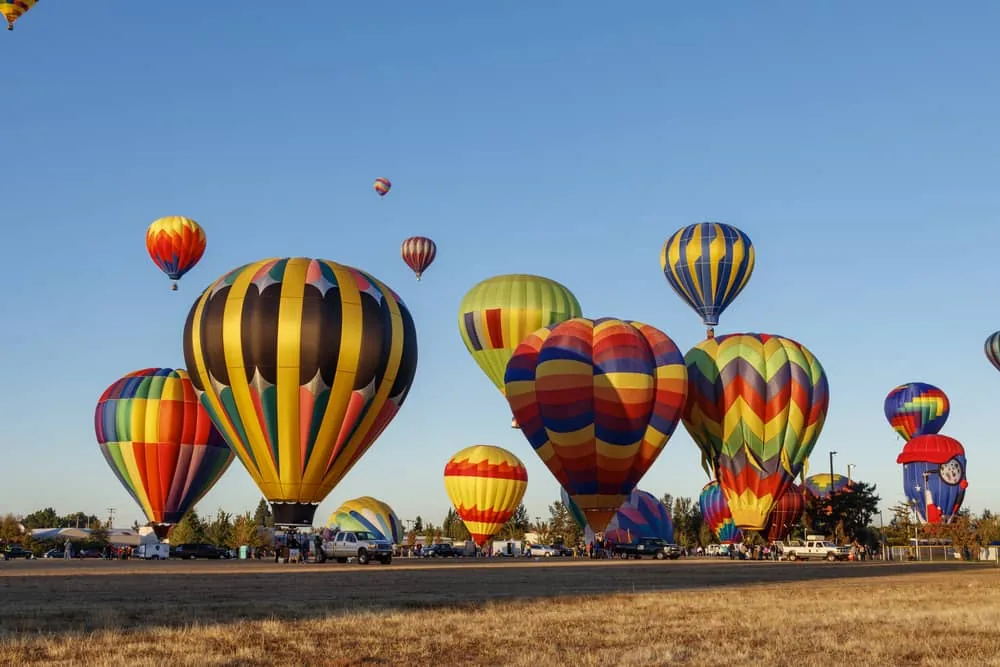
Every late August, Timber Linn Memorial Park becomes the site of the Northwest Art & Air Festival — a free, three-day event that is genuinely hard to replicate elsewhere in the mid-valley. Up to 40 hot-air balloons launch each morning from the park grounds, drifting over the surrounding neighborhoods. Friday evening features the Night Glow, when balloonists fire their burners after dark for a display that draws spectators from across the region. The weekend also includes a juried art show featuring roughly 70 Northwest artists, live music on two stages, a car show, and a Saturday-night amphitheater concert with fireworks.
What surprises people who attend for the first time: the balloon launches require an early arrival. The morning launches happen at first light, and the meadow fills quickly. Showing up at a reasonable weekend hour means watching from the edges rather than the center of the action. That detail is not advertised, and first-timers often wish someone had told them.
The Rest of the Year
Albany's outdoor year outside those summer anchors is quieter, which is not a criticism — it is accurate. The Periwinkle Creek path and the Takena Landing loop stay usable through most of the wet season. Talking Water Gardens' accessible trails work in rain in a way that a gravel or dirt trail does not. Waverly Lake and its paddleboat rentals are a warm-season amenity, and the Willamette's fishable banks see consistent use from fall through spring. Youth sports programming ties into the park system's fields — for more on that side of the equation, the schools page has the fuller picture on activities and athletics.
The honest seasonal trade-off: Albany's outdoor life peaks sharply in July and August, and the rest of the year asks for more intentionality. That is Willamette Valley living broadly, and Albany is no exception. Residents who make the most of it tend to be people who already know how to find a good walk in a light drizzle.
Local Expert Takeaway: Albany's park system punches above its weight for a city this size. The Willamette River corridor — Monteith Riverpark downtown and Takena Landing's 3.6-mile loop on the north bank — gives residents genuine waterfront access year-round. Talking Water Gardens is the hidden asset: 2-plus miles of accessible wetland trails supporting over 100 bird species, and almost nobody outside Albany knows it exists. For families, the summer calendar around River Rhythms and the Northwest Art & Air Festival at Timber Linn is genuinely strong. The gap is connectivity — the trails are good but not yet fully linked, and most non-recreation trips still require a car.
Quick Takeaways & FAQs
✅ Albany's park system aims to keep every resident within two miles of green space — and the riverfront corridor at Monteith Riverpark and Takena Landing delivers on that promise for most of the city.
⚠️ The outdoor calendar peaks hard in July and August; Albany gets 155 sunny days a year, and the Willamette Valley's gray winters require more deliberate effort to stay active outdoors.
📍 Talking Water Gardens — a 37-acre constructed wetland with 2-plus miles of wheelchair-accessible trails and more than 100 wildlife species — is Albany's most underrated outdoor asset and one of the mid-valley's best birding sites.
What is the best park in Albany, Oregon for families with young kids?
Can you kayak or fish in Albany's parks?
What is Talking Water Gardens in Albany?
What are the best trails for walking or biking in Albany?
What is the Northwest Art & Air Festival in Albany?
Moving to Oregon?
Tell us what you need help with and we'll connect you with local resources.
