About Ali

What the Market Looks Like Right Now
The typical home in Corvallis sits at $565,289 (Zillow Home Value Index, July 2026). That number puts this city in a peculiar spot — it's noticeably below Portland's metro price levels, but it's also a figure that strains the median household income here, which comes in at $65,012. That gap is real, and I want buyers to understand it before they start touring.
What I see consistently is that buyers coming from larger Oregon markets feel like they're getting more for their money here, and they often are — in terms of walkability, green space, and the general quality of life a smaller, research-university city delivers. But buyers expecting Portland-adjacent pricing without Portland-adjacent incomes need to run their numbers carefully.
The effective property tax rate sits at approximately 0.95%, which is competitive by Oregon standards. On the rental side, a two-bedroom typically runs $1,590–$1,940 per month across the city. One thing I always flag with rental clients: if you're arriving for an OSU or hospital position and planning to rent first, time your search carefully — competition spikes hard in September when the academic calendar kicks in and supply tightens fast.
Corvallis also has one of the highest renter-to-owner ratios of any city its size in Oregon, with roughly 59% of households renting. That matters for buyers because it shapes the neighborhood character differently than a typical homeowner-majority market. It also means that when a well-priced ownership property comes available, you're often competing with buyers who have been watching the market for months.
Neighborhoods: Where to Look and Why It Matters
College Hill
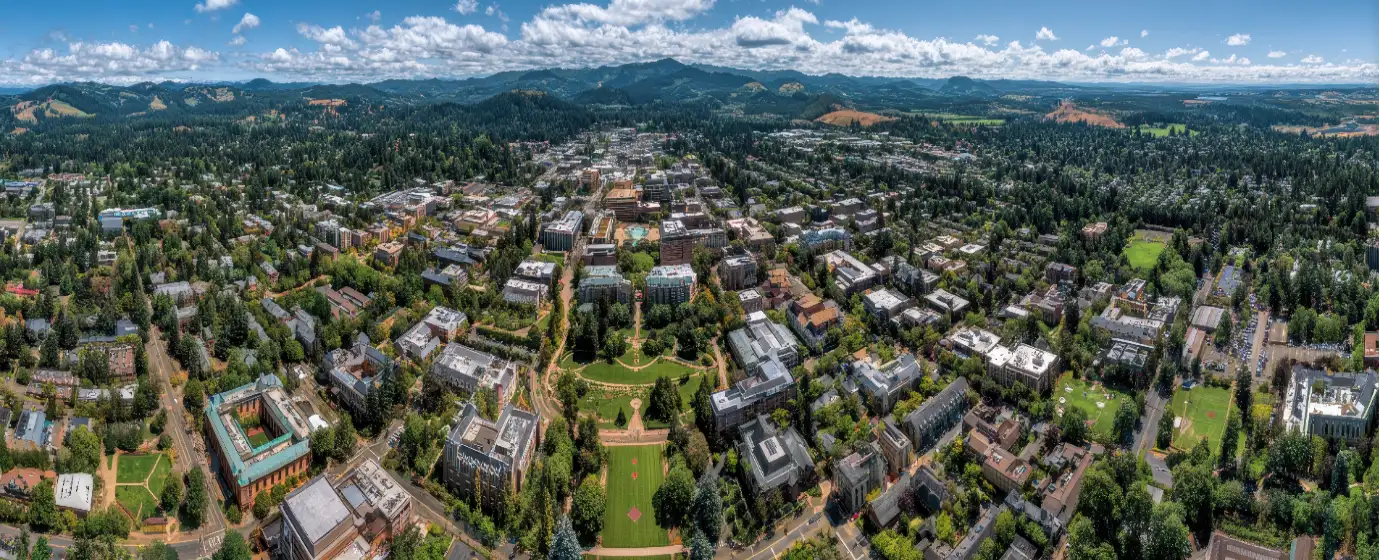
College Hill is the neighborhood that gets the most attention, and for good reason. The College Hill West Historic District — listed on the National Register of Historic Places in 2002 — contains over 250 houses built primarily between 1916 and 1935. Craftsman bungalows, covered porches, mature street trees. It runs above the city median on price, so buyers need to come in with that expectation.
What I tell buyers who fall in love with College Hill: the character is genuine, but you need to think carefully about the rental density immediately adjacent to OSU. The streets closest to campus feel very different from those three or four blocks farther out. The best College Hill purchases are made by buyers who walked the whole neighborhood, not just the block with the listing.
Northwest Corvallis and Timberhill
This corridor attracts a lot of the professional and faculty buyers I work with. The housing stock is more varied — you'll find ranches alongside two-story family homes — and it sits in a part of the city that feels quieter without being far from anything. Timberhill, in particular, draws buyers who want proximity to the trail network that connects toward Bald Hill and beyond.
West Hills
West Hills is where you go when you want elevation and privacy. Lots are larger, views show up reliably, and the price point reflects both. I work with buyers here who are genuinely fine driving to daily errands in exchange for what the hillside delivers. If that trade sounds frustrating rather than appealing, this probably isn't your neighborhood.
Willamette Landing
For buyers relocating from out of state who want something turnkey and predictable, Willamette Landing is often the answer. Newer construction, consistent landscaping, a quiet orderly feel. It draws a mix of retirees and families who want newer builds without the West Hills price premium. I've placed a number of out-of-state relocation buyers here who specifically said they didn't want to spend their first year managing deferred maintenance.
South Corvallis and Avery-Helm
South Corvallis tends to be the entry point for buyers who need to stretch their budget. The housing stock is older and the neighborhood character is more working-class, but Avery Park — one of the city's most-used green spaces — anchors this part of town in a way that keeps it on my list for the right buyer. The Riverfront Commemorative Park is also accessible from this side of the city.
Downtown Corvallis
Downtown living here is genuinely walkable in a way that not many Oregon cities outside Portland can claim. The bike infrastructure is real — dedicated lanes and multi-use paths that make car-free daily living practical for a meaningful share of residents. If your work and errands are in the core, you can pull this off without a car in a way that surprises people coming from car-dependent markets.
Best for: Downtown suits renters-turned-buyers who already know the neighborhood; College Hill suits buyers who want historic character and can carry the premium; Willamette Landing suits relocating families and retirees who want newer construction; West Hills suits buyers who prioritize privacy and views over walkability.
Schools: What the Data Says
Corvallis School District 509J serves this city, with 5,858 students enrolled in 2025-26. On 2024-25 state assessments, 42.7% of students reached math proficiency and 54.7% reached reading proficiency — figures the Oregon Department of Education publishes for all districts in the state. Those numbers sit below what many buyers arriving from other markets expect from a university city, and I think it's worth saying plainly rather than talking around it.
The district is relatively compact for a city of 61,247, which means most buyers will land in 509J regardless of which neighborhood they choose. What does vary is which specific elementary school a given address is assigned to, and that boundary question matters more to some families than others. I always recommend confirming the assigned school for any specific address directly with the district before going under contract — boundaries do shift.
The broader context I offer buyers: a university town attracts a highly educated parent population that tends to be engaged in local schools, and that community dynamic shapes classrooms in ways the state proficiency data doesn't fully capture. Strong district athletics programs, a commitment to enrichment, and an engaged parent base are real features of 509J schools. But buyers should do their own due diligence — confirm the assigned school for a specific address with the district, and review the full data the Oregon Department of Education publishes themselves, rather than relying on any single summary figure.
The one thing I'd add: I've worked with plenty of families who came to Corvallis partly because of OSU's presence and the intellectual culture of the town, and they've found the school environment matches that culture in ways they valued, even when the raw numbers didn't lead them to expect it. That's a texture the data doesn't give you.
Looking to buy in Corvallis? Estimate your payment.
Enter your numbers to see an estimated monthly mortgage payment.
Estimate only. Excludes HOA fees and mortgage insurance. The interest rate above is a starting point, not a quoted rate — replace it with your own to see real numbers. Insurance is a flat placeholder, not a Corvallis quote.
Commute and Daily Life
Corvallis is not a suburb. That distinction matters for commute conversations. This is a self-contained mid-size city — Oregon's 9th-largest incorporated city — with its own major employment base, and the majority of residents I work with work either at Oregon State University, a regional medical center, HP, Benton County, or the school district, all of which are inside or immediately adjacent to the city.
If you're asking about commuting to Portland, the honest answer is that the drive is about 90 minutes to Portland. Some people do make that trip regularly — remote workers who need to be in the Portland office once or twice a week find it manageable. But buyers who picture a daily Portland commute from here tend to stop picturing it within a few months of moving. It's a genuine commitment, not a casual drive.
For regional connectivity without a car, Albany — roughly 10 miles away via US-20 — serves as the nearest Amtrak stop, where the Coast Starlight and Cascades lines offer service north and south. OR-34 provides the direct connection east to Interstate 5. If you need Eugene regularly, that drive is much more livable. Eugene Airport is about 35 miles away and functions as the practical regional air hub.
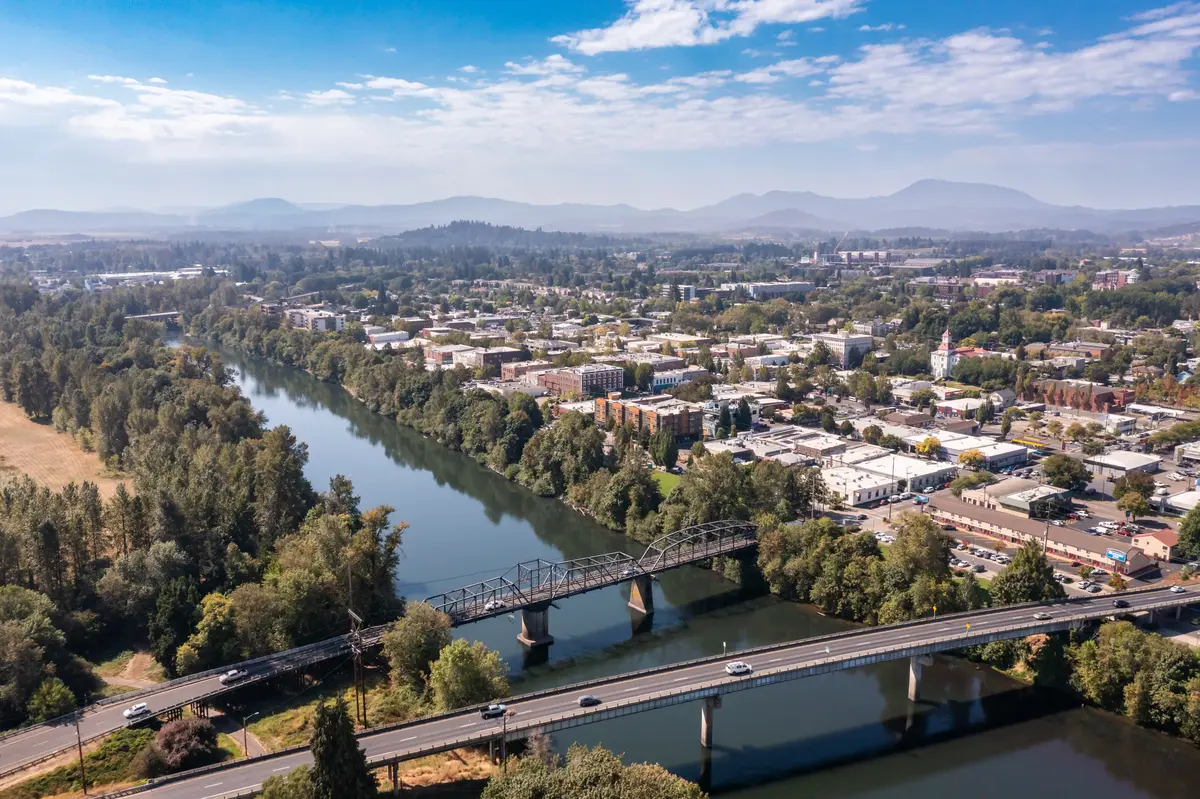
Within the city itself, the bike infrastructure is the real commute story. Dedicated lanes and multi-use paths mean that for buyers whose work is at OSU or downtown, a car-free daily routine is genuinely achievable — not just aspirational. The Willamette River Path adds a flat, paved riverside mile that connects downtown to the broader trail network. For outdoor recreation commuters, the chain of trails connecting Bald Hill Natural Area through Chip Ross Park to the boundary of McDonald-Dunn Research Forest gives you more than 15 continuous miles of off-road riding and running without touching a road.
Corvallis vs Nearby Cities
| City | Typical Home Price | Typical Rent | Cost vs Corvallis |
|---|---|---|---|
| Corvallis (this city) | $565,289 | $1,731/mo | — |
| Albany | $439,047 | $1,744/mo | 22% lower |
| Philomath | $529,921 | $1,876/mo | 6% lower |
| Lebanon | $397,559 | $1,565/mo | 30% lower |
Source — home prices: Zillow ZHVI, July 2026; rent: Zillow ZORI, July 2026. Nearby-city figures are the same series, refreshed together.
The comparison I get asked about most often is Corvallis versus Albany. Albany's typical home price is noticeably lower, and for buyers whose work is in the Corvallis core — OSU, the hospital, HP — the practical question is whether the savings justify the commute. For some buyers, absolutely yes. Albany has its own economy, its own downtown, and its own community character. What it doesn't have is the walkable college-town texture, the trail system, or the concentration of university amenities. I've placed buyers in both cities, and the ones who move to Albany tend to be comfortable driving and value the additional financial headroom. The ones who move to Corvallis tend to be optimizing for daily quality of life within walking or biking distance.
Philomath, just to the west, offers prices somewhat lower than Corvallis and sits close enough that some buyers treat it as a practical alternative with easy city access. It has a small-town feel that appeals to certain buyers, and it shares proximity to the same trail network. The catch is that Philomath has its own school district, which matters for families who've done their research on 509J.
Lebanon, farther east, comes in noticeably lower on price — meaningfully so for buyers whose budget is the primary constraint. The trade is distance: Lebanon is a genuine commute from Corvallis, not a short hop. Buyers heading there are usually prioritizing the lower price point and accepting that their daily geography looks different.
Smaller communities in the surrounding area round out the nearby options for buyers who want land and space, though none of them function as a substitute for Corvallis if city amenities matter. I generally see these appear in conversations with buyers who have very specific land or privacy goals and are using Corvallis as a regional anchor rather than a daily destination.
The actual trade is worth naming plainly: Corvallis costs more than its neighbors because it offers something its neighbors don't have — a major research university, a genuine urban trail system, a walkable downtown, and a stable employment base that insulates the market from some of the volatility smaller towns feel more acutely.
What Surprises Buyers After They Move Here
The Rain Is Real
Corvallis gets 159 sunny days a year. I say that number out loud to every buyer who hasn't lived in the Willamette Valley before, because the Pacific Northwest reputation for rain is not exaggerated here. The gray season runs long — roughly October through May — and buyers who moved from sunnier markets tell me, consistently, that they underestimated how much that affects daily mood. If you're serious about Corvallis, visit in February, not June.
OSU Is the City's Backbone and Its Wildcard
OSU's 420-acre main campus drives essentially everything about how this city functions — the economy, the culture, the rental market, the event calendar, the research institutions. That's a feature, not a flaw, but it means the city operates on an academic rhythm that affects parking, traffic, event density, and housing prices in ways that can catch buyers off guard. Fall semester arrival is the most dramatic example: the city transforms in a matter of days.
The economic anchor is genuinely impressive. OSU generates $2.2 billion in economic impact in the South Valley region annually, sustaining over 13,000 jobs across Linn and Benton counties. That stability is one of the reasons I feel confident recommending this market to buyers who are thinking long-term.
The Outdoor Access Is Closer Than It Looks on a Map
Buyers who move here expecting to eventually get out into nature often discover the trail access is embedded in the city itself. Bald Hill Natural Area, the McDonald-Dunn Research Forest, Avery Park, and the Willamette riverfront path are not drives away — they're extensions of the neighborhood. Mountain bikers come from around the region specifically for the more than 60 miles of trails in and around the city. That access reshapes how people spend their time here, and most buyers say it was better than they expected, not worse.
The Farmers Market Is Genuinely Central to Weekend Life
The Corvallis Farmers' Market is one of those civic institutions that becomes a reliable weekly rhythm for most residents within their first season. It's where you run into your neighbors, figure out what's growing well in the valley that week, and settle into the pace of the city. Buyers who've researched the market from outside often discount it as a nice-to-have; buyers who live here treat it as infrastructure.

Final Advice From Ali
Quick Takeaways & FAQs
✅ Corvallis is anchored by Oregon State University, which creates one of the most stable local employment bases in the Willamette Valley and drives a genuinely walkable, trail-rich city culture.
⚠️ The typical home price of $565,289 (July 2026) sits above what the median household income here comfortably supports — buyers need to run their numbers carefully before falling in love with a neighborhood.
📍 If you're planning to rent first, time your search before September — the academic calendar creates real competition for available units and drives prices up fast in the College Hill and downtown areas.
What does $565,000 actually buy in Corvallis right now?
What is the commute from Corvallis to Portland really like?
Which neighborhood in Corvallis is the right fit for a family with kids?
What do the Corvallis schools data actually show?
Is Corvallis safe?
How fast do homes sell in Corvallis, and how competitive is the market?
Should I buy in Corvallis or Albany?
What do people wish they'd known before moving to Corvallis?
Moving to Oregon?
Tell us what you need help with and we'll connect you with local resources.
