
Maybe you've been priced out of Bellevue or Kirkland, or you're moving closer to family in the region and Federal Way keeps coming up on the list. The city sits at the midpoint between Seattle and Tacoma — close enough to both that you can see a show at the Federal Way Performing Arts & Event Center without planning a road trip, yet far enough from Seattle that the typical home price of $564,681 (Zillow Home Value Index, June 2026) still feels like a real number. That price point, combined with Washington State's famously retirement-friendly tax structure, is what keeps landing Federal Way on retirees' shortlists.
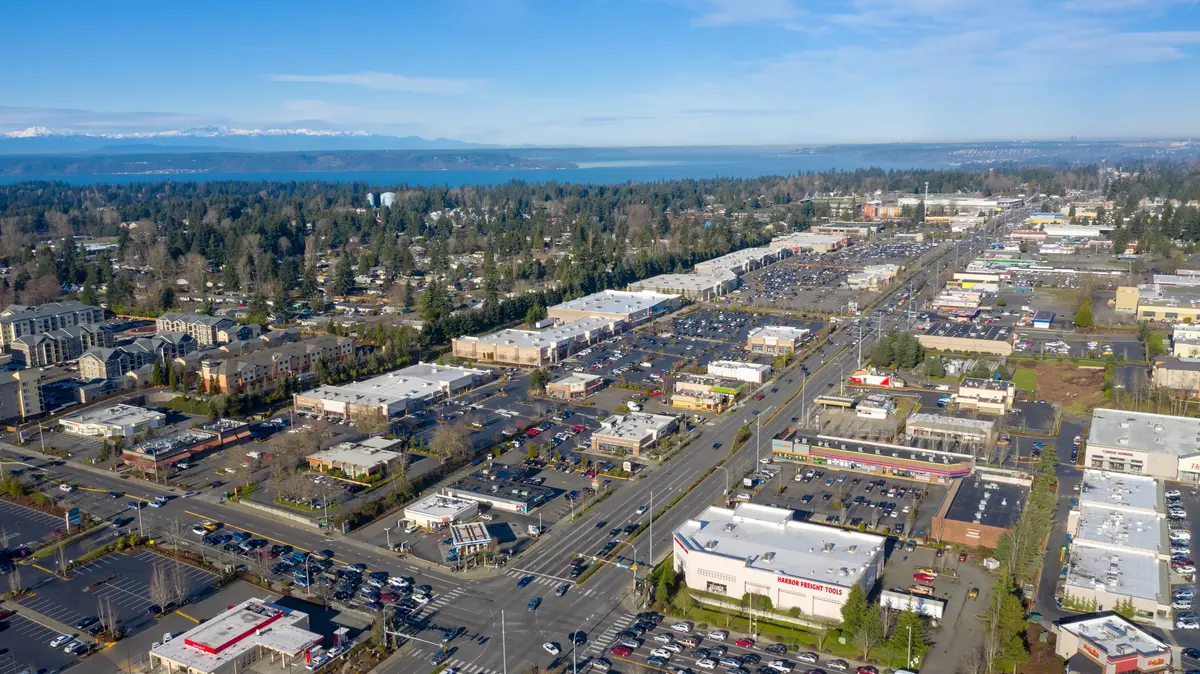
What actually drives daily life here is more layered than any spreadsheet shows. Federal Way is one of the most ethnically and linguistically diverse cities in Washington, and that diversity shows up in the restaurant row along Pacific Highway South, the faith communities, and the neighborhood fabric of places like Twin Lakes and Lakota. The city's senior programs are supported by a dedicated Senior Advisory Commission that publishes a local resource guide annually. And as of December 2025, the Federal Way Link Extension brought light rail to the Federal Way Downtown station on 23rd Avenue South — a genuine game-changer for retirees who'd rather not drive to SeaTac or into Seattle.
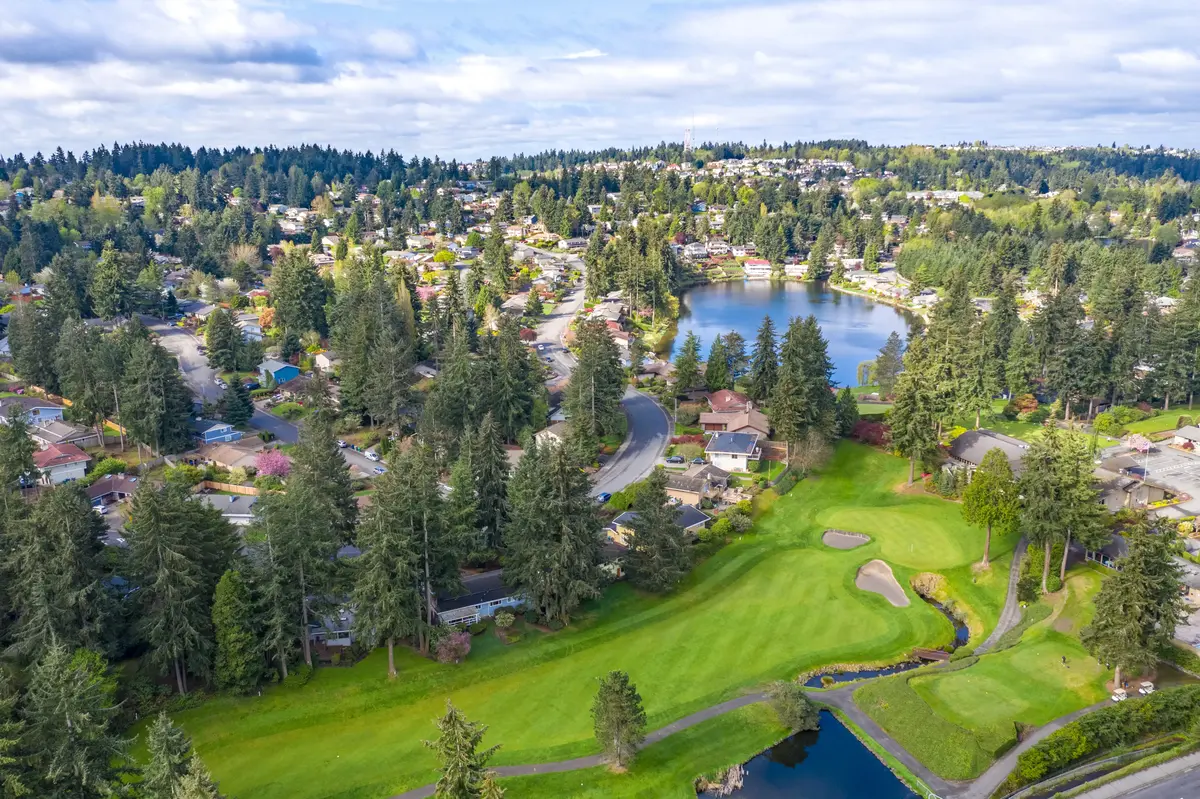
On a fixed income, the cost picture here is meaningfully more comfortable than Seattle's inner suburbs, though it's not cheap by national standards. Washington collects no personal income tax, which means your Social Security check, pension, and IRA withdrawals are entirely untaxed at the state level. The effective property tax rate sits at approximately 0.83%, and seniors 61 and older may qualify for the state's assessed-value freeze program. Day-to-day expenses — groceries, dining, transit — land close to the broader Seattle-metro average, though Federal Way's maturing local dining scene, with new independently owned spots opening throughout 2025, adds real options for retirees eating out on a budget.
Whether you're comparing Federal Way to Tacoma, weighing a condo near the transit center against a single-level home in Steel Lake, or simply trying to understand what the healthcare situation really looks like without a car, the sections below walk through every dimension of retirement here: healthcare access, the retiree budget, walkability, downsizing inventory, and how Federal Way stacks up against the other nearby cities most often on retirees' lists.
Why Retirees Are Choosing Federal Way
Federal Way earns its place on retirees' lists for three reasons that hold up under scrutiny: a full-service hospital inside city limits, a state tax structure that effectively exempts nearly all retirement income, and a light-rail connection that opened in December 2025 and changed the math on car-free retirement living in the region.
The retiree who fits Federal Way best is someone who wants genuine urban access — real medical infrastructure, real transit, real cultural programming at the Performing Arts & Event Center — without paying Seattle or Eastside prices to get it. The typical home price of $564,681 (Zillow Home Value Index, June 2026) puts entry into the market within reach of buyers downsizing from a paid-off suburban home elsewhere in King County. Retirees who value diversity in their community will also feel at home here; Federal Way's mix of cultures, languages, and cuisines is one of the most pronounced of any city its size in the state.
The honest counterpoint: Federal Way is not a walkable retirement village. Errands without a car are possible near the City Center but genuinely difficult in most residential neighborhoods. Crime rates are higher than in quieter exurban alternatives like Milton or Edgewood, and the city's commercial corridors along Pacific Highway South prioritize cars — a real quality-of-life factor for retirees who plan to scale back driving. For that buyer, a smaller neighboring city may be a better call, and the comparison section below walks through the trade-offs city by city.
Healthcare & Medical Access in Federal Way
St. Francis Hospital — The Anchor
St. Francis Hospital, part of Virginia Mason Franciscan Health, sits at 34515 9th Avenue South — inside Federal Way city limits, not a drive to the next town. It offers 24/7 emergency care, diagnostic imaging, a dedicated Franciscan Breast Center, cancer care, and radiation oncology. It carries accreditation as both a Heart Failure Center and a Bariatric Surgery Center of Excellence, which matters more than it might sound: heart failure management and monitoring is among the most common ongoing needs for retirees, and having that specialty accreditation in-city rather than at a regional center 20 miles away is a concrete advantage.
Beyond the Hospital
Kaiser Permanente's Federal Way Medical Center handles primary care and specialty services Monday through Friday, providing a serious in-network alternative for Kaiser members who don't need the ER. Pacific Medical Centers operates an additional clinic at 31833 Gateway Center Blvd S. Between the hospital, Kaiser, and Pacific Medical, most routine and intermediate care needs can be met without leaving Federal Way.
The Advanced-Care Reality
Where the picture gets honest: highly specialized care — major cardiac surgery, advanced neurosurgery, Level I trauma — means a drive north to Seattle or south to Tacoma. Seattle's major medical centers are roughly 30–35 minutes on a good day; with traffic, plan for more. For retirees with a known complex condition requiring frequent specialist visits at a quaternary-care center, that commute is worth pricing into the decision before you buy.
King County's Volunteer Transportation Service helps seniors 60 and older reach medical appointments within King County using volunteer drivers — a practical safety net for retirees who can no longer drive themselves. The light rail connection to SeaTac and downtown Seattle, which opened December 6, 2025, also puts Seattle-area specialty hospitals within reach without requiring a car or a ride-share during peak traffic.
The Retiree Budget in Federal Way
Washington's Tax Advantage Is Real
Washington collects no personal income tax. That means your Social Security benefit, your pension, your IRA or 401(k) distributions — none of it generates a state tax filing, let alone a state tax bill. You do not file a Washington state income tax return as a retiree. For someone moving from California, Oregon, or any other income-taxing state, the first January here produces a genuinely different financial picture.
Washington did add a 7% capital gains tax, but it exempts all transactions through retirement accounts — 401(k)s, IRAs, Roth IRAs, defined-benefit plans — and applies only to gains above a $278,000 annual deduction (inflation-adjusted). The overwhelming majority of retirees drawing down existing retirement accounts will never touch this tax.
Property Tax: The Rate and the Relief
The effective property tax rate in Federal Way is approximately 0.83% — moderate for a King County city, though King County assessments can be aggressive in rising markets. Washington's senior exemption program, available to homeowners 61 or older, can freeze your home's assessed value and provide partial exemptions or deferrals depending on income. The program runs on three income tiers for 2026, with the deepest relief for lower-income seniors. If you're purchasing near retirement, it's worth registering for this program with the King County Assessor's office as soon as you qualify — the savings compound over time and the freeze protects you from assessment increases in a rising market.
Day-to-Day on a Fixed Income
Groceries, utilities, and basic services in Federal Way track close to the broader Seattle-metro average — noticeably above the national median, but meaningfully below what you'd pay in Bellevue or the closer-in Seattle suburbs. The dining scene expanded in 2025, with new independently owned restaurants including Jack's BBQ, Aji Koharu Sushi and Grill, and the café Nón Lá opening alongside veterans like Jimmy Mac's Roadhouse on Pacific Highway South. Eating out regularly on a fixed income is genuinely viable here in a way it isn't in some nearby communities with thinner local options. For a full breakdown of Federal Way's cost of living, see the cost of living page.
Looking to buy in Federal Way? Estimate your payment.
Enter your numbers to see an estimated monthly mortgage payment.
Estimate only. Excludes HOA fees and mortgage insurance.
Walkability, Community & Staying Active in Federal Way
The Walkability Reality
Federal Way is a car-dependent city by most measures — and retirees planning to give up one car or both should understand exactly where that works and where it doesn't. The City Center area, anchored by the Federal Way Downtown light rail station at 23rd Avenue South, is the strongest zone for on-foot access. The station opened December 6, 2025, and is served by 16 bus routes and 1,524 parking spaces, making it a genuine multimodal hub. The City Center Access Project received federal environmental approval in September 2025 and is advancing plans to improve pedestrian connectivity between the station and surrounding blocks — progress that's still in the future, not yet finished.
Neighborhoods like Twin Lakes and Steel Lake are pleasant for walking but require a car for grocery runs. Dash Point and Redondo, near the water, offer beautiful walking terrain along the shoreline but have almost no walkable retail. If car-free daily errands are a priority, buy near the City Center — not in the quieter residential pockets that give Federal Way much of its appeal.
Senior Programs and Community Life
The City of Federal Way's Senior Advisory Commission publishes an annual Senior Resource Guide that consolidates transportation assistance, meal programs, housing resources, and social programming in one place — a genuinely useful document that newer residents often don't know to ask for. King County's Volunteer Transportation Service (VTS) connects seniors 60 and older with volunteer drivers for medical appointments across the county, which fills a real gap for retirees who've stopped driving.
Federal Way's diversity is one of its most underrated social assets in retirement. The city's faith communities, cultural organizations, and community centers draw retirees into genuine social networks across backgrounds and languages — less common in the more homogeneous suburbs to the east and south. The Rhododendron Species Botanical Garden and PowellsWood Garden give nature-oriented retirees two genuinely world-class green spaces within the city. Dash Point State Park offers miles of forested trails and saltwater shoreline for active retirees who want more than a neighborhood walk.
What Surprises People After Six Months
Retirees who moved here expecting a quiet, small-town feel are often caught off guard by the pace and density of the City Center corridor. Federal Way is a real city of 100,000 people, not a sleepy town. The upside of that size is real cultural programming, real medical infrastructure, and real transit — but the trade-off is that the quieter retirement lifestyle many people picture requires deliberate neighborhood selection, not just a Federal Way zip code.
Right-Sizing: Downsizing in Federal Way
What the Market Actually Offers
Federal Way's housing stock skews toward single-family homes from the 1970s through 1990s, which means there's a reasonable supply of ranchers and single-level homes — the most practical format for aging in place — in neighborhoods like Steel Lake, Lakota, and parts of Twin Lakes. These older homes often need updating, but they sit on generous lots and tend to price below newer construction elsewhere in King County. For buyers downsizing from a larger two-story home, the single-level inventory here is more accessible than in many Seattle-adjacent cities.
Condos and Attached Housing
Condo and townhome inventory in Federal Way is concentrated near the City Center and along the Pacific Highway corridor. This is where the transit access, walkable retail, and proximity to St. Francis Hospital combine most usefully for a retiree who wants to reduce home maintenance without sacrificing convenience. Inventory in this segment is tighter than in the single-family market, and competition can be real for well-priced, well-maintained units. Buyers who need to move quickly after selling a larger home should have financing lined up before they start looking seriously.
Senior-Specific Housing
Senior City Apartments, adjacent to the Federal Way Transit Center, provides energy-efficient housing for seniors within walking distance of transit and services — a rare purpose-built option in the immediate city. Sound Transit and the City of Federal Way issued a Notice of Intent to Award in December 2025 for approximately 230 units of affordable mixed-income housing on surplus land next to the light rail station, though those units are in the planning and development pipeline rather than available today.
For retirees seeking a formal 55+ or active-adult community with amenity programming, Federal Way's in-city options are limited. The stronger inventory of dedicated active-adult communities is in Auburn and the broader Pierce County market — a real gap that pushes some buyers to look just outside city limits. If a structured 55+ community is the priority, plan to cast a wider net than Federal Way alone.
The Downsizing Decision
One practical note that catches people off guard: Federal Way's older housing stock means inspection surprises are common. Buyers downsizing on a fixed budget who stretch to their ceiling price leave themselves no cushion for deferred maintenance on a 1980s rancher. The most common mistake retiring buyers make here is underestimating the true cost of buying an older home at market price and then absorbing an unexpected roof, HVAC, or electrical update in year one.
Federal Way vs Nearby Retirement Destinations
| City | Cost vs Federal Way | Primary Hospital | Walkability | Senior Living Depth | Overall Retirement Fit |
|---|---|---|---|---|---|
| Federal Way | Anchor | St. Francis Hospital (VMFH) — full-service, in-city | Fair; best near City Center light rail station | Moderate; Senior City Apts + pipeline development | Transit Value Best for transit-oriented, healthcare-conscious retirees |
| Tacoma | Noticeably cheaper | A major regional health system with broad specialty depth | Better; walkable neighborhoods in the urban core | Strong; broader range of senior communities and assisted living | Walkable Value Best for retirees prioritizing budget and urban amenities |
| Auburn | About the same | A regional medical center serving the valley | Limited; car-dependent suburban layout | Good; stronger 55+ community inventory than Federal Way | Quiet Families Best for buyers seeking a formal active-adult community |
| Des Moines | About the same | Relies on St. Francis (Federal Way) or Seattle facilities | Fair; walkable along the marina but limited elsewhere | Limited; smaller city with fewer dedicated senior options | Nature Views Best for waterfront lifestyle seekers with a car |
| Kent | Slightly cheaper | A regional medical center affiliated with a university health system | Limited; strip-mall suburban core | Moderate; reasonable senior housing supply | Value Commuter Best for cost-focused retirees still working part-time |
| Milton / Edgewood | Slightly cheaper to about the same | No in-city hospital; relies on Tacoma or Federal Way | Low; quiet residential, minimal retail access on foot | Limited; smaller inventory, more rural character | Quiet Privacy Best for retirees who want peace, space, and don't mind driving |
Tacoma is the strongest challenger to Federal Way on pure retirement fundamentals: lower costs across the board, a major regional health system with deeper specialty depth than St. Francis, better walkability in its urban core, and a deeper inventory of senior living options. If budget is the primary driver and you're comfortable in a larger city, Tacoma often wins outright.
Auburn edges ahead of Federal Way specifically on 55+ community inventory — the formal active-adult developments with clubhouses and amenity programming are more plentiful there, making it the better call for retirees who want that structure. Des Moines offers something Federal Way can't match on pure lifestyle terms: genuine waterfront character along its marina, with a slower pace suited to retirees who want scenery over infrastructure. The catch is that Des Moines has no in-city hospital, so any serious medical need sends you back to Federal Way or into Seattle.
Kent is the value option for a retiree still working part-time who needs commuter rail access and wants to stay in King County without paying Federal Way prices. Milton and Edgewood suit a specific buyer: someone who wants a quiet, semi-rural quality of life, doesn't mind driving for everything, and values privacy over proximity. Federal Way itself wins on the combination of in-city hospital access, new light rail, Washington's tax advantages, and a price point that still leaves room to right-size — a combination no single nearby city fully replicates.

Local Expert Takeaway: Federal Way's retirement case rests on three things that genuinely coexist here and rarely do elsewhere in the region at this price point: St. Francis Hospital inside city limits, a light rail connection to Seattle and SeaTac that opened in December 2025, and Washington's zero-income-tax environment that leaves your Social Security and pension untouched. The Senior Advisory Commission's resource guide is the first thing to request when you arrive — it maps transportation assistance, meal programs, and social services that most newcomers don't know exist. Buy near the City Center if you want to reduce driving; buy in Twin Lakes or Steel Lake if you want a quieter single-level home and don't mind the car dependency. The retirees who struggle here most are those who expected Tacoma's walkability or Auburn's 55+ community depth at Federal Way prices — the city is its own thing, and it rewards buyers who understand that going in.
Quick Takeaways & FAQs
✅ Washington's zero state income tax means Social Security, pensions, and IRA withdrawals are entirely exempt — retirees don't even file a state return.
⚠️ Federal Way is car-dependent in most neighborhoods; the City Center near the new light rail station is the exception, not the rule.
📍 St. Francis Hospital at 34515 9th Avenue South is a full-service, accredited Heart Failure Center inside city limits — a rare advantage at this price point in the region.
Is Federal Way a good place to retire on a fixed income?
Does Federal Way have a good hospital for retirees?
Can I get around Federal Way without a car as a retiree?
Are there 55+ or active-adult communities in Federal Way?
How does retiring in Federal Way compare to retiring in Tacoma?
Moving to Washington?
Tell us what you need help with and we'll connect you with local resources.
