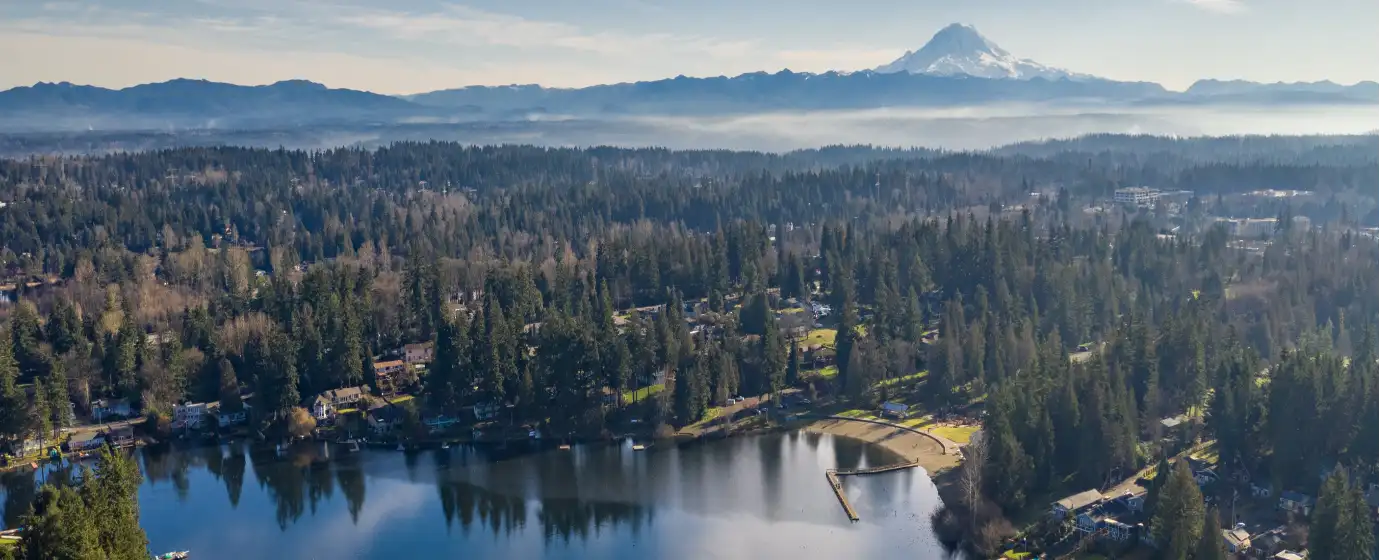
If you're choosing between staying in California and relocating to Federal Way, the decision usually comes down to one concrete question: how much of your paycheck are you willing to hand to Sacramento every April? Washington levies zero state income tax on wages — none — and Federal Way sits 35 minutes south of Seattle with a brand-new Link light rail connection that opened in December 2025. That combination has been pulling Californians north steadily enough that the city's food scene, its City Center redevelopment, and its housing market are all visibly responding to the influx.
Federal Way's economy is anchored by names you may not associate with a suburb: Weyerhaeuser's global forest-products headquarters, World Vision U.S.'s international nonprofit campus, and Amazon logistics operations all call this city home, alongside Federal Way Public Schools as one of the larger institutional employers in King County's south end. The median household income sits at $86,909 — a working-class-to-middle-professional range that reflects a genuinely mixed city of 100,000 people, not a manicured bedroom community. Federal Way Public Schools holds a B- rating, according to Niche; it serves a diverse student body across a wide geographic spread, and like any district of its size, quality varies meaningfully by school.
On price, Federal Way operates in a different register than most of coastal California. The Zillow Home Value Index pegs the typical home value at $564,681 (June 2026) — noticeably below the California statewide median. What you give up in California sunshine you recover in purchasing power, a no-income-tax paycheck, and access to Dash Point State Park's saltwater beach and old-growth forest without getting in a car for two hours. Routine healthcare costs run below what most Californians pay in premiums, though you will drive farther for specialist care than you would in a major metro like Los Angeles or San Francisco. For a fuller look at day-to-day expenses, see the Federal Way cost of living page.
Whether you're being relocated by an employer, priced out of the Bay Area, or simply done paying California income tax, the sections below break down the state-by-state tax comparison, what your housing dollar actually buys here, the lifestyle adjustments Californians consistently underestimate, what's changing at City Center, and the honest reasons some people move back.
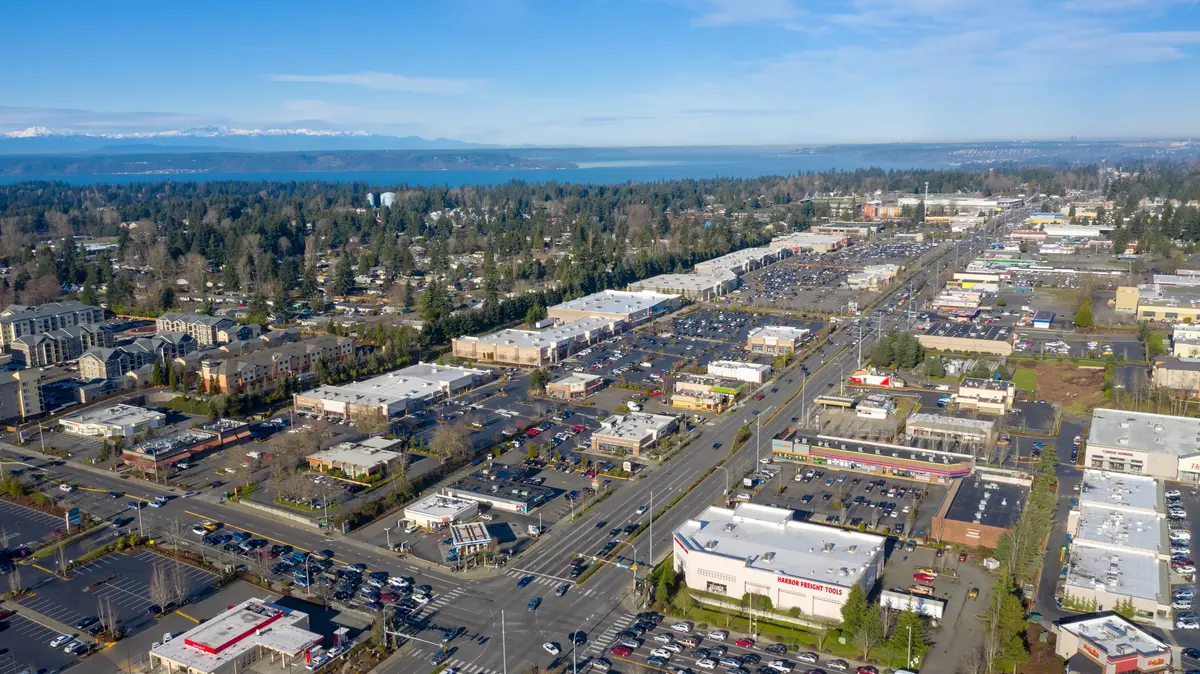
The Tax Math: What Washington Actually Puts Back in Your Pocket
The headline is real: Washington has no state income tax on wages or salaries. Zero. For most earners, moving from California to Federal Way is an immediate, recurring raise that shows up every pay period.
The Income Tax Gap
California's progressive income tax reaches 13.3% at the top bracket — and that's before the additional 1% Mental Health Services Tax on income above $1 million. A Californian earning $100,000 annually saves an estimated $5,762 per year in state income tax by moving to Washington. At $150,000, that figure climbs substantially higher.
One caveat for very high earners: Washington Governor Ferguson signed legislation in March 2026 imposing a 9.9% income tax on household income above $1 million, effective January 1, 2028. If your household clears that threshold, run the updated numbers. If you don't, this change is essentially irrelevant to your move.
Sales Tax: The Trade-Off
Washington makes up some of that income tax revenue through sales tax. Federal Way's combined rate is 10.4% (Q3 2026) — higher than California's 7.25% statewide base, though California localities frequently push their own combined rates well above that floor.
The practical offset: Washington exempts groceries and prescription medicine from sales tax entirely. If you spend $800 a month on food, that exemption puts real money back compared to California's full-rate treatment of many food items. Prepared food, clothing, and general merchandise are taxed in full at 10.4%.
Property Tax: Closer Than You'd Expect — With One Major Difference
| Tax Type | Federal Way / Washington | California (statewide typical) |
|---|---|---|
| State income tax (wages) | 0% (below $1M threshold) | 1%–13.3% progressive |
| Income tax — $100K earner | $0 | ~$5,762 more per year |
| Effective property tax rate | 0.83% | ~0.76% (typical effective rate) |
| Prop 13 assessment cap | None — assessed at market value | Yes — protects long-term owners |
| Sales tax — general | 10.4% (Federal Way combined) | 7.25% base (locals vary higher) |
| Sales tax — groceries | Exempt | Taxed (most items) |
| Sales tax — prescriptions | Exempt | Exempt |
The property tax rates between the two states are actually close. The critical difference is structural: California's Proposition 13 caps annual assessment increases for existing owners, meaning a neighbor who bought in 2003 may pay a fraction of what a 2026 buyer pays. Washington has no equivalent protection — your assessment moves with the market. If you're buying rather than inheriting a longtime owner's basis, this distinction matters less on day one, but it changes your long-term cost trajectory.
Home Prices: What the California-to-Federal Way Dollar Difference Looks Like in Practice
Federal Way's typical home value is $564,681 (Zillow Home Value Index, June 2026). The California statewide median runs roughly $220,000 higher — and that statewide figure masks Bay Area and Los Angeles numbers that are dramatically above it.
What That Gap Buys
In practical terms: a budget that puts you in a two-bedroom condo in a mid-tier California market can get you a three-bedroom single-family house in Federal Way — with a yard, a garage, and a commute that uses a light rail line instead of a freeway. That's not marketing language; it's the direct arithmetic of the price gap between the two markets.
The catch is that Federal Way is not a uniform market. Areas closest to Dash Point State Park and the Puget Sound waterfront command noticeably higher prices than inland neighborhoods. For a detailed breakdown of which parts of the city trade at which price levels, the Federal Way neighborhoods guide covers the full picture.
Californians and the Federal Way Buyer Pool
California equity buyers — people selling a home in the Bay Area or Southern California and arriving with substantial cash — have measurable purchasing power in this market. Arriving with a large down payment from a California sale can position you to move quickly on well-priced inventory, which tends to move in days, not weeks, in Federal Way's most desirable areas.
What surprises many California arrivals in month three: they expected a sleepy suburb and got a genuinely diverse mid-size city. Federal Way is one of the most ethnically diverse cities in Washington, with immigrant communities from across multiple continents, a Vietnamese business corridor, and a food scene that has been expanding aggressively — the city logged more than 5,000 active business licenses in early 2026 and saw a wave of new locally-owned restaurants open in 2025 alone. You can grab bánh mì and Vietnamese coffee at Nón Lá on 21st Ave SW or pull up to Onit Cafe on S 320th St on a weekend morning and find it full of regulars who moved here from three different countries. This is not what people expect when they hear "Federal Way."
Development Underway Near Light Rail
The City Council approved a development agreement in 2026 for the TC-3 site — a former retail parcel in City Center — that could bring up to 1,600 homes and significant commercial space near the Federal Way Downtown Station. Sound Transit is also developing approximately 230 units of affordable housing on surplus land adjacent to that same station, with groundbreaking targeted for 2028. Buying near City Center now means buying into a neighborhood that will look materially different in five years.
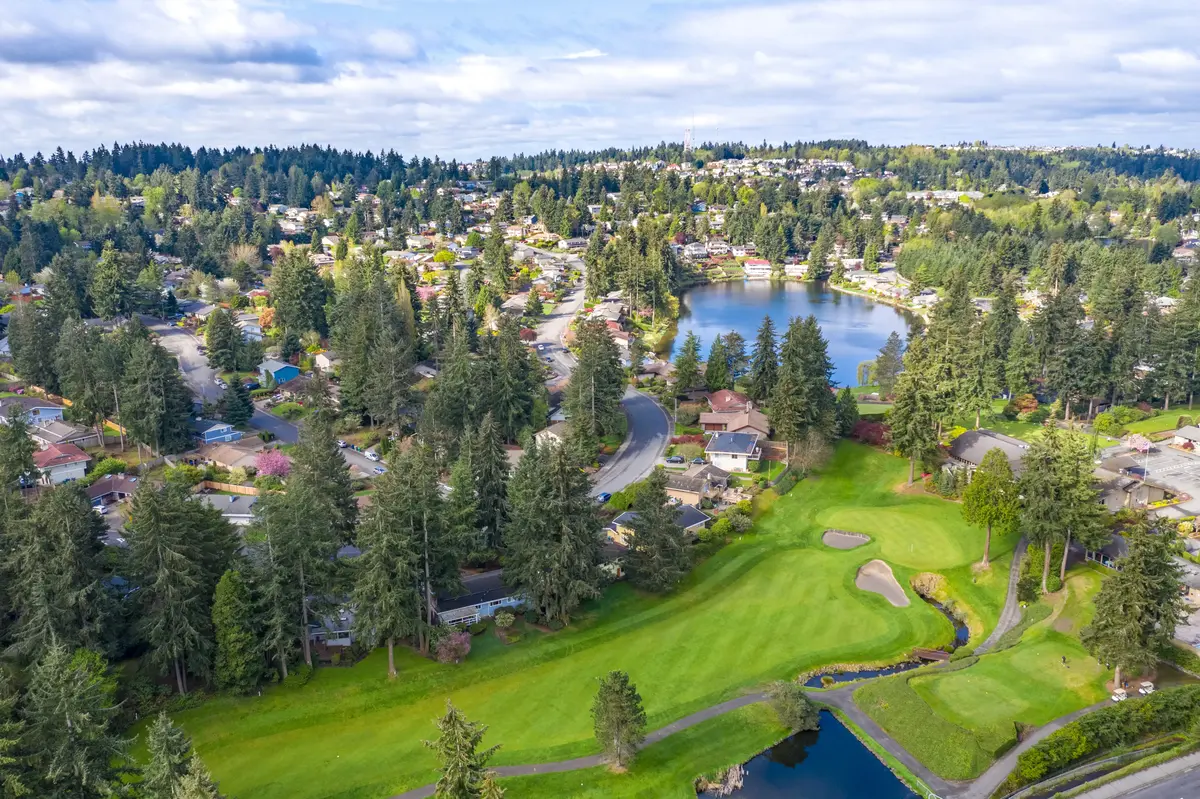
The Lifestyle Adjustment: What California Didn't Prepare You For
Los Angeles costs roughly 31% more than Federal Way across all spending categories. That gap is real and immediate. What the spreadsheet doesn't capture is the texture of daily life — the ways Federal Way is genuinely different from any California city, for better and worse.
Weather Is Not a Minor Detail
Californians consistently underestimate how much the Pacific Northwest grey season costs them psychologically. Federal Way receives around 37 inches of rain annually — not Seattle's dramatic reputation, but real, sustained overcast that runs from October through March. It is not the torrential rain Californians imagine; it is relentless low-grade drizzle and cloud cover. By February, Californians who moved for financial reasons and didn't mentally prepare for the light change are the ones searching Zillow for homes back in Sacramento.
The summer payoff is legitimate. June through September delivers long days, low humidity, and temperatures that rarely break 85°F. Dash Point State Park — with its Puget Sound beach and old-growth forest — is genuinely extraordinary on a clear July day in a way that no California suburb can match without a multi-hour drive.
What "Walkability" Means Here
Federal Way was built for cars. The Pacific Highway corridor and Military Road are not pedestrian environments. If you're arriving from a San Francisco neighborhood or a dense LA pocket where you walked to a coffee shop and a grocery store, Federal Way's on-foot access will feel limited unless you're specifically close to City Center or a commercial node. The Federal Way Farmers Market now anchors South 316th Street near the Performing Arts & Event Center and Town Square Park — that area is evolving toward something more walkable. But it is not there yet.
The light rail connection to Seattle that opened in December 2025 changes the commuting calculus dramatically. Federal Way Downtown Station is currently the southern terminus of the Link line, meaning you can park or walk to the station and ride directly toward downtown Seattle without touching Interstate 5. For Californians accustomed to soul-crushing highway commutes, this is not a small thing.
Where Families Actually Gather
Weekend life for families with kids tends to cluster around Steel Lake Park, the Rhododendron Species Botanical Garden (which surprises visitors every spring), and the seasonal farmers market. The Federal Way Performing Arts & Event Center hosts a genuine performing arts calendar that punches above the city's suburban reputation. PowellsWood Garden draws serious horticulture enthusiasts and casual walkers alike. These are not consolation prizes — they are legitimately good amenities for a city this size. What Federal Way doesn't have is the density of independent retail and nightlife that California transplants from urban neighborhoods often miss most.
Looking to buy in Federal Way? Estimate your payment.
Enter your numbers to see an estimated monthly mortgage payment.
Estimate only. Excludes HOA fees and mortgage insurance. The interest rate above is a starting point, not a quoted rate — replace it with your own to see real numbers. Insurance is a flat placeholder, not a Federal Way quote.
The Full Cost Comparison: California vs. Federal Way Side by Side
Running the full household budget comparison requires honesty about what Federal Way wins on, where it's comparable, and where California — specifically a California city you're leaving — might actually have it cheaper on specific line items.
| Category | Federal Way, WA | California (typical) | Verdict |
|---|---|---|---|
| State income tax | 0% on wages | 1%–13.3% progressive | WA wins significantly |
| Typical home price | $564,681 (ZHVI, June 2026) | ~$785,000 statewide median | WA wins significantly |
| Effective property tax rate | 0.83% | ~0.76% typical effective | Comparable — CA has Prop 13 cap advantage for long-term owners |
| Sales tax — general | 10.4% combined | 7.25%+ (varies by city) | CA wins or ties depending on locale |
| Groceries | Sales-tax exempt | Taxed (many items) | WA wins on food purchases |
| Overall cost of living | Index ~134 (national avg = 100) | LA index ~175 (est.) | WA wins vs. major CA metros |
| Health insurance premiums | Noticeably below CA average | Among highest in nation | WA wins on routine coverage costs |
Health insurance premiums run noticeably below what most Californians pay, though you will drive farther for specialist care than you would in a major California metro. This is the honest trade-off on that line item — better monthly cost, fewer options nearby for complex needs.
* ZHVI = Zillow Home Value Index.
The High-Earner Calculation Is Changing
For households below $1 million in annual income, the Washington advantage is straightforward: you pay no state income tax, period, through at least 2027. The 9.9% rate on income above $1 million that takes effect in January 2028 narrowed the gap for very high earners — but at $100,000 of annual income, the estimated savings of $5,762 per year in state income tax alone still clears a meaningful portion of a year's groceries. Stack that against a home purchase noticeably below California's median, and the financial case for the move holds up.
Why People Move Back — and Why Most Don't
Relocation is not a one-way door, and Federal Way earns its share of return trips to California. Being honest about this is more useful than pretending the move is obviously right for everyone.
The Reasons People Leave
The grey season is the most commonly cited. Californians who moved primarily for financial reasons — and who didn't love the outdoors in ways that reward wet-weather activity — often find the November-to-March stretch genuinely depressing in a way they didn't predict from a house-hunting trip in May. If your quality of life is heavily tied to outdoor dining, dry evenings, and consistent sunshine, no income tax advantage fully compensates for losing that.
The second reason: Federal Way's urban core is still a work in progress. If you moved from a California neighborhood with a walkable main street, weekend farmers markets at the center of things, and a density of independent shops, you will feel the absence. City Center is improving — the farmers market relocation to the South 316th Street corridor near Town Square Park is real momentum — but honest people admit it has a way to go. Buying near City Center right now is a bet on a five-year trajectory, not a move into something finished.
The third reason, and the one nobody mentions in planning conversations: Washington would not be a right fit if your extended family is still in California and you have school-age kids. The distance is real. A long weekend in Sacramento requires either a flight or a 12-hour drive. Families who underestimated that friction are often the ones who go back.
Why Most Stay
The financial math compounds. In year one, you save the income tax. In year three, you notice your mortgage on a home well below California's median is manageable in ways you hadn't expected. In year five, you've built equity in a market that is actively redeveloping its downtown around a light rail station, and the summers — long, green, mild — have converted you. The Puget Sound doesn't look like the Pacific Coast Highway, but Redondo Beach's pier and the saltwater access at Dash Point carry their own pull after you've lived here a while. Most people who survive the first winter stay.
For a realistic look at who Federal Way suits best and what daily life here actually involves, that hub covers the full picture — employer landscape, commute patterns, and the buyer types who consistently report being glad they made the move.

Local Expert Takeaway: The income tax savings are real and immediate — a household earning $100,000 keeps an estimated $5,762 more per year from day one. But the move succeeds or fails on lifestyle fit, not spreadsheets. Californians who love outdoor access, don't need a walkable urban core right now, and can tolerate six months of grey skies tend to stay and build equity in a market with genuine development momentum around the new Federal Way Downtown light rail station. Those who moved purely for the tax math and weren't prepared for Pacific Northwest winters are frequently the ones searching for return flights to Sacramento by February.
Quick Takeaways & FAQs
✅ Washington's zero state income tax on wages saves a $100,000-a-year earner an estimated $5,762 annually compared to California — an immediate, recurring financial advantage that compounds over time.
⚠️ Federal Way's 10.4% combined sales tax rate is noticeably higher than California's 7.25% base, and the grey season from October through March catches Californians off guard more than any other factor — budget for both before you commit.
📍 The Federal Way Downtown Link light rail station opened in December 2025 as the current southern terminus of the line, giving residents a direct rail connection toward Seattle without touching Interstate 5 — a genuinely new commuting option that didn't exist until six months ago.
Do I really pay zero income tax if I move from California to Federal Way?
How do home prices in Federal Way compare to what I'm leaving in California?
Is Federal Way's sales tax higher than California's?
What's the property tax situation — and does Prop 13 matter for someone moving from California?
What do most Californians underestimate about moving to Federal Way?
Moving to Washington?
Tell us what you need help with and we'll connect you with local resources.
