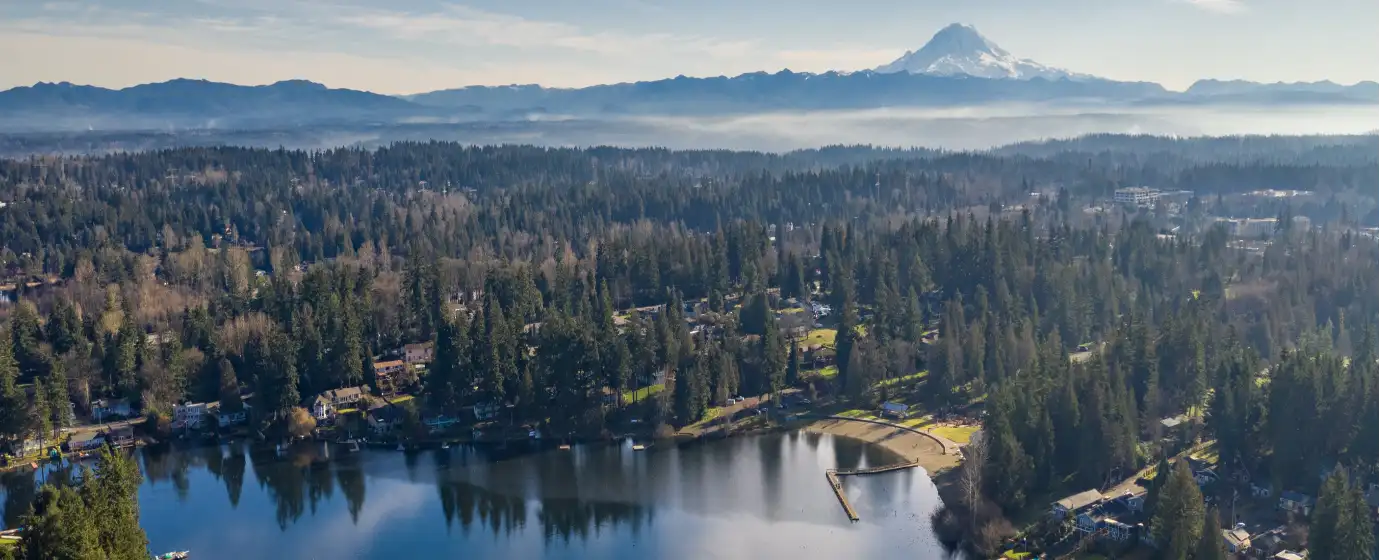
Federal Way has a reputation problem that the map doesn't support. Most newcomers hear "suburb between Seattle and Tacoma" and picture a flat, featureless grid of big-box retail. Then they drive the western edge — past Puget Sound bluffs in Redondo, through the golf-course canopy of Twin Lakes, down to the beachfront at Dash Point State Park — and realize this is not that city. The real Federal Way sits along I-5 and SR-99 (Pacific Highway South), about 35 minutes south of downtown Seattle, and its geography splits the city into two distinct residential experiences: a westside that feels quietly Pacific Northwest and a central and eastern side that trades scenery for affordability and transit access.
Federal Way Public Schools serves the entire city — the district holds a B- rating, according to Niche, and includes schools ranging from genuinely strong performers to others where boundary choice matters considerably. The city's employment base is anchored by Weyerhaeuser's global headquarters, World Vision U.S., Amazon logistics, and Totem Ocean Trailer Express, plus the school district itself as a major public employer. That mix draws professionals who want Puget Sound access without King County's steepest prices, along with families priced out of Bellevue, Renton, and Des Moines to the north. The citywide typical home value sits at $564,681 (Zillow Home Value Index, June 2026) — noticeably below the Seattle metro median — and that gap is the single most powerful argument for choosing Federal Way over its neighbors.
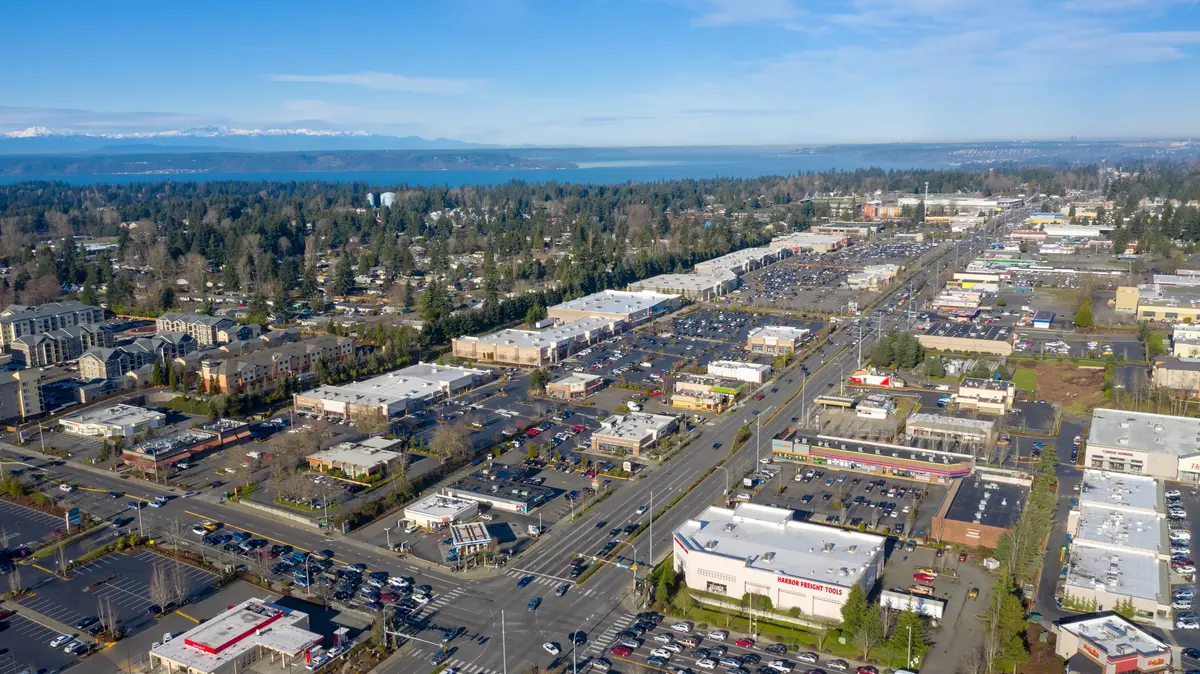
Day-to-day life revolves around SR-99, Federal Way's commercial spine, which has the full suburban retail infrastructure — grocery anchors, national chains, the Federal Way Performing Arts & Event Center — plus a growing set of independent restaurants and cafés filling in around them. Outdoor access is genuinely exceptional for a city this size: Dash Point State Park alone offers 461 acres of Puget Sound shoreline, over 10 miles of trails, and 141 campsites essentially inside city limits. The December 2025 opening of the Sound Transit Link light rail station at Federal Way Downtown changed the commuter calculus significantly, making the neighborhoods closest to that station worth a second look even for buyers who previously dismissed the area as too transit-dependent. For an overview of who thrives here and what daily commuting life actually looks like, that page goes deeper.
Whether you're weighing this city against Auburn to the east or Des Moines to the north, the sections below break down Federal Way's neighborhoods by price, character, and buyer type — covering the geographic divide that shapes every purchase decision, an honest at-a-glance comparison table, common mistakes buyers make, and where renters get the most for their money.
The Federal Way Reality
The West-vs-East Divide Nobody Warns You About
The single most important thing to understand before buying in Federal Way is that SR-99 — Pacific Highway South — is not just a commercial corridor. It is a psychological and practical boundary. On the western side, toward Puget Sound, neighborhoods like Twin Lakes, Redondo, Dash Point, and Lakota sit on bluffs, around lakes, and along the Sound's edge. Streets are quieter, lots are larger, tree canopy is heavier, and prices reflect all of it. On the central and eastern side of SR-99, the character shifts: denser, more affordable, more walkable to transit and retail, and considerably more varied in quality block by block.
The School Boundary Layer
Federal Way Public Schools covers the whole city, but attendance boundaries matter more here than the district rating alone suggests. Specific elementary school assignments vary by address, and a two-block difference can put two neighboring homes in meaningfully different feeder patterns for middle and high school. The schools page covers attendance boundaries and individual campus performance in detail — do not rely on a neighborhood's general reputation when you can look up the specific address.
What the Light Rail Changes
The December 2025 opening of the Federal Way Downtown Link light rail station rewired which neighborhoods carry a commuter premium. Steel Lake, directly adjacent to the Federal Way Transit Center, was already well-positioned — it is now genuinely rail-connected to SeaTac and downtown Seattle. City Center buyers who previously had no transit argument now have one. For westsiders in Twin Lakes or Dash Point, the station is a 10-to-15-minute drive, which shifts their commute calculus but does not transform it.
Neighborhoods at a Glance
| Neighborhood | Best For | Price Range | Vibe |
|---|---|---|---|
| Twin Lakes | Luxury Families | $600,000–$750,000 | Golf course community, three man-made lakes, mature 1970s–80s homes |
| Steel Lake | Commuter First-Time | $470,000–$600,000 | Central, park-adjacent, strong transit access via light rail |
| Redondo | Views Nature | $580,000–$700,000 | Puget Sound waterfront edge, bluff homes, small-beach character |
| Dash Point | Privacy Nature | $600,000–$750,000 | Wooded, state-park adjacent, quiet streets, some Sound views |
| Lakota | Families Quiet | $520,000–$640,000 | Established westside residential, near Lakota Park, low traffic |
| Woodmont | Views Renter | $560,000–$680,000 | Waterfront-adjacent, bluff access, mixed housing stock |
| Lakeland | Families School | $490,000–$620,000 | Newer planned community feel, cul-de-sacs, good school access |
| Federal Way City Center | Walkable Transit | $430,000–$560,000 | Most urban part of the city, light rail connected, actively redeveloping |
Price ranges reflect approximate listing activity as of mid-2026 and are used consistently throughout this guide.
Best Neighborhood by Buyer Type
| Buyer Type | Best Neighborhood | Why |
|---|---|---|
| First-Time Buyer | Steel Lake | Entry prices from $470,000 get you into a park-adjacent neighborhood with light rail access already built in. |
| Luxury Buyer | Twin Lakes | The private 18-hole course, the three lakes, and the established tree canopy create the closest thing Federal Way has to a prestige address. |
| Walkability Seeker | Federal Way City Center | Town Square Park, the Performing Arts & Event Center, and the light rail station are all within a walkable radius — no other neighborhood in the city comes close. |
| Families with Kids | Lakeland | Newer construction, quieter cul-de-sac streets, and some of the more consistent elementary school assignments in the district make this the go-to for parents with school-age children. |
| Commuters | Steel Lake | The Federal Way Transit Center — and the December 2025 Link light rail connection to SeaTac and Seattle — is essentially in the neighborhood's backyard. |
| Large-Lot Buyers | Dash Point | Wooded lots adjacent to Dash Point State Park's 461 acres give you the breathing room and privacy that nowhere else in Federal Way can match at this price. |
| Renters | Federal Way City Center | The highest concentration of rental inventory in the city, with the most competitive rates and the best transit connectivity for car-free commuters. |
Looking to buy in Federal Way? Estimate your payment.
Enter your numbers to see an estimated monthly mortgage payment.
Estimate only. Excludes HOA fees and mortgage insurance. The interest rate above is a starting point, not a quoted rate — replace it with your own to see real numbers. Insurance is a flat placeholder, not a Federal Way quote.
Most Popular Neighborhoods in Federal Way
1. Twin Lakes
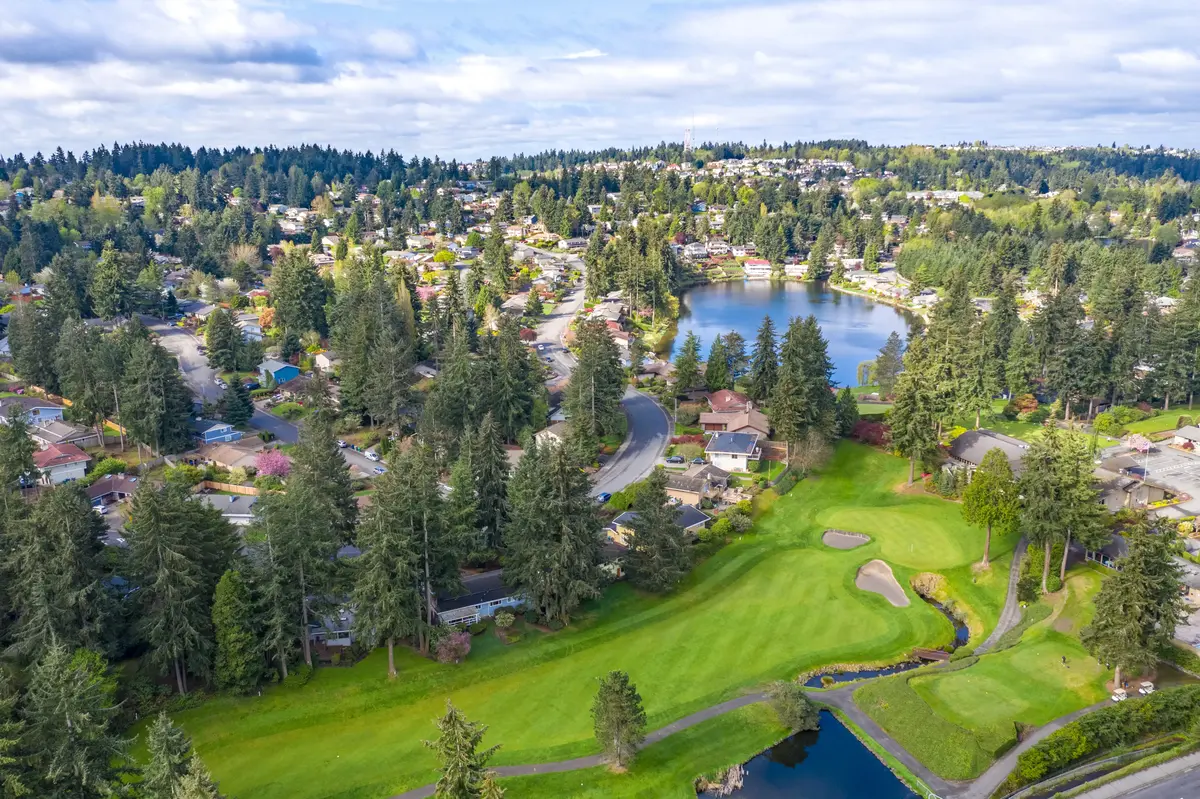
Twin Lakes is Federal Way's most recognizable prestige address — a golf course community built around three man-made lakes and a private 18-hole course, with most homes dating from the 1970s and 1980s. The tree canopy is mature and the streets are quiet, but buyers need to know that many homes have deferred the updates that decades-old construction eventually demands. Expect prices in the $600,000–$750,000 range, and budget accordingly for kitchens, systems, and roofs that may not have been touched in 20 years.
Best for: Buyers who want Federal Way's most established address, a golf-lifestyle community, and large lots — and who can stomach a renovation contingency.
2. Steel Lake
Steel Lake sits near the geographic center of the city but earns its commuter reputation through proximity: the Federal Way Transit Center and the December 2025 Link light rail station are within easy reach, connecting residents to SeaTac and Seattle without getting on I-5. Prices in the $470,000–$600,000 range make it Federal Way's strongest value proposition for buyers who commute north, though the neighborhood's central location also means more traffic on the main arterials than westsiders deal with.
Best for: Commuters, first-time buyers, and anyone whose daily travel points north toward Seattle or SeaTac who doesn't want to fight I-5 in a car every morning.
3. Redondo
Redondo runs along the Puget Sound waterfront on Federal Way's northwestern edge, giving it a small-beach-town character that feels genuinely different from the rest of the city. Bluff homes with Sound views command the higher end of the $580,000–$700,000 range, while inland Redondo streets offer more moderate entry points with the same walkable-to-the-water quality of life. The catch: the neighborhood's SR-99 adjacency means noise and retail character intrude more than the waterfront views suggest they would.
Best for: Buyers who want Puget Sound access without driving to it, coastal Pacific Northwest character, and tolerate a busier commercial backdrop on the inland side.
4. Dash Point
Dash Point is the quietest neighborhood in Federal Way by a significant margin, with wooded lots bordering Dash Point State Park's 461 acres of trails, 3,301 feet of Puget Sound shoreline, and 141 campsites. Prices run $600,000–$750,000, on par with Twin Lakes, but what you get here is privacy and nature access rather than a golf community — an important distinction for buyers who want to hike out their back door rather than out their garage. The downside is real: errands require a car, the nearest light rail connection is a meaningful drive, and the wooded setting comes with serious attention to fire and storm drainage maintenance.
Best for: Buyers who prioritize privacy, outdoor access, and quiet over retail convenience or transit proximity.
5. Lakota
Lakota is the westside neighborhood most buyers overlook — established, residential, and quieter than its price point might suggest. Homes in the $520,000–$640,000 range tend to be well-maintained single-family houses on streets that see little cut-through traffic, and Lakota Park anchors the neighborhood as a genuine gathering point for families. The compromise is that Lakota lacks a defining amenity or identity hook — no waterfront, no golf course, no transit connection — which makes it easier to overlook and harder to resell to buyers with a specific checklist.
Best for: Buyers who want a quiet, established westside residential feel without paying Twin Lakes or Dash Point premiums.
6. Woodmont
Woodmont occupies the northern slice of Federal Way near the Des Moines border, with a mix of bluff homes, Sound-adjacent streets, and more affordable inland blocks running $560,000–$680,000. The neighborhood's position between Federal Way and Des Moines gives it easy access to both cities' retail and parks, but it also means school assignments and neighborhood boundaries can feel ambiguous — verify your specific address's attendance zone before making an offer. The area's diverse and unpretentious character is reflected in its independent cafés and small restaurants that have quietly become local anchors along its main corridors.
Best for: Buyers who want Sound-adjacent character with a more relaxed price ceiling, and who appreciate proximity to both Federal Way and Des Moines.
7. Lakeland
Lakeland has the planned-community feel that buyers either embrace or pass on immediately — cul-de-sacs, newer construction relative to the rest of the city, and a general sense of order that makes it easy to orient in. Prices range from $490,000–$620,000, and the neighborhood tends to attract families specifically because school feeder patterns here are among the more consistent in the district. The limitation: Lakeland sits on the eastern side of SR-99, so the grocery run, the commute, and the errand loop all involve navigating the commercial corridor rather than bypassing it.
Best for: Families with school-age children who want newer construction, quieter streets, and predictable school assignments without paying westside prices.
8. Federal Way City Center
City Center is the most urban part of Federal Way and, right now, the most actively changing. The Federal Way Performing Arts & Event Center — a $32.7 million, 700-plus-seat theater — anchors Town Square Park, and the former Target site at 2141 S. 314th St. is being considered for a temporary civic plaza while longer-term redevelopment is planned. Prices at $430,000–$560,000 are the most accessible in the city, and the December 2025 light rail opening means this is now the most transit-connected neighborhood Federal Way has ever had. What buyers are genuinely betting on is that the redevelopment momentum continues — and that's a reasonable bet, but it is still a bet.
Best for: Buyers who want Federal Way's lowest entry point, light rail access, and are comfortable with a neighborhood that is mid-transformation rather than fully arrived.
Common Mistakes Buyers Make in Federal Way
Assuming the City Is Uniform Along SR-99
Pacific Highway South (SR-99) runs the full length of Federal Way and gives first-time visitors a single, consistent impression of the city: big-box retail, chain restaurants, car dealerships. Buyers who drive only that corridor often underestimate how different the residential streets feel just a half-mile to the west. Making an offer based on a SR-99 drive-through without spending time in Twin Lakes, Lakota, or Dash Point is one of the most reliable ways to miss where you actually wanted to live.
Ignoring School Boundary Specifics
Federal Way Public Schools' district rating is a city-wide average, not a guarantee at the individual campus level. Two homes on the same block can feed into different elementary schools depending on which side of an attendance boundary they fall on — and those boundaries don't always follow streets intuitively. Check the specific address on the district's boundary tool before you fall in love with a listing; finding out after closing that your address feeds a different school than the one your agent mentioned is a genuinely common post-move frustration here.
Chasing Square Footage on the Eastern Side Without a Transit Plan
The central and eastern corridors — including parts of City Center — offer the most house per dollar in Federal Way. Buyers coming from more expensive markets sometimes anchor hard on square footage and miss that a larger home on that side without a transit plan means I-5 or SR-99 for every commute, every day. If the light rail station at Federal Way Downtown is your plan, confirm the walk or drive time from the specific address — City Center blocks vary considerably in their actual proximity to the station.
Overlooking the Renovation Reality in Twin Lakes
Twin Lakes prices are the highest in the city, but the housing stock is largely 1970s and 1980s construction. Buyers sometimes stretch their budget to get into the neighborhood and then discover that the kitchen, the HVAC, and the roof are all on the same replacement timeline. Pricing a Twin Lakes home at list without factoring in a thorough inspection — and a realistic renovation reserve — is a mistake that buyers regret by the end of year one.
Best Areas to Rent in Federal Way
| Area | Ideal For | Typical Rent Range | Trade-off |
|---|---|---|---|
| Federal Way City Center | Commuters, transit-dependent renters | $1,600–$2,200/mo (1–2 BR) | Most urban feel but mid-transformation; street-level character is still inconsistent |
| Steel Lake Area | Professionals commuting north, young couples | $1,750–$2,300/mo (1–2 BR) | Lower rental inventory than City Center; competition moves quickly |
| SR-99 Corridor (Central) | Budget-focused renters, short-term relocators | $1,450–$1,900/mo (1–2 BR) | Highest traffic noise and commercial density of any rental zone in the city |
| Woodmont / Redondo Edge | Renters wanting coastal character without owning | $1,900–$2,500/mo (2 BR) | Limited inventory; single-family rentals dominate, availability is sporadic |
| Lakeland / Eastside | Families, longer-term renters wanting quieter streets | $2,000–$2,600/mo (3 BR) | Car-dependent for everything; no transit proximity to offset the suburban trade-off |
Federal Way's rental market tightened noticeably after the December 2025 light rail opening, with units near the City Center station leasing faster than at any point in the prior decade. If you're relocating and need short-term flexibility before buying, City Center and Steel Lake offer the most inventory — but expect to move quickly when something opens up at a price that makes sense.

Local Expert Takeaway: Federal Way's best neighborhood decision comes down to one honest question: do you want Puget Sound access and quiet streets, or do you want transit and affordability? Twin Lakes and Dash Point deliver the former — mature trees, Sound proximity, and real privacy — but at $600,000–$750,000 and with renovation realities baked in. Steel Lake and City Center deliver the latter, now with light rail to Seattle added to the equation. The buyers who struggle most here are the ones who try to split the difference and end up on the SR-99 corridor without the benefits of either side. Pick your priority, verify your school boundary at the specific address, and get into Dash Point State Park on a weekend before you decide — because 3,301 feet of Puget Sound shoreline inside city limits is something you should factor into your decision before it's someone else's backyard.
Quick Takeaways & FAQs
✅ The December 2025 Sound Transit Link light rail opening at Federal Way Downtown made Steel Lake and City Center genuinely competitive commuter neighborhoods for the first time.
⚠️ Twin Lakes commands the city's highest prices ($600,000–$750,000) but the 1970s–80s housing stock means renovation costs are a real line item, not a maybe.
📍 School attendance boundaries in Federal Way don't always follow streets — two neighboring homes can feed into different elementary schools, so verify your specific address before making an offer.
What is the most affordable neighborhood in Federal Way to buy a home?
Which Federal Way neighborhood is best for commuting to Seattle?
Is Twin Lakes actually worth the premium over other Federal Way neighborhoods?
What's the best Federal Way neighborhood for families with school-age kids?
How close is Dash Point State Park to the Dash Point neighborhood?
Moving to Washington?
Tell us what you need help with and we'll connect you with local resources.
