
West Texas · Best Places to Retire · 2026
Best Places to Retire in West Texas: Every City Ranked
Cities ranked by a weighted composite of healthcare access, walkability, affordability, sunshine, and overall quality of life for retirees.
Cities ranked by a weighted composite of healthcare access, walkability, affordability, sunshine, and overall quality of life for retirees.
Choosing a place to retire in West Texas is not a single decision — it is a series of trade-offs spread across a vast stretch of the state, from the Panhandle plains of Amarillo down through the Permian Basin oil towns and out to the desert edges of El Paso County. The cities on this list are connected not by proximity but by the broad character they share: abundant sunshine, home prices well below what most of Texas charges, and a pace of daily life that does not demand you hustle. What separates them from each other is sharper than it looks from a distance — hospital access in a genuinely remote town, whether a downtown is walkable enough for a retired couple to run errands on foot, and whether the local scene offers enough to keep you engaged past the first year.
The spread across this list runs from smaller agricultural towns where real estate is extraordinarily affordable but amenities are modest, to larger regional cities where a full hospital, a university, and a genuine variety of restaurants and parks are all within a short drive. What drives the differences is mostly scale and economic base: cities built around oil and gas tend to carry higher home prices that track energy-cycle demand, while cities anchored by a university or agricultural economy tend to hold steadier, lower prices and a calmer pace. The sections below walk through each city's particular retirement case — what it does well, where it falls short, and who it genuinely suits.
Each city is scored 1-10 on every dimension below against a fixed statewide scale — never against the other cities in this region — then combined into one weighted Composite score out of 10.
Ranked by overall composite score. Click any city to jump to the full breakdown.
| # | City | Composite | Healthcare | Walkability | Median Price |
|---|---|---|---|---|---|
| 1 | Lubbock Lubbock County | 9.6/10 | 10 | 10 | $212,191 |
| 2 | Abilene Taylor County | 9/10 | 10 | 6 | $222,710 |
| 3 | El Paso El Paso County | 8.9/10 | 10 | 10 | $237,796 |
| 4 | Amarillo Potter County | 8.8/10 | 10 | 6 | $212,025 |
| 5 | Brownwood Brown County | 8.7/10 | 8 | 6 | $172,876 |
| 6 | San Angelo Tom Green County | 8.6/10 | 8 | 6 | $214,811 |
| 7 | Big Spring Howard County | 8.0/10 | 8 | 4 | $147,462 |
| 8 | Plainview Hale County | 7.7/10 | 8 | 6 | $120,278 |
| 9 | Mineral Wells Palo Pinto County | 7.5/10 | 8 | 4 | $208,649 |
| 10 | Odessa Ector County | 7.5/10 | 8 | 6 | $253,740 |
| 11 | Pecos Reeves County | 7/10 | 8 | 4 | $180,627 |
| 12 | Midland Midland County | 7/10 | 8 | 6 | $332,692 |
| 13 | Stephenville Erath County | 6.5/10 | 8 | 6 | $324,964 |
| 14 | Horizon City El Paso County | 6.4/10 | 8 | 2 | $223,740 |
| 15 | Glen Rose Somervell County | 6.2/10 | 8 | 4 | $401,143 |
| 16 | San Elizario El Paso County | 6.1/10 | 4 | 4 | $180,144 |
| 17 | Socorro El Paso County | 5.9/10 | 6 | 2 | $209,849 |
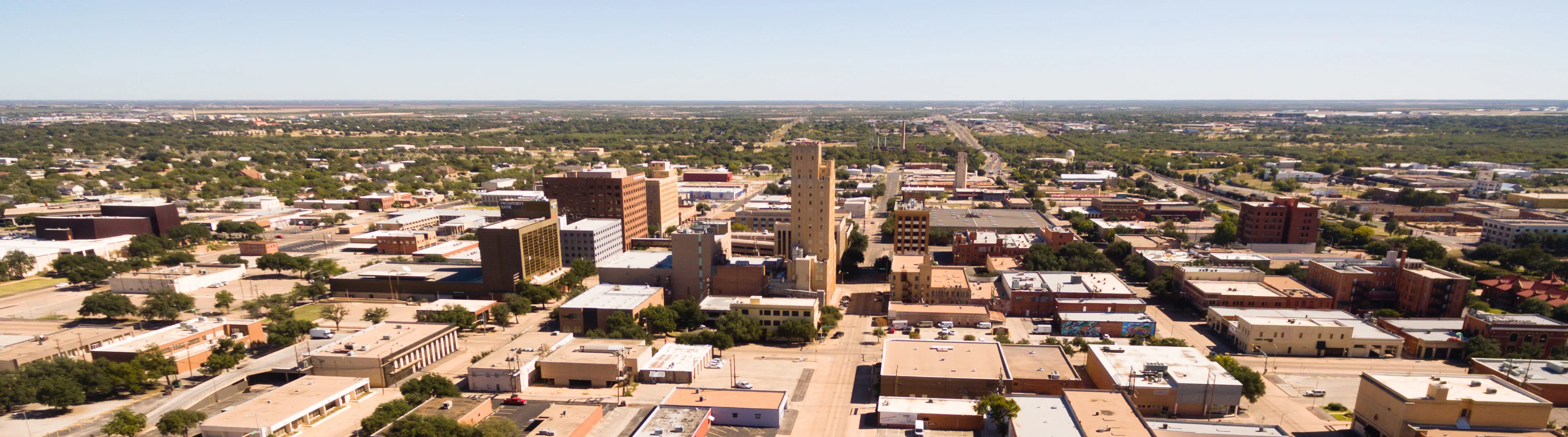
#1 Top Overall · Lubbock County
Best for retirees who want full city services without big-city costs.
Lubbock makes the retirement case cleanly: a $212,191 typical home price in a city large enough to have genuine walkable districts, a major medical center right in town, and exceptional sunshine that retirees from cloudier parts of the country find remarkable after their first winter here. Texas Tech anchors the cultural calendar with events, lectures, and a museum presence that most cities this size can only wish for, and Loop 289 keeps the whole city navigable without the kind of traffic that wears on retired drivers.
Lubbock suits retirees who want the full range of city services — specialist medical care, a recognizable dining scene, multiple grocery options, performing arts — without paying a premium for them. It is a meaningfully different retirement than the smaller towns on this list: more going on, more driving options, more variety in how you spend a Tuesday afternoon.

#2 Top Healthcare · Taylor County
Best for retirees who want dual hospital access and West Texas affordability.
Abilene's retirement case rests on a genuinely strong combination: hospitals in town, a $222,710 typical home price, and abundant sunny days year-round. The city's size — the 29th-largest in Texas — means services are real and locally available rather than a long drive away, and the mix of museums, parks, and a dining scene that punches above its weight gives retirees enough variety to stay engaged month after month.
Most daily errands require a car, and Abilene does not have the walkable downtown core that some retirees prioritize. But for buyers who are comfortable driving and want strong medical access, a lower home price, and a genuine West Texas community feel, Abilene is a practical and underrated choice — especially compared to smaller towns in this region where services are thinner.
#3 Top Healthcare · El Paso County
Best for retirees who want big-city infrastructure at a fraction of the price.
El Paso is the sixth-largest incorporated city in Texas by U.S. Census count, and that scale shows in the retirement picture: the city has a university medical center, walkable districts in its Central core, and a home price of $237,796 that would be considered a bargain in any comparably sized American city. Extraordinary sunshine — among the highest totals in the entire country — means outdoor life is genuinely year-round here, and the Franklin Mountains running through the city give retirees a dramatic backdrop for hiking and morning walks.
El Paso suits retirees who want big-city infrastructure — major medical, cultural institutions, diverse dining, international airport access — at a fraction of what larger Sun Belt metros charge. The trade-off is a quality-of-life amenity count that, while solid, does not match what cities like Abilene or San Angelo offer relative to their size; El Paso is large enough that its attractions are spread out rather than concentrated.

#4 Top Healthcare · Potter County
Best for retirees who want a Panhandle hub with real medical and cultural depth.
Amarillo delivers the retirement fundamentals reliably: hospitals in town, outstanding sunshine on the Panhandle plains, and a $212,025 typical home price that keeps retirement budgets in good shape. As the 17th-largest incorporated city in Texas, Amarillo has the infrastructure of a real regional hub — medical specialists, a varied dining scene, Palo Duro Canyon within easy reach for outdoor days — without the congestion or cost that comes with Texas's largest metros.
The honest caveat is walkability: Amarillo is a car-dependent city in the way most Panhandle cities are, and retirees who picture strolling to coffee or the pharmacy on foot will need to reset expectations. For retirees who drive comfortably and want strong medical access, low home prices, and a genuine range of things to do, Amarillo is one of the more well-rounded options in the region.
#5 Top Affordability · Brown County
Best for retirees who want genuine small-town Texas life at a low cost.
Brownwood is the outlier on this list in the best possible way for buyers watching their budget: a $172,876 typical home price, a downtown undergoing visible revitalization, and a local lifestyle — generous sunshine, a strong lineup of parks, restaurants, and landmarks — that holds its own against cities twice its size. A regional medical center right in town means retirees are not driving an hour for basic hospital access, which matters enormously for a city at this population level.
Brownwood is best suited to retirees who genuinely want small-town Texas life rather than a compromise version of it — neighbors who wave, a manageable pace, and a cost of ownership that lets a fixed income stretch. It is a different retirement than Lubbock or El Paso, not a lesser one, and buyers who have spent time in small-town Texas tend to understand the distinction immediately.
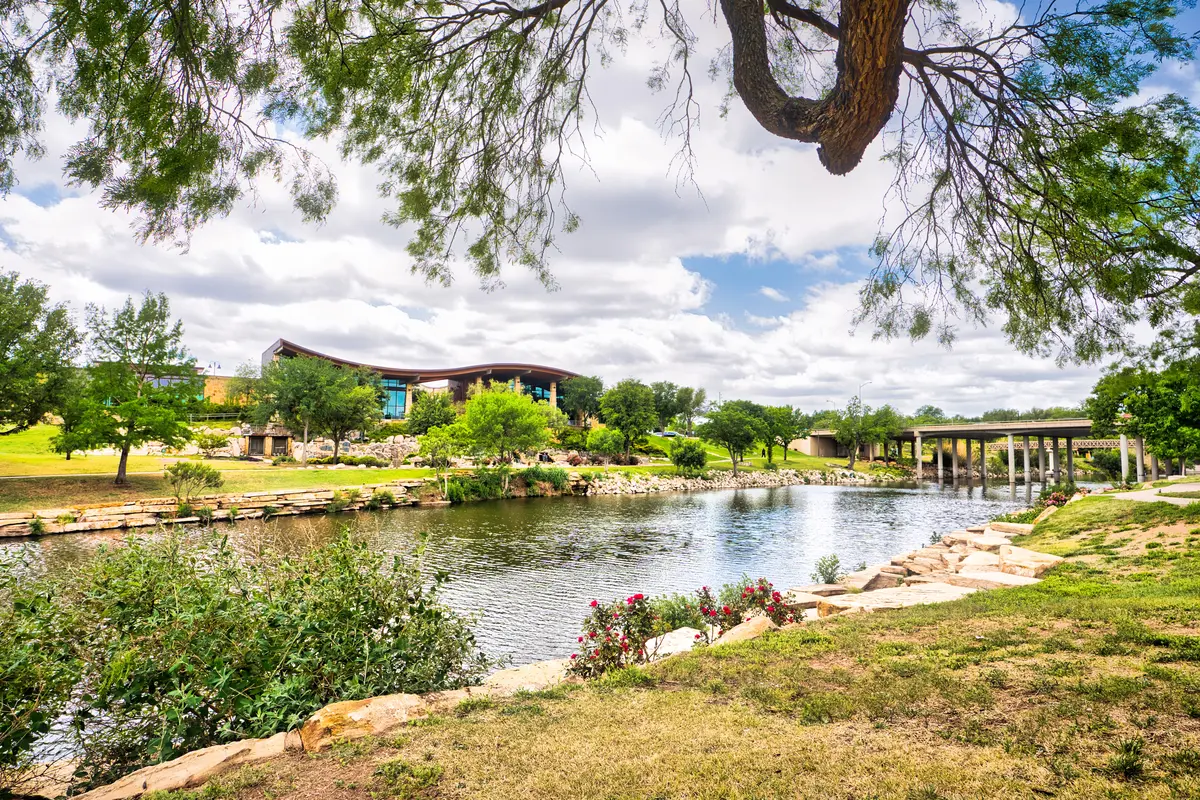
#6 Top Climate · Tom Green County
Best for retirees drawn to river-town character and regional service depth.
San Angelo earns its place on any serious West Texas retirement list: a hospital in town, generous sunshine year-round, a riverfront park system that gives the city genuine outdoor character, and a $214,811 typical home price that keeps the math favorable. As the 44th-largest incorporated city in Texas, it sits in a comfortable middle range — large enough to have real services, small enough that nothing feels far away or congested.
The quality-of-life score here reflects a city that has cultivated more local depth than its size suggests — art galleries, a thriving farmers market culture, and outdoor access along the Concho River that retirees from more urban areas often find genuinely surprising. San Angelo tends to suit retirees who want a recognizable small-city lifestyle without sacrificing hospital access or the basic variety of a regional hub.
#7 Top Affordability · Howard County
Best for retirees who want to minimize fixed costs in a real West Texas town.
Big Spring makes a compelling affordability argument: a $147,462 typical home price, exceptional sunshine year-round, and a local hospital that means residents are not driving to Midland or Odessa for routine care. For retirees whose priority is minimizing fixed housing costs while staying in a real town with a genuine community, Big Spring delivers in a way that few West Texas cities can match at this price point.
The honest trade-off is that Big Spring is a small city where daily errands require a car and the local amenity scene — while solid for its size — is not what you find in Lubbock or Abilene. Retirees who thrive here tend to be people who already know small-town West Texas, who value low overhead over a wide selection of restaurants, and who find the Permian Basin landscape genuinely appealing rather than merely tolerable.
#8 Top Affordability · Hale County
Best for retirees on a tight fixed income who want to own outright.
Plainview offers a home price of $120,278 — well below what most Texas cities charge — paired with a real downtown core that is walkable by the standards of a city this size, a local hospital, and outstanding sunshine year-round. For retirees on a fixed income who want to own a home outright or with minimal financing, Plainview's price point opens possibilities that simply do not exist in most of Texas.
The quality-of-life picture is the honest limitation: Plainview's dining and attraction variety is modest, and the city's small population means certain services and social options require a drive to Lubbock. Retirees who do well here tend to be people who are self-sufficient in their entertainment, who already have community ties in the area, or who are drawn specifically to the agricultural Panhandle landscape and its particular rhythm.
#9 Historic Mineral Springs Town · Palo Pinto County
Best for retirees who want a historic small city near the Hill Country edge.
Mineral Wells sits on the eastern edge of what most people think of as West Texas, and its character reflects that geography: a small city with a historic identity built around its famous mineral spring heritage, a local hospital, and a $208,649 typical home price that is well within reach for most retirement budgets. With plentiful sunny days each year, the climate is genuinely pleasant without reaching the extreme aridity of the Permian Basin or the Panhandle.
The walkability picture is limited — most errands require a car — and the amenity count, while solid for a city this size, means that retirees who want a robust cultural calendar will need to drive. Mineral Wells tends to suit buyers who want a quieter, more rural pace with a real town feel, and who are drawn to the Hill Country-adjacent landscape of Palo Pinto County rather than the flat plains further west.

#10 Top Climate · Ector County
Best for retirees with existing Permian Basin ties and family nearby.
Odessa's retirement picture is shaped almost entirely by its oil-economy roots: local hospitals in town, strong sunshine, and a home price of $253,740 that reflects Permian Basin demand more than local wages. The city has the infrastructure of a larger regional hub — medical access, a variety of services — but the lifestyle amenities and walkability that retirees often prioritize have not kept pace with its population growth.
Retirees who are drawn to Odessa are often people with existing ties to the oil patch — family nearby, a familiar community, a property they already own. For someone choosing purely on retirement merit, the combination of a higher home price relative to amenities and a car-dependent layout means other cities on this list tend to offer a more compelling overall picture for buyers without those pre-existing roots.
#11 Top Affordability · Reeves County
Best for retirees who want deep desert solitude and low overhead.
Pecos makes a genuine case for retirees who want to minimize housing costs and do not mind the remoteness that comes with deep West Texas: a $180,627 typical home price, a full-service local hospital that is a genuine asset for a city this size, and exceptional sunshine year-round. The honesty required here is that Pecos has limited dining and local amenity variety, and daily life in a small, remote basin city is genuinely different from what most retirement resources describe.
Pecos suits a specific kind of retiree — someone who values solitude and low overhead over social infrastructure, who has practical self-sufficiency, and who finds the wide-open Chihuahuan Desert landscape appealing rather than isolating. It is not the right fit for retirees who want a rich calendar of local activities or proximity to family services, but for the right person it represents an unusually affordable and sunny retirement with real hospital access in town.

#12 Top Climate · Midland County
Best for retirees with oil-country roots who value strong local medical access.
Midland's home price — $332,692 typical — reflects the boom-and-bust economics of oil country more than it reflects the city's retirement amenities, and that gap is the central tension of retiring here. The city does have a local hospital, outstanding sunshine year-round, and a size large enough to support genuine services, but the affordability picture places Midland in a different category than most other West Texas cities on this list.
Retirees who already own property in Midland, or who have family ties that make the location non-negotiable, will find the city functional and sunny. For buyers who are choosing freely, however, the combination of oil-driven home prices and a quality-of-life scene that does not match what similarly priced Texas cities offer makes Midland a harder retirement case to construct — especially when neighboring options carry lower prices and comparable or better amenity counts.
#13 Hill Country Edge College Town · Erath County
Best for retirees who want a university town feel within reach of DFW.
Stephenville occupies an interesting edge position on this list — geographically east of the traditional West Texas footprint, anchored by Tarleton State University, and carrying a $324,964 typical home price that reflects its growing appeal to buyers leaving the Dallas-Fort Worth corridor. Old Town Stephenville gives the city a genuine historic walkable square that most cities its size do not have, and a full hospital in town means retirees are not entirely dependent on Fort Worth for medical care.
The affordability picture is the honest limiting factor for retirement: at this price point, Stephenville is selling partly on its proximity to DFW and partly on its small-town character, and retirees who do not need that DFW connection may find that other cities on this list offer comparable or better retirement value. The city suits buyers who want a Hill Country-adjacent feel, a university town atmosphere, and are comfortable with a longer drive when Fort Worth's specialist medical resources are needed.
#14 Top Climate · El Paso County
Best for retirees who want El Paso's sunshine orbit at a lower price.
Horizon City is a suburb of El Paso in the practical sense that matters most for retirement planning: a $223,740 typical home price, extraordinary sunshine year-round, and a local hospital in town — but an amenity picture that requires driving into El Paso for most dining, cultural, and shopping needs. The city is explicitly car-dependent, and retirees who want to walk to anything will find the layout genuinely limiting.
The retirement case for Horizon City is essentially the case for El Paso's orbit at a lower price point — outstanding sunshine, desert landscape, proximity to a major city's resources — without the walkable districts and in-city variety that El Paso itself provides. It suits retirees who are comfortable driving, prioritize sunshine and affordability, and plan to use El Paso as their primary amenity hub rather than their own city center.
#15 Fossil Country Scenic Town · Somervell County
Best for retirees who want nature-immersive small-town life and can pay for it.
Glen Rose is the most visually distinctive city on this list — dinosaur tracks in the riverbed, a wildlife safari nearby, a historic courthouse square — and it carries a home price to match: $401,143 typical, driven by second-home and weekend-retreat demand from the DFW market. The local hospital in town is a genuine asset for a small town, and the natural attractions give the area a quality-of-life richness that is real even if the underlying amenity count is modest.
The affordability picture is the decisive factor for most retirees considering Glen Rose: at this price point, buyers are paying a significant premium for the scenery and proximity to the DFW metroplex, and the trade-offs in walkability and daily convenience are genuine in a town this size. Glen Rose suits retirees who have the budget and want a nature-immersive small-town retirement with weekend-destination character — not retirees who are optimizing for value or urban access.
#16 Top Affordability · El Paso County
Best for retirees drawn to Rio Grande history and very low home prices.
San Elizario is one of the oldest communities in Texas — its historic plaza and mission church give it a cultural identity that the home price does not advertise: $180,144 typical, well within reach for retirees on a fixed income. Located in El Paso County, it gets extraordinary sunshine year-round, and for retirees whose daily life is genuinely low-key, the town's quiet pace and manageable cost of ownership can be genuinely appealing.
The honest retirement limitations are healthcare access — no local hospital, with the nearest facility requiring a drive — and a modest local amenity count that means most services and dining require a trip toward El Paso. San Elizario suits retirees who are healthy, self-sufficient, deeply drawn to the Rio Grande Valley's Hispanic history and architecture, and are comfortable treating El Paso as their practical service hub.
#17 Top Climate · El Paso County
Best for retirees who want El Paso-area sunshine on a modest budget.
Socorro sits in the El Paso metro footprint with a $209,849 typical home price and extraordinary sunshine year-round, but its retirement picture is shaped primarily by what it lacks locally: no hospital within city limits, a car-dependent layout with minimal walkability, and limited dining and activity variety that means El Paso handles most of daily life's practical needs.
Socorro suits retirees who are buying into the El Paso area's sunshine and affordability but are not attached to living in the city itself — people who want a quieter, suburban-feeling base at a lower price point and are comfortable driving for everything from groceries to medical care. Retirees who want local amenities within easy reach, or who have specific healthcare needs requiring frequent facility access, will find the picture here more limiting than the home price alone suggests.
West Texas offers some of the most retirement-friendly home prices in the entire state, but the cities that score best for retirees are the ones that combine affordable housing with a real hospital in town and enough local life to keep daily routines interesting. Size matters here more than it does in most regions: a city large enough to have a medical district and a walkable core simply gives retirees more options without a long drive.
Tell us what you need help with and we'll connect you with local resources.
