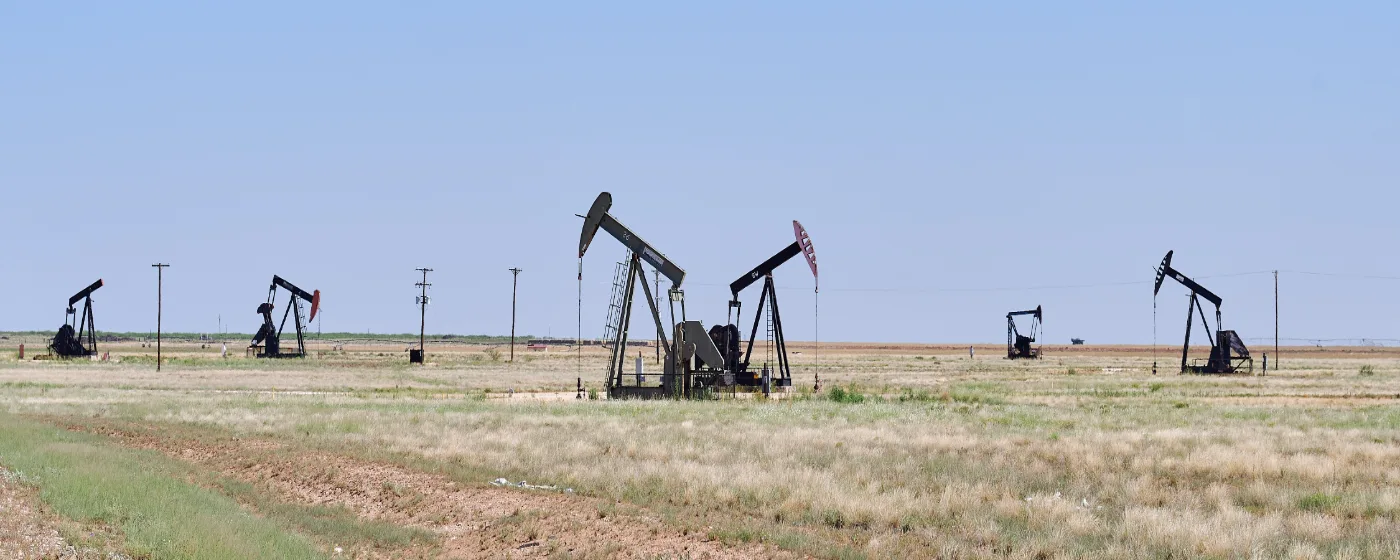
What Is Living in Midland, Texas Like?
Midland sits at the geographic and economic center of the Permian Basin, and that position shapes everything about living here. I-20 bisects the city, connecting it to Fort Worth to the east and El Paso to the west, and Loop 250 rings the metro in a way that tells you immediately how much of the city has been built in the last two generations. The real tension for anyone considering a move: Midland's economy is one of the most concentrated in the country — more than 72 times the national employment share in oil and gas extraction, according to a U.S. Department of Energy analysis — which means the city's fortunes are real, its wages are elevated, and its boom-bust history is not ancient. People who understand that going in build real lives here. People who don't sometimes leave when the cycle turns.
The city's population is 147,615, and it has grown 11% since 2020 — the fastest rate among major West Texas cities. The median age sits around 31 to 32 years, which you feel on the ground: this is a city of young families, dual incomes, and kids in sports leagues, not a retirement destination. Midland Independent School District anchors the community with 29,087 students enrolled in 2025-26 and holds a C rating, according to the Texas Education Agency. The district's 2024-25 state assessments show 39% of students reached math proficiency and 46% reached reading proficiency — numbers that are honest, not exceptional, and that families weigh carefully. The major employers beyond the schools are the energy companies that line the corporate corridor: Diamondback Energy, ConocoPhillips, and Occidental Petroleum all have significant presences here, and the city and a major regional health system round out the non-energy side of the economy.
The cost of living runs approximately 10% below the U.S. national average, which surprises people who expect an oil-boom city to be expensive across the board. Texas has no state income tax, which compounds the income advantage for energy-sector workers. The typical home price is $332,692 (July 2026), and the median household income of $89,585 means the math genuinely works for many buyers — something that cannot be said for most comparably sized Texas metros. For a full picture of what things cost day to day, see the Midland cost-of-living breakdown. Day-to-day life is outdoor-oriented, car-dependent, and community-focused in a way that rewards people who put down roots: Midland has more than 30 city parks, a performing arts center, and 266 sunny days a year that make the flat West Texas landscape feel less stark than it looks on a map.
Whether you are being relocated by an energy company, drawn by the wages, or simply priced out of a bigger Texas city, the sections below break down Midland's neighborhoods, housing market, commute patterns, schools, local businesses, and what daily life here actually looks like once you are living it.
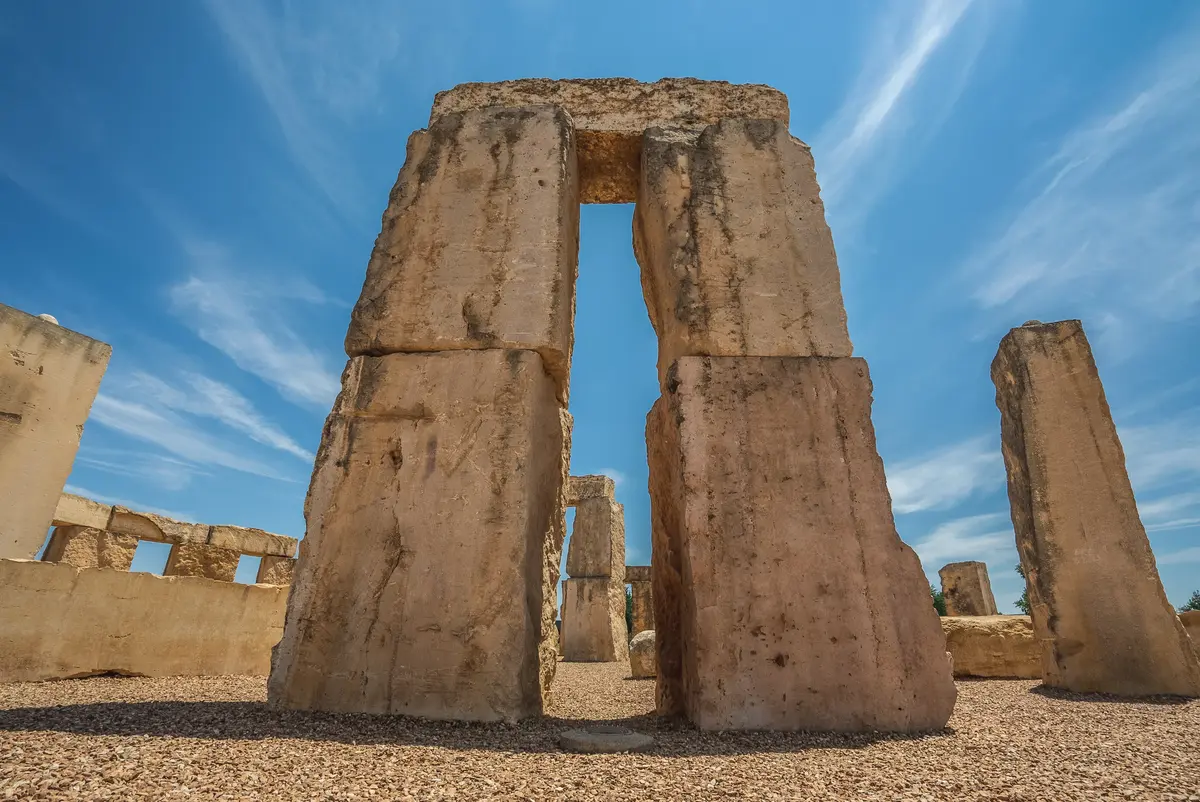
Midland at a Glance
Looking to buy in Midland? Estimate your payment.
Enter your numbers to see an estimated monthly mortgage payment.
Estimate only. Excludes HOA fees and mortgage insurance. The interest rate above is a starting point, not a quoted rate — replace it with your own to see real numbers. Insurance is a flat placeholder, not a Midland quote.
Why Are People Moving to Midland?
The simplest answer is jobs. Midland is the administrative headquarters of the Permian Basin, which produced more than 6.5 million barrels of oil per day in 2025 — roughly half of total U.S. oil output. When basin production is strong, Midland's job market absorbs people faster than local housing can keep up. The city's growth rate since 2020 reflects that reality more honestly than any marketing campaign could.
The energy companies drawing the most relocators are the names on every lease in the basin: Diamondback Energy, ConocoPhillips, and Occidental Petroleum all headquarter or maintain major operations here. But the picture is broader than oil fields. Midland ISD is the city's largest employer by headcount, the City of Midland runs a significant municipal workforce, and the local economy is actively expanding into aerospace, defense, and healthcare. The non-energy job base is real and growing — not just a talking point.
The Income Advantage
Texas's lack of a state income tax matters more in Midland than in most Texas cities because energy-sector wages are already elevated above what comparably skilled workers earn in non-energy markets. A family earning well above the $89,585 median household income — which is common in the engineering, geology, and field-services side of the industry — keeps more of that income here than they would in a state with income tax.
The affordability math genuinely works. The median household income is at or above the income needed to buy the typical home here, which puts Midland in a category of its own among Texas cities its size. For buyers weighing this against a move from a higher-cost state, the full comparison is on the moving from California to Midland page.
Who Moves Here — and Who Leaves
The in-migration profile is young, dual-income, and often energy-industry: a geologist and a teacher, a field engineer and a healthcare worker, a corporate attorney serving oil and gas clients. The city's median age of around 31 reflects this — Midland is not a place people typically retire to, and most 55+ amenities require a drive or a trip to a larger metro.
The honest reason people leave is the cycle. When oil prices drop sharply, the layoffs are real and concentrated, and a city this economically specialized feels it fast. Families who moved for a specific company job and did not build broader roots in the community are the ones most likely to head back to Dallas or Houston when the market turns. People who planted themselves — bought a house, joined a church or a youth sports league, built a contractor business serving the basin — tend to stay through the cycles and come out ahead.
| Buyer Type | What Draws Them | Best Fit? |
|---|---|---|
| Energy-sector professionals | Industry HQ, major operator offices, elevated wages | Commuter Tech |
| Families with school-age children | Affordable homes, young community, active UIL athletics | Families |
| First-time buyers | Prices well below Austin/Dallas, income-to-price ratio works | First-Time Value |
| Remote workers relocating from high-cost metros | No state income tax, lower cost of living, 266 sunny days a year | Value Nature |
| Healthcare and education professionals | Non-energy anchor employers, stable demand regardless of oil cycle | Commuter |
| Investors and landlords | Rental demand tracks oil-cycle workers, typical rent of $1,636/mo | Renter |
The city suits people who want a real community, not just a posting. Midland's social fabric — Friday night UIL football, the Midland Rockhounds at Momentum Bank Ballpark, the Wagner Noël Performing Arts Center, the Florida Avenue Market — is genuine and does not require a long drive to access.
What Daily Life Feels Like in Midland
Midland is a car city, full stop. The street grid is wide, the distances between home, work, and school are real, and most residents drive a pickup or SUV. That is not a complaint — it is just the geography of West Texas, and once you accept it, the city functions efficiently. Parking is never a problem, roads are generally well-maintained, and the downtown core is compact enough that errands there go quickly.
The rhythm of the week is shaped by the energy industry's schedule. Crews on two-week rotations come and go, corporate offices on the Midland side of the basin run standard business hours, and the social calendar fills up around kids' activities, weekend outdoor time, and community events. The city's median age of around 31 means there are a lot of people in the same life stage as you — young families, young professionals, people figuring out whether to buy or rent.
Where People Actually Gather
Weekend mornings in Midland often start with coffee. The independent scene is real: Far West Coffee, THE GRIND CAFE, Twelve Gate Coffee Company, and Leyenda Coffee & Tequila each draw a regular crowd, and Hi Boba Tea Midland has become a fixture for a different kind of afternoon stop. The Florida Avenue Market runs through the growing season and is where you run into neighbors you did not know you had.
Evenings lean toward the dining scene rather than a walkable bar strip. Clear Springs Restaurant has been a Midland institution for decades. Wall Street Bar & Grill draws the after-work energy crowd. The Cantinita, Venezia Restaurant, and TerraZZita each bring something the chains do not. None of these are downtown in the sense a big-city transplant would expect — Midland's dining scene is distributed, and you will learn quickly which end of town suits your regular routine.
The Seasonal Quirk Nobody Warns You About
Midland gets 266 sunny days a year, and the summers are long and genuinely hot. Most newcomers handle July and August fine — it is dry heat, not humid — but the spring wind is the surprise. Dust storms, locally called haboobs, roll through the basin several times a year, coating everything and making outdoor plans unreliable for a day at a time. Long-timers barely notice; people who moved from the Pacific Northwest find the first one genuinely disorienting. You will want a good air filter for your HVAC system.
The outdoors community adapts to the climate rather than fighting it. Hogan Park and Wadley Barron Park see heavy use in the cooler months. Beal Park is a quieter option with shade. The Sibley Nature Center draws school groups and adults who want to understand the Chihuahuan Desert landscape rather than just endure it. For the full picture of Midland's parks and trails, see the parks and recreation page.
The safety picture is mixed in ways worth understanding before you choose a neighborhood. The city carries a violent crime rate of 4 per 1,000 residents and a property crime rate of 16 per 1,000 residents — the violent rate sits roughly in line with the state average of 4 per 1,000, while property crime runs noticeably below the state figure of 20.7 per 1,000. The full breakdown, including neighborhood-level context, is on the Midland safety page.
The Midland Housing Market Right Now
The typical home price in Midland is $332,692 (July 2026), sourced from the Zillow Home Value Index. That figure sits well below what comparable energy-economy cities in other states command, and it makes the income-to-price math genuinely favorable for most working households here. Some areas of the city run noticeably above that figure; others come in below — the full neighborhood breakdown is on the best neighborhoods page.
The rental market reflects the energy cycle's demand. The city-wide typical rent is $1,636 per month (Zillow ZORI, July 2026), which gives landlords real demand and gives renters a market that is tighter than the purchase side suggests. Basin workers on rotation, new hires waiting to decide whether to buy, and corporate relocatees on short-term assignments all feed rental demand in ways that keep it from softening much even when prices plateau.
What the Market Feels Like
Well-priced homes in established neighborhoods move without sitting long. The city's growth — up 11% in population since 2020 — has kept construction active, particularly on the newer edges of the city where Loop 250 opens into undeveloped land. Buyers who want new construction will find more options than in most comparably sized Texas cities; buyers who want an established neighborhood with mature landscaping and larger lots will find those too, at a range of price points.
The effective property tax rate is 1.17% — meaningful on a typical purchase, and a figure worth plugging into your budget alongside Texas's lack of a state income tax. For a full cost-of-living comparison, see the Midland cost of living page.
What Buyers Should Know
The oil cycle is the variable that no spreadsheet fully captures. In strong basin years, Midland home prices reflect elevated demand from relocating workers and corporate housing allowances. In slower years, that demand softens and sellers feel it. Buying here is a long-term proposition — the city rewards patience more than it rewards a flip mentality. For guidance on the buying process in this market, see the first-time homebuyer page.
Midland Neighborhoods
Midland has several distinct areas — each with its own character and appeal. Here’s a breakdown to help you narrow down where to focus your home search.
🏡 Grassland Estates
One of Midland's most established neighborhoods, Grassland Estates draws buyers who want larger lots, mature landscaping, and a sense of permanence that newer subdivisions cannot replicate. It runs above the city median and suits families and professionals who want a settled, community-oriented feel.
🏠 Green Tree / Green Tree Country Club
Green Tree is the address that signals arrival in Midland — the country club anchors a neighborhood of well-kept homes and golf-course adjacency that draws energy-sector executives and longtime residents who have traded up over the years. It sits above the city median and has the quiet, established character of a neighborhood that has seen several oil cycles and stayed desirable through all of them.
🌳 Saddle Club / Saddle Club Estates
Saddle Club draws buyers who want more space and a slightly removed feel from the city's commercial corridors, without sacrificing access to the northwest growth areas. The neighborhood runs above the city median and suits families and professionals who prioritize lot size and a quieter residential character.
🏘 Trinity (Trinity Meadows, Trinity Estates, Trinity West)
The Trinity cluster is where newer construction meets an established neighborhood identity — families with school-age children are the dominant buyer, drawn by the housing stock and proximity to the city's northwest growth corridor. All three sub-areas sit above the city median and collectively represent one of Midland's most active family-formation zones.
🏔 Briarwood
Briarwood is an established mid-city neighborhood that draws buyers looking for proximity to Midland's older core without the price premium of the country club areas. It runs above the city median and suits buyers who want a settled neighborhood feel with reasonable access to the I-20 corridor.
🌆 Wedgewood Park
Wedgewood Park is the most accessible entry point into Midland homeownership, sitting below the city median in a neighborhood that suits first-time buyers and value-focused households. The housing stock is older and the lots are modest, but the location keeps daily commutes manageable for residents working across the city's core.
Pros & Cons of Living in Midland
The Pros
- High median incomes driven by the energy sector
- No state income tax
- Abundant sunshine nearly year-round
- Strong job market tied to oil and gas
The Cons
- Home and rental prices swing with oil price cycles
- Hot, dry summers with frequent wind and dust
- School district accountability ratings lag state averages
Getting Around & Commuting in Midland
Midland is one of the more car-dependent mid-size cities in Texas, and that is not a criticism — it is the physical reality of a city built on West Texas land with no geographic constraint on sprawl. I-20 is the city's main spine, carrying the bulk of commuter and commercial traffic. The older commercial core is served by a business loop through the city center. Loop 250 defines the outer ring, and SH 158, SH 191, SH 349 (the Nadine and Tom Craddick Highway), and SH 140 (the Garden City Highway) carry the radial traffic in and out.
For most residents, a typical workday commute is measured in minutes rather than hours. The city is compact enough that crossing it end to end rarely takes more than 20 to 25 minutes outside of peak congestion windows. The commute to Odessa — Midland's sister city and where many basin workers split their time — is about 25 minutes to Odessa, TX, on I-20.
Where Traffic Actually Builds
The corridors that slow down are predictable: SH 158 and SH 191 on the northwest side, where newer residential growth has outpaced road capacity, and the I-20 interchanges near the business district during the morning and late-afternoon windows. The Texas Transportation Commission authorized new Midland-Odessa area interchange projects as part of a statewide 2025-2034 investment program, and the city has been actively adding signals on major corridors including SH 158. The infrastructure is playing catch-up with the growth, which is worth factoring in if you are choosing between neighborhoods on opposite ends of the city from your office.
Midland International Air and Space Port (MAF) is 10 miles from the city center and served by major carriers. For residents who travel regularly for work — common in the energy industry — having a commercial airport this close without the congestion of a major metro is a genuine quality-of-life advantage. MAF also happens to be the closest commercial airport to Big Bend National Park, which becomes relevant quickly once you are a resident and realize the park is a real weekend destination rather than a once-in-a-decade trip.
Public Transit
EZ-Rider, operated by the Midland-Odessa Urban Transit District, runs fixed bus routes within the city and a commuter link connecting to Odessa. The City of Midland renewed its annual EZ-Rider funding agreement for FY2026. For most Midland residents, transit is not part of the daily routine — but it exists for those who need it, particularly for workers whose jobs are concentrated along the fixed routes. Most errands, school pickups, and weekend trips require a car regardless of where in the city you live.
| Route / Connection | What It Serves | Who Uses It Most |
|---|---|---|
| I-20 | Main east-west spine, Fort Worth to El Paso corridor | Commuters, commercial traffic, inter-city travel |
| Business loop through city center | Through the older commercial core | Local business access, downtown-adjacent trips |
| Loop 250 | Outer ring road around the metro | Cross-city commuters, outer neighborhood access |
| SH 158 / SH 191 | Northwest growth corridors | Newer subdivision residents heading to work |
| SH 349 (Craddick Hwy) / SH 140 | Radial routes north and west of the city | Field workers, rural basin access |
| EZ-Rider bus network | Fixed city routes + Odessa commuter link | Car-free or limited-vehicle households |
| MAF (Midland International Air and Space Port) | Commercial air service, 10 miles from city center | Energy-sector business travelers, regional leisure |
The one thing newcomers consistently underestimate is how different the northwest side of the city feels from the older established core. If your office is near the I-20 corridor and you buy in a newer development off Loop 250, your daily drive is easy. If those two points are reversed, plan your route before you commit to a neighborhood.
Schools in Midland
Families relocating to Midland have public, private, and higher-education options nearby. Here’s a quick overview.
🎓 School District
Midland Independent School District serves K–12 students across Midland and the surrounding area. Rated C (source: Texas Education Agency, 2025 A-F accountability rating (2024-25 school year)).
🏆 Graduation Rate
The 4-year high-school graduation rate here is approximately 86.3%.
📚 Higher Education
Texas’s public universities — the University of Texas at Austin, Texas A&M University, and the University of Houston — offer four-year degrees statewide, with one of the largest community college systems in the country (50+ public community college districts) providing two-year and workforce programs.
🌐 Online Learning
UT Austin Online and Texas A&M University Online offer fully accredited online degrees for remote learners across the state.
Safety in Midland
A quick look at how Midland compares on the numbers that matter most when weighing a neighborhood or a move.
🛡 Violent Crime
Approximately 4 per 1,000 residents.
🔒 Property Crime
Approximately 16 per 1,000 residents.
Compared to the most recent national figures from the Bureau of Justice Statistics (2024), Midland’s violent crime is above the national average (about 3.7 per 1,000), and property crime is below the national average (about 18.4 per 1,000).
Against Texas as a whole, Midland’s violent crime is about the same as the state average, and property crime is somewhat below the state average (Bureau of Justice Statistics, Crime Known to Law Enforcement, 2024 (tables 2 and 3)).
Crime rates can vary a lot within a single city, so the citywide numbers above are only a starting point. Some neighborhoods in Midland run well below these averages, while others run higher — the kind of block-by-block detail that matters most when you’re actually choosing where to live. The full guide below breaks it down neighborhood by neighborhood.
Working in Midland
Midland’s largest employers span several industries — here are some of the anchors of the local job market.
🎓 Midland Independent School District
Education
🏛 City of Midland
Municipal government
🏥 Midland Memorial Hospital
Healthcare
💼 Diamondback Energy
Oil and gas
💼 ConocoPhillips
Oil and gas
💼 Occidental Petroleum
Oil and gas
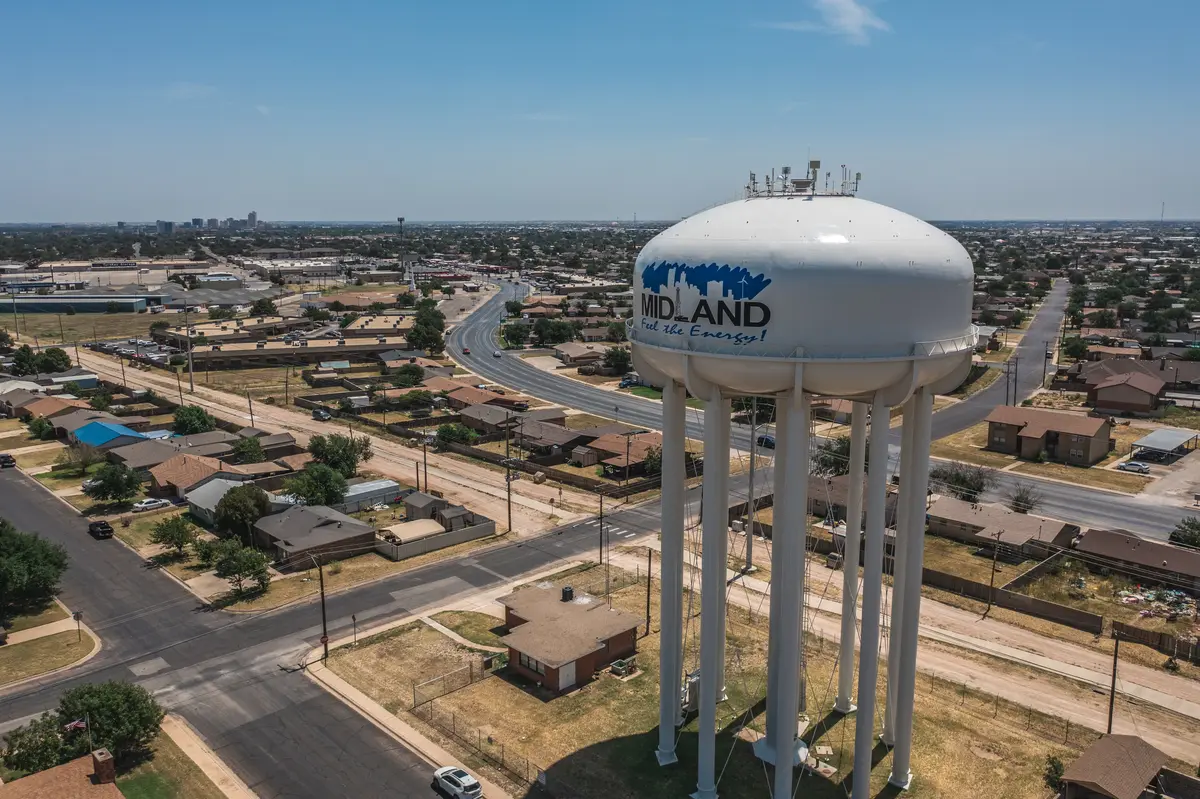
Retiring in Midland
Midland draws retirees for its balance of amenities, outdoor access, and cost. Here’s what to weigh.
🌤 Climate
Midland logs 266 sunny days a year and sits in a semi-arid zone where humidity is rarely the complaint. Winters are mild with occasional freezes, springs bring strong wind and periodic dust storms, and summers run long and hot — though the dry air makes the heat more bearable than the Gulf Coast. Fall is genuinely pleasant and the preferred season for most outdoor activity.
🍴 Lifestyle
The Wagner Noël Performing Arts Center brings touring Broadway productions, ballet, and symphony performances to a city that punches well above its weight culturally. The Petroleum Museum, the Sibley Nature Center, and the Bush Family Home State Historic Site give daily life a historical and natural texture. The independent dining scene — from Clear Springs to TerraZZita — is solid, and the Florida Avenue Market anchors the local food community through the growing season.
🏚 55+ Communities
No 55+ communities were found in Midland. Retirees choosing the city typically do so for family proximity, the favorable Texas tax environment, or a working retirement in the energy or healthcare sector rather than a dedicated age-restricted community.
✈ Getting Around
A car is essential in Midland — the city is built for driving, and most daily destinations require one. Midland International Air and Space Port (MAF) is 10 miles from the city center and served by major carriers, making regional and national travel straightforward for residents who fly regularly. EZ-Rider bus service exists for those who need it, but most retirees here drive.
🏛 Texas Taxes for Retirees — What to Know
- No state income tax — Texas has no personal income tax — constitutionally protected under Article VIII, Section 24. Social Security, pensions, 401(k)/IRA withdrawals, and annuity payments are all untaxed at the state level, with no state return to file.
- Sales tax is the tradeoff — The state sales tax is 6.25%, and local add-ons bring the combined rate in Midland to 8.25% (Texas Comptroller of Public Accounts, city sales and use tax rates, July 2026). Groceries and prescription drugs are exempt.
- Property taxes — the real tradeoff — Texas’s effective property tax rate averages about 1.40%, among the highest in the country, since property tax (not income tax) funds most local government and schools.
- Over-65 homestead exemption and school-tax freeze — Homeowners 65+ (or disabled) get an additional $60,000 exemption from their home’s value for school district taxes, on top of the general homestead exemption — $200,000 off school taxable value combined, following November 2025’s Proposition 11 (SB 23), which raised the over-65 exemption to $60,000, and Proposition 13 (SB 4), which raised the general homestead exemption to $140,000. Once claimed, your school district tax bill is frozen at that year’s amount and cannot increase as home values rise, and the ceiling can transfer if you move to a new home within Texas.
- Deferral option if cash is tight — Homeowners 65+ can defer property tax payment entirely for as long as they live in the home, rather than paying it currently — interest accrues, but no forced sale.
- No estate or inheritance tax — Texas has no estate tax, no inheritance tax, and no gift tax.
- No separate capital gains tax — Because Texas has no state income tax, capital gains — including on investments and home sales — are not taxed at the state level at all, unlike states such as Washington that tax capital gains separately from income.
Tax laws change frequently and individual situations vary. This is general information, not tax advice — always consult a qualified Texas tax professional or CPA for personalized retirement tax planning.
Weekends & Local Favorites in Midland
Midland's weekend identity is built around a mix of culture, outdoor space, and community gatherings that most outsiders do not expect from a West Texas oil city. The Petroleum Museum is the obvious starting point — its collection of antique oil-drilling equipment is the largest in the world, and the Petroleum Hall of Fame draws visitors from across the basin. It is also where local kids go on school field trips and where newcomers realize the industry they work in has a history worth understanding.
The Bush Family Home State Historic Site is a restored 1950s residence that offers guided tours and draws a steady stream of visitors. It is a quiet, specific piece of American history that happens to be in the middle of a West Texas residential neighborhood. The Midland County Courthouse anchors the older downtown and gives the city center a sense of civic permanence that the newer commercial strips do not.
Arts, Performance, and Culture
The Wagner Noël Performing Arts Center is the city's cultural anchor — a full-scale venue that books ballet, Broadway touring productions, and symphony performances. For a city of 147,615, the programming is serious and the facility is genuinely good. Residents from Odessa, Andrews, and the broader basin drive in for performances, which means tickets move; buying early is habit for regulars.
The Sibley Nature Center is where the community's relationship with the Chihuahuan Desert gets organized. It runs educational programs and maintains trails and exhibits that put the landscape in context — useful for anyone who moved here from somewhere greener and is still making peace with the terrain.
Coffee, Food, and the Farmers Market
The independent coffee scene is strong for a city this size. Far West Coffee, THE GRIND CAFE, Twelve Gate Coffee Company, and Leyenda Coffee & Tequila each have their own character and loyal regulars. Hi Boba Tea Midland has carved out a different niche for afternoon stops. The Florida Avenue Market is where the local-produce and specialty-food community gathers through the growing season — a weekly social event as much as a shopping trip.
On the dining side: Clear Springs Restaurant has the kind of institutional loyalty that only comes from decades of consistency. Wall Street Bar & Grill is the after-work spot for the energy-sector crowd. The Cantinita, Venezia Restaurant, and TerraZZita each bring something genuinely distinctive to a dining scene that, despite being spread across a car-dependent city, holds its own against much larger Texas metros.
Parks and Outdoor Life
Hogan Park is the city's largest recreational complex and the hub for youth sports and community gatherings. Wadley Barron Park and Beal Park offer quieter options. The city's 30-plus parks include a variety of amenities that most residents find a spot fitting their routine within a short drive. The outdoor season runs long on either side of summer, and the ones who thrive here learn to use the cool mornings and evenings rather than waiting for a comfortable afternoon.
Local favorites in Midland
Restaurants
- Clear Springs Restaurant
- The Cantinita
- Wall Street Bar & Grill
- Venezia Restaurant
- TerraZZita
Outdoors
- Hogan Park
- Sibley Nature Center
- Beal Park
- Wadley Barron Park
Coffee
- Hi Boba Tea Midland
- THE GRIND CAFE
- Far West Coffee
- Leyenda Coffee & Tequila
- Twelve Gate Coffee Company
Farmers Markets
- Florida Avenue Market
Top Things Locals Say About Midland
The best intel about a city comes from the people who actually live there. Here’s what Midland residents say when newcomers ask the questions everyone’s thinking.
“I knew Midland was car-dependent, but I didn't realize how different the northwest side of the city feels from where I work near the I-20 corridor. Once I figured out which part of town matched my commute, the whole place made a lot more sense.”
— Recent Midland home buyer
“What's the most surprising thing about living in Midland?”
The dust storms catch most people off guard. You hear about West Texas wind, but the first time a haboob rolls in and turns the sky brown in twenty minutes, it's a genuine shock. Long-timers barely notice, but newcomers from anywhere east of Abilene usually spend their first spring scrambling to cover outdoor furniture and figure out why their air filter looks like it's been in the ground for a year. After one season, it just becomes part of the rhythm.
“What do locals love most about Midland?”
The community is tighter than you'd expect for a city this size. Friday night football at Grande Communications Stadium is a real event — the whole town shows up, not just the parents. The Wagner Noël brings performances that would hold their own in a much larger city. And because Midland is genuinely far from the nearest major metro, people invest in what's here rather than always looking somewhere else for entertainment.
“What should newcomers to Midland know?”
Figure out your commute corridor before you buy. The northwest growth areas off Loop 250 are beautiful and new, but if your office is near the older I-20 business district, you're adding real time to your day on SH 158 or SH 191, which are still catching up to the growth. Also: find a good HVAC service company in your first month. The dust and the heat are hard on systems, and the good contractors book out fast in summer.
“How much do you need a car in Midland?”
Almost completely. EZ-Rider runs fixed bus routes and connects to Odessa, and some residents use it for work commutes along those corridors, but most errands, school pickups, and weekend activities mean driving. The city is designed around the car — wide roads, ample parking, commercial strips set back from the street. If you can walk from your front door to a coffee shop, you are in a fairly unusual situation for Midland. Plan for two vehicles if you're a two-adult household.
Cities Near Midland
Other communities near Midland worth a look — each with its own character and price point.
| City | Distance | Best For | Vibe | Median Rent | Median Buy |
|---|---|---|---|---|---|
| Odessa | 18 mi | value seekers & blue-collar workers | grittier, industrial, lower cost | $1,554 | $253,740 |
| Big Spring | 40 mi | budget buyers & small-town life | quiet, historic, slow-paced | $1,233 | $147,462 |
| Andrews | 35 mi | rural buyers & field workers | small, tight-knit, affordable | $950 | $180,000 |
More Helpful Guides for Midland
Going deeper on Midland? Our blog series covers everything from first-time buying to retiring here — explore the guides below.
Local Expert Takeaway: Midland rewards people who come prepared for the cycle. The wages are real, the cost of living genuinely works, and the community is tighter than outsiders expect — Friday night UIL football at Grande Communications Stadium, the Wagner Noël's Broadway season, and the Florida Avenue Market are not tourism talking points, they are where residents actually show up. The catch is that the oil and gas economy is the whole story here, and buyers who treat their home as a long-term commitment — not a two-year posting — are the ones who come out ahead. Buy in a neighborhood you would want to stay in through a down cycle, learn which corridors off Loop 250 match your commute, and give yourself a year to understand which part of the city actually fits your life.
Quick Takeaways & FAQs
✅ Midland's median household income of $89,585 is at or above the income needed to buy the typical home here — a rare alignment in today's Texas market.
⚠️ The Permian Basin's boom-bust energy cycle is real and shapes Midland's job market, home prices, and rental demand in ways that no spreadsheet fully captures before you move.
📍 Midland International Air and Space Port (MAF) is just 10 miles from the city center and served by major carriers — a genuine convenience for energy-sector workers who travel regularly.
Is Midland, TX a good place to raise a family?
What is the job market like in Midland beyond oil and gas?
How does Midland's housing market compare to other Texas cities?
Do you need a car to live in Midland?
What are the best neighborhoods in Midland for families?
Helpful Links for Moving to Midland
Moving to Texas?
Tell us what you need help with and we'll connect you with local resources.
