What Is Living in Abilene, Texas Like?
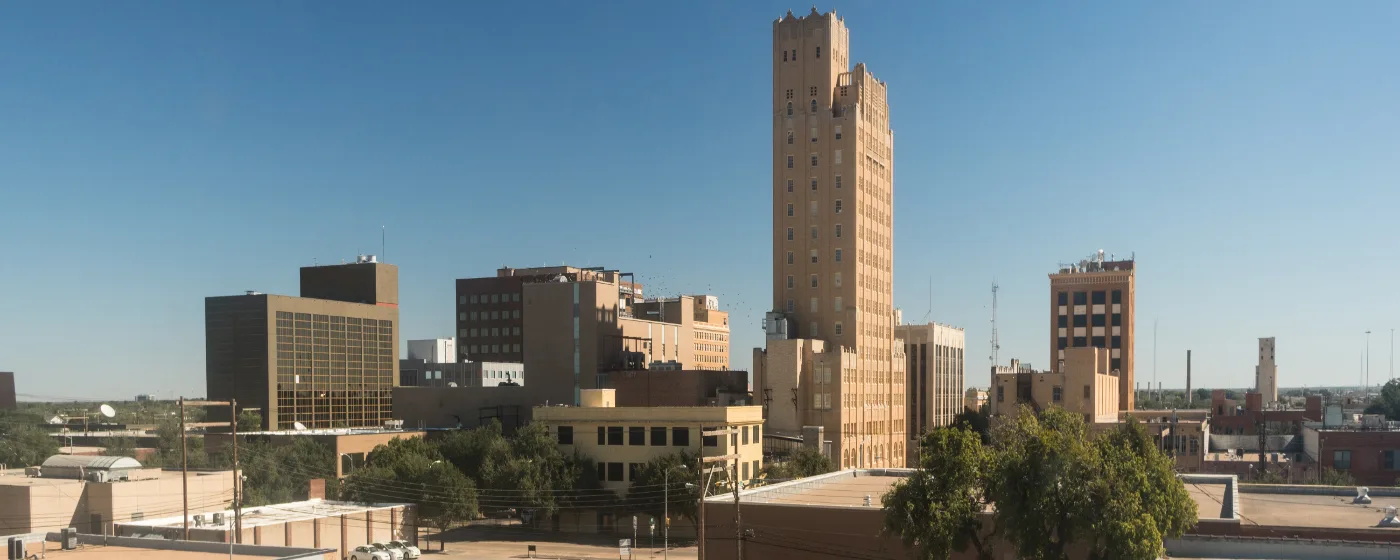
Maybe your orders just came through for Dyess Air Force Base, and you're trying to figure out the city before the moving truck shows up. Maybe you've been watching Texas real estate from the outside and someone mentioned Abilene in the same breath as affordability and a real job market. Either way, the surprise most people have in their first few months here is the same: Abilene is significantly more city than the name "West Texas" tends to suggest. At 131,588 residents, it's the 29th-largest incorporated city in Texas, anchored by I-20 running east-west through the core, with US-83, US-84, and US-277 extending its reach across the surrounding Big Country. This isn't a small town waiting to become something — it already is something.
The economic backbone here is distinctive and more stable than most cities this size. Dyess Air Force Base generates a nearly $310 million annual economic impact and employs more than 13,000 military and civilian personnel, making it the city's single largest employer. A major regional health system anchors the healthcare sector. And then there's the university layer that few cities this size can claim: Abilene Christian University (founded 1906), Hardin-Simmons University (founded 1891), and McMurry University (founded 1923) all operate here, alongside Texas State Technical College and Texas Tech University Health Sciences Center. That combination gives the city an unusual stability — military, medicine, and academia rarely collapse at the same time — and a genuine college-town energy that shows up in the arts scene, the coffee shops, and the sense that the city has a population that actively chose to be here.
The cost of living is the other thing that catches people off guard — pleasantly. Abilene consistently ranks among the most affordable cities in the country by independent cost-of-living measures. The typical home price of $222,710 (July 2026) sits well below what most Texas metros are asking, and the city-wide typical rent runs around $2,017 per month. For a city with three universities, a major military base, and a designated Cultural District, that price level reflects a genuine opportunity, not a place nobody wants to be. The tradeoff is real, though: Fort Worth, the nearest major metro, is about 150 miles away, and Abilene's dining and retail footprint, while solid for its size, doesn't pretend to be a big city. The full cost-of-living breakdown has more detail on taxes, groceries, and what the numbers actually mean day to day.
Whether you're relocating for military service, a university position, a healthcare career, or simply looking for a Texas city where the math still works, the sections below break down Abilene's neighborhoods, housing market, daily life, commuting patterns, local favorites, and what living here is actually like once you've unpacked.
Abilene at a Glance
Looking to buy in Abilene? Estimate your payment.
Enter your numbers to see an estimated monthly mortgage payment.
Estimate only. Excludes HOA fees and mortgage insurance. The interest rate above is a starting point, not a quoted rate — replace it with your own to see real numbers. Insurance is a flat placeholder, not a Abilene quote.
Why Are People Moving to Abilene?
The case for Abilene starts with stability. Three separate economic pillars — military, higher education, and healthcare — underpin the job market, and that mix has kept the city relatively insulated from the boom-bust cycles that hit more resource-dependent West Texas cities hard. When one sector slows, the others tend to hold. That's not an accident; it's the structural reality of a city that has spent a century building institutions.
The Military Connection
Dyess Air Force Base is the single biggest reason people move here — and the single biggest reason they stay longer than they expected to. The base is home to both a bomb wing and an airlift wing, and the ripple effect of more than 13,000 military and civilian personnel runs through every corner of the local economy. If you're PCS-ing to Dyess, the base sits about 7 miles from downtown, and the surrounding neighborhoods are well-practiced at welcoming people who need to get settled quickly.
Three Universities in One City
Abilene Christian University, Hardin-Simmons University, and McMurry University all operate within the city, along with Cisco College, Texas State Technical College, and Texas Tech University Health Sciences Center. That's an unusual density of higher education for a city this size, and it shapes everything: the arts programming, the coffee culture, the career pipeline, and the steady influx of people who came here for school and decided to stay.
Emerging Industries
Wind energy, advanced manufacturing, and aerospace and aviation have been growing alongside the legacy anchors. The regional labor shed spans 140,000 skilled workers across 19 counties, which is part of why larger employers keep taking the city seriously. Great Lakes Cheese operates a significant food manufacturing and logistics presence here, representing a different economic layer than the institutions that dominate the conversation.
Abilene also functions as the destination city for a large surrounding region — residents of smaller Big Country towns come here for shopping, healthcare, cultural events, and dining, which means the city's actual economic footprint is considerably larger than the 131,588 residents within city limits. That regional role reinforces the job market and keeps the retail and dining scene more robust than a city this size might otherwise support.
For a closer look at how the schools fit into the picture, the Abilene schools guide covers the district in detail. And if you're weighing the California-to-Abilene move specifically, the moving from California page addresses the price, tax, and lifestyle delta directly.
What Daily Life Feels Like in Abilene
Six months in, most newcomers say the same thing: the city is bigger than it felt on the drive through. The cultural footprint in particular catches people off guard. Downtown Abilene holds an officially designated Cultural District — one of the first in Texas to earn that designation from the Texas Commission on the Arts — and the density of museums and performing arts venues along those blocks is genuinely surprising for a West Texas city.
The Cultural District Reality
Frontier Texas! uses life-size holographic figures and theatrical environments to tell the story of the frontier era in a way that doesn't feel like a small-town history exhibit. The Grace Museum combines art, history, and science under one roof. The Historic Paramount Theatre still hosts live performances in a restored 1930 venue. And the National Center for Children's Illustrated Literature — the first museum in America dedicated exclusively to picture book art — offers rotating exhibitions and draws visitors from well outside the region.
Abilene also holds the largest collection of storybook sculptures in the world, earning the city the designation of Official Storybook Capital of America®. That's not a Chamber of Commerce stretch — the sculptures are genuinely spread through downtown and have become a fixture of local life, particularly for families with young kids. The annual Children's Art + Literacy Festival draws crowds from across the state and beyond.
Where People Gather
The Abilene Zoo draws crowds from across the region and anchors Nelson Park, which is one of the main gathering spots on a weekend afternoon. The weekly Abilene Farmer's Market is where you'll find people catching up across neighborhoods. On alternating weeks, the downtown ArtWalk opens galleries and museums with live music and performances, free to attend, which has become a consistent fixture in the social calendar.
Active UIL athletics programs run through the schools, and Friday night football fills the stands in the fall in a way that takes some newcomers — particularly those arriving from larger coastal metros — by surprise. This is still Texas, and the rhythm of the school year is shaped around it.
What to Know Before You Move
Summer heat is the adjustment nobody fully anticipates. Abilene averages 243 sunny days a year, which sounds appealing in February and is genuinely oppressive in July and August, when temperatures routinely hit triple digits and outdoor plans get compressed into early mornings. Residents develop habits around it — early runs, afternoon errands, evening everything — but it's a real seasonal quirk worth factoring in if you're moving from a cooler climate.
The city's parks, trails, and lakes provide significant relief; the full picture is on the parks and recreation page. For retirees weighing Abilene specifically, the retiring in Abilene guide covers healthcare access, 55+ options, and lifestyle considerations in more depth.
The Abilene Housing Market Right Now
The typical home price in Abilene sits at $222,710 (July 2026, Zillow Home Value Index) — a figure that reads as almost implausible to buyers arriving from Dallas, Austin, or anywhere in California. That price reflects real homes in real neighborhoods, not distressed inventory or remote rural land. It's one of the most straightforward affordability stories in Texas.
One honest note: the median household income of $62,720 falls a bit short of what's needed to comfortably carry the typical home at current rates. The gap isn't dramatic, but it means first-time buyers especially should run real numbers rather than assuming affordability is automatic. The first-time homebuyer page covers loan programs and what to expect from the process here.
What the Neighborhoods Cost
The city's neighborhoods don't all land at the same price point. Areas like Far Southside (within the Wylie ISD attendance zone), Chimney Rock, River Oaks, Park Central, and the Lytle Lake area run above the city-wide typical price, while Westwood, Elmwood, and the Sayles Boulevard corridor tend to come in below it. The best neighborhoods guide breaks down character, housing stock, and who each area suits.
The Rental Market
The city-wide typical rent of $2,017 per month (Zillow, July 2026) reflects a market that has tightened with the city's growth as a regional hub. Dyess deployments create consistent demand for rental housing across certain parts of the city, which keeps vacancy relatively low in neighborhoods close to the base. More detail on rents by area is on the cost-of-living page.
The effective property tax rate of 1.98% is worth factoring into any purchase calculation — it's on the higher end for Texas, though Texas's lack of a state income tax is the other side of that equation. The cost-of-living breakdown covers the full tax picture.
How This Compares Regionally
Nearby Sweetwater and Brownwood both come in noticeably lower than Abilene's typical price, reflecting their smaller size and more limited job markets. San Angelo, another Big Country regional hub, runs at about the same level as Abilene. If you're weighing those options, the driving factor is usually employment: Abilene's employer base is considerably deeper, and for most buyers the housing price parity with San Angelo isn't enough reason to trade away that job access.
Abilene Neighborhoods
Abilene has several distinct areas — each with its own character and appeal. Here’s a breakdown to help you narrow down where to focus your home search.
🏡 Westwood / Westwood Richland
An established west-side neighborhood with a mix of mid-century and newer homes that attracts buyers looking for value in a settled, tree-lined setting. It runs below the city-wide typical home price, making it one of the more accessible entry points into Abilene homeownership.
🏠 Far Southside (Wylie ISD area)
The primary draw here is the Wylie ISD attendance zone, which pulls families specifically for the school district. Newer construction and a suburban feel characterize the area, and it runs above the city-wide typical price — reflecting consistent demand from parents with school-age children.
🌳 Chimney Rock
A well-established neighborhood with larger homes on generous lots that appeals to buyers looking for space and a quiet residential feel. Prices run above the city median, reflecting the housing stock and the neighborhood's consistent desirability among professionals and families.
🏘 River Oaks / Brookhollow
River Oaks and Brookhollow offer some of Abilene's more refined residential streets, with mature landscaping and a settled character that suits buyers looking for established neighborhoods above the city-wide typical price. The area has a reputation for stability and long-term residents.
🏔 Park Central
Park Central sits above the city-wide typical home price and draws buyers who want proximity to the city's central amenities without sacrificing a genuine neighborhood feel. The area is popular with professionals and university-affiliated households.
🌆 Elmwood
Elmwood has the quiet, established character of a neighborhood that's been there long enough to stop trying to prove anything. It runs below the city median, offers well-maintained older homes on leafy streets, and tends to suit buyers who prioritize character over newness.
Pros & Cons of Living in Abilene
The Pros
- Very low cost of living compared to national and Texas averages
- Stable job base anchored by Dyess AFB and healthcare
- College-town amenities from three universities
- Over 240 sunny days a year with mild winters
The Cons
- Extreme summer heat with frequent 100°F+ days
- Crime rate higher than many similarly sized Texas cities
- Median household income trails state and national averages
- Long drive (2.5+ hours) to the nearest major metro
Getting Around & Commuting in Abilene
Abilene is a driving city. That's not a criticism — it's just the physical reality of a West Texas grid built around the car, where distances between destinations are manageable but almost nothing is within comfortable walking distance of a typical residential neighborhood. Most people who live here have figured out the internal geography quickly and don't think about it twice.
The Internal Commute
Getting around within Abilene is genuinely easy by the standards of any Texas city its size. The internal commute — whether you're headed to downtown, to a university campus, or to Dyess — runs about 15 minutes. Traffic in the traditional sense is almost not a thing here. Rush hour exists in a limited form along I-20 and the main commercial corridors through the core, but it doesn't approach what commuters in Dallas or San Antonio consider normal.
The Highway Network
I-20 is the east-west spine, and it carries the bulk of regional traffic. US-83 heads south and is the primary route toward San Angelo. US-84 and US-277 extend the network across the surrounding Big Country, connecting Abilene to the smaller towns and counties that rely on it as a regional hub. TX-Loop 322 circles enough of the city to make cross-town movement efficient without routing through downtown. For anyone commuting internally, the configuration is genuinely low-stress.
Getting Out of Town
Fort Worth is the nearest major metro at roughly 150 miles — a drive that takes about two and a half hours under normal conditions. That distance is the honest trade-off of Abilene life: the city is self-sufficient for most daily needs, but a big-city trip requires actual planning, not just a 45-minute freeway run.
Abilene Regional Airport (ABI) sits just 7 miles from downtown and offers daily nonstop service to Dallas–Fort Worth, which makes it possible to do a same-day business trip to DFW without a brutal pre-dawn drive to a regional hub. Passenger traffic at ABI grew nearly 20% in 2024, a signal of the city's expanding regional role. For longer trips or international connections, DFW is the practical gateway — and the daily nonstop makes it accessible without an overnight stay.
What People Move Out For
The most common reason people leave Abilene isn't the city itself — it's the isolation from major metro amenities. Specialty retail, certain medical subspecialties, major concert venues, and professional sports all require a long drive. Families who need to be closer to aging parents in a larger city, or career-climbers whose industries are concentrated in Dallas or Austin, tend to be the ones who move on. People who have roots here, or who build them, tend to stay a long time.
Schools in Abilene
Families relocating to Abilene have public, private, and higher-education options nearby. Here’s a quick overview.
🎓 School District
Abilene Independent School District serves K–12 students across Abilene and the surrounding area. Rated C (source: Texas Education Agency, 2025 A-F accountability rating (2024-25 school year)).
🏆 Graduation Rate
The 4-year high-school graduation rate here is approximately 90.9%.
📚 Higher Education
Texas’s public universities — the University of Texas at Austin, Texas A&M University, and the University of Houston — offer four-year degrees statewide, with one of the largest community college systems in the country (50+ public community college districts) providing two-year and workforce programs.
🌐 Online Learning
UT Austin Online and Texas A&M University Online offer fully accredited online degrees for remote learners across the state.
Safety in Abilene
A quick look at how Abilene compares on the numbers that matter most when weighing a neighborhood or a move.
🛡 Violent Crime
Approximately 4 per 1,000 residents.
🔒 Property Crime
Approximately 18 per 1,000 residents.
Compared to the most recent national figures from the Bureau of Justice Statistics (2024), Abilene’s violent crime is above the national average (about 3.7 per 1,000), and property crime is about the same as the national average (about 18.4 per 1,000).
Against Texas as a whole, Abilene’s violent crime is about the same as the state average, and property crime is somewhat below the state average (Bureau of Justice Statistics, Crime Known to Law Enforcement, 2024 (tables 2 and 3)).
Crime rates can vary a lot within a single city, so the citywide numbers above are only a starting point. Some neighborhoods in Abilene run well below these averages, while others run higher — the kind of block-by-block detail that matters most when you’re actually choosing where to live. The full guide below breaks it down neighborhood by neighborhood.
Working in Abilene
Abilene’s largest employers span several industries — here are some of the anchors of the local job market.
🏛 Dyess Air Force Base
Military
🏥 Hendrick Health
Healthcare
🎓 Abilene Christian University
Higher education
🛒 Great Lakes Cheese
Food manufacturing, logistics
🎓 Hardin-Simmons University
Higher education
🎓 Abilene Independent School District
Education
Retiring in Abilene
Abilene draws retirees for its balance of amenities, outdoor access, and cost. Here’s what to weigh.
🌤 Climate
Abilene gets 243 sunny days a year, with mild winters that rarely see significant snow or prolonged freezes. Summers are the real test — July and August bring sustained triple-digit heat that keeps most outdoor activity to early mornings and evenings. Spring and fall are genuinely pleasant, with warm days and cool nights that make the outdoors very livable for extended stretches.
🍴 Lifestyle
Downtown's Cultural District puts the Historic Paramount Theatre, The Grace Museum, Frontier Texas!, and the National Center for Children's Illustrated Literature within easy reach. Independent coffee shops and locally owned restaurants give daily life texture without requiring a big-city commute. Abilene State Park and the city's lakes provide outdoor options for retirees who want to stay active year-round without extreme exertion.
🏚 55+ Communities
No 55+ communities were found in Abilene. Retirees typically purchase in established neighborhoods like Elmwood, Sayles Boulevard, or the River Oaks area, where mature trees and quieter streets offer a settled feel. A major regional medical center within city limits anchors healthcare access for the surrounding area.
✈ Getting Around
Abilene is a car-dependent city, but internal distances are short and traffic is manageable by Texas standards. Most medical offices, grocery options, and cultural venues are concentrated in a way that keeps daily errands reasonable for older drivers. Abilene Regional Airport (ABI), 7 miles from downtown, offers daily nonstop service to Dallas–Fort Worth for trips that require a larger hub.
🏛 Texas Taxes for Retirees — What to Know
- No state income tax — Texas has no personal income tax — constitutionally protected under Article VIII, Section 24. Social Security, pensions, 401(k)/IRA withdrawals, and annuity payments are all untaxed at the state level, with no state return to file.
- Sales tax is the tradeoff — The state sales tax is 6.25%, and local add-ons bring the combined rate in Abilene to 8.25% (Texas Comptroller of Public Accounts, city sales and use tax rates, July 2026). Groceries and prescription drugs are exempt.
- Property taxes — the real tradeoff — Texas’s effective property tax rate averages about 1.40%, among the highest in the country, since property tax (not income tax) funds most local government and schools.
- Over-65 homestead exemption and school-tax freeze — Homeowners 65+ (or disabled) get an additional $60,000 exemption from their home’s value for school district taxes, on top of the general homestead exemption — $200,000 off school taxable value combined, following November 2025’s Proposition 11 (SB 23), which raised the over-65 exemption to $60,000, and Proposition 13 (SB 4), which raised the general homestead exemption to $140,000. Once claimed, your school district tax bill is frozen at that year’s amount and cannot increase as home values rise, and the ceiling can transfer if you move to a new home within Texas.
- Deferral option if cash is tight — Homeowners 65+ can defer property tax payment entirely for as long as they live in the home, rather than paying it currently — interest accrues, but no forced sale.
- No estate or inheritance tax — Texas has no estate tax, no inheritance tax, and no gift tax.
- No separate capital gains tax — Because Texas has no state income tax, capital gains — including on investments and home sales — are not taxed at the state level at all, unlike states such as Washington that tax capital gains separately from income.
Tax laws change frequently and individual situations vary. This is general information, not tax advice — always consult a qualified Texas tax professional or CPA for personalized retirement tax planning.
Weekends & Local Favorites in Abilene
The outdoor options alone are more varied than most people expect from a West Texas city. Lake Fort Phantom Hill, a city-owned reservoir, draws locals for swimming, water skiing, sailing, and windsurfing. Kirby Lake offers a boardwalk and nature play area that's become a regular spot for birdwatchers, with fishing and boating alongside the quieter activity. Redbud Park is a neighborhood anchor worth knowing. And Abilene State Park — on 530 acres next to Lake Abilene, less than 20 miles from downtown — completed major renovations in 2025, including the restoration of its historic swimming pool; it's where you go for hiking, fishing, horseback riding, and camping when you need to feel genuinely away from things.
Coffee & Mornings
The independent coffee scene reflects the university population. Monks Coffee Shop is a consistent local institution, quieter in character and good for the kind of morning that requires actual focus. Front Porch Coffee Company leans more casual and social. Mezamiz Coffee House has built a loyal following. Statesman Coffee and Mad Coffee & More round out a scene that is meaningfully deeper than what most cities this size can sustain — a direct result of three universities generating a steady population of people who take their coffee seriously.
Dining
Lytle Land & Cattle Company is where Abilene takes people when they want to show the city off — a steakhouse that earns its reputation in a state where steakhouses are not given the benefit of the doubt. Belle's Chicken Dinner House is the other institution in that category: old-school, deeply local, the kind of place that has regulars who've been coming for decades. Beehive Restaurant brings a more contemporary sensibility to the local dining scene. Galveston Seafood Company handles the seafood side — a reasonable feat for a landlocked city 300 miles from the coast. Taylor County Taphouse covers the craft beer end of things and has become a social anchor for a certain cross-section of the city.
Markets & Community
The Abilene Farmer's Market is more than a produce run — it's genuinely one of the places where the city's different communities overlap and run into each other. The storybook sculptures scattered through downtown give families a reason to walk the blocks between cultural institutions, and the Abilene Zoo at Nelson Park remains one of the most visited spots in the region, drawing crowds from well outside the city limits.
For anyone moving here from a larger city and worried about cultural thinness: the Paramount Theatre still hosts live performances in its original 1930 space, the ArtWalk draws a real crowd on alternating evenings, and the Children's Art + Literacy Festival each June draws attendees from across the country. It's not Austin, and it doesn't try to be — but it sustains a cultural life that most cities of this size do not.
Local favorites in Abilene
Restaurants
- Lytle Land & Cattle Company
- Taylor County Taphouse
- Belle's Chicken Dinner House
- Galveston Seafood Company
- Beehive Restaurant
Outdoors
- Lake Fort Phantom Hill
- Abilene State Park
- Kirby Lake
- Redbud Park
- Nelson Park
Coffee
- Monks Coffee Shop
- Front Porch Coffee Company
- Mezamiz Coffee House
- Statesman Coffee
- Mad Coffee & More
Farmers Markets
- Abilene Farmer's Market
Top Things Locals Say About Abilene
The best intel about a city comes from the people who actually live there. Here’s what Abilene residents say when newcomers ask the questions everyone’s thinking.
“I thought I'd be in Abilene for two years and then move somewhere bigger. That was seven years ago. Once you figure out the city — where to go for what, which neighborhoods feel right, what the summers actually require — it stops feeling like a compromise and starts feeling like a place you chose.”
— Recent Abilene home buyer
“What's the most surprising thing about living in Abilene?”
The cultural life. People expect West Texas and picture nothing — and then they find a world-class storybook sculpture collection, a functioning 1930s theatre, and a museum dedicated entirely to children's picture book art, all within a few walkable blocks downtown. The ArtWalk brings real crowds. The zoo draws visitors from well outside the city. It doesn't match the expectation people have before they arrive.
“What do locals love most about Abilene?”
The pace and the price, honestly. You can own a real home here, have a real job, and still have evenings that aren't consumed by a two-hour commute. Lake Fort Phantom Hill is where half the city ends up on a warm weekend — sailing, fishing, just sitting by the water. The university presence keeps the city young and the coffee scene genuinely good. And there's a friendliness here that isn't performative; people actually wave.
“What should newcomers to Abilene know?”
Plan your summer schedule around the heat. By July, you're running errands before 9 a.m. or after 7 p.m., and outdoor plans get rescheduled constantly. Also: Abilene is bigger than it looks from I-20. The south side, the university corridors, the Wylie ISD area — these are distinct parts of the city with different feels, and it's worth driving all of them before you decide where to land. The Sayles Boulevard area and the neighborhoods around Elmwood have a character that doesn't show up in a quick pass through downtown.
“How much do you need a car in Abilene?”
For nearly everything. Most errands require a drive, and the distances between residential neighborhoods and commercial areas mean walking is the exception rather than the norm. That said, internal commutes are short — getting from one end of the city to the other rarely takes more than 15 to 20 minutes, even in the heavier traffic hours along the I-20 corridor. A car is essential; traffic is not a problem.
Cities Near Abilene
Other communities near Abilene worth a look — each with its own character and price point.
| City | Distance | Best For | Vibe | Median Rent | Median Buy |
|---|---|---|---|---|---|
| Sweetwater | 40 mi | Budget buyers, rural character | Small, quiet, working-town feel | $900 | $150,000 |
| Brownwood | 70 mi | Retirees, slower pace | Laid-back, historic, affordable | $950 | $172,876 |
| San Angelo | 90 mi | Similar amenities, river setting | Regional hub, arts-forward, outdoor access | $1,332 | $214,811 |
More Helpful Guides for Abilene
Going deeper on Abilene? Our blog series covers everything from first-time buying to retiring here — explore the guides below.
Local Expert Takeaway: Abilene's affordability is real, but the city's strongest selling point is its unusual economic stability: Dyess Air Force Base, three universities, and a major regional health system don't all struggle at the same time. The internal commute is genuinely easy, the cultural district punches above its weight, and the outdoor options — Lake Fort Phantom Hill, Abilene State Park, Kirby Lake — are within a short drive of any neighborhood. The honest catch is geography: Fort Worth is 150 miles away, and a big-city trip requires planning. People who build a life here tend to stop thinking about that fairly quickly. People who can't live without walkable access to a major metro don't last long.
Quick Takeaways & FAQs
✅ Dyess Air Force Base, three universities, and a major regional health system give Abilene an economic stability rare in cities its size.
⚠️ The effective property tax rate of 1.98% is on the higher end for Texas, and the median household income falls slightly short of what's needed to carry the typical home comfortably.
📍 Abilene is the Official Storybook Capital of America® and holds the world's largest collection of storybook sculptures — a distinctive cultural identity that shapes the downtown experience.
Is Abilene, TX a good place to live?
What is the cost of living like in Abilene?
How are the schools in Abilene?
What is there to do in Abilene on weekends?
Is Abilene growing or shrinking?
Helpful Links for Moving to Abilene
Moving to Texas?
Tell us what you need help with and we'll connect you with local resources.
