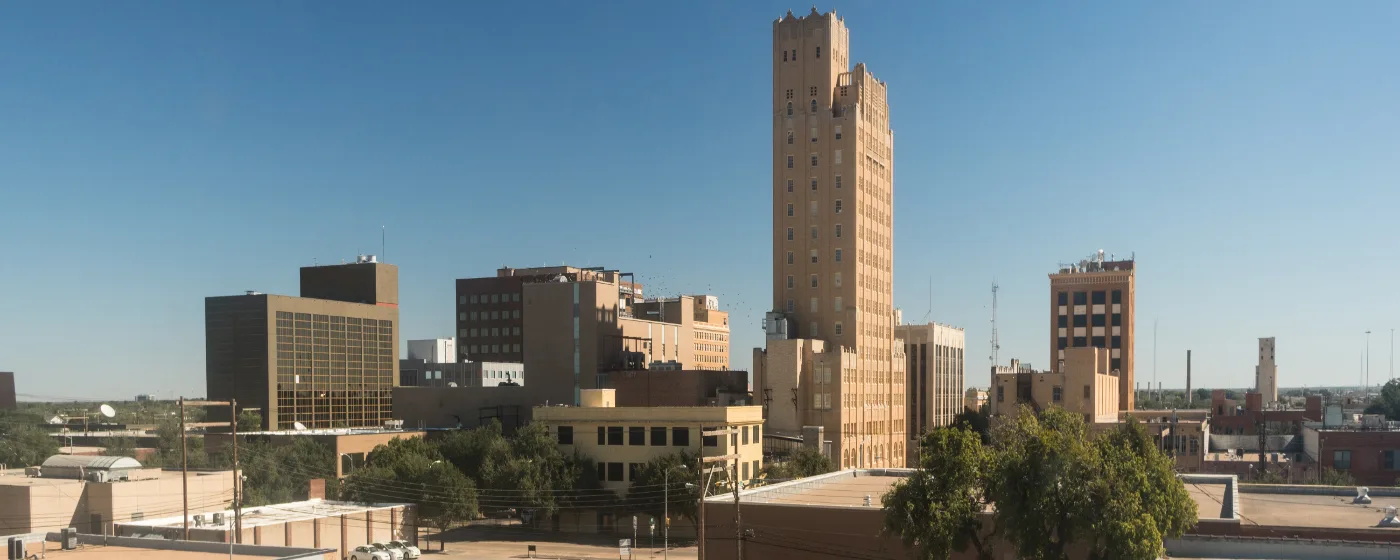
Maybe you've been priced out of Austin or Dallas and someone mentioned Abilene. Maybe Dyess Air Force Base is relocating you here. Either way, the number that stops most people mid-scroll is the home price: $222,710 (July 2026), a figure that looks like a misprint to anyone coming from a major Texas metro. It is not a misprint. Abilene, a city of 131,588 in West Central Texas anchored by I-20 and several US highways, delivers a genuinely below-average cost of living — housing runs well below national norms, and groceries and transportation follow. Utilities are the one category that pushes back, driven by West Texas summer heat that makes air conditioning a fixed cost rather than a variable one.
The economic backbone here runs deeper than most people expect from a city this size. Dyess Air Force Base is the dominant employer and stabilizes the local housing market in ways that matter: military families cycle in and out, which keeps rental demand steady and prevents the bust cycles that plague other West Texas towns. Hendrick Health, Abilene Christian University, and Hardin-Simmons University round out the employer base alongside the Abilene Independent School District. That mix — government, healthcare, higher education — creates a floor under the local economy that pure energy- or agriculture-dependent towns lack.
The cost picture is genuinely favorable, with one honest asterisk: utilities run above the national average, driven by West Texas summer heat and the cooling loads that come with it. Housing, groceries, and transportation all land below national norms, and Texas's no-income-tax structure hands every working resident an immediate advantage over most of the country. The trade-off is a property tax rate of approximately 1.98% — high by national standards, though it applies to home values that are well below most of the country's.
Whether you're crunching numbers before a move or comparing Abilene against nearby alternatives, the sections below cover what it actually costs to live here: housing, everyday expenses, how Abilene compares to nearby cities, and what the tax structure means for your real take-home situation.
What It Really Costs to Live in Abilene
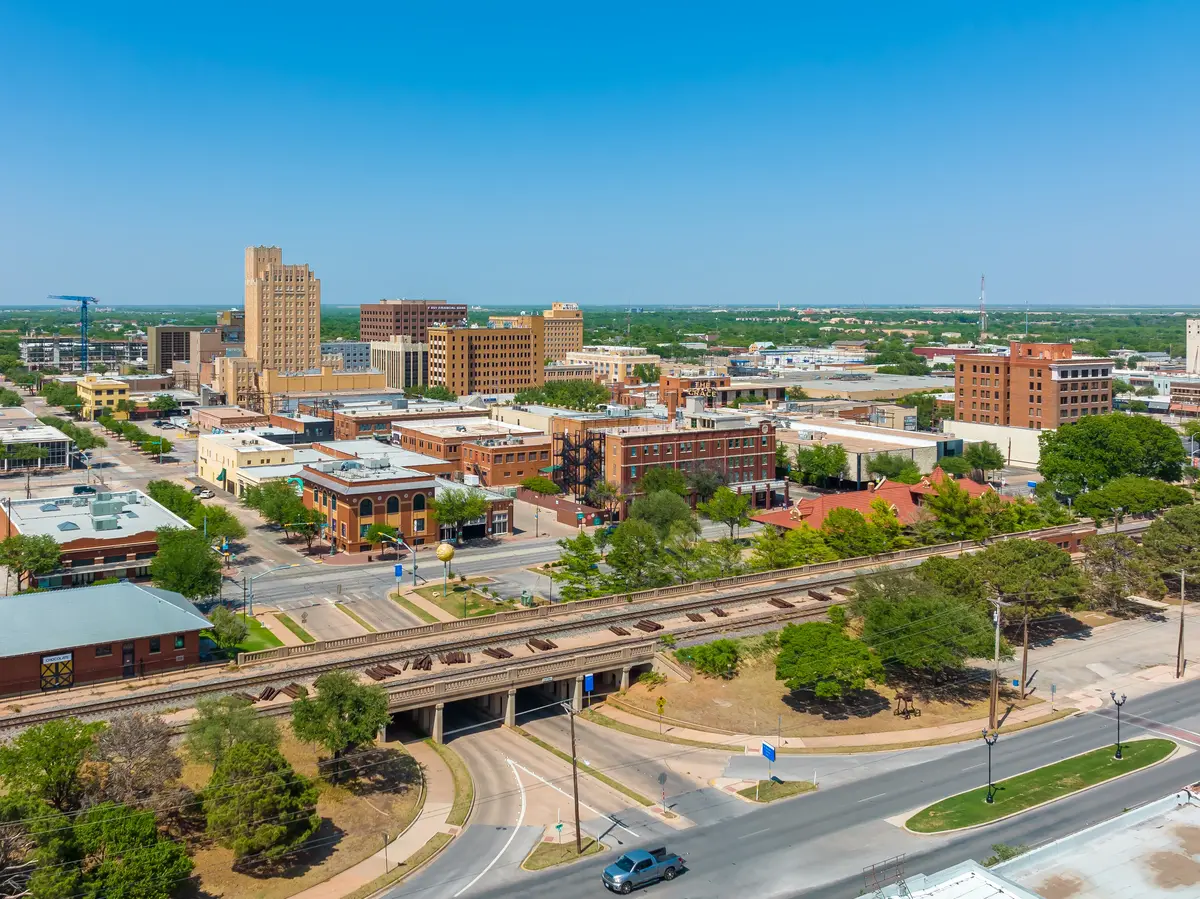
Abilene's affordability is real, not marketed. Housing is the single largest reason — prices run noticeably below national norms, and that gap is wide enough to matter on a budget built around a median household income of $62,720. Among mid-size Texas cities, Abilene consistently appears alongside Amarillo and Harlingen when people are comparing genuinely budget-accessible options.
The one category that bites back is utilities. West Texas summers are long and genuinely hot, and air conditioning runs hard from May through September. That seasonal cooling load pushes utility costs above national averages — the price of living in a place where the sun dominates the calendar. Groceries and transportation both come in below national averages, so the overall picture remains favorable even after accounting for the utility premium.
Within Texas, Abilene sits noticeably cheaper than Austin, San Antonio, or the Dallas-Fort Worth corridor. The honest read: Abilene is a city where a moderate income goes meaningfully further than in most of Texas — as long as you plan for the summer electric bill.
Housing: Rent vs Buy in Abilene
The typical home price in Abilene is $222,710 (Zillow Home Value Index, July 2026). Entry-level homes — older construction, smaller square footage — start well below that figure and are concentrated in the more established parts of the city; the Best Neighborhoods guide maps those areas in detail. Neighborhoods like Chimney Rock, River Oaks, and Park Central run above the city median, while areas like Westwood, Elmwood, and the Sayles Boulevard corridor come in below it. The Far Southside, particularly within Wylie ISD, is a popular area for families — see the neighborhoods guide for how it fits the broader market.
One honest flag on affordability: the median household income of $62,720 falls short — by roughly $7,000 — of what's needed to carry the typical home at current rates. That gap is narrow enough that buyers with dual incomes, a VA loan through Dyess, or meaningful savings often clear it, but it does mean that a single-income household at the median needs to be deliberate about purchase price. The first-time homebuyer guide covers loan options and down payment programs in detail.
The effective property tax rate is approximately 1.98% — a meaningful number that every buyer needs to factor in. Texas funds schools and local services through property taxes rather than income taxes, and Abilene's rate reflects that structure. The interactive calculator below shows how it stacks against the principal and interest at current rates.
Renting makes more sense than buying in Abilene primarily for military families and others on short rotation schedules. The city-wide typical rent is $2,017 per month (Zillow ZORI, July 2026), which is competitive for the square footage available in this market. Longer-term residents who can commit to a purchase and hold through the property tax load will generally build equity faster here than in higher-priced Texas markets — the entry point is simply lower.
Everyday Costs Beyond Housing in Abilene
| Category | Typical Monthly Cost | Notes |
|---|---|---|
| Housing (typical rent) | $2,017/mo | City-wide typical rent. Buying? Use the calculator above for a mortgage estimate. |
| Utilities | $190–$270/mo | Electricity, gas, water, sewer, trash |
| Groceries | $500–$700/mo | Food at home, household of 2–3 |
| Transportation & Gas | $200–$340/mo | Fuel, and transit where it is a real option |
| Phone & Internet | $110–$180/mo | Mobile plan plus home broadband |
| Misc / Discretionary | $200–$420/mo | Dining out, entertainment, subscriptions |
Non-housing figures are estimates for a household of two to three, not a sourced index; housing is the city-wide typical rent (Zillow ZORI, July 2026). Refreshed with the rest of the city data.
Groceries run below the national average, and they're exempt from both Texas state and Abilene city sales taxes — a straightforward win at the checkout line. Transportation costs land below national norms as well, though the savings come with a caveat: Abilene is a car-dependent city by design. CityLink, the city's public bus system, covers a broad network of routes and works for some commutes, but most residents structure their lives around a personal vehicle. Fuel and insurance costs are the dominant transportation line items here.
The utility bill is the one category that consistently surprises people after their first full summer. An estimate using standard assumed usage levels puts a combined electricity, water, sewer, and trash bill at roughly $231 per month — but that figure uses normalized consumption, and a West Texas summer with an older home and a working HVAC system can run considerably higher. AEP Texas North handles transmission and distribution, while residents choose among competing retail electric providers under Texas's deregulated market structure. Shopping your electric plan annually is standard practice here, not optional.
Looking to buy in Abilene? Estimate your payment.
Enter your numbers to see an estimated monthly mortgage payment.
Estimate only. Excludes HOA fees and mortgage insurance. The interest rate above is a starting point, not a quoted rate — replace it with your own to see real numbers. Insurance is a flat placeholder, not a Abilene quote.
Abilene vs Nearby Cities: Cost Comparison
| City | Typical Home Price | Typical Rent | Cost vs Abilene |
|---|---|---|---|
| Abilene (this city) | $222,710 | $2,017/mo | — |
| Sweetwater | $150,000 | $900/mo | 33% lower |
| Brownwood | $172,876 | $950/mo | 22% lower |
| San Angelo | $214,811 | $1,332/mo | 4% lower |
Source — home prices: Zillow ZHVI, July 2026; rent: Zillow ZORI, July 2026. Nearby-city figures are the same series, refreshed together.
Abilene sits near the middle of its regional market — Sweetwater and Brownwood both come in noticeably lower on home prices, while San Angelo tracks at roughly the same level; the full comparison table with current figures is rendered below.
Taxes & the Bottom Line for Abilene
Texas levies no personal state income tax, and no Texas city or county may impose one — residents pay only federal income tax on earned wages. That structure is a genuine financial advantage for anyone relocating from California, Illinois, Oregon, or any other state with a meaningful income tax. The savings are immediate and compounding, especially for households in higher federal brackets.
The combined sales tax rate in Abilene is 8.25%, made up of a 6.25% Texas state rate and a 2% city rate, with no county layer on top. Groceries are exempt, which softens the real-world impact of that rate for most households. On discretionary purchases — electronics, appliances, clothing — the 8.25% adds up, but it remains in line with most Texas cities.
The effective property tax rate of approximately 1.98% is the honest counterweight to the income-tax advantage. It is high by national standards, applying even in years when home values stay flat. On the home-price figures this city carries, the annual load is manageable for most buyers — but it is the number that most people moving from low-property-tax states underestimate, and it tends to close the gap between what Abilene looks like on paper and what it costs in practice.
The bottom line: Abilene works best for households that have stable employment — military, university, healthcare, or remote — and are prepared to own rather than rent long-term. The no-income-tax structure rewards earners, the housing entry point is among the lowest in Texas for a city of this size, and the everyday cost profile is genuinely favorable. Buyers who find it a stretch are typically single-income households trying to purchase above the city median, or people moving from lower-property-tax states who haven't modeled that annual bill. For retirees, the calculus is different — see the retiring in Abilene guide for a full breakdown of fixed-income considerations.

Local Expert Takeaway: Abilene's cost advantage is driven almost entirely by housing — at $222,710 (July 2026), the typical home price is a fraction of what buyers face in Dallas or Austin, and the Texas income-tax structure adds to the advantage. The real numbers to model before you move: a property tax rate of approximately 1.98% and a utility bill that climbs sharply in summer. Buyers with a VA loan from Dyess or dual household income will find the math works comfortably; single-income buyers near the city median need to be deliberate about purchase price to keep the monthly load reasonable.
Quick Takeaways & FAQs
✅ Abilene's typical home price of $222,710 (July 2026) is among the lowest of any Texas city above 100,000 people — a genuine entry-point advantage for buyers priced out of larger metros.
⚠️ The effective property tax rate of approximately 1.98% is high by national standards and regularly surprises buyers coming from states that fund services through income taxes instead.
📍 Abilene is car-dependent in practice — budget for a vehicle, fuel, and auto insurance as non-negotiable line items regardless of the public transit option.
Is Abilene, TX actually affordable compared to the rest of Texas?
What is the typical home price in Abilene, and can a median-income household afford it?
How much are property taxes in Abilene, TX?
What is the sales tax rate in Abilene?
Do I need a car to live in Abilene, TX?
Moving to Texas?
Tell us what you need help with and we'll connect you with local resources.
