
What Is Living in Harlingen, Texas Like?
Maybe your company is relocating you here. Maybe you've been priced out of Austin or San Antonio and someone mentioned that Harlingen, deep in the Rio Grande Valley, costs a fraction of what those metros charge. What surprises most people is how much city 72,467 residents have built in a place that rarely makes national headlines: a city-owned international airport four miles from downtown, a port that recorded $4.6 billion in economic activity in 2023, and a downtown revitalization effort backed by the Texas Main Street Program. Harlingen sits at the junction of I-69E and I-2 in Cameron County, positioned as a logistics and trade hub connecting Mexico, the Gulf Coast, and the rest of Texas.
The economic backbone here runs deeper than most newcomers expect. Harlingen Consolidated Independent School District — with 16,193 students enrolled in 2025-26 — is the city's largest employer, and Texas State Technical College adds a workforce-training pipeline that feeds the region's growing logistics and trade sectors. The Port of Harlingen and Valley International Cold Storage reflect the city's role in international trade and food distribution. The city's Economic Development Corporation reported attracting more than 1,065 new jobs and $39.5 million in investments over three years through the 2025 State of the City Address. Families with school-age children, healthcare workers, and people working in trade-dependent industries are among the most common newcomers, alongside remote workers who have discovered that the cost savings here are substantial.
The cost story is real and it is specific. The typical home price in Harlingen stood at $200,595 as of July 2026, and typical rent runs $1,124 per month — figures that sit well below what most Texas metros charge for comparable square footage. The overall cost of living runs noticeably below the national average across housing, groceries, utilities, and everyday goods. The catch is that the median household income here is also modest at $53,645, and the income needed to carry the typical home price is a meaningful stretch above that. You get purchasing power, but you are also entering a market where local wages reflect local conditions. For the full breakdown on taxes, utilities, and how the numbers stack up, see the cost of living page. The city logs 229 sunny days a year, a genuine warmth that makes outdoor life a year-round proposition — though summers are hot in a way that shapes how and when people spend time outside.
Whether you are weighing a move for work, retirement, or simply looking for a more affordable foothold in Texas, the sections below break down Harlingen's neighborhoods, cost of living, schools, local favorites, and what daily life here is really like.

Harlingen at a Glance
Looking to buy in Harlingen? Estimate your payment.
Enter your numbers to see an estimated monthly mortgage payment.
Estimate only. Excludes HOA fees and mortgage insurance. The interest rate above is a starting point, not a quoted rate — replace it with your own to see real numbers. Insurance is a flat placeholder, not a Harlingen quote.
Why Are People Moving to Harlingen?
The honest answer: affordability brought them, and the quality of life kept them. Harlingen's cost of living running well below the national average is not a marketing claim — groceries, utilities, and housing all run measurably cheaper here than in most Texas metros, and the gap is wide enough to change how a household budget actually feels month to month.
The Economic Pull
Harlingen is a logistics city in a trade corridor, and that shapes who finds work here. I-69E and I-2 connect the city directly to the Mexican border and northward through Texas, and the Port of Harlingen gives water-borne freight access to the Gulf. That infrastructure has built a real job base in warehousing, distribution, and food processing — Valley International Cold Storage is one visible anchor in that sector.
The public sector is equally significant. Harlingen Consolidated ISD and the City of Harlingen together represent a large share of stable local employment. Texas State Technical College, whose main campus is here, trains workers in technical fields and contributes to a workforce pipeline that regional employers increasingly rely on. Over three years through 2025, the city's EDC drew more than 1,065 new jobs and $39.5 million in investment — a pace that reflects a city actively working to broaden its base beyond traditional anchors.
The Rio Grande Valley Growth Story
The broader metro context matters for anyone thinking long-term. The Rio Grande Valley is projected to grow from 1.5 million to 2.5 million residents by 2040, among the fastest-growing areas in the country. Harlingen sits at the center of that expansion as a principal city of the metro — which means infrastructure investment, commercial development, and job creation are likely to continue at a pace that smaller surrounding cities cannot match.
Downtown Harlingen is actively revitalizing under the Texas Main Street Program, with property owners in the Public Improvement District voluntarily funding streetscape and storefront improvements. This is not a city coasting — it is one with a city debt cut nearly 25% and a property tax rate at its lowest point in more than 25 years.
Who Actually Moves Here
| Buyer / Mover Type | Why Harlingen Works | What to Know |
|---|---|---|
| First-Time Buyers | Entry-level home prices well below Texas metro averages | Household income gap means financing needs careful planning |
| Families | HCISD schools, TSTC nearby, active UIL programs | Test score proficiency rates are a factor worth researching |
| RGV Commuters | Central Valley location, about 25 minutes to Brownsville, TX | US-77 and US-83 carry heavy traffic at peak hours |
| Renters Moving to Own | Typical rent and typical buy price both among lowest in Texas | Limited luxury rental stock; most rentals are modest single-family |
| Retirees | Sunshine, low costs, Sunshine Country Club Estates 55+ community | Summer heat limits outdoor activity for months at a stretch |
| Remote Workers | Dramatic cost savings vs. virtually any other U.S. metro | Broadband coverage is improving but not uniform across all areas |
The profile of people moving here has broadened in recent years. Longtime Valley families who grew up here and stayed are joined by out-of-state arrivals drawn by the cost differential, and by retirees from colder states who discovered that 229 sunny days a year goes a long way.
What Daily Life Feels Like in Harlingen
Life in Harlingen is car-dependent — that is the honest baseline. Most of what you need is within the city, but you will drive to get there. The city covers more than 40 square miles and its commercial strips run along US-77 and US-83, not in a walkable core. Once you accept that, the day-to-day rhythm is genuinely comfortable and low-stress compared to what most Texas metros offer.
The Seasonal Reality
Summer here is serious. From late May through September, high temperatures regularly reach the upper 90s and nudge past 100 degrees, and the humidity off the Gulf makes it feel heavier than a dry-heat reading suggests. Newcomers from northern climates almost universally underestimate it. The local adaptation is real: early morning outdoor time, afternoon indoors, and a social culture that picks back up when the sun drops.
The flip side is a winter that rarely demands more than a light jacket and a spring that arrives early and stays long. Those 229 sunny days a year are concentrated in the shoulder seasons when outdoor life in Harlingen is genuinely excellent. The Rio Grande Valley Birding Festival each November draws participants from around the world, and Hugh Ramsey Nature Park — a 55-acre World Birding Center site with over 400 recorded species in the vicinity — makes it clear that this is a city serious about its natural environment, not just trading on a label.
Community and Culture
Harlingen has a strong Mexican-American cultural identity that shapes everything from the food scene to local celebrations. It is not a college-party town or a tourist destination — it is a working city with deep roots, where family gatherings and community events tend to be the social anchors rather than a nightlife strip.
Downtown is genuinely in transition. The Texas Main Street Program investment is visible in improved streetscapes and active storefronts, but the density and on-foot access of a mature downtown are still developing. Parents with school-age children find that UIL athletics and activities fill a significant part of the weekly calendar — Friday night football is a community event here in the full South Texas sense of that phrase. For what the parks system and outdoor amenities look like day-to-day, the parks and recreation page has the full picture.
What Surprises People After Six Months
The thing longtime residents mention most to newcomers: errands that look close on a map take longer than expected, not because of traffic jams but because of rail crossings. Freight rail runs through the city, and at-grade crossings on several major surface streets can add five to ten minutes to a trip with no warning. It is minor in isolation and genuinely annoying when you are in a hurry.
The second surprise is how much the city has to offer medically and educationally once you dig past the surface. Texas State Technical College runs genuine technical workforce programs, and the healthcare infrastructure is more substantial than a city of this size would typically support, a reflection of Harlingen's role serving the broader Valley region.
The Harlingen Housing Market Right Now
The typical home price in Harlingen stood at $200,595 as of July 2026 — a figure that makes Harlingen one of the most accessible ownership markets in Texas. For buyers coming from larger metros, the number can feel almost implausible until you start looking at actual listings and realize the market is real and the inventory is genuine.
What the Market Actually Looks Like
Entry-level housing in Harlingen tends toward older single-family homes from the mid-20th century, particularly in areas like South Harlingen and parts of East Harlingen. Newer construction is concentrated in the northern reaches of the city and in planned neighborhoods like Stonebriar and Nantucket Estates, which attract buyers who want newer builds without the premium of a larger Texas market.
The city-wide typical home price masks meaningful variation across neighborhoods — some areas run well above the city median, others serve as genuine entry points into homeownership. The neighborhoods page covers each area's character and who it tends to suit.
One Honest Note on Affordability
The median household income of $53,645 sits below the income level needed to carry the typical home price here — by a meaningful margin. That gap is smaller than what buyers face in Austin or Dallas, but it is real and it matters when you are planning a purchase. Buyers who make it work typically bring a solid down payment, have household income above the median, or are relocating from a market where they built equity. For guidance on financing and the buying process specific to this market, the first-time homebuyer page has the detail.
The Rental Side
Typical rent in Harlingen runs $1,124 per month as of July 2026, which reflects the same affordability dynamic as the ownership market. The rental stock skews toward modest single-family homes and smaller apartment complexes — this is not a city with a significant luxury rental pipeline. For the full cost-of-living breakdown including how rents compare across the city, see the cost of living page.
Property taxes here carry an effective rate of approximately 1.44%, which is moderate relative to Texas overall — a state with no income tax that funds services through property levies. The no-income-tax environment and overall cost structure is part of why Harlingen's composite affordability compares favorably to virtually every other Texas metro.
Harlingen Neighborhoods
Harlingen has several distinct areas — each with its own character and appeal. Here’s a breakdown to help you narrow down where to focus your home search.
🏡 Treasure Hills
One of Harlingen's more established residential enclaves, Treasure Hills draws buyers who want mature landscaping and a neighborhood that feels settled rather than still developing. The housing stock tends toward mid-size single-family homes and the area has a suburban feel that suits families and longer-term residents alike.
🏠 Downtown Harlingen
Downtown is Harlingen's active work-in-progress — the Texas Main Street Program investment is visible in improved streetscapes and storefronts, and the Harlingen Arts and Heritage Museum anchors the cultural side. Buyers who get in during this revitalization period tend to be patient optimists comfortable with a neighborhood still finding its footing.
🌳 North Harlingen (Dilworth Ranch Estates / Acacia area)
North Harlingen has attracted newer residential development and tends to appeal to buyers looking for more recently built homes with modern layouts. The Dilworth Ranch Estates and Acacia corridor give this part of the city a planned-subdivision character that contrasts with the older neighborhoods to the south.
🏘 South Harlingen
South Harlingen offers some of the city's more accessible entry points into homeownership, with housing stock that skews older and lots that tend to be larger relative to price. It suits buyers willing to take on a home with character in exchange for more square footage and a quieter residential feel.
🏔 East Harlingen (Homeland / Russell Estates area)
The Homeland and Russell Estates corridor on Harlingen's east side mixes established residential streets with pockets of newer development. It suits buyers who want proximity to Valley International Airport and the eastern highway connections without paying a premium for a more finished neighborhood.
🌆 Stonebriar / Nantucket Estates
Stonebriar and Nantucket Estates are among the city's more planned and polished residential developments, drawing buyers who want a newer-build feel with consistent streetscapes. The area appeals particularly to families with school-age children and to buyers relocating from larger metros who want a neighborhood that feels familiar in its layout.
Pros & Cons of Living in Harlingen
The Pros
- Cost of living well below the national average
- Mild, sunny winters that draw seasonal 'Winter Texan' residents
- Strong healthcare and education job base
- Short drive to South Padre Island beaches
The Cons
- Property crime rate above the national average
- Long, hot and humid summers
- Several campuses rated below-average on GreatSchools/Niche
Getting Around & Commuting in Harlingen
Harlingen is a car city, full stop. Most residents use a personal vehicle for virtually every daily trip, and the city's layout — more than 40 square miles, commercial activity spread along the main highways — makes that true regardless of where you live. The good news is that within-city traffic is manageable compared to what most Texas metros demand — rush hour here is real but short-lived.
The Road Network
The city's highway access is genuinely strong. I-69E and I-2 intersect here, giving direct freeway connections in multiple directions. US-77 serves as the main north-south commercial spine through the city, carrying the bulk of surface-street traffic, while US-83 runs east-west and connects Harlingen to McAllen and the rest of the Valley corridor. TX-107 and Loop 499 handle circulation within the city, and Spur 206 provides access to Valley International Airport.
The commute to Brownsville is about 25 minutes — a trip most people make on US-77 or I-69E depending on their exact origin. McAllen, the Valley's largest city and a major employment center, is roughly 45 minutes west on US-83. Many Harlingen residents commute in both directions depending on where their employer is located, which is common in a metro where cities blur into one another along the main highway corridors.
Valley International Airport
Valley International Airport (HRL) is owned by the city and sits just four miles from downtown — one of the more convenient airport locations for any city of this size. Southwest, American, United, Frontier, and Viva Aerobus all operate service here, giving residents genuine options for domestic and cross-border travel without driving to a larger hub city. Valley Metro bus service connects the airport to surrounding communities for those who need it.
What Commuters Actually Experience
The at-grade freight rail crossings scattered across the city are the variable that local commuters know to account for. On US-77 and on several internal surface streets, an unexpected freight train can add meaningful time to a trip — long enough to be frustrating, common enough to require planning around if your route crosses the tracks regularly.
For people working remotely or in-city, traffic is rarely the dominant concern. Harlingen's layout means that most points of interest — shopping, schools, the airport, healthcare — are within 15 to 20 minutes of most residential areas without freeway travel. That convenience is one of the quality-of-life advantages the city's size delivers.
| Destination | Typical Drive | Primary Route |
|---|---|---|
| Brownsville, TX | About 25 minutes | US-77 / I-69E |
| Valley International Airport (HRL) | ~10 minutes from most of the city | Spur 206 / US-77 |
| Downtown Harlingen | 10–20 min from residential areas | Loop 499 / US-83 |
| McAllen, TX | ~45 minutes | US-83 westbound |
| South Padre Island | ~45 minutes | US-77 / TX-100 |
| Mexican border crossing (Los Indios) | ~20 minutes | I-2 / FM roads |
Schools in Harlingen
Families relocating to Harlingen have public, private, and higher-education options nearby. Here’s a quick overview.
🎓 School District
Harlingen Consolidated Independent School District serves K–12 students across Harlingen and the surrounding area. Rated B (source: Texas Education Agency, 2025 A-F accountability rating (2024-25 school year)).
🏆 Graduation Rate
The 4-year high-school graduation rate here is approximately 95.4%.
📚 Higher Education
Texas’s public universities — the University of Texas at Austin, Texas A&M University, and the University of Houston — offer four-year degrees statewide, with one of the largest community college systems in the country (50+ public community college districts) providing two-year and workforce programs.
🌐 Online Learning
UT Austin Online and Texas A&M University Online offer fully accredited online degrees for remote learners across the state.
Safety in Harlingen
A quick look at how Harlingen compares on the numbers that matter most when weighing a neighborhood or a move.
🛡 Violent Crime
Approximately 3 per 1,000 residents.
🔒 Property Crime
Approximately 27 per 1,000 residents.
Compared to the most recent national figures from the Bureau of Justice Statistics (2024), Harlingen’s violent crime is below the national average (about 3.7 per 1,000), and property crime is above the national average (about 18.4 per 1,000).
Against Texas as a whole, Harlingen’s violent crime is roughly two-thirds of the state average, and property crime is somewhat above the state average (Bureau of Justice Statistics, Crime Known to Law Enforcement, 2024 (tables 2 and 3)).
Crime rates can vary a lot within a single city, so the citywide numbers above are only a starting point. Some neighborhoods in Harlingen run well below these averages, while others run higher — the kind of block-by-block detail that matters most when you’re actually choosing where to live. The full guide below breaks it down neighborhood by neighborhood.
Working in Harlingen
Harlingen’s largest employers span several industries — here are some of the anchors of the local job market.
🎓 Harlingen Consolidated Independent School District
Education
🏛 City of Harlingen
Municipal government
🏥 Valley Baptist Medical Center – Harlingen
Healthcare
🎓 Texas State Technical College
Higher education
🛒 Valley International Cold Storage
Food processing, logistics
Parks & Recreation in Harlingen
Some of the outdoor spaces that shape everyday life in Harlingen.
🌱 Hugh Ramsey Nature Park
Harlingen residents don’t have to go far for green space — spots like Hugh Ramsey Nature Park are part of everyday life here, whether that’s a morning walk, a weekend hike, or just somewhere to unwind outside. The full guide below covers more of what Harlingen has to offer for parks and outdoor recreation.
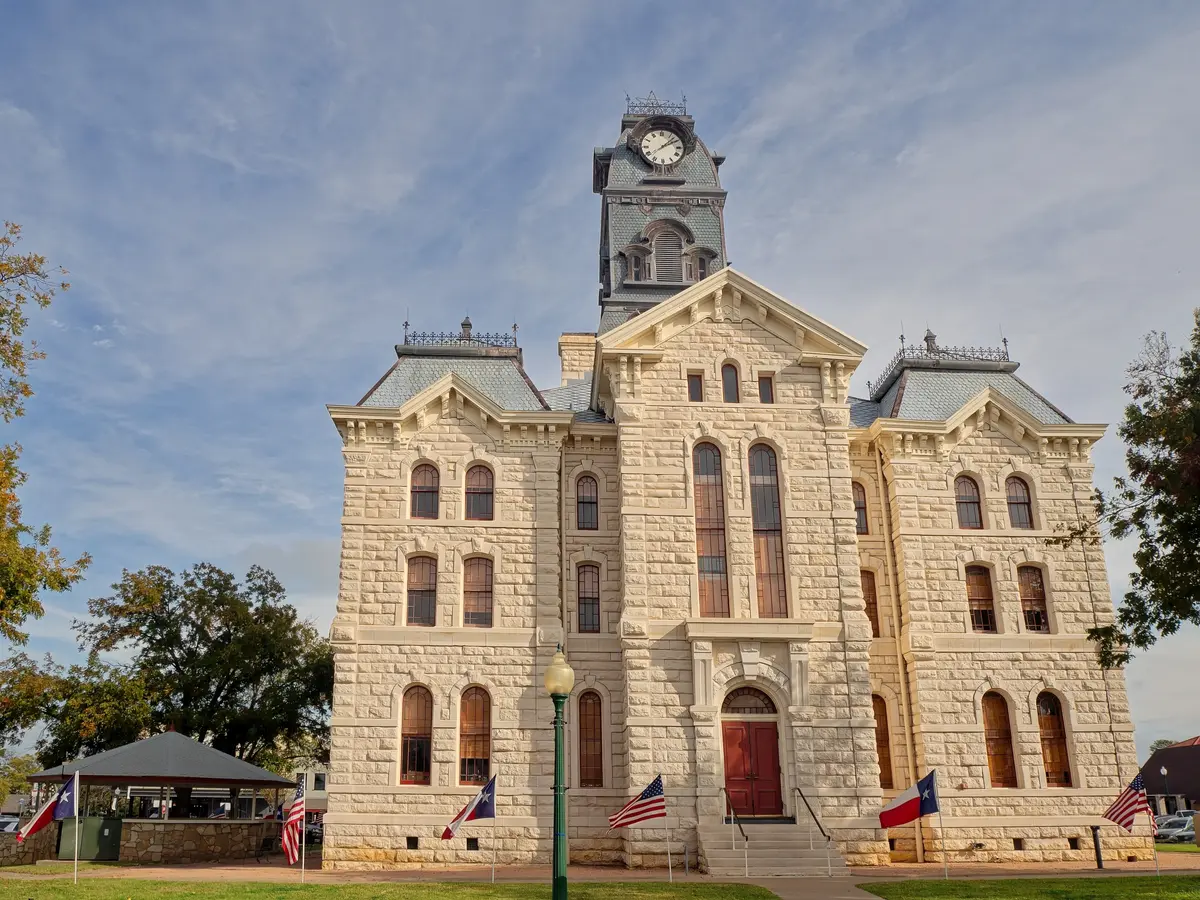
Retiring in Harlingen
Harlingen draws retirees for its balance of amenities, outdoor access, and cost. Here’s what to weigh.
🌤 Climate
Harlingen logs 229 sunny days a year, with mild winters that rarely see sustained cold and a spring that arrives early across the Valley. Summers are the honest caveat — heat from late May through September is genuine and shapes outdoor routines. Retirees who have lived through northern winters typically find the trade-off very much in their favor.
🍴 Lifestyle
The city's affordability extends to dining, recreation, and daily amenities in a way that stretches a retirement income further than most Texas markets allow. Hugh Ramsey Nature Park, Dean Porter Park, and the Harlingen Arroyo Colorado Hike & Bike Trail support an active outdoor lifestyle in the cooler months, and the Iwo Jima Monument and Museum and Harlingen Arts and Heritage Museum anchor the cultural calendar. The Rio Grande Valley Birding Festival each November is a genuine regional event worth planning around.
🏚 55+ Communities
Sunshine Country Club Estates is an established 55+ community in Harlingen, offering a residential option specifically structured for that life stage. For the broader picture on retiring in the Rio Grande Valley — including healthcare access, cost comparisons with nearby cities, and lifestyle considerations — the retiring page has the full detail.
✈ Getting Around
A personal vehicle is the practical baseline for getting around Harlingen day to day. Valley International Airport (HRL) is just four miles from downtown, with multiple airlines offering service — a meaningful convenience for retirees who travel to see family. Most medical appointments, shopping, and errands are within a 15- to 20-minute drive from residential areas across the city.
🏛 Texas Taxes for Retirees — What to Know
- No state income tax — Texas has no personal income tax — constitutionally protected under Article VIII, Section 24. Social Security, pensions, 401(k)/IRA withdrawals, and annuity payments are all untaxed at the state level, with no state return to file.
- Sales tax is the tradeoff — The state sales tax is 6.25%, and local add-ons bring the combined rate in Harlingen to 8.25% (Texas Comptroller of Public Accounts, city sales and use tax rates, July 2026). Groceries and prescription drugs are exempt.
- Property taxes — the real tradeoff — Texas’s effective property tax rate averages about 1.40%, among the highest in the country, since property tax (not income tax) funds most local government and schools.
- Over-65 homestead exemption and school-tax freeze — Homeowners 65+ (or disabled) get an additional $60,000 exemption from their home’s value for school district taxes, on top of the general homestead exemption — $200,000 off school taxable value combined, following November 2025’s Proposition 11 (SB 23), which raised the over-65 exemption to $60,000, and Proposition 13 (SB 4), which raised the general homestead exemption to $140,000. Once claimed, your school district tax bill is frozen at that year’s amount and cannot increase as home values rise, and the ceiling can transfer if you move to a new home within Texas.
- Deferral option if cash is tight — Homeowners 65+ can defer property tax payment entirely for as long as they live in the home, rather than paying it currently — interest accrues, but no forced sale.
- No estate or inheritance tax — Texas has no estate tax, no inheritance tax, and no gift tax.
- No separate capital gains tax — Because Texas has no state income tax, capital gains — including on investments and home sales — are not taxed at the state level at all, unlike states such as Washington that tax capital gains separately from income.
Tax laws change frequently and individual situations vary. This is general information, not tax advice — always consult a qualified Texas tax professional or CPA for personalized retirement tax planning.
Weekends & Local Favorites in Harlingen
Weekends in Harlingen tend to center on outdoor life in the cooler months and indoor social spaces when the heat peaks. The city's birding reputation is not a niche interest here — Hugh Ramsey Nature Park and the Harlingen Arroyo Colorado Hike & Bike Trail are genuinely well-used community amenities, not just items on a tourism brochure.
Outdoors and Parks
Hugh Ramsey Nature Park's 55 acres offer trails, photo blinds, and a hummingbird garden that draws serious birders and casual morning walkers alike — and with over 400 recorded species in the vicinity, the Rio Grande Valley Birding Festival in November is the kind of event that fills hotels across the Valley. Dean Porter Park and Lon C. Hill Park serve as neighborhood gathering anchors, while the Harlingen Arroyo Colorado Hike & Bike Trail gives residents a multi-use path that runs through the city without requiring a drive to access. Harlingen Municipal Golf Course handles the golf crowd without sending them out of town.
Culture and History
The Iwo Jima Monument and Museum is one of the most specific and moving civic landmarks in South Texas — Harlingen is home to the original bronze casting used to create the famous Washington memorial, and the museum tells the story of the Marines photographed in that iconic image. The Harlingen Arts and Heritage Museum fills in the deeper regional history, occupying a space that matters to longtime Valley families. Downtown's ongoing revitalization under the Texas Main Street Program means the cultural core is actively evolving, with the Harlingen Farmers Market adding a recurring community rhythm to the mix.
Food, Coffee, and Gathering Spots
La Playa Mexican Cafe is the kind of restaurant that locals bring out-of-town visitors to — well-established, well-regarded, and genuinely local. SMOKE: Texas BBQ & Watering Hole and The Tipsy Tavern Bar & Grill cover the casual end of the social dining spectrum, while Colletti's Italian Restaurant and Station 1 Bar & Grill round out a dining scene that has more variety than the city's size might suggest.
On the coffee side, Bandera Coffee Co. and Girl Of All Trades are the independent options that regulars tend to develop loyalty to. Lara's Bakery brings a baked goods dimension to the morning routine, and G'S TEA Dixieland and G's TEA Sunshine Strips reflect the Valley's strong tea culture — a local flavor point that distinguishes Harlingen from most other Texas cities of comparable size.
The honest trade-off: if you are coming from a city with a dense restaurant row or a bar district, Harlingen's dining and nightlife scene will feel smaller. The depth is there for a mid-sized Valley city; it is not there for someone expecting a San Antonio-scale weekend entertainment grid. What it lacks in density it compensates for in affordability — a dinner out here costs noticeably less than the equivalent in most Texas metros.
Local favorites in Harlingen
Restaurants
- La Playa Mexican Cafe
- SMOKE:Texas BBQ & Watering Hole
- The Tipsy Tavern Bar & Grill
- Colletti's Italian Restaurant
- Station 1 Bar & Grill
Outdoors
- Hugh Ramsey Nature Park
- Dean Porter Park
- Lon C. Hill Park
- Harlingen Arroyo Colorado Hike & Bike Trail
- Harlingen Municipal Golf Course
Coffee
- Lara's Bakery
- Bandera Coffee Co.
- Girl Of All Trades
- G'S TEA Dixieland
- G's TEA Sunshine Strips
Farmers Markets
- Harlingen Farmers Market
Top Things Locals Say About Harlingen
The best intel about a city comes from the people who actually live there. Here’s what Harlingen residents say when newcomers ask the questions everyone’s thinking.
“I knew the numbers before I moved, but I didn't know what they felt like. Our mortgage payment is less than what we were paying for a one-bedroom apartment back home. What caught me off guard was the summer — it's not just hot, it's relentless from June through September in a way I had to reorganize my whole schedule around.”
— Recent Harlingen home buyer
“What's the most surprising thing about living in Harlingen?”
The freight rail crossings. There are tracks running through multiple parts of the city, and if you're on US-77 or crossing over toward East Harlingen when a long freight train comes through, you just wait — there's no going around it. Nobody mentions it before you move here, but every longtime resident has a story about being late because of it. You learn to build it into your mental map of the city.
“What do locals love most about Harlingen?”
The cost of living is real — it's not a gimmick. You can own a house here, save money, and still go out to eat. Hugh Ramsey Nature Park surprises people when they actually visit it; it's a serious birding site that also works perfectly as a morning walk. And the November birding festival is one of those events that makes you proud of the city — it draws people from around the world and the whole Valley gets behind it.
“What should newcomers to Harlingen know?”
Give yourself a real summer before you make any judgments about outdoor life here. June through September, you plan everything around heat — early mornings or evenings only for anything outside. Once that clicks, the rest of the year feels genuinely pleasant. Also: Valley International Airport is right here in Harlingen, and it's easy. You can fly with several airlines without driving an hour to a bigger hub, which matters more than people realize until they've used it a few times.
“How much do you need a car in Harlingen?”
You need a car for virtually everything. The city spreads out across more than 40 square miles, the commercial areas run along the main highways rather than clustering in a walkable core, and even a trip to the grocery store or a park usually means driving. Valley Metro bus service connects the city to surrounding Valley communities, which helps if you need it, but most residents plan around having their own vehicle. The good news is that within-city traffic is light compared to most Texas cities — you're driving everywhere, but the drives are short.
Cities Near Harlingen
Other communities near Harlingen worth a look — each with its own character and price point.
| City | Distance | Best For | Vibe | Median Rent | Median Buy |
|---|---|---|---|---|---|
| San Benito | 8 mi | Budget buyers & established neighborhoods | Quiet, working-class, deeply rooted | $950 | $140,000 |
| Rio Hondo | 10 mi | Rural feel, lower price points | Small-town, agricultural, unhurried | $900 | $150,000 |
| La Feria | 12 mi | Families wanting small-town quiet | Compact, community-oriented, affordable | $950 | $145,000 |
More Helpful Guides for Harlingen
Going deeper on Harlingen? Our blog series covers everything from first-time buying to retiring here — explore the guides below.
Local Expert Takeaway: Harlingen's affordability advantage is real, specific, and shows up across housing, groceries, and utilities — not just in the home price. The typical home price of $200,595 (July 2026) and typical rent of $1,124 per month reflect a genuine market, not distressed conditions. What locals know that the numbers don't show: the city's freight rail crossings will reshape your mental map of commuting, the November birding festival fills Hugh Ramsey Nature Park with serious enthusiasts from around the world, and the summer heat from June through September is the primary lifestyle constraint that shapes how and when outdoor life happens here.
Quick Takeaways & FAQs
✅ Harlingen's cost of living runs well below the national average across housing, groceries, utilities, and transportation — a composite advantage that shows up in everyday spending, not just the home price.
⚠️ The median household income sits below the income needed to carry the typical home price, which means buyers who make it work here usually bring equity from a prior home or income above the local median.
📍 Valley International Airport is city-owned and just four miles from downtown, with multiple airlines offering service — an unusual asset for a city of 72,467 that saves residents the drive to a larger hub.
Is Harlingen, TX a good place to live?
What is the cost of living like in Harlingen compared to the rest of Texas?
How are the schools in Harlingen, TX?
What are the best neighborhoods in Harlingen?
How far is Harlingen from the beach and from Mexico?
Helpful Links for Moving to Harlingen
Moving to Texas?
Tell us what you need help with and we'll connect you with local resources.
