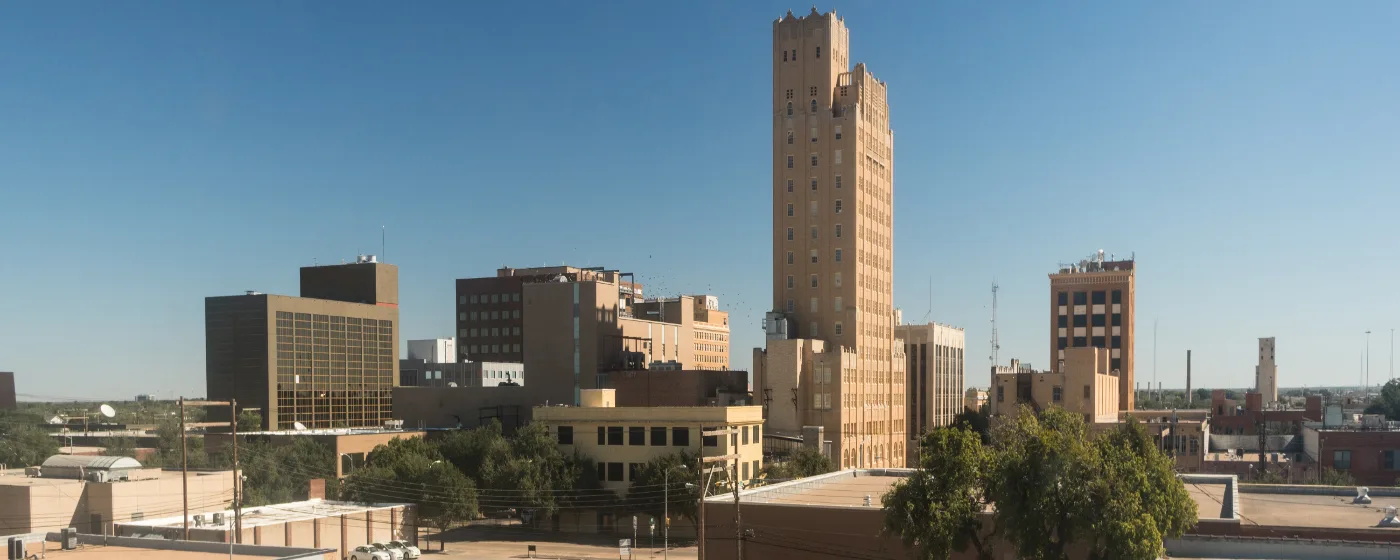
Most Californians who land in Abilene say the same thing within the first month: the number in their bank account stopped shrinking. That is not hyperbole — it is arithmetic. Abilene sits in the heart of West Central Texas, anchored by I-20 and a cluster of major employers that keep the local economy stable regardless of what the coastal markets are doing. The city of 131,588 is large enough to have genuine amenities and small enough that a commute measured in minutes, not hours, is genuinely the norm.
The economic case for Abilene starts with Dyess Air Force Base, which brings a steady military and civilian workforce, and extends through Hendrick Health, Abilene Christian University, Hardin-Simmons University, and Great Lakes Cheese — a manufacturing and logistics anchor that reflects the city's growing role as a West Texas supply-chain hub. The Abilene Independent School District, with 14,425 students enrolled in 2025-26, holds a C rating, according to the Texas Education Agency, which is worth factoring in if schools are a priority. The city's median age of 33.8 years means it skews young — partly because of the universities, partly because of the military presence, and partly because Abilene is genuinely attracting younger families priced out of larger Texas metros.
Cost of living is where Abilene makes its strongest argument. Housing costs run approximately 36% below the national average, and the broader cost of living sits about 12% below the U.S. norm. Against California specifically, the gap is even wider: Texas is roughly 39% less expensive to live in statewide, and Abilene — already one of the more affordable cities in Texas — pushes that further. The typical home price of $222,710 (Zillow Home Value Index, July 2026) will produce a genuine double-take for anyone coming from a coastal California market. Beyond housing, groceries are around 5% cheaper than the national average, and health insurance premiums run noticeably below what most Californians were paying, though you will drive farther for specialist care.
Whether you are being relocated for a military assignment, chasing the spread between your California equity and Abilene home prices, or simply looking for a place where a median income can go further, this guide breaks down what actually changes when you cross state lines — the taxes, the home-price math, the daily-life adjustments, and the honest trade-offs Californians consistently do not anticipate.
The Home Price Gap: What Your California Equity Actually Buys Here
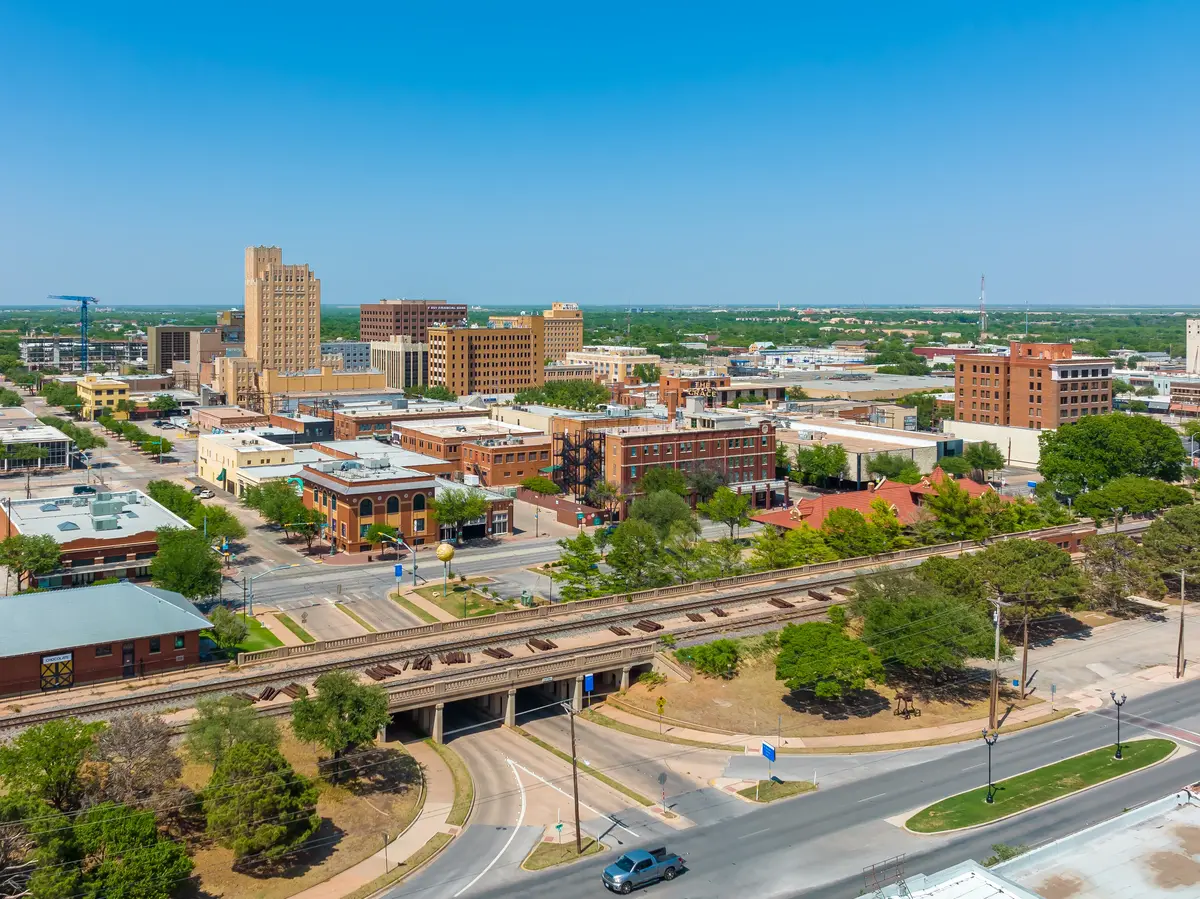
The single most disorienting thing about shopping for a home in Abilene after living in California is how fast the math moves in your favor. The typical home in Abilene was priced at $222,710 as of July 2026 — a figure that, in most California markets, represents a down payment rather than a purchase price.
California's statewide typical home value of $773,735 puts the gap in sharp relief. That spread — more than half a million dollars — is not just a number. For a California homeowner with accumulated equity, it means arriving in Abilene debt-light or debt-free, which reshapes what the monthly budget looks like entirely.
What does that price buy on the ground? Abilene's housing stock runs heavily toward detached single-family homes on real lots, with brick construction common in the established neighborhoods. Areas like Chimney Rock, River Oaks, and Park Central sit above the city median in price, offering newer construction and larger footprints. Westwood, Elmwood, and the Sayles Boulevard corridor come in below median and offer solid older stock at genuine entry-level prices. The Far Southside area draws parents specifically for the Wylie ISD school district boundary — buyers who make that choice deliberately and know exactly why. For a full neighborhood breakdown, see the Abilene neighborhoods guide.
One thing to calibrate early: the Abilene market is not one where a California buyer can low-ball with impunity. Well-priced homes in the right neighborhoods move. Coming in with clear financing, a pre-approval in hand, and realistic expectations about what the price point delivers will serve you far better than assuming you have unlimited leverage just because the numbers look small on paper.
Entry Point vs. Trade-Up
At the lower end, Abilene's below-median neighborhoods offer homes that would be unattainable in almost any California coastal zip code. At the upper end, the above-median areas are still priced in a range that feels like a rounding error compared with California's move-up tier. The affordability window is real across the entire price spectrum — not just at the entry level.
Taxes: The Wins, the Trade-Offs, and the One That Surprises People
The income tax story is straightforward and large. Texas has no state income tax. California's top state income tax rate of 13.3% — the highest in the nation — applies only to the highest earners, but the rate kicks in well before the top bracket, and even middle-income Californians are paying meaningfully more than zero. A single filer earning $100,000 saves approximately $5,055 per year in state income tax alone by crossing into Texas. For a dual-income household, that figure compounds quickly.
The property tax picture is where Californians consistently get caught off guard. Abilene's effective property tax rate is 1.98% — noticeably higher than what Proposition 13 has held California homeowners to. California's effective property tax rate of 0.71% reflects decades of Prop 13 caps that have kept longtime California homeowners' assessed values far below market. Texas has no equivalent cap structure, which means your assessed value tracks closer to market and your annual tax bill reflects that. On a $222,710 home, that rate produces a meaningful annual obligation — and it is the one recurring cost that will feel higher than what many California homeowners are accustomed to, even though the purchase price is dramatically lower.
Sales Tax: A Wash With One Important Carve-Out
Abilene's combined sales tax rate is 8.25% — the 6.25% Texas state rate plus a 2% city levy. California's statewide base sales tax rate of 7.25%, the highest in the U.S., gets pushed higher by local additions in most California cities, so the headline gap is smaller than it appears. The meaningful difference is groceries: Texas exempts food from both state and city sales tax entirely. For a family running a real grocery budget every week, that exemption adds up over a year in a way that flat comparisons between the two rates miss.
The Net Picture
Run the full ledger and the numbers move decisively in Abilene's direction. No income tax, dramatically lower home prices, and a cost of living running well below California norms more than offset the higher property tax rate. The property tax is real and should be budgeted honestly — but it is an offset against a purchase price that is already a fraction of what you left behind, not a gotcha that erases the gains.
For the complete breakdown of Abilene taxes, utilities, and ongoing living costs, the Abilene cost of living page has the full picture.
Daily Life in Abilene: What Changes, What Doesn't, and What Catches People Off Guard
Six months in, most California transplants say the adjustment was easier than they expected — with two consistent exceptions. The first is the retail footprint. Abilene is a real city of 131,588 with genuine shopping and dining options, but it is not a metro with every category covered at every price point. A serious shopping run for specialty goods or certain categories of retail means driving out of town, and you will be ordering online for anything the local shops do not carry. Plan for that and it becomes a minor inconvenience; resist it and it becomes a real frustration.
The second adjustment is weather. Abilene gets 243 sunny days a year — more sunshine than most of coastal California — but the summers are legitimately hot, the wind is persistent, and the occasional West Texas dust storm is something no amount of reading prepares you for. Californians from the Central Valley or Inland Empire adapt fastest; those from the Bay Area or coastal Southern California typically take a full summer to recalibrate their expectations.
Where Families Actually Land
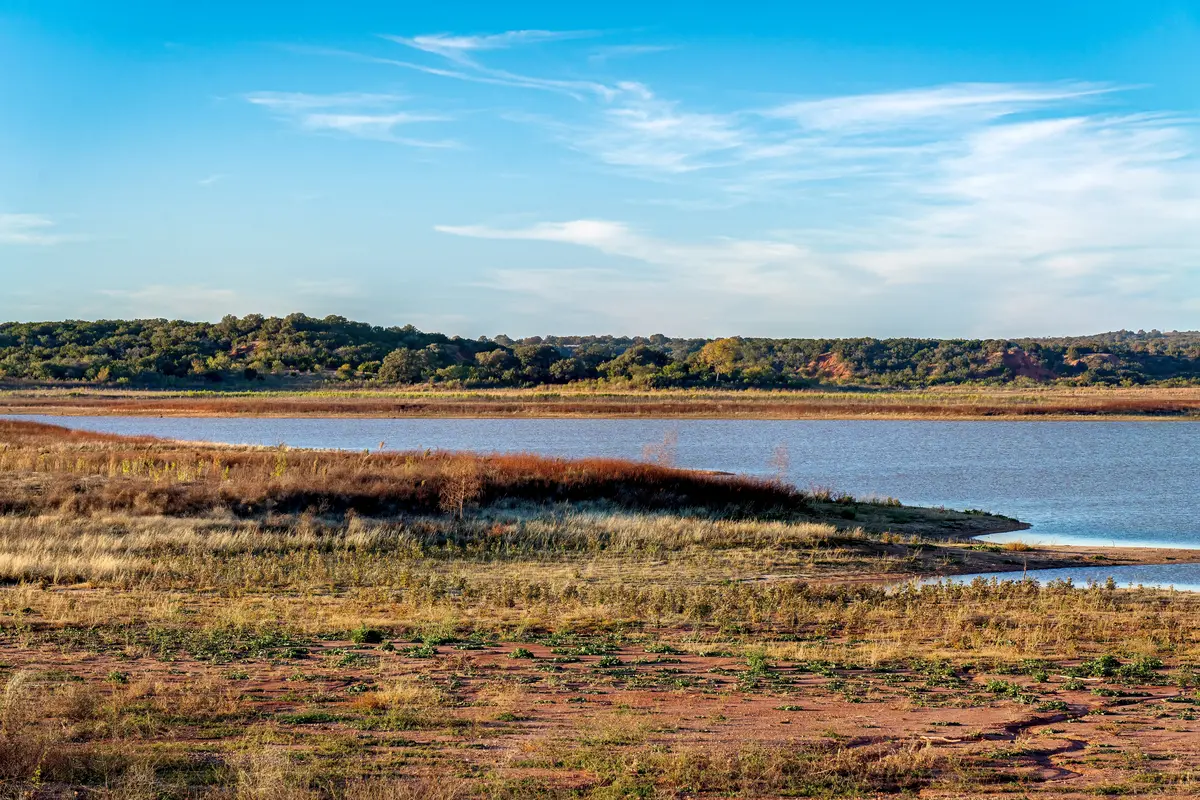
The social fabric in Abilene is tighter and more neighborhood-oriented than what many transplants are used to. Friday night football at the high school stadiums is genuinely a community event, not a cliché. Abilene State Park — a 530-acre park less than 20 miles from downtown, with hiking, swimming, boating, fishing, and camping — completed major renovations to its historic pool in 2025 and draws families throughout the warmer months. Lake Fort Phantom Hill and Kirby Lake give the city a genuine outdoor recreation loop that does not require a long drive.
Downtown Abilene has a distinct identity worth noting: Abilene holds the designation of Storybook Capital of America®, home to 46 storybook sculptures — the largest collection of its kind in the nation. The annual Children's Art + Literacy Festival draws visitors from across the state and gives the cultural scene a genuine anchor that outlasts any single administration or grant cycle.
The Commute Reality
Within the city, the commute equation is simply different. The intracity commute — across town to Dyess Air Force Base, to one of the universities, or to a regional health system — runs about 15 minutes on a normal workday. That figure is not a marketing claim; it is the actual driving time across town. The trade-off is that Abilene is genuinely not a suburb — it is the destination, not a satellite of something larger. Remote work has made that trade-off more manageable for people whose employers are not physically in the city, but if your job is in a major Texas metro, Abilene is not a commuter city. That is worth being clear-eyed about before you sign anything.
Looking to buy in Abilene? Estimate your payment.
Enter your numbers to see an estimated monthly mortgage payment.
Estimate only. Excludes HOA fees and mortgage insurance. The interest rate above is a starting point, not a quoted rate — replace it with your own to see real numbers. Insurance is a flat placeholder, not a Abilene quote.
Schools, Culture, and the Honest Trade-Offs
Abilene Independent School District holds a C rating, according to the Texas Education Agency — a 2025 A-F accountability rating covering the 2024-25 school year. On 2024-25 state assessments, 34% of students reached math proficiency and 46% reached reading proficiency. Those numbers are below state averages and below what many California transplants are used to hearing from their home districts, and it would be doing you a disservice to soften them.
The fuller picture is more mixed. The district runs active UIL athletics programs, and the culture around school activities — band, theater, athletics — is strong in a way that standardized test scores do not capture. For families specifically prioritizing academic metrics, the Far Southside area falls within the Wylie Independent School District boundary rather than AISD, and that distinction is something buyers in that part of town make deliberately. The Abilene schools page has the district-by-district breakdown.
Higher Education as a Community Asset
Three private universities — Abilene Christian University, Hardin-Simmons University, and McMurry University — give the city a cultural density that punches above its population weight. ACU and HSU both run performing arts programs, lecture series, and facilities that are accessible to the broader community, not just enrolled students. For a California transplant accustomed to a metro with multiple universities nearby, Abilene's university presence will feel familiar even if the scale is different.
Culture and Arts
Frontier Texas!, The Grace Museum, the Historic Paramount Theatre, and the National Center for Children's Illustrated Literature give the downtown cultural district real substance. These are not placeholder institutions — they are funded, attended, and taken seriously by the community. The arts scene is smaller than what you left in a California metro, but it is genuinely present, which is more than can be said for cities of comparable size in the region.
For youth activities and sports programming beyond UIL, see the schools and activities page.
Weekends and Local Favorites in Abilene
One of the first things California transplants notice is how quickly Abilene's leisure scene becomes familiar. The city is not trying to replicate a coastal lifestyle — it has its own, built around the outdoors, local food, and a genuinely unhurried pace that most people either love immediately or need a few months to appreciate.
Outdoors
Abilene State Park anchors the weekend outdoor rotation for most residents. The 530-acre park handles the full range — hiking, fishing, swimming, horseback riding, camping — and the 2025 renovation to the historic pool brought it back as a genuinely usable family facility. Lake Fort Phantom Hill and Kirby Lake fill out the fishing and boating calendar, and Redbud Park and Nelson Park handle the in-city recreation days when you do not want to drive out of town.
The Abilene Farmer's Market runs through the growing season and is the kind of weekly ritual that Californians from farmers-market-heavy communities tend to adopt immediately.
Dining and Coffee
Lytle Land & Cattle Company is the obvious anchor for a proper West Texas steak dinner — the kind of place you take visiting family. Belle's Chicken Dinner House has been feeding Abilene for long enough that it functions more as a civic institution than a restaurant. Galveston Seafood Company fills the Gulf seafood niche that you might not expect to find this far inland, and Beehive Restaurant is the choice when the occasion calls for something with more polish. Taylor County Taphouse handles the local craft beer scene for the evenings when dinner can wait.
The coffee rotation has real options. Monks Coffee Shop, Front Porch Coffee Company, Mezamiz Coffee House, Statesman Coffee, and Mad Coffee & More give the city a genuine independent café culture — something California transplants specifically tend to appreciate, and something that Abilene does not advertise loudly enough. Each has its own personality; finding your regular spot is part of settling in.
What People Miss — and What They Stop Missing
Most California transplants report missing the density of dining options and the proximity of certain categories of retail. What they stop missing, usually around month four: the cost of going out, the traffic, and the gap between income and what it could buy. Abilene is a trade of convenience density for financial breathing room, and the people who chose it deliberately tend to stay.
Local Expert Takeaway: Californians moving to Abilene typically arrive skeptical and leave surprised — not because Abilene oversells itself, but because the math is harder to argue with once you are living inside it. The property tax rate is real and deserves honest budgeting, but the income tax savings and the home price gap absorb it and then some. The adjustment that takes longest is not financial — it is learning that a city of 131,588 in West Texas operates on its own terms, with its own pace, its own culture around football and faith and outdoor life, and its own version of the good life that has nothing to do with replicating what you left.
Quick Takeaways & FAQs
✅ Texas has no state income tax, which puts thousands of dollars back into a California transplant's annual budget from day one.
⚠️ Abilene's effective property tax rate of 1.98% is meaningfully higher than what Proposition 13 has held most California homeowners to — budget for it honestly before you close.
📍 Abilene is the Storybook Capital of America® with 46 downtown sculptures and an annual Children's Art + Literacy Festival that gives the cultural scene a genuine anchor.
How much cheaper are homes in Abilene compared to California?
Do I really save money on taxes by moving from California to Texas?
What is the sales tax rate in Abilene, and how does it compare to California?
What do Californians find hardest to adjust to after moving to Abilene?
Is Abilene a good place to move if I work remotely from a California company?
Moving to Texas?
Tell us what you need help with and we'll connect you with local resources.
