What Is Living in Galveston, Texas Like?
You've probably pictured Galveston as a beach town — somewhere you go for a weekend, not somewhere you put down roots. That's the assumption most people carry until they actually spend time here. Galveston is a barrier island city of 53,636 people sitting at the southern tip of I-45 (Gulf Freeway), where the Houston metro meets the Texas coast. The island is 32 miles long and up to two-and-a-half miles wide, which means geography shapes almost every decision you'll make here — where you live, how you get to work, and how exposed your home is to storm season. That physical reality is what drives life on Galveston Island, and understanding it before you move is the whole game.
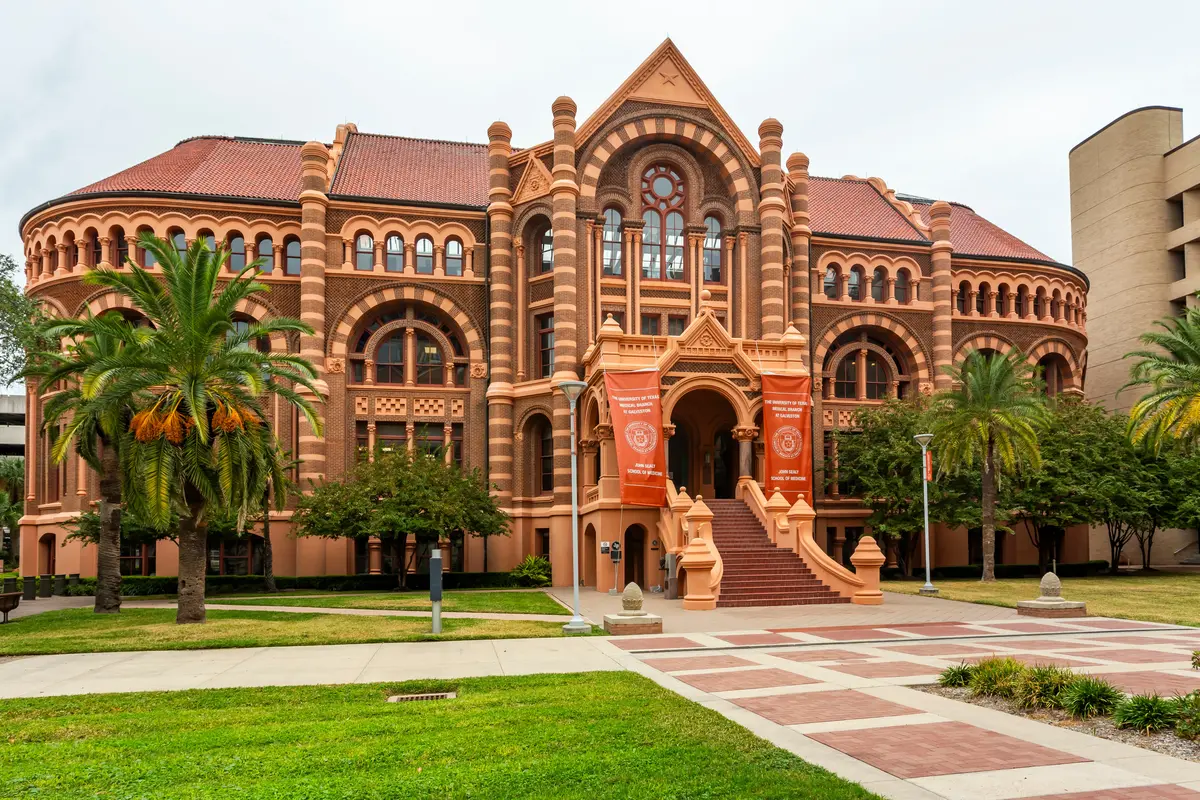
The economic backbone of Galveston is broader than most outsiders expect. UTMB Health — the University of Texas Medical Branch — is the dominant anchor, combining a major research hospital with a medical school that draws faculty, students, and healthcare professionals from across the state. Texas A&M University at Galveston adds another layer of academic employment. The Galveston Wharves and the Port of Galveston represent a serious maritime and logistics industry, and tourism and hospitality make up a significant employment sector that keeps the city humming year-round. The Galveston Independent School District, with 6,671 students enrolled in 2025-26, holds a C rating, according to the Texas Education Agency — something families with school-age children will want to weigh carefully alongside the island's many other draws.
On the cost side, Galveston occupies an interesting position in the Houston metro. The typical home price of $320,772 (July 2026) sits noticeably below what you'd find in League City or Friendswood to the north — but the effective property tax rate of 1.72% and the realities of coastal insurance mean carrying costs run higher than that sticker price suggests. The median household income of $55,631 reflects the economic mix of a city that is simultaneously a university town, a port city, and a tourism destination. About 203 sunny days a year and 32 miles of beach are real amenities — but so is the commute: getting to central Houston takes about 55 minutes on a good day, and the Galveston Causeway doesn't care about your schedule when traffic backs up.
Whether you're weighing a move for the UTMB campus, looking for a coastal lifestyle at a more accessible price point than other Gulf cities, or simply deciding if island life is practical for your family, the sections below break down Galveston's neighborhoods, housing market, commute realities, schools, local scene, and what daily life here genuinely looks and feels like.
Galveston at a Glance
Looking to buy in Galveston? Estimate your payment.
Enter your numbers to see an estimated monthly mortgage payment.
Estimate only. Excludes HOA fees and mortgage insurance. The interest rate above is a starting point, not a quoted rate — replace it with your own to see real numbers. Insurance is a flat placeholder, not a Galveston quote.
Why Are People Moving to Galveston?
The people who move to Galveston usually fall into one of a few categories, and the honest answer is that this city doesn't suit everyone equally well. Knowing which group you belong to before you make an offer matters more here than in most Texas cities.
The UTMB Anchor
The single largest driver of intentional relocation to Galveston is UTMB Health. Medical students, residents, nursing faculty, research staff, and administrative employees come from across the country to work or train here, and many of them stay. The campus gives the city an intellectual and professional density that you wouldn't expect from a coastal town of this size. If you're moving for a UTMB position, the island makes immediate practical sense — you're close to your employer, parking and commuting are manageable, and the cost of living is lower than many academic medical center cities.
The Lifestyle Case
For buyers priced out of the Houston suburbs or simply tired of subdivisions, Galveston offers something genuinely different: Victorian cottages in the East End Historic District, raised beachfront homes in the West End, and loft conversions downtown — all within one ZIP code. The Seawall Boulevard promenade, recognized in September 2025 as the longest continuous walkway in the world, is a legitimate amenity you can use on a Tuesday morning before work. That's not marketing copy; longtime residents actually run, bike, and walk it as part of their daily routine.
Who Tends to Struggle Here
Families prioritizing top-rated public schools often find the calculus harder to make work. The Galveston Independent School District holds a C rating, according to the Texas Education Agency — a frank data point that shapes many parents' decisions. For more detail on what that means at the campus level, the Galveston schools page breaks it down fully.
Buyers who need a short, predictable commute to downtown Houston also need to think carefully. The island's single primary exit — I-45 across the Galveston Causeway — means that an accident or severe weather can turn the drive into something much longer than the usual about 55 minutes to Houston. That single-point-of-failure geography is the most common thing people don't fully reckon with before moving here.
The Honest Trade-off
What Galveston offers is a specific kind of life: water access, architectural character, a university and port economy that keeps things humming year-round, and a price point that makes ownership possible in a way it isn't on many coastal Texas islands. What you give up is suburban convenience, school district performance, and the ability to simply hop on a freeway and go in any direction. If the trade makes sense for your situation, it makes a lot of sense. If it doesn't, Texas City to the north or League City farther up I-45 may fit better.
What Daily Life Feels Like in Galveston
Living on a barrier island is a different operating system than living in a mainland suburb. The rhythms here are shaped by the Gulf Coast climate, by tourism, and by a community that has rebuilt itself more than once — most famously after the 1900 Storm, which remains the deadliest natural disaster in U.S. history and whose 125th anniversary the Seawall recognized in September 2025.
The Tourist Reality
Galveston draws visitors in numbers that fill the Seawall corridor, The Strand Historic District, and the beach access points at Stewart Beach and East Beach on peak weekends. Traffic on Seawall Boulevard slows to a crawl in summer and on holiday weekends, and parking near the water becomes a strategic exercise. Newcomers who move here expecting a quiet coastal retreat are the ones most likely to be surprised by month three. The locals who stay long-term have learned to treat summer as a season to work around rather than fight.
Where Residents Actually Gather
The version of Galveston that residents live in is quieter and more neighborhood-scaled than the tourist version. The East End fills with walkers and cyclists on weekend mornings. Galveston's Own Farmers Market is where you'll run into neighbors on a regular basis. Independent coffee shops along the island's commercial corridors function as the community's informal living room in a way that chain alternatives simply don't.
Storm Season Is Not Abstract
Hurricane Beryl disrupted the 2024 tourism season meaningfully — a reminder that Gulf storm season here is not a background fact but an active planning consideration. Residents carry flood insurance, know their evacuation routes, and often have a plan for where they'll go and when. This isn't a reason not to move here; it's a reason to understand it before you do. Home elevation, flood zone designation, and insurance costs are part of every serious buying conversation on this island.
The Day-to-Day Texture
For routine errands, the island has grocery options, pharmacies, and a solid range of restaurants — but a serious shopping trip often means driving off-island. The city is more walkable in its historic core than most Texas cities its size; you can realistically handle some daily needs on foot in the East End or near The Strand. For anything the local shops don't carry, you'll be ordering online or heading toward the mainland. Island Transit operates fixed-route bus service and a Street Rail Trolley within city limits, which is useful for getting around the Seawall corridor without a car, though most residents drive for most trips.
The Galveston Housing Market Right Now
The typical home price in Galveston sits at $320,772 (July 2026, Zillow Home Value Index) — a figure that reflects a city with genuinely wide variation in what you get for that number. This is not a uniform market. A raised beachfront home in the West End and a Victorian cottage in the East End Historic District and a midcentury bungalow in Midtown are all in the same city and carry very different insurance profiles, flood zone designations, and long-term maintenance realities.
What the Stock Actually Looks Like
Galveston's housing inventory runs from stately historic mansions and Victorian cottages in the older neighborhoods to modern elevated construction in the West End to downtown loft conversions near The Strand. That range is real and it's one of the city's genuine draws — buyers who want architectural character can find it here at a price point that wouldn't exist in most coastal markets. Some areas run above the city median, including the East End Historic District and the Silk Stocking Historic District; for a full breakdown of where neighborhoods sit relative to each other, the neighborhoods page covers the details.
The Renter Reality
Galveston skews notably toward renters — the homeownership rate sits around 46%, which is low by Texas standards. That reflects the city's mix of university students, tourism-industry workers, and seasonal residents. The typical rent citywide runs $1,366 per month (Zillow, July 2026). For a full breakdown of what that buys and how it compares to local income, the cost-of-living page covers the numbers in detail.
What Buyers Need to Know
The median household income here is meaningfully below what it takes to carry the typical home price — which tells you something important about the market's composition. Many buyers are arriving with equity from elsewhere, financing vacation or investment properties, or are dual-income households with income above the local median. If you're buying as a primary resident on a local salary, running the numbers carefully with current rates is essential. Property tax runs at an effective rate of approximately 1.72%, and coastal insurance premiums add a real carrying cost that mainland buyers consistently underestimate. For the full picture on taxes and cost of ownership, see the cost-of-living page.
Galveston Neighborhoods
Galveston has several distinct areas — each with its own character and appeal. Here’s a breakdown to help you narrow down where to focus your home search.
🏡 East End Historic District
Galveston's oldest residential neighborhood and a National Historic Landmark, the East End spans more than 50 city blocks of Victorian, Greek Revival, and Queen Anne architecture — the kind of streetscape that buyers from Houston's newer suburbs find genuinely disorienting in the best way. It runs above the city median in price and suits buyers who want architectural character as part of daily life.
🏠 Midtown
Sitting between the Seawall and downtown, Midtown blends classic island cottages and renovated bungalows in a central location that gives residents fast access to both the beach and The Strand without committing to the quieter far ends of the island.
🌳 West End
The West End is where you find modern raised homes oriented toward beach or bay views, on lots that get progressively less dense as you move toward the island's western tip — a good fit for buyers who want new construction, water proximity, and separation from the tourist corridors.
🏘 Silk Stocking Historic District
Listed on the National Register of Historic Places since 1996, the Silk Stocking District is one of the most intact 19th- and early-20th-century residential areas on the island, with its core along Rosenberg (25th Street) — a draw for buyers who want historic character and a neighborhood that feels established and residential.
🏔 Beachtown
Beachtown is a planned coastal community built with raised construction and a design vocabulary meant to echo traditional Gulf Coast architecture — it appeals to buyers who want the feel of a historic neighborhood with newer bones and the Gulf close by.
🌆 Denver Court
Denver Court is a smaller, established residential pocket that sits at the city median price point and draws buyers looking for an entry into island ownership without the premium of the historic districts or the more exposed West End beach market.
Pros & Cons of Living in Galveston
The Pros
- Year-round beach and boating lifestyle
- Distinctive historic Victorian architecture and walkable downtown
- Strong healthcare/education job base anchored by UTMB
- More affordable than many coastal markets nationally
The Cons
- Elevated violent and property crime rates compared to national averages
- Significant hurricane and flood risk with high insurance costs
- Longer commute (45+ minutes) to core Houston job centers
Getting Around & Commuting in Galveston
Galveston's geography makes transportation conversations different from any other city in the Houston metro. You live on an island with one primary road to the mainland. That is the foundational fact everything else flows from.
The I-45 Reality
I-45 (Gulf Freeway) is the road that connects Galveston Island to the rest of Texas. It crosses the Galveston Causeway and runs north through Texas City and La Marque before reaching the Houston metro's ring roads. The drive to Houston proper takes about 55 minutes under normal conditions — but that figure assumes the causeway is clear. An accident on the bridge or a weather event can extend that substantially, with no meaningful alternate route off the island for most drivers. This isn't a hypothetical inconvenience; it's a weekly reality for Galveston commuters.
Getting Around the Island
Within Galveston itself, most residents drive. Island Transit operates fixed-route bus service and a Street Rail Trolley that handles the Seawall corridor well — useful for getting between the beach, The Strand, and Moody Gardens without fighting for parking. For daily commuting off-island, Island Transit is not a practical substitute for a car. Spur 342 (61st Street) functions as a major north-south connector between the Seawall and I-45, and it backs up predictably during summer tourist season.
The Ferry Option
SH-87 leads to the Galveston-Port Bolivar Ferry, a free crossing that has operated for nearly 100 years. The 2.7-mile trip takes about 20 minutes and connects to the Bolivar Peninsula — useful for reaching communities on the peninsula or for a scenic alternative route, but not a commuter solution for most Houston-bound workers.
Air Travel
William P. Hobby Airport (HOU) is the nearest major airport, 41 miles from the island. For most Galveston residents, Hobby is the practical choice for domestic travel — it's meaningfully closer than the George Bush Intercontinental option and sits right on the I-45 corridor.
The Commuter Profile
The realistic Galveston commuter either works on the island — at UTMB, the port, the school district, or in tourism — or accepts a daily drive of roughly an hour each way to reach Houston employment centers. Remote workers have found Galveston increasingly attractive precisely because that commute becomes irrelevant. If your work requires consistent, time-sensitive presence in Houston, the causeway math is worth stress-testing before you commit to island living.
Schools in Galveston
Families relocating to Galveston have public, private, and higher-education options nearby. Here’s a quick overview.
🎓 School District
Galveston Independent School District serves K–12 students across Galveston and the surrounding area. Rated C (source: Texas Education Agency, 2025 A-F accountability rating (2024-25 school year)).
🏆 Graduation Rate
The 4-year high-school graduation rate here is approximately 95.3%.
📚 Higher Education
Texas’s public universities — the University of Texas at Austin, Texas A&M University, and the University of Houston — offer four-year degrees statewide, with one of the largest community college systems in the country (50+ public community college districts) providing two-year and workforce programs.
🌐 Online Learning
UT Austin Online and Texas A&M University Online offer fully accredited online degrees for remote learners across the state.
Safety in Galveston
A quick look at how Galveston compares on the numbers that matter most when weighing a neighborhood or a move.
🛡 Violent Crime
Approximately 5.08 per 1,000 residents.
🔒 Property Crime
Approximately 23.33 per 1,000 residents.
Compared to the most recent national figures from the Bureau of Justice Statistics (2024), Galveston’s violent crime is above the national average (about 3.7 per 1,000), and property crime is above the national average (about 18.4 per 1,000).
Against Texas as a whole, Galveston’s violent crime is somewhat above the state average, and property crime is somewhat above the state average (Bureau of Justice Statistics, Crime Known to Law Enforcement, 2024 (tables 2 and 3)).
Crime rates can vary a lot within a single city, so the citywide numbers above are only a starting point. Some neighborhoods in Galveston run well below these averages, while others run higher — the kind of block-by-block detail that matters most when you’re actually choosing where to live. The full guide below breaks it down neighborhood by neighborhood.
Working in Galveston
Galveston’s largest employers span several industries — here are some of the anchors of the local job market.
🏥 UTMB Health
Healthcare, medical education
🎓 Galveston Independent School District
Education
🏛 City of Galveston
Municipal government
🏛 Galveston County
County government
🎓 Texas A&M University at Galveston
Higher education
💼 Galveston Wharves
Port, maritime logistics
Parks & Recreation in Galveston
Some of the outdoor spaces that shape everyday life in Galveston.
🌱 Galveston Island State Park
🌱 Stewart Beach
Galveston residents don’t have to go far for green space — spots like Galveston Island State Park and Stewart Beach are part of everyday life here, whether that’s a morning walk, a weekend hike, or just somewhere to unwind outside. The full guide below covers more of what Galveston has to offer for parks and outdoor recreation.
Retiring in Galveston
Galveston draws retirees for its balance of amenities, outdoor access, and cost. Here’s what to weigh.
🌤 Climate
Galveston runs warm and humid most of the year, with mild winters that rarely see freezing temperatures and summers that are hot and muggy from June through September. The island gets approximately 203 sunny days a year, and the coastal breeze makes the shoulder seasons — October through November and March through April — genuinely pleasant for outdoor living. Hurricane season runs June through November and is an active weather reality residents plan around each year.
🍴 Lifestyle
The island has a walkable historic core, a strong independent food and coffee scene, and year-round outdoor access through the Seawall promenade, Galveston Island State Park, and the bay-side nature preserves. Moody Gardens, Bishop's Palace, and The Strand Historic District provide cultural anchors. A serious shopping trip means heading to the mainland, and a major regional health system operates within city limits.
🏚 55+ Communities
No 55+ communities were found in Galveston. Retirees who move here typically do so into the general housing market — Victorian cottages in the historic districts, bayfront homes, or condominiums near the Seawall — rather than into a dedicated age-restricted community.
✈ Getting Around
A personal vehicle is the practical reality for most daily travel, including any trips to the mainland. Within the island, Island Transit operates bus and trolley routes along the Seawall corridor. William P. Hobby Airport (HOU) is the nearest major airport at 41 miles — a straightforward drive up I-45 for most travel needs.
🏛 Texas Taxes for Retirees — What to Know
- No state income tax — Texas has no personal income tax — constitutionally protected under Article VIII, Section 24. Social Security, pensions, 401(k)/IRA withdrawals, and annuity payments are all untaxed at the state level, with no state return to file.
- Sales tax is the tradeoff — The state sales tax is 6.25%, and local add-ons bring the combined rate in Galveston to 8.25% (Texas Comptroller of Public Accounts, city sales and use tax rates, July 2026). Groceries and prescription drugs are exempt.
- Property taxes — the real tradeoff — Texas’s effective property tax rate averages about 1.40%, among the highest in the country, since property tax (not income tax) funds most local government and schools.
- Over-65 homestead exemption and school-tax freeze — Homeowners 65+ (or disabled) get an additional $60,000 exemption from their home’s value for school district taxes, on top of the general homestead exemption — $200,000 off school taxable value combined, following November 2025’s Proposition 11 (SB 23), which raised the over-65 exemption to $60,000, and Proposition 13 (SB 4), which raised the general homestead exemption to $140,000. Once claimed, your school district tax bill is frozen at that year’s amount and cannot increase as home values rise, and the ceiling can transfer if you move to a new home within Texas.
- Deferral option if cash is tight — Homeowners 65+ can defer property tax payment entirely for as long as they live in the home, rather than paying it currently — interest accrues, but no forced sale.
- No estate or inheritance tax — Texas has no estate tax, no inheritance tax, and no gift tax.
- No separate capital gains tax — Because Texas has no state income tax, capital gains — including on investments and home sales — are not taxed at the state level at all, unlike states such as Washington that tax capital gains separately from income.
Tax laws change frequently and individual situations vary. This is general information, not tax advice — always consult a qualified Texas tax professional or CPA for personalized retirement tax planning.
Weekends & Local Favorites in Galveston
The tourist version of Galveston and the resident version overlap more than in most tourism-heavy cities — because the beaches, the history, and the food scene are genuinely good, not just good for visitors. The difference is knowing which spots locals actually use and when to go.
The Outdoor Scene
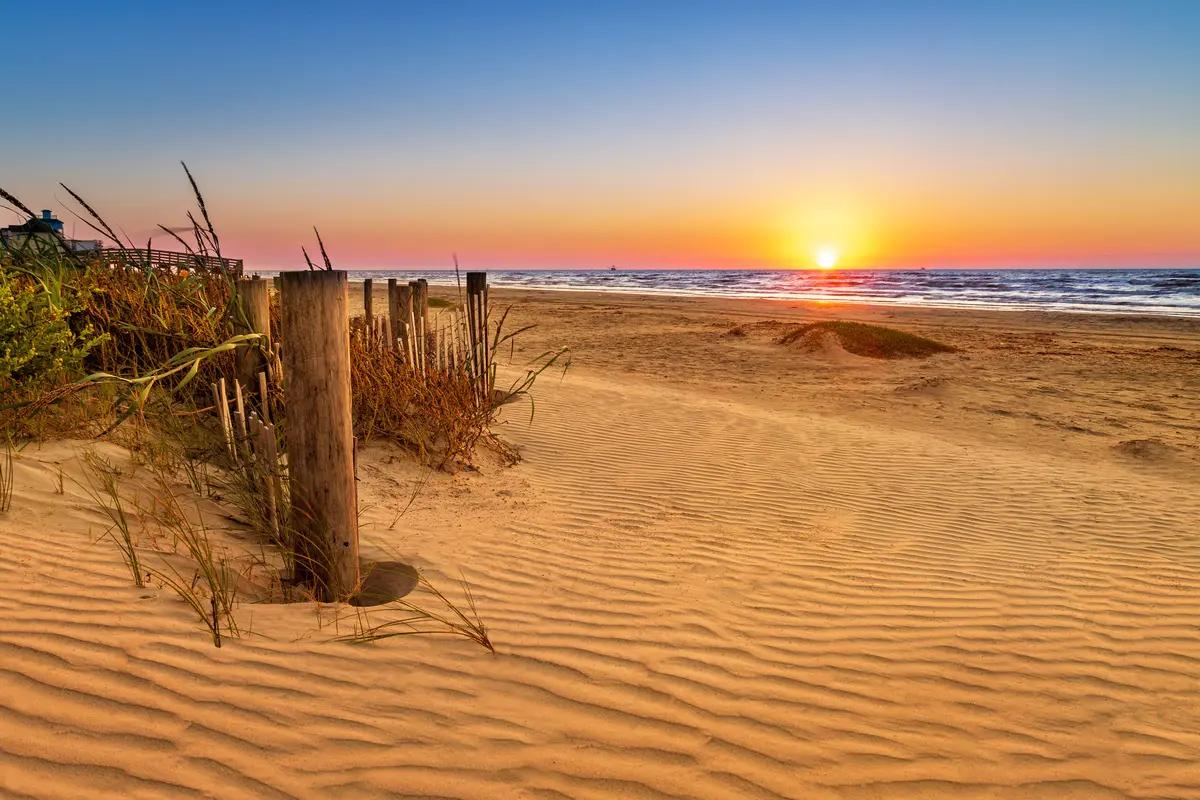
Galveston Island State Park's 2,000 acres offer fishing, kayaking, paddling trails, and wildlife viewing in a setting that feels removed from the Seawall bustle. East End Lagoon Nature Preserve is a quieter bird-watching and trail destination on the bay side that most visitors never find. Stewart Beach tends to draw families with younger kids; East Beach sits at the far eastern tip and has a different, more open feel. The Seawall Boulevard promenade — the longest continuous walkway in the world as of its September 2025 recognition — is genuinely used by residents for morning runs, evening walks, and weekend bike rides year-round.
Food and Coffee
Gaido's has been feeding Galveston for generations and remains the island's most institutionally beloved seafood restaurant. The Spot is a more casual, multi-level waterfront spot that locals return to reliably. Fisherman's Wharf and Miller's Seawall Grill round out the Seawall dining stretch that residents actually frequent rather than just recommend to visitors.
For coffee, MOD Coffeehouse is the island's independent anchor — a genuine local gathering spot. Sugar Bean Coffee & Cream, Seawall Coffee Company, Red Light Coffee Roasters, and Indies Coffee Bar and Speakeasy give the island a coffee culture that far outperforms what you'd expect from a city this size.
Culture and History
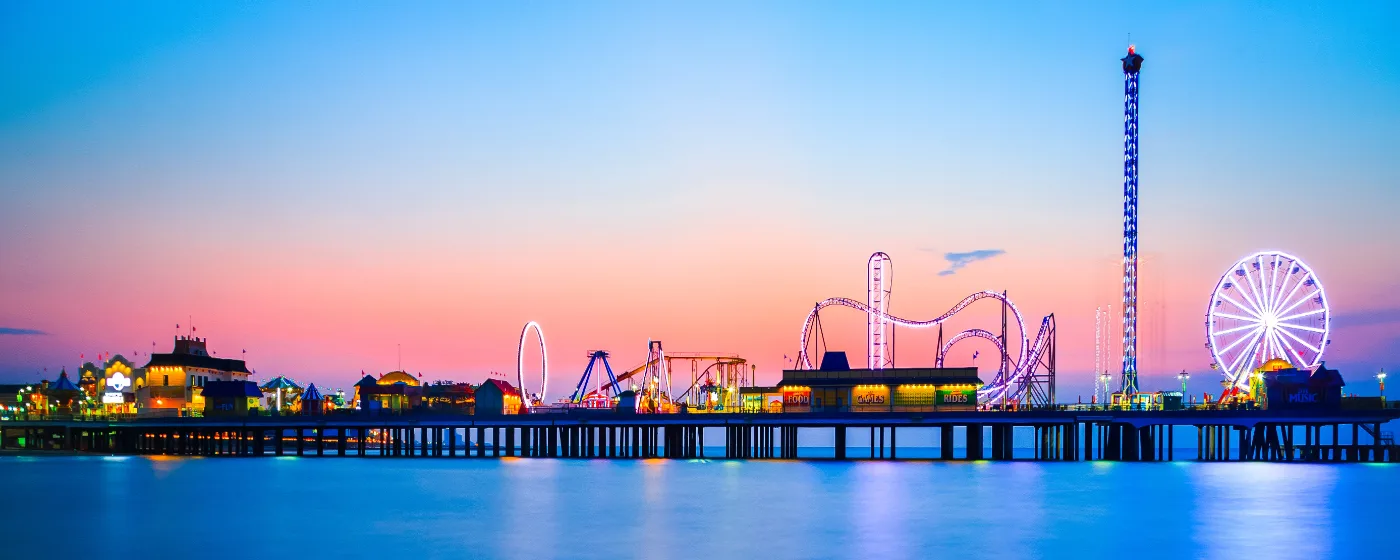
The Strand Historic District is where Galveston's 19th-century commercial architecture is best preserved — cast-iron facades, galleries, and independent shops in a walkable stretch that rewards an afternoon on foot. Bishop's Palace is the most photographed Victorian mansion on the island and worth the visit even if you've lived here for years. Moody Gardens combines aquariums, a rainforest pyramid, and an IMAX theater in a way that makes it genuinely useful for families. The Galveston Island Historic Pleasure Pier delivers the full Gulf-coast amusement pier experience.
The Farmers Market
Galveston's Own Farmers Market is where the residential community shows up in a way that tourist crowds don't — local produce, prepared foods, and the kind of repeat-customer familiarity that makes it feel like a neighborhood anchor rather than a seasonal attraction. It runs through the warm months and is one of the more reliable spots to get a read on what actual Galveston community life feels like.
Local favorites in Galveston
Restaurants
- Rainforest Cafe
- The Spot
- Fisherman's Wharf
- Miller's Seawall Grill
- Gaido's
Outdoors
- Galveston Island State Park
- Stewart Beach
- East Beach
- East End Lagoon Nature Preserve
- Seawall Boulevard promenade
Coffee
- MOD Coffeehouse
- Sugar Bean Coffee & Cream
- Seawall Coffee Company
- Red Light Coffee Roasters
- Indies Coffee Bar and Speakeasy
Farmers Markets
- Galveston's Own Farmers Market
Top Things Locals Say About Galveston
The best intel about a city comes from the people who actually live there. Here’s what Galveston residents say when newcomers ask the questions everyone’s thinking.
“I knew about the commute before I moved — what I didn't expect was how completely the tourist crowd disappears by October. By November this place feels like an entirely different city. That's when you understand why people actually stay.”
— Recent Galveston home buyer
“What's the most surprising thing about living in Galveston?”
The seasonality is more extreme than people expect. Summer is genuinely intense — the Seawall corridor is crowded, Spur 342 backs up, and your favorite coffee shop has a line. Then Labor Day passes and the island exhales. The East End goes quiet, you can park anywhere, and the weather turns perfect. A lot of people fall in love with Galveston in October and November, when it's finally just the people who actually live here.
“What do locals love most about Galveston?”
The architecture and the water in the same breath. You can walk out of a 100-year-old Victorian in the East End Historic District and be on the beach in fifteen minutes. That combination doesn't exist anywhere else in the Houston region. The Seawall promenade at sunrise — before the tourist traffic picks up — is the version of Galveston that residents guard a little jealously.
“What should newcomers to Galveston know?”
Take flood zone designations seriously before you close on a house — not afterward. Your flood and wind insurance costs depend heavily on the specific property's elevation and zone, and the spread between a low-risk and high-risk policy is large enough to change the math on a purchase. Also, have a hurricane plan before the season starts, not during. Galveston residents who've been here a while aren't panicked about storms — they're prepared, and that's the difference.
“How much do you need a car in Galveston?”
A car is essentially mandatory for daily life. Most errands — groceries, a doctor's visit, anything off the island — require driving. Within the historic core and near the Seawall you can handle some daily needs on foot, and Island Transit's trolley works fine for getting along the Seawall without parking. But for a Houston commute or a major shopping run, you need your own vehicle. Remote workers and people who work on the island have the most flexibility; everyone else is driving.
Cities Near Galveston
Other communities near Galveston worth a look — each with its own character and price point.
| City | Distance | Best For | Vibe | Median Rent | Median Buy |
|---|---|---|---|---|---|
| Texas City | 10 mi | Budget buyers, industrial workers | Practical, mainland, affordable | $1,386 | $230,169 |
| League City | 22 mi | Families, top-rated schools | Suburban, polished, growing fast | $1,811 | $378,258 |
| Friendswood | 25 mi | Established families, quiet streets | Safe, suburban, school-focused | $2,324 | $464,253 |
More Helpful Guides for Galveston
Going deeper on Galveston? Our blog series covers everything from first-time buying to retiring here — explore the guides below.
Local Expert Takeaway: Galveston rewards buyers who understand what they're choosing. The Seawall promenade at 6 a.m., the East End's Victorian streetscapes, and a UTMB research career all in one ZIP code — that combination is genuinely rare. But the causeway is real, the school district rating is honest, and coastal insurance costs belong in your budget from day one. Run those numbers before you fall in love with the house.
Quick Takeaways & FAQs
✅ Galveston's UTMB Health campus is one of the largest academic medical centers in Texas and the city's most stable employment anchor, drawing professionals who stay long-term.
⚠️ The Galveston Causeway is the island's only practical exit to the mainland — a single-point-of-failure commute route that can back up significantly during accidents, tourist season, or severe weather.
📍 The Galveston Seawall was recognized in September 2025 as the longest continuous walkway in the world — a 32-mile strip that residents actually use for daily exercise, not just tourist photos.
Is Galveston a good place to live year-round, not just visit?
How bad is the commute from Galveston to Houston?
What are the schools like in Galveston?
What does it cost to buy a home in Galveston?
Is Galveston safe?
Helpful Links for Moving to Galveston
Moving to Texas?
Tell us what you need help with and we'll connect you with local resources.
