
What Is Living in League City, Texas Like?
Maybe your company is transferring you to the NASA Johnson Space Center corridor. Maybe you've been priced out of Houston's inner loop and someone mentioned the Bay Area suburbs. Whatever brought you here, League City tends to surprise people — not because it's undiscovered, but because 119,905 residents and a population that has grown more than 150% since 2000 don't fit the image of a quiet little bedroom community. This is one of the 34th-largest incorporated cities in Texas, shaped by I-45 (Gulf Freeway) running straight through its spine, Clear Lake and Clear Creek at its edges, and a daily rhythm built around aerospace, healthcare, and the kind of space-adjacent pride that comes with living minutes from where astronauts go to work.
The economic backbone here is real and varied. Clear Creek Independent School District — with 38,780 students enrolled in 2025-26 — is the city's largest employer and the main reason families with school-age children keep showing up. The UTMB Health League City Campus anchors the local healthcare side of the economy. And a significant share of residents commute to NASA Johnson Space Center in Houston, making engineers, contractors, and aerospace professionals a visible part of the community texture. The median household income of $121,099 reflects that concentration of technical and professional workers, and approximately 74.7% of households own their homes — a figure that tells you something about who League City attracts and keeps.
The typical home price sits at $378,258 (July 2026), which puts League City noticeably below what you'd pay in Friendswood to the west and well above what you'd find in Dickinson or Webster to the south and north. The city's median household income is at or above the income needed to buy the typical home here — an affordability signal that genuinely sets it apart from many Texas metros. The outdoor life is a bonus most newcomers don't expect: nearly 900 acres of parks, 27 miles of hike-and-bike trails, a 6.5-mile paddle trail along Clear Creek, and water access to Clear Lake's 2,000 acres put fishing, kayaking, and sailing within a short drive of any neighborhood.
Whether you're considering a move or just researching the area, the sections below break down League City's neighborhoods, cost of living, schools, local favorites, commute patterns, and what daily life here is really like.

League City at a Glance
Looking to buy in League City? Estimate your payment.
Enter your numbers to see an estimated monthly mortgage payment.
Estimate only. Excludes HOA fees and mortgage insurance. The interest rate above is a starting point, not a quoted rate — replace it with your own to see real numbers. Insurance is a flat placeholder, not a League City quote.
Why Are People Moving to League City?
The honest answer is: mostly families, and mostly for the schools. Clear Creek ISD holds a B rating, according to the Texas Education Agency — a mark that, in a Houston metro where district quality varies wildly by zip code, carries real weight in a home-buying decision. Parents with school-age children are driving a disproportionate share of inbound moves, and the median age of 37.7 years confirms what you'd sense driving through any neighborhood on a weekday afternoon: this is a city built around households with kids.
The aerospace angle matters too. With NASA Johnson Space Center a straight shot up I-45 in Houston, League City has become the de facto home base for a large slice of the JSC workforce — engineers, mission specialists, contractors, and the broader ecosystem of aerospace firms that cluster around the Johnson campus. That concentration gives the city a distinct professional character that sets it apart from generic Houston sprawl.
Growth That Hasn't Stopped
League City still has approximately 40% of its land undeveloped — which sounds like a planning problem until you realize it means the city is still being built. In May 2025, the City Council approved the Westside Master Plan, a roadmap for developing nearly 4,000 acres on the southwest side of the city. In October 2025, developer Hines acquired a 1,532-acre tract for a master-planned community planned to include 2,730 single-family lots, a future school site within Clear Creek ISD, a resort-style pool, a clubhouse, and over 400 acres of parks and trails — with first lots expected in late 2027.
That pipeline is both a draw and a caution. Buyers coming from denser markets often find the value equation compelling: a typical home price of $378,258 (July 2026), a strong school district, and an effective property tax rate of approximately 1.49%. The catch is that new construction brings new traffic, new school crowding, and the kind of half-finished infrastructure that can make a brand-new neighborhood feel unresolved for a few years. The southwest side especially, where most of the growth is headed, will look quite different by 2030.
Who Moves Here — and Who Doesn't Stay
Families relocating from California or the Northeast often land in League City specifically because it offers waterfront access, good schools, and room at a price point that feels almost disorienting after coastal markets. The affordability comparison isn't subtle — see the full moving-from-California breakdown for more on that culture and budget shift.
Who tends to move out? Younger singles and childless couples who didn't fully reckon with just how car-dependent and suburban the day-to-day rhythm is. League City does not offer the walkable density of Midtown Houston or the nightlife of Montrose. If those things are central to how you want to live, this city will feel like a trade-off rather than a destination.
The crime picture helps make the case for staying. League City reports a violent crime rate of 1 per 1,000 residents and a property crime rate of 11.5 per 1,000 residents — well below Texas state averages and national benchmarks. That's not marketing language — it's a consistent pattern that shows up in why families stay once they arrive. See the full analysis on the League City safety page.
What Daily Life Feels Like in League City
A car is not optional here. That's the first thing to understand. League City is a suburban city in the Texas coastal plain, built largely around cul-de-sacs, master-planned communities, and strip commercial corridors along FM-518 and SH-96 (League City Parkway). Most errands require a drive, and most of daily life happens in that comfortable, climate-controlled suburban rhythm that people either love or find numbing within six months.
What softens that reality is the water. Clear Creek runs through the city toward Clear Lake, and the sense that you're living on the edge of something open — the Gulf, the bay, Galveston Island an hour south — gives League City a coastal-adjacent quality that flat inland suburbs don't have. On a weekday evening you can put a kayak in at Walter Hall Park and be paddling past herons within minutes. That's not marketing; it's what the 6.5-mile Clear Creek Paddle Trail actually delivers.
The Seasonal Surprise
Newcomers from drier climates consistently underestimate the humidity and the storm season. League City gets 203 sunny days a year — genuinely pleasant from October through April — but the summers are oppressively hot and muggy, and hurricane season runs June through November with enough regularity that flood insurance and evacuation planning are part of the local conversation, not the paranoid fringe of it. Harvey's legacy is still visible in some neighborhoods, and asking about a home's flood history is not optional.
Where Families Actually Gather
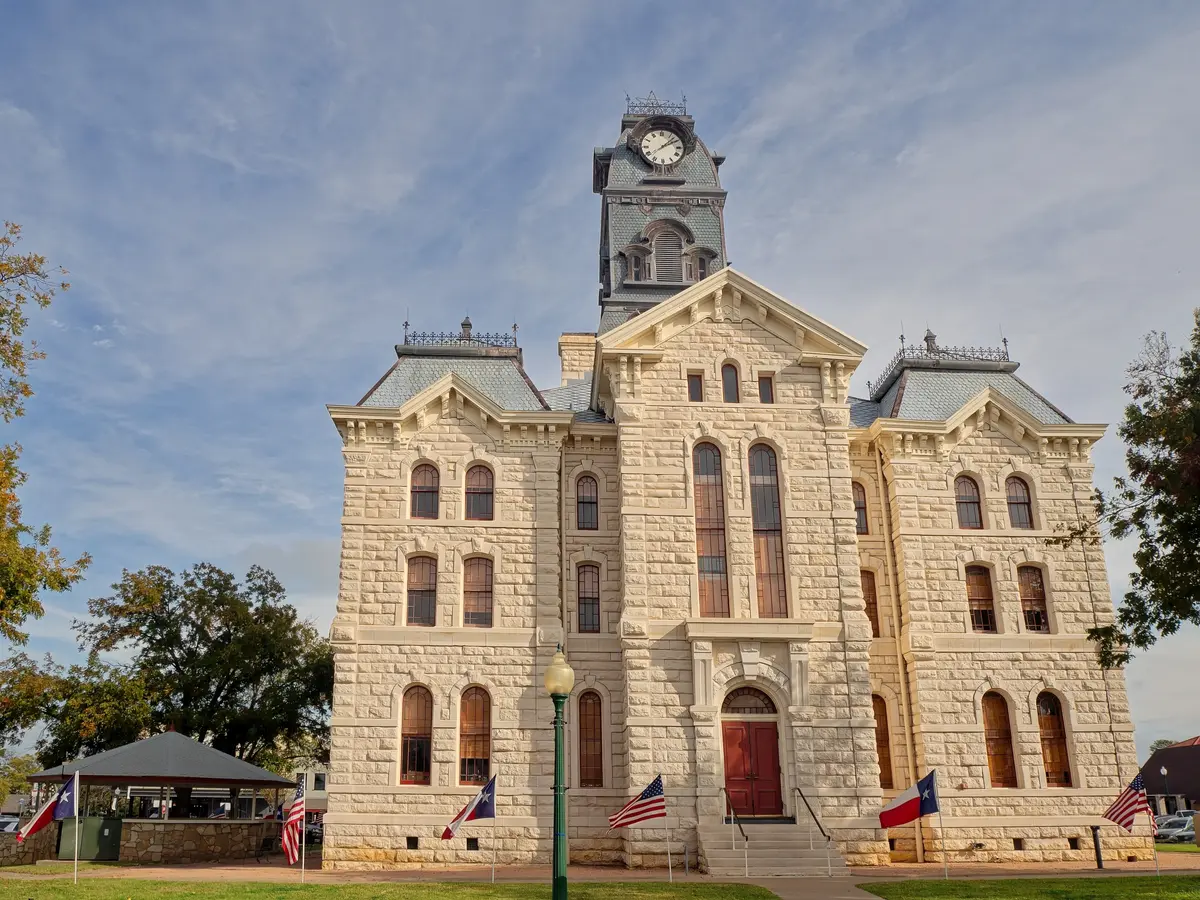
Walter Hall Park is the community's default outdoor living room — baseball fields, picnic areas, a boat ramp, and trail access make it the spot on a Saturday morning. The League City Historic District, centered around the old downtown near League Park, has more personality than most suburban city centers: century-old live oaks, Helen's Garden, boutique shops in restored buildings, and a free monthly concert series that draws real crowds. It's not a big-city dining district, but it's genuinely pleasant in a way that surprises people who were expecting nothing.
The aerospace identity surfaces in everyday life more than you'd expect. Neighbors work shifts at JSC. Local conversations reference launches. Space Center Houston — the official visitor center of NASA Johnson Space Center — is a short drive away, and it functions less like a tourist attraction and more like a civic institution that the community genuinely claims as its own.
For the full picture on parks, trails, and outdoor programming, see the parks and recreation page.
The League City Housing Market Right Now
The typical home price in League City is $378,258 (July 2026, Zillow Home Value Index) — a figure that continues to make the city one of the more accessible entry points in the Houston Bay Area for buyers who want a master-planned community, good schools, and a reasonable commute. The city's median household income is at or above the income needed to buy the typical home here, which is a meaningful threshold: in much of the Houston metro, income and home prices have diverged enough that it no longer holds.
The city-wide typical rent runs $1,811 per month (Zillow, July 2026), reflecting a market where ownership is the dominant mode — approximately 74.7% of households own rather than rent. That ownership skew shapes the rental inventory: it tends to be thinner and less varied than in denser urban markets. For a fuller breakdown of what these figures mean for your monthly budget, see the cost of living page.
What Shapes Prices Here
Neighborhood character drives meaningful price variation across the city. Some areas run above the city-wide typical home price — Westover Park, Tuscan Lakes, Mar Bella, Magnolia Creek, and Victory Lakes all sit in that above-median tier. South Shore Harbour prices cluster right at the city median. Bay Colony is the relative entry point, sitting below the city median, which makes it worth understanding if your budget is tighter. For the full neighborhood-by-neighborhood breakdown, the best neighborhoods page covers the distinctions in detail.
In October 2025, developer Hines acquired a 1,532-acre tract for a master-planned community with 2,730 single-family lots approved for development, and the City Council adopted the Westside Master Plan covering nearly 4,000 acres in May 2025. Both decisions are made and on record. What they mean for prices over the coming years is genuinely uncertain; master-planned communities in League City have historically held their value well because of the school district pull, but meaningful new supply tends to moderate appreciation.
One thing the market does consistently: well-priced homes in established neighborhoods with strong school assignments don't sit. That's the buyer reality here, regardless of where rates land — and it's been true through multiple rate environments. Come prepared, not rushed.
League City Neighborhoods
League City has several distinct areas — each with its own character and appeal. Here’s a breakdown to help you narrow down where to focus your home search.
🏡 Westover Park
Westover Park is an established master-planned neighborhood that runs above the city-wide typical home price, drawing families who want newer construction, well-maintained common areas, and proximity to well-regarded schools within Clear Creek ISD. The community feel here is active and organized, with residents who tend to stay put.
🏠 South Shore Harbour
South Shore Harbour is a waterfront master-planned community built around a marina with direct access to Clear Lake and the Gulf of Mexico, a private golf course, and resort amenities — priced right at the city median, which makes it one of the more accessible waterfront options in the Houston Bay Area.
🌳 Tuscan Lakes
Tuscan Lakes sits above the city median and includes The Village at Tuscan Lakes, League City's primary 55+ community — making it one of the few neighborhoods in the city that genuinely serves multiple stages of life within the same master-planned framework.
🏘 Bay Colony
Bay Colony is the relative entry point into League City's neighborhood hierarchy, sitting below the city-wide typical home price and offering families a way into the Clear Creek ISD attendance zone at a more accessible price point than most of the city's master-planned communities.
🏔 Mar Bella
Mar Bella runs above the city median and sits near the League City–Kemah border, where a new 25-acre mixed-use retail development broke ground in early 2025 — giving this neighborhood more walkable commercial access than most parts of League City currently offer.
🌆 Magnolia Creek
Magnolia Creek is a master-planned community above the city median, known for its amenity package and organized community programming — the kind of neighborhood where HOA events and neighborhood pools are a genuine part of how residents actually spend their weekends.
Pros & Cons of Living in League City
The Pros
- Highly rated Clear Creek ISD schools
- Waterfront and marina lifestyle on Clear Lake and Galveston Bay
- Strong household incomes and relatively low violent crime
- Growing retail, dining and healthcare infrastructure
The Cons
- Hot, humid summers with hurricane/flood risk
- Property taxes above the Texas average
- Commute into central Houston can be lengthy at peak hours
- Limited walkability (car-dependent layout)
Getting Around & Commuting in League City
I-45 (Gulf Freeway) is the axis around which League City's commuter life revolves. Everything else — FM-518, FM-646, SH-96 (League City Parkway), FM-270 (Egret Bay Boulevard), SH-3 — is essentially a surface-road network for reaching I-45 or moving laterally across the city. Most residents access the freeway through one of those corridors depending on which neighborhood they're in, and the difference in that access point matters more than it might seem at 7 a.m.
The Commute Reality
The drive to Houston — Texas Medical Center or Downtown — runs about 35 minutes under reasonable conditions. That "reasonable conditions" qualifier is doing a lot of work. I-45 through the Galveston-to-Houston corridor is one of the most congested stretches in Texas, and the morning and evening builds can stretch that benchmark by 20 to 40 minutes on the wrong days. If your office is in the Pearland or Clear Lake direction, the calculus changes — many residents find those commutes genuinely manageable. But if you're planning to drive Downtown daily, budget honestly.
NASA Johnson Space Center sits in Houston along the I-45 corridor, and a significant portion of League City's workforce makes that commute. The concentration of JSC employees and contractors means many residents are moving in the same direction at the same time, which is worth factoring into any decision about which neighborhood to live in relative to your on-ramp.
Transit and Alternatives
METRO's Bay Area Park & Ride lot, approximately 4.5 miles north of city center, offers express bus service to Houston on weekdays — a legitimately useful option for commuters who can plan around a fixed schedule and would rather read than drive. The Gulf Coast Transit District also runs park-and-ride service along I-45 toward UTMB Galveston on weekdays. Neither service replaces a car for daily life; they supplement it for the specific use case of a predictable office commute.
William P. Hobby Airport is 18 miles away — the closest major airport option and the one most League City residents use for domestic travel. For international departures, George Bush Intercontinental is further north of the city, adding meaningfully to the drive.
Within the City
Inside League City, the surface road network is functional but spread out. SH-96 (League City Parkway) and FM-518 carry most of the east-west commercial traffic. Getting from one master-planned community to another typically means driving — the geography of the city doesn't lend itself to running errands on foot. The Clear Creek Nature Trail and the city's 27 miles of hike-and-bike trails serve recreation far better than transportation, which is the honest description of how most residents use them.
Schools in League City
Families relocating to League City have public, private, and higher-education options nearby. Here’s a quick overview.
🎓 School District
Clear Creek Independent School District serves K–12 students across League City and the surrounding area. Rated B (source: Texas Education Agency, 2025 A-F accountability rating (2024-25 school year)).
🏆 Graduation Rate
The 4-year high-school graduation rate here is approximately 97.7%.
📚 Higher Education
Texas’s public universities — the University of Texas at Austin, Texas A&M University, and the University of Houston — offer four-year degrees statewide, with one of the largest community college systems in the country (50+ public community college districts) providing two-year and workforce programs.
🌐 Online Learning
UT Austin Online and Texas A&M University Online offer fully accredited online degrees for remote learners across the state.
Safety in League City
A quick look at how League City compares on the numbers that matter most when weighing a neighborhood or a move.
🛡 Violent Crime
Approximately 1 per 1,000 residents.
🔒 Property Crime
Approximately 11.5 per 1,000 residents.
Compared to the most recent national figures from the Bureau of Justice Statistics (2024), League City’s violent crime is below the national average (about 3.7 per 1,000), and property crime is below the national average (about 18.4 per 1,000).
Against Texas as a whole, League City’s violent crime is roughly a quarter of the state average, and property crime is roughly half the state average (Bureau of Justice Statistics, Crime Known to Law Enforcement, 2024 (tables 2 and 3)).
Crime rates can vary a lot within a single city, so the citywide numbers above are only a starting point. Some neighborhoods in League City run well below these averages, while others run higher — the kind of block-by-block detail that matters most when you’re actually choosing where to live. The full guide below breaks it down neighborhood by neighborhood.
Working in League City
League City’s largest employers span several industries — here are some of the anchors of the local job market.
🎓 Clear Creek Independent School District
Education
🏛 City of League City
Municipal government
🏥 UTMB Health League City Campus
Healthcare
💼 NASA Johnson Space Center
Aerospace, located in Houston
🏥 HCA Houston Healthcare Clear Lake
Healthcare, located in Webster
Retiring in League City
League City draws retirees for its balance of amenities, outdoor access, and cost. Here’s what to weigh.
🌤 Climate
League City gets 203 sunny days a year, with genuinely pleasant weather from October through April. Summers are hot and humid — Gulf Coast humid — and hurricane season runs June through November, which means flood preparedness is part of the seasonal routine. Winters are mild and rarely see freezing temperatures for more than a day or two.
🍴 Lifestyle
The water access, the South Shore Harbour Resort and Marina, and the League City Historic District give retirees a mix of outdoor recreation and genuine community events without requiring a long drive. The Kemah Boardwalk is a short trip for waterfront dining and live entertainment, and Clear Lake sailing is a year-round draw for those who want it.
🏚 55+ Communities
The Village at Tuscan Lakes is the primary age-restricted community in League City — a master-planned 55+ neighborhood within the larger Tuscan Lakes development, with amenities and a community structure built specifically for that demographic. For a full look at retiring in League City, including healthcare access, see the dedicated retiring page.
✈ Getting Around
A car is essential for daily life in League City. The city's layout is suburban and spread out, and most errands require driving. William P. Hobby Airport is 18 miles away, making it the practical choice for travel. The flat terrain and extensive trail network make outdoor mobility easy for active retirees who want to walk or bike recreationally.
🏛 Texas Taxes for Retirees — What to Know
- No state income tax — Texas has no personal income tax — constitutionally protected under Article VIII, Section 24. Social Security, pensions, 401(k)/IRA withdrawals, and annuity payments are all untaxed at the state level, with no state return to file.
- Sales tax is the tradeoff — The state sales tax is 6.25%, and local add-ons bring the combined rate in League City to 8.25% (Texas Comptroller of Public Accounts, city sales and use tax rates, July 2026). Groceries and prescription drugs are exempt.
- Property taxes — the real tradeoff — Texas’s effective property tax rate averages about 1.40%, among the highest in the country, since property tax (not income tax) funds most local government and schools.
- Over-65 homestead exemption and school-tax freeze — Homeowners 65+ (or disabled) get an additional $60,000 exemption from their home’s value for school district taxes, on top of the general homestead exemption — $200,000 off school taxable value combined, following November 2025’s Proposition 11 (SB 23), which raised the over-65 exemption to $60,000, and Proposition 13 (SB 4), which raised the general homestead exemption to $140,000. Once claimed, your school district tax bill is frozen at that year’s amount and cannot increase as home values rise, and the ceiling can transfer if you move to a new home within Texas.
- Deferral option if cash is tight — Homeowners 65+ can defer property tax payment entirely for as long as they live in the home, rather than paying it currently — interest accrues, but no forced sale.
- No estate or inheritance tax — Texas has no estate tax, no inheritance tax, and no gift tax.
- No separate capital gains tax — Because Texas has no state income tax, capital gains — including on investments and home sales — are not taxed at the state level at all, unlike states such as Washington that tax capital gains separately from income.
Tax laws change frequently and individual situations vary. This is general information, not tax advice — always consult a qualified Texas tax professional or CPA for personalized retirement tax planning.
Weekends & Local Favorites in League City
The water defines the weekend. Clear Lake sits at the city's northern edge, and the routine for a lot of residents involves some version of being near it — whether that's kayaking the Clear Creek Paddle Trail from Walter Hall Park toward Galveston Bay, watching the sailboat races that run during the warm months, or just driving down to the South Shore Harbour Resort and Marina to watch the boats. This isn't aspirational lifestyle copy; it's where people actually spend their Saturday mornings.
Food, Coffee, and Casual Dining
The local food scene has genuine depth for a suburb this size. The Toasted Yolk Cafe is the breakfast destination that draws weekend waits — the kind of place where the parking lot tells you what the crowd will be before you get out of the car. Little Daddy's Gumbo Bar delivers the Gulf Coast comfort food that the city's proximity to Louisiana actually earns. The Spot and Red Oak Cafe - League City round out the casual end of the dining scene with solid local regulars. Craft 96 Draught House + Kitchen handles the craft beer and elevated bar-food side of things.
For coffee, Boba Mama has become the spot for the younger crowd and the boba-adjacent morning. Soulfreak Railroad cafe brings a personality the chain options in the strip centers don't — worth knowing about if a sense of place in a coffee shop matters to you. Wayside Coffee Co. is the quieter, neighborhood option.
The Historic District and Events
The League City Historic District surprises people who write off the city as pure suburban sprawl. The White Linen Night street festival — an annual outdoor event with live music and more than 100 artists — takes over the old downtown and draws crowds from across the Bay Area. Free monthly concerts at League Park fill that same corridor on a smaller, more regular scale. Helen's Garden and the century-old live oaks that line the streets make it one of the more genuinely pleasant places to spend a warm evening in Galveston County.
Day Trips and Nearby Draws
The Kemah Boardwalk — on Galveston Bay just outside city limits — functions as a neighborhood extension for most League City residents: amusement rides, waterfront dining, live entertainment, and regular fireworks. Waterford Harbor Marina in nearby Kemah expands the boating and marina access that South Shore Harbour Marina already provides within the city. Galveston Island is about an hour south — a real beach day, not a tourist detour. Space Center Houston, the official visitor center of NASA Johnson Space Center, sits minutes away and earns repeat visits; locals don't treat it as a one-time field trip. The city's position on the Great Texas Coastal Birding Trail also makes it a legitimate destination for serious birders working the Gulf flyway.
The outdoor infrastructure for all of this — 900 acres of parks, the Clear Creek Nature Trail, the League City Dog Park, Centennial Park nearby in Friendswood — gets its full treatment on the parks and recreation page.
Local favorites in League City
Restaurants
- The Toasted Yolk Cafe
- The Spot
- Red Oak Cafe - League City
- Craft 96 Draught House + Kitchen
- Little Daddy's Gumbo Bar
Outdoors
- South Shore Harbour Marina
- Clear Creek Nature Trail
- Walter Hall Park
- League City Dog Park
- Centennial Park (nearby Friendswood)
Coffee
- Boba Mama
- Soulfreak Railroad cafe
- Wayside Coffee Co.
Top Things Locals Say About League City
The best intel about a city comes from the people who actually live there. Here’s what League City residents say when newcomers ask the questions everyone’s thinking.
“I knew it would be suburban, but I didn't expect to have a kayak in the water fifteen minutes from my front door. Clear Creek caught me completely off guard — and I-45 at 7:15 a.m. is exactly as bad as everyone said it would be.”
— Recent League City home buyer
“What's the most surprising thing about living in League City?”
The water access, honestly. People move here for the schools and then discover they're basically living on the edge of a coastal recreation network. The Clear Creek Paddle Trail from Walter Hall Park, the sailboat races on Clear Lake, the quick drive to Kemah — it adds up to something that doesn't feel like a typical Houston suburb once you're actually living it.
“What do locals love most about League City?”
The combination of a strong school district and a community that actually has a history. The League City Historic District around League Park is something people take genuine pride in — it's not a manufactured downtown, it's an old one that got preserved. White Linen Night draws crowds from across the Bay Area, and the monthly concerts at League Park are the kind of thing that makes you feel like you actually live somewhere, not just in a zip code.
“What should newcomers to League City know?”
Plan your commute before you pick your neighborhood. The on-ramp to I-45 you use every morning matters more than you'd think, and not all of them are created equal during the 7 to 8:30 a.m. window. Also: flood insurance isn't paranoia here, it's due diligence. Ask specifically about a home's flood history before you make an offer — Harvey's impact was not uniform, and some streets fared very differently than the ones around them.
“How much do you need a car in League City?”
Completely. For daily life — groceries, school drop-off, dinner out, anything — you need a car. The hike-and-bike trail system is genuinely good for recreation, but it doesn't replace transportation. Most errands mean a drive, and the commercial corridors along FM-518 and SH-96 are designed around cars. If you're coming from a city where you walked or took transit regularly, that adjustment is real and worth thinking through before you commit.
Cities Near League City
Other communities near League City worth a look — each with its own character and price point.
| City | Distance | Best For | Vibe | Median Rent | Median Buy |
|---|---|---|---|---|---|
| Friendswood | 8 mi | Established families, quieter streets | Settled, tree-lined, slightly slower pace | $2,324 | $464,253 |
| Webster | 6 mi | Value seekers, medical corridor workers | Commercial, practical, no-frills | $1,700 | $300,000 |
| Dickinson | 7 mi | Entry-level buyers, rural feel | Small-town, affordable, unpretentious | $1,583 | $270,294 |
More Helpful Guides for League City
Going deeper on League City? Our blog series covers everything from first-time buying to retiring here — explore the guides below.
Local Expert Takeaway: League City earns its reputation as a family destination, but the water access is what turns residents into long-termers. Buyers who discover the Clear Creek Paddle Trail from Walter Hall Park, or find themselves watching sailboat races on Clear Lake after work, often say that's the detail nobody told them about before they moved. The school district rating holds the market together; the kayaks and the South Shore Harbour Marina are what make people stop looking at the rest of Houston.
Quick Takeaways & FAQs
✅ Clear Creek ISD holds a B rating from the Texas Education Agency, giving League City one of the more reliable school district stories in the entire Houston Bay Area.
⚠️ I-45 is the only realistic commute route to Houston, and the morning build can add 20 to 40 minutes to an otherwise manageable 35-minute drive — budget honestly before choosing a neighborhood.
📍 Approximately 40% of League City's land remains undeveloped, with a 1,532-acre master-planned community by Hines and a 4,000-acre Westside Master Plan already approved by City Council in 2025 — the city you buy into today will look noticeably different by 2030.
Is League City a good place to raise a family?
How long is the commute from League City to Houston?
What is the typical home price in League City right now?
How are the schools in League City?
Is League City still growing — and does that affect buying now?
Helpful Links for Moving to League City
Moving to Texas?
Tell us what you need help with and we'll connect you with local resources.
