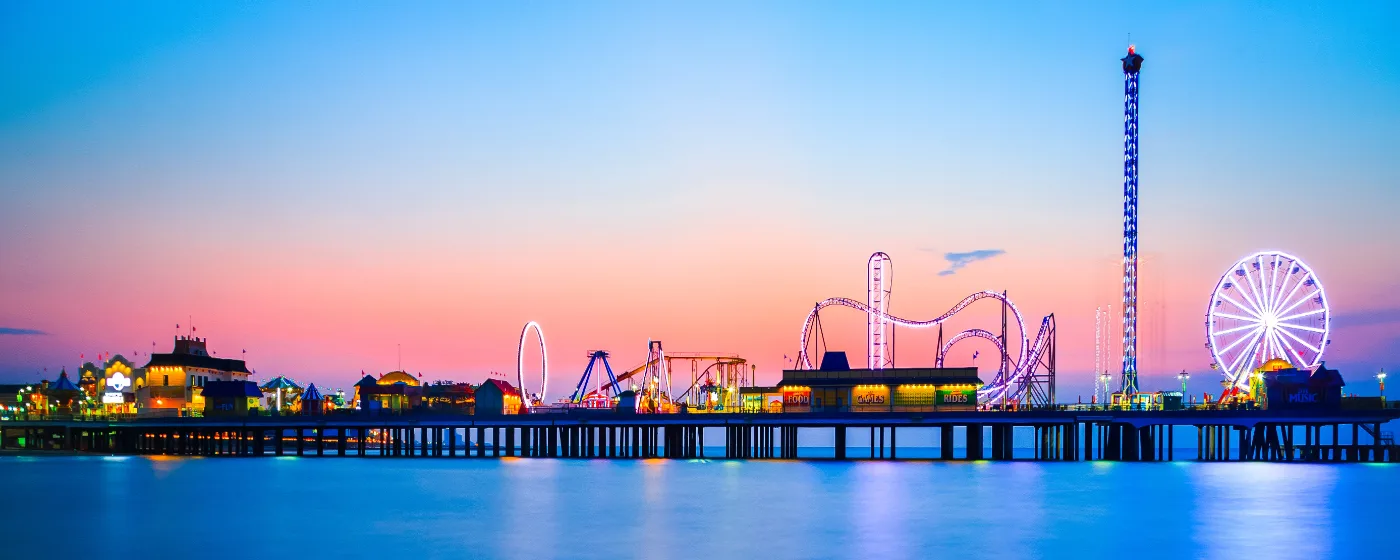
People who move to Galveston from inland Texas often describe a specific moment — usually within the first week — when it clicks that outdoor life here is genuinely different from anywhere else in the state. The Gulf is not backdrop; it is infrastructure. The beach is where residents run in the morning, where kids spend the afternoon, and where the whole city turns up on a warm weekend. Living on a barrier island means the outdoors is never more than a few minutes away, regardless of which neighborhood you land in.
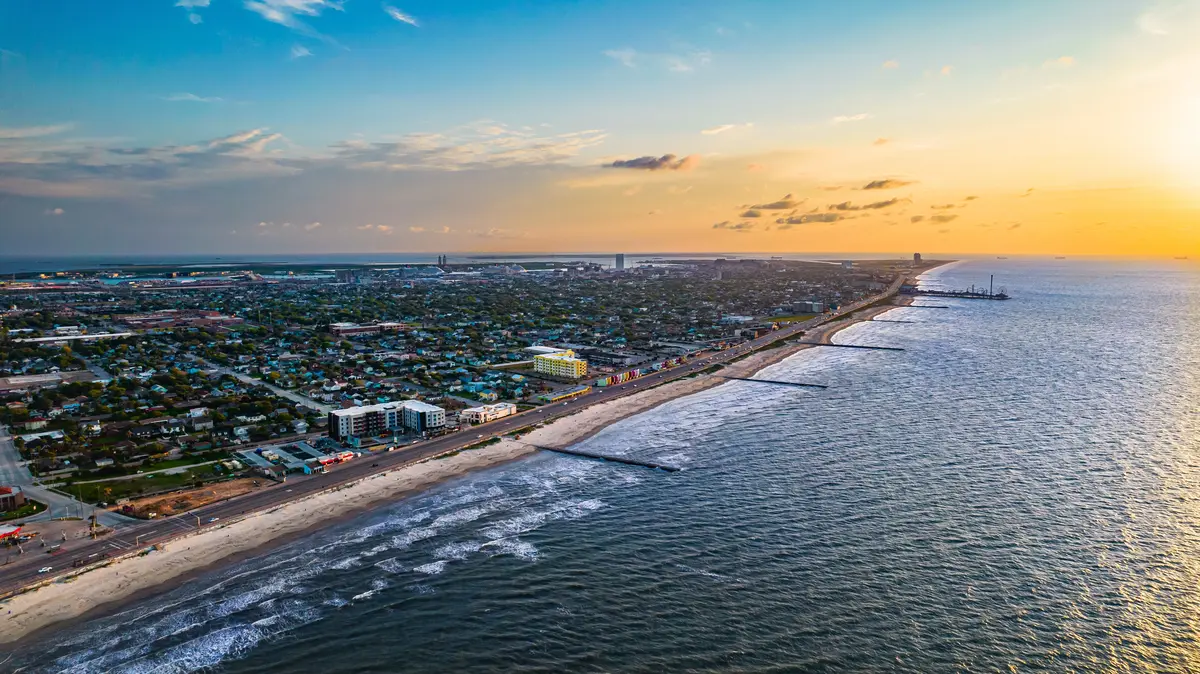
Galveston's population of 53,636 is spread across an island that is 27 miles long and, at its widest, about 3 miles across. That geography compresses recreation into a surprisingly dense package: a 2,013-acre state park at the western end, a 685-acre nature preserve at the eastern end, more than 10 miles of walkable Seawall promenade running the length of the Gulf side, and a string of beach parks in between. You do not need to plan a day trip to reach serious outdoor space — it is woven into the street grid.
The honest caveat for newcomers is seasonality. Gulf Coast summers are real: humidity, heat, and hurricane-season awareness shape how and when locals use outdoor spaces. The warm months that push tourists to the beach are also the months when a midday run on the Seawall is best replaced with an early-morning one. Residents learn this adjustment quickly, and most come to appreciate the shoulder seasons — fall especially — when the crowds thin and the water is still warm. The cost of living page covers how the island's overall affordability picture compares to nearby markets.
The sections below cover Galveston's signature parks and beach venues, the Seawall and trail corridors, water-based recreation, and the birding and nature scene that has made this island a genuine destination for naturalists across the region.
Galveston's Signature Parks and Beach Venues
The two anchors of Galveston's park system sit at opposite ends of the island, and they could not feel more different from each other.
Galveston Island State Park
At the western end, Galveston Island State Park is one of the most visited state parks in Texas. The park covers 2,013 acres and spans the full width of the island, meaning it holds both Gulf-facing beachfront and a quieter bay-side section with coastal prairie and marsh. That split gives it a range of activity that no single-shoreline beach park can match.
A redevelopment completed in 2022 upgraded the beachside section substantially, adding 36 water-and-electric campsites with direct beach access. For residents, this matters less as a camping destination than as a signal about the park's trajectory — the infrastructure is genuinely well-maintained. The nature center, observation platform, kayak and canoe launches, fish-cleaning stations, and picnic pavilions make it functional for a two-hour visit or a full weekend.
Adult admission runs $5; children 12 and under enter free, and a Texas State Parks Pass covers entry entirely. Locals who visit more than a handful of times a year find the pass pays for itself quickly.
Stewart Beach and East Beach
Closer to the urban core, Stewart Beach is the family-oriented beach park where Broadway Avenue meets the Seawall. Lifeguards on duty, chair and umbrella rentals, beach volleyball courts, concessions, and rinse-off showers make it the practical choice for parents with young kids. Alcohol is not permitted, which keeps the atmosphere distinctly calm — that is by design, not accident.
East Beach, formally R.A. Apffel Park, operates at the opposite end of the social register. Positioned at the far eastern tip of the island, it hosts live music, festivals, and sporting events, and is one of the few spots on the island where alcohol is permitted. The two parks serve genuinely different crowds, and most Galveston residents eventually develop a clear preference for one over the other.
The city offers a seasonal parking pass that provides unlimited beach access at both East Beach and Stewart Beach through the warm months — one of the more practical resident perks in the park system, and worth looking into if you plan to use either park regularly.
| Venue | Size / Type | Best For | Key Features |
|---|---|---|---|
| Galveston Island State Park | 2,013 acres, state park | Nature Families | Camping, paddling, birding, hiking, nature center |
| Stewart Beach | Beach park, Gulf side | Families | Lifeguards, volleyball, concessions, no alcohol |
| East Beach (R.A. Apffel Park) | Beach park, eastern tip | All ages | Live music, festivals, alcohol permitted |
| East End Lagoon Nature Preserve | 685 acres, city-owned | Nature Quiet | Birding, kayaking, fishing, free entry |
| Seawall Boulevard promenade | 10+ miles, linear trail | Walkable Active | Running, cycling, skating, mosaic trail art |
The Seawall Promenade and Trail Corridors
The Seawall Blvd promenade is the connective tissue of outdoor life in Galveston. It runs more than 10 miles and is cited as the longest continuous sidewalk in the United States — a claim locals repeat with the casual confidence of people who have had it confirmed repeatedly. Walking, running, cycling, skating, and surrey riding all share the corridor, and on a dry winter morning it fills with residents who treat it as their commute, their gym, and their stress-relief system simultaneously.
The Seawall Interpretive Trail
What distinguishes the Seawall from a generic coastal path is the Seawall Interpretive Trail — 70 hand-painted mosaic tile benches installed along the promenade, each one interpreting the ecology, economy, or history of the Texas coast. They are legitimately beautiful and genuinely informative. Runners who have logged hundreds of miles on the Seawall still stop occasionally to read one they missed. It gives the corridor texture that a bare concrete walk would not have.
What Locals Know About Timing
The Seawall is glorious from October through April. In the deep summer months, the tourist volume between the beach parks reaches a density that most residents navigate by going early — before 8 a.m. — or by shifting to the bay side of the island, where the East End Lagoon Nature Preserve offers a completely different pace. The two corridors function as a counterbalance: the Seawall for long-distance movement and Gulf views, the Lagoon for quiet and wildlife. Galveston residents who spend time outdoors regularly tend to use both.
Water Recreation: Paddling, Fishing, and the Gulf
On an island surrounded by water, the divide between casual beach use and active water recreation is smaller than it looks from the outside. Galveston's parks and preserves are designed around water access, not just water views.
Paddling
The bay side of Galveston Island State Park has kayak and canoe launches that put paddlers into the calm intracoastal waters within the park boundary. The East End Lagoon Nature Preserve operates a separate boat launch for human-powered vessels — kayaks and paddleboards — that gives access to 685 acres of coastal prairie and salt marsh without motorized traffic. Both sites are among the more accessible flatwater paddling spots on the upper Texas coast.
Fishing
The East End Lagoon draws dedicated anglers as much as birders. Flounder, trout, redfish, and blue crabs are regularly caught in the lagoon; a state fishing license is required, and the preserve provides fish-cleaning facilities. The state park offers its own fishing access on both the Gulf and bay sides, with dedicated fish-cleaning stations as well. Surf fishing along the beach sections of the state park is common enough that you will see gear in trucks parked in the lot on most weekday mornings.
Swimming and Beach Use
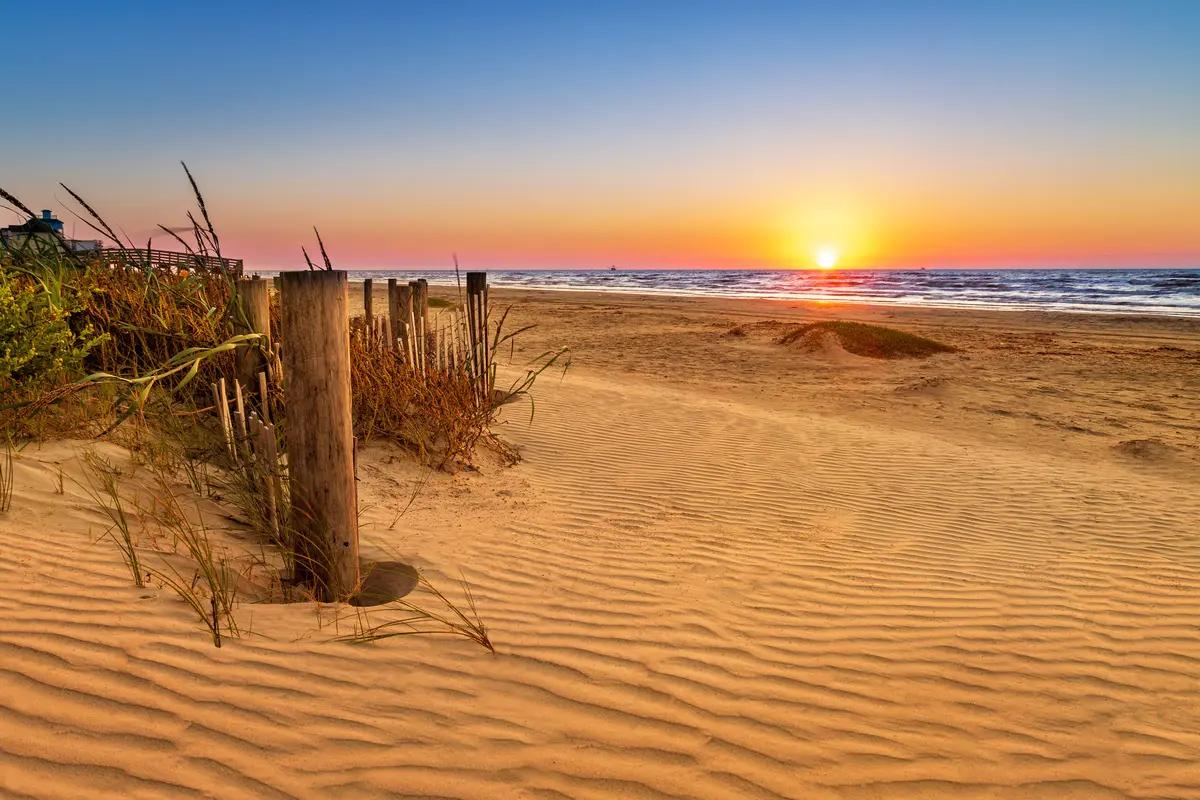
Both Stewart Beach and East Beach are managed for swimming, with lifeguard coverage at Stewart Beach during the warm-season months. The state park's beach section is an alternative for those who prefer less-managed access — the tradeoff is fewer services but considerably more space. The Gulf water temperature stays swimmable well into October, which is one of the things that keeps Galveston residents using the beach long after the tourist season winds down.
Parents with school-age kids will find that beach sports — volleyball, paddleboarding, surf fishing — are where a lot of the informal youth recreation happens outside of organized leagues. The schools page covers organized youth athletics and activities in more detail.
Looking to buy in Galveston? Estimate your payment.
Enter your numbers to see an estimated monthly mortgage payment.
Estimate only. Excludes HOA fees and mortgage insurance. The interest rate above is a starting point, not a quoted rate — replace it with your own to see real numbers. Insurance is a flat placeholder, not a Galveston quote.
Birding, Nature, and Seasonal Recreation
Galveston's position on the Central Flyway is the fact that surprises most newcomers. The flyway is the migratory corridor running from South America to Canada, and the island sits squarely in its path. More than 300 bird species can be seen here throughout the year. Spring migration peaks from mid-April through the first half of May, and during that window the variety of species that appears — sometimes overnight, when a weather system pushes migrants to land on the island en masse — is genuinely remarkable even to people who did not move here as birders.
Bird City, Texas
Galveston holds Bird City High-Flyer status from Audubon Texas and Texas Parks and Wildlife — the first city in Texas to earn the designation. That recognition reflects both the habitat preserved on the island and a deliberate, sustained effort by the city and its conservation organizations to maintain it. For residents who care about green infrastructure, it is a meaningful data point about where the city's priorities actually land.
Where to Go
The East End Lagoon Nature Preserve is the easiest entry point. Entry is free, the ADA-accessible half-mile trail loop with interpretive signage works for any fitness level, and the Galveston Island Nature Tourism Council offers free guided nature walks for visitors and residents alike. The preserve received a Houston-Galveston Area Council Parks and Natural Areas Award in 2022 for its management practices — rare recognition for a city-owned site of this scale.
Galveston Island State Park adds the widest habitat variety: ranger-led birding walks move through beach, coastal prairie, and bay ecosystems in a single outing. Those walks are open to all ages at standard park admission — $5 for adults, free for children 12 and under.
FeatherFest
Each spring, the Galveston FeatherFest Birding and Nature Photography Festival brings expert-guided field trips, workshops, and a nature photography contest to historic downtown. It is among the largest birding festivals in Texas, which means the hotel rooms fill and the birding spots get crowded in ways that residents who visit the Lagoon on a quiet Tuesday would not otherwise recognize. For people relocating here who are already into birding or wildlife photography, FeatherFest is the event that puts Galveston on the calendar of serious practitioners from across the region.
What Six Months Here Teaches You
Almost every newcomer underestimates how much the island's recreation shifts with the seasons. The Seawall feels infinite in November. The state park is quietest and most rewarding in February, when the camping crowd is thin and the bay-side trails feel remote. East Beach in July is a fundamentally different experience than East Beach in October. Residents who have lived here a full year stop thinking about outdoor space as a static amenity and start reading the calendar instead — which park, which month, which hour of the day. That adjustment takes a season or two, but once it clicks, the island's outdoor life is difficult to give up.
Local Expert Takeaway: Galveston's outdoor recreation is wide, varied, and genuinely built into the island's geography — but it rewards the resident who learns to work with the seasons rather than against them. The East End Lagoon Nature Preserve is the under-used gem: 685 free acres of coastal marsh with kayak access and serious birding, visited by a fraction of the people who line up at Stewart Beach. The city's seasonal beach parking pass is one of the better values in the park system for anyone using the beaches more than a handful of times — check the current rate when you arrive, as it reprices periodically. And if you care about wildlife habitat, the state park's bay side in February or March — before the spring crowds arrive — is worth the five-dollar admission every single time.
Quick Takeaways & FAQs
✅ Galveston Island State Park spans 2,013 acres and offers camping, paddling, hiking, and ranger-led birding across both Gulf and bay-side habitat — all within the city limits.
⚠️ Summer heat and tourist-season crowds on the Seawall are real; locals who thrive here learn to use outdoor spaces early in the morning or shift to the bay side of the island when the Gulf-facing parks fill up.
📍 Galveston was the first city in Texas to earn Bird City High-Flyer status from Audubon Texas and Texas Parks and Wildlife, reflecting more than 300 species found on the island's Central Flyway corridor.
Is Galveston Island State Park worth visiting as a resident, or is it mainly for tourists?
What is the difference between Stewart Beach and East Beach?
What is the East End Lagoon Nature Preserve, and why don't more people seem to know about it?
How good is the Seawall promenade for running and cycling?
Is Galveston actually a good place for birding, or is that marketing?
Moving to Texas?
Tell us what you need help with and we'll connect you with local resources.
