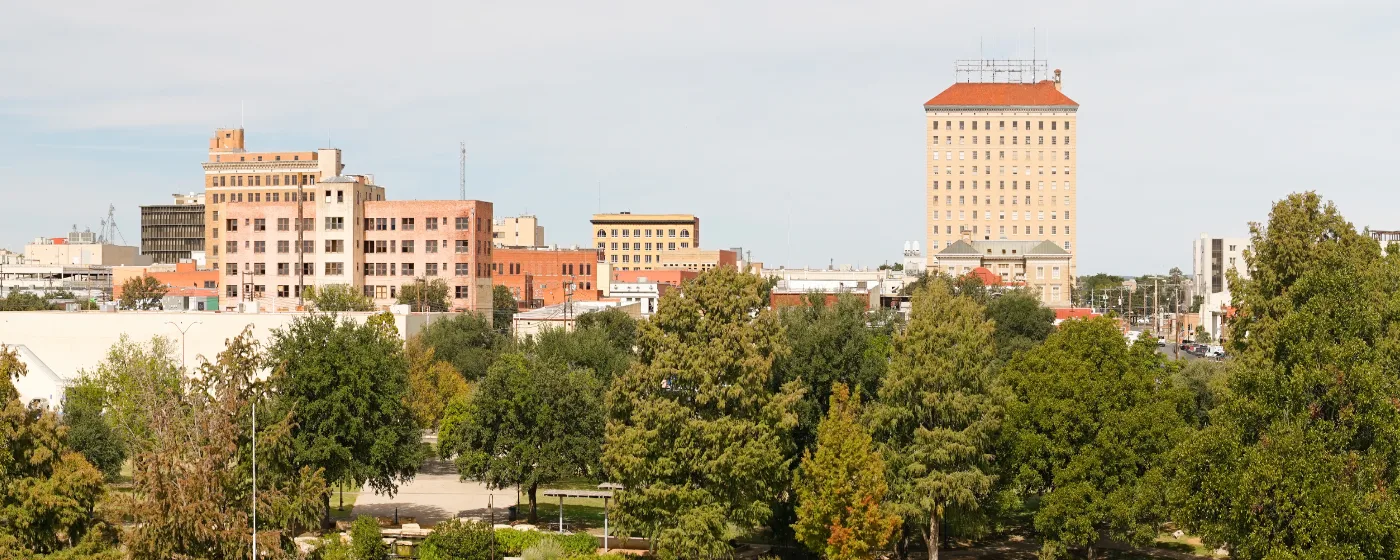
San Angelo does not announce itself the way coastal retirement destinations do. There is no ocean view, no golf-cart culture, no sprawling planned community with a gatehouse. What it offers instead is something rarer in the current market: a city of 100,640 people where a retiree on a fixed income can actually afford to own a home, see a specialist without driving three hours, and still have a four-mile river walk out the front door of downtown. That combination is harder to find in Texas than most people expect.
The economy here runs on Goodfellow Air Force Base, Shannon Health, Angelo State University, and Ethicon — a medical device manufacturer. That mix means the city maintains the kind of infrastructure a retiree depends on: a serious hospital, steady retail, reliable services, and a population that is not entirely dependent on one boom-and-bust industry. The Concho Valley location, roughly in the center of West Central Texas, means genuine isolation from major metros, which is the trade-off that filters out anyone who needs a big city nearby.
On a pure cost basis, San Angelo is one of the more compelling retirement destinations in Texas. The typical home price is $214,811 (Zillow Home Value Index, July 2026) — well below what most Texas metros demand — and the overall cost of living runs approximately 17% below the U.S. average. Groceries, healthcare services, and everyday expenses track noticeably below national norms, which matters on a Social Security check or a pension that does not grow with inflation. The Concho River Walk, San Angelo State Park, and Lake Nasworthy mean there is genuine outdoor life here year-round, not just in the brief mild season.
The sections below cover what retirees most need to weigh: who San Angelo genuinely fits, the healthcare picture at Shannon Medical Center, the Texas tax advantages for seniors, walkability and community, downsizing options, and how the city stacks up against nearby towns worth considering.
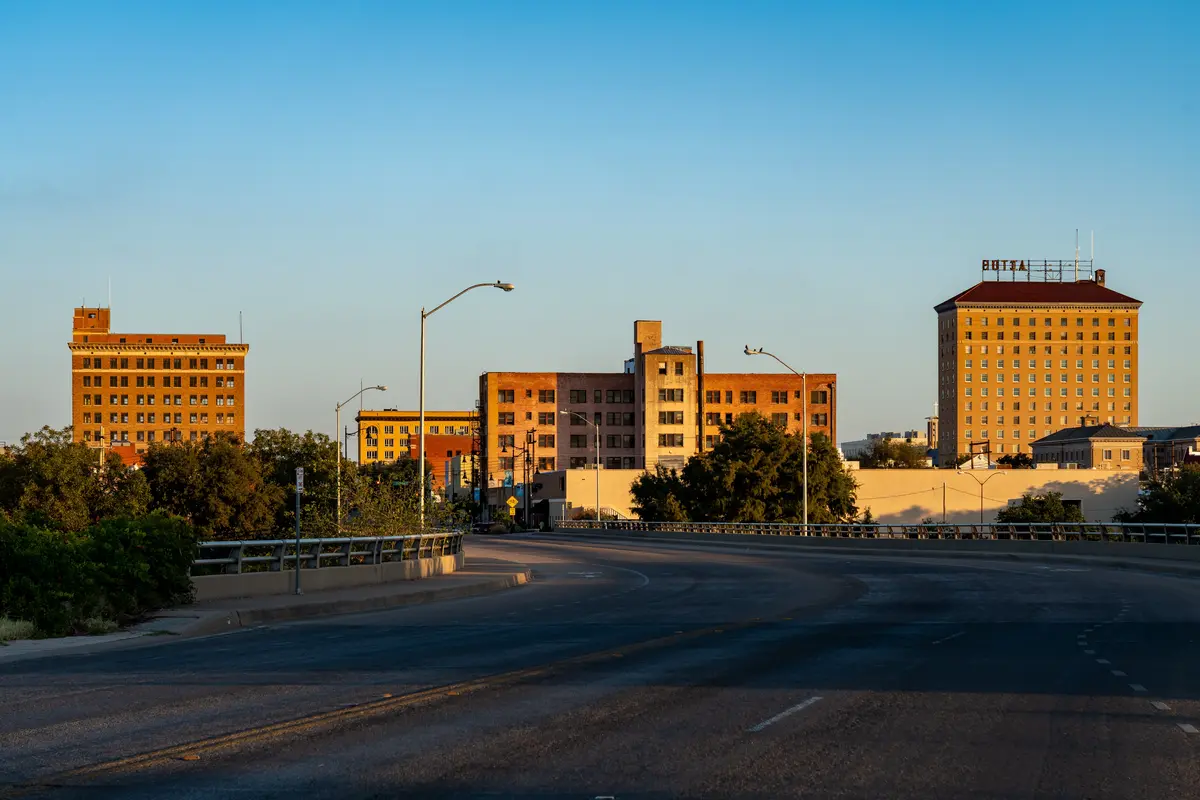
Why Retirees Are Choosing San Angelo
The case for San Angelo in retirement starts with the math. At a typical home price of $214,811 (July 2026), the city sits far below what most Texas metros demand, and the median household income here is at or above the income needed to buy at that price point — meaning this is not an affordability story built on wishful thinking. Retirees arriving from higher-cost states, or from Texas cities where the same budget would buy a fraction of the space, often feel the contrast immediately.
San Angelo fits best if you value self-sufficiency over convenience. The city has 250 sunny days a year, a four-mile river walk, a regional trauma center inside city limits, and a genuine arts and culture scene anchored by the San Angelo Museum of Fine Arts and Fort Concho National Historic Landmark. That is a lot of amenity for a city this size in West Texas. Retirees who thrive here tend to be people who enjoy a slower pace, who are comfortable driving for most errands, and who do not need the dining and entertainment density of a larger metro.
The honest case against San Angelo is geographic isolation. The city sits about 90 minutes to Midland-Odessa, TX, and considerably farther from Dallas, Austin, or San Antonio. Retirees who need regular access to advanced subspecialty care — complex cardiac surgery, major cancer centers, organ transplant programs — will need to travel for it. Families whose adult children live in major metros will find visits require real planning. If that kind of distance creates anxiety rather than peace, San Angelo is likely the wrong fit regardless of what the numbers say.
Healthcare & Medical Access in San Angelo
Shannon Medical Center is a full-service regional hospital inside city limits — and for a city of this size in West Texas, it punches well above its weight. The system is locally owned and non-profit, with a broad specialist bench and multiple locations across the city serving the surrounding Concho Valley region.
For retirees, the specifics matter. Shannon is the only Level III Lead Trauma Facility in the region, with emergency department physicians on site around the clock. Its cardiac program and stroke program carry national recognition. The AirMed air ambulance service connects patients to higher-level facilities when needed — a critical backstop in a city this far from a major academic medical center.
Oncology deserves a direct mention. Shannon Cancer Center consolidates all outpatient oncology care under one roof. More importantly, as a member of the Mayo Clinic Care Network, Shannon's physicians have access to Mayo Clinic knowledge and expertise — at no added cost to patients. That kind of network affiliation is unusual for a regional hospital of this scale, and it meaningfully narrows the gap between what is available locally and what you would find in a major metro.
The honest limit is still real. Highly specialized procedures — complex cardiac surgeries, organ transplants, rare subspecialty consultations — will require travel to San Antonio, Dallas, or Houston. Retirees managing complex chronic conditions should map out those referral pathways before committing to a move. But for the full range of everyday and urgent senior health needs, Shannon provides a depth of local access that significantly exceeds what most comparably sized rural-adjacent cities can offer.

The Retiree Budget in San Angelo
Texas does not tax retirement income. Social Security benefits, pension distributions, IRA withdrawals, and 401(k) income all face zero state income tax — which for a retiree pulling from multiple retirement accounts is a meaningful annual advantage over states that tax any of those sources. Texas also passed a 2025 constitutional amendment permanently prohibiting any new estate, inheritance, or gift taxes, which matters for estate planning.
Property taxes in Texas are often the first thing retirees push back on, and the concern is fair — the effective rate in San Angelo runs approximately 1.20%. What changed significantly in November 2025 is the exemption structure. Voters approved the largest expansion of senior property tax relief in Texas history: the standard homestead exemption rose to $140,000 and the additional over-65 exemption rose to $60,000, creating a combined $200,000 school-district exemption for seniors. For homeowners 65 and older whose home is appraised at $200,000 or less, those combined exemptions effectively eliminate school district property taxes entirely. At San Angelo's typical price point, a large share of retiree homeowners fall at or near that threshold. Texas also freezes school district property taxes once the over-65 exemption is claimed — they cannot rise above the level set in the year of application, providing genuine cost predictability on a fixed income. See the full cost of living breakdown for a complete picture of local taxes and daily expenses.
Day-to-day costs track well below national norms. Groceries run roughly 6–10% below the national average, and healthcare services cost measurably less than in most U.S. cities. Utilities in West Texas can spike hard in summer — air conditioning bills from July through September are real — but that seasonal pressure is offset by mild winters and the property-tax picture described above. Retirees who compare San Angelo to higher-cost Sun Belt destinations often find the overall cost difference larger than they expected.
Looking to buy in San Angelo? Estimate your payment.
Enter your numbers to see an estimated monthly mortgage payment.
Estimate only. Excludes HOA fees and mortgage insurance. The interest rate above is a starting point, not a quoted rate — replace it with your own to see real numbers. Insurance is a flat placeholder, not a San Angelo quote.
Walkability, Community & Staying Active in San Angelo
The Honest Walkability Picture
San Angelo is a car-dependent city for most daily errands. Grocery runs, medical appointments, and retail shopping generally require driving, and the city's layout does not reward trying to skip it. That said, the car dependency comes with less frustration than in denser metros: traffic is manageable, parking is free and plentiful, and distances between destinations are short by Texas standards.
Where San Angelo genuinely delivers on foot is along the Concho River Walk. The four-mile paved and gravel path runs through the heart of downtown along the North and Middle Concho Rivers, connecting parks, cultural institutions, gardens, outdoor art installations, and the RiverStage — a three-acre outdoor amphitheater. Paddleboat rentals, fishing, and evening walks on an illuminated path are realities, not aspirations. For retirees who want a daily walking routine with real scenery and consistent programming, this path is the center of community life downtown. The terrain is flat enough for most fitness levels, and 250 sunny days a year means the calendar for using it is long.
Community Life and Social Infrastructure
The River Walk hosts dozens of events each year, including the annual River Fest celebration that draws crowds from across the region for performances, crafts, and concerts. Angelo State University adds a layer of cultural programming — lectures, performances, athletic events — that many cities this size simply do not have. The San Angelo Museum of Fine Arts and Fort Concho National Historic Landmark anchor a cultural calendar that retirees with time to engage it find surprisingly robust.
The San Angelo Farmers Market is a consistent gathering point through the growing season, and the city's independent coffee shops have become reliable social anchors for people who want a third place that is not a big chain. Spring Creek Park, Lake Nasworthy, and San Angelo State Park extend active life outdoors for retirees who hike, fish, or simply want open water and space within city reach. The semi-arid landscape is an acquired taste, but retirees who love wide-open West Texas terrain find it deeply satisfying.
One thing retirees who move here from larger cities consistently note after a few months: the social pace requires some initiative. San Angelo is not a city that throws community events at you constantly — you find your people through a church, a volunteer organization, a fishing club, or a regular route on the River Walk. The infrastructure is there; the connections take a little more building than they would in a purpose-built retirement destination.
Right-Sizing: Downsizing in San Angelo
San Angelo's housing stock skews toward single-family homes, and the city's price point makes downsizing genuinely workable on a retirement budget. The typical home price of $214,811 (July 2026) means a retiree selling a paid-off home in a higher-cost market can often purchase outright, or close to it. Single-level ranch-style homes are a staple of San Angelo's residential neighborhoods and are not scarce — the city's building pattern through the mid-century favors that format, which lines up well with what aging-in-place requires.
Patio homes and smaller maintenance-reduced footprints exist but are not as abundant as in cities with dedicated active-adult planned communities. Neighborhoods like Santa Rita and College Hills (ASU–College Hills) offer established, walkable-to-campus character with more compact lots. The Bluffs and Southland run above the city median in price, which for a downsizer coming in with equity can still represent a meaningful upgrade in finish or lot quality. Lake Nasworthy is the choice for retirees who want water access as part of daily life, also priced above the city median.
No 55+ communities were found in San Angelo. The city does have options for retirees who want a managed environment. Baptist Retirement Community is a faith-based campus welcoming residents age 62 and older, with independent living, assisted living, memory care, respite care, and rehabilitation — plus an on-site urgent care clinic and pharmacy, which is an unusual amenity for a facility of this type. Lyndale San Angelo offers independent and assisted living and received the 2025 San Angelo Community's Choice Award for Best Senior Living. These are assisted and independent living facilities, not age-restricted ownership communities — an important distinction for buyers who want to own rather than lease.
Retirees who want a dedicated 55+ ownership community with HOA maintenance coverage, shared amenities, and deed-restricted age requirements will not find that product in San Angelo. The city rewards flexibility: a retiree who is comfortable selecting a well-built single-level home in an established neighborhood, handling their own maintenance or hiring it out, and connecting to the city's general social infrastructure will find the price point and housing quality compelling. Someone who specifically wants the lock-and-leave structure of a master-planned 55+ community should weigh that gap honestly before committing.
San Angelo vs Nearby Retirement Destinations
| City | Cost vs San Angelo | Primary Hospital | Walkability | Senior Living Depth | Overall Retirement Fit |
|---|---|---|---|---|---|
| San Angelo | Anchor | Shannon Medical Center — full-service regional hospital inside city limits, Level III trauma, nationally recognized cardiac and stroke programs, Mayo Clinic Care Network oncology | Car-dependent for errands; excellent River Walk for daily walking | Independent and assisted living options; no 55+ ownership communities | Strong value, solid healthcare, genuine community life; isolated from major metros |
| Christoval | Noticeably higher | No local hospital; relies on San Angelo (short drive) | Minimal; fully rural, errands require driving to San Angelo | Very limited; small community with few managed senior options | Best for retirees who want rural quiet and are comfortable driving for everything |
| Wall | Noticeably higher | No local hospital; relies on San Angelo | Minimal; small town, car essential for all needs | Essentially none locally | Rural lifestyle with proximity to San Angelo's services; pays a premium for that setting |
| Mertzon | About the same | No local hospital; considerably farther from regional medical care | Very limited; small county seat with basic services only | Essentially none locally | Deep rural option for retirees who want maximum quiet and minimal cost; healthcare access is the real constraint |
| Midland | Noticeably higher | Regional medical center with broader specialty depth; oil-economy-driven healthcare investment | Car-dependent; larger retail and dining footprint than San Angelo | More 55+ and active-adult options than San Angelo | More amenities and senior living options; meaningfully higher housing costs driven by energy sector |
| San Antonio | Pricier | Multiple major health systems, academic medical centers, transplant programs | Mixed; urban core walkable, suburbs fully car-dependent | Extensive — multiple 55+ communities, CCRCs, and active-adult neighborhoods | Maximum healthcare and senior living depth; substantially higher cost; right choice if advanced subspecialty access is non-negotiable |
For retirees weighing the nearby options honestly: Christoval and Wall offer genuine rural character but carry higher price tags and zero local healthcare — they work only as satellites of San Angelo, not as standalone retirement locations. Mertzon is the low-cost rural option, but distance from medical care is a real constraint that sharpens with age. Midland beats San Angelo on senior living inventory and amenity breadth, but housing costs there reflect the energy sector's influence, and the gap with San Angelo's price point is real.
San Antonio is in a different category entirely — it offers the healthcare depth, 55+ community selection, and urban amenity that San Angelo does not, but the cost of living and home prices reflect that. For a retiree who needs transplant-level care, a specialist cluster, or a purpose-built active-adult community with HOA structure, the drive from San Angelo to San Antonio is not a reasonable substitute — the move itself becomes the answer. San Angelo's strength is the combination of regional healthcare depth, genuine affordability, and a livable small-city life that most comparably priced Texas towns simply cannot match.
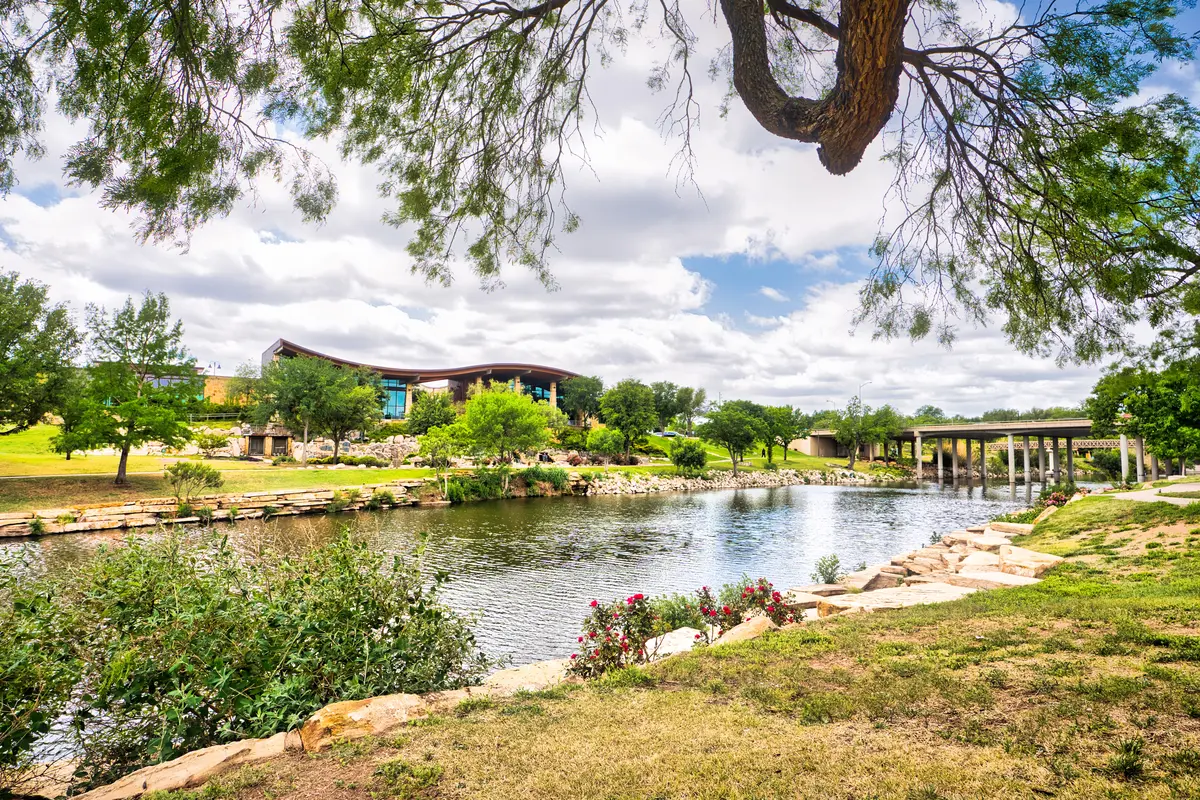
Local Expert Takeaway: San Angelo's retirement case is most compelling for people who arrive from higher-cost markets, want to own a home outright or close to it, and are genuinely comfortable with a small-city pace in West Texas. The river walk, Shannon Medical Center's Mayo Clinic Care Network oncology affiliation, and Texas's 2025 senior property tax overhaul are the three things that separate San Angelo from other affordable small Texas cities — none of them are well-publicized, and all three matter more on a fixed income than they do when you're still earning. The one thing to go in clear-eyed about: this is not a destination that hands you community. The River Fest crowd, the San Angelo Farmers Market, the morning regulars at the coffee shops — that social life is there, but you find it by showing up consistently, not by signing up for a community calendar.
Quick Takeaways & FAQs
✅ Shannon Medical Center — a full-service regional hospital inside city limits with Level III trauma designation and oncology through the Mayo Clinic Care Network — gives San Angelo healthcare depth that almost no comparably priced small city in Texas can match.
⚠️ No 55+ ownership communities were found in San Angelo, which is a genuine gap for retirees who want deed-restricted age-qualified neighborhoods with HOA maintenance coverage.
📍 Texas's November 2025 constitutional amendments raised the combined senior homestead exemption to $200,000 and froze school district property taxes for homeowners 65 and older — at San Angelo's typical price point, many retiree homeowners effectively eliminate school district taxes entirely.
Is San Angelo a good place to retire on Social Security?
How good is the healthcare in San Angelo for retirees?
Are there 55+ communities in San Angelo?
What are property taxes like for retirees in San Angelo?
How does San Angelo compare to retiring in a smaller nearby town like Christoval or Mertzon?
Moving to Texas?
Tell us what you need help with and we'll connect you with local resources.
