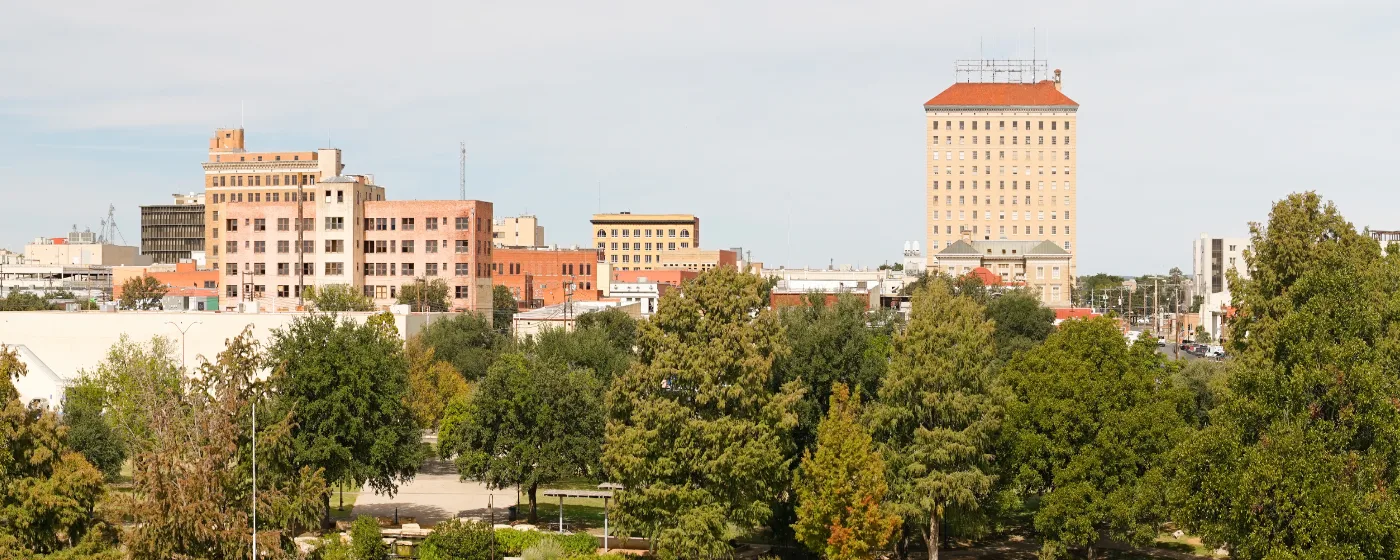
Maybe your company is relocating you to San Angelo, or Goodfellow Air Force Base is bringing you here for a tour. Either way, the school question lands fast. San Angelo Independent School District is the only public option for the city's 100,640 residents, and it is a district in a real moment of transition — carrying a C rating while simultaneously sitting on the largest capital investment it has seen in nearly two decades. That tension is worth understanding before you sign a lease or make an offer.
The district runs 15 elementary schools, three middle schools, two traditional high schools, two alternative campuses, and three Head Start and Early Head Start centers. San Angelo's major employers — Goodfellow Air Force Base, Shannon Health, Angelo State University, and Ethicon Inc. — bring a steady stream of families with kids who need to get plugged in quickly. The district handles a lot of military transitions, and that experience shows in its support infrastructure, particularly at the high school level.
Academically, the picture is mixed but moving in a measurable direction. The district holds a C rating, according to the Texas Education Agency, with an overall accountability score that climbed from 73 to 76 in the most recent cycle. District leadership has said publicly that a C is not where SAISD intends to stay. Meanwhile, a voter-approved $397 million bond program — the first passed since 2008 — has funded construction at both high schools and the replacement of Glenn Middle School. For families arriving now, the question is how much weight to put on today's rating versus the trajectory and infrastructure being built around it.
This guide covers the district's structure and rating, three standout programs and campuses worth knowing by name, the Career and Technical Education pathways that represent SAISD's clearest academic differentiator, an honest look at who this district is not a great fit for, and the youth sports and kids' activity landscape that makes San Angelo surprisingly well-equipped for active families.
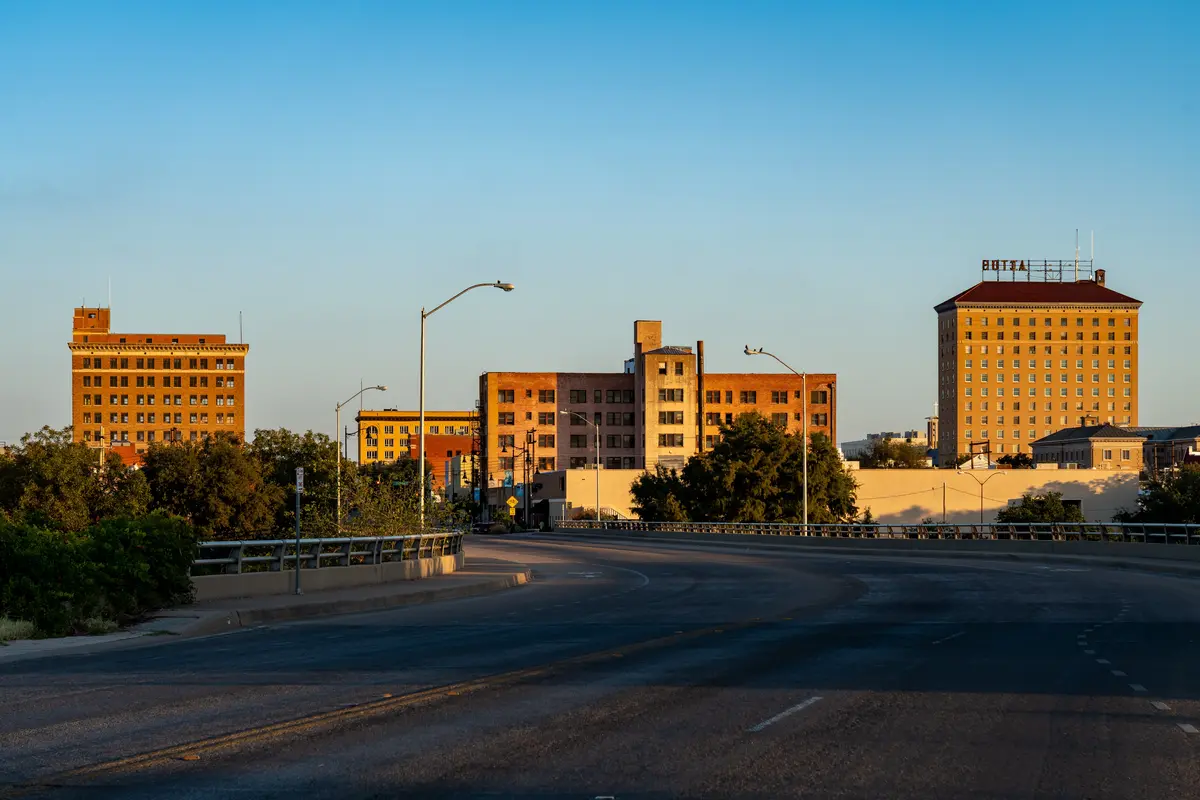
San Angelo ISD at a Glance
San Angelo ISD is a mid-size urban district serving a West Texas city — not a suburban district where property values concentrate resources into a handful of campuses, and not a rural district where a single school handles everything. It sits in its own category, and that shapes what you can reasonably expect.
The district holds a C rating, according to the Texas Education Agency, based on the 2025 A-F accountability rating for the 2024-25 school year. That grade reflects where the district stands on state academic measures: on 2024-25 state assessments, 33% of students reached math proficiency and 44% reached reading proficiency. Those numbers trail state averages, which is the honest starting point for any conversation about SAISD.
What the letter grade does not capture is the upward movement. The district's accountability score increased from 73 to 76, and district leaders have been direct that the C rating is not the destination. The $397 million Bond 2025 program — passed with roughly 54.6% of the vote and the first successful SAISD bond since 2008 — funds campus renovations at both high schools, a full replacement of Glenn Middle School with a modern campus, and district-wide safety and security upgrades.
| Category | Detail |
|---|---|
| TEA Rating (2024-25) | C — overall score 76 of 100, up from 73 |
| Elementary Schools | 15 campuses |
| Middle Schools | 3 campuses (Glenn replacement funded by Bond 2025) |
| High Schools | 2 traditional campuses (Central, Lake View) |
| Early Childhood | 3 Head Start / Early Head Start centers (birth–age 5) |
| Alternative Campuses | 2 |
| Bond Program | $397 million approved in 2025; construction launched at Lake View in August 2026 |
One planning note families should track: SAISD is proposing elementary attendance boundary adjustments set to take effect in the 2027-28 school year, driven by declining enrollment and the need to balance capacity across campuses. If you are buying a home and assigning a child to a specific elementary school is important to you, verify the proposed boundaries before committing to a neighborhood.
Standout Schools and Programs Worth Knowing
Central High School — The Bobcats
Central High School is the district's larger of the two traditional high schools and carries the widest academic menu in SAISD. It offers AP coursework, a Gifted and Talented program, and active UIL athletics programs across a full range of sports. Friday night football at Central fills the stands in a way that is genuinely West Texas in character — this is a community that shows up.
The credential that matters most for Goodfellow families is Central's Purple Star Designation. That recognition, issued by the Texas Education Agency, identifies campuses with strong support systems for military-connected students — counselors who understand PCS timelines, transcript flexibility, and the particular disruption of mid-year moves. For a city where Goodfellow Air Force Base drives a significant share of the population, having a high school that has specifically earned that designation is not a small thing.
Best for: Families Military familiesLake View High School — Bond 2025 Investments Underway
Lake View High School is the district's second traditional campus, and it broke ground on Bond 2025-funded improvements in August 2026. Those improvements include CTE additions and renovations, a new dedicated Mariachi Hall, athletic facility upgrades, and locker room renovations. Both AP and dual-credit coursework are available, and active UIL athletics programs run across the calendar year.
The Mariachi Hall is worth noting specifically. It signals a genuine investment in the arts and in the cultural identity of the campus — not a token addition but a purpose-built facility. Families with kids who are serious about music, particularly mariachi, will find that Lake View built infrastructure around it rather than simply tolerating it.
Best for: Families Arts & CTE focusCareer and Technical Education — The District's Clearest Differentiator
SAISD's CTE department is, arguably, where the district most clearly punches above its C rating. Across 18 programs of study within 12 career clusters, students can pursue pathways in healthcare, welding, construction, culinary arts, design and multimedia arts, law enforcement, robotics, automotive technology, and cosmetology — a list that maps directly onto the industries actually hiring in San Angelo and the broader West Texas economy.
What makes this concrete rather than aspirational: students can earn industry-based certifications in nine areas, including Certified Nurse Assistant and American Welding Society credentials, and access dual-credit courses through a partnership with Howard College. That is real post-secondary credit and real workforce credentials available before graduation — not a course catalog that sounds impressive but leads nowhere. For a family with a kid who is more interested in building a career than a four-year transcript, SAISD's CTE pathways are a legitimate differentiator in a city this size.
Best for: Career-track students Value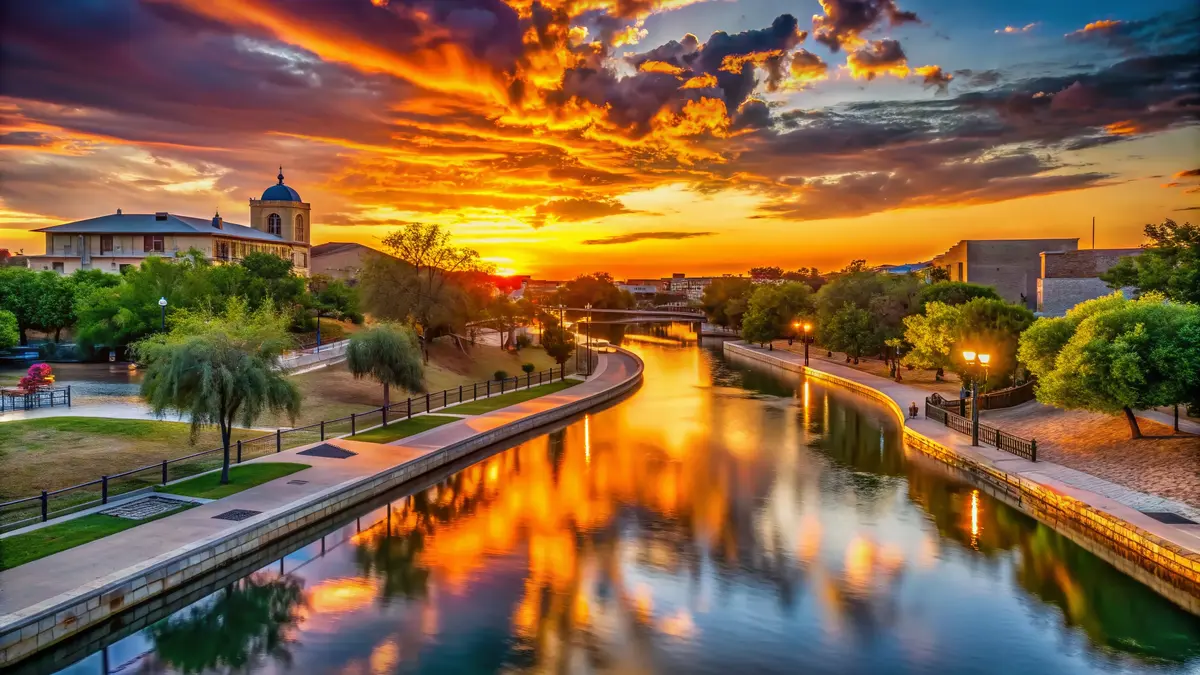
Youth Sports and Kids' Activities
San Angelo's youth sports infrastructure is one of the things that surprises families after they arrive. For a city of this size in West Texas, the organized-sports landscape is broader and better-resourced than most people expect from the outside.
Texas Bank Sports Complex
The city-operated Texas Bank Sports Complex is the anchor of youth athletics in San Angelo. It hosts flag football, youth softball, and baseball leagues through City Recreation programs, and has been recognized as Sports Complex of the Year by the Texas Turfgrass Association. The San Angelo Soccer Association and YMCA soccer programs both use the complex as their primary venue. When San Angelo says it has youth sports, this is the facility doing most of the work.
Soccer
The San Angelo Soccer Association provides organized competitive soccer for players 18 and younger and draws enough participation to run real competitive tiers — meaning a kid who is serious about the sport has somewhere to develop, not just a Saturday-morning recreational league. The scale of the program is one of the things that genuinely distinguishes San Angelo from comparably sized West Texas cities.
Basketball
The YMCA of San Angelo runs a recreational basketball league for boys and girls from kindergarten through 8th grade, with a separate club-level league for 4th through 8th graders. Teams are organized by gender, grade, and school or area of town, which keeps competition balanced and makes it easier for kids from the same neighborhood to land on the same team.
Softball and Baseball
Beyond the City Recreation programs at the Sports Complex, West Texas Velocity Softball — founded in 2024 — adds a club-level travel option for families whose kids are ready to compete beyond the recreational circuit. It is a relatively new organization, but its founding signals that the demand for a competitive travel option was there and someone built to meet it.
UIL School Athletics
Both Central and Lake View high schools carry active UIL athletics programs, the state's governing body for interscholastic competition in Texas. Friday night football is genuinely a community event in San Angelo — the kind of thing where the whole city has a stake, not just the families of players. For families moving here from larger metro areas where high school sports can feel like a logistical obligation rather than a social anchor, the community texture around UIL athletics in San Angelo is often a pleasant adjustment.
Beyond varsity sports, UIL also governs academic competitions, band, theatre, and debate — so a kid who is not an athlete still has structured competitive outlets through the school programs.
Looking to buy in San Angelo? Estimate your payment.
Enter your numbers to see an estimated monthly mortgage payment.
Estimate only. Excludes HOA fees and mortgage insurance. The interest rate above is a starting point, not a quoted rate — replace it with your own to see real numbers. Insurance is a flat placeholder, not a San Angelo quote.
Who SAISD Is Not the Right Fit For
Being honest about this matters more than it might seem. Families who research SAISD only through general reputation sometimes arrive surprised. The district does real things well — CTE pathways, military-family support, a bond program that reflects community investment — but it is not the right fit for every family, and knowing that up front is more useful than discovering it six months in.
Families Prioritizing High State Assessment Performance
If your household has made academic test performance the primary filter for a school district, SAISD's current numbers will not meet that bar. On 2024-25 state assessments, 33% of students reached math proficiency and 44% reached reading proficiency. Those figures are below state averages, and a C rating, according to the Texas Education Agency, reflects that gap. The district is moving the right direction, but it is not there yet. Families for whom a specific proficiency threshold is non-negotiable should weigh this carefully against the district's trajectory rather than treating either number as permanent.
Families Needing Stable Elementary Attendance Zones
SAISD is proposing elementary attendance boundary adjustments set to take effect in the 2027-28 school year. The intent is to balance enrollment across campuses as overall district enrollment declines. For a family buying a home in a specific neighborhood because of its assigned elementary school, this is a real planning risk. The school a home is zoned to today may not be the school it is zoned to in two years. Families who want certainty about elementary placement before making a purchase should review the proposed boundary maps and ask the district directly about the timeline before committing.
Families Relocating from High-Performing Suburban Districts
This one is not a criticism of SAISD — it is a structural reality of what San Angelo is. Families moving from well-resourced suburban districts in the DFW Metroplex, Houston's inner ring, or Austin's suburbs sometimes find the academic infrastructure comparison jarring. SAISD is a mid-size urban district in a small West Texas city, not a suburban system where concentrated property tax revenue flows into AP offerings at every campus. The two high schools offer real AP and dual-credit options, and the CTE pathways are genuinely strong — but the breadth of course offerings, the extracurricular depth, and the campus resources are different at scale. That is not a flaw in San Angelo's district; it is a difference a family from a much larger system should anticipate.
Families for whom the district's current academic profile is a dealbreaker should also look at private school options in the city and at Angelo State University's influence on educational resources in the area. And for the right family — one whose kid thrives in a military-aware environment, or one whose teenager wants a welding certification and real college credit before graduation — SAISD offers things that many higher-rated suburban districts simply do not.
What the Bond 2025 Program Means for Families Arriving Now
The $397 million Bond 2025 program is the single most consequential thing happening in SAISD right now, and it deserves more than a passing mention in a district summary. Passed with roughly 54.6% of the vote — the first successful SAISD bond since 2008 — it represents a community decision to invest in the physical and programmatic future of its schools after nearly two decades without a capital program of this scale.
The scope is broad. At Central High School and Lake View High School, the bond funds renovations and upgrades. At Lake View specifically, the Bond 2025 improvements include CTE additions and renovations, a new dedicated Mariachi Hall, athletic facility upgrades, and locker room renovations — with a groundbreaking completed in August 2026. Glenn Middle School is being replaced with an entirely new modern campus rather than patched. District-wide safety and security upgrades are also part of the program.
For a family arriving in San Angelo now, this matters in a specific and practical way: you are buying into a district at the beginning of a multi-year physical transformation, not at the end of one. Some of that construction will be disruptive in the short term. But the campuses that emerge from Bond 2025 — particularly Lake View and the new Glenn Middle School — will be materially different facilities from what exists today. Families with kids who are several years away from high school are likely to benefit the most from the timeline.
The bond's passage also signals something harder to quantify: the community voted to fund this. After 17 years without a successful bond, getting to 54.6% in favor requires real turnout from parents, longtime residents, and voters who do not have children in the system but understand that the district's condition affects the city. That civic engagement is part of what families are moving into, and it matters for the district's longer-term trajectory in a way that a single TEA rating cycle cannot fully reflect.
Practical Advice for Families Making the Move
A few things experienced San Angelo parents would tell you that the district's official communications will not.
The Military-Family Transition Is Genuinely Supported
If you are arriving from a Goodfellow Air Force Base assignment or any other military move, Central High School's Purple Star Designation is not just a plaque. It reflects an actual infrastructure for handling mid-year enrollments, transcript transfers, and the academic disruption that comes with a PCS move. Make contact with the campus counselor early — the systems for military families exist and they are used.
Elementary Boundaries Are in Flux — Verify Before You Buy
The proposed boundary adjustments for the 2027-28 school year are real, and they are driven by declining enrollment rather than population growth. That is a different dynamic than most families are used to. In a growing district, boundaries shift because demand is high. Here, they are shifting to consolidate and rebalance — which means a neighborhood that currently feeds one elementary school may feed a different one in two years. If you are buying a home and the assigned elementary matters, call the district directly before closing.
CTE Is Where to Look for Advanced Opportunities
For high schoolers, the Career and Technical Education pathways are the district's strongest offering relative to its size and rating. The dual-credit courses available through Howard College and the industry certifications available before graduation — including healthcare and welding credentials — represent real post-secondary value. If your teenager has a vocational or technical direction in mind, SAISD can support it in a way that many C-rated districts cannot.
Youth Sports Registration Fills Early
The YMCA basketball leagues and San Angelo Soccer Association programs are genuinely popular, and registration for competitive slots fills on a first-come basis. Families arriving mid-year sometimes find that recreational leagues are mid-season and club programs are already rostered. Plan to register within the first few weeks of arriving rather than waiting until the household is fully settled. The Texas Bank Sports Complex is where most of the organized youth activity runs, and the parks and recreation page covers the facility and programming calendar in more detail.
The typical home price in San Angelo as of July 2026 sits at $214,811 — see the cost-of-living breakdown for how that compares with surrounding communities and what it means for a household at the area's median income. For most families, the affordability of the housing market and the depth of the youth sports infrastructure are the two things that shift the calculus toward San Angelo once they look past the district's current rating.
Local Expert Takeaway: San Angelo ISD holds a C rating, according to the Texas Education Agency, and that number is real — the proficiency rates on state assessments are below where most families want them to be. But the district is not standing still. The $397 million Bond 2025 program broke ground at Lake View High School in August 2026, the accountability score moved from 73 to 76 in the most recent cycle, and the CTE pathways — 18 programs of study, dual-credit courses through Howard College, and industry certifications including Certified Nurse Assistant and American Welding Society credentials — represent a genuinely strong option for high schoolers with a vocational or technical direction. Military families should know that Central High School's Purple Star Designation is one of the most practical credentials in the district. And for families with active kids, the Texas Bank Sports Complex, the San Angelo Soccer Association's well-established competitive program, and the YMCA leagues make San Angelo's youth sports landscape larger and better-organized than its size would suggest.
Quick Takeaways & FAQs
✅ Central High School's Purple Star Designation gives Goodfellow Air Force Base families a high school with real infrastructure for military-connected students — counselors, transcript flexibility, and mid-year enrollment support.
⚠️ On 2024-25 state assessments, 33% of students reached math proficiency and 44% reached reading proficiency — below state averages, and the honest starting point for any family evaluating SAISD.
📍 Elementary attendance boundaries are proposed to shift for the 2027-28 school year; if a specific elementary school matters to your decision, verify the proposed boundary map with the district before you buy.
What is the San Angelo ISD rating from the Texas Education Agency?
How large is San Angelo ISD?
What is the Purple Star Designation at Central High School?
What youth sports are available for kids in San Angelo?
Are there attendance boundary changes coming to San Angelo ISD elementary schools?
Moving to Texas?
Tell us what you need help with and we'll connect you with local resources.
