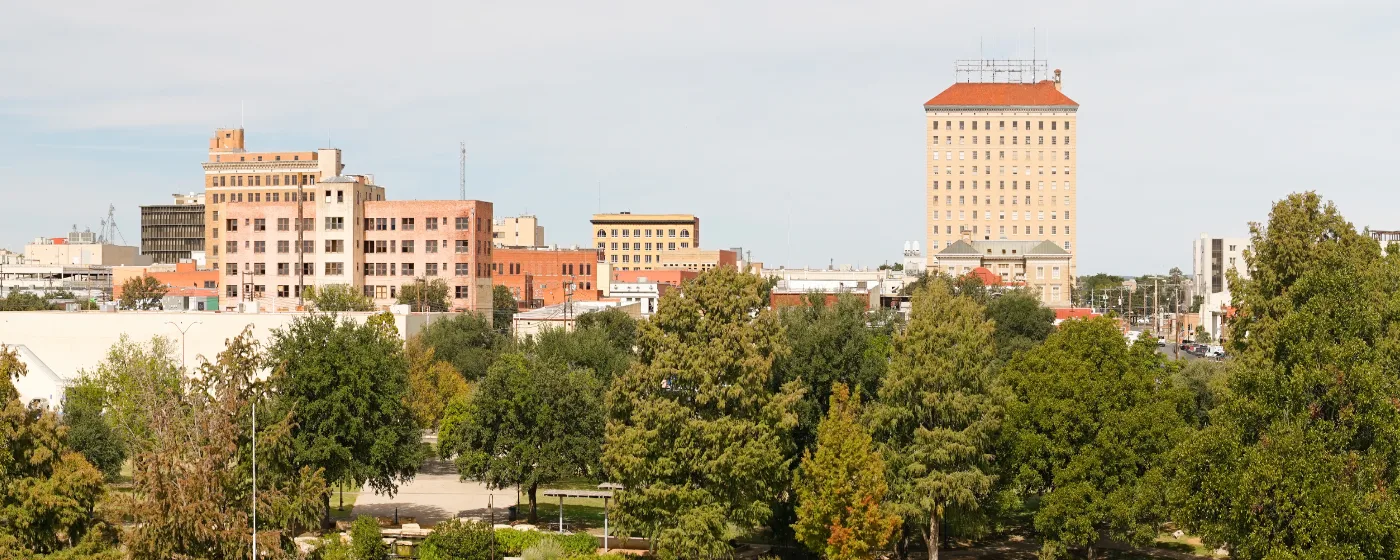
You've probably run the numbers at least twice. California's statewide typical home value of $773,735 — and what you could buy instead in San Angelo for $214,811 (Zillow ZHVI, July 2026) — is the kind of gap that makes people stop scrolling and start packing. But the financial math is only the beginning of the story. San Angelo is a city of 100,640 people sitting in the Concho Valley of West Central Texas, connected to the wider state by US-67, US-87, US-277, and Loop 306. It is not a suburb of anything larger. The nearest metro anchor is about 90 minutes to Midland-Odessa, TX, and that distance shapes daily life in ways no spreadsheet captures.
What keeps San Angelo's economy steady is Goodfellow Air Force Base — the sole training installation for intelligence, surveillance, reconnaissance, and fire support across all U.S. military branches, and one of the most mission-critical federal employers in the state. Beyond the base, Angelo State University, Shannon Health, San Angelo Independent School District, and Ethicon's medical device manufacturing plant round out an employer base that insulates the city from the boom-and-bust cycles that whipsaw other West Texas towns. The San Angelo MSA posted the third-lowest unemployment rate among all Texas metropolitan areas in January 2025, at 3.3%, according to the Texas Workforce Commission. Californians relocating for remote work find a city with real economic ballast underneath them.
Cost of living in San Angelo runs approximately 15% below the national average — and noticeably below what you were spending in California. Texas has no state income tax, and the absence of California's progressive brackets is one of the first things Californians notice in their first paycheck here. The Concho River Walk threads through the city center, San Angelo State Park borders the western edge, and Lake Nasworthy gives the city a genuinely outdoorsy character that most people don't expect from a West Texas town of this size. What you give up is California's density of amenities; what you get back is space, lower cost, and 250 sunny days a year.
Whether you're relocating for a job at Goodfellow, following a remote-work opportunity, or simply priced out of California's housing market, the sections below break down the real California-to-San-Angelo comparison: home prices, taxes, what the cost shift actually feels like month to month, what surprises people after six months, and how to think about the trade-offs honestly.
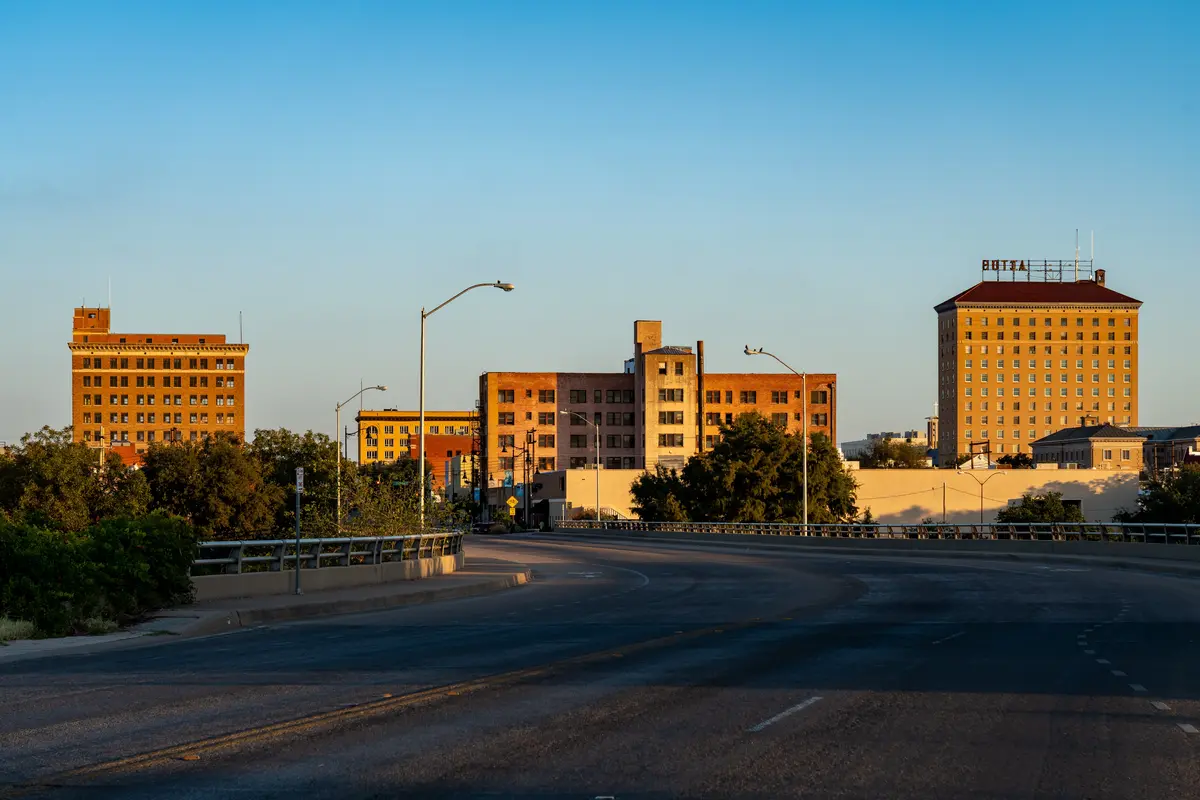
The Home Price Gap: What California's Statewide Typical Home Value Means Here
The raw comparison stops most Californians cold. California's statewide typical home value of $773,735 — a Zillow figure drawn from the same Zillow Home Value Index series as San Angelo's own number — sits at more than three and a half times San Angelo's typical home price of $214,811 (Zillow ZHVI, July 2026). That is not a rounding difference. That is the difference between a competitive offer on a modest coastal bungalow and a paid-off house in a city with a low unemployment rate and 250 sunny days a year.
In practical terms, a California buyer who sells at or near that statewide figure and relocates to San Angelo arrives with equity that can eliminate a mortgage entirely or fund a significant renovation budget. The median household income in San Angelo is $65,864 — and the city sits in the unusual position where that income is at or above what a buyer needs to afford the typical home here. That affordability ratio is the opposite of what most Californians have lived with for the past decade.
For a neighborhood-level breakdown of what different parts of the city look like in terms of housing stock and character, the best neighborhoods page goes deep. What matters for the California comparison is the structure: San Angelo's housing market gives a relocating buyer purchasing power they likely haven't had since before California prices ran away from incomes.
The Property Tax Trade-Off
San Angelo's effective property tax rate is 1.20% — meaningfully higher than California's effective property tax rate of 0.71% (Tax Foundation). This is the part of the move Californians consistently underestimate in month one and then recalibrate by month six.
On a $214,811 home, a 1.20% effective rate produces a notably higher annual tax bill than the same rate applied to a California home protected by Proposition 13 assessment limits. But the math flips when you account for the purchase price: annual property taxes on a typical San Angelo home run at a fraction of what a Californian was paying on a home worth three or four times as much. The net effect for most relocating buyers is a lower total housing cost despite the higher rate — though that gap narrows if you choose one of San Angelo's above-median neighborhoods like The Bluffs, Southland, or Lake Nasworthy.
Texas offsets the higher property tax rate with no state income tax and a sales tax structure that runs modestly below California's combined average — details covered in the section below. The full cost-of-living picture, including utilities and groceries, lives on the cost of living page.
Taxes: What You Stop Paying When You Leave California
Texas's most significant financial advantage over California is structural and immediate: Texas levies no state income tax — it is constitutionally prohibited. California's top state income tax rate of 13.3% applies only to the highest earners, but California's progressive brackets reach even moderate incomes. At $100,000 of income, the difference is approximately $5,208 per year in state income tax (Tax Foundation), a figure that compounds meaningfully over a decade. For dual-income households, the annual savings double.
This is not a marginal advantage. For remote workers bringing California salaries into a Texas cost structure, the income tax elimination alone can shift a household's monthly cash position by hundreds of dollars from the first paycheck.
Sales Tax: Close, but California Still Runs Higher
California's statewide base sales tax rate of 7.25% is the highest state-level base rate in the country, and local add-ons push the combined statewide average to roughly 8.99% (Tax Foundation). Texas's state base rate is 6.25%, with a maximum combined rate of 8.25% and a combined statewide average of approximately 8.19%. The difference is real but modest at the combined level — what changes more dramatically is the income tax line, not the cash register.
San Angelo's local sales tax additions keep the combined rate within the Texas maximum. Combined averages vary by municipality and purchasing category, so your exact experience will depend on what you buy and where. The structural point stands: you are moving from the state with the highest base sales tax rate in the nation to one with a lower base rate and no income tax bracket touching your paycheck.
What the Tax Shift Feels Like Month to Month
Most California transplants describe the same experience: the first couple of paychecks feel larger in a way that is hard to pin down until you see the state withholding line that no longer exists. The property tax bill, when it arrives, is the counterweight — and it surprises people who budgeted for the rate without calculating the actual dollar figure on a Texas assessment. Run both numbers before you move, not after.
For a full breakdown of how San Angelo's property, income, and sales tax figures stack up for a relocating household, the cost of living page has the complete picture.
Daily Life in San Angelo: The Adjustment Most Californians Don't Anticipate
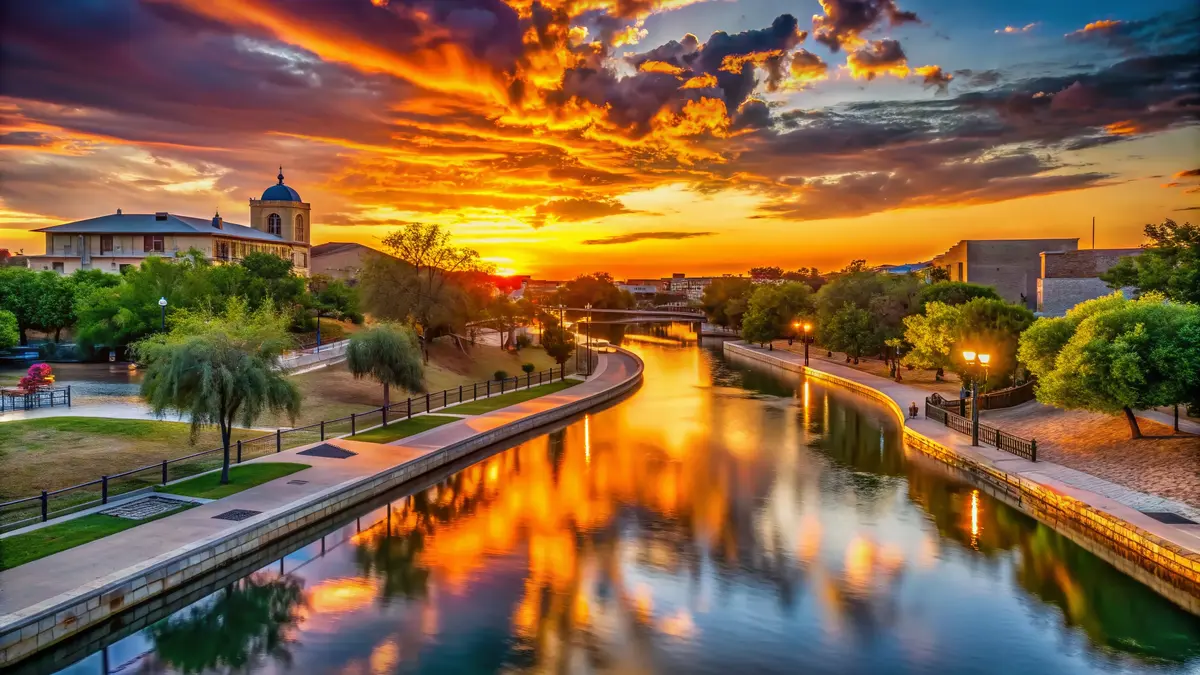
The financial case for moving to San Angelo is easy to make. The lifestyle adjustment is more honest to examine. San Angelo is a genuine mid-sized Texas city — not a satellite of anything — and daily life reflects that. The Concho River Walk is a real civic amenity, threading through the center of the city and connecting the San Angelo Museum of Fine Arts, Fort Concho National Historic Landmark, and Celebration Bridge. San Angelo State Park and Lake Nasworthy give the city an outdoor life that most transplants don't expect. Spring Creek Park and the International Waterlily Collection add to a parks system that punches above its weight for a city this size.
What San Angelo does not have is California's retail and restaurant density. A serious shopping trip for things the local market doesn't stock means a drive or an online order. The restaurant scene has genuine local anchors — independent spots with real kitchens, not just chain row — but the variety is narrower. Independent coffee is a genuine strength: there are several well-regarded local roasters and cafés, and the quality is better than the city's size might suggest.
The Six-Month Surprise
Californians who move to San Angelo consistently report the same thing around month six: the quiet. Not silence — San Angelo is a working city with active UIL athletics programs and a Friday night football culture that fills stands in a way coastal cities rarely see — but an absence of the constant ambient friction that comes with California density. Traffic exists, but it does not define the day. Parking is free and abundant. The pace of errands is genuinely different.
The other six-month surprise is summer. West Texas heat is not California coastal heat, and July in San Angelo means sustained triple-digit afternoons that limit outdoor time in ways the 250 sunny days a year marketing does not fully convey. Locals adapt — outdoor activity migrates to early mornings, and Lake Nasworthy becomes the social center of the city from late spring through early fall — but Californians from the Bay Area or the coast should know the heat is a real adjustment, not a footnote.
Child Care and Family Costs
For families with young children, one of the least-discussed advantages of the California-to-San-Angelo move is child care. Infant center-based care averages $1,700 to $2,200 per month in California. In Texas, that figure runs $900 to $1,500 per month. For a family with two children under five, the annual savings on child care alone can approach the down payment on a San Angelo home.
Health insurance premiums and routine care costs also run noticeably below what most Californians were paying, though the honest trade-off is that specialist care and advanced treatment require driving farther than you would in a major California metro. For family activities, schooling, and what the parks system offers, the schools page and the parks and recreation page cover those in depth.
Looking to buy in San Angelo? Estimate your payment.
Enter your numbers to see an estimated monthly mortgage payment.
Estimate only. Excludes HOA fees and mortgage insurance. The interest rate above is a starting point, not a quoted rate — replace it with your own to see real numbers. Insurance is a flat placeholder, not a San Angelo quote.
Weekends and Local Favorites in San Angelo
San Angelo has a food and coffee scene that rewards locals who know where to look. Twisted Root Burger Co. is a Texas-grown burger concept with a real following. The Original Henry's has been a San Angelo institution for long enough that it shows up in every local's shortlist. Angry Cactus and Cork & Pig Tavern anchor the more social end of the dining scene, and Western Sky Steakhouse is where the city goes for a proper occasion dinner. None of these are chains, and none of them feel like they're trying to be somewhere else.
Coffee is a genuine local strength. Buttercup all day café, The Bearded Barista Coffee & Stuff, The Grind Coffee & Café, Free Rein Coffee, and Elohim Grounds give the city a depth of independent coffee options that most West Texas cities of this size lack entirely. For Californians accustomed to a serious coffee culture, the local scene holds up better than expected — and the prices are lower than almost anywhere in California.
The San Angelo Farmers Market runs through the growing season and draws a consistent local crowd. The Concho River Walk is genuinely worth the walk on any morning that isn't July — the stretch past Fort Concho National Historic Landmark and the San Angelo Museum of Fine Arts is the city's best public space. San Angelo State Park sits at the western edge of the city and connects to a trail network that mountain bikers, trail runners, and equestrians all share without much conflict.
Lake Nasworthy is the city's outdoor social anchor — a reservoir with enough shoreline to give the city a recreational identity that surprises people who picture only flat, dry West Texas. The International Waterlily Collection, tucked into the city's park system, is the kind of quietly excellent civic amenity that San Angelo locals mention casually and out-of-towners find unexpectedly impressive.
What to calibrate: San Angelo does not have the concentrated nightlife of a college town, despite Angelo State University's presence. The city is quiet later in the evening compared to California urban areas. That is not a complaint from most people who moved here — it's a feature after a few months — but it is worth knowing going in.
Who Moves to San Angelo from California — and Who Thinks Twice
The Californians who land in San Angelo and stay tend to fall into a few clear categories. Remote workers who can bring their California salary to a Texas cost structure see the math work immediately and decisively. Military families connected to Goodfellow Air Force Base make up a significant share of the city's relocating population, and the base's mission-critical status means that population is stable. Retirees and near-retirees who want to cash out California equity and own a home outright find San Angelo one of the most straightforward markets in Texas to execute that move — the retiring page covers the retiree picture in full.
People who move OUT of San Angelo — and some do — tend to cite two things. The first is the distance from a major metro. San Angelo is about 90 minutes to Midland-Odessa, TX, and farther still from Dallas, Austin, or San Antonio. Californians who built their life around weekend access to a major city find that distance genuinely limiting after the novelty of the financial savings wears off. The second is the summers. A first West Texas July changes the calculation for some people, and there is no coastal breeze or marine layer to moderate it.
What You Would Not Do If Moving Here
Do not buy in the Lake View area without understanding what below-median pricing signals about the neighborhood's trajectory. The price point is accessible, but the character differs from the more established areas of the city. That is not a condemnation — it is information. Talk to people who live there before you sign, not after.
Do not assume San Angelo's smaller size means a less stable economy. The base, the university, and the medical employment sector give this city a diversified public-sector foundation that many larger Texas cities lack. The 3.3% MSA unemployment rate (Texas Workforce Commission, January 2025) is not an accident — it reflects an employment base that does not evaporate in a downturn the way a single-industry town would.
The Honest Summary
The case for San Angelo from California is built on real math: a home price well below California's statewide typical home value of $773,735, no state income tax to replace California's top state income tax rate of 13.3%, and a cost structure that gives a median income genuine purchasing power. The case against it is shorter: it is far from everywhere else, and the summers are serious. Most people who make the move with clear eyes about both sides stay. Most of the ones who don't were surprised by something they could have researched. This guide exists so you don't have to be. For safety context, the full picture — including a violent crime rate of 2.18 per 1,000 residents and a property crime rate of 24.86 per 1,000 residents — is on the safety page.
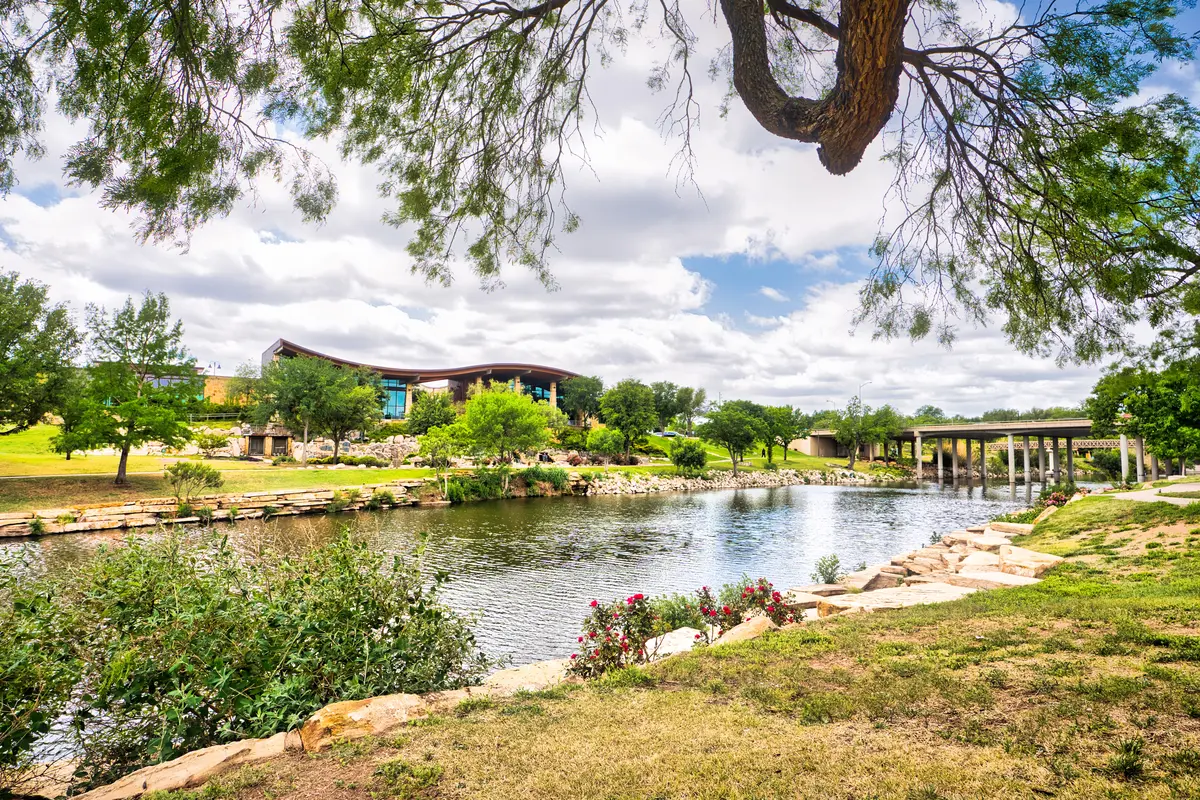
Local Expert Takeaway: San Angelo's financial case for Californians is real and substantial — the home price gap alone resets what homeownership means for most buyers. But the city works best for people who want a genuine community, not just a cheaper version of California. The Concho River Walk, Lake Nasworthy, a strong independent food and coffee scene anchored by spots like Cork & Pig Tavern and Free Rein Coffee, and an economy stabilized by Goodfellow Air Force Base give San Angelo a quality of daily life that the numbers alone don't capture. Run the tax math, then drive through the city on a Saturday morning before you decide.
Quick Takeaways & FAQs
✅ San Angelo's typical home price of $214,811 (Zillow ZHVI, July 2026) sits at a fraction of California's statewide typical home value, giving most relocating buyers immediate and substantial purchasing power.
⚠️ Texas has no state income tax, but San Angelo's effective property tax rate of 1.20% is noticeably higher than California's — budget for both before you close.
📍 Goodfellow Air Force Base is the sole U.S. military training installation for intelligence, surveillance, and reconnaissance — that federal anchor is why San Angelo posted the third-lowest unemployment rate among Texas metros in January 2025.
How much cheaper is San Angelo than California for housing?
Does Texas really have no state income tax?
What is San Angelo's property tax rate, and how does it compare to California's?
What should California families know about child care costs in San Angelo?
What do Californians find hardest about adjusting to San Angelo?
Moving to Texas?
Tell us what you need help with and we'll connect you with local resources.
