
West Texas · Best for Remote Workers · 2026
Best Cities for Remote Workers in West Texas, Ranked
Cities ranked on internet infrastructure, property tax burden, airport access, home affordability, and overall quality of life for remote workers.
By Todd Davidson, Relocation Writer & Housing Market Analyst, Updated September 2026
Home ›
Blog ›
Best Cities for Remote Workers in West Texas, Ranked
If you can work from anywhere, West Texas makes a case that most remote workers from Austin or Dallas haven't seriously considered. The region stretches from the Caprock of the Panhandle down through the oil-and-gas Permian Basin and out to the edge of the Chihuahuan Desert — a massive swath of land where home prices stay grounded, the property tax picture varies enormously by county, and airport access is far more convenient than people expect. What actually shapes the remote-work calculus here is the combination of those three forces, and they land differently in every city on this list.
The spread across these cities is real and worth understanding before you pick one. Larger cities like Lubbock, Amarillo, and El Paso carry the broadband infrastructure you'd expect from a metro and put an airport within easy reach; the trade-off tends to show up in the property tax rate rather than the home price. Smaller towns like Big Spring, Brownwood, and Plainview offer strikingly low home prices and a slower pace, but internet options are more limited and the drive to a commercial airport is a genuine consideration for anyone who travels regularly for client meetings. The sections below break down each city's honest strengths and the real costs a remote worker should price in before making an offer.
How This Ranking Was Built
Each city is scored 1-10 on every dimension below against a fixed statewide scale — never against the other cities in this region — then combined into one weighted Composite score out of 10.
Internet Speed — 25%Weighted contribution to the composite score, graded 1-10 against a fixed statewide scale.
Tax Burden — 20%Weighted contribution to the composite score, graded 1-10 against a fixed statewide scale.
Airport Access — 20%Weighted contribution to the composite score, graded 1-10 against a fixed statewide scale.
Affordability — 20%Weighted contribution to the composite score, graded 1-10 against a fixed statewide scale.
Quality of Life — 15%Weighted contribution to the composite score, graded 1-10 against a fixed statewide scale.
Top 17 Cities: Best for Remote Workers Snapshot
Ranked by overall composite score. Click any city to jump to the full breakdown.
| # | City | Composite | Internet | Property Tax | Median Price |
|---|
| 1 | San Angelo
Tom Green County | 9.4/10 | 8.0 | 10 | $214,811 |
| 2 | Lubbock
Lubbock County | 8.9/10 | 10 | 6.2 | $212,191 |
| 3 | Amarillo
Potter County | 8.8/10 | 10 | 5.3 | $212,025 |
| 4 | Midland
Midland County | 8.3/10 | 9.3 | 10 | $332,692 |
| 5 | Abilene
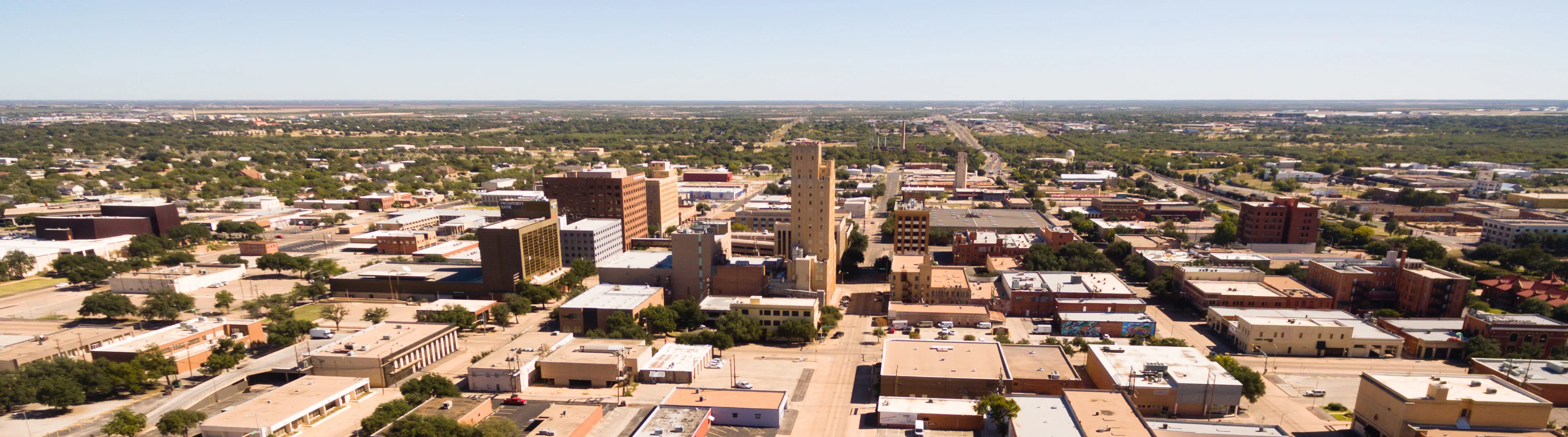
Taylor County | 7.9/10 | 8.8 | 2 | $222,710 |
| 6 | El Paso
El Paso County | 7.8/10 | 10 | 3.9 | $237,796 |
| 7 | Odessa
Ector County | 7.7/10 | 8.6 | 6 | $253,740 |
| 8 | Big Spring
Howard County | 6.7/10 | 4.8 | 5.3 | $147,462 |
| 9 | Mineral Wells
Palo Pinto County | 6.7/10 | 4.2 | 8 | $208,649 |
| 10 | Socorro
El Paso County | 6.2/10 | 6.1 | 2 | $209,849 |
| 11 | Brownwood
Brown County | 5.8/10 | 4.5 | 2 | $172,876 |
| 12 | San Elizario
El Paso County | 5.8/10 | 3.3 | 3.9 | $180,144 |
| 13 | Horizon City
El Paso County | 5.8/10 | 5.1 | 2 | $223,740 |
| 14 | Plainview
Hale County | 5.5/10 | 4.5 | 2 | $120,278 |
| 15 | Stephenville
Erath County | 5.5/10 | 4.8 | 8.3 | $324,964 |
| 16 | Glen Rose
Somervell County | 5.3/10 | 1.8 | 9.4 | $401,143 |
| 17 | Pecos
Reeves County | 4.4/10 | 3.3 | 2 | $180,627 |
Property Tax
10/10
out of 10
Airport Access
10/10
out of 10
Affordability
9.3/10
out of 10
Quality of Life
10/10
out of 10
Median Price
$214,811
2026 market price
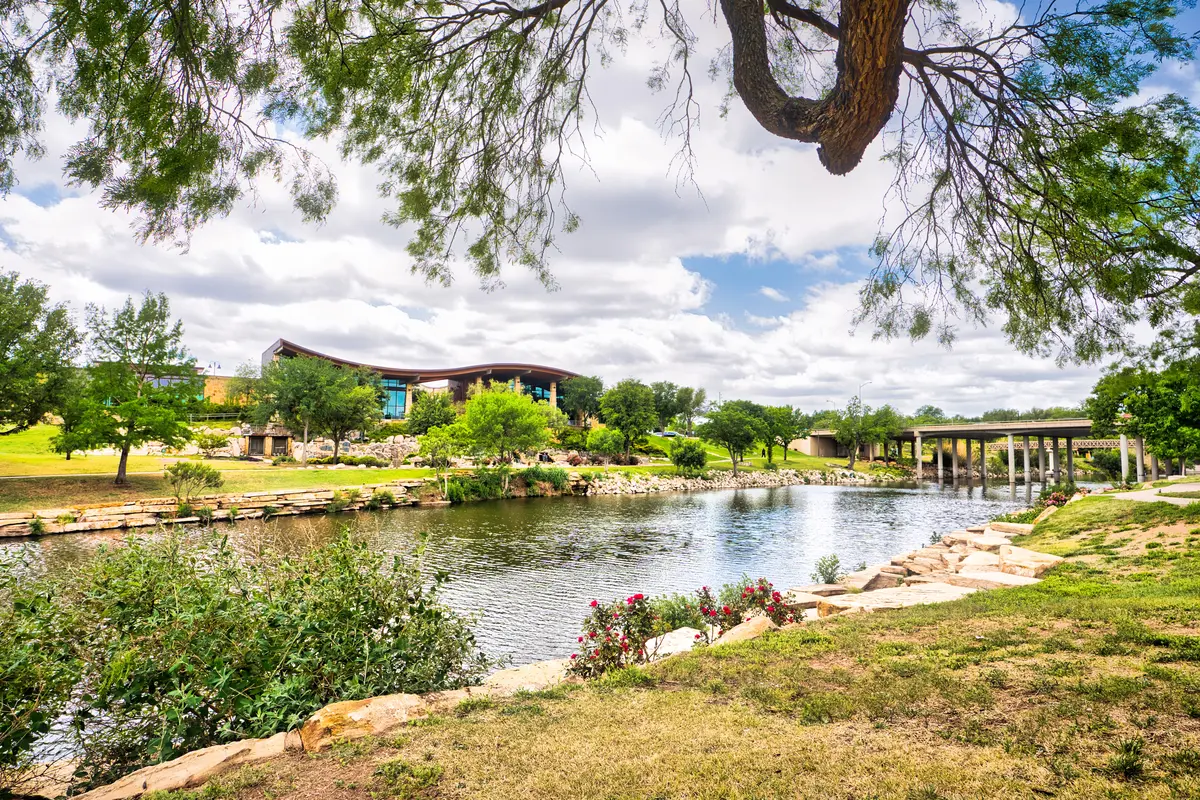
San Angelo is a genuine regional hub for the southern part of West Texas, and for remote workers that matters in practical ways. The city's size — it is the 44th-largest incorporated city in Texas — supports competitive broadband infrastructure, and San Angelo Regional Airport sits close enough to town that catching a flight doesn't feel like an expedition. At a $214,811 typical home price, ownership is attainable without stretching, and the property tax rate lands on the lighter side for Texas, which keeps the monthly carrying cost from eating into what you saved on the purchase. The mix of parks, local landmarks, and a real downtown gives daily life here a texture that smaller West Texas cities can't always match.
San Angelo tends to suit remote workers who want a genuine small-metro experience — real broadband options, a short airport run, and enough local infrastructure to feel like a functioning city — without paying anything close to urban prices. Compared to a smaller town in the region, you get meaningfully more connectivity and amenity depth; compared to Midland, you get a similar-sized city feel at a substantially different ownership cost.
Property Tax
6.2/10
out of 10
Airport Access
10/10
out of 10
Affordability
9.5/10
out of 10
Quality of Life
8.7/10
out of 10
Median Price
$212,191
2026 market price
Lubbock is the largest city in this group by a wide margin — the 10th-largest incorporated city in Texas — and that scale translates directly into the things remote workers care about most. Broadband infrastructure here operates at a level that smaller West Texas cities simply can't match, and Lubbock Preston Smith International Airport sits close enough to town to make regular travel manageable rather than exhausting. The $212,191 typical home price keeps ownership accessible even as the city delivers a full range of restaurants, universities, cultural institutions, and outdoor options that give daily life real variety. The property tax rate sits in a moderate range for Texas — not the lightest in the region, so it's worth pricing into the monthly budget carefully before you commit.
Lubbock is the right call for remote workers who genuinely need metro-level broadband reliability and don't want to compromise on amenity depth or airport convenience. It suits buyers who travel regularly for work and want the security of a larger city's infrastructure without leaving West Texas — and it compares well to Amarillo on that front, with a similar home price and a somewhat lighter property tax burden.

Property Tax
5.3/10
out of 10
Airport Access
10/10
out of 10
Affordability
9.5/10
out of 10
Quality of Life
8.7/10
out of 10
Median Price
$212,025
2026 market price
Amarillo anchors the northern end of this region as the 17th-largest incorporated city in Texas, and its size delivers the broadband infrastructure and provider competition that remote workers need most. Rick Husband Amarillo International Airport is close enough to make routine travel genuinely convenient rather than a half-day commitment. The $212,025 typical home price keeps buying accessible, and the mix of dining, outdoor spaces along Palo Duro Canyon, and local culture gives daily life a range that belies the city's High Plains setting. The property tax rate is on the heavier side among the West Texas options here, so it's worth asking the county appraisal district for the exact rate on any specific address before making an offer.
Amarillo fits remote workers who want a larger city's infrastructure — competitive broadband, a nearby international airport, real retail and dining variety — at a West Texas price point. The property tax carry is the honest trade-off, and it's the number to watch. Buyers who want a lighter tax burden at a similar home price will find that San Angelo and Lubbock are worth a close comparison.

Property Tax
10/10
out of 10
Airport Access
10/10
out of 10
Affordability
5.5/10
out of 10
Quality of Life
6/10
out of 10
Median Price
$332,692
2026 market price
Midland runs on oil-and-gas money, and that boom economy has produced real consequences for remote workers deciding whether to buy here. The 25th-largest incorporated city in Texas, Midland carries strong broadband infrastructure and Midland International Air and Space Port is a short drive from most of the city — a genuine advantage for anyone who travels for work. The property tax rate is among the lightest in Texas, which helps. But the $332,692 typical home price reflects oil-sector demand and sits noticeably above what buyers will find in comparable West Texas cities, which is the central trade-off this city asks you to make.
Midland suits remote workers who are relocating alongside oil-industry peers, value a low property tax carry, and are comfortable with a higher purchase price as the cost of entry. It's a less obvious fit for buyers whose income is entirely location-independent and who are drawn to West Texas specifically for its affordability — in that case, San Angelo or Lubbock deliver most of the same infrastructure advantages at a substantially different price point.

Property Tax
2/10
out of 10
Airport Access
10/10
out of 10
Affordability
9.0/10
out of 10
Quality of Life
10/10
out of 10
Median Price
$222,710
2026 market price
Abilene sits at the 29th-largest incorporated city in Texas, a size that supports competitive broadband options well suited to home-office work. Abilene Regional Airport is close to the city center, making it one of the more convenient airport situations in the state for remote workers who travel to clients. At a $222,710 typical home price, the entry cost is genuinely low, and the depth of local parks, landmarks, and dining options rivals cities much larger. The significant caveat is the property tax rate: it is among the higher rates in Texas, and it should be modeled into the monthly payment carefully before you commit — the county appraisal district can confirm the exact rate for a specific address.
Abilene rewards remote workers who can absorb a heavier property tax line in exchange for a low purchase price, excellent airport proximity, and a quality of life that outperforms the city's modest size. Buyers who are sensitive to carrying costs should compare the full monthly picture here against San Angelo, where the property tax rate is considerably lighter at a similar home price.
Property Tax
3.9/10
out of 10
Airport Access
10/10
out of 10
Affordability
8.3/10
out of 10
Quality of Life
6/10
out of 10
Median Price
$237,796
2026 market price
El Paso is the 6th-largest incorporated city in Texas and the only full metro on this list, which means broadband infrastructure operates at a level that simply isn't available anywhere else in the region. El Paso International Airport is close to the city and handles direct routes that the region's smaller airports can't — a real advantage for remote workers who travel to clients regularly. The $237,796 typical home price remains well below what a city this size would cost in Central or North Texas. The property tax rate is on the heavier end for Texas, which is the main cost to model carefully; confirm the exact rate with the El Paso County appraisal district for any specific address.
El Paso suits remote workers who need genuine metro-level internet infrastructure, frequent direct flights, and a large city's range of neighborhoods and amenities — and who can accept a higher property tax carry as the cost of that scale. It's a different kind of West Texas city than Abilene or San Angelo: bigger, more urban, closer to the border, and shaped by a culture that's entirely its own.

Property Tax
6/10
out of 10
Airport Access
9.7/10
out of 10
Affordability
7.7/10
out of 10
Quality of Life
6/10
out of 10
Median Price
$253,740
2026 market price
Odessa shares the Permian Basin's oil economy with neighboring Midland and is the 32nd-largest incorporated city in Texas — large enough to support solid broadband infrastructure for home-office work. Its connection to Midland International Airport is close enough to be practical for regular travelers. The $253,740 typical home price reflects the Basin's demand-driven market; oil-sector activity pushes ownership costs above what buyers will find in the region's agricultural and smaller-city markets, though the city's property tax rate sits in a mid-range for Texas. The exact rate for a specific address is worth confirming with the Ector County appraisal district.
Odessa tends to suit remote workers who are tied to the Permian Basin by industry adjacency, a partner's job, or family — and who want a different ownership cost profile than Midland while staying in the area. Buyers whose only reason for being in West Texas is location independence will likely find that San Angelo or Lubbock offer a better combination of infrastructure and affordability.
Property Tax
5.3/10
out of 10
Airport Access
5.5/10
out of 10
Affordability
10/10
out of 10
Quality of Life
8.7/10
out of 10
Median Price
$147,462
2026 market price
Big Spring is the 144th-largest incorporated city in Texas, a size that puts it in a different tier from the regional hubs on this list — and that matters most for internet. Broadband options here are more limited than what the larger West Texas cities offer, and the drive to Midland International Airport is long enough to be a real inconvenience for remote workers who travel frequently. What Big Spring delivers in return is genuine: a $147,462 typical home price that represents outstanding buying power, a property tax rate that sits in a moderate range for Texas, and a local park-and-restaurant scene that punches above its population for day-to-day quality of life.
Big Spring is the right fit for remote workers whose work is reliably asynchronous — video calls and file uploads over a home connection rather than anything that requires consistent high-speed infrastructure — and who want to maximize buying power above all else. For anyone who flies regularly, the airport distance is the honest dealbreaker and worth sitting with before committing.
Property Tax
8/10
out of 10
Airport Access
4.9/10
out of 10
Affordability
9.6/10
out of 10
Quality of Life
7.3/10
out of 10
Median Price
$208,649
2026 market price
Mineral Wells sits at the 189th-largest incorporated city in Texas, a small-city scale that places it firmly in limited-provider internet territory. Before buying here for remote work, confirming which providers actually serve a specific address is genuinely important — the gap between what's available at a rural property versus a downtown address can be significant. The $208,649 typical home price is among the more accessible on this list, and the property tax rate is on the lighter side for Texas, which helps keep the monthly carrying cost manageable. The city's location in Palo Pinto County, with access to lakes and a real small-town character, gives it a quality of life that draws buyers out of the Dallas–Fort Worth orbit.
Mineral Wells tends to suit remote workers who want to stay within reach of a major metro but escape its price structure — buyers who visit the city regularly and have already tested the internet at a specific address rather than assuming it. The airport situation here means flying requires real planning; buyers who travel frequently for work should weigh that honestly.
Property Tax
2/10
out of 10
Airport Access
9.3/10
out of 10
Affordability
9.6/10
out of 10
Quality of Life
3/10
out of 10
Median Price
$209,849
2026 market price
Socorro is the 101st-largest incorporated city in Texas, a mid-size El Paso suburb with El Paso International Airport a manageable drive away — a genuine advantage for remote workers who travel. The $209,849 typical home price keeps ownership attainable, and the proximity to El Paso means you can access a metro's services, broadband providers, and amenities without paying a metro price for the house. The real cost to model carefully is the property tax rate: El Paso County's effective rate is among the higher ones in Texas, and it should be confirmed with the appraisal district for any specific address in Socorro before you commit.
Socorro suits remote workers who want El Paso's airport access and metro proximity at a lower purchase price, and who are comfortable making most day-to-day trips into the larger city for dining, shopping, and entertainment. Buyers who want that same access without the heavier property tax carry will find the trade-offs are worth comparing directly against cities like San Angelo or Lubbock.
Property Tax
2/10
out of 10
Airport Access
3.9/10
out of 10
Affordability
10/10
out of 10
Quality of Life
10/10
out of 10
Median Price
$172,876
2026 market price
Brownwood is a small city — the 164th-largest incorporated city in Texas — and internet infrastructure reflects that scale. Broadband options are more limited than what the regional hubs on this list provide, and the nearest commercial airport is a substantial drive, which is a real constraint for remote workers who need to travel for client meetings. What Brownwood offers in return is hard to dismiss: a $172,876 typical home price that represents outstanding buying power, and a local scene of parks, landmarks, and restaurants that genuinely surpasses what most Texas cities its size can offer. The property tax rate, however, is among the steeper ones in Texas and should be modeled into the full monthly payment before making an offer.
Brownwood is best suited to remote workers whose workflow is reliably internet-light, who rarely need to fly, and who prioritize maximizing square footage and land over connectivity speed. The combination of a high property tax rate and limited infrastructure is a real constraint for anyone whose remote work depends on consistent broadband or frequent travel.
Property Tax
3.9/10
out of 10
Airport Access
8/10
out of 10
Affordability
10/10
out of 10
Quality of Life
4/10
out of 10
Median Price
$180,144
2026 market price
San Elizario is a small El Paso County community — the 254th-largest incorporated city in Texas — and internet infrastructure at its small-town scale is genuinely limited. Remote workers considering a purchase here should verify which providers serve a specific address before committing, because rural connectivity can vary significantly block by block. El Paso International Airport is accessible within a reasonable drive, which helps for travel. At a $180,144 typical home price, ownership is attainable, but the property tax rate in El Paso County is on the higher side for Texas, which narrows the affordability advantage on a month-to-month basis.
San Elizario suits buyers drawn to a small, historically rooted community in the El Paso Valley who are willing to test and confirm internet speeds at a specific address before buying. For remote workers who depend on reliable high-speed connectivity, the infrastructure uncertainty here is the central risk — and Socorro or El Paso itself will offer a more predictable setup.
Property Tax
2/10
out of 10
Airport Access
8.9/10
out of 10
Affordability
8.9/10
out of 10
Quality of Life
3.5/10
out of 10
Median Price
$223,740
2026 market price
Horizon City is the 134th-largest incorporated city in Texas, a growing El Paso suburb with El Paso International Airport within a reasonable drive — a meaningful advantage for remote workers who travel. Internet infrastructure sits in a mid-range tier for a city of this size; it's adequate for most remote work but not as robust as what El Paso's full metro delivers, and confirming provider availability at a specific address before buying is worthwhile. The $223,740 typical home price keeps ownership accessible, but the property tax rate here is among the higher ones in Texas, which is the most important number to model before making an offer.
Horizon City tends to suit remote workers who want El Paso's airport proximity and a suburban home at a purchase price that stays below the city proper, and who make most of their daily trips into El Paso for amenities. Buyers who want a lighter property tax carry at a similar price point will find it worth comparing directly against cities like Mineral Wells or San Angelo, where the rate is considerably lower.
Property Tax
2/10
out of 10
Airport Access
6.3/10
out of 10
Affordability
10/10
out of 10
Quality of Life
5/10
out of 10
Median Price
$120,278
2026 market price
Plainview sits on the southern edge of the Texas Panhandle as the 162nd-largest incorporated city in Texas, and at that scale broadband options are in the smaller-city tier — adequate for basic home-office work, but worth verifying at a specific address before buying. The drive to Lubbock's airport is long enough to require real planning for any remote worker who travels regularly. The $120,278 typical home price represents exceptional buying power for buyers who can absorb the trade-offs. The property tax rate, however, is among the steepest in Texas and is the most critical number to model into the monthly budget before committing.
Plainview fits a specific buyer: someone whose remote income is stable and whose work is low-bandwidth, who wants to maximize what their dollar buys in land and square footage, and who doesn't need to fly often. The combination of the high property tax rate and limited internet infrastructure makes it a harder case for anyone who depends on both.
Property Tax
8.3/10
out of 10
Airport Access
3.7/10
out of 10
Affordability
5.7/10
out of 10
Quality of Life
5/10
out of 10
Median Price
$324,964
2026 market price
Stephenville is a small university city — the 146th-largest incorporated city in Texas — anchored by Tarleton State University, which shapes both the community's character and its pace. Internet infrastructure is mid-range for a city of this scale; adequate for most remote work, but buyers should confirm provider options at a specific address rather than assuming. The nearest major airport requires a genuine commitment of travel time. The $324,964 typical home price reflects the city's proximity to the DFW orbit and sits above what most of the smaller West Texas cities on this list are asking. The property tax rate is on the lighter side for Texas, which helps offset the higher purchase price on a monthly basis.
Stephenville tends to suit remote workers who are drawn to a college-town atmosphere and a greener Hill Country–adjacent landscape, and who don't need to fly frequently. Buyers who are optimizing purely for affordability and internet infrastructure will find that the larger cities in this region — Lubbock, San Angelo, Amarillo — deliver more on both counts at a similar or lower price.
Property Tax
9.4/10
out of 10
Airport Access
4.5/10
out of 10
Affordability
4.0/10
out of 10
Quality of Life
8.7/10
out of 10
Median Price
$401,143
2026 market price
Glen Rose is a very small town — the 482nd-largest incorporated city in Texas — and internet infrastructure at its scale is genuinely limited. Remote workers considering buying here should verify provider speeds at a specific address before committing; what's available in town may differ significantly from a rural or semi-rural property. The drive to DFW is long enough to make regular air travel a full-day undertaking rather than a quick trip. At a $401,143 typical home price, Glen Rose carries a price tag driven by its appeal as a scenic small-town destination with dinosaur tracks, a wildlife safari, and natural landscapes that draw buyers from across North Texas. The property tax rate is on the lighter side for Texas, which helps on the monthly carry.
Glen Rose suits a specific remote worker: someone who has already tested internet at a specific property, flies rarely, and is drawn to a genuinely scenic small-town setting and is willing to pay for it. Buyers who need reliable high-speed broadband or fly frequently will find that the infrastructure and airport constraints here are difficult to work around, and the price point makes those constraints harder to accept.
Property Tax
2/10
out of 10
Airport Access
3.4/10
out of 10
Affordability
10/10
out of 10
Quality of Life
3.5/10
out of 10
Median Price
$180,627
2026 market price
Pecos is a small city in the far reaches of the Permian Basin — the 247th-largest incorporated city in Texas — and both internet infrastructure and airport access reflect its remote geography honestly. Broadband options are limited at this population scale, and the drive to Midland International Airport makes catching a flight a significant time commitment for any remote worker who travels regularly. At a $180,627 typical home price, ownership costs are low in absolute terms, but the property tax rate is among the higher ones in Texas, which offsets that affordability advantage on a month-to-month basis.
Pecos suits a narrow profile: remote workers whose income is stable, whose work requires minimal bandwidth, who travel rarely if ever, and who want to be in the far West Texas landscape specifically. For most remote workers running video calls, cloud-based workflows, or any kind of regular client travel, the connectivity and airport constraints here make daily professional life genuinely difficult to sustain.
In West Texas, the cities that look like the best deals on paper often ask you to trade away the two things remote workers depend on most — fast internet and easy airport access. The cities that deliver on all fronts tend to be the larger regional hubs, where infrastructure investment follows population, and the property tax rate is the number worth scrutinizing most closely before you commit.
Want to see what's for sale in these neighborhoods?
Sign up for listing alerts — get notified when homes hit the market.
Get Listing Alerts →
Frequently Asked Questions
Which West Texas cities are most practical for remote workers who travel frequently for client meetings?
San Angelo, Lubbock, Amarillo, El Paso, Abilene, and Midland all have airports close enough to town to make regular travel genuinely manageable. El Paso International handles direct routes that smaller regional airports cannot, which matters if your clients are in major metros. For the smaller cities on this list — Big Spring, Brownwood, Pecos, and Glen Rose — the drive to a commercial airport is long enough to make any flight a significant time commitment rather than a quick run.
How much does the property tax rate vary across these West Texas cities, and why does it matter for remote workers?
It varies substantially, and for a remote worker it is often the most important recurring cost to model. Texas has no state income tax, so property tax is the main ongoing cost of owning, and the rate is set by overlapping districts — county, city, school district, and sometimes a special district — so two homes in the same city can sit at different rates. Cities like San Angelo and Midland sit at the lighter end of the range here; Abilene, Plainview, El Paso County cities like Socorro and Horizon City, and Pecos are at the heavier end. Always confirm the exact rate for a specific address with the county appraisal district before making an offer.
Is internet infrastructure in West Texas reliable enough for full-time remote work?
It depends heavily on which city and which specific address. Larger cities — Lubbock, Amarillo, El Paso, and Midland — have the population base to support competitive broadband infrastructure, and most home-office setups there will find adequate options. Mid-size cities like Abilene and San Angelo are generally well served. Smaller towns like Glen Rose, Pecos, San Elizario, and Mineral Wells are in a different tier where provider competition is limited and speeds can vary significantly by address. The most important step before buying in any smaller West Texas city is confirming which providers actually reach that specific property.
Which West Texas cities offer strong buying power for remote workers on a fixed income?
Plainview and Big Spring carry home prices driven by local agricultural and small-city economies rather than oil-sector or resort-town demand, which translates into genuine buying power for a remote worker. Brownwood and Pecos also offer low entry costs. The trade-off in each case is real: limited broadband infrastructure, limited airport access, and in some cases a property tax rate that narrows the monthly affordability advantage. Buyers who want low home prices without as much infrastructure compromise will find San Angelo and Lubbock offer a strong middle ground.
Which city is the best overall fit for a remote worker relocating to West Texas for the first time?
San Angelo and Lubbock tend to suit first-time West Texas transplants best, because both deliver the combination remote workers depend on — competitive broadband infrastructure, a nearby airport, a genuine range of local amenities, and home prices that leave real buying power. Amarillo is a strong alternative for anyone drawn to the Panhandle. El Paso is the right call for buyers who need full metro-scale infrastructure and direct flight access. Buyers willing to accept infrastructure trade-offs in exchange for lower costs will find Big Spring, Brownwood, and Plainview worth a close look — but verifying internet at a specific address before buying is non-negotiable in those markets.
Moving to Texas?
Tell us what you need help with and we'll connect you with local resources.

Todd Davidson
About the Author
Todd Davidson is the founder of The Move Genie, a premier digital resource offering in-depth city guides, neighborhood profiles, and localized market insights for communities nationwide. Drawing on an extensive background in home financing and real estate, he established the platform to streamline the relocation process, helping families make confident, data-driven decisions when comparing new areas.