
West Texas · Cost of Living · 2026
Cost of Living in West Texas: Every City Ranked
Cities ranked by the real financial weight of buying a home here — driven by local wages, industry, and how far each town sits from a major job center.
Cities ranked by the real financial weight of buying a home here — driven by local wages, industry, and how far each town sits from a major job center.
If you're choosing between West Texas cities, the decision usually comes down to one question: how much does the local economy actually pay, and does the housing cost reflect it? West Texas stretches from the Llano Estacado's flat agricultural plains down to the Rio Grande and out across the Permian Basin — a region tied together less by geography than by the shared reality of driving long distances for anything the local town doesn't have. What ties these places together is that housing here is still genuinely affordable by Texas standards, and in some corners of the region, by almost any standard in the country.
The spread across this list is driven by a few clear forces. Oil-field towns carry a cost premium that follows the boom-bust cycle of the Permian Basin. Agricultural towns anchor closer to local wages. Cities with universities, military installations, or a diversified economy tend to land somewhere in the middle, offering services the smaller towns don't while still keeping prices well below what you'd pay in the state's largest metros. The sections below walk through each city's home price, what drives it, and what kind of buyer each place genuinely suits.
All prices reflect 2026 market data sourced from Zillow and cross-referenced with our individual city guides. County tax rates are verified effective rates.
Ranked by overall affordability. Click any city to jump to the full breakdown.
| # | City | Home Price | Monthly PITI | Income to Buy | Est. Rent |
|---|---|---|---|---|---|
| 1 | Big Spring Howard County | $147,462 | $1,004/mo | $43,603/yr | $1,150/mo |
| 2 | Brownwood Brown County | $172,876 | $1,232/mo | $56,973/yr | $1,048/mo |
| 3 | Pecos Reeves County | $180,627 | $1,307/mo | $57,128/yr | $1,000/mo |
| 4 | San Angelo Tom Green County | $214,811 | $1,395/mo | $59,050/yr | $1,150/mo |
| 5 | Plainview Hale County | $120,278 | $892/mo | $59,522/yr | $800/mo |
| 6 | Mineral Wells Palo Pinto County | $208,649 | $1,390/mo | $61,296/yr | $1,221/mo |
| 7 | Lubbock Lubbock County | $212,191 | $1,429/mo | $65,020/yr | $1,115/mo |
| 8 | Amarillo Potter County | $212,025 | $1,444/mo | $65,542/yr | $1,100/mo |
| 9 | El Paso El Paso County | $237,796 | $1,649/mo | $66,402/yr | $1,150/mo |
| 10 | Abilene Taylor County | $222,710 | $1,591/mo | $69,418/yr | $1,376/mo |
| 11 | Horizon City El Paso County | $223,740 | $1,587/mo | $71,343/yr | $1,500/mo |
| 12 | San Elizario El Paso County | $180,144 | $1,249/mo | $71,786/yr | $942/mo |
| 13 | Glen Rose Somervell County | $401,143 | $2,625/mo | $74,515/yr | $1,250/mo |
| 14 | Odessa Ector County | $253,740 | $1,711/mo | $76,448/yr | $1,480/mo |
| 15 | Socorro El Paso County | $209,849 | $1,518/mo | $81,574/yr | $1,150/mo |
| 16 | Stephenville Erath County | $324,964 | $2,156/mo | $83,110/yr | $1,080/mo |
| 17 | Midland Midland County | $332,692 | $2,152/mo | $83,400/yr | $1,650/mo |

#1 Most Affordable · Howard County
Best for energy-sector and healthcare workers who want to own outright on modest income.
Big Spring sits at the crossroads of I-20 and US-87, a small Permian Basin city in Howard County where the cost of homeownership reflects a local economy built around energy services, a state psychiatric facility, and a regional healthcare presence — not the white-collar oil-field income that inflates prices further west in the Basin. A $147,462 typical home price is what that working-town foundation produces: genuine ownership within reach on a modest income, but a limited range of retail, dining, and services that makes most larger shopping trips a drive. The trade-off is straightforward and consistent across seasons.
Big Spring suits buyers who work in energy services, healthcare, or state government, or who work remotely and want to own a house outright on a modest income. It has a grittier, working-town character than a university city like Lubbock — fewer amenities, but also far less competition for entry-level homes.
#2 Quiet University Hub · Brown County
Best for buyers who want a stable small city with a university presence nearby.
Brownwood anchors Brown County on US-67 and US-84, a small city whose economy runs on a mix of manufacturing, healthcare, and Howard Payne University — a combination that gives it more stability than a single-industry town, even if it keeps wages modest. A $172,876 typical home price reflects that working-town foundation, and buyers find the housing stock here tends toward older but substantial homes on real lots rather than new construction subdivisions.
Brownwood tends to suit buyers who want a genuine small-city feel with a university presence nearby but aren't chasing the amenity set of a larger metro. It has a slower pace and a tighter community than San Angelo, which is the nearest city with noticeably more services.
#3 Remote Basin Gateway · Reeves County
Best for oil-field workers who want Basin proximity without Midland prices.
Pecos sits at the western edge of the Permian Basin in Reeves County, where I-20 and US-285 carry a constant stream of oil-field traffic. A $180,627 typical home price is relatively accessible for a Basin town, but that number needs context: Pecos is a small, isolated city with limited retail and services, and the driving distances to anything else are among the longest of any city on this list. What keeps prices from climbing further is the same thing that keeps the population from growing faster — the town is genuinely remote.
Pecos suits buyers who are employed directly in the Permian oil and gas industry and want to live close to the work site without paying Midland or Odessa prices. It demands a high tolerance for isolation — this is not a city where you choose between local options, because in most categories there is only one.
#4 Concho Valley Regional Hub · Tom Green County
Best for buyers who want the most complete small-city life in the region.
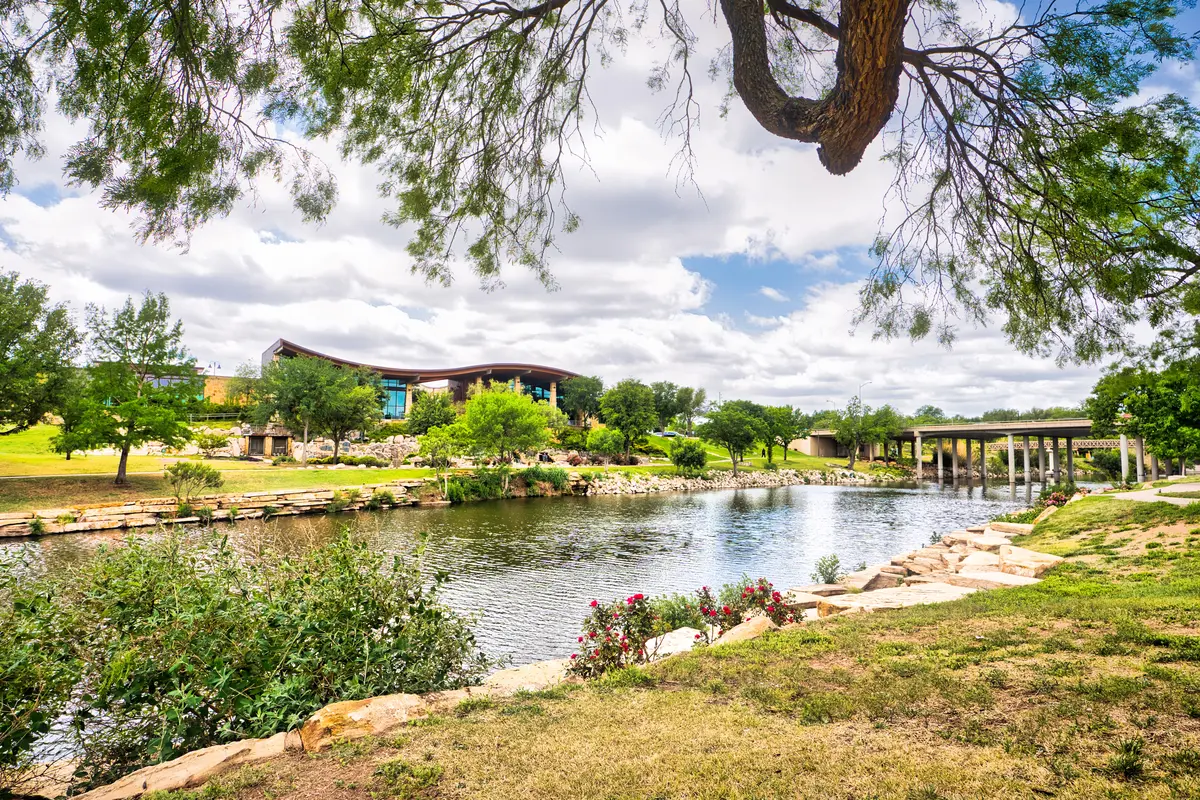
San Angelo is the economic and cultural hub of the Concho Valley, the 44th-largest incorporated city in Texas, with Angelo State University, a meaningful healthcare sector, and a historic downtown that gives it a genuine sense of place. A $214,811 typical home price reflects that depth: more services, more employers, more walkable neighborhoods, and more reasons to stay than the single-industry towns elsewhere in the region. US-67 (Houston Harte Expressway) and US-87 are the main arteries, and the city is self-sufficient in a way that few West Texas cities of any size can claim.
San Angelo suits buyers who want the most complete small-city experience in the region — real dining, arts, healthcare, and university energy — without needing to live in a major metro. It draws families with school-age children and retirees in roughly equal measure, and the housing stock is diverse enough to serve both.
#5 Lowest Home Price · Hale County
Best for agricultural workers and remote buyers seeking very low ownership costs.
Plainview sits on the Llano Estacado in Hale County, connected by I-27 and US-87, and its economy has long revolved around agriculture — cotton, grain, and the processing industries that follow. A $120,278 typical home price reflects a community where local wages are driven by agricultural and food-processing work rather than oil or a university, producing ownership costs that are within reach on incomes that the larger, service-heavy cities on this list don't typically generate. The trade-off is a limited service base: Plainview is a real community, but a serious shopping trip or a medical specialist means driving to Lubbock.
Plainview suits buyers who are genuinely embedded in the agricultural economy or who work remotely and want to minimize their cost of homeownership. Buyers who need regular access to a full range of services or who are accustomed to urban amenities will find the distance to Lubbock a constant factor in daily life.
#6 Palo Pinto Hill Town · Palo Pinto County
Best for buyers who want small-town character within reach of a major metro.
Mineral Wells sits at the eastern edge of what most residents think of as West Texas — Palo Pinto County, on US-180 and US-281 — and its cost of homeownership is shaped more by its proximity to the Dallas-Fort Worth metroplex than by any local industry. A $208,649 typical home price reflects the demand from buyers who want the look and feel of small-town Texas while keeping a realistic commute corridor to the Metroplex. That proximity is both the city's biggest asset and the reason it doesn't price like the more isolated towns further west.
Mineral Wells suits buyers who want a genuinely small-town pace but are willing to drive for work, shopping, or services — and who value the outdoor recreation that the Palo Pinto hills provide. Buyers expecting a full local service base will find it limited; the city's value proposition is tied directly to what lies within driving range, not what's in town.
#7 South Plains College City · Lubbock County
Best for buyers who want urban amenities at a genuinely accessible price.
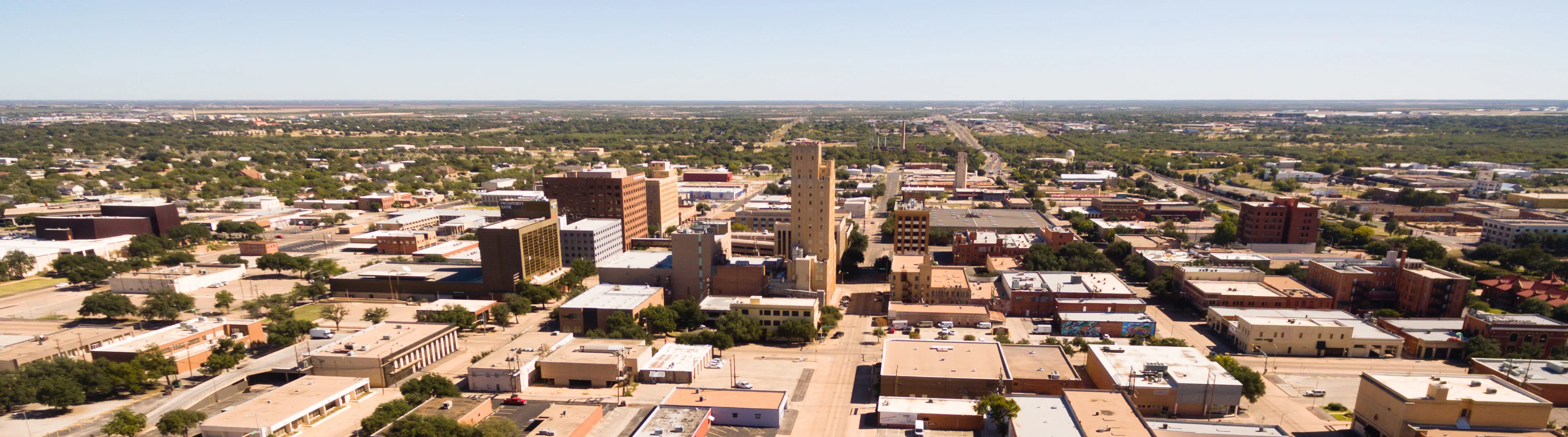
Lubbock is the 10th-largest incorporated city in Texas and the economic engine of the South Plains, anchored by Texas Tech University, a substantial healthcare corridor, and a diversified base of agriculture, retail, and professional services. A $212,191 typical home price is remarkably accessible for a city of this scale, and it's one of the reasons Lubbock consistently attracts buyers priced out of larger Texas metros. I-27, Loop 289, and the Marsha Sharp Freeway (US-82/US-62) define the city's traffic geometry, and the urban amenity set here — independent restaurants, arts venues, a real music scene — is the strongest of any city on this list.
Lubbock suits the widest range of buyers of any city in this comparison: university families, young professionals entering the job market, healthcare workers, and retirees who want walkable neighborhoods and real services. It has the most complete urban infrastructure in the region, and the home price still reflects a market that hasn't caught up to the city's actual quality of life.
#8 Panhandle Trade City · Potter County
Best for buyers who want a self-sufficient mid-size city on the High Plains.
Amarillo anchors the Texas Panhandle as the 17th-largest incorporated city in Texas, sitting at the crossroads of I-40 and I-27 (Canyon Expressway), with US-287 and Loop 335 rounding out a highway network that reflects the city's role as a regional distribution and trade hub. A $212,025 typical home price is competitive for a city that offers two universities, a regional medical presence, and the kind of retail and dining variety that smaller Panhandle towns can't provide. The trade-off is the wind and the weather — Amarillo's location on the High Plains means temperature swings and persistent Panhandle wind that newcomers routinely underestimate.
Amarillo suits buyers who want a mid-size city with real infrastructure and reasonable commute distances, and who are not troubled by distance from a major coastal or Sun Belt metro. It has a more conservative, working-city character than Lubbock, with fewer university-town amenities but stronger logistics and retail employment.
#9 Rio Grande Border Metro · El Paso County
Best for buyers who want large-city infrastructure without large-city prices.
El Paso is the 6th-largest incorporated city in Texas, a border metro on I-10 and the Patriot Freeway (US-54) whose economy runs on Fort Bliss and the U.S. Army, international trade and manufacturing, healthcare, and the University of Texas at El Paso. A $237,796 typical home price reflects both the city's scale and the genuine bilingual, binational character of a community that operates in two countries and two time zones. Housing here is still accessible relative to the city's size — buyers get a full metro experience at a price that smaller cities in other regions don't consistently match.
El Paso suits buyers who want the infrastructure of a large city — hospitals, universities, a real transit network, major-league retail — without a major-metro price tag. The international character is a genuine asset for buyers who work in trade, the military, or cross-border industries, and a real adjustment for buyers who have never lived in a border community.
#10 Three-University Anchor City · Taylor County
Best for buyers who want institutional stability and a diversified local economy.
Abilene is the 29th-largest incorporated city in Texas, anchored by three universities — Hardin-Simmons, McMurry, and Abilene Christian — along with a regional medical center and Dyess Air Force Base, a combination that makes it one of the more economically stable cities in West Texas. A $222,710 typical home price reflects that institutional depth: Abilene has real employers, full-service hospital care in town, and real dining and retail, and the housing stock ranges from historic bungalows near the university corridors to newer construction on the city's edge. I-20 and US-83 (Winters Freeway) carry most of the traffic.
Abilene suits buyers who want a mid-size city with multiple anchors — no single employer dominates the economy the way the oil patch dominates Midland or Odessa — and who value the cultural and athletic programming that three universities bring. Parents with school-age children and buyers tied to the military community at Dyess make up a significant share of the market.
#11 El Paso County Suburb · El Paso County
Best for El Paso metro buyers who want newer construction and a quieter pace.
Horizon City is the 134th-largest incorporated city in Texas, a mid-size El Paso County community connected to the metro by I-10 and FM-1281 (Horizon Boulevard). A $223,740 typical home price reflects its character as a bedroom community: residents here trade a longer drive into central El Paso for newer housing stock and a quieter neighborhood feel. The cost of living calculus here is less about what's in Horizon City itself and more about what you're willing to drive past on the way to work, shopping, and services.
Horizon City suits buyers who are already embedded in the El Paso metro and want newer construction and a suburban pace without leaving the county. Buyers expecting a self-sufficient town will find the service base thin — the value here is in the housing, not the local amenity set.
#12 Historic Rio Grande Village · El Paso County
Best for buyers with deep community ties and El Paso County connections.
San Elizario is a small, historically significant El Paso County community on SH-20 and FM-258, one of the oldest communities on the Rio Grande and a place where the housing stock and the local economy both reflect a working-class, agrarian character. A $180,144 typical home price reflects that foundation, though the income-to-ownership equation here is tighter than the price alone suggests — the local wage base is narrower than in the larger cities on this list, and services are limited.
San Elizario suits buyers who are deeply connected to the community and the El Paso County agricultural economy, or who are making a trade: lower purchase price in exchange for a longer commute to El Paso's full service base. It is not a practical choice for buyers unfamiliar with the area or without an existing connection to the community.
#13 Paluxy River Scenic Town · Somervell County
Best for buyers who prioritize scenery and small-town character over affordability.
Glen Rose is the 482nd-largest incorporated city in Texas, a small Somervell County town on US-67 and TX-144 where the Paluxy River and the Dinosaur Valley State Park give the area a tourism and recreation draw that is entirely absent from the agricultural and oil-field cities further west. A $401,143 typical home price stands apart from every other city on this list — and the driver is straightforward: this is a scenic small-town Texas community within reasonable driving distance of the Dallas-Fort Worth Metroplex, and buyers are paying for that combination of rural atmosphere and Metroplex access.
Glen Rose suits buyers who are drawn to the Hill Country-adjacent aesthetic, outdoor recreation, and the small-town Texas identity that comes with a historic courthouse square. Buyers primarily motivated by affordability will find other cities on this list a more practical option — the premium here is real, and it is entirely tied to the land, the river, and the proximity to a much larger metro.
#14 Basin Blue-Collar Hub · Ector County
Best for oil and gas workers who want more services than the smaller Basin towns offer.
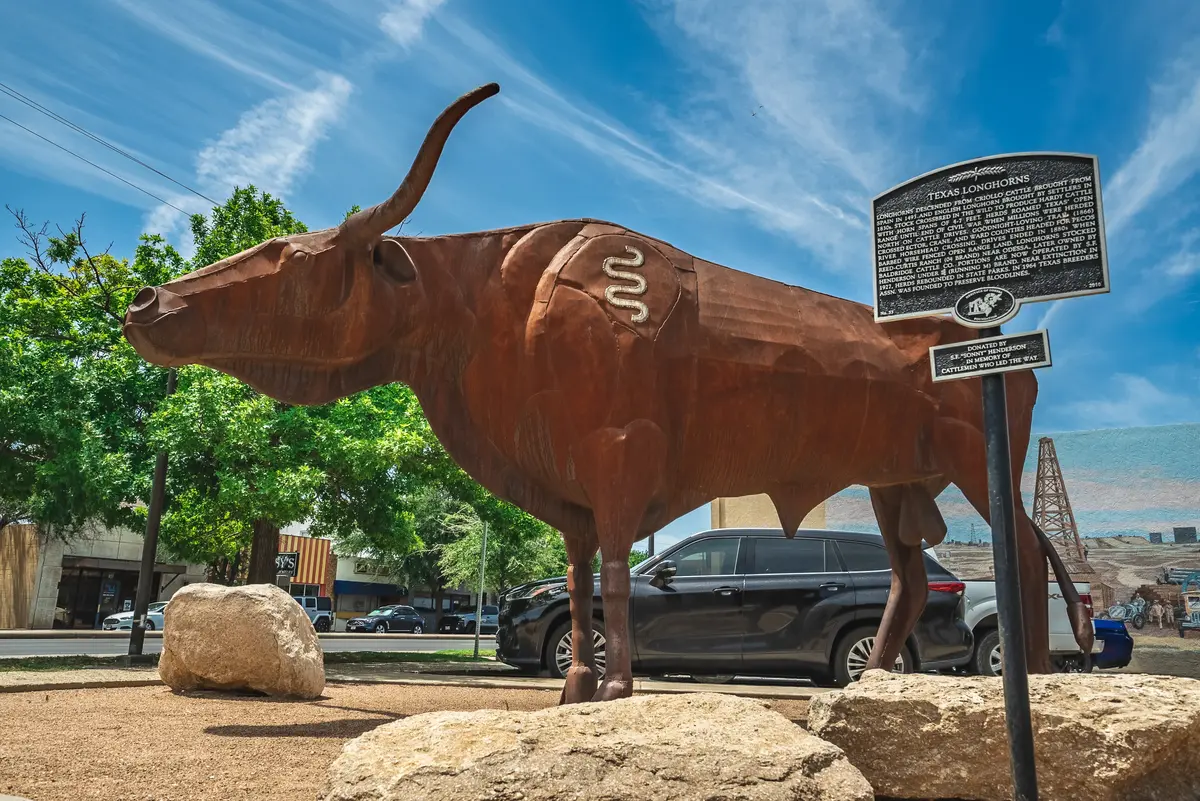
Odessa is the 32nd-largest incorporated city in Texas, and its economy runs almost entirely on the Permian Basin oil and gas industry — which means home prices here track energy markets more than they track anything else. A $253,740 typical home price reflects the Permian premium: Odessa has grown and contracted with oil prices for generations, and buyers who move here during a boom cycle should understand that the same forces that drove prices up can drive them back down. I-20, Loop 338, and US-385 carry the basin traffic that defines daily life.
Odessa suits buyers who are employed in the oil and gas industry or its supply chain, and who understand that accepting the Permian cycle is part of the deal. It has more infrastructure and more retail than Pecos or Big Spring, and a different energy than Midland — historically more blue-collar and trade-oriented, which is reflected in the types of neighborhoods and the character of the housing stock.
#15 El Paso Valley Community · El Paso County
Best for working families who want El Paso metro access at a lower price point.
Socorro is the 101st-largest incorporated city in Texas, a mid-size El Paso County community on SH-20 (Alameda Avenue) and FM-258, whose cost of homeownership reflects its character as a densely settled, working-class El Paso suburb. A $209,849 typical home price is accessible relative to the city's size, but the income-to-cost ratio here is tighter than in many of the smaller towns on this list — Socorro's residents carry real commuting costs and a service base that depends heavily on the broader El Paso metro.
Socorro suits buyers who want to own a home in the El Paso metro at a price below what central El Paso commands, and who are comfortable with a community that is densely settled and heavily oriented toward working families. Buyers looking for a self-contained small-town feel will find Socorro's character more suburban corridor than independent town.
#16 Cowboy Capital College Town · Erath County
Best for buyers who want ranch-culture small-city life near the Metroplex.
Stephenville sits in Erath County on US-67 and US-281, anchored by Tarleton State University and a strong agricultural and equine industry presence — it calls itself the Cowboy Capital of the World, and the ranch culture here is not a marketing phrase but an actual driver of the local economy. A $324,964 typical home price is driven by proximity to the Dallas-Fort Worth Metroplex, which inflates demand well beyond what the local economy alone would support — the same dynamic that shapes Glen Rose further east.
Stephenville suits buyers who want a genuine small-city Texas identity — university energy, working-ranch character, a real downtown — and who either work locally or are willing to commit to a Metroplex commute. Buyers motivated purely by affordability will find other cities on this list more accommodating; the premium here reflects both the university and the land.

#17 Permian Corporate Hub · Midland County
Best for professional-level oil industry buyers who want the Basin's best services.
Midland is the 25th-largest incorporated city in Texas and the corporate headquarters side of the Permian Basin equation — home to the executive offices, the energy company headquarters, and the professional-class income that separates it from its working-class neighbor to the west. A $332,692 typical home price is driven by white-collar oil-industry demand and a tight housing supply that struggles to keep pace with boom-cycle population growth. I-20, Loop 250, and the Nadine and Tom Craddick Highway (SH-349) carry the basin's business traffic.
Midland suits buyers who are employed at the professional and management level of the oil and gas industry, or who serve the financial and legal infrastructure that surrounds it. It has the strongest retail base of any Permian Basin city, but buyers who are not tied to the energy economy will find the income-to-cost equation harder to justify here than in most other cities on this list.
In West Texas, the gap between cities on this list is not just about size — it's about what the local economy runs on. Agricultural towns price to local wages; oil towns price to the Permian cycle; towns with universities or hospitals price to the stability those institutions bring. Match the economy to your own income source and you'll find the right fit faster than any spreadsheet will.
Tell us what you need help with and we'll connect you with local resources.
