
You've done the spreadsheet. El Paso checks real boxes — a typical home price of $237,796 (July 2026), no state income tax, 297 sunny days a year, and a Level I Trauma Center inside city limits. What the spreadsheet won't tell you is that this is a city of 683,012 people spread across a desert basin hemmed in by the Franklin Mountains, with a cultural identity shaped equally by the U.S.-Mexico border and one of the largest military installations in the country. That combination produces a retirement environment that is genuinely unlike anywhere else in Texas.
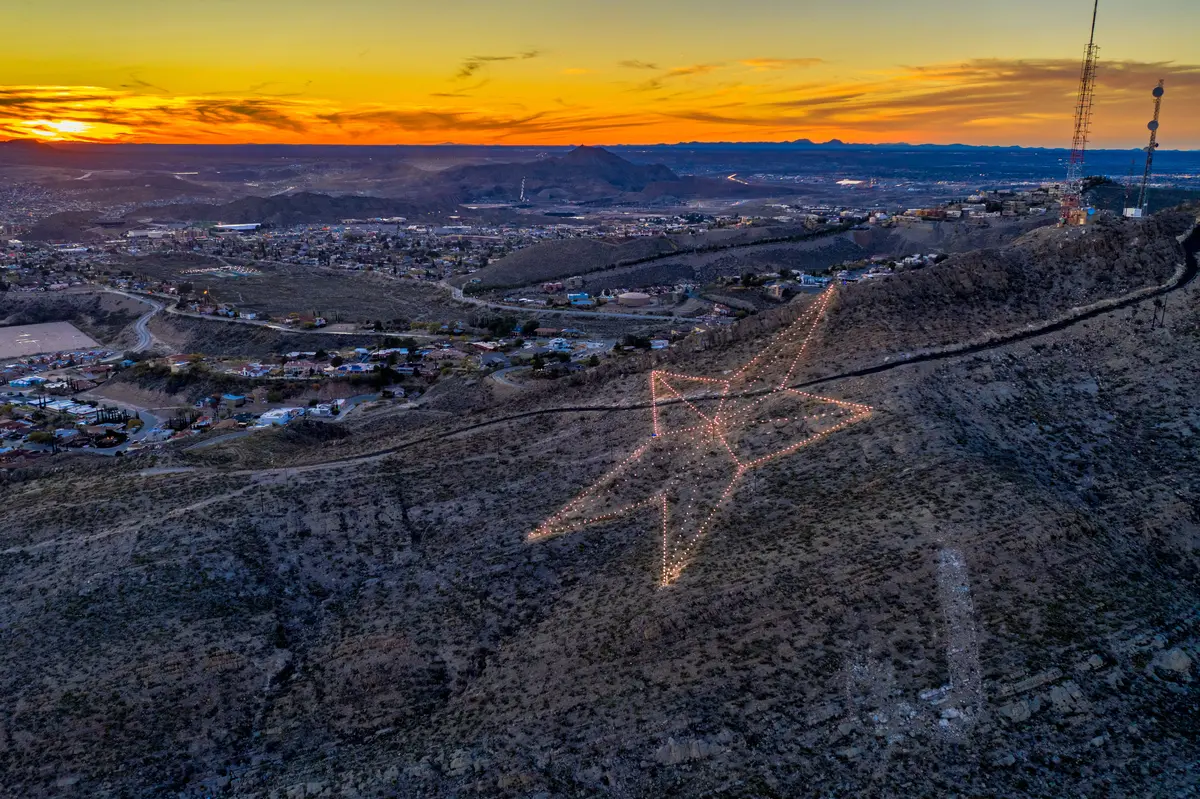
El Paso sits in the far western corner of Texas, closer to Tucson than to San Antonio, and the isolation is real. A medical subspecialty, a flight connection, or a major retail chain that isn't here means a drive or a flight — not a quick trip to the next suburb. But within those limits, the city delivers a cost structure that makes a fixed income go noticeably further than in most Sun Belt metros, a healthcare anchor that punches well above its weight for a city this size, and an outdoor culture built around Franklin Mountains State Park, which is the largest urban state park in the United States and sits directly inside city limits.
The population skews younger than many retirement destinations — Fort Bliss military families keep the demographic mix active — but approximately 14.1% of residents are aged 65 and older, and that community is well-served by a municipal bus system with senior-reduced fares, a free downtown streetcar, and the El Paso Area Agency on Aging, which connects retirees to in-home care, financial assistance, and long-term planning resources. The bilingual, bicultural character of the city is a genuine draw for retirees who want to live somewhere with deep roots and a distinct identity rather than a generic suburb.
Whether you're weighing El Paso against Tucson or Albuquerque, wondering what your Social Security check actually buys here, or trying to figure out whether a single-level home in this market is even findable, the sections below cover healthcare access, the retiree tax picture, walkability, downsizing options, and how El Paso stacks up against nearby alternatives.
Why Retirees Are Choosing El Paso
The case for El Paso in retirement starts with one number: a typical home price of $237,796 (Zillow Home Value Index, July 2026). In a Sun Belt market where comparable desert cities have pushed well past half a million, that figure represents genuine purchasing power for a retiree selling a home in a higher-cost state. Pair it with Texas's complete exemption of all retirement income from state tax, and the financial logic becomes hard to argue with on a fixed income.
El Paso also fits a specific kind of retiree: someone who wants urban amenities without urban density, outdoor access without mountain-town prices, and a community with actual cultural depth. The bilingual, bicultural character of the city — Spanish spoken comfortably alongside English throughout daily life — is an asset for retirees with roots in Mexico, for veterans who spent time at Fort Bliss, and for anyone who finds a monocultural retirement enclave stifling. The military retiree community here is particularly large and well-organized, with established networks and familiarity with the area.
Who should look elsewhere? Retirees who need to walk to everything will find most of El Paso requires a car — the city is geographically large and spread out, and only the downtown core and a few central neighborhoods offer genuine on-foot access to daily errands. Anyone who needs frequent access to a major airport hub, a large research medical center beyond what the city offers, or a dense network of cultural institutions will feel the isolation that comes with being in the far western corner of Texas. And summer heat is not a minor detail: temperatures regularly exceed 100°F for weeks at a stretch, and anyone who struggled with Phoenix or Las Vegas summers should factor that in seriously before committing.
Healthcare & Medical Access in El Paso
The Regional Anchor
University Medical Center of El Paso is the city's primary hospital and carries credentials that matter more in a city this geographically isolated than they would almost anywhere else. It is the only Level I Trauma Center within a 270-mile radius — verified by the American College of Surgeons — and holds the region's only Level I Stroke Center and Joint Commission-certified Comprehensive Stroke Center. No other hospital in West Texas, all of New Mexico, or southern Arizona holds that stroke designation. For a retiree weighing what happens in a cardiac or neurological emergency, that combination is significant.
Specialty Depth
UMC operates dedicated geriatrics services for adults 65 and older, alongside cardiology, neurosciences, oncology, orthopedics, and imaging. The hospital has received national recognition for nursing excellence and made expanded oncology investment a stated priority in 2025 with the appointment of a new senior oncology administrator. These are the kinds of institutional commitments that shape the quality of care available to retirees over the long run.
Six UMC Neighborhood Healthcare Centers are distributed across the city, offering primary care and specialty referrals without the drive to the main campus. For routine management of chronic conditions — the day-to-day reality for most retirees — that neighborhood footprint matters as much as the flagship hospital's trauma designation.
The Honest Distance Reality
Where El Paso's healthcare picture gets complicated is at the subspecialty edge. Certain cancer treatments, complex cardiac interventions, transplant programs, and highly specialized procedures may not be available locally and require travel to major academic medical centers in Houston or Dallas. This is not a criticism of UMC specifically — it is the reality of any city this far from a major metro cluster. Retirees with a known complex condition or a family history that points toward intensive specialty care should ask their physicians specifically about where those services are located before committing to El Paso.

The Retiree Budget in El Paso
The Tax Picture
Texas levies no state income tax, and that applies to every dollar of retirement income without exception — Social Security, pensions, 401(k) withdrawals, IRA distributions, and investment income are all entirely free of Texas state tax, with no age test and no income threshold. Texas also has no estate or inheritance tax. For retirees moving from California, Oregon, or other high-income-tax states, the difference on a $60,000-to-$80,000 annual retirement income can be several thousand dollars a year.
Homeowners 65 and older qualify for a school-tax ceiling that freezes the school portion of their property tax bill and an enhanced homestead exemption that reduces the assessed value subject to tax. The effective property tax rate in El Paso runs approximately 1.73% — notably higher than rates in many Western states, and something to model carefully before assuming Texas is uniformly cheaper on taxes. The interactive calculator below this section can help you run those numbers against a specific purchase price.
Daily Cost of Living
El Paso's overall cost of living runs roughly 13–18% below the national average depending on the index, with housing as the primary driver — running approximately 30–33% below the U.S. average. Groceries and healthcare services run modestly below national averages as well, a meaningful cushion on a fixed income. The one category to watch: summer air conditioning. At roughly 3,800 feet elevation the desert heat is dry, but peak-summer utility costs can run above national averages during the hottest months, partially offsetting the annual savings. For a full breakdown of ongoing costs, see the El Paso cost of living page.
The city's typical rent of $1,529 per month (Zillow, July 2026) gives renters a viable alternative to buying, particularly for retirees who want to test the city before committing to a purchase or who are downsizing out of a home they've already sold.
Looking to buy in El Paso? Estimate your payment.
Enter your numbers to see an estimated monthly mortgage payment.
Estimate only. Excludes HOA fees and mortgage insurance. The interest rate above is a starting point, not a quoted rate — replace it with your own to see real numbers. Insurance is a flat placeholder, not a El Paso quote.
Walkability, Community & Staying Active in El Paso
The Walkability Reality
Most of El Paso requires a car for daily errands — the city covers a large footprint and was built around the automobile. The exceptions are meaningful but limited. The downtown Union Plaza district and the area around San Jacinto Plaza offer genuinely walkable streets where coffee, restaurants, transit, and cultural institutions sit within comfortable walking distance. Central El Paso and Kern Place are the neighborhoods most often cited by retirees who want to run errands on foot. If walkable daily life is a priority, those are the areas to focus a housing search.
For retirees who can't or prefer not to drive, Sun Metro operates an extensive network of fixed bus routes across the city. Seniors 65 and older pay a reduced fare, making the system one of the more accessible transit networks for a city of this size. Sun Metro LIFT provides ADA-compliant paratransit service for those unable to use fixed-route buses. The free downtown Streetcar covers a 4.8-mile loop through the cultural core, connecting riders to the El Paso Museum of Art and the El Paso Museum of History — both free admission — as well as the University of Texas at El Paso medical district.
Staying Active Outdoors
Franklin Mountains State Park is the most significant outdoor amenity in the city — the largest urban state park in the United States, with hiking trails ranging from gentle walks to serious climbs, all inside city limits. McKelligon Canyon offers a dramatic canyon setting for hiking without venturing far from Central El Paso. Ascarate Park provides a more accessible, flat option, and Rio Bosque Wetlands Park appeals to retirees who want a slower-paced nature walk along the Rio Grande corridor. The 297 sunny days a year make year-round outdoor activity realistic in a way that few other cities can honestly claim.
Community & Social Life
The El Paso Area Agency on Aging coordinates resources for retirees across the city — financial aid, in-home care planning, home modification assistance, and connections to community programs. Faith communities across denominations are active and many offer senior-specific programming, which is a meaningful social anchor in a city where the bilingual, bicultural community gives congregations deep roots. The military retiree community tied to Fort Bliss has its own established social networks, and veterans organizations are well-represented. For retirees who speak Spanish or are learning, daily life in El Paso offers genuine immersion that most U.S. cities can't provide.
Right-Sizing: Downsizing in El Paso
The Single-Level Question
El Paso's housing stock skews toward single-family homes, and a meaningful share of that inventory is single-story — a legacy of the city's sprawl-heavy growth pattern and the desert Southwest building tradition. That is genuinely good news for retirees who need to avoid stairs. Neighborhoods on the flatter east and northeast sides of the city tend to have more ranch-style single-story inventory than the hillier Upper Valley or Kern Place areas, though single-level homes exist across the city. The El Paso neighborhoods page breaks down the geographic character of each area in detail.
Condos and Patio Homes
The downtown and central core have seen condominium development tied to urban revitalization efforts, and patio homes appear in several established residential areas. These options suit retirees who want reduced maintenance without leaving the city. The condo market here is smaller than in coastal cities, and buyers looking for a lock-and-leave lifestyle with strong association management will find fewer options than in purpose-built retirement markets like Scottsdale or The Woodlands — but what exists is priced in line with the city-wide typical home price, which is a meaningful advantage.
55+ Communities
No 55+ communities were found in El Paso. The city has multiple assisted-living and memory-care facilities, and independent-living communities operate here, but an age-restricted 55+ residential community in the traditional sense — where age restriction governs the neighborhood itself — was not confirmed within city limits. Retirees seeking that structure will need to look at nearby markets or consider the broader metro area. The El Paso Area Agency on Aging can connect buyers and renters to appropriate housing options based on individual needs and budget.
The absence of a formal 55+ community is one of El Paso's genuine gaps relative to purpose-built retirement destinations in Arizona and New Mexico. For retirees who find the social architecture of a 55+ community important — the programming, the peer group, the maintenance-free lifestyle — this is worth weighing seriously against the city's considerable financial and healthcare advantages.
El Paso vs Nearby Retirement Destinations
| City | Cost vs El Paso | Primary Hospital | Walkability | Senior Living Depth | Overall Retirement Fit |
|---|---|---|---|---|---|
| El Paso, TX | Anchor | UMC — Level I Trauma & Stroke Center, in-city | Car-dependent overall; walkable downtown core | Assisted living and independent living; no 55+ communities confirmed | Strong on cost, taxes, and healthcare; limited 55+ options |
| Las Cruces, NM | About the same | Regional hospital; less specialty depth than UMC | More compact city; some walkable neighborhoods | Several 55+ communities; growing senior market | Better 55+ inventory; less healthcare depth; state income tax applies to some retirement income |
| Tucson, AZ | Noticeably pricier | Multiple hospitals including a major academic medical center | Car-dependent; some walkable cores | Extensive 55+ and active-adult communities | More senior infrastructure; higher cost; strong outdoor culture |
| Albuquerque, NM | Somewhat pricier | Major academic medical center with broad specialty depth | Car-dependent overall; walkable historic district | Good 55+ and independent-living inventory | More specialty healthcare; higher cost; appeals to retirees wanting a larger metro |
| Socorro, TX | Somewhat lower | Relies on El Paso for hospital access | Minimal walkability; entirely car-dependent | Very limited senior-specific housing | Lower cost; no local healthcare; suited to self-sufficient retirees close to El Paso |
| Horizon City, TX | Somewhat lower | Relies on El Paso for hospital access | Minimal walkability; suburban and car-dependent | Very limited senior-specific housing | Lower entry price; quiet suburban setting; commute to El Paso services required |
El Paso's clearest advantage over every city in this comparison is the combination of a Level I Trauma and Stroke Center inside city limits and a housing cost that sits well below the Sun Belt average — a pairing that is genuinely rare.
Las Cruces is the most natural alternative for retirees who want a smaller-scale city with more 55+ community infrastructure, though New Mexico's income tax treatment of retirement income differs from Texas's complete exemption and should be modeled carefully.
Tucson beats El Paso on senior living depth and healthcare breadth, but at a noticeably higher cost; for retirees whose medical needs point toward complex specialty care, that trade-off may be worth it. Albuquerque offers the most specialty medical depth in the region, but it also carries the highest price tag of these comparisons.
Socorro and Horizon City are for the self-sufficient retiree who wants to stay in the El Paso orbit at a lower price point and doesn't need daily access to senior services — not for anyone who anticipates needing frequent medical or community support.

Local Expert Takeaway: El Paso is one of the few Sun Belt cities where a retiree can buy a home outright on a modest nest egg, pay zero state tax on Social Security and pension income, and have a Level I Trauma Center inside city limits. The catch is real: no 55+ communities, limited walkability outside the downtown core, and summer heat that makes air conditioning a serious budget line from June through September. The retirees who thrive here tend to be active, comfortable driving, drawn to the outdoor culture of Franklin Mountains State Park and McKelligon Canyon, and connected to the bilingual community or the Fort Bliss veteran network. If that profile fits, the financial case for El Paso is hard to beat in this region.
Quick Takeaways & FAQs
✅ Texas exempts all retirement income — Social Security, pensions, and IRA withdrawals — from state income tax, and homeowners 65 and older qualify for a school-tax freeze.
⚠️ No 55+ age-restricted communities were confirmed in El Paso, which is a genuine gap for retirees who want the structured lifestyle and peer community that those developments provide.
📍 University Medical Center of El Paso is the only Level I Trauma Center within a 270-mile radius and holds the region's only Joint Commission-certified Comprehensive Stroke Center — credentials that matter most if you live far from any other metro.
Is El Paso a good place to retire on a fixed income?
What is the nearest hospital for retirees in El Paso?
Are there 55+ or active-adult communities in El Paso?
How walkable is El Paso for retirees who don't want to drive?
How does El Paso's retirement appeal compare to Las Cruces or Tucson?
Moving to Texas?
Tell us what you need help with and we'll connect you with local resources.
