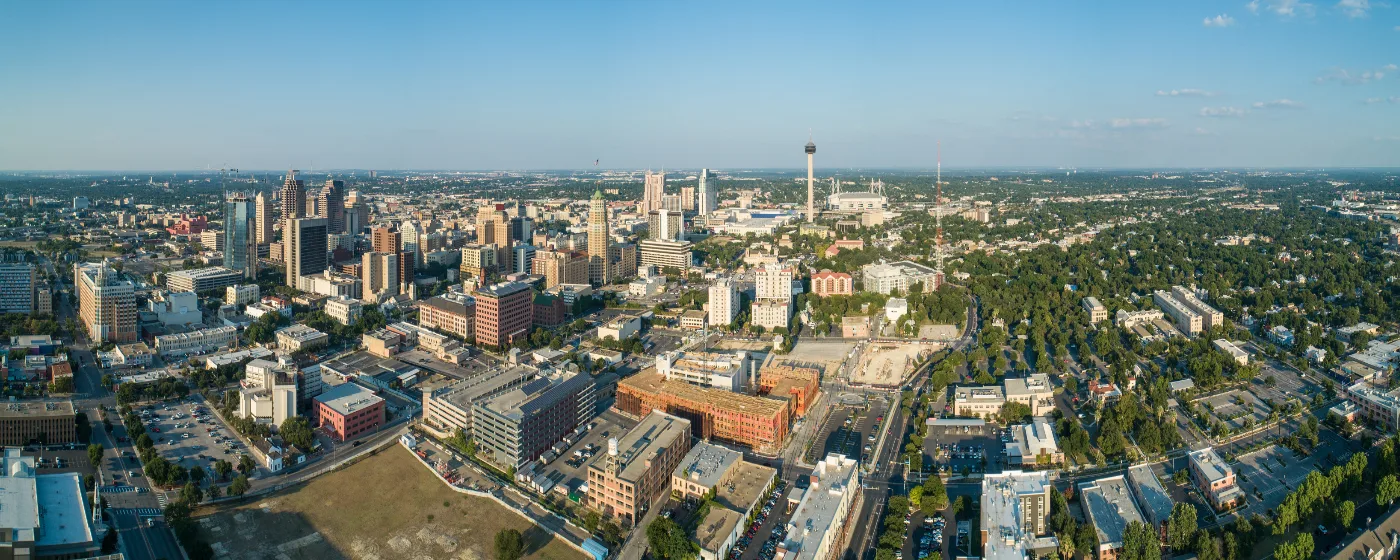
Most people who move to San Antonio in retirement say the same thing six months in: the summers are longer and hotter than they planned for, and the city is far bigger than it looked on a map. At 1,548,422 residents, this is the 2nd-largest incorporated city in Texas, and its sprawl is real. I-10, I-35, US-281, and Loop 1604 form the bones of a metro that stretches across Bexar County in every direction. Daily life here is built around a car, not a sidewalk — and that is the single most important thing a retiree considering this city needs to understand before signing anything.
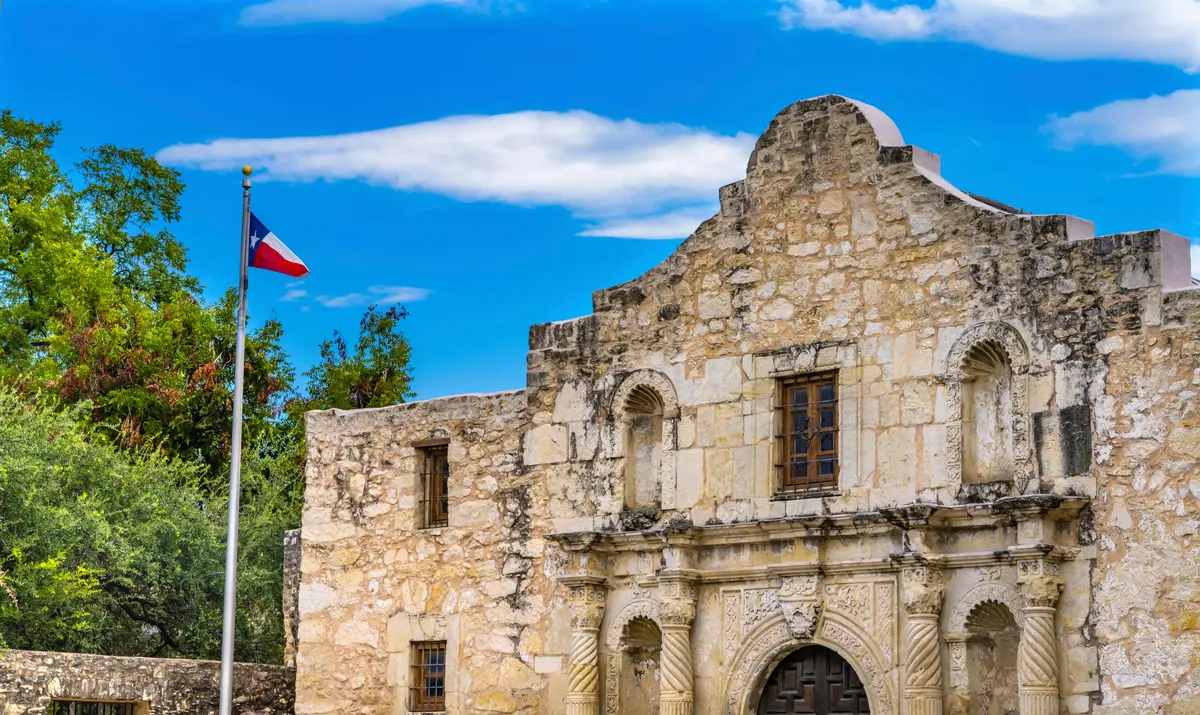
What draws people anyway is a combination that is genuinely hard to match in a major American city. The cost of living runs below the national average, making it the most affordable major metro in Texas. Texas levies no state income tax, which means Social Security, pensions, and 401(k) withdrawals are untaxed at the state level. The South Texas Medical Center anchors one of the strongest healthcare ecosystems in the state. And the cultural backdrop — the San Antonio River Walk, the Alamo, the missions, the deep Mexican-American and military heritage — gives the city a texture that newer Sun Belt boomtowns simply do not have.
The tradeoffs are concrete. Property taxes carry an effective rate of approximately 1.55%, which is meaningful in a no-income-tax state. Summers push electricity bills sharply upward for roughly five months. And the city's sprawl means that retirees who want to walk to a coffee shop or a farmers market have exactly one neighborhood — the Pearl District — where that is genuinely practical. For the full cost-of-living breakdown, the cost page covers every category in detail. Whether you're comparing San Antonio against New Braunfels, weighing the healthcare system, or trying to figure out how the property-tax exemptions actually work, the sections below cover what retirement in San Antonio is really like.
Why Retirees Are Choosing San Antonio
San Antonio makes the most sense for retirees who want a large-city healthcare infrastructure and a lower cost of entry than Austin or Dallas, without leaving Texas. The typical home price of $249,689 (Zillow Home Value Index, July 2026) puts ownership within reach for retirees arriving with equity from a pricier market — California, Colorado, or even Houston. That price point, combined with the state's income-tax-free posture, is the core of the financial case.
The city also suits retirees with a military background in a way few American cities can match. Joint Base San Antonio is the city's largest employer, and the veteran and active-duty community here is enormous. Access to military healthcare, commissaries, and the broader veteran support network adds a layer of practical value that is felt in daily life rather than captured in any single spending category.
San Antonio tends to disappoint retirees who prioritize walkability and a compact, pedestrian-scaled daily life. This is a driving city, full stop. It also tends to frustrate people who move from places with mild summers — the heat from June through September is intense and unavoidable. Retirees who want a slower, small-town pace and a lower property-tax bill sometimes find that New Braunfels or Helotes fits better. But for anyone who wants a genuine major city — world-class medical care, an international airport, professional sports, a deep cultural calendar — at a price that still makes sense on a fixed income, San Antonio is a serious and honest answer.
Healthcare & Medical Access in San Antonio
University Hospital, inside city limits, anchors University Health — the public hospital system serving Bexar County — and handles the region's most complex trauma and specialty cases. For retirees, that proximity matters: the most advanced care in South Texas does not require a drive to another metro.
For day-to-day healthcare, the South Texas Medical Center corridor is a concentrated cluster of hospitals, specialty clinics, cancer centers, and physician offices that makes San Antonio genuinely competitive with much larger metros. Methodist Healthcare System and Baptist Health System both operate multiple facilities across the city, and Medicare is widely accepted across hospital systems and physician networks.
Methodist Hospital carries a strong reputation in specialist care, particularly in cardiology, orthopedics, neurology, and oncology. Methodist Hospital Stone Oak has earned recognition for performance across multiple procedures and conditions. That depth of specialty access — multiple systems, multiple campuses — matters enormously for retirees who are no longer just managing routine care.
University Health is also actively expanding. University Health Palo Alto Hospital broke ground in January 2024 and is designed to open in 2027 with 166 inpatient beds on the south side. University Health Retama Hospital, a four-story facility with 140 inpatient beds along the I-35 corridor north of Loop 1604, also broke ground in February 2024. Both expansions are aimed at underserved and fast-growing parts of Bexar County.
One program worth knowing about: Methodist Healthcare's 55PLUS® senior wellness program is open to community members 55 and older. It includes transportation to Methodist Hospital facilities, wellness screenings and events, and discounts during inpatient stays — a practical benefit for retirees who want to stay connected to the health system between appointments.
For veteran retirees, the military healthcare footprint here is a distinct advantage that does not exist in most cities. Joint Base San Antonio's presence means VA and military healthcare options are real and accessible, not a distant afterthought.
The honest reality is that San Antonio is the advanced-care destination for this region. Retirees coming from smaller Texas towns or rural areas often say the medical access here is the single biggest upgrade in their quality of life.
The Retiree Budget in San Antonio
Texas's retirement tax posture is one of the strongest in the country. Social Security benefits, pensions, 401(k) and IRA withdrawals, and military retirement pay all escape state income tax entirely — the Texas Constitution prohibits an individual income tax, and that has not changed. Federal rules still apply, so a portion of Social Security may be taxable at the federal level depending on total income, but the state takes nothing.
Property taxes deserve an honest look. The effective rate in San Antonio is approximately 1.55%, which is real money in a state that funds everything through property and sales taxes rather than income. The good news for retirees: Texas voters approved Proposition 11 in November 2025, raising the mandatory over-65 additional school district exemption from $10,000 to $60,000. Combined with the standard $140,000 homestead exemption, homeowners 65 and older now exempt $200,000 of their home's value from school district taxes — effective for the 2026 tax year. On top of that, the school district portion of the property tax bill is automatically frozen at the level owed in the year the exemption is first claimed. It cannot rise above that ceiling as long as the homeowner remains in the home, even if appraised values climb. City, county, and special district taxes are not automatically frozen, so the total bill can still move — but the school-tax freeze meaningfully limits the exposure.
The sales tax trade-off is worth understanding before moving here. The combined state and local rate can reach up to 8.25%. Groceries and prescription drugs are generally exempt, but most other purchases carry the full rate. On a fixed income in a state with no income tax, that sales tax shows up in everyday spending in ways that surprise people who move from lower-sales-tax states.
The other budget line that catches retirees off guard is summer electricity. San Antonio's heat concentrates cooling costs into roughly five months, so averaging utility bills across the year gives a misleading picture. Budget the summer months separately. Homeowners insurance in central Texas also carries hail and severe convective storm exposure, and premiums have risen faster than the national average in recent years — get multiple quotes before closing.
On the overall spending side, San Antonio runs qualitatively below the national average. Housing accounts for the biggest savings, while groceries and transportation track closer to Texas norms. For retirees arriving with equity from a higher-cost market, that gap is real and compounds over time on a fixed income.
Looking to buy in San Antonio? Estimate your payment.
Enter your numbers to see an estimated monthly mortgage payment.
Estimate only. Excludes HOA fees and mortgage insurance. The interest rate above is a starting point, not a quoted rate — replace it with your own to see real numbers. Insurance is a flat placeholder, not a San Antonio quote.
Walkability, Community & Staying Active in San Antonio
San Antonio's city-wide walkability is limited. Most of the city requires a car for nearly every errand, and the suburban layout means that even well-located neighborhoods have significant gaps between destinations. Retirees who moved here expecting the kind of on-foot access they had in older East Coast or Midwest cities often adjust their expectations within the first few months.
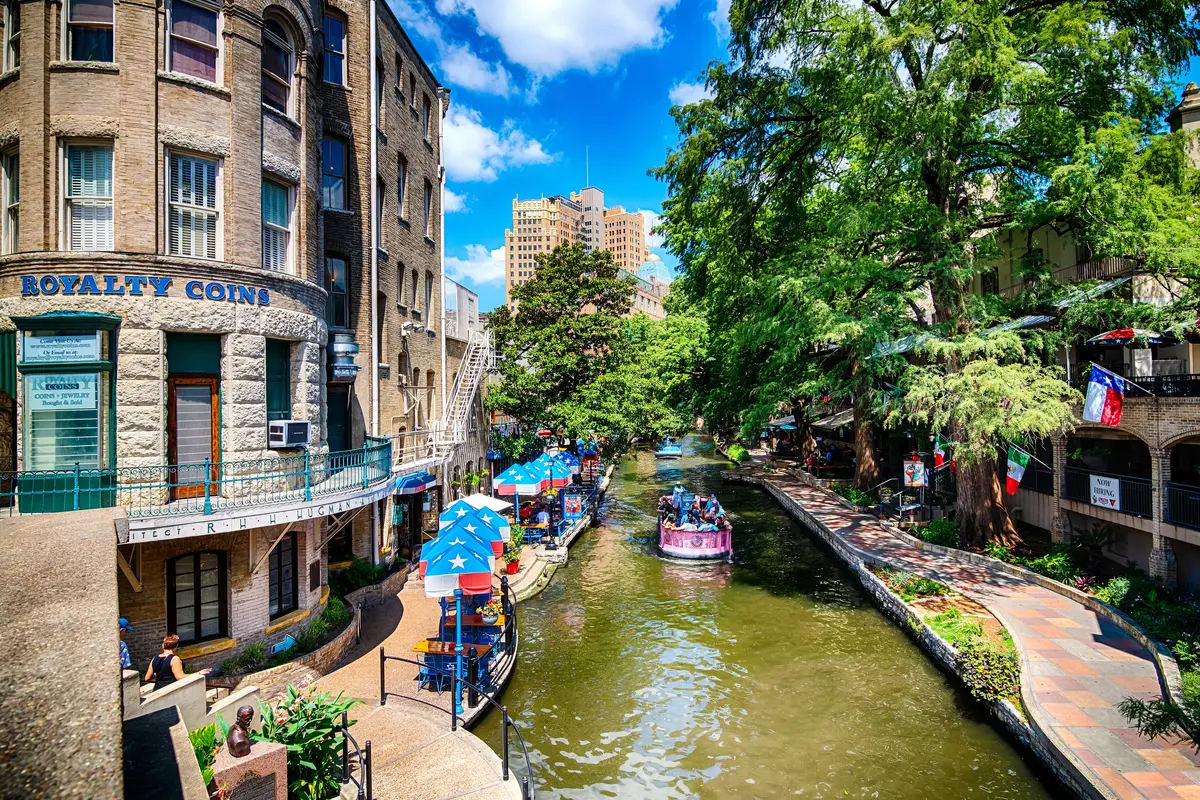
The Pearl District is the clear exception. Built around the restored Pearl Brewery complex on the San Antonio River, it is the only area in the city where car-optional daily living is genuinely practical. The Pearl Farmers Market operates on weekends and draws a loyal crowd of residents and visitors alike. The River Walk connects the Pearl to downtown on foot, making the entire corridor more accessible than the rest of the city by a wide margin. For retirees who want walkable streets as a non-negotiable, the Pearl District and the adjacent Midtown neighborhoods are where to look first.
Beyond walkability, the city has real infrastructure for staying active and socially engaged. The City of San Antonio's Senior Transportation Services program provides regular one-way trips to city-operated senior centers — a meaningful resource for retirees who want to reduce or eliminate driving. The centers themselves offer fitness classes, social programming, and connections to city services.
Outdoors, Brackenridge Park sits near the Medical Center corridor and offers easy, relatively flat terrain for walking and birdwatching. Eisenhower Park and McAllister Park give more active retirees trail access without leaving the city. Government Canyon State Natural Area on the northwest edge of the metro is a more serious hiking destination for those who can handle the terrain.
The cultural calendar is genuinely deep for a city at this price point. The San Antonio Missions National Historical Park, the River Walk, and the Tower of the Americas all give retirees walking-distance history and scenery. The Pearl's Culinary Institute of America campus adds cooking classes, demos, and food events that draw regulars from across the city. For retirees who moved partly for cultural richness, San Antonio delivers in ways that smaller nearby cities simply cannot.
Methodist Healthcare's 55PLUS® senior wellness program also doubles as a community touchpoint, offering wellness events and screenings that bring people together outside a clinical setting. It is one of the more underrated social resources for new arrivals figuring out where to meet people.
Right-Sizing: Downsizing in San Antonio
San Antonio's residential growth has concentrated in large master-planned subdivisions and single-family neighborhoods rather than age-restricted communities. Retirees looking for a purpose-built 55+ environment with shared amenities and deed restrictions will need to look at nearby cities like New Braunfels or Boerne, which do have established age-restricted options.
What San Antonio does have is a wide supply of single-level homes, particularly in the northwest side and Alamo Ranch areas where newer construction dominates. Patio homes and zero-lot-line single-story builds are reasonably common in the outer suburbs, and the typical home price of $249,689 (July 2026) gives downsizers from higher-cost markets real purchasing power. Retirees selling a home in Stone Oak or the Dominion — both of which sit above the city median — and moving into a smaller single-story in a newer suburb can often execute that transition without drawing down other assets.
Condo inventory in San Antonio is thinner than in cities like Austin or Dallas, but it exists. The Pearl District and the Southtown / King William Historic District have the most walkable condo options. The Medical Center corridor on the northwest side has more moderately priced options with proximity to healthcare — a practical consideration that moves up the priority list for many retirees.
The honest single-level inventory reality is this: the supply exists across multiple price points, but the most affordable options are car-dependent by design. Retirees who want single-level living and walkable streets are looking at a premium — either in price or in compromises on the neighborhood. That trade-off is worth naming before the search begins, not after the first offer.
For retirees considering a long-term aging-in-place plan, the Medical Center area's density of physicians, specialists, and hospital access makes it one of the more practical quadrants of the city to anchor a home search. The neighborhoods guide covers the geographic divides in more detail.
San Antonio vs Nearby Retirement Destinations
| City | Cost vs San Antonio | Primary Hospital | Walkability | Senior Living Depth | Overall Retirement Fit |
|---|---|---|---|---|---|
| San Antonio | The baseline | University Hospital (inside city limits); Methodist Healthcare System; Baptist Health System | Car-dependent citywide; Pearl District walkable | Thin on 55+ communities; strong senior center network | Strong for healthcare access and affordability; weak on walkability |
| New Braunfels | Noticeably higher | Regional hospital; complex cases refer to San Antonio | Mostly car-dependent; historic Gruene area walkable | Has established age-restricted communities | Good for retirees wanting small-town pace with Hill Country scenery |
| Schertz | Noticeably higher | Relies on San Antonio medical corridor | Suburban, car-required for most errands | Limited dedicated senior community options | Suits commuter-age households more than retirees; close to JBSA |
| Helotes | Noticeably higher | Close access to San Antonio Medical Center | Very car-dependent; quiet, low-density | Very limited senior-specific inventory | Appeals to retirees wanting a quieter edge of the metro with Hill Country feel |
| Boerne | Noticeably higher | Community hospital; San Antonio for specialty care | Compact historic downtown is walkable; rest is suburban | Has 55+ communities and active adult options | Strong fit for retirees prioritizing Hill Country lifestyle and age-restricted community options |
| Universal City | About the same | Relies on San Antonio medical corridor | Car-dependent | Limited senior-specific options | Reasonable value; best for veteran retirees near JBSA Randolph |
The cost picture is straightforward: San Antonio is the most affordable entry in this comparison. New Braunfels, Schertz, Boerne, and Helotes all run noticeably higher, and for retirees on a fixed income that gap matters from the first month.
On healthcare depth, San Antonio is in a different category. Every nearby city either relies on the San Antonio medical corridor for specialty and tertiary care, or sends complex cases there. A retiree who expects to use the healthcare system regularly — and most do — is closer to that infrastructure by staying in San Antonio itself.
Boerne is the most compelling alternative for retirees who want an age-restricted community with Hill Country scenery. It has established 55+ options that San Antonio lacks, and the drive into the city for medical appointments is manageable. New Braunfels works for retirees who want a smaller-town feel and are willing to pay more for it. Universal City makes the most sense for veteran retirees who want proximity to Joint Base San Antonio Randolph without paying the Boerne or New Braunfels premium.
For retirees who want the full package of healthcare access, cultural depth, and the lowest cost of entry, San Antonio is still the strongest answer in this region — with the honest caveat that walkability requires choosing the right neighborhood deliberately, not assuming it exists by default.
Local Expert Takeaway: San Antonio's retirement case is built on three pillars that are genuinely hard to find together: a major-city healthcare system with multiple full-service hospitals offering deep specialty care, a cost of entry well below other Texas metros, and a tax structure that leaves Social Security and pension income untouched at the state level. The property-tax freeze for homeowners 65 and older — locked in the year you first qualify — gives long-term residents real protection against rising appraised values. The Pearl Farmers Market, Brackenridge Park, and the River Walk are where retirees actually spend their weekends, but most of the city still requires a car. If walkability matters to you every day, put the Pearl District or Southtown at the top of your neighborhood shortlist and budget accordingly.
Quick Takeaways & FAQs
✅ Texas levies no state income tax, so Social Security, pensions, and military retirement pay are fully exempt at the state level — a meaningful advantage on a fixed income.
⚠️ San Antonio is a car-dependent city; retirees expecting to walk to daily errands will find only the Pearl District delivers that reliably — every other part of the city requires a car for most errands.
📍 Age-restricted 55+ communities are not a significant part of San Antonio's housing inventory — retirees who want that environment should look at nearby Boerne or New Braunfels, both of which have established options.
Is San Antonio a good place to retire on Social Security and a small pension?
What is the over-65 property tax benefit in San Antonio?
How good is healthcare in San Antonio for retirees?
Are there 55+ communities or active adult neighborhoods in San Antonio?
Which San Antonio neighborhood is best for retirees who want walkability?
Moving to Texas?
Tell us what you need help with and we'll connect you with local resources.
