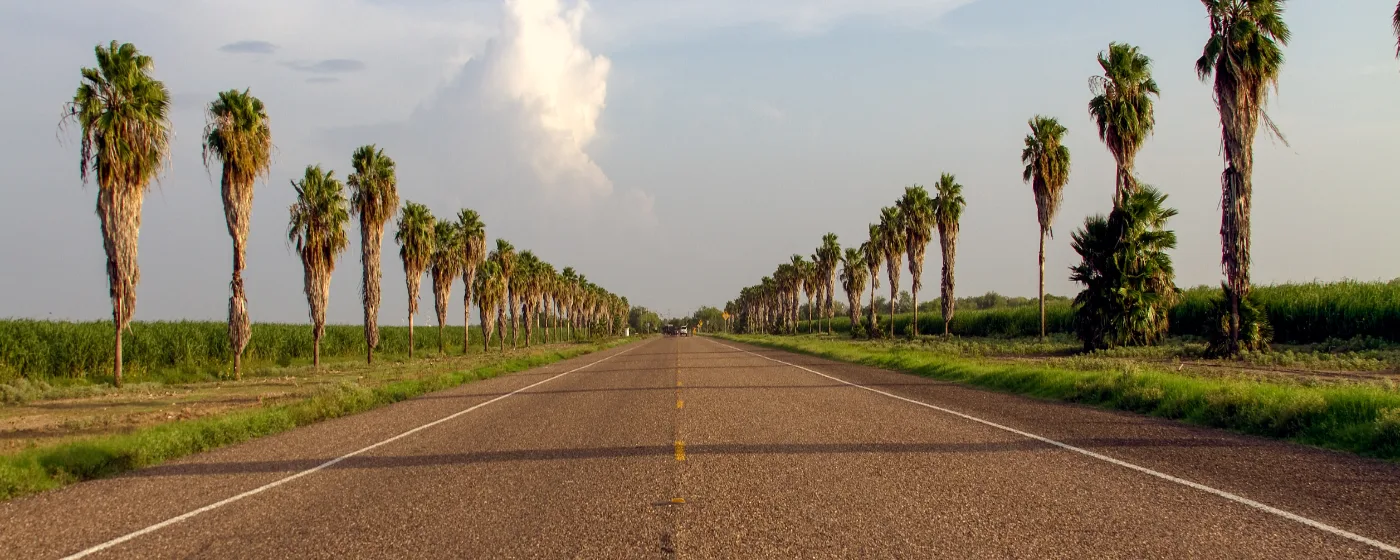
What Is Living in Alamo, Texas Like?
You've probably driven through Alamo on US-83 and thought it was just another Valley corridor town. That's the most common mistake people make before they actually move here. Alamo, Texas — population 20,625, sitting in Hidalgo County between McAllen and Donna — is a city that rewards closer inspection. The median age of 29.2 years and an average household size of 3.3 persons tell you something real about the place: this is a young, multigenerational community, deeply rooted in Rio Grande Valley culture, where the backyard barbecue matters as much as the school calendar. I-2 cuts straight through the city, putting residents about 15 minutes to McAllen for major shopping, dining, and employment — which is the practical backbone of most residents' daily routines.
The economic foundation here rests on a handful of institutions that most residents interact with directly. The City of Alamo and the local school district — which holds a B rating according to the Texas Education Agency — are the two largest local employers. A regional health system ER provides emergency services within the city, and a significant share of residents commute to larger healthcare and commercial employers in McAllen and Edinburg. The city has been investing quietly in infrastructure: more than 6,000 digital water meters now let the city monitor usage in real time and catch leaks before homeowners ever see a bill spike. That kind of municipal investment signals something about where city leadership sees Alamo going.
What draws people to Alamo is almost always the same combination: home prices that are noticeably below the rest of the state, a subtropical climate with 225 sunny days a year, and a community culture built around family and faith rather than nightlife and hustle. The typical home price sits at $173,228 (Zillow Home Value Index, July 2026), which makes Alamo more affordable than roughly 94% of Texas cities — a real number, not marketing copy. The owner-occupied housing rate of 73.2% reflects what residents already know: when you can actually afford to buy, you do. For a fuller breakdown of what homes cost and what rent looks like here, see the cost of living page.
Whether you're weighing a move from a pricier Texas metro, relocating for a school district, or drawn by the Valley's pace and weather, the sections below break down Alamo's neighborhoods, daily life, the housing market, how people get around, and where locals spend their weekends.
Alamo at a Glance
Looking to buy in Alamo? Estimate your payment.
Enter your numbers to see an estimated monthly mortgage payment.
Estimate only. Excludes HOA fees and mortgage insurance. The interest rate above is a starting point, not a quoted rate — replace it with your own to see real numbers. Insurance is a flat placeholder, not a Alamo quote.
Why Are People Moving to Alamo?
The case for Alamo starts with the math. A typical home price of $173,228 (July 2026) in a state where most metro markets push well past $300,000 gets people's attention. But the buyers who actually stay aren't purely spreadsheet people — they're families who wanted to be closer to relatives already in the Valley, retirees and seasonal Winter Texans chasing warmth and a golf community, and younger buyers who got priced out of larger Texas cities and found Alamo's homeownership rate of 73.2% meant something real: this is a place where owning, not renting, is the norm.
The Cultural Draw
Approximately 84% of Alamo's residents identify as Hispanic or Latino, and the multigenerational household structure — 3.3 persons on average — isn't incidental. It's the organizing principle of daily life here. If you're moving from a city where community feels abstract, Alamo can genuinely surprise you. People show up for school parades. The Taste of Alamo food festival draws real local participation, not just a sponsor tent. Fourth of July at Alamo Central Park is a neighborhood event, not a civic obligation.
What the City Is Building Toward
City leadership has been explicit about positioning Alamo as a place to invest and grow, not just a pass-through. The digital water meter rollout — more than 6,000 units citywide — is the kind of infrastructure story that rarely makes headlines but matters to homeowners when it catches a slab leak before it becomes a costly repair. Small-city infrastructure investment at this scale is worth noticing if you're thinking long-term.
The honest trade-off: Alamo is a city of 20,625 people, and it reflects that in its retail and entertainment options. A serious shopping trip means a drive. But for buyers whose priorities are affordability, family proximity, and the specific warmth of Valley life, the trade-off lands comfortably on the right side.
What Daily Life Feels Like in Alamo
Six months after moving here, most newcomers say the same thing: the pace is slower than they expected, and they mean that as a compliment. Alamo doesn't operate on a hustle schedule. Mornings run on coffee and conversation at a bakery, not a drive-through. Afternoons in summer mean staying indoors between roughly noon and four — temperatures regularly approach 100°F from June through August, and that's not optional information if you're coming from a cooler climate.
The Seasonal Reality Nobody Mentions
Summer heat is the thing newcomers from out of state consistently underestimate. Alamo's subtropical climate means temperatures typically range from 52°F to 97°F, with summer peaks near 101°F. The city's 225 sunny days a year sound like a selling point — and for Winter Texans arriving in November, they are — but late June through mid-September requires genuine planning around heat. Outdoor errands happen early or late. School sports practices get rescheduled. It's not a dealbreaker; it just changes your calendar.
What Actually Fills the Week
Community life in Alamo clusters around the school district, Alamo Central Park, and the annual event calendar. The local school district isn't just an employer — it's the organizing institution of the city's social life, from UIL athletics to school parades that genuinely stop traffic. The park draws families consistently through the milder months.
The proximity to Santa Ana National Wildlife Refuge — a 2,088-acre reserve along the Rio Grande that the U.S. Fish & Wildlife Service calls the jewel of the National Wildlife Refuge System — gives residents access to one of the premier birding destinations in the world, minutes from home. Over 12 miles of hiking trails, an observation tower, a canopy bridge, and a nature tram make it a genuine weekend resource, not a tourist attraction that locals ignore. Green jays and chachalacas visible on a weekday morning walk is a real part of life here.
For school details, active UIL athletics programs, and what the district means for families with kids, the schools page has the full picture.
The Alamo Housing Market Right Now
The typical home price in Alamo is $173,228 (Zillow Home Value Index, July 2026). That figure sits well below the Texas statewide median, and it reflects a market built on owner-occupancy — 73.2% of homes here are owner-occupied — rather than investor churn. The entry point into Alamo homeownership is genuinely accessible by Texas standards, though it's worth knowing that the median household income of $57,096 falls below what's typically needed to carry the median home comfortably, which shapes who qualifies and how buyers structure their finances.
What the Market Feels Like
Alamo is not a speculative market. It doesn't attract the investor attention that South Austin or the Dallas suburbs do. What it attracts are local buyers — families, first-timers, and retirees — which gives the market a different character. Well-priced homes in established neighborhoods move; overpriced listings sit.
Neighborhoods range from the established brick-home feel of Alamo Country Club to newer residential development in areas like Tower Oaks and Tower Pointe, and more affordable options in Nebraska Heights and South Alamo. Some areas run above the city-wide typical price; others are the entry point into Alamo ownership. For a neighborhood-by-neighborhood breakdown, the best neighborhoods page covers the character and feel of each area in detail.
The Effective Tax Rate
Texas has no state income tax, but property taxes carry the load. Alamo's effective property tax rate is 1.83% — meaningful on any home but especially visible at this price point. Budget for it explicitly. For the full cost-of-living picture including rent, utilities, and how Alamo compares to the broader Valley, see the cost of living page.
Alamo Neighborhoods
Alamo has several distinct areas — each with its own character and appeal. Here’s a breakdown to help you narrow down where to focus your home search.
🏡 Alamo Country Club
The city's established 55+ community, built around a golf course with brick homes and dedicated security — a draw for retirees and Winter Texans who want quiet, structured neighborhood living within Alamo proper.
🏠 Tower Oaks
A residential area with a mix of family homes that suits buyers looking for a settled neighborhood feel with reasonable access to US-83 for commuting.
🌳 Tower Pointe
Newer residential development that appeals to families and first-time buyers looking for updated housing stock within the city limits.
🏘 Nebraska Heights
One of Alamo's more affordable residential pockets, popular with buyers entering the market for the first time and families looking for practical, no-frills neighborhood living.
🏔 Riverside Tower & 495
A corridor-adjacent area shaped by its proximity to TX-495, convenient for commuters and practical for families who prioritize access over neighborhood character.
🌆 Tower Hills
A quiet residential area that draws families looking for an established neighborhood feel away from the commercial bustle of the US-83 corridor.
Pros & Cons of Living in Alamo
The Pros
- Low cost of living well below the national average
- A-rated school district (PSJA ISD) with strong graduation outcomes
- Short commute to McAllen's jobs, retail, and healthcare
- Warm winters and a close-knit Hispanic-majority community
The Cons
- Crime rates for both violent and property crime run notably above national averages
- Hot, humid summers with highs near 100°F
- Median household income lags well behind state and national figures
Getting Around & Commuting in Alamo
Alamo's location on I-2 and US-83 is its single biggest practical advantage as a place to live. I-2 connects the city east and west across the Valley; US-83 runs parallel as the main commercial corridor; TX-495 serves the city's internal grid. Most residents commute by car, and the drive times are genuinely short by Texas standards.
Where Alamo Residents Work
| Destination | Typical Commute | Common Employers / Draws | Best For |
|---|---|---|---|
| McAllen | About 15 minutes | Regional healthcare, retail, hospitality, professional services | Commuters |
| Edinburg | ~20 minutes | A major regional health system, a state university, county government | Commuters Healthcare/Edu |
| San Juan / Pharr | ~10 minutes | Distribution, logistics, manufacturing | Commuters |
| Donna | ~10 minutes | Agriculture, small business, services | Commuters |
| Within Alamo | Local | City of Alamo, local school district, regional health system ER | Families Local workers |
| Mexico (border crossing) | ~20–25 minutes to bridge | Cross-border commerce, family, healthcare | Commuters |
For most Alamo residents, the daily commute is a 15-to-25-minute drive in any direction. That's a genuine quality-of-life feature in a state where an hour-plus each way is common.
What You Need to Know About the Drive
US-83 is the artery that connects everything — McAllen to the west, Donna and Weslaco to the east — and it carries heavy commercial traffic through the heart of the Valley. The corridor gets congested during school pickup and the late afternoon window, particularly around major intersections. If you're commuting to McAllen daily, the timing of I-2 versus US-83 makes a real difference in your morning.
The nearest major airport is McAllen Miller International Airport, about 10 miles away — a meaningful convenience for anyone who travels for work or visits family outside the Valley. Most daily errands require a drive, and the Valley's grid road system means traffic rarely forces you onto the one congested route.
Remote work has become a real part of Alamo's employment picture — the combination of affordable housing and Valley broadband infrastructure makes it viable for workers whose jobs are based in Austin, San Antonio, or elsewhere in Texas.
Schools in Alamo
Families relocating to Alamo have public, private, and higher-education options nearby. Here’s a quick overview.
🎓 School District
Pharr-San Juan-Alamo Independent School District serves K–12 students across Alamo and the surrounding area. Rated B (source: Texas Education Agency, 2025 A-F accountability rating (2024-25 school year)).
🏆 Graduation Rate
The 4-year high-school graduation rate here is approximately 96.7%.
📚 Higher Education
Texas’s public universities — the University of Texas at Austin, Texas A&M University, and the University of Houston — offer four-year degrees statewide, with one of the largest community college systems in the country (50+ public community college districts) providing two-year and workforce programs.
🌐 Online Learning
UT Austin Online and Texas A&M University Online offer fully accredited online degrees for remote learners across the state.
Safety in Alamo
A quick look at how Alamo compares on the numbers that matter most when weighing a neighborhood or a move.
🛡 Violent Crime
Approximately 9 per 1,000 residents.
🔒 Property Crime
Approximately 35 per 1,000 residents.
Compared to the most recent national figures from the Bureau of Justice Statistics (2024), Alamo’s violent crime is above the national average (about 3.7 per 1,000), and property crime is above the national average (about 18.4 per 1,000).
Against Texas as a whole, Alamo’s violent crime is about double the state average, and property crime is about one and a half times the state average (Bureau of Justice Statistics, Crime Known to Law Enforcement, 2024 (tables 2 and 3)).
Crime rates can vary a lot within a single city, so the citywide numbers above are only a starting point. Some neighborhoods in Alamo run well below these averages, while others run higher — the kind of block-by-block detail that matters most when you’re actually choosing where to live. The full guide below breaks it down neighborhood by neighborhood.
Working in Alamo
Alamo’s largest employers span several industries — here are some of the anchors of the local job market.
🏛 City of Alamo
Municipal government
🎓 Pharr-San Juan-Alamo Independent School District
Education
🏥 South Texas Health System ER Alamo
Healthcare
🏥 DHR Health
Healthcare, located in Edinburg
Parks & Recreation in Alamo
Some of the outdoor spaces that shape everyday life in Alamo.
🌱 Santa Ana National Wildlife Refuge
🌱 Alamo Central Park
Alamo residents don’t have to go far for green space — spots like Santa Ana National Wildlife Refuge and Alamo Central Park are part of everyday life here, whether that’s a morning walk, a weekend hike, or just somewhere to unwind outside. The full guide below covers more of what Alamo has to offer for parks and outdoor recreation.
Retiring in Alamo
Alamo draws retirees for its balance of amenities, outdoor access, and cost. Here’s what to weigh.
🌤 Climate
Alamo's subtropical climate delivers 225 sunny days a year and mild winters that rarely dip below 39°F — the reason Winter Texans return reliably each fall. Summer temperatures regularly reach 97°F to 101°F, so retirees who struggle with heat should plan indoor routines from June through August. The rest of the year is genuinely pleasant for outdoor living.
🍴 Lifestyle
Day-to-day life in Alamo centers on family, community events, and the outdoors. Retirees have access to Alamo Central Park, nearby state parks, and Santa Ana National Wildlife Refuge — one of the premier birding destinations in North America. The city's dining scene is casual and Valley-rooted, with a handful of well-regarded local spots for everyday meals.
🏚 55+ Communities
Alamo Country Club is the city's established 55+ community, featuring brick homes, a golf course, and dedicated security. It draws a mix of year-round retirees and seasonal Winter Texans looking for warm weather, low-maintenance living, and an affordable price point relative to other Texas retirement destinations.
✈ Getting Around
A car is essential in Alamo — most services and medical facilities require a short drive, with McAllen about 15 minutes away via I-2. McAllen Miller International Airport is approximately 10 miles from the city, a practical convenience for retirees who travel regularly or have family elsewhere in the country.
🏛 Texas Taxes for Retirees — What to Know
- No state income tax — Texas has no personal income tax — constitutionally protected under Article VIII, Section 24. Social Security, pensions, 401(k)/IRA withdrawals, and annuity payments are all untaxed at the state level, with no state return to file.
- Sales tax is the tradeoff — The state sales tax is 6.25%, and local add-ons bring the combined rate in Alamo to 8.25% (Texas Comptroller of Public Accounts, city sales and use tax rates, July 2026). Groceries and prescription drugs are exempt.
- Property taxes — the real tradeoff — Texas’s effective property tax rate averages about 1.40%, among the highest in the country, since property tax (not income tax) funds most local government and schools.
- Over-65 homestead exemption and school-tax freeze — Homeowners 65+ (or disabled) get an additional $60,000 exemption from their home’s value for school district taxes, on top of the general homestead exemption — $200,000 off school taxable value combined, following November 2025’s Proposition 11 (SB 23), which raised the over-65 exemption to $60,000, and Proposition 13 (SB 4), which raised the general homestead exemption to $140,000. Once claimed, your school district tax bill is frozen at that year’s amount and cannot increase as home values rise, and the ceiling can transfer if you move to a new home within Texas.
- Deferral option if cash is tight — Homeowners 65+ can defer property tax payment entirely for as long as they live in the home, rather than paying it currently — interest accrues, but no forced sale.
- No estate or inheritance tax — Texas has no estate tax, no inheritance tax, and no gift tax.
- No separate capital gains tax — Because Texas has no state income tax, capital gains — including on investments and home sales — are not taxed at the state level at all, unlike states such as Washington that tax capital gains separately from income.
Tax laws change frequently and individual situations vary. This is general information, not tax advice — always consult a qualified Texas tax professional or CPA for personalized retirement tax planning.
Weekends & Local Favorites in Alamo
Weekends in Alamo run on a straightforward rhythm: family, food, outdoors, and the occasional festival. The city isn't trying to be a weekend destination for outsiders — and that's exactly what makes it work for residents. Alamo Central Park is where families reliably gather during the milder months, and the annual event calendar gives the city genuine texture.
The Food Scene
The dining landscape here is built on Valley staples and a few standout local spots that residents claim as their own. The Original Willie's Bar-B-Q is the kind of place that gets named first when you ask a longtime resident where to eat — brisket and sides, no apologies. El Dorado Restaurant anchors the traditional Mexican food side of things. Tower Burger Co. handles the casual end. Muelle 37 brings a different register — seafood-forward, with more of a sit-down feel. And Railyard 83 Icehouse is the newer addition on the US-83 corridor, the kind of place that signals where the city's commercial dining scene is slowly heading.
Coffee & Bakeries
El Manjar Bakery and La Familia Bakery are the morning anchors for anyone who values pan dulce over a drive-through breakfast. Coffee Time (CT83) and 707 Coffee House round out the coffee options for residents who work remotely or want a place to sit with a laptop that isn't a chain.
The Outdoors
Santa Ana National Wildlife Refuge is the crown jewel — 2,088 acres of subtropical habitat along the Rio Grande, with over 12 miles of trails, an observation tower, a canopy bridge, and an open-air tram. The birding is genuinely world-class: green jays, chachalacas, great kiskadees, and hundreds of migratory species pass through. It's the kind of place that residents often take for granted until a visitor from out of state spends a morning there and can't believe it's this close.
Bentsen-Rio Grande Valley State Park and Anzalduas Park, both near Mission, extend the outdoor options significantly and are close enough to treat as neighborhood parks for a half-day outing.
Culture & Heritage
The Maria del Pilar Garza Museum anchors local heritage programming and gives the city a genuine cultural institution — not large by metro standards, but meaningful to a community that values its history. The Taste of Alamo food festival and the city's Fourth of July events are the kind of annual anchors that fill a community calendar without requiring a trip out of town.
Local favorites in Alamo
Restaurants
- The Original Willie's Bar-B-Q
- El Dorado Restaurant
- Tower Burger Co.
- Muelle 37
- Railyard 83 Icehouse
Outdoors
- Bentsen-Rio Grande Valley State Park (nearby Mission)
- Anzalduas Park (nearby Mission)
Coffee
- El Manjar Bakery
- Coffee Time (CT83)
- 707 Coffee House
- La Familia Bakery
Top Things Locals Say About Alamo
The best intel about a city comes from the people who actually live there. Here’s what Alamo residents say when newcomers ask the questions everyone’s thinking.
“I expected to miss the big-city restaurant scene after we moved here, and I do — a little. What I didn't expect was how much I'd love being ten minutes from everything that actually matters to us: the kids' school, my parents, the park. The heat in July was a genuine shock, though. Nobody told me you basically reschedule your outdoor life for two months.”
— Recent Alamo home buyer
“What's the most surprising thing about living in Alamo?”
How tight the community actually is. You think a city of 20,000 on a busy highway corridor is going to feel anonymous, but it doesn't. People know each other through the school district, through church, through family connections that go back generations. The Taste of Alamo festival, the Fourth of July events — those aren't things people attend out of obligation. The other surprise is Santa Ana — residents live minutes from a world-class wildlife refuge and half of them haven't walked the trails in years.
“What do locals love most about Alamo?”
The pace and the price — in that order. You can buy a home here, own it outright on a normal Valley income over time, and not spend three hours a day commuting. McAllen is about 15 minutes away when you need a bigger store or a nicer restaurant. But day-to-day life in Alamo moves slowly in a way that people who grew up in the Valley specifically chose and protect. The weather from November through April is genuinely exceptional.
“What should newcomers to Alamo know?”
Plan your schedule around the summer heat — seriously. From late June through mid-September, outdoor activities happen in the morning or after dark. US-83 gets congested during school hours and late afternoon, especially around the TX-495 intersection, so factor that into any commute timing. And stock up on essentials when you're already in McAllen — a dedicated shopping run to the larger stores is more efficient than driving out for one item at a time.
“How much do you need a car in Alamo?”
A car is how every errand gets done in Alamo. Most daily needs — groceries, medical appointments, anything beyond a very short radius — require a drive. The good news is that the drives are short: about 15 minutes to McAllen covers most needs, and the Valley's grid road system means traffic rarely forces you onto the one congested route.
Cities Near Alamo
Other communities near Alamo worth a look — each with its own character and price point.
| City | Distance | Best For | Vibe | Median Rent | Median Buy |
|---|---|---|---|---|---|
| San Juan | 3 mi | Value buyers, established families | Similar pace, Valley roots | $1,267 | $180,294 |
| Alton | 5 mi | Buyers seeking newer construction | Growing, newer development | $1,100 | $215,000 |
| Donna | 10 mi | Budget-first buyers | Small, quiet, agricultural | $950 | $150,000 |
More Helpful Guides for Alamo
Going deeper on Alamo? Our blog series covers everything from first-time buying to retiring here — explore the guides below.
Local Expert Takeaway: Alamo is one of the few places in Texas where a median-income household can still realistically buy a home, raise kids in a district with real community investment, drive to a world-class wildlife refuge on a Saturday morning, and be back in time for a Willie's Bar-B-Q lunch. The trade-off is honest: retail is limited, summer heat is serious, and the city is small enough that you'll exhaust its restaurant rotation fairly quickly. But for buyers whose priority is affordability, family culture, and Valley roots, Alamo delivers more than the price tag suggests.
Quick Takeaways & FAQs
✅ Alamo's typical home price of $173,228 (July 2026) makes it one of the most affordable ownership markets in Texas, with 73.2% of residents already owning rather than renting.
⚠️ The city's crime rates run above state and national averages, which is worth weighing carefully — see the safety page for the full breakdown and neighborhood context.
📍 Santa Ana National Wildlife Refuge, a 2,088-acre reserve minutes from the city, is called the 'jewel of the National Wildlife Refuge System' by the U.S. Fish & Wildlife Service and is one of the world's top birding destinations.
Is Alamo, TX a good place to raise a family?
How affordable is housing in Alamo compared to the rest of Texas?
What is the commute like from Alamo to McAllen?
What is Santa Ana National Wildlife Refuge, and is it actually worth visiting?
Are there 55+ communities in Alamo, TX?
Helpful Links for Moving to Alamo
Moving to Texas?
Tell us what you need help with and we'll connect you with local resources.
