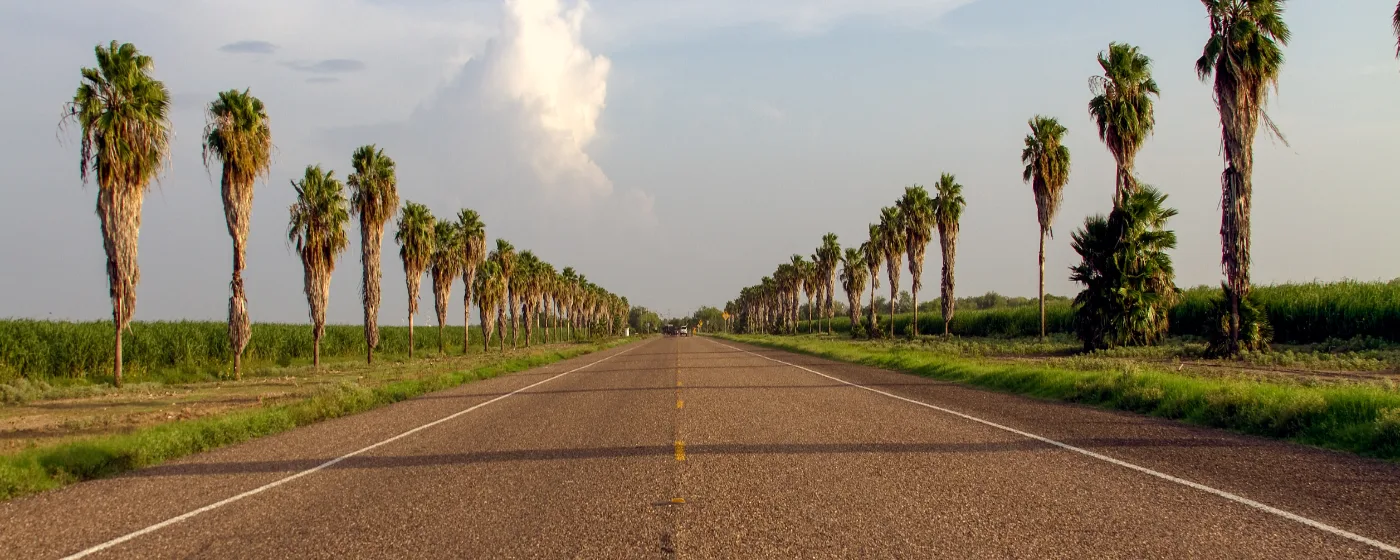
Alamo has been pulling retirees and Winter Texans into the Rio Grande Valley for decades — and the reasons are more practical than picturesque. A city of 20,625 tucked into Hidalgo County, Alamo sits along US-83 roughly about 15 minutes to McAllen, with subtropical winters mild enough that people who left Minnesota or Michigan in October often don't return until April. The surrounding landscape — citrus groves, irrigated farmland, and one of the great birding refuges in North America just to the south — gives the place a character that no subdivision in suburban Phoenix can replicate.
The financial case is straightforward. The typical home price here stood at $173,228 in July 2026, and the overall cost of living runs well below the national average. Texas adds a layer most retirees quickly come to appreciate: no state income tax on Social Security, pensions, IRA withdrawals, or 401(k) distributions, and a meaningful property-tax freeze available to homeowners 65 and older. For a retiree on a fixed income, those two facts alone shift the math considerably compared with many Sun Belt alternatives.
Daily life in Alamo is unhurried and genuinely affordable. Groceries, utilities, and healthcare costs all run below national norms. The tradeoffs are real — the city itself is not walkable in the traditional sense, a serious shopping run means driving out of town, and specialty medical care above the local level means a trip to McAllen or Edinburg. Understanding those tradeoffs before you buy is exactly what this guide is for.
The sections below cover who Alamo genuinely fits in retirement, what healthcare looks like locally and regionally, how a retiree budget plays out here, where the community gathers and stays active, what downsizing options exist, and how Alamo compares with nearby Rio Grande Valley retirement destinations.
Why Retirees Are Choosing Alamo
Alamo fits a specific kind of retiree well: someone who wants a warm-weather base with low overhead, genuine outdoor access, and a tight-knit community that has been absorbing snowbirds and permanent retirees long enough to know how to do it gracefully. The city's identity as a winter resort and retirement town isn't marketing — it's baked into the regional literature going back generations. If you are drawn to world-class birding, subtropical winters with 225 sunny days a year, and a cost structure that makes a fixed income feel like more than it does most places, Alamo is worth a serious look.
The typical home price of $173,228 (July 2026) means that someone selling a midwestern home or cashing out equity from a higher-cost market can often buy here outright or with a modest mortgage. That frees up retirement income for travel, healthcare, or simply a more comfortable daily life. Alamo Country Club, the city's established 55+ community, draws buyers who want neighbors in a similar life stage and the social infrastructure that comes with it.
Who should look elsewhere? Retirees who prioritize walkable urban amenities, a wide dining and arts scene they can access without a car, or immediate proximity to a major academic medical center will find Alamo limiting. The city is small and car-dependent. McAllen's larger retail and cultural options are close, but that drive becomes a daily reality rather than an occasional errand. If your retirement vision centers on a downtown you can stroll, Alamo is an honest mismatch — the neighborhood breakdown covers the geographic layout in more detail.
Healthcare & Medical Access in Alamo
For a city of 20,625, Alamo's local healthcare infrastructure is more substantial than most comparably sized Texas towns. The anchor is South Texas Health System ER Alamo, a freestanding emergency department operating around the clock with board-certified physicians and the same diagnostic technology — imaging, laboratory services — you would find in a full hospital ER. It also offers same-day outpatient imaging and lab appointments on a walk-in basis, which matters practically for retirees managing chronic conditions.
What makes this facility genuinely relevant to older adults is its Level 3 Geriatric Emergency Department Accreditation (GEDA) from the American College of Emergency Physicians — a designation that reflects a dedicated standard of care specifically for older patients, not just a general ER that happens to treat them. The facility has also earned Acute Stroke Ready Hospital designation and Chest Pain Management certification from The Joint Commission. For a freestanding ER in a small city, that accreditation stack is meaningful.
The nearest hospital is Rio Grande Regional Hospital, 8 miles away. That is your anchor for inpatient care, surgery, and the broader clinical services a freestanding ER cannot provide. For deeper specialist access — cardiology, oncology, orthopedics, complex surgery — DHR Health in Edinburg operates as the regional health system backbone for the Valley. Retirees with complex medical histories should map that care relationship before committing to Alamo, because advanced specialty care is a drive, not a walk-in. The honest reality of retiring in a small South Texas city is that you are about 15 to 25 minutes from most of what you need, and that gap is manageable for most people — until it isn't.
For skilled nursing and post-acute recovery, The Heights of Alamo, operated by Touchstone Communities, provides short-term rehabilitation, long-term care, memory support, and respite care within the city. That matters enormously for retirees who want to stay in the same community through a health transition rather than being transferred somewhere unfamiliar.

The Retiree Budget in Alamo
Texas is one of the cleanest states in the country for retirement income taxes. Social Security benefits are not taxed at the state level. Neither are pensions, IRA withdrawals, or 401(k) distributions — and the state constitution's prohibition on a personal income tax without voter approval makes that protection effectively structural rather than something a future legislature could quietly reverse. For retirees whose income is drawn from a mix of Social Security and retirement accounts, every dollar comes out whole at the state level.
Property taxes are the one place Texas pushes back. The effective rate in Alamo runs approximately 1.83% — meaningful in a higher-priced market, but on a home at the local typical price it stays manageable. More importantly, Texas homeowners 65 and older may qualify for a senior homestead exemption and a school district tax ceiling that freezes the school portion of the tax bill. That combination can reduce what is otherwise the largest recurring tax a Texas retiree pays. Check with the Hidalgo County Appraisal District directly for current exemption amounts and deadlines, since the dollar figures shift annually.
Day-to-day costs reinforce the budget case. Alamo's overall cost of living runs roughly 21 to 23% below the national average, with housing costs approximately 40% below the national benchmark and food expenses about 12% lower. Energy, transportation, and healthcare combined run around 11% below the average as well. On a fixed income, those gaps compound: grocery bills, utility bills, and out-of-pocket medical costs that run consistently below what retirees were paying elsewhere add up to a meaningfully different monthly reality. For a full breakdown of cost comparisons, see the cost of living page.
Looking to buy in Alamo? Estimate your payment.
Enter your numbers to see an estimated monthly mortgage payment.
Estimate only. Excludes HOA fees and mortgage insurance. The interest rate above is a starting point, not a quoted rate — replace it with your own to see real numbers. Insurance is a flat placeholder, not a Alamo quote.
Walkability, Community & Staying Active in Alamo
Alamo is a car-dependent city. Running errands on foot is not a realistic daily option for most residents, and the street grid does not reward walking the way a traditional downtown does. The terrain is flat — that is genuinely useful for older adults, cyclists, and anyone managing mobility constraints — but flat and walkable are not the same thing here. Plan on driving for groceries, medical appointments, and most social activities.
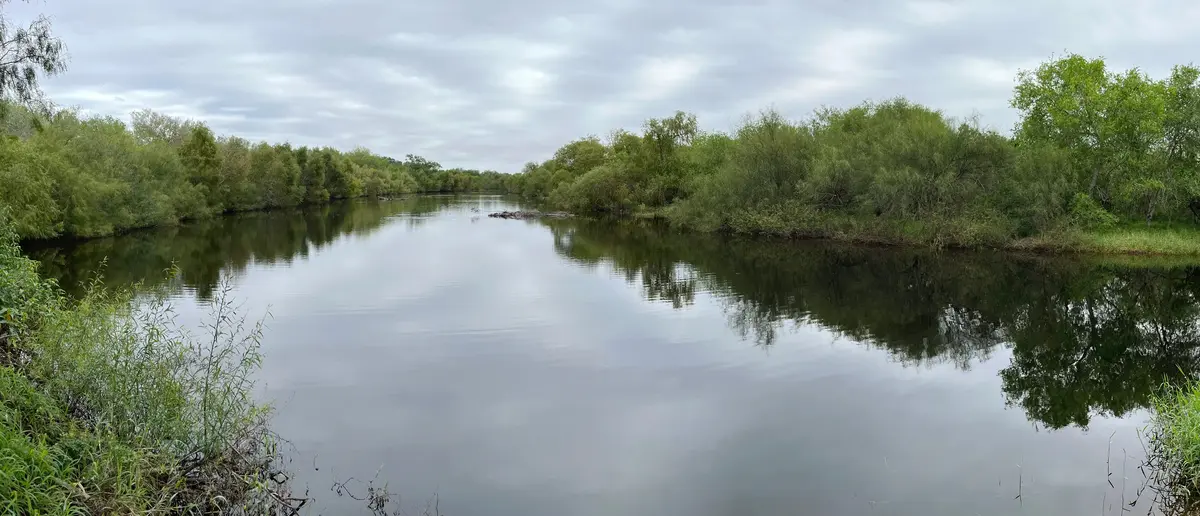
Where Alamo earns its retirement reputation is in the outdoor life adjacent to it. The Santa Ana National Wildlife Refuge — a 2,088-acre federal refuge along the Rio Grande established in 1943 — sits just south of the city and draws birders from across the country. More than 400 bird species have been recorded there, and the refuge offers over 12 miles of hiking trails, bike-accessible paved roads, and an observation tower. For a retiree who wants to be outdoors on a Tuesday morning watching a green jay or a plain chachalaca without driving three hours, that proximity is a serious quality-of-life asset. Alamo Central Park anchors the city's civic green space closer to home.
The Winter Texan community gives Alamo a social fabric that smaller Texas towns often lack. Snowbird season brings a surge of activity — clubs, organized outings, community events — that creates ready-made social entry points for new arrivals who don't yet know anyone. Alamo Country Club, the city's 55+ residential community, concentrates that social life for residents who want neighbors in the same life stage. For retirees who moved from places where their social network was deep and decades-old, the Winter Texan culture is one of the fastest paths into a functioning social life in a new city.
The community texture here is genuinely Rio Grande Valley: the pace is unhurried, the food scene skews toward Mexican and Tex-Mex, and the social center of gravity tends to be family-oriented gatherings rather than bar scenes or performance venues. That suits a lot of retirees exactly. It suits others not at all.
Right-Sizing: Downsizing in Alamo
Single-level living is the norm rather than the exception in Alamo. The housing stock skews toward ranch-style construction — one-story homes on modest lots — which is exactly what most retirees are looking for when they downsize. You are unlikely to find yourself competing for the handful of single-level homes in a market that is otherwise full of two-story colonials, which is the frustrating situation in many Sun Belt cities right now.
The city's typical home price of $173,228 (July 2026) sets a low floor. Buyers coming from higher-cost markets often have the latitude to purchase without a mortgage, or to right-size into something smaller and bank the equity difference. Patio homes and smaller lots do exist in Alamo, though the inventory of purpose-built low-maintenance condos or lock-and-leave communities is thinner than you would find in a larger metro. If that specific product is a priority — the sort of community where you can leave for three months and not worry about the yard — you may need to look at McAllen's broader inventory alongside Alamo's.
For 55+ community living specifically, Alamo Country Club is the city's established option. It has the residential and community character that long-term retirees in the area associate with the city's snowbird identity. That is the only named 55+ community within Alamo itself; buyers who want a wider selection of that product type will find more depth in McAllen and the broader Valley market.
For retirees who need skilled nursing or memory care without leaving the city, The Heights of Alamo provides that continuum. The ability to age in place within a single community — moving from independent living to skilled care without relocating — is something smaller cities often cannot offer, and Alamo's combination of the Country Club and The Heights of Alamo gives it more of that continuum than its size would suggest.
Alamo vs Nearby Retirement Destinations
| City | Cost vs Alamo | Primary Hospital | Walkability | Senior Living Depth | Overall Retirement Fit |
|---|---|---|---|---|---|
| Alamo | Baseline | Rio Grande Regional Hospital (8 mi); local freestanding ER with geriatric accreditation | Car-dependent; flat terrain | One named 55+ community; skilled nursing in-city | Strong for budget-focused retirees and birders; limited for walkability or urban amenities |
| McAllen | Noticeably higher | Rio Grande Regional Hospital (in-city); fuller specialist access | More retail and dining accessible; still primarily car-dependent | Wider selection of active-adult and 55+ options | Better for retirees who want more amenities and don't mind spending more |
| Mission | About the same | Similar regional access via McAllen corridor | Car-dependent; access to Bentsen-Rio Grande Valley State Park | Moderate senior living options | Good alternative for outdoor-oriented retirees; similar cost profile |
| San Juan | About the same | Regional access; no major hospital in-city | Car-dependent; smaller commercial footprint than Alamo | Limited dedicated senior community options | Quieter; suits retirees who want low overhead and minimal activity |
| Donna | Somewhat lower | Regional access only | Car-dependent; small-town scale | Thin senior living inventory | Cheapest nearby option; tradeoff is fewer services and less social infrastructure |
| Alton | Noticeably higher | Regional access; newer residential growth area | Car-dependent; newer subdivision character | Growing but not deeply established senior community | Appeals to retirees who want newer construction; costs more than Alamo |
McAllen is the obvious upgrade if budget is flexible — more specialist care in-city, a wider dining and retail scene, and a deeper inventory of active-adult communities. The cost is meaningfully higher, but for retirees prioritizing convenience and clinical access over price, it is the strongest alternative in the Valley.
Mission competes closely with Alamo on cost and has its own outdoor draw in Bentsen-Rio Grande Valley State Park, making it a genuine alternative for retirees whose retirement plan centers on trails, birding, and an unhurried outdoor pace. Donna is the lowest-cost option in this group but offers noticeably thinner services and social infrastructure — worth considering only if minimizing housing expense is the top priority. Alton's newer construction is attractive to some buyers, but the higher cost and less-established senior community make it a harder case for retirees specifically. San Juan is Alamo's quietest near-neighbor, essentially similar on cost but smaller in every dimension that matters to an active retiree's daily life.

Local Expert Takeaway: Alamo is genuinely one of the most affordable retirement options in Texas with a real outdoor identity — the Santa Ana National Wildlife Refuge alone makes it worth considering for anyone who takes birding seriously. The local freestanding ER's geriatric accreditation is an underappreciated asset for a city this size. The honest caveat: everything here requires a car, and retirees managing serious chronic conditions should map their specialist care in McAllen or Edinburg before they buy, not after. The Winter Texan community softens the social transition for newcomers more than most small Texas cities can.
Quick Takeaways & FAQs
✅ Texas exempts all Social Security, pension, and retirement-account income from state income tax, and homeowners 65+ may qualify for a school district tax freeze — two structural advantages that compound meaningfully on a fixed income.
⚠️ Most daily errands require a car, and advanced specialty care means a drive to McAllen or Edinburg — retirees with complex health histories should map that care relationship before committing.
📍 South Texas Health System ER Alamo holds a Level 3 Geriatric Emergency Department Accreditation from the American College of Emergency Physicians — an unusual designation for an in-city freestanding ER in a community this size.
Is Alamo, Texas a good place to retire?
Does Texas tax Social Security and pension income for retirees?
What hospital is closest to Alamo, Texas?
Are there 55+ communities in Alamo, Texas?
What is the property tax situation for senior homeowners in Alamo?
Moving to Texas?
Tell us what you need help with and we'll connect you with local resources.
