
If you are moving to San Antonio with school-age children, the first thing to understand is that the district rating is not the whole story — and for a city of 1,548,422 people, the whole story is considerably more interesting. San Antonio ISD holds a C rating, according to the Texas Education Agency, which is the kind of number that can end a conversation before it starts. But SAISD also runs one of the most expansive school-choice systems in Texas, with roughly 40 of its 70-plus campuses operating as choice schools or magnet programs, drawing about 7,000 students from outside district boundaries. The district's rating and its choice ecosystem coexist, and understanding both is essential before you write off or uncritically embrace a school assignment.
San Antonio's economy is anchored by Joint Base San Antonio, H-E-B's corporate headquarters, USAA, and a healthcare sector that includes a major regional health system and a large hospital network — employers that collectively bring a steady flow of relocated families into the metro. Many of those families land in SAISD's geographic footprint and quickly discover that their child's assigned campus and their child's actual school can be two very different things, depending on how aggressively they navigate the choice and lottery system. The district serves 42,548 students enrolled in 2025-26, predominantly in lower-income households, and on 2024-25 state assessments, 27% of students reached math proficiency and 37% reached reading proficiency — numbers that reflect both the district's challenges and the urgency behind its choice investments.
Day-to-day life for families in San Antonio extends well beyond the classroom. The city's parks system, its warm climate, and a deep culture of community sports mean that youth athletics here are not an afterthought — Friday night football is a genuine civic event, and recreational leagues serve children from toddler age through high school across 18 community centers. The typical home price of $249,689 (July 2026) keeps San Antonio meaningfully more accessible than New Braunfels or Schertz for families buying their first home, which is part of why the city continues to attract young households despite the school-rating headline.
Whether you are weighing a specific neighborhood, trying to decode the magnet lottery, or figuring out where your nine-year-old will play soccer on Saturday mornings, the sections below cover SAISD's district-level picture, its standout choice campuses, the school-choice process, who the district is and is not a strong fit for, and the youth sports infrastructure that threads through the whole city.
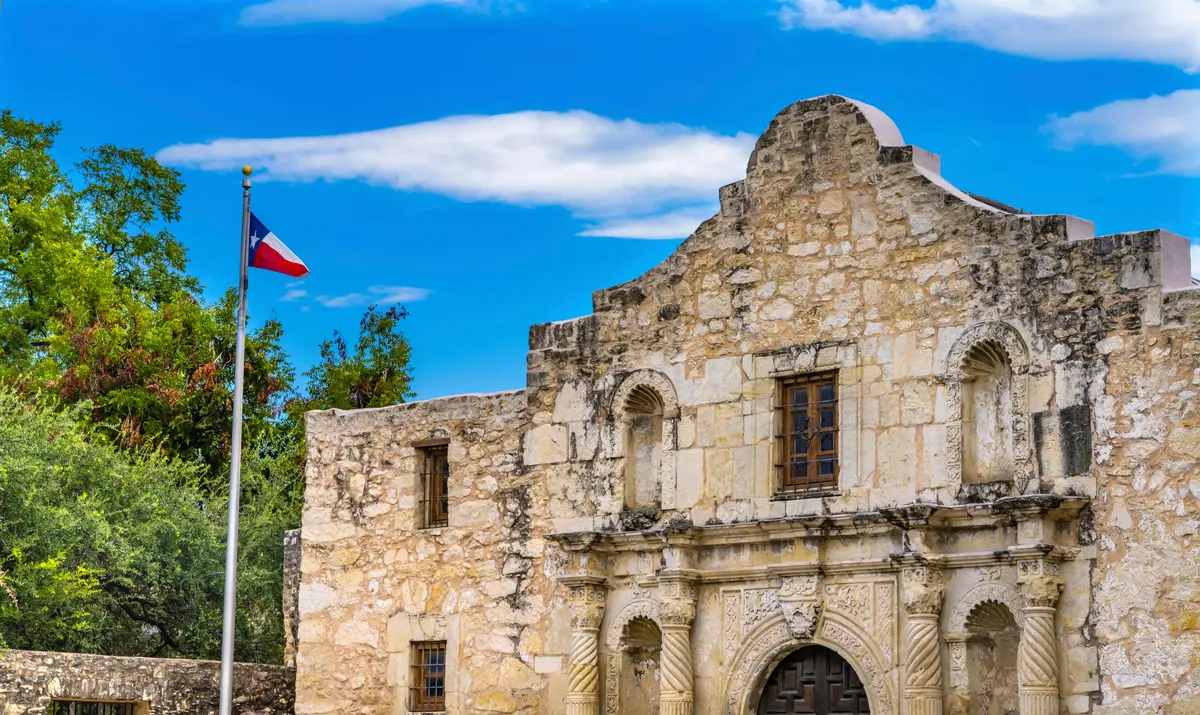
San Antonio ISD at a Glance
San Antonio ISD holds a C rating, according to the Texas Education Agency, based on the 2024-25 school year's A-F accountability system. That rating reflects districtwide performance on state assessments — and on 2024-25 state assessments, 27% of students reached math proficiency and 37% reached reading proficiency. Those figures sit well below state averages and represent the clearest honest baseline a relocating family can work from.
The district serves 42,548 students enrolled in 2025-26, making it a large urban system by Texas standards. Approximately 89.6% of students identify as Hispanic and 86.9% are economically disadvantaged — both figures substantially above state averages. About 68.9% of students are identified as at risk of dropping out under state criteria. These are not numbers to dismiss or to use as a reason to disengage; they are the context in which the district's choice investments exist and the reason those investments matter so much to families navigating this city.
The district is also facing structural headwinds. A multi-year enrollment decline, driven partly by falling birth rates in the ZIP codes SAISD serves and partly by competition from charter schools and Texas's expanding school voucher program, means the district could lose an additional 1,452 students in 2026-27. For a family buying a home in San Antonio, that trend is worth monitoring — it affects program continuity and campus stability over the medium term.
What the C rating does not capture is the degree to which SAISD has restructured itself around school choice. Roughly 40 of its campuses operate as choice schools or have a magnet program, spanning STEM, Dual Language, International Baccalaureate, single-gender, and Montessori models. A family willing to research and apply for the right program can land their child in a radically different educational environment than a zoned assignment would suggest. That gap — between what the district offers by default and what it offers to a persistent applicant — is the defining feature of schooling in San Antonio.
| Metric | SAISD Figure |
|---|---|
| TEA A-F Rating (2024-25) | C |
| Enrollment (2025-26) | 42,548 students |
| Math Proficiency (2024-25) | 27% |
| Reading Proficiency (2024-25) | 37% |
| Hispanic student share | ~89.6% |
| Economically disadvantaged share | ~86.9% |
| Choice/magnet campuses | ~40 of 70+ schools |
| Students from outside district | ~7,000 |
SAISD's Choice and Magnet System: How It Actually Works
SAISD runs an open-enrollment choice system that is unusual in its scope for a Texas urban district. Any student — inside or outside SAISD's geographic boundaries — can apply to a choice school or magnet program, regardless of academic history. There is no entrance exam gate for most programs. What there is, for the most competitive campuses, is a lottery.
The breadth of programs is real. Dual Language strands run at the elementary level. Montessori-model campuses serve younger children. International Baccalaureate programs operate at the secondary level. STEM-focused schools and career-technical education pathways have become especially popular in recent years, reflecting a citywide shift toward healthcare, trades, and workforce-aligned credentials. The San Antonio Report's coverage of the choice landscape in 2026 documented this clearly: families are increasingly choosing programs that connect directly to a career track, not just a college pathway.
The mechanics matter as much as the offerings. Lottery timelines run on an annual cycle, and the most in-demand campuses — particularly the Young Women's Leadership Academy — fill entirely in a single round. Families new to San Antonio often underestimate how early they need to engage with the system. If you are relocating and your moving date sits outside the primary application window, you may be looking at a wait-list situation for your first choice, with a zoned-campus assignment in the interim. That is the friction moment most families do not expect until they are already in contract on a house.
SAISD maintains a dedicated choice portal at saisdchoice.com where families can browse programs, review admission requirements, and submit applications. The district also runs information sessions for prospective applicants. For families coming from states with more straightforward enrollment systems, the choice process feels like a parallel admissions cycle running inside a public school district — because that is essentially what it is.
What Families Show Up For
The strongest demand, per current enrollment trends, clusters around programs tied to healthcare and STEM careers, single-gender college-prep environments, and early college opportunities. Trade-based and career-technical pathways have seen a sharp increase in interest across San Antonio school districts — the demand is broad enough that multiple districts are competing to offer it. SAISD's choice portfolio is large enough to absorb a range of family priorities, which is its genuine strength.
Three Standout SAISD Campuses Worth Knowing
Young Women's Leadership Academy Secondary (Grades 6–12)
YWLA Secondary is the most competitive campus in SAISD's choice system, and the numbers back that up. The campus earned an A rating from the Texas Education Agency and received all 7 of 7 possible TEA distinction designations. It offers a college-preparatory curriculum built around math, science, and technology, with Honors and Advanced Placement coursework throughout. Admission is lottery-only, and seats for 2025-26 filled entirely — families who want this program need to be in the application process the moment they know they are moving to San Antonio.
For parents relocating from markets where high-performing public schools are easy to access, YWLA Secondary is the clearest answer to the question of where SAISD excels. It is a single-gender campus, which is not a fit for every family, but for families who specifically want that environment, there is no comparable public option in the district.
Best for: School Families
Young Women's Leadership Academy Primary (PreK–5)
YWLA Primary is San Antonio's first public all-girls PreK–5 school, operating under the SAISD choice umbrella. The program focuses on STEAM integration, social-emotional learning, and building the academic habits that feed into the secondary pipeline. Like its secondary counterpart, admission is by lottery only and is open to girls from any ZIP code, inside or outside the district. For families with daughters at the early elementary stage, the primary campus offers a head start into the YWLA pathway.
Best for: School Families
Edison High School
Edison operates as an SAISD choice high school organized around career-focused learning pathways rather than a single academic track. Students can pursue pathways in business and industry, public service fields including law, fire science, and teaching, STEM, health professions, and multi-disciplinary studies. The campus also houses a dedicated Health Professions Magnet Program — one of the most sought-after tracks in the district given San Antonio's outsized healthcare employment base. For families where a student already has a vocational or professional direction in mind, Edison offers a structured path toward it inside the public school system.
Best for: School Tech
Looking to buy in San Antonio? Estimate your payment.
Enter your numbers to see an estimated monthly mortgage payment.
Estimate only. Excludes HOA fees and mortgage insurance. The interest rate above is a starting point, not a quoted rate — replace it with your own to see real numbers. Insurance is a flat placeholder, not a San Antonio quote.
Youth Sports and Kids Activities in San Antonio
Youth sports in San Antonio run on a scale that matches the city's size. The City of San Antonio Parks and Recreation Department alone operates leagues across 18 community centers, covering basketball, soccer, T-ball, kickball, and volleyball for children ages 3 through 17. The entry cost is deliberately low — the city's program keeps the per-athlete fee accessible — which means recreational leagues here are genuinely accessible to the full range of families, not just those with discretionary income to spend on club sports.
The YMCA of Greater San Antonio runs a parallel youth sports operation covering baseball, softball, soccer, volleyball, flag football, and basketball, reaching from toddler-age programs through competitive teen leagues. For families who want a step up from pure recreation but are not ready to commit to travel-club schedules, the YMCA programs offer that middle tier. The depth of the programming means most children can find a sport and a level of commitment that fits the family's schedule.
Finding the Right Level
Beyond city and YMCA programs, San Antonio Sports — a local nonprofit — maintains a citywide directory of youth sports organizations, leagues, and clubs. For parents trying to navigate from recreational soccer to a club environment, or from a community-center basketball league to a more structured competitive program, that directory is the most efficient starting point. The range of options across a city this size is substantial enough that a family arriving from a smaller market often finds more choices than they expected — the challenge is orienting quickly.
At the school level, active UIL athletics programs give middle and high school students access to school-based competition. Friday night football is a real community draw at SAISD high schools — the stands fill, the band plays, and the surrounding neighborhoods organize around the season. That culture is not unique to San Antonio, but it runs deeper here than in many comparably sized cities, partly because so many school communities have been rooted in the same neighborhoods for generations.
Beyond Organized Sports
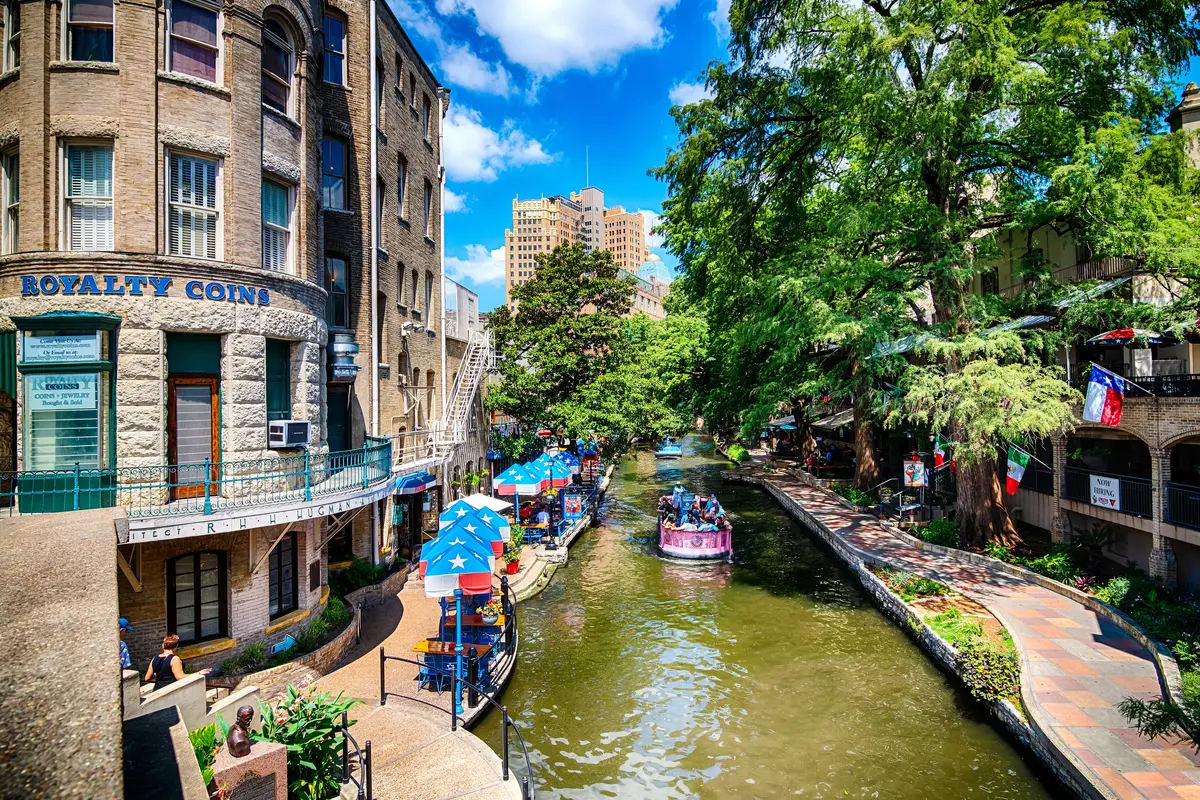
San Antonio's parks system gives youth activities a strong physical backdrop. Brackenridge Park, McAllister Park, Eisenhower Park, and Government Canyon State Natural Area all see heavy family use — trail running, cycling, and weekend nature time are built into how families here spend their off-hours. The San Antonio River Walk is a gathering place in a different register entirely, more civic than athletic, but it anchors the downtown experience for families showing visiting relatives around. For families who want outdoor recreation integrated into daily life alongside organized sports, the infrastructure is genuinely strong — a full breakdown of the parks and trails system lives on the parks and recreation page.
Who SAISD Is NOT the Right Fit For
Straight talk: if your family's primary criterion for choosing a neighborhood is the quality of the zoned neighborhood school, SAISD's districtwide C rating and its 2024-25 assessment results will be difficult to look past. Families who are not prepared to research the choice system, apply to programs, and potentially navigate a wait list are likely to land in a zoned campus that does not match what they left behind in their previous market.
The choice system is excellent — but it requires active participation. Families who move to San Antonio expecting the assigned school to perform at a level comparable to top suburban districts in the Austin or Dallas metros will frequently be disappointed. The gap between what a lottery-winning family experiences at YWLA Secondary and what a family experiences at an average zoned SAISD campus is substantial. That gap is not a criticism of the educators working in those buildings; it is an honest description of where districtwide resources and outcomes currently sit.
Families with very specific academic programming needs — certain AP course loads, a particular athletic environment, or specialized arts programs — may find that the choice system's offerings do not align precisely with what they want. The magnet portfolio is wide, but it is not infinite, and the most in-demand programs run lotteries that a family cannot control.
The district's ongoing enrollment decline also deserves mention. A district losing students year over year faces compounding pressure on program continuity. Families planning to stay in San Antonio through multiple school years are making a longer-term bet on an institution that is navigating real structural stress. That does not make SAISD the wrong choice — the choice programs in particular have shown durability — but it is a variable that families prioritizing stability should factor in honestly.
Families who want a straightforward, high-performing zoned school without the lottery process will generally find what they are looking for in neighboring Northside ISD, North East ISD, or other Bexar County districts whose boundaries extend into the suburbs. Those districts operate on their own performance trajectories and serve different geographic footprints — but for families where the choice-system approach is not a workable fit, exploring the full range of Bexar County school districts before choosing a neighborhood is the right move. A look at how neighborhood character maps across the city is on the best neighborhoods page.
Weekends and Local Favorites for San Antonio Families
San Antonio families with kids tend to build their weekends around the city's landmarks and its food scene in roughly equal measure. SeaWorld San Antonio and Six Flags Fiesta Texas are both within the metro and function as the default answer to "what do we do this Saturday" for elementary-age children — they are year-round anchors in a way that theme parks in colder climates are not.
The San Antonio Missions National Historical Park threads four mission sites along the river south of downtown and gives families with older children a surprisingly absorbing half-day history circuit. The Tower of the Americas offers a quick downtown excursion. The Alamo, whatever a family's expectations, delivers something different in person than the postcard version suggests — it sits in the middle of a very busy commercial district and rewards the families who approach it as a history museum rather than a monument.
For weekday coffee and the kind of neighborhood-feeling errands that make a city feel like home, San Antonio has a solid independent café scene. Early Bird Coffee, Local Coffee, PRESS Coffee @ The Boardwalk, What's Brewing Coffee Roasters, and Theory Coffee Company are the names that come up consistently among locals — each has its own character, and none of them is trying to be the same thing. The Pearl Farmers Market is the Saturday-morning social anchor for a large portion of the city's families, drawing a consistent crowd through the seasons.
On the food side, Mi Tierra Cafe y Panaderia is the kind of institution that operates at a scale most cities do not produce — it has been feeding San Antonio for generations and is as good an introduction to the city's culinary identity as any single meal can be. Chama Gaúcha Brazilian Steakhouse is the choice when a family celebration calls for something more deliberate. Boudro's on the Riverwalk, Domingo Restaurant, and Rainforest Cafe round out a range that spans casual to occasion-worthy, all within a city whose restaurant infrastructure genuinely reflects its size.
The combination of theme parks, mission sites, a strong farmers market, and a café scene with actual independent operators gives San Antonio families a weekend texture that holds up across years of residence — this is not a city where families run out of things to do and start looking at the exits.
Local Expert Takeaway: San Antonio ISD's C rating from the Texas Education Agency is the starting point, not the whole story. The district's choice and magnet system — with roughly 40 campuses running specialized programs, including the A-rated Young Women's Leadership Academy and Edison High School's career pathways — means that families who engage early with the lottery process often land their children in environments that bear little resemblance to the districtwide average. The catch is real: the best programs fill in a single lottery cycle, and families who arrive after the application window closes face a wait. If you are relocating to San Antonio, treat the choice application timeline as a logistical priority equal to your closing date. For youth sports, the city's Parks and Recreation department and the YMCA of Greater San Antonio together cover everything from three-year-olds kicking a ball at a community center to competitive teen leagues — and the entry cost is low enough that it is not a budget question for most families.
Quick Takeaways & FAQs
✅ SAISD's open-enrollment choice system includes roughly 40 magnet and choice campuses — including the A-rated Young Women's Leadership Academy — open to any student regardless of where in San Antonio they live.
⚠️ The districtwide C rating from the Texas Education Agency reflects real gaps: on 2024-25 state assessments, only 27% of students reached math proficiency, and families relying on a zoned assignment without navigating the choice system are unlikely to see outcomes above that average.
📍 The City of San Antonio Parks and Recreation Department runs youth sports leagues across 18 community centers for ages 3–17, making organized sports accessible for families across the income spectrum.
What rating does San Antonio ISD have from the state?
Can my child attend a magnet or choice school in SAISD even if we live outside the district?
What kinds of magnet programs does SAISD offer?
What youth sports options exist for kids in San Antonio?
Is San Antonio ISD the right choice for families who want a strong neighborhood school without navigating a lottery?
Moving to Texas?
Tell us what you need help with and we'll connect you with local resources.
