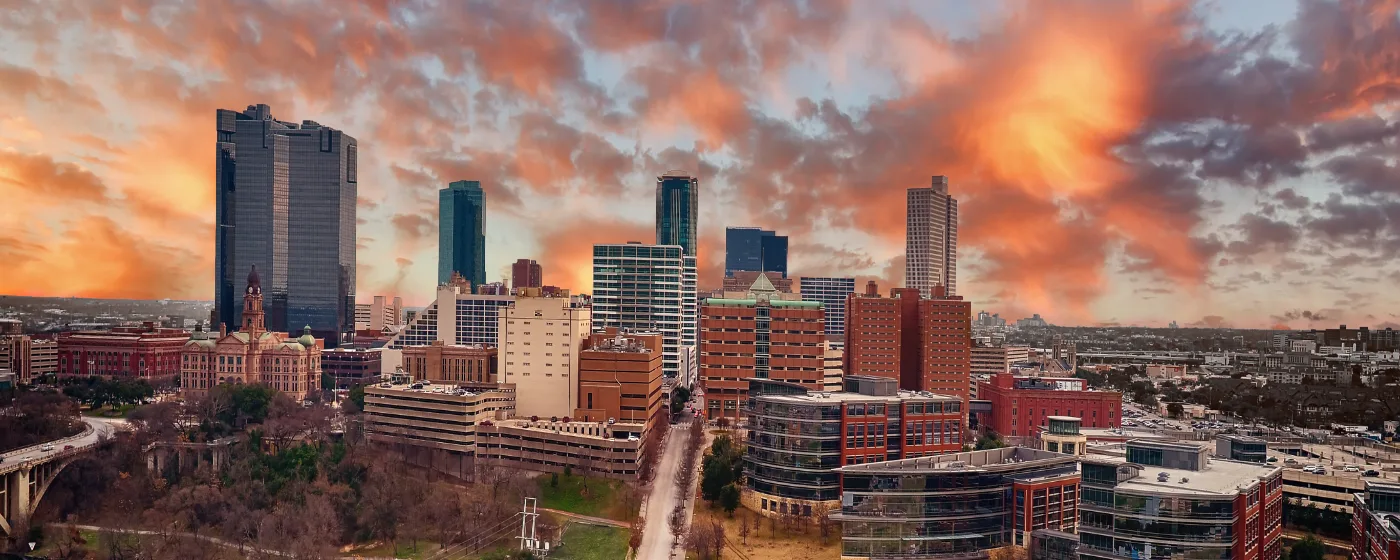
What Is Living in Fort Worth, Texas Like?
Maybe you've been watching Fort Worth's name climb the Census charts and wondered what's actually driving it. Maybe you're priced out of Austin or Denver and someone in your industry mentioned the DFW market. Maybe you drove through on I-30 heading somewhere else and felt something you didn't expect. Fort Worth is genuinely different from Dallas — less corporate, more lived-in, with a Western identity it wears without irony — and understanding that difference is the first thing any serious relocator needs to do. The city sits at the western anchor of the Dallas-Fort Worth Metroplex, served by I-20, I-30, and I-35W, with Dallas/Fort Worth International Airport reachable in 24 miles. What shapes daily life here isn't any single thing but a combination: real industry, real land, and a city that's been building faster than almost anywhere in the country while still feeling, in many pockets, like a place that hasn't been polished into sameness.
The economic backbone here is unusually broad for a city this size. American Airlines Group, Lockheed Martin Aeronautics, BNSF Railway, Bell Textron, and the Fort Worth Independent School District — with 67,491 students enrolled in 2025-26 — are all major employers operating inside city limits, with the City of Fort Worth itself rounding out the top tier. That's aerospace, defense, freight rail, aviation, and public services all in one zip code cluster. The unemployment rate stood at 3.8% in December 2024, below both the Texas and national rates at that time. The Alliance area in north Fort Worth continues to attract industrial and creative investment, including SGS Studios' 450,000-square-foot film and television production campus being built in partnership with Tarrant County College. Families with school-age children will find the Fort Worth ISD holds a C rating, according to the Texas Education Agency — a number worth understanding before choosing a neighborhood, since private school enrollment and attendance boundary strategy are common conversations here.
Home prices are a genuine draw. The typical home price in Fort Worth was $298,353 as of July 2026 — well below what you'd pay in comparable Texas metros like Austin, and noticeably below nearby North Richland Hills and Keller. The typical citywide rent runs $1,625 per month. The catch is that at a median household income of $79,507, the math is tighter than it looks: the median income falls short of what's needed to carry the typical home here, which matters for first-time buyers doing the calculation. For more on taxes, rent, and the full cost picture, the cost-of-living page breaks it down. On the lifestyle side, Fort Worth gets 229 sunny days a year, which means outdoor life — the Trinity River Trail, the Fort Worth Botanic Garden, Lake Worth — is genuinely usable most of the year. The summers are legitimately hot, with August highs near 97°F, but winters are mild enough that January rarely interrupts much.
Whether you're relocating for work at one of the major employers, chasing a home price that still makes sense, or drawn to a city that pairs world-class museums with a working stockyards, the sections below break down Fort Worth's neighborhoods, cost of living, schools, commute realities, local favorites, and what daily life here is really like.
Fort Worth at a Glance
Looking to buy in Fort Worth? Estimate your payment.
Enter your numbers to see an estimated monthly mortgage payment.
Estimate only. Excludes HOA fees and mortgage insurance. The interest rate above is a starting point, not a quoted rate — replace it with your own to see real numbers. Insurance is a flat placeholder, not a Fort Worth quote.
Why Are People Moving to Fort Worth?
Fort Worth added 19,512 residents between July 2024 and July 2025 — the second-largest numeric increase of any city in the country that year. That's not a rounding error or a metro-area statistic; that's people choosing Fort Worth specifically, crossing the 1,028,117 population mark and landing it as the 10th most populous city in the United States. Since 2020, Fort Worth has grown faster than any other top-30 U.S. city by population, a 9.7% gain in a period when most major metros were stagnant or shrinking.
The jobs picture is the most honest explanation. American Airlines Group's headquarters, Lockheed Martin's aeronautics division, Bell Textron's manufacturing operations, and BNSF Railway's freight network all anchor here, creating a labor market that isn't dependent on any single industry. A Dallas Fed senior economist described Fort Worth's economy as maintaining its strengths in energy, transportation, and manufacturing while broadening into aerospace, healthcare, and entertainment — and the employment numbers back that up, with area employment growing 14.6% from early 2020 through the end of 2024.
The Alliance corridor in northern Fort Worth is where a lot of the new momentum is concentrated. Industrial logistics, residential construction, and now a major film and television production campus being developed by SGS Studios — in partnership with Tarrant County College for workforce training — are all landing in the same part of the city. That's not a single industry bet; it's the kind of economic diversification that tends to age well.
The Price-to-City-Size Equation
What surprises people most when they actually start looking at listings is that Fort Worth is the 4th-largest incorporated city in Texas and the 10th largest in the country, and yet the typical home price as of July 2026 is $298,353. That combination — major-city infrastructure, major-city employers, and a home price still in the accessible range for many households — is rare enough that it registers immediately when people run the comparison.
The city's Western identity matters too, and not just as a marketing tagline. Fort Worth developed with a different physical and cultural logic than Dallas: lower density in many residential areas, a genuine stockyards district that functions as a working part of city life rather than a themed attraction, and a community culture that values a certain unhurriedness. People who move here from coastal metros often remark on it in their first year. The trade-off is that Fort Worth is also a car-dependent city at its edges, with transit serving the core more than the neighborhoods, and anyone who moves here expecting urban walkability outside a handful of central districts will need to adjust.
For a full look at how Fort Worth compares to nearby cities on price and neighborhood character, see the best neighborhoods guide.
What Daily Life Feels Like in Fort Worth
The thing longtime residents cite most often is the pace. Fort Worth moves at a register that Dallas doesn't — less performative, more practical, with a downtown in Sundance Square that people actually use on weeknights rather than just weekends. The Cultural District, where the Kimbell Art Museum, the Amon Carter Museum of American Art, and Bass Performance Hall sit within walking distance of each other, is genuinely world-class and genuinely accessible. You can see a major traveling exhibition and be home in 20 minutes from most of the central neighborhoods.
Summers Require a Strategy
The 229 sunny days a year sounds ideal until August hits. Highs near 97°F for weeks at a stretch are real, and outdoor plans get restructured around early mornings and evenings from roughly late June through September. The Trinity River Trail and the Fort Worth Botanic Garden are both genuinely beautiful — and genuinely brutal in afternoon heat. Newcomers from the Pacific Northwest or the Midwest regularly underestimate the adjustment required. The winters, by contrast, are mild and mostly generous; January averages a high near 57°F, and the occasional ice storm is the main seasonal hazard rather than sustained cold.
Where the City Gathers
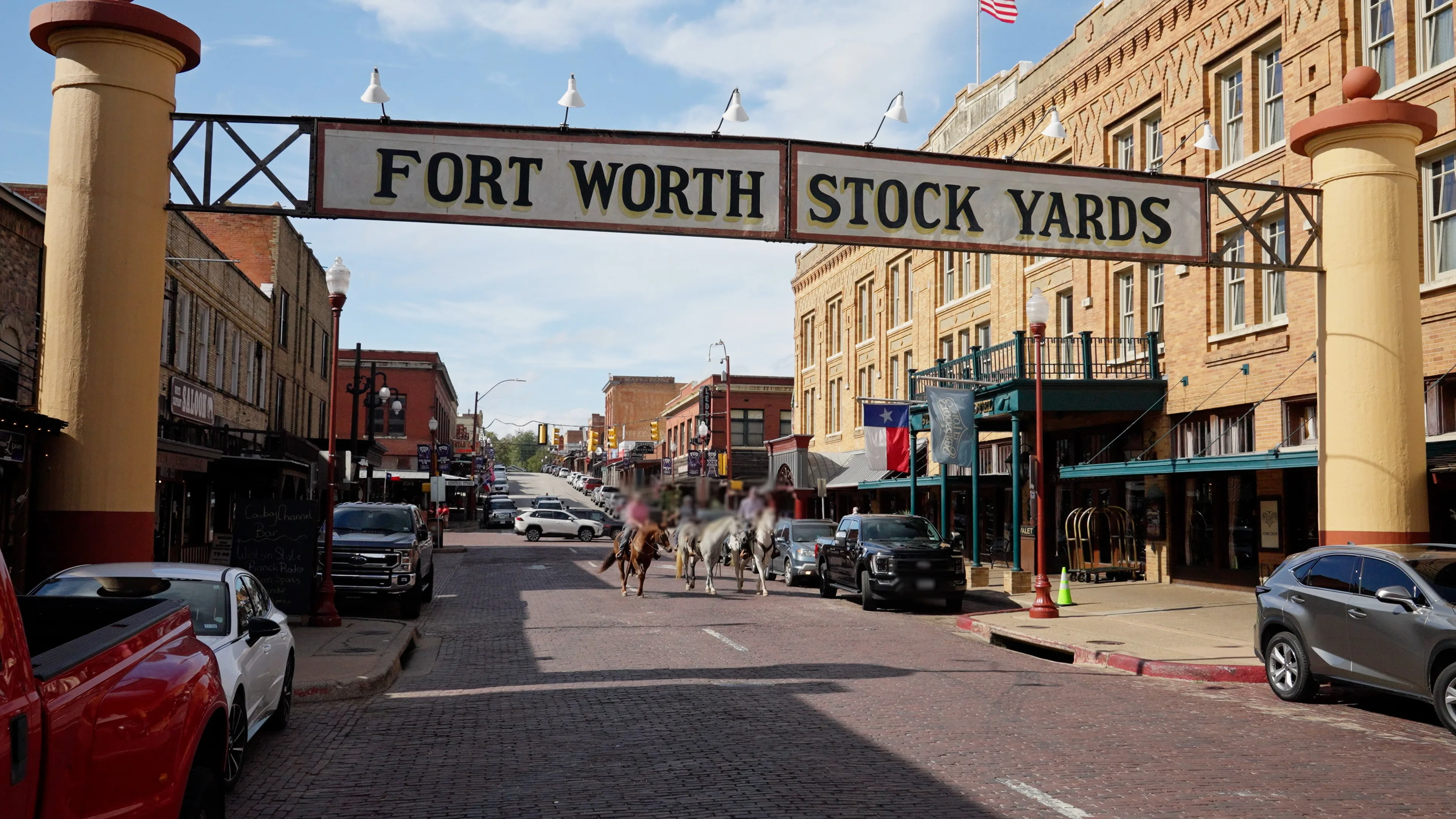
The Fort Worth Stockyards National Historic District anchors the city's social identity in a way that's hard to explain until you've spent a Saturday there. It's not a museum — it's a functioning entertainment and dining district that happens to run a twice-daily longhorn cattle drive down Exchange Avenue, with Billy Bob's Texas operating as the city's de facto concert hall and honky-tonk. The Fort Worth Zoo is a consistent draw for families and locals alike, one of the more visited urban zoos in the region.
The Near Southside district has become the city's most walkable restaurant and arts corridor, with independent businesses concentrated along Magnolia Avenue. It's the kind of neighborhood that didn't exist in Fort Worth 15 years ago and is now one of the first places real estate agents take relocating buyers who want urban texture. For youth sports and activities, the schools and activities page covers what's available through the district and beyond.
What People Don't Expect After Six Months
The sprawl is the most common adjustment. Fort Worth covers a lot of geographic ground, and the distance between, say, the Near Southside and the Alliance area in the north is substantial — not just in miles but in character. Buyers who choose a neighborhood based on its proximity to one employer sometimes find that everything else they do requires a 20-minute drive in a different direction. Mapping your actual weekly geography before you buy is the advice most people wish they'd gotten earlier.
The Fort Worth Housing Market Right Now
The typical home price in Fort Worth was $298,353 as of July 2026, which puts the city in a notably different bracket than most metros its size. To put that in context: Fort Worth is the 10th most populous city in the United States, and its typical home price is well below what you'd pay in comparable-sized cities in California, the Pacific Northwest, or even parts of the Sun Belt that have seen sharper run-ups.
The citywide typical rent runs $1,625 per month. Renters make up a significant share of the city's population, and the rental stock ranges from large apartment complexes near major employment corridors to single-family homes in established neighborhoods. Some areas of the city run noticeably above those figures; others sit at or below them. The neighborhoods guide covers the character and price positioning of each area in detail.
What the Affordability Reality Looks Like
The median household income in Fort Worth is $79,507. At current rates, that income falls short — by roughly $9,000 — of what's needed to carry the typical home here comfortably. That gap matters most for first-time buyers, and it explains why down payment strategy and loan program selection are significant conversations in Fort Worth's buyer market. The first-time homebuyer page walks through the financing mechanics in detail.
The effective property tax rate is approximately 1.47%, which is meaningful in a state with no income tax — Texas funds schools and services heavily through property taxes, and Fort Worth is no exception. Budget for it when you're running the monthly numbers. For the full breakdown of taxes, utilities, and cost comparisons, see the cost-of-living page.
What the Market Feels Like Right Now
Fort Worth is not the frenzied market it was in 2021 and 2022, but it is not a slow market either. Well-priced homes in desirable neighborhoods — Fairmount, Near Southside, Tanglewood — attract serious interest. The outer edges of the city, particularly in areas with heavy new construction, give buyers more room. The city's growth trajectory means demand is unlikely to soften significantly; the North Central Texas Council of Governments projects further population growth of 13.8% by 2035, which tends to put a floor under prices in a supply-constrained market.
Fort Worth Neighborhoods
Fort Worth has several distinct areas — each with its own character and appeal. Here’s a breakdown to help you narrow down where to focus your home search.
🏡 Tanglewood
Tanglewood is one of Fort Worth's most established residential areas, with mature tree canopy, larger lots, and a quiet character that draws buyers who want proximity to the Cultural District without the urban density of Near Southside. It prices above the city median and holds its value accordingly.
🏠 Fairmount
Fairmount is Fort Worth's most distinctly walkable historic neighborhood, centered on Magnolia Avenue's independent restaurant and retail corridor. The housing stock is early-twentieth-century bungalows and craftsman homes, and the neighborhood draws a mix of young professionals and long-established homeowners who value the on-foot access.
🌳 Near Southside
Near Southside has evolved into the city's most active urban district, with Magnolia Avenue anchoring a dense corridor of independent businesses, arts venues, and dining. It suits buyers who want Fort Worth's urban energy at its most concentrated.
🏘 Arlington Heights
Arlington Heights sits just west of the Cultural District and offers tree-lined streets, a mix of bungalows and mid-century homes, and a residential pace that makes it a consistent draw for buyers who want to be close to the Kimbell and Bass Performance Hall without the price premium of Tanglewood.
🏔 Wedgwood
Wedgwood is a mid-century established neighborhood on Fort Worth's southwest side, priced at the city median and popular with families who want space and a quieter residential feel. The housing stock skews toward ranch-style homes on generous lots.
🌆 Ridglea / Ridglea Hills
Ridglea and Ridglea Hills sit in the city's west side and price below the city median, offering larger lots and a more relaxed pace at an accessible entry point. The area appeals to buyers who want established neighborhood character without the above-median premium.
Pros & Cons of Living in Fort Worth
The Pros
- No state income tax with a lower cost of living than Dallas or Austin
- Deep aerospace/defense job base anchored by Lockheed Martin and Bell
- Walkable, historic downtown and Stockyards culture
- Abundant parks and the Trinity Trails greenway system
The Cons
- Property crime and vehicle theft rates run above the national average
- Hot, humid summers with highs regularly near 95-100°F
- Explosive population growth is straining traffic and housing supply in some corridors
Getting Around & Commuting in Fort Worth
Fort Worth is fundamentally a driving city, and the freeway network is the skeleton that holds it together. I-35W runs the north-south spine, I-30 carries east-west traffic toward Dallas, and I-20 handles the southern corridor. The Jim Wright Freeway — I-820 — loops the city's western and northern edges. SH-121, the Chisholm Trail Parkway, has become the primary route for residents in the city's growing southwestern quadrant. For those living or working in the northern Alliance corridor, SH-170, the Alliance Gateway Freeway, is the road that connects that industrial and residential expansion zone to the broader network.
The Dallas Commute
The drive to Dallas is about 35 minutes under normal conditions. That qualifier matters: I-30 between Fort Worth and Dallas is one of the most congested corridors in Texas, and the 35-minute figure belongs to off-peak travel. Rush hour on that stretch can add 20 to 40 minutes in either direction, and buyers who are planning to commute to Dallas daily should test the drive at the time they'd actually do it before choosing a neighborhood on the Fort Worth side.
Rail and Transit Options
Fort Worth has more rail infrastructure than most residents realize. The Trinity Railway Express (TRE) commuter rail connects Fort Worth's T&P Station and Central Station to downtown Dallas, running Monday through Saturday — making it a real option for Dallas-based workers who want to live in Fort Worth without driving I-30 every day. Fort Worth Central Station is the busiest Amtrak station in Texas, drawing intercity travelers and serving as a genuine transit hub for the region.
TEXRail, operated by Trinity Metro, runs 27 miles from downtown Fort Worth directly to DFW Airport's Terminal B, passing through North Richland Hills and Grapevine. For frequent fliers, that connection is genuinely useful. Trinity Metro's bus network covers Tarrant County broadly and serves thousands of weekday riders across the core commuter corridors. That said, for most neighborhoods and most errands, a car is the practical reality — transit covers the commuter corridors well and the residential grid unevenly.
Airport Access
Dallas/Fort Worth International Airport is 24 miles from the city, reachable by car or by TEXRail. For a city of Fort Worth's size and economic weight, that proximity to a major international hub is a meaningful quality-of-life factor for business travelers and anyone with family spread across the country.
| Destination | Primary Route | Typical Commute |
|---|---|---|
| Downtown Dallas | I-30 (West Freeway) | About 35 minutes |
| DFW Airport | SH-183 / TEXRail | 24 miles by road |
| Alliance Corridor | I-35W / SH-170 | North Fort Worth |
| Arlington | I-30 east | East of Fort Worth |
| Benbrook / Southwest FW | I-20 / SH-121 | Southwest quadrant |
| Downtown Fort Worth | I-35W / I-30 / I-820 | City center anchor |
The freeway network connects most of the city's major employment zones, but the practical commute depends heavily on which part of the city you live in relative to where you work.
Schools in Fort Worth
Families relocating to Fort Worth have public, private, and higher-education options nearby. Here’s a quick overview.
🎓 School District
Fort Worth Independent School District serves K–12 students across Fort Worth and the surrounding area. Rated C (source: Texas Education Agency, 2025 A-F accountability rating (2024-25 school year)).
🏆 Graduation Rate
The 4-year high-school graduation rate here is approximately 82.6%.
📚 Higher Education
Texas’s public universities — the University of Texas at Austin, Texas A&M University, and the University of Houston — offer four-year degrees statewide, with one of the largest community college systems in the country (50+ public community college districts) providing two-year and workforce programs.
🌐 Online Learning
UT Austin Online and Texas A&M University Online offer fully accredited online degrees for remote learners across the state.
Safety in Fort Worth
A quick look at how Fort Worth compares on the numbers that matter most when weighing a neighborhood or a move.
🛡 Violent Crime
Approximately 4.9 per 1,000 residents.
🔒 Property Crime
Approximately 26.4 per 1,000 residents.
Compared to the most recent national figures from the Bureau of Justice Statistics (2024), Fort Worth’s violent crime is above the national average (about 3.7 per 1,000), and property crime is above the national average (about 18.4 per 1,000).
Against Texas as a whole, Fort Worth’s violent crime is somewhat above the state average, and property crime is somewhat above the state average (Bureau of Justice Statistics, Crime Known to Law Enforcement, 2024 (tables 2 and 3)).
Crime rates can vary a lot within a single city, so the citywide numbers above are only a starting point. Some neighborhoods in Fort Worth run well below these averages, while others run higher — the kind of block-by-block detail that matters most when you’re actually choosing where to live. The full guide below breaks it down neighborhood by neighborhood.
Working in Fort Worth
Fort Worth’s largest employers span several industries — here are some of the anchors of the local job market.
🎓 Fort Worth Independent School District
Education
🏛 City of Fort Worth
Municipal government
💼 American Airlines Group
Aviation, transportation
🏭 Lockheed Martin Aeronautics
Aerospace, defense manufacturing
💼 BNSF Railway
Freight rail, logistics
🏭 Bell Textron
Aerospace manufacturing
Parks & Recreation in Fort Worth
Some of the outdoor spaces that shape everyday life in Fort Worth.
🌱 Fort Worth Botanic Garden
Fort Worth residents don’t have to go far for green space — spots like Fort Worth Botanic Garden are part of everyday life here, whether that’s a morning walk, a weekend hike, or just somewhere to unwind outside. The full guide below covers more of what Fort Worth has to offer for parks and outdoor recreation.
Retiring in Fort Worth
Fort Worth draws retirees for its balance of amenities, outdoor access, and cost. Here’s what to weigh.
🌤 Climate
Fort Worth gets 229 sunny days a year, with mild winters that rarely dip below freezing for long — January highs average near 57°F and snow is unusual. Summers are the honest challenge: August highs near 97°F are sustained, not occasional, and retirees from cooler climates typically build their outdoor routines around mornings. The shoulder seasons — spring and fall — are genuinely excellent.
🍴 Lifestyle
The Cultural District puts the Kimbell Art Museum, Bass Performance Hall, and the Amon Carter Museum of American Art within a short drive of most central neighborhoods. The Fort Worth Botanic Garden and the Fort Worth Stockyards National Historic District offer very different but equally consistent reasons to get out of the house. A range of independent restaurants and coffee shops serves the more walkable central neighborhoods.
🏚 55+ Communities
Ladera at Tavolo Park is the established 55+ community in Fort Worth, located in the Tavolo Park master-planned area in the city's southwestern corridor. For a fuller look at retiring here — including healthcare options and downsizing considerations — see the retiring-in-Fort-Worth page.
✈ Getting Around
A car is essential for most daily life in Fort Worth, though the TEXRail commuter rail offers a convenient connection to Dallas/Fort Worth International Airport, 24 miles from the city. Downtown and the Near Southside are the most walkable areas for day-to-day errands. The flat terrain makes driving straightforward, and the freeway network connects most parts of the city efficiently outside of peak hours.
🏛 Texas Taxes for Retirees — What to Know
- No state income tax — Texas has no personal income tax — constitutionally protected under Article VIII, Section 24. Social Security, pensions, 401(k)/IRA withdrawals, and annuity payments are all untaxed at the state level, with no state return to file.
- Sales tax is the tradeoff — The state sales tax is 6.25%, and local add-ons bring the combined rate in Fort Worth to 8.25% (Texas Comptroller of Public Accounts, city sales and use tax rates, July 2026). Groceries and prescription drugs are exempt.
- Property taxes — the real tradeoff — Texas’s effective property tax rate averages about 1.40%, among the highest in the country, since property tax (not income tax) funds most local government and schools.
- Over-65 homestead exemption and school-tax freeze — Homeowners 65+ (or disabled) get an additional $60,000 exemption from their home’s value for school district taxes, on top of the general homestead exemption — $200,000 off school taxable value combined, following November 2025’s Proposition 11 (SB 23), which raised the over-65 exemption to $60,000, and Proposition 13 (SB 4), which raised the general homestead exemption to $140,000. Once claimed, your school district tax bill is frozen at that year’s amount and cannot increase as home values rise, and the ceiling can transfer if you move to a new home within Texas.
- Deferral option if cash is tight — Homeowners 65+ can defer property tax payment entirely for as long as they live in the home, rather than paying it currently — interest accrues, but no forced sale.
- No estate or inheritance tax — Texas has no estate tax, no inheritance tax, and no gift tax.
- No separate capital gains tax — Because Texas has no state income tax, capital gains — including on investments and home sales — are not taxed at the state level at all, unlike states such as Washington that tax capital gains separately from income.
Tax laws change frequently and individual situations vary. This is general information, not tax advice — always consult a qualified Texas tax professional or CPA for personalized retirement tax planning.
Weekends & Local Favorites in Fort Worth
Fort Worth's weekend identity is built around a few anchors that residents return to consistently rather than a sprawling list of one-off destinations. The Fort Worth Stockyards National Historic District is the most iconic — not a tourist trap that locals avoid, but an actual gathering place with bars, restaurants, live rodeo, shops, and the daily longhorn cattle drive down Exchange Avenue that is, genuinely, unlike anything else in any American city. Billy Bob's Texas operates there as a concert venue and honky-tonk on a scale that has to be experienced to be understood.
The Cultural District is the counterweight — quieter, more contemplative, and arguably more impressive to visitors from other major cities. The Kimbell Art Museum, the Amon Carter Museum of American Art, and Bass Performance Hall are all within the same walkable district. The Amon Carter's permanent collection of paintings and sculptures focused on the American West alone would justify a trip; the Kimbell's architecture and rotating international exhibitions make it a recurring destination for longtime residents.
Outdoors and Green Space
Trinity Park anchors the greenway along the Trinity River, connecting to the Trinity River Trail — one of the longer urban trail systems in North Texas — and running near the Botanic Garden. The Fort Worth Nature Center & Refuge, one of the largest city-owned nature preserves in the country, sits at the northwest edge of the city near Lake Worth and offers genuine hiking through cross timbers habitat rather than manicured park lawns. These aren't places you visit once; they're where residents build their outdoor routines.
Food, Coffee, and Markets
The verified local anchors worth knowing: Cattlemen's Steak House in the Stockyards has been the city's steak standard for decades. Woodshed Smokehouse sits along the Trinity and does smoked meats with a riverside setting that's hard to match in any weather. Rodeo Goat is the casual burger spot that locals reliably send newcomers to. HG Sply Co. - Fort Worth runs a health-forward menu that draws the Near Southside crowd. Quince Riverside offers a more elevated dining experience and a frequent-fine-dining crowd.
On the coffee side, Sons Coffee has become a neighborhood anchor for the city's younger professional set, while Ampersand draws a design-conscious crowd with a considered menu. Buon Giorno Coffee is a longtime local institution. HustleBlendz Coffee caters to the pre-workout and smoothie crowd alongside espresso. Rio Dulce Coffee brings a Latin-influenced coffee menu that's worth seeking out.
For fresh produce and local goods, the Clearfork Farmers Market and the Rufe Snow Farmers Market both operate through the warm months and draw consistent crowds. The Fort Worth Botanic Garden also hosts seasonal events that give the garden a social dimension beyond just a morning walk.
Local favorites in Fort Worth
Restaurants
- HG Sply Co. - Fort Worth
- Rodeo Goat
- Cattlemen's Steak House
- Woodshed Smokehouse
- Quince Riverside
Outdoors
- Trinity Park
- Fort Worth Botanic Garden
- Trinity River Trail
- Lake Worth
- Fort Worth Nature Center & Refuge
Coffee
- Buon Giorno Coffee
- HustleBlendz Coffee
- Sons Coffee
- Ampersand
- Rio Dulce Coffee
Farmers Markets
- Rufe Snow Farmers Market
- The Clearfork Farmers Market
Top Things Locals Say About Fort Worth
The best intel about a city comes from the people who actually live there. Here’s what Fort Worth residents say when newcomers ask the questions everyone’s thinking.
“I knew Fort Worth was growing, but I didn't understand what that meant until I'd been here six months. The traffic on I-30 in the late afternoon is real — it's not a Dallas problem that stops at the city line. I wish someone had told me to test the commute at 5:30 on a Tuesday before I picked the neighborhood I did.”
— Recent Fort Worth home buyer
“What's the most surprising thing about living in Fort Worth?”
How different it feels from Dallas once you're actually living here. Fort Worth has its own neighborhoods, its own pace, its own identity — Fairmount doesn't feel like anything you'd find on the Dallas side of the metro. The Stockyards being an actual neighborhood anchor rather than a tourist afterthought is something you can't fully appreciate until you've been to a rodeo on a random Friday night.
“What do locals love most about Fort Worth?”
The combination of things that shouldn't coexist: a genuine Western heritage district, world-class art museums, a functional commuter rail line to DFW Airport, and home prices that still make sense. The Cultural District alone — the Kimbell, the Amon Carter, Bass Performance Hall all within walking distance of each other — would be the crown jewel of most cities twice Fort Worth's size.
“What should newcomers to Fort Worth know?”
Map your actual weekly life before you buy. Fort Worth is geographically large, and the difference between living near the Near Southside and living in the Alliance area is not just miles — it's a different city in terms of vibe, commute, and what's around you. Also: budget for the August heat seriously. The Trinity River Trail is beautiful, but you will not be running it at 2 in the afternoon in August.
“How much do you need a car in Fort Worth?”
Almost entirely. The TRE to Dallas and TEXRail to DFW Airport are genuinely useful if those are your specific destinations, and Trinity Metro's buses serve the core corridors. But most neighborhoods require a car for groceries, school runs, and anything outside a tight downtown radius. The Near Southside and parts of central Fort Worth are walkable once you're in them — the rest of the city is not.
Cities Near Fort Worth
Other communities near Fort Worth worth a look — each with its own character and price point.
| City | Distance | Best For | Vibe | Median Rent | Median Buy |
|---|---|---|---|---|---|
| Arlington | 12 mi | Sports fans, families, value buyers | Entertainment-anchored, suburban, active | $1,525 | $312,255 |
| North Richland Hills | 12 mi | Families seeking top-rated schools | Polished, quiet, family-focused | $1,545 | $370,431 |
| Keller | 18 mi | Upscale buyers, strong school districts | Affluent, spacious, community-oriented | $2,058 | $654,648 |
More Helpful Guides for Fort Worth
Going deeper on Fort Worth? Our blog series covers everything from first-time buying to retiring here — explore the guides below.
Local Expert Takeaway: Fort Worth is a city where the price-to-quality ratio still makes sense, but only if you go in with clear eyes about the school district, the summer heat, and the fact that your car is non-negotiable outside the central neighborhoods. The buyers who thrive here choose their neighborhood deliberately — Near Southside for walkable urban texture, Tanglewood or Arlington Heights for established residential feel, or the northern corridors if Alliance-area employment is the anchor — rather than picking a ZIP code and assuming the rest will follow.
Quick Takeaways & FAQs
✅ Fort Worth is the fastest-growing major city in America since 2020, with a genuine job base in aerospace, freight rail, aviation, and defense — not just tech or real estate speculation.
⚠️ The Fort Worth ISD holds a C rating according to the Texas Education Agency, which means private school options and attendance boundary research matter more here than in many comparable Texas cities.
📍 TEXRail connects downtown Fort Worth directly to DFW Airport's Terminal B — a detail that matters far more than most newcomers realize until their first work trip.
Is Fort Worth cheaper to live in than Dallas?
How far is Fort Worth from Dallas, and is the commute doable?
How are the Fort Worth schools?
What neighborhoods are best for families moving to Fort Worth?
Do you need a car to live in Fort Worth?
Helpful Links for Moving to Fort Worth
Moving to Texas?
Tell us what you need help with and we'll connect you with local resources.
