
Fort Worth gets compared to Dallas constantly, and that comparison usually lands in Fort Worth's favor on price. The 4th-largest incorporated city in Texas, with a population of 1,028,117, it sits close enough to the metro's job base to share its opportunities while keeping its own cost structure noticeably friendlier. The typical home price came in at $298,353 as of July 2026 — a figure that would get laughed out of most coastal markets and still stands well below the national median for a city this size. What drives daily spending here isn't housing. It's the summer.
The economic backbone is diverse in a way that insulates the city from single-sector shocks. Fort Worth Independent School District, the City of Fort Worth, American Airlines Group, Lockheed Martin Aeronautics, BNSF Railway, and Bell Textron all maintain significant presences here, anchoring a workforce that skews toward aerospace, logistics, and public-sector employment. The median household income sits at $79,507 — enough to rent comfortably, enough to get close to ownership, though not quite enough to carry the typical home at today's prices without a meaningful down payment. The school district holds a C rating, according to the Texas Education Agency, which is worth knowing when you're deciding whether the cost savings justify the trade-off for families with kids.
The honest overall picture: Fort Worth runs about 5% below the national average cost of living, with housing costs roughly 14% cheaper than the U.S. average. Groceries are close to a wash. Transportation costs run slightly below the national average. The one category that pushes back is utilities — specifically electricity in summer, when air conditioning can account for more than half of a household's annual electric bill. Texas's deregulated electricity market means you can shop among competing retail electricity plans for a better rate, but you cannot shop your way out of a North Texas July.
Whether you're comparing Fort Worth against Arlington, weighing rent against buying, or trying to figure out what a paycheck actually buys here, the sections below break down housing costs, everyday expenses, the nearby-city price comparison, and the full tax picture so you can build a realistic budget before you move.

What It Really Costs to Live in Fort Worth
Fort Worth's cost of living lands close to the national average — about 5% below it, per C2ER data — which puts it in a comfortable middle ground: cheaper than most large Sun Belt metros that have absorbed heavy migration over the past decade, but not the bargain basement it was before the pandemic repriced Texas broadly. Housing is the primary driver of that advantage, running roughly 14% cheaper than the U.S. average for a city of its scale.
The key tension isn't between Fort Worth and Dallas — it's between what the income picture supports and what the housing market now asks. A SmartAsset analysis from 2026 puts the income needed for a single adult to be financially stable here at approximately $97,552 annually, which clears the median household income of $79,507 by a meaningful gap. That gap is real and worth budgeting around: ownership is achievable for dual-income households and buyers with equity to bring in, but it requires planning. Renters, meanwhile, are in a more comfortable position relative to income than buyers are.
What makes Fort Worth distinct from comparable-sized Texas cities is the combination of no state income tax, competitive (if rising) home prices, and transportation costs that stay below the national average for a car-dependent metro. The catch that every newcomer eventually hits is utilities — summer electricity bills in particular. That's the one line item that breaks the otherwise favorable cost story, and it's the one most people moving from a milder climate don't see coming until August.
Housing: Rent vs Buy in Fort Worth
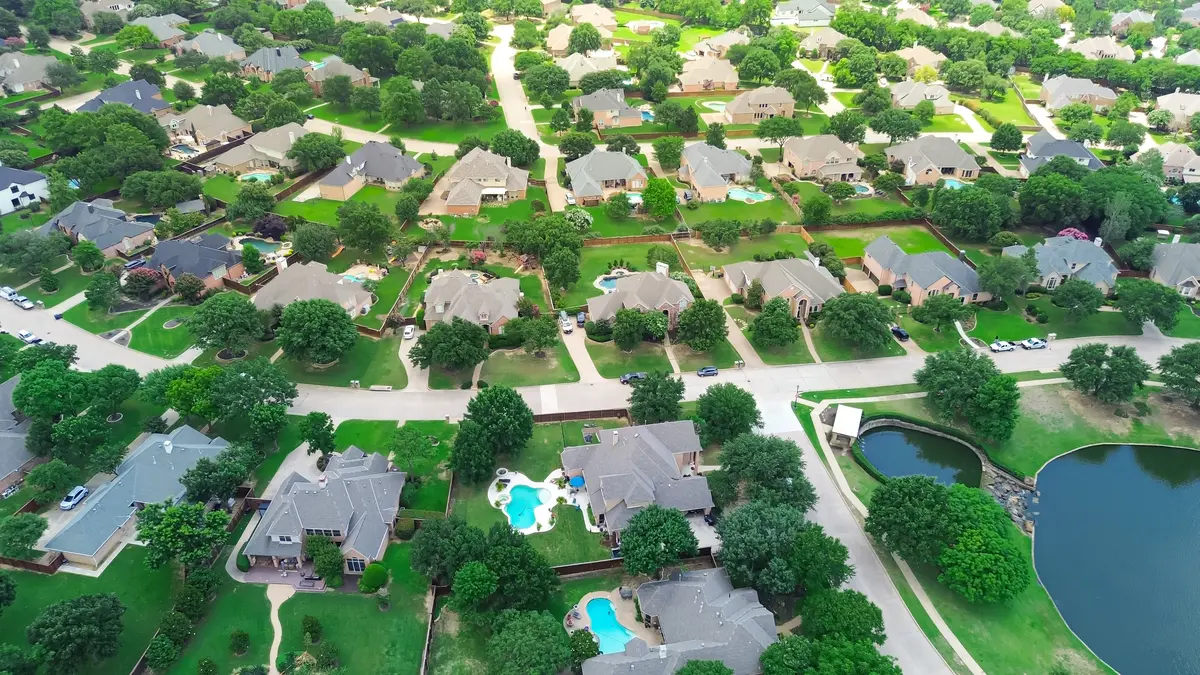
The typical home price in Fort Worth stood at $298,353 as of July 2026, which means entry-level buyers — those targeting older construction or smaller square footage — can still find homes below that figure, though not without competition. Entry-level inventory tends to cluster in the city's southern and eastern corridors; if you want a neighborhood-by-neighborhood breakdown of where price tiers land, the best neighborhoods guide covers that in full.
The effective property tax rate is approximately 1.47%. That figure matters enormously in Texas, where property tax does the job that income tax does in other states. On a home near the city-wide typical price, the annual tax bill is a material number — the mortgage calculator below will work it into your monthly estimate. What it means practically: buyers here often find that the sticker price looks friendlier than the all-in monthly cost once property taxes are folded in. That's not unique to Fort Worth, but it surprises buyers arriving from states where the income tax is high and the property tax is modest.
The city-wide typical rent of $1,625 per month (Zillow Rent Observed Index, July 2026) gives renters a reasonable foothold, and the rent-vs-buy math currently favors renting for anyone without a substantial down payment or a longer time horizon. Renting makes the most practical sense if you're still learning the city's geography, plan to stay fewer than three to four years, or are waiting to see whether one of the city's fast-growing corridors shifts your preferred neighborhood. Buying makes sense if you have equity, a stable employer anchor, and enough runway for the property tax to be offset by the appreciation the market has historically delivered — and for Fort Worth, that case is genuinely solid over a five-plus-year hold.
The neighborhood price tiers in the fact sheet give a clear read on the spectrum: Tanglewood, Fairmount, Arlington Heights, Mistletoe Heights, and Ryan Place all run above the city median; Wedgwood sits at it; Ridglea and Ridglea Hills come in below. Use that as your mental map for where your budget positions you, then dig into specifics with the neighborhoods guide.
Everyday Costs Beyond Housing in Fort Worth
| Category | Typical Monthly Cost | Notes |
|---|---|---|
| Housing (typical rent) | $1,625/mo | City-wide typical rent. Buying? Use the calculator above for a mortgage estimate. |
| Utilities | $210–$310/mo | Electricity, gas, water, sewer, trash |
| Groceries | $550–$720/mo | Food at home, household of 2–3 |
| Transportation & Gas | $220–$380/mo | Fuel, and transit where it is a real option |
| Phone & Internet | $110–$180/mo | Mobile plan plus home broadband |
| Misc / Discretionary | $250–$480/mo | Dining out, entertainment, subscriptions |
Non-housing figures are estimates for a household of two to three, not a sourced index; housing is the city-wide typical rent (Zillow ZORI, July 2026). Refreshed with the rest of the city data.
Groceries in Fort Worth run roughly 1% cheaper than the national average — close enough to a wash that it won't move your budget needle significantly. What does move the needle is the Texas sales tax exemption on unprepared groceries and prescription drugs, which provides quiet but real relief at the register given the 8.25% combined sales tax rate on everything else. The dining scene covers a wide range of price points, and the broader Dallas-Fort Worth restaurant market stays broadly in line with national trends on pricing.
Utilities are the honest asterisk on Fort Worth's affordability story. Electricity, water, gas, and internet combined run approximately 12–16% above the national average, driven almost entirely by summer cooling demand — air conditioning typically accounts for 50–70% of a Fort Worth household's annual electric bill. Fort Worth sits in Texas's deregulated electricity market, meaning residents can shop among many competing retail electricity plans through the Public Utility Commission's Power to Choose portal; Oncor handles the physical delivery side while retail providers compete on the supply side. Monthly bills for a typical household run roughly $125–$175 in moderate seasons and can reach $220–$290 at summer peak for a 2,000-square-foot home. Shopping your provider when your contract expires is one of the few genuine levers residents have on this cost.
Transportation costs run about 5–6% below the national average — gas prices are near or slightly below the national figure, and the well-developed highway network keeps commute distances manageable for most of the metro. Trinity Metro operates bus routes, the TEXRail commuter rail line to Dallas/Fort Worth International Airport, the Trinity Railway Express shared with DART, and on-demand ZIPZONE rideshare service — useful for downtown-adjacent residents, though most Fort Worth households budget for at least one car.
Looking to buy in Fort Worth? Estimate your payment.
Enter your numbers to see an estimated monthly mortgage payment.
Estimate only. Excludes HOA fees and mortgage insurance. The interest rate above is a starting point, not a quoted rate — replace it with your own to see real numbers. Insurance is a flat placeholder, not a Fort Worth quote.
Fort Worth vs Nearby Cities: Cost Comparison
| City | Typical Home Price | Typical Rent | Cost vs Fort Worth |
|---|---|---|---|
| Fort Worth (this city) | $298,353 | $1,625/mo | — |
| Arlington | $312,255 | $1,525/mo | 5% higher |
| North Richland Hills | $370,431 | $1,545/mo | 24% higher |
| Keller | $654,648 | $2,058/mo | 119% higher |
Source — home prices: Zillow ZHVI, July 2026; rent: Zillow ZORI, July 2026. Nearby-city figures are the same series, refreshed together.
Fort Worth holds its own against its nearest neighbors — Arlington comes in at about the same price level, while North Richland Hills and Keller run noticeably higher — and the table below shows the full side-by-side picture across home price, rent, and relative cost.
Taxes & the Bottom Line for Fort Worth
Texas's no-state-income-tax structure is the headline: every dollar of wages, retirement income, and investment income arrives intact, with no state-level deduction. For buyers relocating from California, Oregon, or any of the high-income-tax states, this is often the single largest line-item shift in their annual budget — worth more in practice than the home-price delta alone. The California-to-Fort Worth guide covers that comparison in full.
The sales tax picture is more nuanced. The combined rate in Fort Worth is 8.25% — built from the 6.25% Texas state rate plus local city and district levies. That's a meaningful rate on discretionary spending, though unprepared groceries and prescription drugs are exempt, softening the impact on essential purchases. Budget for 8.25% on anything from furniture to dining out to home goods.
Property tax at approximately 1.47% effective is the lever that matters most for owners. Texas routes much of its public-services funding through property tax rather than income tax, so the rate reflects that structural choice rather than local mismanagement. On the typical Fort Worth home, that effective rate produces a real annual obligation — use the calculator above to model it precisely for any price point you're considering. It's the cost that surprises most out-of-state buyers, and it's worth running the numbers before you fall in love with a sticker price.
The bottom line: Fort Worth fits the budget of a household that values income-tax freedom, can absorb a meaningful property tax, and is either buying near the typical home price with a solid down payment or renting while they build equity. It tends to be a stretch for single-income buyers at the median income attempting to own at current prices without additional equity — the gap between what the typical home costs and what the median household earns is real, even if it's smaller than in most major metros. Dual-income households, relocating buyers with existing equity, and remote workers pricing out of coastal markets are the ones who consistently find the math works cleanly here.

Local Expert Takeaway: Fort Worth's cost of living story is genuinely favorable for most households — but the property tax rate and the summer electricity bill are the two numbers that bite hardest and surprise the most newcomers. Shop your electricity provider through the Power to Choose portal every contract cycle, budget the 1.47% effective property tax rate into any ownership scenario, and know that the no-income-tax advantage is real but doesn't fully offset both of those at once. For dual-income households and buyers with equity to deploy, the math works well. For single-income buyers near the median, it's tight — not impossible, but tight.
Quick Takeaways & FAQs
✅ Fort Worth's typical home price of $298,353 (July 2026) sits well below comparable large metros, and Texas levies no state income tax — a genuine double advantage for relocating households.
⚠️ The effective property tax rate of approximately 1.47% and summer electricity bills that can top $220–$290 per month are the two costs that most newcomers underestimate.
📍 Fort Worth operates in Texas's deregulated electricity market — residents can shop among many competing retail electricity plans through the Public Utility Commission's Power to Choose portal, which is one of the few real levers you have on the city's above-average utility costs.
Is Fort Worth cheaper than Dallas to live in?
What is the property tax rate in Fort Worth?
How much does electricity cost in Fort Worth per month?
Is it cheaper to rent or buy in Fort Worth right now?
Does Fort Worth have a state income tax?
Moving to Texas?
Tell us what you need help with and we'll connect you with local resources.
