
Fort Worth is the 4th-largest incorporated city in Texas, and its school district is one of the most complex in the state — not in the way that phrase usually gets used to mean mediocre, but genuinely complex. Fort Worth Independent School District holds a C rating, according to the Texas Education Agency, and that grade is accurate at the district level. It is also, for many families, only the beginning of the analysis. The same district that earns a C overall also contains 17 A-rated campuses and two high schools with consistently strong academic outcomes and national academic recognition. Where your child lands inside this district matters enormously — far more than in most cities their size.
The economic backbone here is real and deeply connected to the schools. Lockheed Martin Aeronautics and Bell Textron anchor the aerospace manufacturing sector, and FWISD has built Career and Technical Education pathways in aviation, healthcare, and culinary arts that track directly to those industries. American Airlines Group and BNSF Railway round out the major employer list, giving the city's workforce a heavy transportation and logistics identity. Roughly 85% of FWISD students qualify as economically disadvantaged, a figure that explains a significant portion of the district-level rating and that any parent researching the district deserves to understand plainly.
What draws families to Fort Worth despite a C-rated district is a combination of housing prices well below the DFW average — the typical home price sits at $298,353 (Zillow Home Value Index, July 2026), noticeably below North Richland Hills and Keller — and a Gold Seal magnet system that functions almost like a district within the district. Parents who engage with that system and apply strategically often secure placements at schools that match or exceed what nearby suburban districts offer. Parents who do not engage with it may find a very different experience.
This guide covers what Fort Worth ISD actually looks like in 2026: the district-level picture, the state intervention context, the standout schools worth knowing by name, the specialty magnet options, who the district realistically does not serve well, and the youth sports landscape that fills weekends across this city.
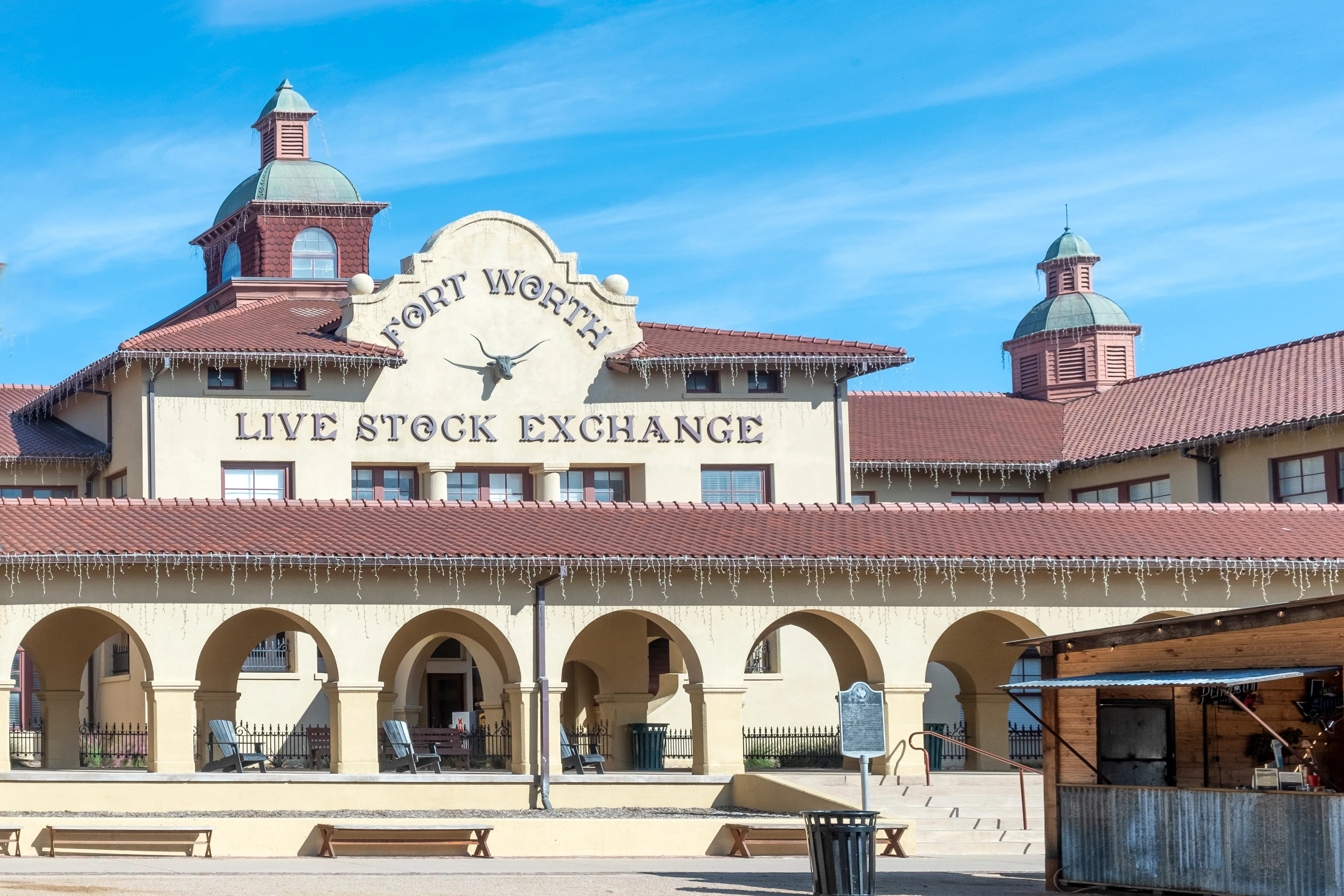
Fort Worth ISD at a Glance: The District-Level Picture
Fort Worth ISD holds a C rating, according to the Texas Education Agency, based on the 2024-25 accountability cycle. The district score of 73 places it solidly in the middle tier of Texas districts by letter grade — not failing, not thriving, and not a number that tells the whole story.
FWISD is one of the larger urban districts in Texas, serving students across more than 130 campuses. On 2024-25 state assessments, 29% of students reached math proficiency and 38% reached reading proficiency. Those numbers run roughly 16 percentage points below the state average, and any family making a decision based on district-wide academic outcomes needs to see them clearly.
What those averages obscure is the campus-to-campus range. In 2024-25, the district had 17 A-rated campuses and 28 B-rated campuses alongside lower-scoring schools — a spread that is, by most accounts, among the widest of any DFW district. The number of F-rated campuses dropped from 31 to 11 in that same year. Whether that trajectory continues under new leadership is the open question.
The State Intervention
In March 2026, the Texas Education Agency appointed a nine-member Board of Managers and named Dr. Peter B. Licata as the new superintendent. This triggered state intervention under Texas law after a campus received five consecutive failing ratings. The elected school board's powers are suspended for the duration of the Board of Managers' tenure.
This is not a housekeeping change. It is the most significant governance event in the district's recent history, and it is ongoing. Families moving to Fort Worth in 2026 are buying into a district in active state receivership, with proficiency targets and zero-tolerance for multi-year failing campuses as the exit criteria. That context does not make FWISD a bad choice for every family — but it is context every family should have before they buy a house based on a school boundary.
The Gold Seal System: How Fort Worth's Best Schools Actually Work
The most important thing to understand about FWISD is that your home address does not determine your child's school — not entirely. The district's Gold Seal Schools of Choice program offers application-based specialty campuses that any student in the district can apply to, regardless of where they live.
The program covers a genuinely wide range of pathways: STEM, Visual and Performing Arts, Career and Technical Education, World Languages, Applied Learning, Single-Gender, and Montessori. This is not a token offering — it is a structured system that the district has built into its core structure, and it is how many of Fort Worth's highest-performing students navigate an otherwise uneven district.
There is a real catch, and it affects families new to the city more than anyone: the program runs on an application window, typically in late fall to early winter. Families who arrive in Fort Worth in January and expect to enroll in a Gold Seal school for the following fall need to move quickly — the lottery closes and waitlists fill. If you are relocating and have a school-age child, researching the Choices calendar before you close on a house is not optional.
Dual Enrollment at No Cost
One of the stronger and less-publicized features of the Choices program is dual-enrollment access. FWISD has built partnerships with area colleges that allow students to graduate with both a high school diploma and an associate degree at no additional cost to the family. For a district serving a largely economically disadvantaged population, that is a meaningful outcome — and it is available through the application pathway, not the default neighborhood assignment.
Secondary Gold Seal campuses generally do not field UIL athletics teams, with the exception of Young Men's Leadership Academy, Young Women's Leadership Academy, and Trimble Technical High School. Families who want a specialty academic program AND varsity sports need to factor that trade-off in early.
Three Standout Schools Worth Knowing by Name
Naming individual schools in a district this size always risks the list going stale — campuses close, programs shift, and the notes for this guide already flag that two previously cited standouts were among five schools voted to close at the end of 2025-26. The three below were confirmed active and academically recognized as of the research date.
World Languages Institute
World Languages Institute is an application-based Gold Seal high school focused on global language acquisition and international studies. It has earned sustained recognition for strong academic outcomes and college-readiness rates, and consistently places among the higher-performing high schools in the district. It is open to students across the district, which means a family in Wedgwood has the same access as one in Tanglewood — if they apply on time.
Young Women's Leadership Academy
Young Women's Leadership Academy is a single-gender Gold Seal school with a track record of strong academic performance and high college-readiness rates. That makes it a targeted fit rather than a universal one, but for families with daughters who thrive in that structure, it represents the kind of outcome the district's application pathway can unlock. It is one of the three specialty high schools that retains active UIL athletics.
Paschal High School
Paschal is the district's most established traditional high school with a specialized academic track. It hosts an International Baccalaureate programme with a long history as a college-prep pipeline for Fort Worth students who want the IB credential without leaving a neighborhood campus. Paschal carries active UIL athletics programs, which means students here have access to both a rigorous academic track and a full slate of varsity sports — a combination the Gold Seal application schools often cannot offer.
The CTE pathways the district operates across campuses are also worth naming: aviation, healthcare, and culinary arts programs that are designed around the industries Fort Worth actually employs. A student in an aviation CTE track here is not doing generic career education — they are a short drive from the Lockheed Martin Aeronautics campus and the American Airlines Group operations center.
Looking to buy in Fort Worth? Estimate your payment.
Enter your numbers to see an estimated monthly mortgage payment.
Estimate only. Excludes HOA fees and mortgage insurance. The interest rate above is a starting point, not a quoted rate — replace it with your own to see real numbers. Insurance is a flat placeholder, not a Fort Worth quote.
Who This District Is Not the Right Fit For
Honesty about this matters more in Fort Worth than in most cities, because the gap between the district's best and worst campuses is wide enough that the wrong assumption can affect years of a child's education.
Families who want strong district-wide academic performance without having to navigate an application process will likely be disappointed. If your plan is to buy a house, enroll in the neighborhood school, and trust the system to deliver, the odds are not in your favor at the district-level averages. On 2024-25 state assessments, 29% of students reached math proficiency and 38% reached reading proficiency — those are the baseline numbers for a student whose family does not engage with the Gold Seal system.
Families who move to Fort Worth after the Choices application window closes and need a high-performing school immediately — not after a full year's wait for the next lottery cycle — may find the options thin. The Gold Seal system rewards early planning, and families arriving mid-year or late in the prior spring are often on the outside of it for at least one school year.
Suburban Districts Are a Real Alternative
Families prioritizing overall academic metrics who are not pursuing a specific magnet pathway frequently end up in Keller ISD, which sits north of the city and serves parts of the metro that feel like Fort Worth without being inside FWISD boundaries. Grapevine-Colleyville, Carroll, Mansfield, and Eagle Mountain-Saginaw are the other names that come up repeatedly. Each of those districts comes with higher home prices — Keller is noticeably higher than Fort Worth's typical home price — so the trade-off is real and worth running.
The district is also in active state receivership as of 2026, which is a governance reality that families with strong feelings about elected local control will weigh differently than those who are indifferent to school board structure. The intervention is not window dressing; it suspends the powers of the elected board for the duration. Whether the Board of Managers improves outcomes faster than an elected board would have is genuinely uncertain.
Youth Sports and Kids Activities in Fort Worth
Fort Worth is a serious youth sports city — and the infrastructure is visibly straining to keep up with the demand. In late 2025, city officials unveiled an $82 million, 12-year plan to expand athletic field capacity, including a proposed 2026 bond with $48 million earmarked for upgrades to four existing parks and a future bond that envisions a new baseball and softball complex with at least eight fields. The Cowtown Classic soccer tournament draws more than 300 teams annually and has had to turn away participants because there simply are not enough fields. That context tells you something real about how seriously Fort Worth takes youth athletics.
Recreational Leagues Through the City
The City of Fort Worth Parks and Recreation Department runs a Youth Sports Division out of Sycamore Community Center, offering recreational leagues in basketball, baseball, softball, and tee ball. These are the entry-level leagues — low-pressure, affordable, and available to young residents across the city. For families with younger kids who want a first organized sport experience, this is the natural starting point.
The YMCA of Fort Worth runs year-round youth sports leagues and clinics for ages 3 to 17, with basketball as the most visible offering. The YMCA's programming covers a wider age range and runs on a more continuous schedule than the city leagues, making it a useful complement for families who want activity throughout the year rather than just a single season.
Club Soccer and the Vaqueros Youth Club
For families looking at competitive youth soccer, Fort Worth Vaqueros FC launched an official Youth Club in 2024. The program is structured for all skill levels, from developmental beginners to competitive-track players, and it is tied to a professional parent club that competes in USL League Two. That connection matters for competitive families — the Vaqueros Youth Club is not a recreational program wearing a professional team's logo; it is a genuine development pathway.
UIL Athletics at FWISD High Schools
At the high school level, FWISD campuses carry active UIL athletics programs. Friday night football in Fort Worth is not a metaphor — the stands fill at traditional high schools across the city, and the energy around UIL competition is one of the more genuine community gathering points the city offers. Band, choir, and the full slate of UIL activities run alongside athletics at most campuses.
The important nuance is that Gold Seal specialty high schools — including World Languages Institute — generally do not field UIL teams. Families choosing the magnet pathway for academic reasons are making a real trade-off on the athletics side, unless they land at Young Women's Leadership Academy, Young Men's Leadership Academy, or Trimble Technical, which are the exceptions that retain UIL participation. That is worth knowing before a student who wants both an IB track and a varsity sport commits to an application school.
For parks, trails, and the broader outdoor infrastructure that supports all of this, see the parks and recreation page — Trinity Park, the Trinity River Trail, and Fort Worth Nature Center and Refuge are all part of the picture for active families.
Weekends and Local Favorites for Fort Worth Families
The rhythms of a Fort Worth family weekend tend to center on the outdoors, the cultural institutions, and a food scene that leans unapologetically toward the Texas end of the spectrum. Trinity Park and the Trinity River Trail are where a lot of families burn off Saturday morning energy — the trail system runs through significant stretches of the city and connects to Fort Worth Botanic Garden, which is as close to a civic living room as the city has.
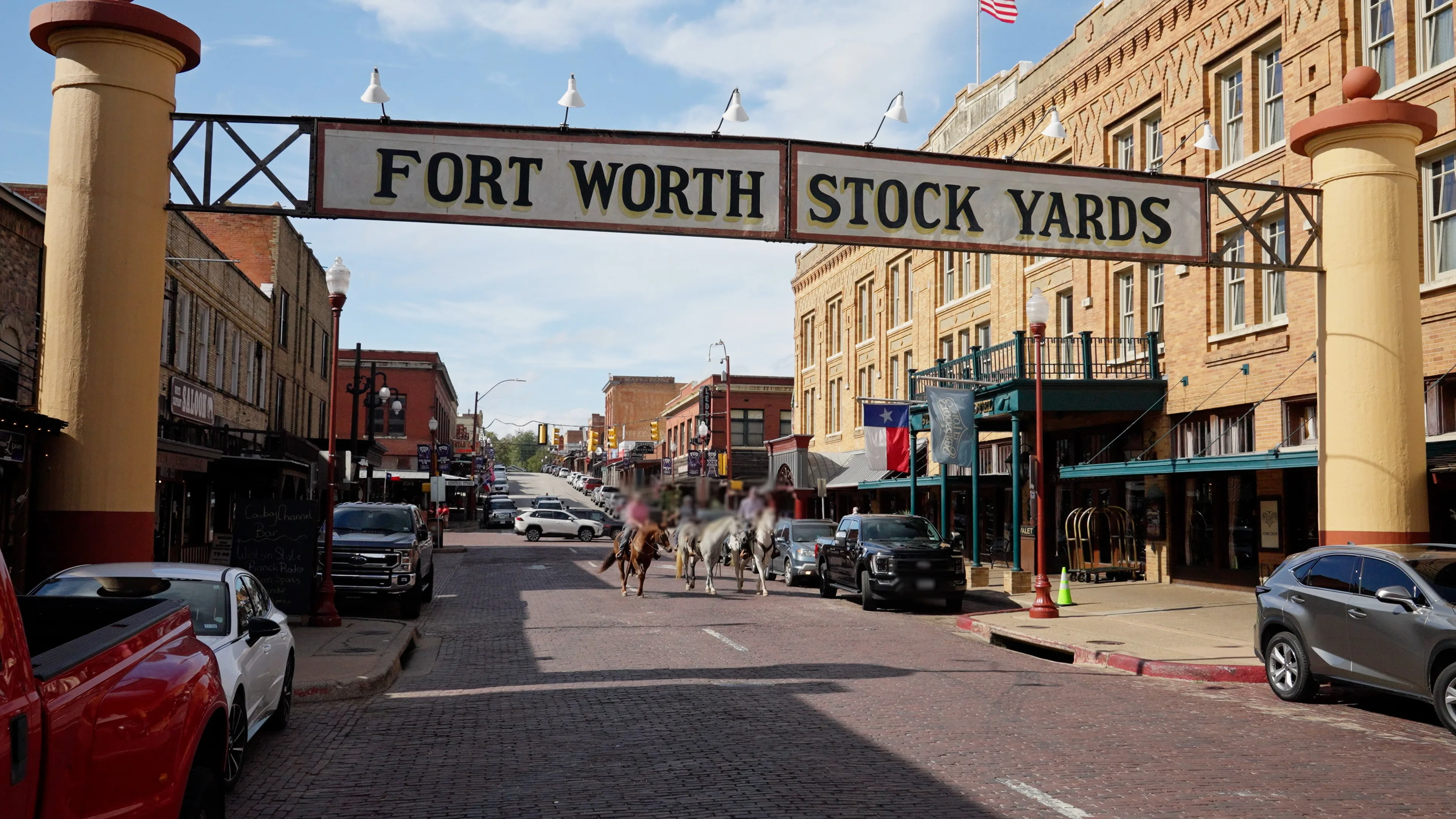
The Fort Worth Stockyards National Historic District draws the crowds, but locals treat it differently than visitors do — less as a tourist stop and more as a backdrop for the kind of afternoon that ends with a meal. For that, Cattlemen's Steak House is the name that comes up most among people who have lived here a while. Woodshed Smokehouse and Rodeo Goat round out the casual end of a genuinely strong local food scene. HG Sply Co. — Fort Worth and Quince Riverside are where the dining steps up a register.
Coffee before a soccer Saturday morning runs through a few spots: Sons Coffee, Ampersand, Buon Giorno Coffee, HustleBlendz Coffee, and Rio Dulce Coffee each have their regulars, and the fact that all five are independent is something Fort Worth families tend to take quiet pride in.
The Rufe Snow Farmers Market and The Clearfork Farmers Market are the two established weekly markets. Sundance Square, Bass Performance Hall, the Kimbell Art Museum, and the Amon Carter Museum of American Art fill out the cultural side — Fort Worth has a museum district that punches above its weight for a Texas city, and families with school-age kids get significant mileage out of it for weekend programming. The Fort Worth Zoo and Fort Worth Water Gardens are the reliable options when nothing else is planned and the kids need somewhere to go.
Lake Worth is the local water anchor — swimming, fishing, and informal outdoor time without leaving the city. Fort Worth Nature Center and Refuge sits near the lake and is where families go when they want actual nature rather than a manicured park.
Local Expert Takeaway: Fort Worth ISD is not a district you move to passively — it is a district you navigate. The Gold Seal Schools of Choice program is the mechanism that separates outcomes here, and families who research it before they sign a lease or close on a house get a fundamentally different experience than those who discover it a year later. The district holds a C rating, according to the Texas Education Agency, has 17 A-rated campuses, and is currently under state management. World Languages Institute and Young Women's Leadership Academy have strong records of academic achievement and college readiness. Paschal has the IB program. None of that is automatic — it all requires an application. If you are moving here from a suburban district where your neighborhood school was the plan, build the Gold Seal application calendar into your relocation timeline before anything else.
Quick Takeaways & FAQs
✅ Fort Worth ISD's Gold Seal Schools of Choice program gives families access to academically strong, application-based specialty schools — including two high schools with consistently high college-readiness rates — regardless of home address.
⚠️ The district holds a C rating, according to the Texas Education Agency, and is currently under state receivership following a Board of Managers appointment in March 2026 — a governance reality that affects every family considering FWISD.
📍 The Cowtown Classic soccer tournament turns away more than 300 teams annually due to field shortages, which captures exactly how serious Fort Worth's youth sports culture is — and how much the infrastructure is still catching up to it.
What rating does Fort Worth ISD have and what does it actually mean?
What is the FWISD Gold Seal Schools of Choice program and how does my child apply?
Is Fort Worth ISD under state takeover right now?
What youth sports leagues are available for kids in Fort Worth?
Which suburban school districts do families move to instead of FWISD?
Moving to Texas?
Tell us what you need help with and we'll connect you with local resources.
