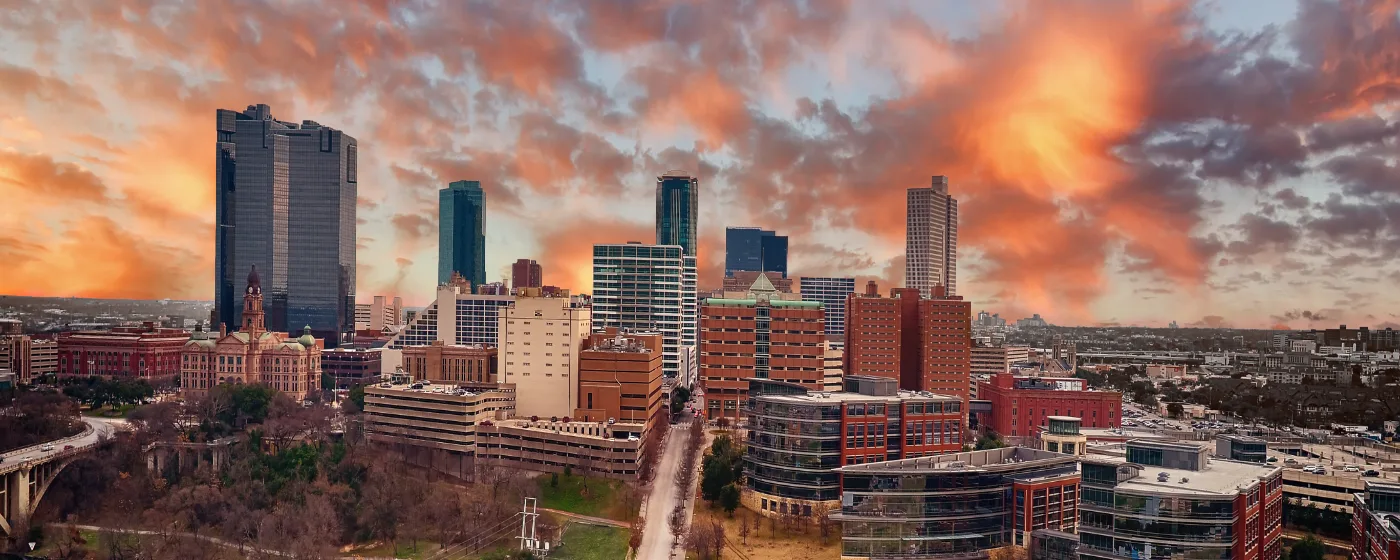
Fort Worth has a reputation problem — in the best possible way. People who haven't been here in a decade still picture the Stockyards and not much else. What they miss is a city of 1,028,117 people with a westside Cultural District that rivals anything in Texas, a Near Southside that has quietly become one of the most livable urban districts in the state, and a range of historic neighborhoods that have more architectural character per block than most cities twice its size. The catch is that Fort Worth is geographically enormous, and where you land within it shapes everything about daily life: your commute on I-30 or I-35W, your school options within the Fort Worth Independent School District, and whether you can walk to dinner or need a car for every errand.
The economic engine here is real and diversified. Lockheed Martin Aeronautics, Bell Textron, and BNSF Railway anchor the industrial and aerospace base. American Airlines Group connects the city to a global economy, with Dallas/Fort Worth International Airport 24 miles away. The Fort Worth Independent School District — with 67,491 students enrolled in 2025-26 — is one of the largest employers in the city. That employer mix draws aerospace engineers and logistics professionals alongside teachers, city workers, and a growing creative class that has filled the Near Southside's historic buildings with studios and independent businesses. For a full picture of the job market, see the living in Fort Worth guide.
On price, Fort Worth is still meaningfully below what most people expect from a major Texas city. The typical home price stands at $298,353 (Zillow Home Value Index, July 2026), and while that figure is close to what you'd pay in Arlington, it runs noticeably below North Richland Hills and Keller to the north. The full cost-of-living picture — taxes, utilities, groceries — is on the cost of living page. Day-to-day, the city offers 229 sunny days a year, the Trinity River Trail system for cyclists and runners, and enough park acreage to make outdoor life genuinely accessible, even in summer.
Whether you're weighing a historic bungalow in Fairmount against a ranch-style home in Tanglewood, or trying to figure out which westside neighborhood actually makes sense for your commute, the sections below break down Fort Worth's eight most sought-after neighborhoods, the divides that matter most, and the mistakes buyers most commonly make.
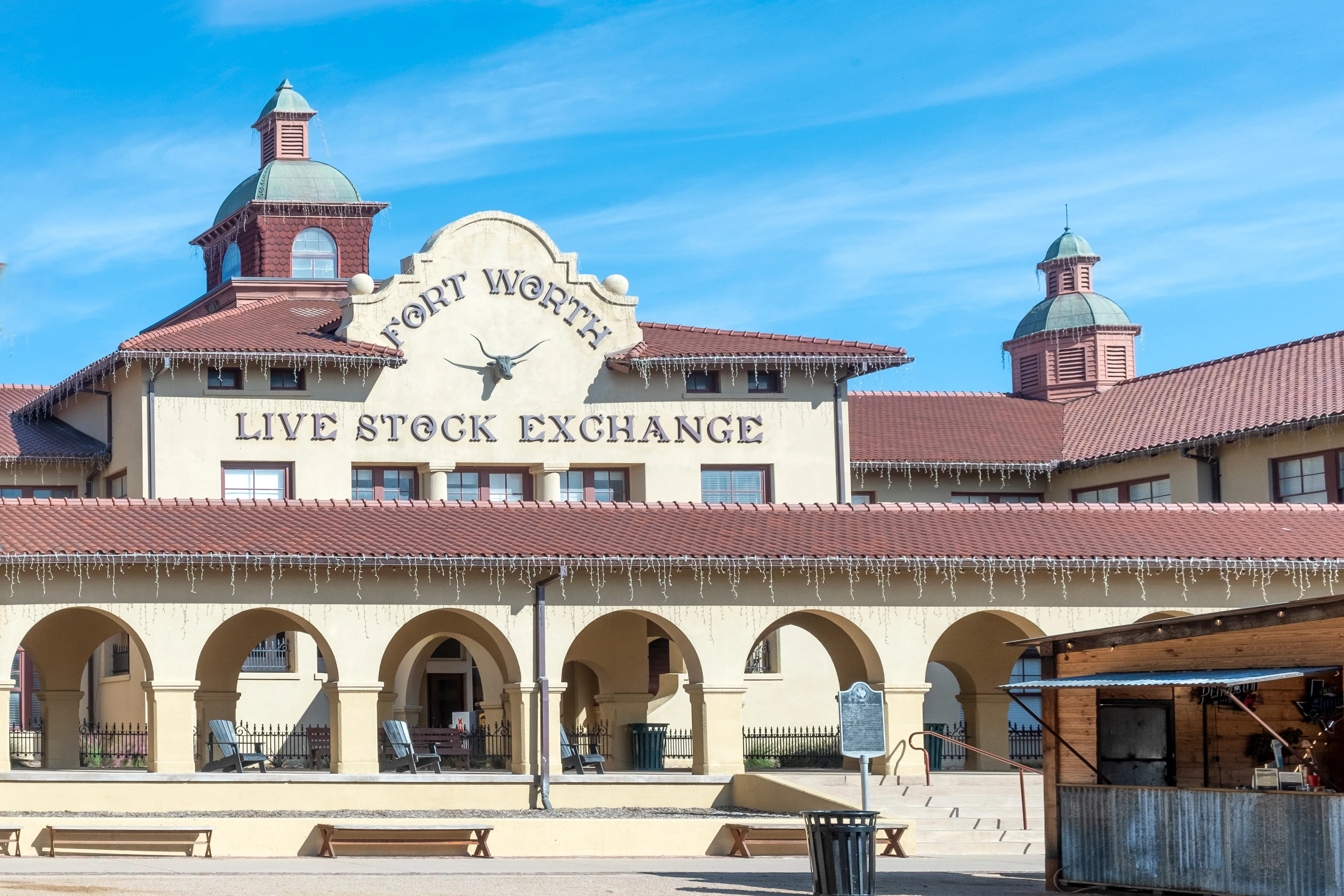
The Fort Worth Reality
The single most important thing to understand about buying in Fort Worth is the westside-vs-everything-else divide. The city's most established, character-rich neighborhoods — Tanglewood, Arlington Heights, Mistletoe Heights, Fairmount, Ryan Place, Ridglea — are all clustered in a band that runs from the Cultural District south through the Near Southside. This westside corridor has the mature trees, the walkable streets, the historic architecture, and proximity to the city's best parks and museums. It is also, in most cases, priced above the city-wide typical home price of $298,353 (July 2026).
The school boundary reality is the second thing buyers underestimate. Fort Worth ISD holds a C rating, according to the Texas Education Agency. That districtwide rating covers enormous variation between individual campuses, and many buyers in the historic westside neighborhoods pay a premium specifically to land in the attendance zones for the district's stronger elementary schools — then discover at the middle or high school level that the calculus changes. Families with kids should research individual school boundaries before making an offer, not after. See the full breakdown on the schools page.
The third reality is the freeway effect. I-20 cuts across the southern edge of neighborhoods like Wedgwood, while I-35W is the main artery toward downtown and south toward Burleson. Buyers who want the westside lifestyle but need a daily commute toward downtown or the Mid-Cities corridor on I-30 will find that some neighborhoods feel much closer in practice than others. Distance on a map and commute time are not the same thing in Fort Worth.
Neighborhoods at a Glance
| Neighborhood | Best For | Vibe |
|---|---|---|
| Tanglewood | Luxury Families | Established, tree-lined ranch homes near TCU and the Fort Worth Zoo; active neighborhood association with a legendary Fourth of July parade |
| Fairmount | Walkable First-Time | Historic bungalow district platted before 1907; one of the most walkable blocks in the city, with genuine architectural character at every turn |
| Near Southside | Walkable Renter | Urban, mixed-use district anchored by West Magnolia Avenue; the closest Fort Worth gets to a true live-work-walk neighborhood |
| Arlington Heights | Families Views | Craftsman bungalows and Tudor cottages next to the Cultural District; quiet streets with museum-district walkability |
| Wedgwood | Families Value | All-brick 1960s–70s ranch homes in southwest Fort Worth; approachable, low-drama neighborhood with easy lake access |
| Ridglea / Ridglea Hills | Value Quiet | Rolling postwar terrain with generous lots; the entry point into the established westside without the premium price tag |
| Mistletoe Heights | Luxury Nature | Bluff-top historic district overlooking the Clear Fork of the Trinity; Prairie, Craftsman, and Colonial Revival homes on 640 acres |
| Ryan Place | Luxury School | Architecturally significant Near Southside enclave with large homes, mature trees, and a tight-knit identity in the 76110 zip cluster |
Fort Worth typical home price: $298,353 (Zillow ZHVI, July 2026). Typical rent: $1,625/mo (Zillow ZORI, July 2026). Neighborhood tiers on this page are relative to these figures.
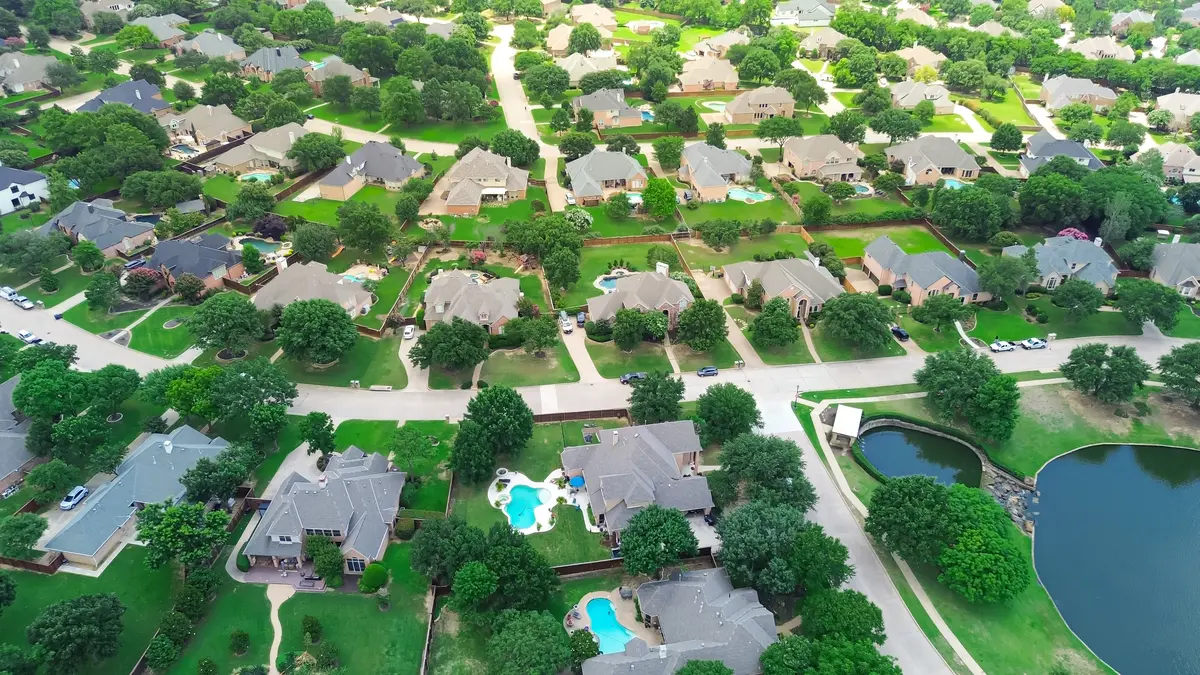
Best Neighborhood by Buyer Type
| Buyer Type | Best Neighborhood | Why |
|---|---|---|
| First-Time Buyer | Fairmount | Historic character at a more accessible entry point than Tanglewood or Mistletoe Heights, with genuine walkability that makes car-free errands realistic. |
| Luxury Buyer | Tanglewood | The city's most coveted address — brick-and-stone ranch homes on winding streets near the Fort Worth Zoo and Colonial Country Club, well above the city median. |
| Walkability Seeker | Near Southside | West Magnolia Avenue and South Main Street deliver the kind of block-by-block, on-foot access that most of Fort Worth simply cannot offer. |
| Families with Kids | Arlington Heights | Oak-shaded streets adjacent to the Cultural District, with the Fort Worth Botanic Garden and Trinity Park immediately accessible for weekend life. |
| Commuters | Wedgwood | I-20 access to the north edge of the neighborhood puts downtown Fort Worth and the Mid-Cities within a reasonable drive without westside pricing. |
| Large-Lot Buyers | Ridglea / Ridglea Hills | Postwar ranch homes on generous lots below the city median — more land for less money than nearly anywhere else on the established westside. |
| Renters | Near Southside | The densest mix of apartments, live-work units, and urban rentals in Fort Worth, walkable to dining, events, and the Medical Innovation District. |
Looking to buy in Fort Worth? Estimate your payment.
Enter your numbers to see an estimated monthly mortgage payment.
Estimate only. Excludes HOA fees and mortgage insurance. The interest rate above is a starting point, not a quoted rate — replace it with your own to see real numbers. Insurance is a flat placeholder, not a Fort Worth quote.
Most Popular Neighborhoods
1. Tanglewood
Tanglewood is the neighborhood Fort Worth buyers put on their list first and compromise off last. The housing stock is predominantly mid-century and later brick-and-stone ranch homes — original deed restrictions required masonry construction — set on winding, tree-shaded streets just west of Texas Christian University. The Fort Worth Zoo, Colonial Country Club, and the Trinity River Trail are all within minutes. The trade-off is price: homes here run well above the city-wide typical, and the inventory is tight enough that well-presented listings rarely wait long for offers.
Best for: Established-neighborhood buyers, families who want walkable park access, and anyone prioritizing the westside's top-tier residential feel.
2. Fairmount
Fairmount is one square mile of turn-of-the-century housing — bungalows and four-square homes platted across roughly 20 subdivisions between 1883 and 1907 — that has been on the National Register of Historic Places since 1990. It's asserted to be the largest historic district in the southwestern United States, with more than 1,013 contributing buildings. Residents consistently rate walkability as the neighborhood's defining feature, and the annual Fairmount Tour of Homes draws buyers from across the metro who didn't know this much architectural density existed inside Fort Worth city limits. Prices run above the city median, and renovation costs on older homes can add up faster than buyers from newer-construction markets expect.
Best for: Buyers who want historic character, strong walkability, and a true neighborhood identity — and who have budgeted for older-home maintenance.
3. Near Southside
Near Southside is the roughly 1,400-acre district that spent 30 years quietly becoming Fort Worth's most urban neighborhood, and it's now the place relocating buyers from larger cities feel most immediately at home. West Magnolia Avenue and South Main Street carry the bulk of the creative energy — local breweries, distilleries, artisan markets, and murals concentrated in a walkable corridor. The district also anchors Fort Worth's Medical Innovation District. Near Southside is primarily a renter's and urban-lifestyle market; buyers looking for single-family homes with a yard will find the options narrower than in the surrounding historic districts.
Best for: Renters, urban-lifestyle buyers, and anyone whose daily life revolves around West Magnolia Avenue rather than a cul-de-sac.
4. Arlington Heights
Arlington Heights sits directly adjacent to the Cultural District — meaning the Kimbell Art Museum, Fort Worth Botanic Garden, and the Trinity Trails trailhead at Trinity Park are genuinely walkable, not just nearby. The housing stock is early 20th-century Craftsman bungalows and Tudor cottages on oak-shaded streets, giving the neighborhood a texture that newer westside areas can't replicate. Prices run above the city median, and buyers should know that the neighborhood's desirability has made it competitive: homes with good bones and a Cultural District address attract serious attention.
Best for: Buyers who want museum-district access and historic architecture, and families who treat Trinity Park as a backyard.
5. Wedgwood
Wedgwood is southwest Fort Worth's most straightforward family neighborhood — built primarily in the 1960s and 1970s with all-brick ranch-style homes, and priced right at the city-wide typical home level. I-20 forms the northern boundary, which is both an asset (freeway access) and the thing that shapes the neighborhood's rhythm: the commuter infrastructure is there, but so is the noise and visual edge that comes with a major interstate. Benbrook Lake, with a full marina, is reachable just to the west, which gives Wedgwood a weekend-outdoor quality that few urban neighborhoods can offer at this price point.
Best for: Families wanting brick construction, ownership at the city median, and easy lake access without leaving Fort Worth's city limits.
6. Ridglea / Ridglea Hills
The name says it plainly: Ridglea sits on rolling terrain — the "ridge" and the "lea" (original open meadowland) — developed from ranch holdings in the 1940s and 1950s. Lot sizes are generous by Fort Worth standards, and the postwar ranch architecture is solid and livable. Prices come in below the city-wide typical, making this the most accessible address on the established westside. The catch is that Ridglea doesn't have the walkable commercial strip of Fairmount or the near-museum access of Arlington Heights — it's a residential neighborhood first, last, and entirely.
Best for: Buyers who want westside geography and larger lots at a below-median price, without needing to walk anywhere.
7. Mistletoe Heights
Mistletoe Heights sits on bluffs overlooking the Clear Fork of the Trinity River, and it earned its Fort Worth Historic District designation in 2002 for good reason: more than 500 households on 640 acres, with Prairie, Craftsman, Colonial Revival, and traditional bungalow homes that cover nearly every early American architectural movement. Land values first spiked here after Texas Christian University relocated nearby and a streetcar line ran through; today the draw is the same mix of geography, architecture, and proximity to the Fort Worth Zoo, the Botanic Garden, and the Near Southside dining corridor. Prices run above the city median, and the bluff-top lots closest to the river command the most attention.
Best for: Architecture enthusiasts, buyers who want river bluff scenery with urban proximity, and anyone willing to pay above-median for a historic designation that has real teeth.
8. Ryan Place
Ryan Place is the quietest of the Near Southside's historic neighborhoods — architecturally significant, developed in the early 20th century, with large homes and mature trees that give it a scale and weight rare in this part of the city. It shares the 76110 zip code cluster with Fairmount and Mistletoe Heights, which means it benefits from proximity to both without quite having either's commercial spine or bluff-top geography. Prices run above the city median. Ryan Place rewards the diligent buyer rather than the first-time explorer — it's a neighborhood for people who already know what they want and have done the research before they start touring.
Best for: Buyers who want historic-scale single-family homes near the Near Southside corridor, with strong neighborhood identity and less foot traffic than Fairmount.
Common Mistakes Buyers Make in Fort Worth
Treating the Westside as Uniform
The neighborhoods along the westside corridor — Tanglewood, Arlington Heights, Mistletoe Heights, Fairmount — are close on a map but meaningfully different in price, school zones, and daily texture. Buyers who conflate them often end up in the right general area but the wrong specific situation: paying Tanglewood prices for a home that isn't in Tanglewood's school attendance zone, or choosing Arlington Heights for its walkability without realizing that walkability is largely museum-and-trail access, not a commercial main street.
Underestimating the I-20 Corridor Effect
Wedgwood's position at I-20 is its greatest commuter asset and its most honest limitation. Buyers coming from markets where freeways are buried or screened are sometimes caught off guard by how present I-20 feels in the northern reaches of the neighborhood. If a quiet backyard is the priority, the blocks that back up to the freeway corridor are not the ones to choose — and those blocks are not always obvious until you spend time there on a weekday.
Chasing Square Footage Over School Boundaries
Fort Worth ISD holds a C rating, according to the Texas Education Agency, and that districtwide average obscures real variation between campuses. Buyers focused on maximizing square footage sometimes stretch into areas where the local elementary school is performing well below even the district average. A smaller home in a stronger attendance zone consistently outperforms a larger home in a weaker one for resale, and families rarely regret the compromise in the other direction. Check the boundary map before checking the square footage.
Overlooking Older-Home Carrying Costs in the Historic Districts
Fairmount, Mistletoe Heights, and Ryan Place contain homes built between 1883 and the 1930s. The architectural character is real and worth something — but so are the costs of maintaining century-old plumbing, original electrical systems, and wood-frame construction in a climate that swings between summer heat and hard winter freezes. Buyers moving from newer-construction markets routinely underbudget for the first two years of ownership in these districts. A thorough inspection — not a walk-through — is the non-negotiable step before making an offer on anything pre-1940 in this part of the city.
Best Areas to Rent in Fort Worth
| Area | Ideal For | Trade-off |
|---|---|---|
| Near Southside | Urban renters who want walkable streets, West Magnolia Avenue dining, and proximity to the Medical Innovation District employers | The most in-demand rental zone in the city; well-located units attract competition and tend not to stay available long |
| Fairmount | Renters who want historic-district character and on-foot access without committing to the carrying costs of homeownership in an older home | Rental inventory is limited relative to demand; bungalow rentals appear infrequently and go quickly |
| Arlington Heights / Cultural District Edge | Renters tied to the Cultural District's museums or TCU, who want walkable park access and quiet streets | Fewer large apartment complexes; rental options skew toward single-family homes and smaller multifamily buildings |
| Wedgwood / Southwest Fort Worth | Renters who need I-20 access, more space for the money, and a quieter suburban pace without leaving city limits | Car-dependent for most errands; what you give up in walkable amenities you gain in affordability and space |
| Ridglea / West Fort Worth | Renters who want established-westside geography at the most accessible price point, with larger lots and postwar housing stock | Limited dining and retail within walking distance; the neighborhood rewards residents who want quiet over convenience |
The city-wide typical rent is $1,625 per month (Zillow ZORI, July 2026), but that figure reflects enormous variation across Fort Worth's geography — a Near Southside apartment steps from West Magnolia Avenue and a Wedgwood single-family rental are both in that data set. Renters new to the market who anchor expectations to the citywide figure are often surprised in either direction depending on which part of the city they're targeting.
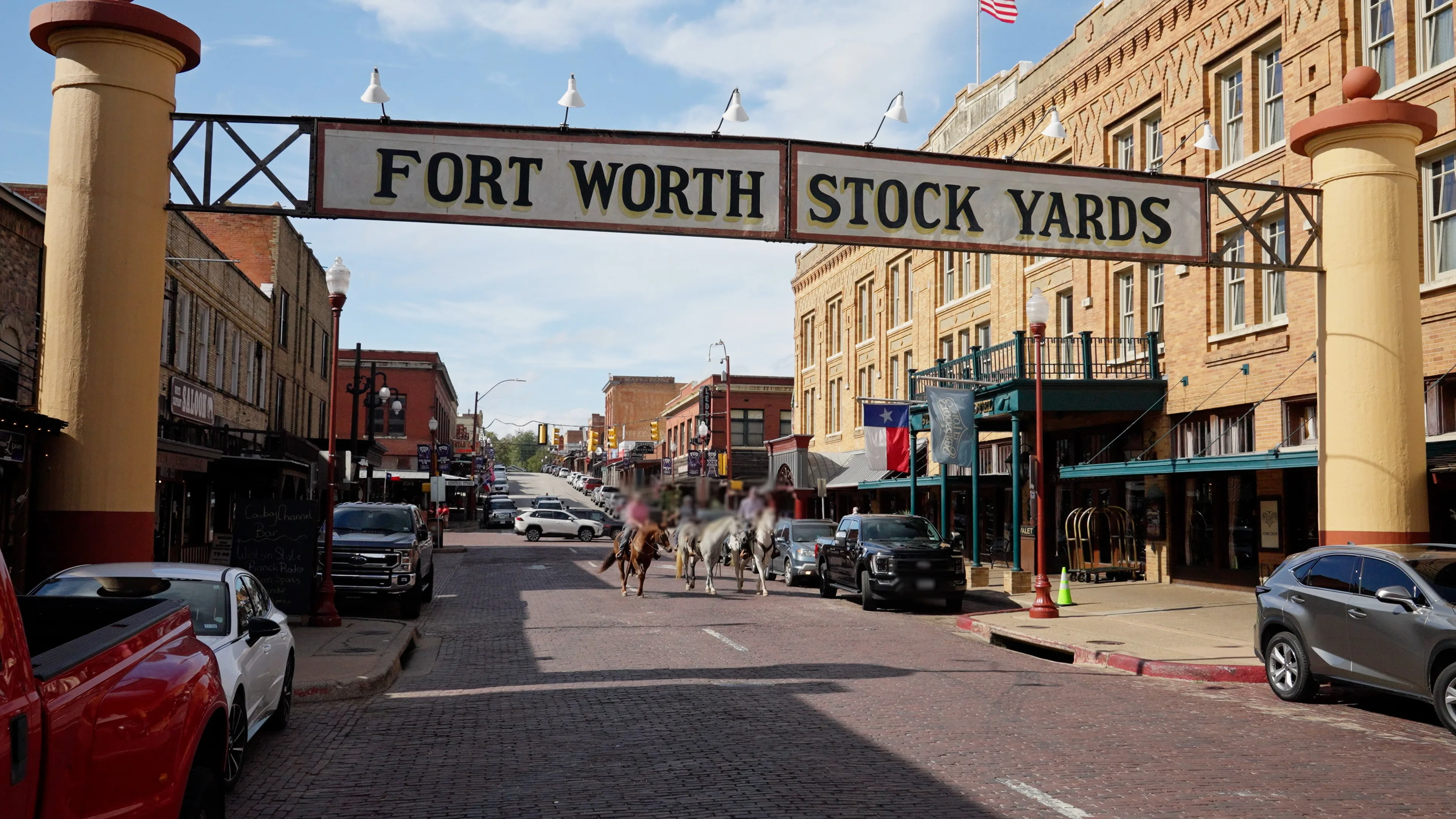
Local Expert Takeaway: The buyers who do best in Fort Worth are the ones who pick a corridor first and a specific house second. The westside historic band — Fairmount, Arlington Heights, Mistletoe Heights, Tanglewood — offers the most architectural character and the strongest long-term demand, but it prices above the city median and rewards buyers who understand school boundaries before they start touring. If price is the primary driver, Ridglea gives you established westside geography below that median. If lifestyle is the driver, Near Southside delivers the on-foot daily life that most of Fort Worth requires a car for. The mistake is buying a house without knowing which of those things you're actually buying.
Quick Takeaways & FAQs
✅ Fort Worth's westside historic corridor — Fairmount, Tanglewood, Mistletoe Heights, Arlington Heights — offers genuine architectural character and mature-tree streets that rival any neighborhood in the Dallas-Fort Worth metro.
⚠️ Fort Worth ISD holds a C rating, according to the Texas Education Agency, and campus-level variation is significant enough that school boundary research should happen before neighborhood selection, not after.
📍 Ridglea / Ridglea Hills is the one established westside neighborhood priced below the city-wide typical home price — the only way to get postwar ranch homes on generous lots without paying above-median.
Which Fort Worth neighborhood is best for walkability?
What is the most affordable established neighborhood in Fort Worth?
Are Fort Worth's historic neighborhoods good for families with kids?
How does Fairmount compare to Mistletoe Heights for a buyer choosing between them?
Is Near Southside a good place to buy, or mainly a rental market?
Moving to Texas?
Tell us what you need help with and we'll connect you with local resources.
