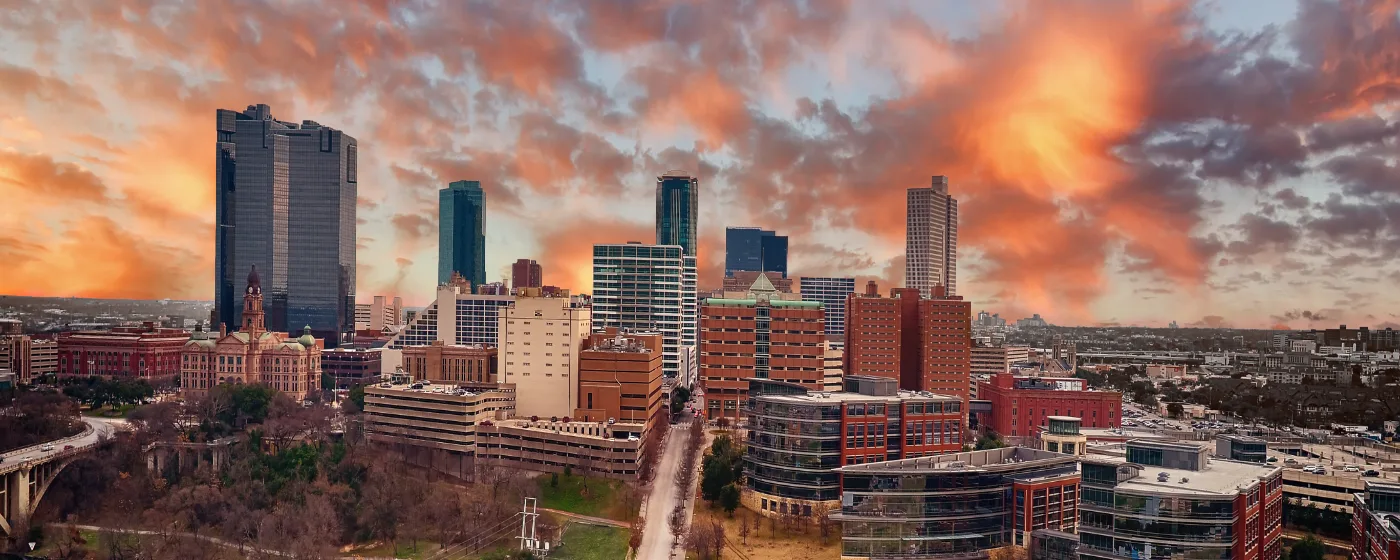
Fort Worth is not the retirement destination people picture when they think of Texas. They picture Hill Country towns or Gulf Coast sunsets. What they don't picture is a city of 1,028,117 people — the 4th-largest incorporated city in Texas — with a legitimate major-metro healthcare system, a cultural district that rivals cities twice its national profile, and a typical home price of $298,353 (July 2026) that looks almost impossible by the standards of most places retirees are moving from. The surprise, once you spend time here, is how livable the city actually is on a fixed income.
The economic backbone matters for retirees in a specific way: Fort Worth is anchored by major employers — Lockheed Martin Aeronautics, Bell Textron, BNSF Railway, American Airlines Group — which means the city supports a working population large enough to sustain real restaurants, real cultural institutions, and a functioning hospital system, without the cost of living that usually comes with that density. The Fort Worth Independent School District is a separate conversation for families with kids, but for retirees it signals one thing: the city runs a full-scale civic infrastructure. That matters when you're deciding whether a place can support you for the next twenty years.
Cost of living on a fixed income here is genuinely competitive with most Texas metros, and the state's tax posture toward retirees is among the most favorable in the country. Property taxes are the honest counterweight — the effective rate runs higher than many retirees expect — but Texas layered meaningful senior exemptions on top of that in 2025 that change the math considerably. Dallas/Fort Worth International Airport is 24 miles out, which means seeing family in any direction is a direct flight away, not a connection. For 229 sunny days a year and flat terrain suited to walking and cycling, the outdoor life here costs nothing extra.
Whether you're deciding between Fort Worth and a smaller Texas town, weighing the move from a higher-cost state, or trying to understand whether the healthcare infrastructure is deep enough for your needs, the sections below cover the retiree budget, senior healthcare access, walkability and community life, downsizing options, and an honest comparison of nearby retirement destinations.
Why Retirees Are Choosing Fort Worth
The case for Fort Worth in retirement starts with a number that still surprises people: a typical home price of $298,353 (July 2026). For retirees arriving from coastal California, the Pacific Northwest, or the Northeast, that figure represents a genuine equity unlock — selling a home worth $800,000 or $1.2 million and buying here outright, or close to it, with money left over to fund retirement income. That dynamic is real, and it's driving a meaningful share of the relocation decisions this city is seeing.
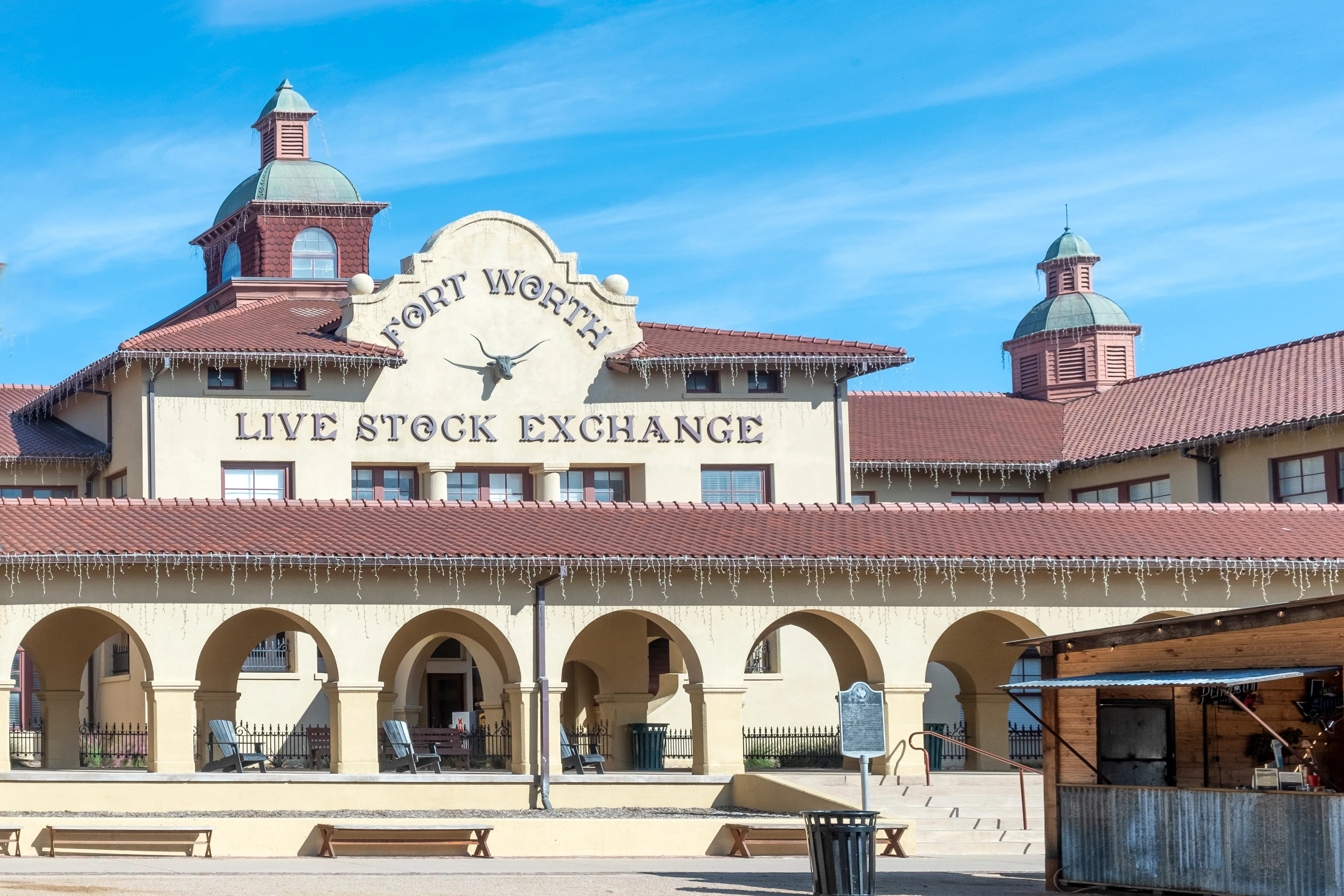
Fort Worth also fits retirees who want a full-service city without the relentless pace of Dallas. The Stockyards, Sundance Square, the Cultural District, Bass Performance Hall — this is a city with things to do on a Tuesday, not just a weekend. Culture-oriented retirees who want museum access built into their weekly routine will find the Kimbell Art Museum and the Amon Carter Museum of American Art within a walkable cluster in the Cultural District, which is something you simply don't get in smaller Texas towns.
The honest counterpoint: Fort Worth is car-dependent for most daily errands across most of the city. If you're coming from a place where you walked to the pharmacy or the coffee shop, that adjustment is real. Retirees who need or want to give up driving eventually will find the city's transit options limited compared with a Chicago or a Denver. And the summer heat — sustained triple-digit stretches — is not something to minimize. If you are heat-sensitive or prefer four mild seasons, this city will test you between June and September. For retirees who are comfortable behind the wheel, love warm weather most of the year, and value big-city amenities at a smaller-city price, Fort Worth is genuinely hard to argue against.
Healthcare & Medical Access in Fort Worth
Texas Health Harris Methodist Hospital Fort Worth is the nearest hospital and serves as a Level I Trauma Center — the highest designation in the trauma system, meaning it is equipped and staffed for the most complex emergencies around the clock. It holds The Joint Commission's Gold Seal of Approval and carries American Heart Association Advanced Certification for both Comprehensive Stroke Centers and Comprehensive Cardiac Center care. It was also the first North Texas hospital to earn the American College of Cardiology Transcatheter Valve Certification, which is relevant specifically for retirees: that certification covers the minimally invasive valve procedures that have become a standard part of cardiac care for older adults.
For research-driven specialty care, UNT Health Fort Worth — an academic health science center operating within the city — leads all Texas medical and health science centers in NIH-funded research growth as of 2026. That distinction matters less for routine care and more for retirees who may need access to clinical trials, emerging treatment protocols, or sub-specialty consultations that smaller markets simply cannot staff. The city is not Houston's Texas Medical Center in terms of sheer volume, but for most of what retirees need — cardiac care, orthopedics, cancer treatment, stroke response — Fort Worth's infrastructure holds up without requiring a drive.
The practical reality is that for advanced sub-specialty care — certain rare cancers, complex neurosurgery, pediatric subspecialties that aren't personally relevant but sometimes matter for grandchildren visits — the full depth of the Dallas medical system is about 35 minutes away. Most retirees will never need to leave the city for care, but knowing that depth is close rather than four hours away is part of why healthcare-conscious retirees keep landing here over smaller Texas markets.
The Retiree Budget in Fort Worth
Texas collects no state income tax. That means your Social Security benefits, pension payments, 401(k) and IRA withdrawals, and military retirement pay arrive without a state-level cut. Federal taxes may still apply depending on your total income picture, but the state takes nothing — and in November 2025, Texas voters constitutionally entrenched a ban on any future state estate, inheritance, or death tax via Proposition 8. For retirees doing multigenerational planning, that permanence matters.
Property taxes are where the conversation gets more complicated. Fort Worth's effective property tax rate runs approximately 1.47% — higher than most states retirees are moving from, and a genuine line item on a fixed-income budget. The meaningful offset came with Texas Proposition 11, approved by voters in November 2025: homeowners 65 and older now receive a combined $200,000 school-district homestead exemption. For seniors whose home is appraised at $200,000 or less, those combined exemptions effectively eliminate school district property taxes entirely. Beyond that, once you qualify for the over-65 exemption in Tarrant County, your school district property taxes are frozen at the level owed in the year you turn 65 — future appraisal increases cannot raise that portion of your bill.
Daily cost of living on a fixed income is genuinely workable here. The city-wide typical rent of $1,625 per month gives renters a reasonable baseline, and the full cost-of-living breakdown covers groceries, utilities, and transportation in more detail. The Fort Worth Botanic Garden — 120 acres, 23 specialty gardens, the oldest botanic garden in Texas — charges no admission for most of its grounds, and the Trinity River Trail system offers more than 100 miles of flat, paved paths connecting parks and neighborhoods at no cost. The cultural institutions in the city run regular programming for older adults, often at reduced rates. A retirement budget here can be stretched further than the headline home price might initially suggest.
Looking to buy in Fort Worth? Estimate your payment.
Enter your numbers to see an estimated monthly mortgage payment.
Estimate only. Excludes HOA fees and mortgage insurance. The interest rate above is a starting point, not a quoted rate — replace it with your own to see real numbers. Insurance is a flat placeholder, not a Fort Worth quote.
Walkability, Community & Staying Active in Fort Worth
Be honest with yourself about the car question before you commit to Fort Worth. Most of the city requires one. The overall walkability picture is car-dependent — most errands in most neighborhoods will mean driving. The exception is meaningful, though: if you buy or rent specifically in the Cultural District corridor, Downtown, or the pockets near TCU, the picture shifts considerably. The Cultural District puts the Kimbell Art Museum and the Amon Carter Museum of American Art within walking distance of each other, and that kind of density — real museums, accessible on foot — is rare at this price point in Texas.
For active retirees who are comfortable behind the wheel to get somewhere and then walk once they're there, Fort Worth delivers. The Trinity River Trail spans more than 100 miles of paved and natural-surface paths connecting 31 neighborhoods and 21 parks, running along flat terrain that's accessible regardless of fitness level. It links the Fort Worth Botanic Garden, the Fort Worth Zoo, the Fort Worth Stockyards National Historic District, and downtown in a single continuous system. Trinity Park is a natural gathering point along that corridor. The Fort Worth Nature Center & Refuge adds more than 20 miles of trails through forests, wetlands, and prairies — genuinely wild terrain within city limits, anchored by the Hardwicke Interpretive Center.
Culture, Community, and the Social Calendar
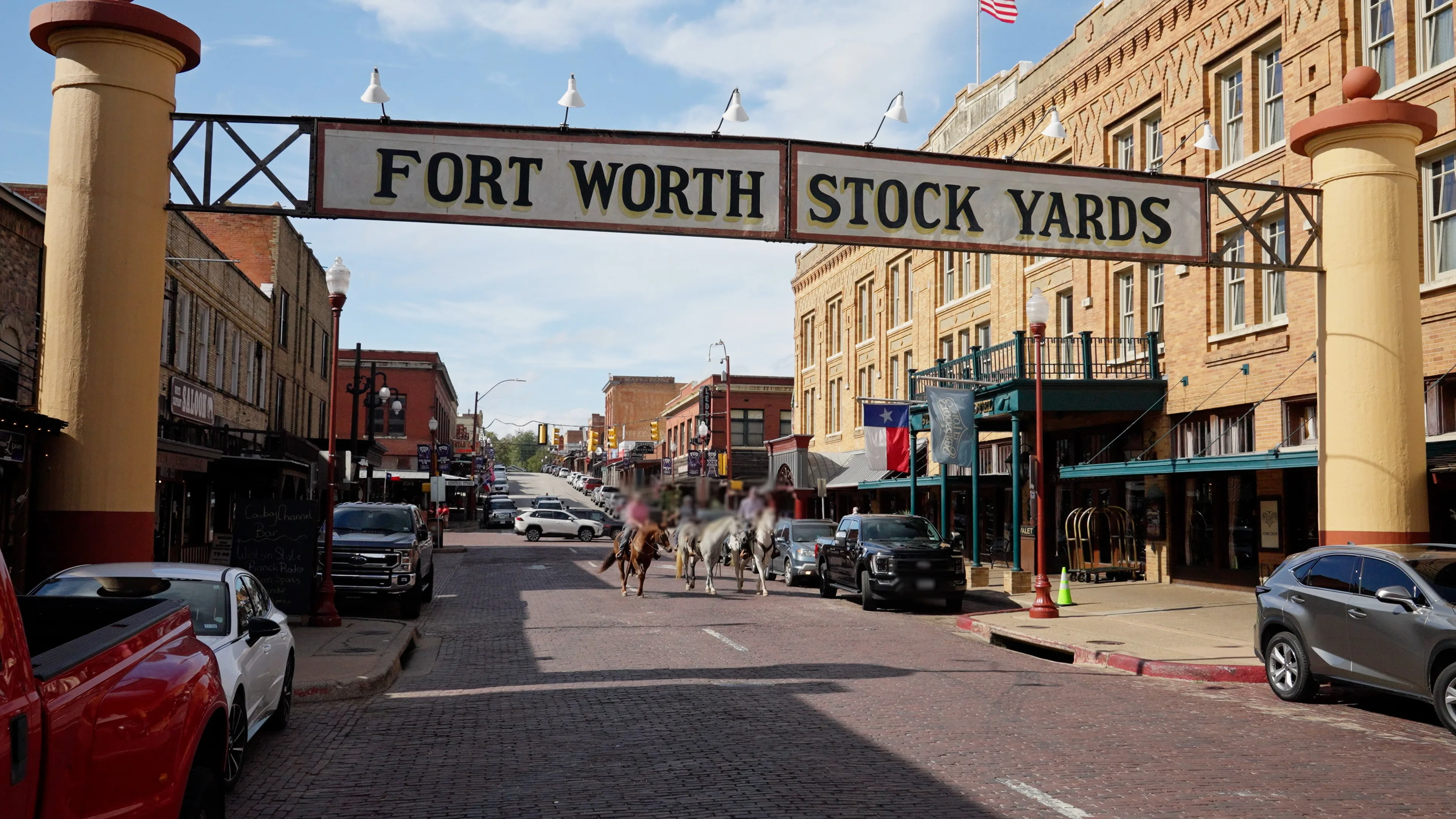
Retirees who want a sustained cultural life will find Fort Worth punches well above what its reputation outside Texas would suggest. Bass Performance Hall hosts world-class performances year-round. The Rufe Snow Farmers Market and The Clearfork Farmers Market both draw regular crowds and function as genuine community gathering points, not just shopping trips. For retirees who moved somewhere smaller and missed the texture of a real city — the street-level energy of Sundance Square on a weekday afternoon, the Fort Worth Stockyards on a weekend — this city provides that without requiring you to drive to Dallas to get it.
One thing retirees discover after six months: the summer months genuinely reshape outdoor life here. The Trinity River Trail that feels like a sanctuary in October becomes a heat-management exercise by July. Locals adapt — earlier morning walks, more time in the cultural institutions, a shift to evening outings — but if you're visiting Fort Worth to assess it as a retirement destination, do yourself a favor and come in August, not March.
Right-Sizing: Downsizing in Fort Worth
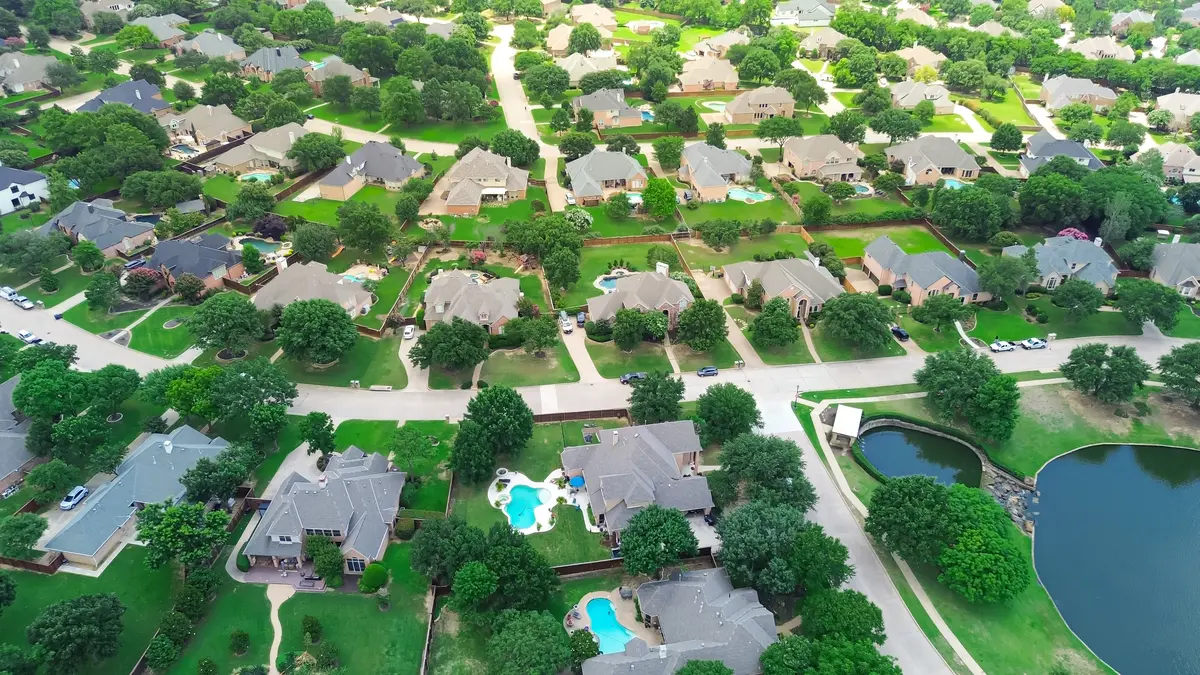
Fort Worth's single-level housing stock is more available here than in many Texas metros simply because the city's residential development happened largely in an era of ranch-style construction. Older neighborhoods like Ridglea, Wedgwood, and Ryan Place contain substantial numbers of single-story homes that translate well to aging-in-place living — manageable lots, covered porches, and room layouts that don't require navigating stairs. The neighborhood guide covers the character of specific areas in more depth.
The dedicated 55+ community option within Fort Worth city limits is Ladera at Tavolo Park — an age-restricted community offering homeownership in a master-planned setting with HOA-managed amenities. It is the only verified in-city age-restricted community for purchase; the Fort Worth metro's broader suburban ring offers more options, but Ladera at Tavolo Park is the one that keeps you inside city limits with access to Fort Worth's full infrastructure.
For retirees who want to rent rather than own in this phase, independent living communities in Fort Worth start at approximately $2,816 per month on average, according to A Place for Mom's mid-2026 pricing data — a figure that covers the community fee itself and not personal care add-ons. That positions Fort Worth's senior rental market as competitive within the broader Texas metro landscape, though it's worth noting that demand for this kind of housing is rising: a 2025 55+ Housing Survey found that more than 53 percent of older adults say they'd prefer to live in a 55-plus community, and that shift is visible in the Fort Worth metro's development pipeline.
The practical advice for downsizers: don't assume single-level inventory is unlimited just because the price point is accessible. Well-maintained ranch homes in established neighborhoods move, and buyers looking specifically for no-step entries, wider doorways, or ground-floor primary suites may need to be patient or budget for targeted renovations. The buying process page covers financing mechanics for this market in more detail.
Fort Worth vs Nearby Retirement Destinations
| City | Cost vs Fort Worth | Primary Hospital | Walkability | Senior Living Depth | Overall Retirement Fit |
|---|---|---|---|---|---|
| Fort Worth | The baseline | Level I Trauma Center; cardiac and stroke certifications; academic health center | Car-dependent overall; inner corridors walkable | One verified 55+ purchase community; broad independent living market | Strong for healthcare, culture, and price-conscious buyers |
| Arlington | About the same | Major regional hospital; solid acute care | Car-dependent throughout | Multiple senior living options; fewer age-restricted purchase communities | Good value; fewer cultural amenities than Fort Worth |
| North Richland Hills | Noticeably higher | Nearby major systems; no standalone Level I trauma | Suburban and car-dependent | Some senior living options; smaller overall inventory | Quieter suburban feel; higher cost narrows the value case |
| Keller | Noticeably higher | Relies on Fort Worth and NRH systems | Car-dependent; limited walkable core | Limited age-restricted options; strong single-family stock | Best for retirees prioritizing quiet, newer construction, and school-district prestige for visiting grandchildren |
| Benbrook | Noticeably cheaper | Relies on Fort Worth systems; short drive to full care | Car-dependent; lakeside setting | Limited dedicated senior living; strong single-level ranch inventory | Appealing for retirees who want lower density and proximity to Lake Worth without sacrificing Fort Worth access |
| Haltom City | Noticeably cheaper | Relies on Fort Worth systems nearby | Car-dependent; working-class suburban grid | Limited senior-specific inventory | Most affordable entry point in the immediate metro; trade-off is fewer amenities and older infrastructure |
On pure cost, Benbrook and Haltom City both come in below Fort Worth — meaningful for retirees on a tight fixed income who still want proximity to Fort Worth's hospitals and cultural institutions. On healthcare depth, no nearby city matches what Fort Worth itself offers; all of them rely on driving to Fort Worth or Dallas for anything above routine acute care.
Keller and North Richland Hills come in noticeably higher on home prices without delivering meaningfully better healthcare access — the compromise there is suburban quietude and newer construction, which suits retirees who prioritize a calmer setting over walkable culture. Arlington is the closest to a true peer: similar cost, solid hospital infrastructure, but notably thinner on the arts-and-culture side that makes Fort Worth's Cultural District a genuine differentiator.
The honest summary: if healthcare access and a real cultural life at an accessible price are your criteria, Fort Worth is the strongest answer in its own immediate metro. If you want lower density and don't mind a short drive to the city, Benbrook offers the most natural compromise.
Local Expert Takeaway: Fort Worth is a serious retirement option, not a compromise one. The city's Level I Trauma Center and academic health science center handle the medical side at a level most similarly priced markets cannot match. The Kimbell and the Amon Carter anchor a Cultural District walkable enough to use without a car on that corridor. The Trinity River Trail gives you more than 100 miles of flat paths to fill your mornings. And Texas Proposition 11 — passed in November 2025 — meaningfully changed the property tax math for homeowners 65 and older. The city will require a car for most daily life, and August heat is not negotiable. But for retirees who want big-city infrastructure at a price that lets them fund the rest of retirement, Fort Worth consistently outperforms its reputation.
Quick Takeaways & FAQs
✅ Texas collects no state income tax on Social Security, pensions, or retirement account withdrawals, and 2025's Proposition 11 added a $200,000 school-district homestead exemption for homeowners 65 and older — one of the strongest senior property-tax packages in the country.
⚠️ Fort Worth is car-dependent across most of the city, and summer heat from June through September is sustained and serious — retirees who plan to give up driving or are heat-sensitive will find real friction here.
📍 The Cultural District puts the Kimbell Art Museum and the Amon Carter Museum of American Art within a walkable cluster — a rare combination of genuine museum depth and accessible home prices that sets Fort Worth apart from most Texas retirement markets.
Is Social Security taxed in Fort Worth, Texas?
What property tax breaks do seniors get in Fort Worth?
What is the nearest hospital to Fort Worth for serious medical care?
Are there 55+ communities to buy into in Fort Worth?
How walkable is Fort Worth for retirees who want to give up a car?
Moving to Texas?
Tell us what you need help with and we'll connect you with local resources.
