
Most first-time buyers assume they missed their window — that Fort Worth got too expensive, too fast, and the spreadsheet no longer works. The reality is more complicated, and more encouraging. The typical home price here is $298,353 (Zillow Home Value Index, July 2026), which puts Fort Worth well below Austin and broadly competitive with Dallas on price. Housing costs run roughly 12% below the national average, and WalletHub recently ranked Fort Worth 22nd out of the 69 largest U.S. cities for first-time homebuyers. That does not mean buying here is easy. But it does mean the math can still close in a way that it simply cannot in many comparable metros.
The economic floor under that math is real. Major employers like Lockheed Martin Aeronautics, Bell Textron, BNSF Railway, and American Airlines Group anchor a job base that spans aerospace, defense, freight logistics, and aviation — sectors that tend to hold through slow periods. Job growth in the three months ending May 2026 ran at 3.4%, outpacing the statewide rate of 2.3%. Texas also levies no state personal income tax, which meaningfully stretches a household budget that is already trying to cover a down payment, closing costs, and the first year of homeownership. The Fort Worth Independent School District serves 67,491 students enrolled in 2025-26 and holds a C rating, according to the Texas Education Agency — something families with school-age children should factor in before choosing a neighborhood. For a full breakdown of schools, see the Fort Worth schools guide.
The cost picture is genuinely competitive, but first-time buyers need to understand one structural friction: the median household income of $79,507 sits just below the income needed to comfortably carry the typical home here. That gap is not catastrophic — it is closer than in most major Texas cities — but it means budgeting honestly matters more than it does in markets where prices have more room to breathe. First-time buyers have made up a shrinking share of the national market in recent years, a reminder that the conditions making it hard everywhere are real, even when a specific market is relatively approachable compared to the coasts.
Whether you are trying to figure out what your budget actually buys, how the local process works, or which mistakes most often derail first-time buyers in Tarrant County, the sections below cover each step with the specificity Fort Worth deserves.

The Fort Worth First-Time Buyer Reality
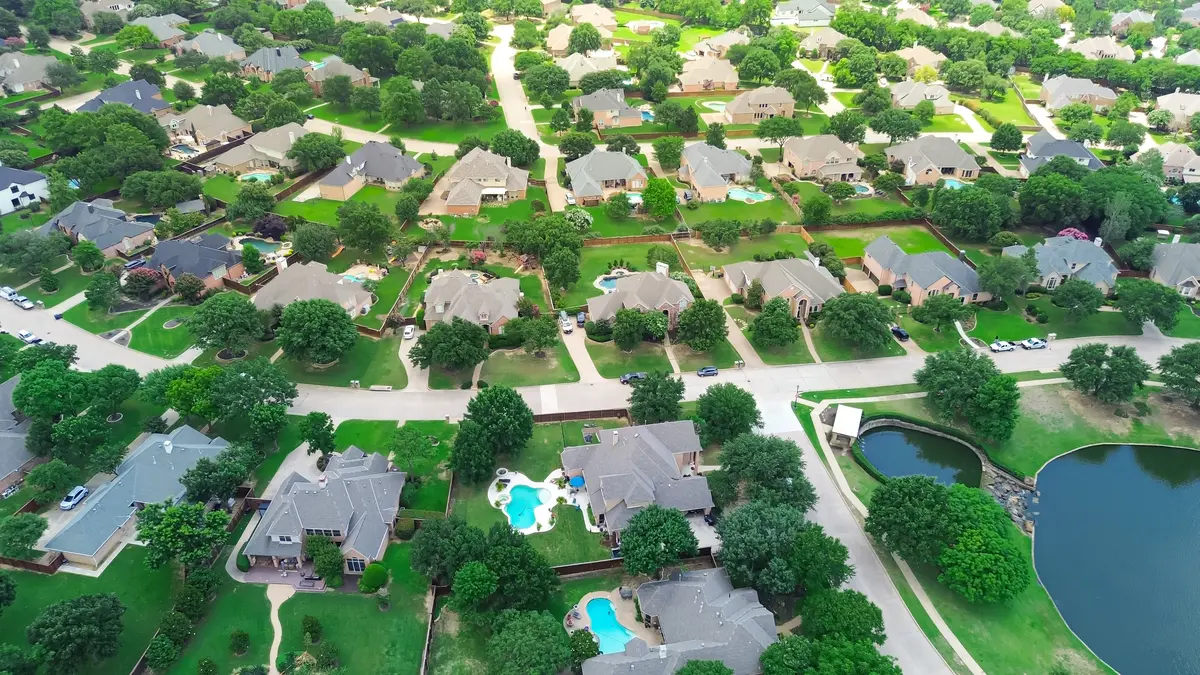
The $298,353 typical home price (Zillow Home Value Index, July 2026) is the most important number on this page — and it is more useful when you understand what it actually buys. In Fort Worth's entry-level price bands, that figure gets you a solid three-bedroom, two-bath house in established neighborhoods like Wedgwood or Ridglea Hills, typically with a yard and a garage, on a lot that has been in the same hands for decades. These are real houses, not condos or townhomes, which is genuinely uncommon at this price point among cities of Fort Worth's size.
Entry points below the city median do exist, particularly in parts of the east side and some older stock near Haltom City's border — but those require eyes-open awareness of deferred maintenance, neighborhood trajectory, and school boundaries. For buyers set on the established west-side neighborhoods like Arlington Heights or Fairmount, where character homes and walkable streets come at a premium, budgets need to stretch noticeably above the city median. Ryan Place and Mistletoe Heights, two of the more competitive inner-loop neighborhoods, also run above that figure. For the full neighborhood breakdown, see the Fort Worth neighborhoods guide.
What makes the Fort Worth market genuinely workable for first-timers right now is a combination of price moderation and a stable job market. Well-priced homes in desirable areas attract real competition, so buyers who show up pre-approved and ready to move have a clear advantage over those who are still sorting out their financing. The catch: property taxes here carry weight. The effective rate in Tarrant County runs approximately 1.47%, and on a $298,353 purchase that is a meaningful annual line item — one the interactive calculator below can help you model. File for the Tarrant Appraisal District homestead exemption as soon as you close; the statewide school-district exemption alone shields $140,000 of assessed value from that portion of the tax, and Tarrant County adds a 20% optional exemption on top of that for county taxes. The deadline is before May 1 of the tax year, and it costs nothing to file.
The Homebuying Process in Fort Worth, Step by Step
Step 1: Get Pre-Approved Before You Do Anything Else
In Fort Worth, pre-approval is not a formality — it is the admission ticket. Sellers and their agents in competitive neighborhoods routinely decline to show homes to buyers who cannot produce a pre-approval letter upfront. This means locking down a lender, submitting income documentation, and receiving a written commitment before you schedule a single tour. Buyers who shop first and pre-approve second waste weeks and occasionally lose a property they had already mentally moved into.
Step 2: Define Your Search Before You Tour
Fort Worth is geographically large — the 4th-largest incorporated city in Texas — and the character of neighborhoods shifts significantly across it. Before touring, decide which school feeder zones matter to you, how you feel about a commute on I-30 or I-35W versus a shorter drive within the city, and what your non-negotiables are on lot size and age of construction. Showing up to tour homes without this clarity leads to fatigue, scope creep, and offers made emotionally rather than strategically.
Step 3: Make an Offer That Accounts for Local Conditions
The DFW market has moved toward more buyer-favorable conditions than in recent years, and buyers now have more room to negotiate in many parts of the city — but this does not apply uniformly. Well-located, well-priced homes in Fairmount, Near Southside, and Ryan Place still draw multiple offers. Your agent's knowledge of which specific streets are competitive and which have sitting inventory is worth more than any metro-wide generalization. An escalation clause or a clean offer without unnecessary contingencies can matter in the right situation; your agent should advise based on comparable sales in that specific neighborhood, not the market at large.
Step 4: Inspection and Appraisal — Do Not Skip Either
This is where first-time buyers in Fort Worth most often make a costly error: waiving the inspection contingency to compete, or treating the inspection as a checkbox rather than a tool. Fort Worth's housing stock includes a significant share of 1950s through 1980s construction, and foundation issues tied to the area's expansive clay soil are common enough that a foundation inspection — not just a general inspection — is worth adding separately. Appraisal gaps have become less common as prices moderated, but if the appraisal comes in below purchase price, you need to know in advance how you will handle it.
Step 5: Closing in Tarrant County
Texas is an attorney-optional closing state, meaning most residential closings in Tarrant County run through a title company rather than a law firm. Closings typically take 30 to 45 days from executed contract. Expect to sign a substantial document package and bring your closing costs in the form of a wire or certified funds — personal checks are not accepted at the closing table. Budget 2% to 3% of the purchase price for closing costs on top of your down payment, and confirm the exact figure with your lender at least three business days before closing, when federal law requires them to deliver the final settlement document.
How Much Home Can You Afford in Fort Worth
The table below models five realistic purchase scenarios for first-time buyers in Fort Worth, using FHA and conventional loan structures at different price points. Down payments are the program minimums; closing costs are estimated at 2.5% of purchase price, which is a reasonable planning figure for Tarrant County. These are estimates — your lender will give you exact figures based on your credit profile, loan terms, and the specific property. Use the interactive mortgage calculator below to model monthly payments at current rates.
| Scenario | Purchase Price | Down Payment | Est. Closing Costs | Cash Needed at Table |
|---|---|---|---|---|
| FHA — entry-level | $220,000 | $7,700 (3.5%) | ~$5,500 | ~$13,200 |
| FHA — city median | $298,353 | $10,443 (3.5%) | ~$7,459 | ~$17,902 |
| Conventional — entry-level | $220,000 | $6,600 (3%) | ~$5,500 | ~$12,100 |
| Conventional — city median | $298,353 | $8,951 (3%) | ~$7,459 | ~$16,410 |
| Conventional — established neighborhood | $350,000 | $10,500 (3%) | ~$8,750 | ~$19,250 |
| Conventional — premium west-side | $425,000 | $21,250 (5%) | ~$10,625 | ~$31,875 |
A few Fort Worth-specific factors shape these numbers. Texas has no state income tax, which frees up monthly cash flow relative to buyers relocating from states like California or New York. On the other side of the ledger, the effective property tax rate in Tarrant County runs approximately 1.47% — significant enough that it belongs in every budget conversation from day one, not after you have already fallen in love with a house. Filing the homestead exemption with the Tarrant Appraisal District shortly after closing shields $140,000 of your assessed value from the school-district portion of the tax, reducing the effective bill meaningfully. For a full cost-of-living breakdown including taxes, see the Fort Worth cost of living guide.
Looking to buy in Fort Worth? Estimate your payment.
Enter your numbers to see an estimated monthly mortgage payment.
Estimate only. Excludes HOA fees and mortgage insurance. The interest rate above is a starting point, not a quoted rate — replace it with your own to see real numbers. Insurance is a flat placeholder, not a Fort Worth quote.
Common First-Time Buyer Mistakes in Fort Worth
Skipping Pre-Approval Until After You Find a House
This is the single most common derailment, and it costs buyers in two ways. First, they tour homes they cannot actually afford, recalibrate their expectations upward, and then find the pre-approved budget disappointing. Second, they lose properties. In any Fort Worth neighborhood where homes move quickly, a seller who receives a pre-approved offer alongside yours will take the sure thing. Pre-approval takes a few days at most — there is no strategic reason to defer it.
Waiving the Inspection to Compete
Buyers who waived inspections during the heated 2021-2022 market are now dealing with foundation repairs, aging HVAC systems, and plumbing surprises in Fort Worth's older housing stock. The clay soil that defines Tarrant County is notoriously active — it expands and contracts with seasonal moisture swings, and foundation movement in 1960s and 1970s construction is common rather than exceptional. A general inspection plus a dedicated foundation inspection is the floor, not a luxury. Never waive it entirely; negotiate the repair credits or the price instead.
Ignoring School Boundaries Until After the Offer
Fort Worth Independent School District attendance boundaries do not follow neighborhood names cleanly. Two houses on the same block can feed into different elementary schools, and the difference can matter significantly to families with kids. Fort Worth ISD holds a C rating, according to the Texas Education Agency — but individual campus performance varies considerably. Confirm the exact feeder school for any property you are serious about before submitting an offer, not after. The Fort Worth schools guide breaks down what that means across the district.
Underestimating the Cash Needed at Closing
First-time buyers consistently focus on the down payment and forget that closing costs in Texas run 2% to 3% of the purchase price on top of it. On a $298,353 purchase with a 3.5% FHA down payment, that means arriving at the table with roughly $17,000 to $18,000 in cash — not the $10,000 many buyers mentally planned for. Add in moving costs, initial maintenance reserves for an older home, and the cost of any inspections, and the true cash requirement at purchase is often $5,000 to $8,000 higher than buyers first expect. Build that buffer into your savings target before you start touring, not after.
Choosing a Neighborhood Without a Commute Reality Check
Fort Worth is large, and the freeway network — I-30, I-35W, I-820, and SH-121 among them — shapes daily life in ways that are hard to appreciate from a map. A house in far north Fort Worth near the Alliance corridor is an entirely different commute experience from one near Near Southside, even if the prices look similar on paper. If your job is in the eastern part of the metro, the drive of about 35 minutes to Dallas from central Fort Worth can stretch considerably depending on where in the city you start. Test your actual commute at rush hour before making an offer on a house in a part of the city you have only visited on a weekend. For more on commute patterns across the city, see the Living in Fort Worth guide.
Local Expert Takeaway: Fort Worth is one of the few large Texas cities where a first-time buyer with a conventional income can still find a three-bedroom house — not a condo, a house — near the city median price. The homestead exemption filing with the Tarrant Appraisal District is the single most actionable step new owners overlook; it costs nothing and meaningfully reduces your taxable value from year one. Get pre-approved before you tour anything, budget 2.5% of purchase price for closing costs on top of your down payment, and do not skip the foundation inspection on any home built before 1990.
Quick Takeaways & FAQs
✅ Fort Worth's typical home price of $298,353 (July 2026) is well below Austin and still competitive with Dallas, giving first-time buyers real options at the city median.
⚠️ The effective property tax rate of approximately 1.47% is a significant line item — buyers who skip the Tarrant Appraisal District homestead exemption filing leave meaningful savings on the table every year.
📍 Foundation inspections are not optional in Fort Worth — Tarrant County's expansive clay soil means foundation movement in older homes is common, and a general inspection alone will not catch it.
What credit score do I need to buy a home in Fort Worth?
How long does it take to close on a home in Fort Worth?
What is the Tarrant County homestead exemption and how do I apply?
Is Fort Worth a buyer's market right now?
How do Fort Worth home prices compare to nearby cities?
Moving to Texas?
Tell us what you need help with and we'll connect you with local resources.
