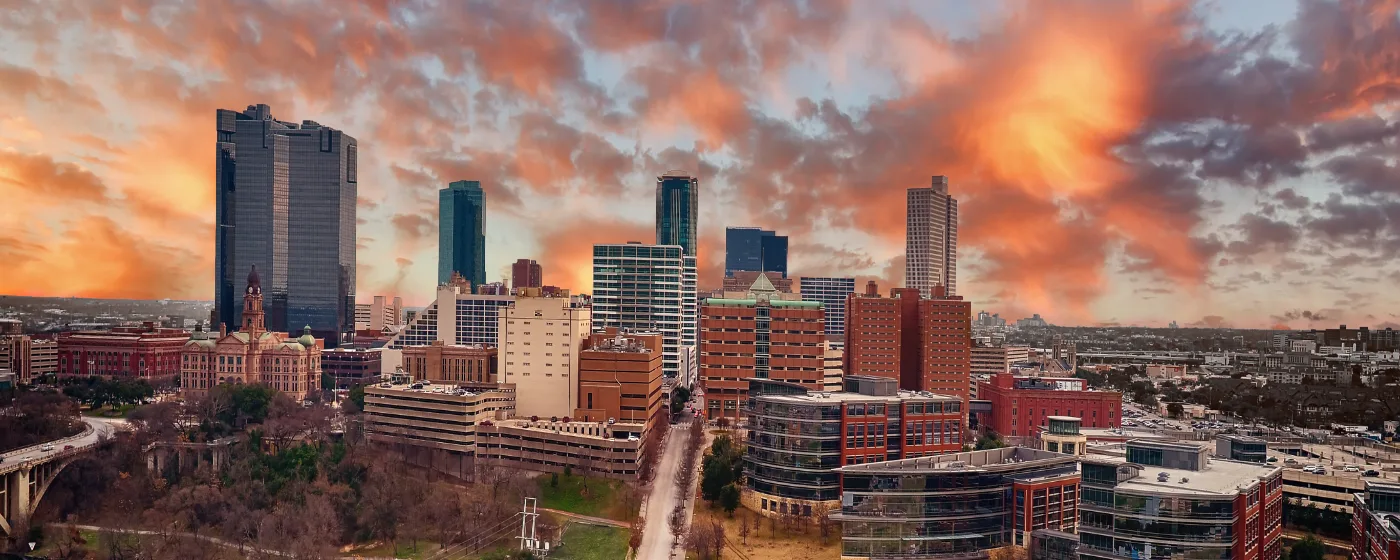
You've done the spreadsheet. Fort Worth checks the boxes on paper — a typical home price well below what you left behind, no state income tax, and a job market that added tens of thousands of positions metro-wide in the past year alone. But spreadsheets don't tell you that Fort Worth is the 4th-largest incorporated city in Texas, with 1,028,117 residents, a genuine arts district anchored by the Kimbell Art Museum and Bass Performance Hall, and a Stockyards district that is nothing like what the tourism brochures suggest. It's a real, working city with real tradeoffs, and the gap between its numbers and California's numbers is large enough that most people who move here take several months to fully absorb it.
Fort Worth's economy is built on a diversified employer base that has cushioned it against the single-sector collapses that have hit other metros hard. Lockheed Martin Aeronautics and Bell Textron anchor the aerospace and defense side. American Airlines Group and BNSF Railway anchor aviation and freight logistics. The Fort Worth Independent School District and the City of Fort Worth are among the largest public employers. That mix — defense, transportation, public sector — means the city doesn't live and die on tech funding cycles or energy prices alone, which matters if you're coming from a California market that's been jolted by both. The Fort Worth ISD is one of the largest school districts in North Texas and holds a C rating, according to the Texas Education Agency; families with school-age children will want to read the full schools breakdown before choosing a neighborhood.
Fort Worth has 229 sunny days a year — fewer than the 300-days figure California coastal marketers like to use, but comparable to much of inland California, and paired with genuine seasons. The Trinity River Trail, Fort Worth Botanic Garden, Fort Worth Nature Center & Refuge, and Lake Worth give the city a recreational backbone that surprises people who expect a flat, treeless Texas prairie. On cost, the city-wide typical home price stood at $298,353 as of July 2026 (Zillow Home Value Index) — a figure that lands like a gut punch to anyone who spent years watching California prices move in the opposite direction. Typical rent runs $1,625/mo citywide, which is a meaningful contrast to what most Californians are accustomed to paying.
Whether you're being relocated here by an employer, escaping California's housing costs, or simply tired of watching your income tax bill climb, the sections below break down the real California-to-Fort Worth comparison on home prices, property taxes, income taxes, sales taxes, and what daily life actually costs once you land here.
The Home Price Gap Is Real — and Bigger Than You Think
California's statewide typical home value of $773,735 is already a statewide average that smooths over the most expensive markets. Fort Worth's typical home price of $298,353 (Zillow Home Value Index, July 2026) is not a different tier of the same market — it's a fundamentally different ownership equation.
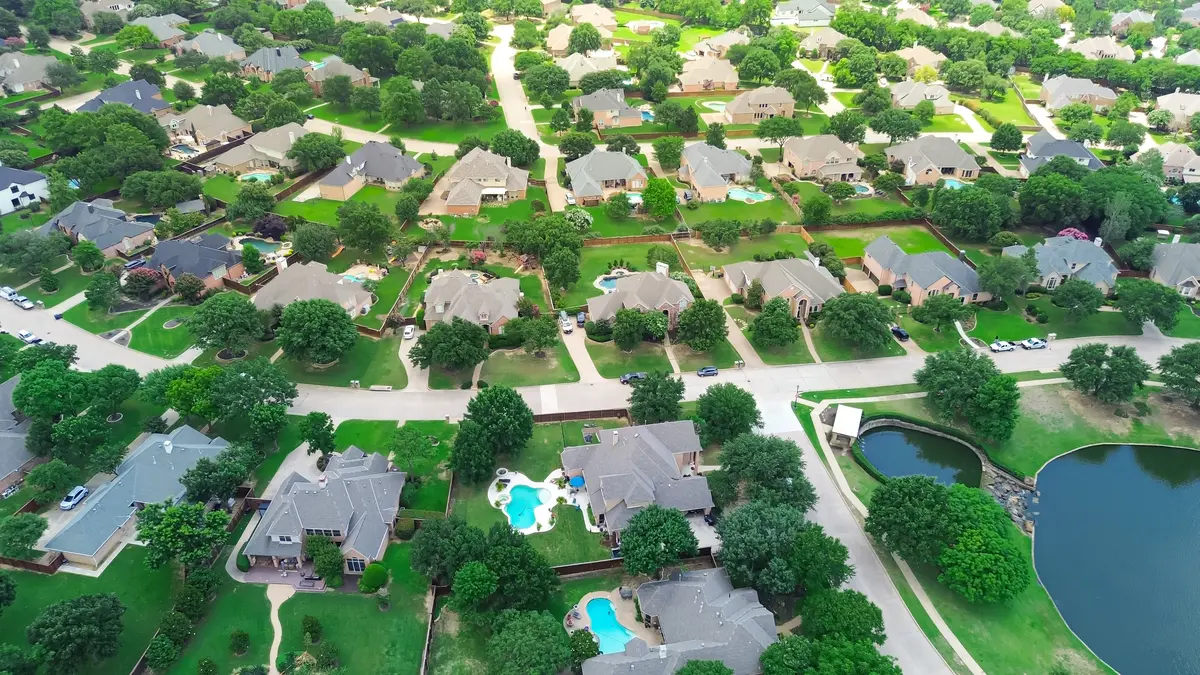
What that gap actually means in practice: a buyer who could afford a modest two-bedroom condo in a mid-tier California suburb may find themselves qualifying for a detached single-family home in established Fort Worth neighborhoods like Wedgwood or Ridglea. Neighborhoods like Tanglewood, Fairmount, Mistletoe Heights, and Ryan Place run above the city-wide median; Ridglea runs below it. Even the above-median neighborhoods here trade at price points that would represent significant savings against what you left behind in California.
One thing Californians consistently underestimate: while the purchase price is dramatically lower, Fort Worth's 1.47% effective property tax rate is more than double California's effective property tax rate of 0.71%. California's rate is held low by a long-standing 1978 ballot measure that caps annual reassessment increases at 2% and only resets to market value upon sale. Texas reassesses annually at market value, with no comparable statewide cap.
That said, Texas has been moving to soften the blow. Texas voters approved a constitutional amendment in November 2025 — a separate Texas ballot measure also called Proposition 13 — raising the homestead exemption for school district property taxes from $100,000 to $140,000, effective for the 2025 tax year. Homeowners 65 and older qualify for a $150,000 exemption. For a home at the city-wide typical price, that exemption meaningfully reduces the taxable base.
One structural detail every buyer should know: property taxes in Fort Worth are set by stacked taxing authorities — Tarrant County, the city itself, and the applicable school district — so the effective rate varies by where exactly in the city you buy. Request a full tax-district breakdown for any specific address before you close. The 1.47% figure is the city-wide effective rate; your address may land differently. For the full cost-of-living picture, see the Fort Worth cost-of-living page.
On homeowners insurance: California's market has deteriorated sharply in recent years, with average annual premiums reaching an estimated $2,843 and more than half a million Californians now relying on the state's insurer of last resort after major carriers restricted coverage. Fort Worth sits in a different insurance environment — competitive, with private coverage generally available — though Texas is not without its own weather-related risk, and anyone moving from California should shop coverage carefully before assuming any single premium estimate applies to their specific property.
State Income Tax: The Number That Changes the Math on Everything
Texas levies no state income tax. That single fact reshapes what a Fort Worth salary is actually worth relative to what the same salary was worth in California.
California's top state income tax rate of 13.3% applies only to the highest earners, but the bracket structure starts at 1% and moves upward through ten progressive brackets that hit well-compensated professionals before the top rate kicks in. A household earning the kind of income that lets someone buy in a competitive California market is almost certainly paying a meaningful share of that income to the California Franchise Tax Board every April.
In Fort Worth, that entire line item disappears. For a household earning $150,000, the difference between California's bracket and zero is not a rounding error — it is a material increase in take-home pay that compounds every year. Over a decade, that difference can represent a down payment on its own.
This is the single largest driver behind the migration pattern that has brought more than 700,000 Californians to Texas between 2020 and 2025. It is also the thing that most people who run the numbers say they wish they had understood earlier, because it changes the real cost comparison between buying in California and buying in Fort Worth in ways that a simple home-price comparison misses entirely.
Fort Worth is within the Dallas-Fort Worth metro, which added 54,600 nonfarm jobs in the twelve months ending June 2026 — a 1.3% gain and one of the strongest performances among the nation's twelve largest metros over that period. For someone relocating with a remote role or negotiating a Texas-based offer, the income tax difference is immediate; for someone entering the local job market, the combination of a growing employer base and zero state income tax represents a genuinely different financial starting point than what most California markets offer.
Sales Tax, Insurance, and the Costs Californians Don't Expect
Fort Worth's combined sales tax rate is 8.25% — composed of Texas's 6.25% state rate plus 2% in local additions. California's statewide base sales tax rate of 7.25% is the highest base rate in the country, and local additions in many California cities push the combined rate well above 9% or even 10%. On this one measure, Fort Worth actually comes in lower than much of California.
What surprises most Californians after six months here is not the tax bill — it's the car dependency. Fort Worth is a driving city. I-20, I-30, I-35W, and I-820 carry the bulk of movement across and through the metro, and the city's layout means that almost every errand, school run, and social trip requires a vehicle. If you were living in a walkable California neighborhood or relying on transit, the adjustment here is real. Budget for a second car before you arrive, not after.
Healthcare costs are worth a sentence here: insurance premiums generally run noticeably below what you were paying in California, which is part of the broader cost-of-living shift. The honest tradeoff is that the specialist and subspecialty infrastructure of a place like the Bay Area or Los Angeles is simply not matched in Fort Worth at the same density, and some advanced care means traveling. For most day-to-day and routine needs, the city is well-served.
The overall cost-of-living gap between Texas and California runs roughly 30 to 40% in Texas's favor, driven primarily by housing and the income tax difference. Groceries, utilities, and transportation costs inside the city are more modest contributors, but they add up. The cost-of-living page breaks down each of those line items in detail.
Looking to buy in Fort Worth? Estimate your payment.
Enter your numbers to see an estimated monthly mortgage payment.
Estimate only. Excludes HOA fees and mortgage insurance. The interest rate above is a starting point, not a quoted rate — replace it with your own to see real numbers. Insurance is a flat placeholder, not a Fort Worth quote.
What Fort Worth Actually Feels Like Coming from California
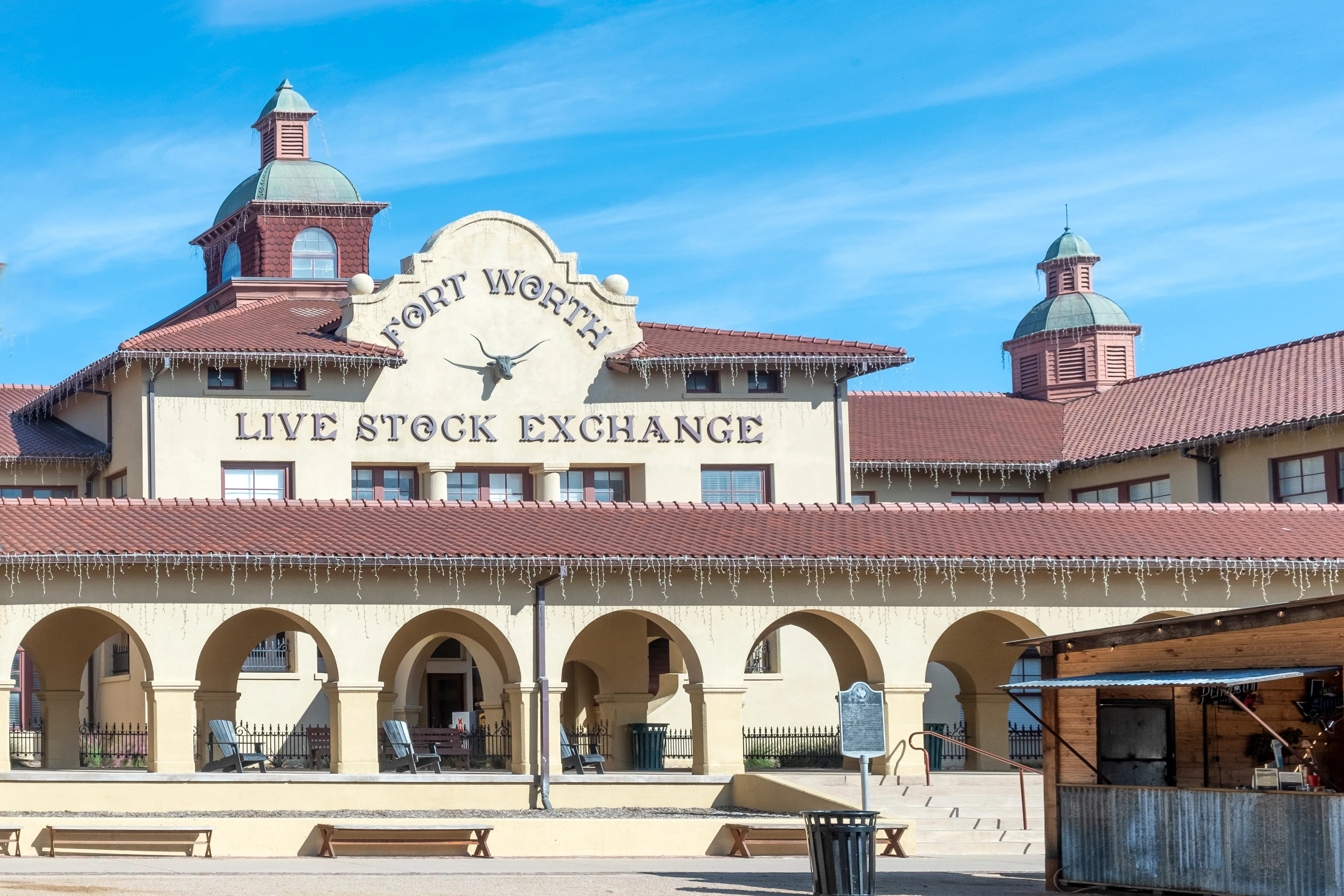
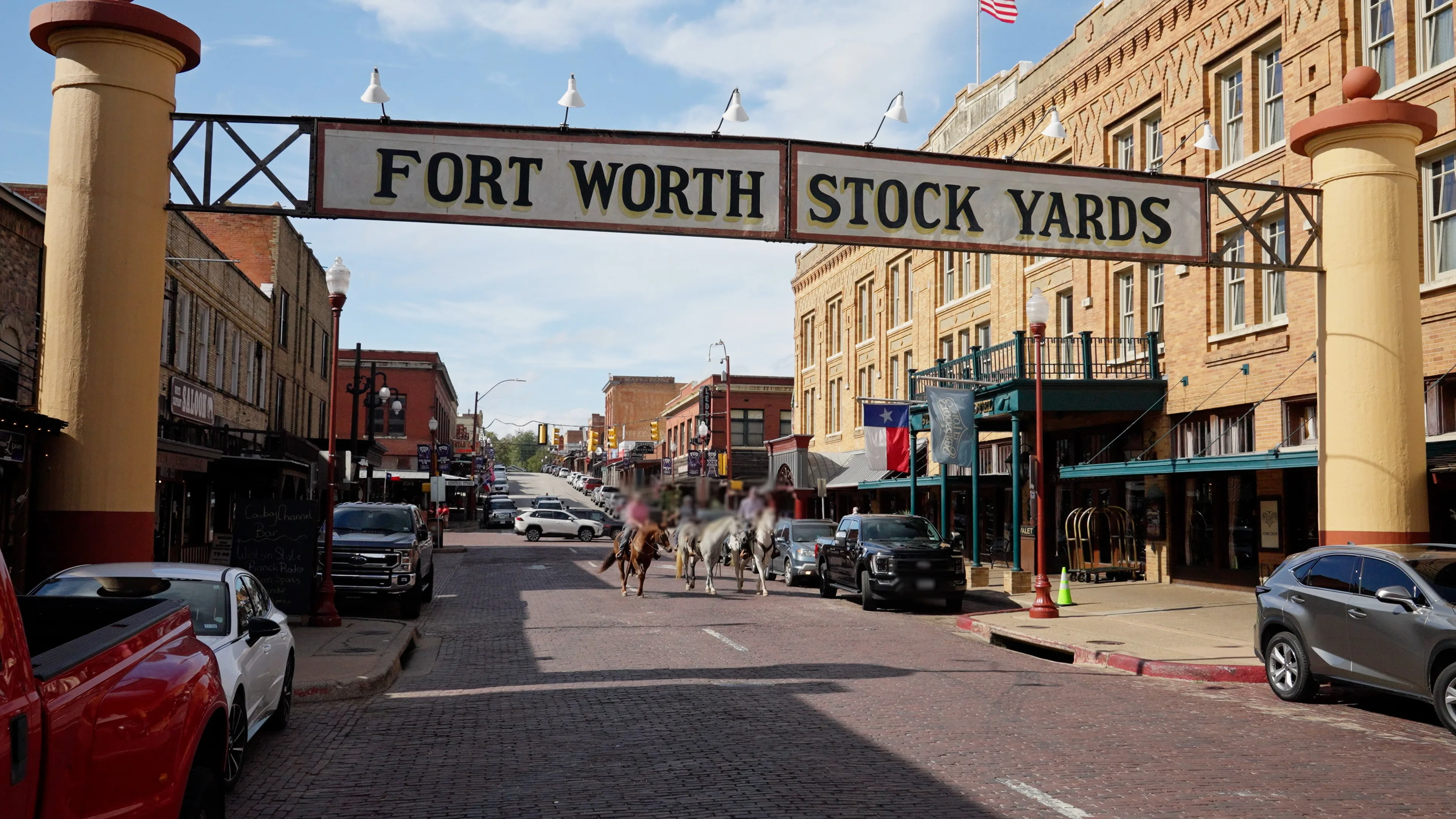
Fort Worth has a strong sense of its own identity, and it is not merely a suburb of Dallas. The Stockyards National Historic District is a working cattle exchange district, not a theme park replica of one. Sundance Square anchors a genuine downtown with independent restaurants, live music at Bass Performance Hall, and street life that functions on a weeknight. The Kimbell Art Museum and Amon Carter Museum of American Art sit within walking distance of each other and draw serious collections that residents treat as a matter of course rather than a novelty.
The Clearfork Farmers Market and Rufe Snow Farmers Market run through the warmer months and draw the kind of crowd that tells you something about who is moving here. The Trinity River Trail connects green space across the city, and Fort Worth Nature Center & Refuge — one of the largest city-owned nature preserves in the country — sits at the edge of Lake Worth. These are not amenities that require driving to another city.
Verified local anchors worth knowing about once you've settled in: Cattlemen's Steak House is a Fort Worth institution with a pedigree that predates most of what's around it; Woodshed Smokehouse and Rodeo Goat represent the more casual, outdoor-leaning end of the dining scene; Quince Riverside and HG Sply Co. - Fort Worth sit at the more polished end. For coffee, Sons Coffee, Ampersand, Buon Giorno Coffee, Rio Dulce Coffee, and HustleBlendz Coffee are the independent options locals actually use. These are gathered in one place here because the rest of the guide focuses on the structural picture — taxes, prices, schools — rather than the day-to-day texture.
The cultural adjustment is real for Californians, and it usually shows up in the same places: the climate is more extreme in both directions (genuine winters, brutally hot summers), the political climate is measurably more conservative at the state level, and the city's relationship with land use and density is different from what most California cities have built toward over the past twenty years. None of these are dealbreakers for most people who move here — they are adjustments. The ones who struggle most are those who arrived expecting Fort Worth to feel like a cheaper version of where they left, rather than a genuinely different city with its own character.
For neighborhood geography and how different parts of the city feel on the ground, the best neighborhoods page covers the distinctions that matter for buyers. For schools, the district's C rating from the Texas Education Agency is the starting point, but performance varies significantly by campus — see the schools page for the full breakdown, including test score data and boundary details.
The Honest California-to-Fort Worth Comparison Table
| Factor | California (Statewide) | Fort Worth, TX | What It Means for You |
|---|---|---|---|
| Typical Home Value | $773,735 (Zillow Home Value Index) | $298,353 (Zillow Home Value Index, July 2026) | Dramatically lower entry point; same income qualifies for significantly more home |
| State Income Tax | Top rate 13.3% (CA Franchise Tax Board); ten progressive brackets starting at 1% | $0 — Texas levies no state income tax | One of the largest single financial changes; adds directly to take-home pay every paycheck |
| Effective Property Tax Rate | 0.71% (SmartAsset); capped by 1978 ballot measure | 1.47%; reassessed annually at market value; varies by tax district within the city | Higher rate partially offsets lower purchase prices; request district breakdown before closing |
| Statewide Base Sales Tax Rate | 7.25% — highest base rate in the U.S. (CA Dept. of Tax and Fee Administration); local additions push it higher in most cities | 8.25% combined (6.25% state + 2% local) | Fort Worth's combined rate is lower than most California cities once local additions are counted |
| Homeowners Insurance Environment | Average annual premiums estimated at $2,843; major carriers have restricted coverage; FAIR Plan dependency rising (Insurify) | Competitive private market; premiums generally lower; shop carefully for weather-risk coverage | Meaningful annual savings likely; coverage more available than in California's current market |
| Typical Rent | Well above Fort Worth levels in most California metros | $1,625/mo citywide (Zillow ZORI, July 2026) | Renting while you learn the city is financially viable here; rare in California markets |
| Nearest Major Airport | Multiple major airports within metro areas | Dallas/Fort Worth International Airport (DFW), 24 miles | DFW is one of the busiest airports in the world; direct routes to California and beyond are plentiful |
* ZHVI = Zillow Home Value Index.
The property tax line in particular deserves attention before you close. The effective rate is higher than California's, and it applies to an annually reassessed market value with no statewide cap equivalent to California's 1978 ballot measure — though the 2025 Texas homestead exemption increase does provide meaningful relief on the school-district portion of the bill.
For a complete side-by-side on utilities, groceries, and transportation costs inside the city, the cost-of-living page carries those figures with current sourcing.
Local Expert Takeaway: The Californians who land in Fort Worth and stay are the ones who ran the full numbers — not just the home price, but the income tax savings, the property tax rate, the insurance environment, and what a commute on I-35W actually feels like on a Tuesday morning. The purchase price at $298,353 (July 2026) is real, the zero state income tax is real, and the 1.47% property tax rate is also real. None of these cancel each other out entirely. What most people find after the first year is that the net financial picture is genuinely better, the city has more cultural weight than they expected, and the adjustment they didn't plan for was the car dependency and the Texas summer — both of which are more intense than most Californians anticipate.
Quick Takeaways & FAQs
✅ Fort Worth's typical home price of $298,353 (July 2026) sits dramatically below California's statewide typical home value, and Texas's zero state income tax means every dollar of salary goes further from day one.
⚠️ Fort Worth's effective property tax rate of 1.47% is more than double California's 0.71% — the lower purchase price does not fully erase the annual tax difference, and the rate is reassessed at market value each year with no statewide cap.
📍 Fort Worth is a driving city: I-20, I-30, I-35W, and I-820 carry the daily load, and budget for a second vehicle before you arrive — the transit infrastructure is not a substitute for a car the way it can be in California's denser metros.
How much less will I pay in income tax moving from California to Fort Worth?
Is Fort Worth's property tax higher than California's?
How does Fort Worth's sales tax compare to California's?
What neighborhoods should California buyers look at first in Fort Worth?
Is Fort Worth a good fit for someone working remotely who is leaving California?
Moving to Texas?
Tell us what you need help with and we'll connect you with local resources.
