
Maybe you have spent decades commuting about 25 minutes to Portland and are ready to stop. Maybe you are relocating from out of state and Wilsonville keeps coming up as a Portland-area option that is calmer, newer, and easier to navigate than the city itself. Either way, the honest case for retiring here starts with what the city actually is: a planned, infrastructure-forward community of 27,341 people where the roads are wide, the parks are well-maintained, and the whole place was designed — not patched together — with connected living in mind.
That planning shows up in ways retirees feel immediately. The SMART transit system (South Metro Area Regional Transit) runs free fixed-route buses throughout the city and offers a Dial-a-Ride program for residents 60 and older, providing door-to-door transport for medical appointments in Portland and surrounding cities. The WES Commuter Rail connects the Town Center area to Beaverton for car-free metro access. For retirees who want to preserve independence without dependence on a car, Wilsonville's transit infrastructure is genuinely among the strongest in the Portland suburbs.
The catch, and it is a real one, is housing cost. The typical home price stands at $630,814 (Zillow Home Value Index, July 2026), and the median household income in the city sits well below what it takes to buy at that level — meaning Wilsonville is not an obvious choice for retirees on lean fixed incomes without substantial equity to deploy. Oregon's tax posture softens some of that pressure: no sales tax, Social Security fully exempt from state income tax, and a property-tax deferral program for qualifying homeowners 62 and older. But the entry price is what it is, and buyers should go in clear-eyed. See the full cost of living breakdown for detailed figures.
The sections below walk through healthcare access, the retiree budget, walkability and community life, downsizing options, and how Wilsonville stacks up against the nearby alternatives that retirees in this part of Oregon most often consider.
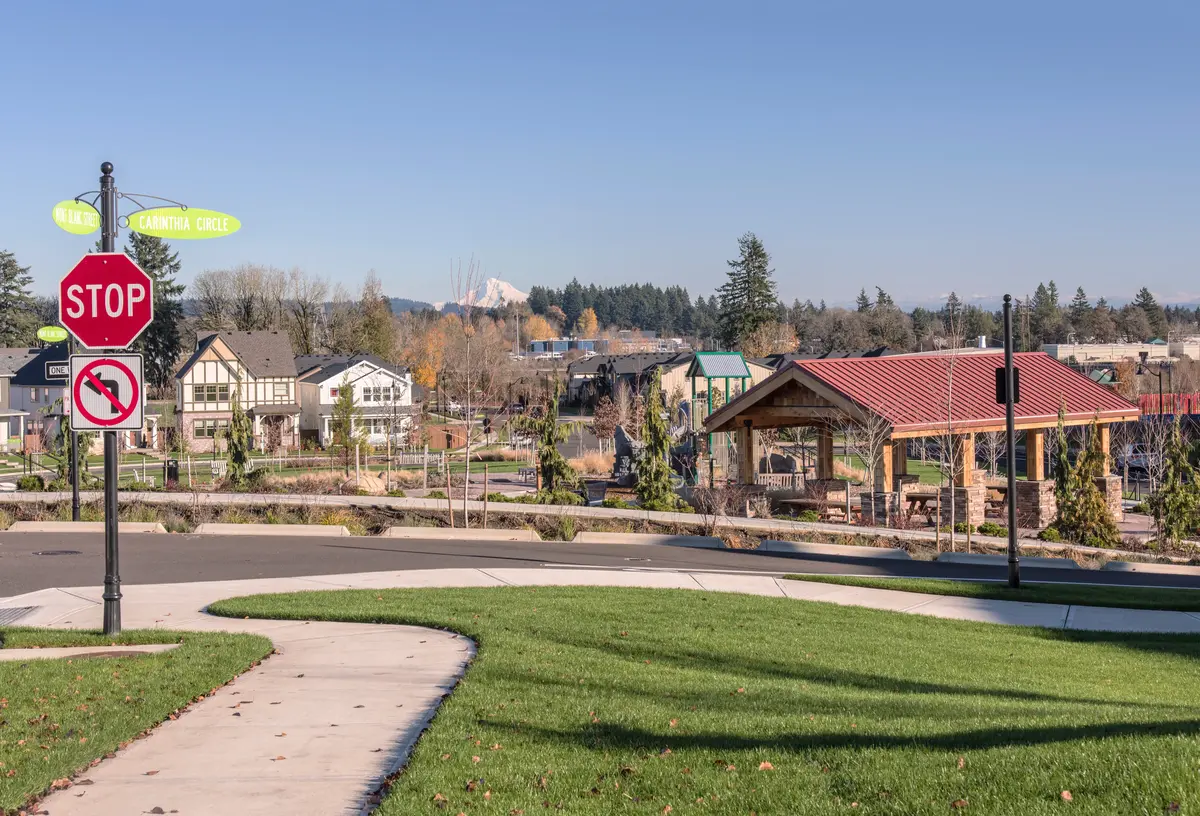
Why Retirees Are Choosing Wilsonville
Wilsonville fits a particular kind of retiree well: someone who wants suburban calm, genuine green space, and a city that was built with connective infrastructure rather than grown haphazardly. Graham Oaks Nature Park and Memorial Park give the city a scale and quality of outdoor space that most Portland suburbs cannot match. The overall safety profile sits well below Oregon state averages — a violent crime rate of 1.9 per 1,000 residents compared to the state's 3.3 per 1,000, and a property crime rate of 15.4 per 1,000 residents against the state's 24.5 per 1,000 — which matters to retirees more than most buyers. See the safety page for the full breakdown.
The city also draws retirees who have family in the Portland metro and want proximity without Portland's density, traffic, or cost. At a typical home price of $630,814 (July 2026), Wilsonville is not a bargain relative to the national picture, but it lands in a reasonable range for the Portland market — and buyers arriving with equity from a California or Seattle sale often find it genuinely comfortable. The city's position along I-5 makes it easy to reach the metro without living in it.
Who should look elsewhere? Retirees on tight fixed incomes without a significant equity base will find the entry price difficult, and the city's car-dependent layout — most errands require driving — is a real constraint for anyone who cannot or prefers not to drive. There is no 55+ age-restricted community in Wilsonville, and the assisted-living inventory is limited to a small number of facilities. Retirees who want a dense, walkable downtown with restaurants and shops within a short stroll will be disappointed; Wilsonville is green and connected, but it is not that kind of place. For neighborhood-level context, see the neighborhoods guide.
Healthcare & Medical Access in Wilsonville
The closest hospital to Wilsonville is Legacy Meridian Park Medical Center, located in Tualatin about 6 miles away. It is a non-profit acute-care hospital within the Legacy Health system, licensed for 150 beds, and offers emergency care, surgical services, cardiology, orthopedics, weight management, and advanced imaging. For routine and moderately complex care, it is a practical and capable facility.
The depth it offers matters particularly to retirees. Legacy Meridian Park carries strong ratings across several of the procedures most relevant to older adults, including orthopedic care, stroke treatment, and cardiac services. The strong patient experience numbers reflect a facility that functions well day to day — important for the kind of recurring specialist visits that retirement-age healthcare often requires.
The honest limitation is that Wilsonville sits at the southern edge of the metro, and truly advanced or subspecialty care — major cancer centers, complex neurosurgery, transplant programs — means driving into Portland proper. Oregon Health & Science University and the broader Portland hospital network are reachable, but they are not next door. For retirees managing chronic conditions that require frequent specialist access, that 25-to-35-minute drive into the city is worth factoring into the decision rather than treating as a minor inconvenience.
For retirees who can no longer drive or prefer not to, SMART's Dial-a-Ride program fills a meaningful gap. Residents 60 and older qualify for door-to-door transport that extends beyond city limits to medical appointments in Portland and nearby cities — a genuinely useful resource that most suburban communities of this size do not offer.
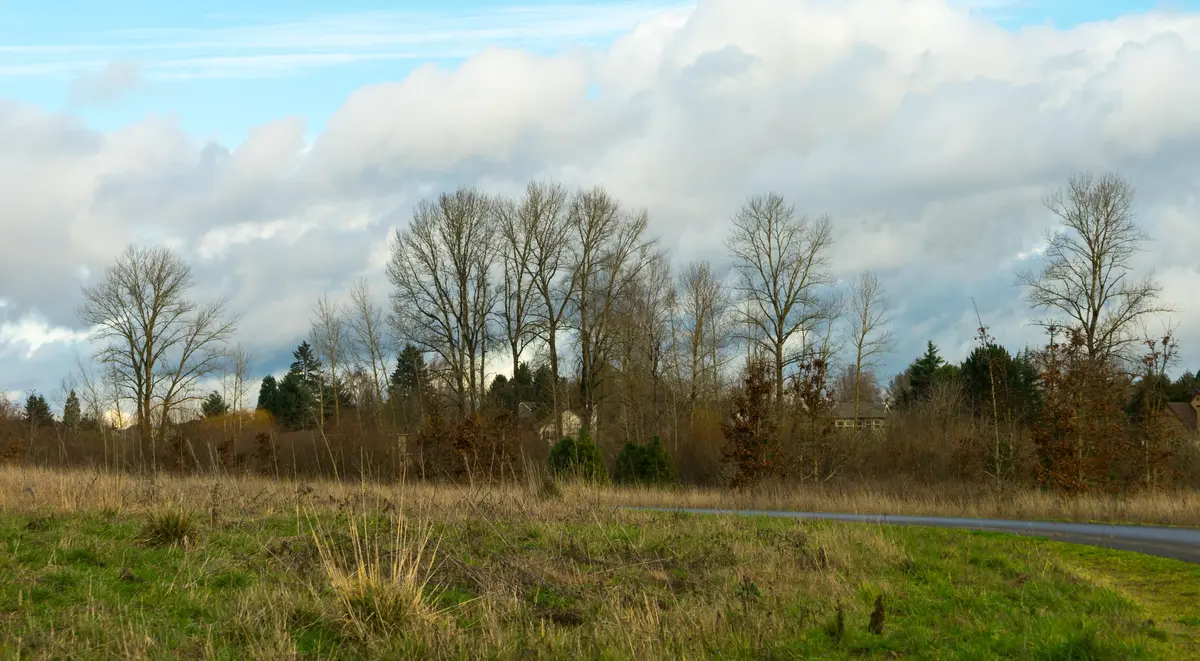
The Retiree Budget in Wilsonville
Oregon's tax treatment of retirement income is a mixed picture, and understanding it clearly matters. The strong point: Social Security benefits and Railroad Retirement income are fully exempt from Oregon state income tax regardless of your total income level. For retirees living primarily on Social Security, that is a meaningful savings compared to the majority of states that tax some portion of those benefits.
The more complicated reality: pension income, 401(k) distributions, and IRA withdrawals are taxed at Oregon's regular graduated rates, which run from 4.75% up to 9.9% at the top end. Retirees drawing significantly from pre-tax accounts should model the Oregon income-tax hit carefully before assuming Oregon is a low-tax state for them — it may not be. Oregon also has an estate tax with an exemption threshold that is not indexed to inflation, which is worth discussing with an estate planner for higher-net-worth households.
Oregon's no-sales-tax environment is a genuine everyday advantage for retirees on fixed budgets. Every grocery run, appliance purchase, and clothing buy carries no additional percentage on top of the sticker price — and over a year, that adds up to real savings compared with states that layer 6%–9% sales tax onto daily spending.
On property taxes, Wilsonville's effective rate runs approximately 0.96% — a relatively moderate figure by Oregon suburban standards. Qualifying homeowners who are 62 or older with household income at or below $60,000 (2025 threshold) and at least five years of ownership may defer property taxes entirely until the home is sold, with the state paying the county directly and recording a lien. This program can meaningfully reduce cash-flow pressure for retirees in lower-income brackets who own their homes outright or near outright.
One near-term alert: Oregon's small Retirement Income Credit for taxpayers 62 and older with low income was available through tax year 2025 only. A 2025 bill to extend it did not pass. Retirees who relied on that credit when planning their Oregon tax picture should confirm its status with a tax professional for returns filed from 2026 onward.
Looking to buy in Wilsonville? Estimate your payment.
Enter your numbers to see an estimated monthly mortgage payment.
Estimate only. Excludes HOA fees and mortgage insurance. The interest rate above is a starting point, not a quoted rate — replace it with your own to see real numbers. Insurance is a flat placeholder, not a Wilsonville quote.
Walkability, Community & Staying Active in Wilsonville
Wilsonville is car-dependent for most daily errands — that is the factual starting point, and it would be dishonest to soften it. Most grocery shopping, most retail, most dining requires driving. The Town Center area is the closest thing the city has to a walkable core, with SMART bus lines and the WES Commuter Rail station concentrated there, but it is not the kind of compact downtown where a retiree can stroll from coffee to pharmacy to lunch without a car.
What the city does well is trail connectivity and green space, which serves active retirees better than walkable retail would. Graham Oaks Nature Park offers miles of maintained trails through native oak woodland — flat enough for walking and well-signed. Boones Ferry Park adds riverfront access. These are not amenity gestures; they are genuinely well-built spaces that residents use regularly.
The SMART Dial-a-Ride program deserves specific attention in any honest walkability discussion. For residents 60 and older who reduce or eliminate driving, it provides door-to-door service within the city and to medical appointments beyond it. A 2025 rider survey found 99.5% of SMART passengers would recommend the service to family and friends. That kind of transit infrastructure is unusual for a city of 27,341 and makes car-free aging in place more realistic here than in most comparable suburban communities.
On the community side, Wilsonville's civic fabric is active for its size. The parks system hosts a summer concert series and community events through the warm months. The city's proximity to Portland means retirees who want museum access, performing arts, or a wider dining range can reach those resources without moving into the city. Charbonneau Golf Club offers another social anchor for golfers. For retirees who were drawn to the idea of a quieter life that still connects to a real metro, that balance is exactly what Wilsonville delivers — as long as driving or SMART transit remains part of the picture.
Right-Sizing: Downsizing in Wilsonville
No 55+ age-restricted communities were found in Wilsonville. That is the starting point for anyone hoping to move into a purpose-built retirement community within city limits — the option simply does not exist here, and the alternatives are limited.
Two assisted-living communities operate in the city: Brookdale Wilsonville and The Springs at Wilsonville, the latter offering assisted living and memory care. These are meaningful resources for retirees who need or anticipate needing that level of support, but they are distinct from independent 55+ living and do not fill that gap.
For retirees looking to downsize into single-level living rather than a community setting, Wilsonville's newer construction neighborhoods offer some genuinely practical options. The Villebois development in particular includes patio homes and attached single-story floor plans designed for lower-maintenance living — smaller lots, exterior maintenance often shared, and layouts that age well. Canyon Creek and Frog Pond also include some single-level stock from the 2000s and 2010s build-out. The challenge is that single-level homes in good condition here tend to hold value firmly; buyers should not expect a meaningful discount relative to the city-wide typical home price of $630,814 (July 2026) just because a home is smaller.
Condominiums are a thinner slice of the Wilsonville inventory than in more urban markets, though the Town Center area has the highest concentration. For retirees who want truly maintenance-free living without assisted care, the most realistic path in Wilsonville is a newer patio home or attached single-story rather than a traditional condo tower. Anyone who needs the full range of 55+ independent-living options — social programming, community dining, fitness facilities — will likely need to look at nearby markets. See the neighborhoods guide for a fuller picture of the city's housing stock by area.
Wilsonville vs Nearby Retirement Destinations
| City | Cost vs Wilsonville | Primary Hospital | Walkability | Senior Living Depth | Overall Retirement Fit |
|---|---|---|---|---|---|
| Wilsonville | Anchor | Legacy Meridian Park (Tualatin, ~6 mi) | Car-dependent; strong Dial-a-Ride program for 60+ | Two assisted-living facilities; no 55+ communities | Strong transit/safety; limited senior community options |
| Tualatin | About the same | Legacy Meridian Park (on-site) | Car-dependent with a more established commercial core | Several assisted-living and memory-care options | Better hospital proximity; similar cost and density |
| Sherwood | About the same | Legacy Meridian Park (Tualatin, ~10 mi) | Car-dependent; quieter suburban feel | Limited; small-town senior services | Good for retirees wanting quiet over amenities |
| West Linn | Pricier | Legacy Meridian Park (Tualatin, ~8 mi) | Hilly terrain limits on-foot access | Small number of assisted-living options | Excellent parks and safety; steeper terrain is a real constraint |
| Canby | Somewhat lower | Longer drive to hospital care | Small-town walkable core; limited transit | Very limited senior community options | Most affordable nearby option; trade-off is medical distance |
| Tigard | About the same | Legacy Meridian Park (Tualatin, ~8 mi) | More walkable commercial areas; Washington Square corridor | More senior-living inventory than Wilsonville | Better retail walkability; more urban feel |
Tualatin is the most straightforward alternative for retirees prioritizing hospital proximity — Legacy Meridian Park is effectively a neighborhood amenity there rather than a 6-mile drive. Canby is the clearest cost-relief option, with a somewhat lower price point, but retirees should weigh that savings against longer drives to hospital and specialist care.
West Linn is beautiful and among the safer communities in the metro, but its hilly terrain is a genuine physical challenge for retirees with mobility concerns — what looks appealing on paper can become difficult to navigate on foot within a few years. Tigard offers more walkable retail access and a deeper assisted-living inventory, which makes it worth considering for retirees who want more day-to-day independence without a car. Sherwood is quieter than Wilsonville and sits at roughly the same price level, but the senior infrastructure is thinner.
For retirees who can drive and want planned, safe suburban living with strong transit backup and good green space, Wilsonville is a genuinely competitive choice in this part of Oregon. For those who need a 55+ community, a more walkable environment, or a lower entry price, the surrounding cities offer real alternatives worth visiting before committing.

Local Expert Takeaway: Wilsonville works best in retirement for people who arrive with equity, value planned green space and safety, and appreciate that the SMART Dial-a-Ride program is a real safety net — not a marketing claim. The city is not for retirees who want a walkable downtown or a purpose-built 55+ community; neither exists here. But for a couple downsizing into a single-level patio home in Villebois or Charbonneau, with Graham Oaks for morning walks and Legacy Meridian Park six miles up I-5, the trade-offs are manageable and the day-to-day quality of life is high.
Quick Takeaways & FAQs
✅ SMART's free city bus network and Dial-a-Ride program for residents 60+ give Wilsonville one of the strongest transit safety nets of any Portland suburb its size.
⚠️ No 55+ age-restricted communities exist within Wilsonville, and single-level inventory is limited — retirees who need that option will need to look at neighboring cities.
📍 Oregon fully exempts Social Security from state income tax, but pension and IRA withdrawals are taxed at rates up to 9.9% — model your specific income mix before assuming Oregon is a low-tax retirement state.
Does Oregon tax Social Security benefits for retirees in Wilsonville?
What is the nearest hospital to Wilsonville for retirees?
Are there 55+ communities or retirement communities in Wilsonville?
Can retirees get around Wilsonville without a car?
Is Wilsonville a good place to retire on a fixed income?
Moving to Oregon?
Tell us what you need help with and we'll connect you with local resources.
