If you're a remote worker eyeing the Willamette Valley, the honest question isn't whether this region can support your lifestyle — it's which town actually fits the way you work. The valley runs roughly from the Portland metro's southern edge down through Eugene, tied together by I-5 and a string of college towns, agricultural communities, and small cities that each have a genuinely different remote-work calculus. What you give up in one place you often gain in another: a quieter, more affordable town east of the valley floor may have a surprising coffee scene but ask real questions about your broadband setup before you sign anything.
The spread across this list is wider than most buyers expect. Larger cities like Eugene and Salem have the infrastructure depth — provider options, professional amenities, shared workspace possibilities — that makes the logistics of remote work easier. Smaller towns like Cottage Grove, Independence, and Stayton score on affordability and character but require due diligence on connectivity that their bigger neighbors simply don't. Coffee culture turns out to be a relative equalizer across the valley; what truly separates the cities is the combination of size-driven infrastructure, home prices, and how quickly you can reach an airport when a client meeting demands it. The sections below break down each city's real trade-offs on all of those dimensions.
How This Ranking Was Built
Each city is scored 1-10 on every dimension below against a fixed statewide scale — never against the other cities in this region — then combined into one weighted Composite score out of 10.
Internet Speed — 25%Weighted contribution to the composite score, graded 1-10 against a fixed statewide scale.
Coworking Access — 20%Weighted contribution to the composite score, graded 1-10 against a fixed statewide scale.
Coffee Culture — 20%Weighted contribution to the composite score, graded 1-10 against a fixed statewide scale.
Airport Access — 20%Weighted contribution to the composite score, graded 1-10 against a fixed statewide scale.
Affordability — 15%Weighted contribution to the composite score, graded 1-10 against a fixed statewide scale.
Top 20 Cities: Best for Remote Workers Snapshot
Ranked by overall composite score. Click any city to jump to the full breakdown.
| # | City | Composite | Internet | Coworking | Median Price |
|---|
| 1 | Eugene
Lane County | 9.4/10 | 10 | 10 | $482,062 |
| 2 | Salem
Marion County | 8.7/10 | 10 | 10 | $440,726 |
| 3 | Springfield
Lane County | 8.2/10 | 6.8 | 6.8 | $421,652 |
| 4 | Albany
Linn County | 7.5/10 | 6.7 | 6.7 | $439,047 |
| 5 | Corvallis
Benton County | 7.0/10 | 6.8 | 6.8 | $565,289 |
| 6 | McMinnville
Yamhill County | 6.8/10 | 6 | 6 | $488,040 |
| 7 | Lebanon
Linn County | 6.6/10 | 4.6 | 4.6 | $397,559 |
| 8 | Newberg
Yamhill County | 6.5/10 | 5.3 | 5.3 | $535,028 |
| 9 | Keizer
Marion County | 6.5/10 | 6.1 | 6.1 | $453,552 |
| 10 | Cottage Grove
Lane County | 6.3/10 | 3.4 | 3.4 | $405,035 |
| 11 | Woodburn
Marion County | 5.8/10 | 5.4 | 5.4 | $429,908 |
| 12 | Independence
Polk County | 5.8/10 | 3.3 | 3.3 | $430,520 |
| 13 | Junction City
Lane County | 5.7/10 | 2.7 | 2.7 | $489,162 |
| 14 | Monmouth
Polk County | 5.7/10 | 3.6 | 3.6 | $480,666 |
| 15 | Stayton
Marion County | 5.3/10 | 2.9 | 2.9 | $471,759 |
| 16 | Silverton
Marion County | 5.2/10 | 3.4 | 3.4 | $557,308 |
| 17 | Dallas
Polk County | 4.9/10 | 4.4 | 4.4 | $481,280 |
| 18 | Molalla
Clackamas County | 4.9/10 | 3.3 | 3.3 | $499,534 |
| 19 | Philomath
Benton County | 4.0/10 | 2.4 | 2.4 | $529,921 |
| 20 | Dundee
Yamhill County | 3.1/10 | 2 | 2 | $598,118 |

Coffee Culture
10/10
out of 10
Airport Access
10/10
out of 10
Affordability
6.3/10
out of 10
Median Price
$482,062
2026 market price
Eugene is where remote-work infrastructure and livability converge most fully in the valley. As the third-largest incorporated city in Oregon, it supports the kind of provider competition and professional ecosystem that makes broadband a genuine non-issue for most home offices — though you should still confirm service at your specific address. The independent café scene here is one of the strongest in the Pacific Northwest for a city this size, meaning you'll have genuine options for a working-outside-the-home day. The Eugene Airport's proximity makes travel manageable in a way that smaller valley towns simply can't match. The trade-off is home prices: a $482,062 typical home price puts Eugene in a moderately expensive range for Oregon buyers, and buyers who assumed they'd find a dramatic bargain compared to larger West Coast cities may be surprised at how much demand this city commands.
Eugene suits remote workers who want a full-service city — real infrastructure, real amenities, real airport access — without leaving the Pacific Northwest lifestyle behind. It reads less like a suburb you've settled for and more like a deliberate choice, which is exactly what most people who land here will tell you it was.

Coffee Culture
10/10
out of 10
Airport Access
5.1/10
out of 10
Affordability
7.6/10
out of 10
Median Price
$440,726
2026 market price
Salem's standing as the state capital gives it something most Willamette Valley cities can't manufacture: a professional gravity that pulls in coworking-friendly amenities, reliable broadband competition, and a downtown that functions like a real downtown. The independent café scene is genuinely strong for a city of this size, with roasters and creative spots that make working outside the house a realistic daily option. At a $440,726 typical home price, Salem reflects the practical affordability of a working capital city while still offering the infrastructure depth that remote workers need. The one honest limitation is airport access: getting to Portland International Airport takes an hour-plus and requires planning — it's not an impossible trip, but it's a real factor if you fly more than a few times a year.
Salem tends to suit remote workers who want a large, functional city with genuine affordability, and who don't need to be wheels-up out of a local airport on a moment's notice. Salem's home prices reflect its character as a working city rather than a resort or university town, and that distinction matters for buyers who want infrastructure without paying a lifestyle premium.
Coffee Culture
10/10
out of 10
Airport Access
9.5/10
out of 10
Affordability
8.2/10
out of 10
Median Price
$421,652
2026 market price
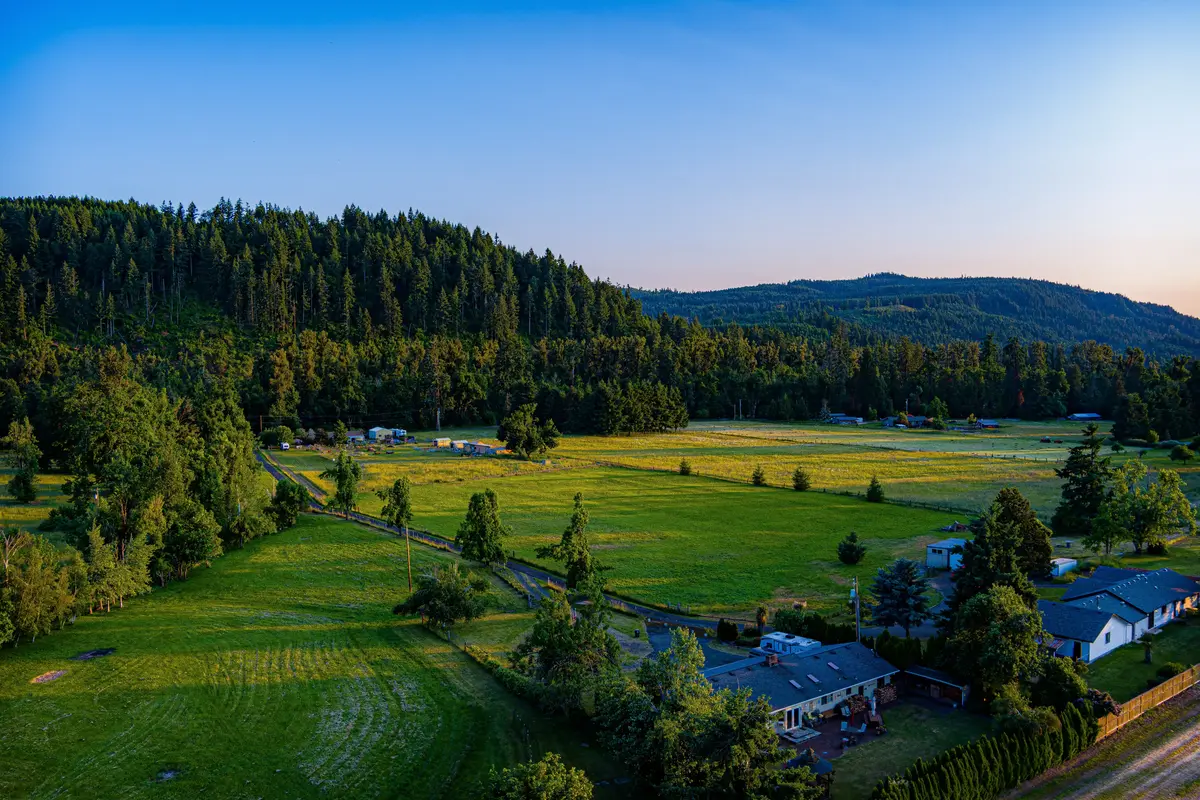
Springfield's strongest argument for remote workers is the combination of an accessible price point and immediate proximity to Eugene's larger infrastructure. At $421,652 for a typical home, it's priced meaningfully below its neighbor across the river while still sitting just a short drive from Eugene's fuller ecosystem of providers, shared workspaces, and professional services. The Eugene Airport is close enough to make travel genuinely convenient — exceptional for a city in this price range. The local coffee scene is surprisingly deep for a city of Springfield's size, giving you real options for working outside the home without crossing into Eugene every time. Broadband infrastructure is solid for a mid-size city but won't match what a larger market offers, so verifying service at your specific address matters here more than in Eugene or Salem.
Springfield suits remote workers who want Eugene-adjacent access without Eugene's home prices. It's the practical choice for buyers who've priced out their first-choice city and found that moving across the river costs less than they expected to give up.

Coffee Culture
10/10
out of 10
Airport Access
6.5/10
out of 10
Affordability
7.7/10
out of 10
Median Price
$439,047
2026 market price
Albany is a mid-size Willamette Valley city that has quietly assembled one of the better daily café scenes in the region — a strong lineup of independent local coffee spots for a city of this scale is a real asset for remote workers who rely on a change of scenery to stay productive. The home price picture, at a $439,047 typical figure, lands Albany in an accessible range that doesn't force painful trade-offs between space and budget. Broadband infrastructure is reasonable for a city this size but sits below what Eugene or Salem can offer, making address-level verification important before you commit. Airport access is a genuine consideration: the Eugene Airport is a meaningful drive from Albany, which is manageable for occasional travel but adds friction for anyone flying frequently.
Albany tends to appeal to remote workers who want a real community feel, a strong local coffee culture, and a home price that leaves some budget headroom — without needing the full urban infrastructure of Salem or Eugene. It's a grounded choice for buyers who work primarily from home and treat the airport as an occasional rather than a regular logistical concern.

Coffee Culture
10/10
out of 10
Airport Access
7/10
out of 10
Affordability
3.8/10
out of 10
Median Price
$565,289
2026 market price
Corvallis is anchored by Oregon State University, and that university presence shapes everything about the remote-work experience here — from the energy of the independent café scene to the general expectation that the city functions as a knowledge-worker environment. The coffee culture is one of the best in the valley for a mid-size city, with roasters and indie spots that take the craft seriously. The trade-off remote workers face in Corvallis is almost entirely about home prices: at $565,289 for a typical home, it carries a price point driven by university-adjacent demand and limited housing supply that sits well above most valley towns. Broadband infrastructure is reasonable for a university-anchored city, and the Eugene Airport is a manageable drive for most flights.
Corvallis suits remote workers who genuinely value the intellectual and cultural texture of a college town and are willing to pay for it. Buyers moving from a high-cost metro may find the adjustment manageable; buyers coming from elsewhere in the valley will feel the price gap acutely.

Coffee Culture
10/10
out of 10
Airport Access
6/10
out of 10
Affordability
6.1/10
out of 10
Median Price
$488,040
2026 market price
McMinnville sits in Yamhill County wine country, and that context shapes its character in ways that matter to remote workers: it's a genuine small city with a real downtown, a strong independent café scene for its size, and the kind of place that draws people who want texture in their daily environment. At a $488,040 typical home price, it lands in a range that's neither a bargain nor dramatically expensive by valley standards. The practical limitation for frequent travelers is airport access — getting to Portland International Airport takes the better part of an hour, which adds up if you fly regularly. Broadband infrastructure is consistent with a mid-size town: adequate for most home-office setups, but worth verifying at the address level before you buy.
McMinnville tends to suit remote workers who can anchor their work life to a home office and treat urban amenities as a deliberate day trip rather than a daily dependency. It's a livability-first choice, and buyers who move here typically know that's the trade they're making.

Coffee Culture
10/10
out of 10
Airport Access
6/10
out of 10
Affordability
8.8/10
out of 10
Median Price
$397,559
2026 market price
Lebanon is a small Linn County city that offers one of the more accessible entry points in the valley, with a $397,559 typical home price that gives remote workers genuine budget headroom. The coffee culture here is surprisingly robust for a town this size — multiple independent local spots means your daily routine won't feel limited. The honest challenge for remote workers considering Lebanon is connectivity: at this population scale, broadband infrastructure is more constrained than in a mid-size or large city, and the gap between what's theoretically available and what reaches a specific address can be meaningful. Plan on verifying service carefully before you commit, and build a home-office setup that doesn't depend on a single provider.
Lebanon suits remote workers who prioritize affordability and a genuine small-town pace over infrastructure depth, and who have either confirmed strong connectivity at their specific property or can accommodate some flexibility in how they work. It's a serious option for buyers who are done paying mid-range prices for mid-range infrastructure.

Coffee Culture
10/10
out of 10
Airport Access
7.3/10
out of 10
Affordability
4.5/10
out of 10
Median Price
$535,028
2026 market price
Newberg sits at the northern edge of Yamhill County wine country, close enough to the Portland metro to feel its gravitational pull without fully belonging to it. The local café scene is strong for a mid-size town, and the character of the community — a mix of longtime residents, Linfield University's presence, and wine-country transplants — gives it more texture than a typical commuter suburb. At $535,028 for a typical home, Newberg carries a price that reflects its desirability and proximity to Portland; buyers expecting valley-floor affordability will find the numbers tighter than anticipated. Broadband infrastructure is consistent with a mid-size town of its scale, and airport access to Portland International Airport is a manageable drive for frequent flyers.
Newberg tends to suit remote workers who want to live in wine country without sacrificing reasonable access to a major airport, and who have priced in the premium that proximity to Portland commands. It's less a budget choice than a lifestyle choice, and the buyers who thrive here usually know the difference.
Coffee Culture
8/10
out of 10
Airport Access
5.3/10
out of 10
Affordability
7.2/10
out of 10
Median Price
$453,552
2026 market price
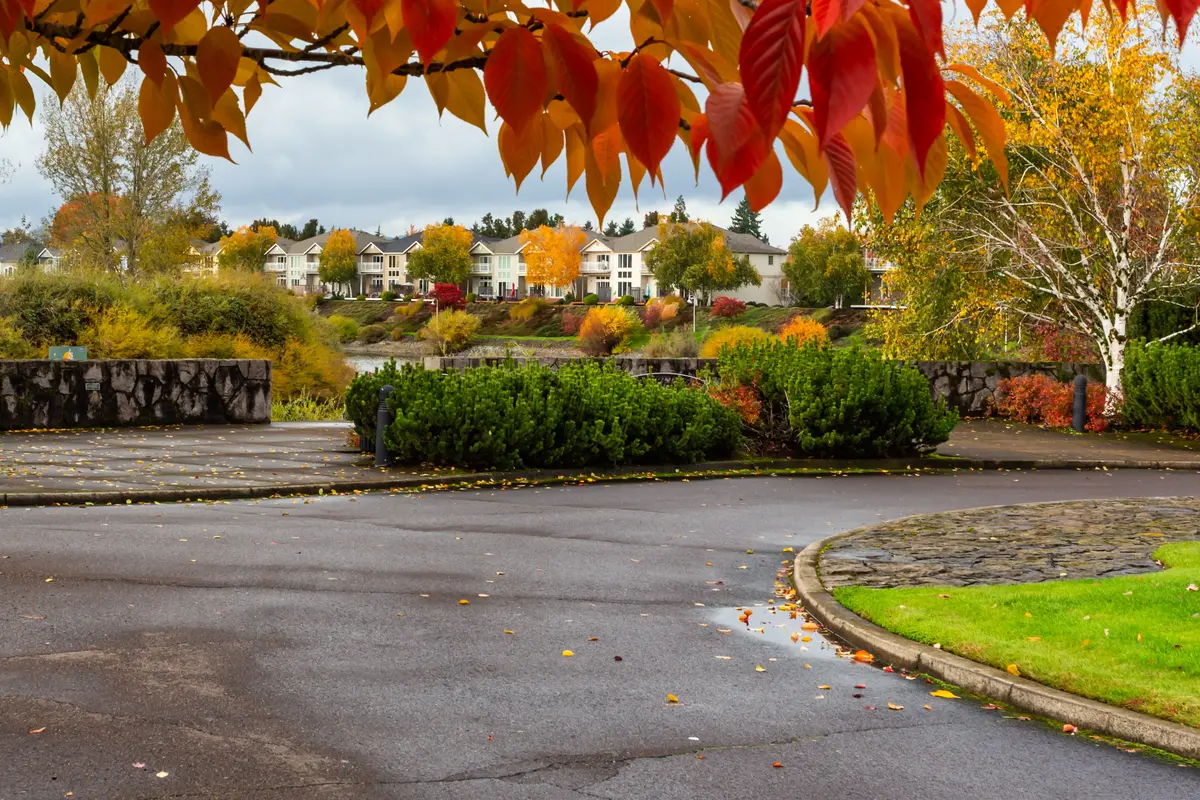
Keizer functions as a close-in suburb of Salem, and that relationship defines the remote-work experience here more than anything specific to Keizer itself. The city has a respectable café scene for its size and solid broadband infrastructure for a community in this tier of mid-size Oregon suburbs. At a $453,552 typical home price, it sits in a range that reflects suburban Salem pricing while offering immediate access to Salem's fuller ecosystem of professional services, shared workspace options, and urban amenities. The limitation remote workers feel most is airport access: Portland International Airport is a significant drive out, which requires real planning for anything more than occasional travel.
Keizer suits remote workers who want Salem-adjacent living — all the practical benefits of a large city next door — with a slightly different home-price profile and a quieter residential character. Think of it as Salem's calmer neighbor, not a standalone destination.
Coffee Culture
10/10
out of 10
Airport Access
7.5/10
out of 10
Affordability
8.6/10
out of 10
Median Price
$405,035
2026 market price
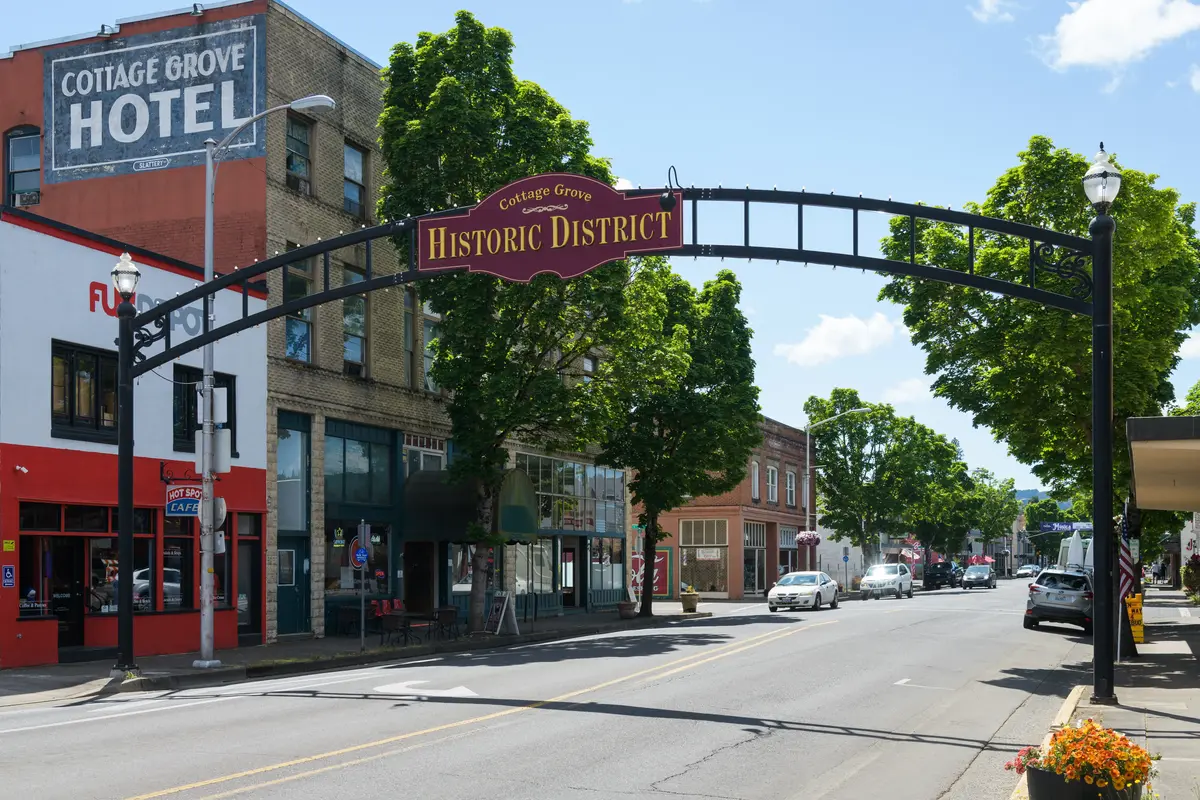
Cottage Grove is a small Lane County city with genuine character and an affordable home price: $405,035 for a typical home puts it well within reach for buyers who've been watching valley prices climb. The café scene here is strong by small-town standards, which is one of those pleasant surprises that keeps locals loyal. The real calculus for remote workers is connectivity: at Cottage Grove's population scale, broadband infrastructure is limited, provider options are fewer, and the gap between town-level availability and what actually reaches a rural or semi-rural address can be significant. Verify service at your specific property before you commit — this is not a town where you can assume the infrastructure will support a demanding home-office setup without checking.
Cottage Grove suits remote workers who have done their connectivity homework and found it pencils out — and who genuinely want a small-town pace and the kind of home-price accessibility that's increasingly hard to find in the valley. The Eugene Airport is a reasonable drive away, which gives occasional travelers a workable option.

Coffee Culture
4.7/10
out of 10
Airport Access
6.5/10
out of 10
Affordability
8/10
out of 10
Median Price
$429,908
2026 market price
Woodburn sits along I-5 in Marion County, positioned between Salem and the Portland metro in a way that makes it practical for remote workers who occasionally need to reach either city. The home price of $429,908 reflects its position as one of the more budget-accessible options in the northern valley. The trade-off is a modest local café scene — the independent coffee culture here is thinner than in most valley cities its size, which matters if working from a café is part of your daily rhythm. Broadband infrastructure is consistent with a mid-size city, adequate for most home-office setups but worth verifying at the address level. Portland International Airport is a manageable freeway drive for regular travelers.
Woodburn tends to suit remote workers who are primarily anchoring to a home office, value freeway access for the days they do need to move around the region, and want a lower home price without committing to true small-town isolation. Senior Estates Golf and Country Club is the one established age-restricted community here for buyers in that chapter of life.

Coffee Culture
10/10
out of 10
Airport Access
5.7/10
out of 10
Affordability
8.0/10
out of 10
Median Price
$430,520
2026 market price
Independence is a small Polk County city that sits on the Willamette River and carries more visual charm than its modest size might suggest. The café scene here is genuinely impressive for a community this small — multiple independent local spots creates real daily variety for a town where you'd expect one. The challenge for remote workers is infrastructure: at Independence's scale, broadband options are limited, provider competition is thin, and a home-office setup that works reliably requires verifying service at your specific address rather than assuming. At a $430,520 typical home price, the affordability is real but doesn't fully offset the connectivity question for buyers who depend on consistent, fast internet for their work.
Independence suits remote workers who can confirm strong connectivity at their specific property and who want a small-town riverfront community with an unexpectedly lively café scene. Buyers who need infrastructure depth or fly frequently will find the practical limitations add up.

Coffee Culture
8/10
out of 10
Airport Access
10/10
out of 10
Affordability
6.0/10
out of 10
Median Price
$489,162
2026 market price
Junction City is a small Lane County town with one genuinely exceptional remote-work asset: the Eugene Airport is just a short drive away, making it the most airport-convenient small town on this list by a meaningful margin. For a remote worker who rarely needs urban infrastructure day-to-day but flies frequently for client work, that proximity is a real differentiator. The home price of $489,162 sits at a level that buys a lot of space and quiet for that airport convenience. The honest challenge is connectivity: at Junction City's small-town scale, infrastructure is limited, and remote workers need to verify broadband service at their specific address — not just the town's general availability — before committing.
Junction City tends to suit a specific kind of remote worker: someone who works primarily from home, flies regularly, and values proximity to an airport over walkable urban amenities. It's a deliberate, narrow trade that works well for the buyer it fits.

Coffee Culture
10/10
out of 10
Airport Access
5.5/10
out of 10
Affordability
6.3/10
out of 10
Median Price
$480,666
2026 market price
Monmouth is a small Polk County city home to Western Oregon University, and that campus presence gives it more daily energy than its size would otherwise suggest. The café scene here is strong — multiple independent spots for a small community is a genuine asset for anyone who builds a work routine around good coffee. At a $480,666 typical home price, Monmouth has moved past the bargain tier but still sits below the valley's most expensive markets. The infrastructure picture is what gives most remote workers pause: at this population scale, broadband options are fewer and provider competition is limited, which means verifying service at a specific address is not optional — it's the central due-diligence step before you buy.
Monmouth suits remote workers who want a small university-town character, a surprisingly good café scene, and a price point that reflects a working college town rather than a resort or high-demand suburb — and who are willing to do the legwork on connectivity. Salem is the practical backstop for anything Monmouth's size can't support.
Coffee Culture
10/10
out of 10
Airport Access
5/10
out of 10
Affordability
6.6/10
out of 10
Median Price
$471,759
2026 market price
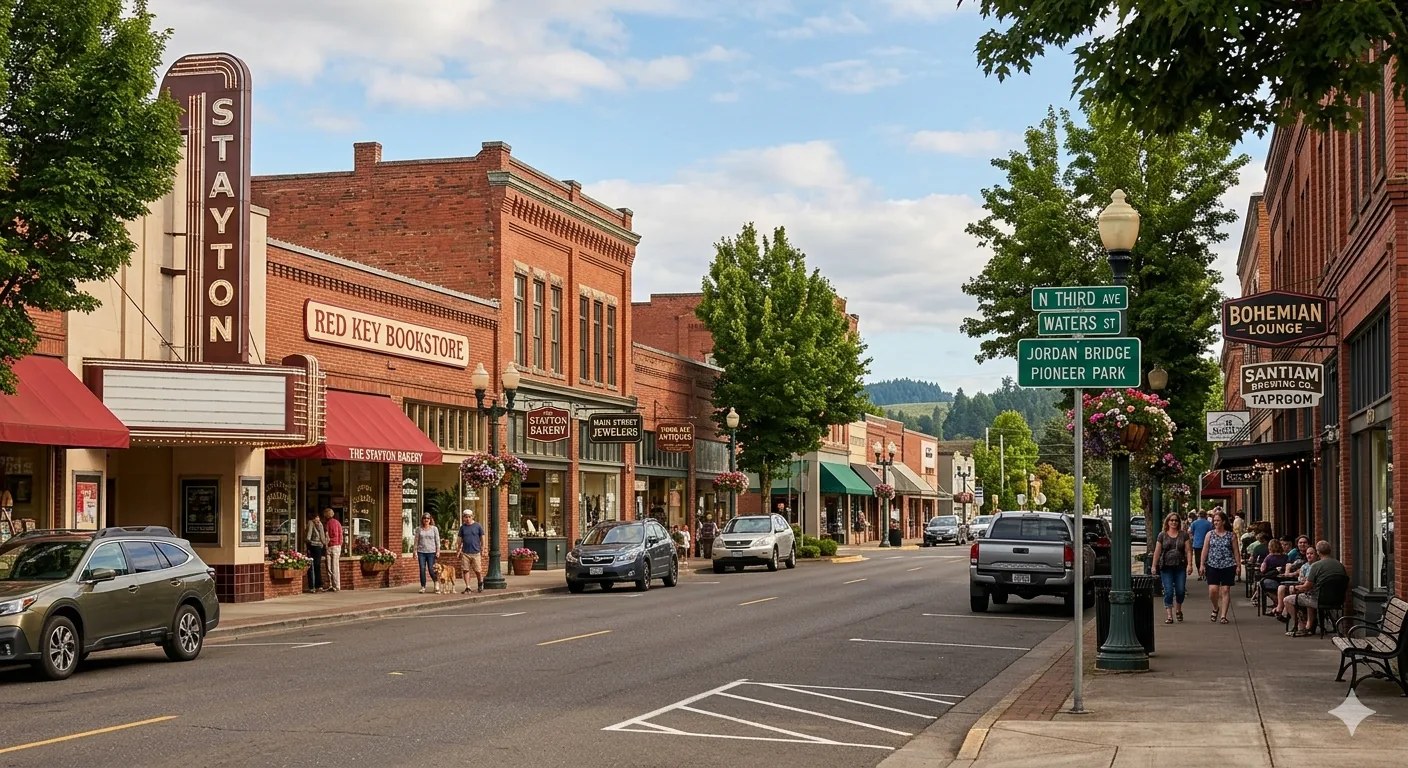
Stayton is a small Marion County town in the foothills east of Salem, and it offers the kind of quiet, slower-paced environment that some remote workers seek out deliberately. The café scene here defies expectations — multiple independent local spots for a town this size gives residents real daily variety. At a $471,759 typical home price, Stayton sits in a range that reflects a genuine small-town foothills community rather than a suburb with urban amenities priced in. The connectivity picture is the central issue: at Stayton's scale, broadband infrastructure is limited and provider options are fewer than in larger cities, which makes address-level verification before purchase essential rather than advisory.
Stayton suits remote workers who have done their connectivity due diligence, want a genuinely small-town pace close to Salem's practical resources, and aren't flying frequently enough to make airport access a daily concern. It's a choice for buyers who know what they're optimizing for.

Coffee Culture
10/10
out of 10
Airport Access
5.7/10
out of 10
Affordability
3.9/10
out of 10
Median Price
$557,308
2026 market price
Silverton is one of the valley's most visually distinctive small cities — a hillside community in Marion County known for its art scene and proximity to Silver Falls State Park — and it carries a home price that reflects that desirability: $557,308 for a typical home puts it among the more expensive options on this list despite its small-town scale. The café scene is strong for a small community, giving remote workers genuine daily variety. The challenge is that Silverton's appeal comes without the infrastructure to match: broadband options are limited at this population size, dedicated workspace options are unlikely without driving to Salem, and Portland International Airport is a meaningful drive away. Verify connectivity at your specific address before you buy — the mismatch between Silverton's lifestyle premium and its infrastructure reality is the central tension for remote workers considering it.
Silverton tends to suit remote workers who have confirmed strong home-office connectivity and are drawn by the town's character more than its practicalities — buyers who want a genuinely beautiful small city and have priced in both the premium and the trade-offs that come with it.
No Willamette Valley city forces you to choose between good coffee and a manageable commute to an airport — but the smaller the town, the harder you need to pressure-test your internet setup before committing to a purchase. Confirm which providers serve your specific address; the gap between what's available in a city and what reaches a particular neighborhood or rural edge can be significant.
Want to see what's for sale in these neighborhoods?
Sign up for listing alerts — get notified when homes hit the market.
Get Listing Alerts →
Frequently Asked Questions
Which Willamette Valley cities are genuinely practical for full-time remote workers?
Eugene and Salem are the most straightforwardly practical options — both have the infrastructure depth, provider competition, and professional amenities that make full-time remote work logistically easier. Springfield gets you Eugene-adjacent access at a lower home price. Mid-size cities like Albany and Corvallis work well for buyers who primarily anchor to a home office. Smaller towns like Cottage Grove, Independence, Stayton, and Silverton can absolutely work, but they require careful address-level verification of broadband service before you commit — the gap between what's available in a town and what reaches a specific property can be significant.
Do I really need to verify internet service before buying in a small Willamette Valley town?
Yes, and this is not a formality — it's the single most important pre-purchase step for remote workers buying in a smaller community. In cities like Eugene, Salem, and Springfield, provider competition is real enough that most addresses are well served. In smaller towns like Independence, Monmouth, Stayton, Cottage Grove, and Silverton, the difference between town-level availability and what actually reaches a specific rural or semi-rural address can be substantial. Contact providers directly, ask neighbors, and if possible request a speed test at the property. Your internet connection is your income infrastructure — treat it that way.
Which cities are the best fit for remote workers who fly frequently for work?
Eugene and Springfield both sit within easy reach of the Eugene Airport, making them the strongest options for frequent flyers in the southern valley. Junction City is a small town with exceptional airport proximity — genuinely unusual for a community its size. In the northern valley, Newberg offers a manageable drive to Portland International Airport, and Woodburn has reasonable freeway access to the same airport. Salem and Keizer are further from any major airport, which is a real consideration for anyone flying more than occasionally. The smaller towns in Marion County — Stayton, Silverton, Independence — require the most planning around any air travel.
Is the café culture in smaller Willamette Valley towns actually usable for working remotely, or is it just limited options?
It's one of the genuine surprises of this region. Towns like Lebanon, Independence, Monmouth, Silverton, Cottage Grove, and Stayton each have multiple independent coffee spots despite their small size, which means working outside the home is a real daily option rather than a novelty. The café culture is a relative equalizer across the valley — even small towns here often punch above their weight on this front. The limitation isn't variety so much as hours and capacity; in a smaller town, you're working around a community gathering place rather than a purpose-built workspace, which suits some remote workers perfectly and frustrates others.
Which Willamette Valley cities make sense for remote workers who also want to keep home prices manageable?
Springfield and Lebanon offer some of the more accessible home prices among cities with reasonable infrastructure. Albany and Woodburn land in a similar range and come with mid-size city infrastructure. Cottage Grove is genuinely accessible and suits buyers who've confirmed their connectivity situation. On the other end, Corvallis and Silverton carry home prices driven by university-adjacent and lifestyle demand that sit well above most valley towns — buyers there are typically paying for character and location. Newberg also sits at a premium for its size, driven by wine-country demand and proximity to the Portland metro.
Moving to Oregon?
Tell us what you need help with and we'll connect you with local resources.

Todd Davidson
About the Author
Todd Davidson is the founder of The Move Genie, a premier digital resource offering in-depth city guides, neighborhood profiles, and localized market insights for communities nationwide. Drawing on an extensive background in home financing and real estate, he established the platform to streamline the relocation process, helping families make confident, data-driven decisions when comparing new areas.