What Is Living in Junction City, Oregon Like?
Junction City was literally built on a railroad promise that never arrived. Ben Holladay named it for the rail junction he planned between two Willamette Valley lines — and when the western line was never built, the town kept the name anyway and figured out its own identity. What emerged over the next century is a small city of 7,256 people rooted in Scandinavian heritage, surrounded by some of the most productive farmland in Oregon, sitting just far enough from Eugene to feel like its own place and just close enough to matter. OR-99 runs through the heart of town, and the Long Tom River traces the surrounding landscape, with the Willamette River only about three miles away.
The economic backbone here is more civic than corporate. The Junction City School District, the Oregon State Correctional Institution, and the City of Junction City itself are among the largest employers. Hanley Farm anchors the agricultural side. Most residents who want professional careers commute south — it is about 20 minutes to Eugene, OR, where the University of Oregon and a regional health system bring a deeper job market. The school district holds a C+ rating, according to Niche, with 1,558 students enrolled in 2025-26. Families move here because the yards are real, the density is low, and the Eugene commute is manageable — not because the local economy alone can support every career.
The typical home price sits at $489,162 (Zillow Home Value Index, July 2026), which puts Junction City noticeably below Eugene and well below what buyers are escaping in coastal California markets. Roughly 65% of the housing stock is single-family detached — this is a city of houses with driveways, not condos and mixed-use corridors. The city logs 155 sunny days a year, which is less than Oregon's marketing materials suggest but enough to make the surrounding farmland and the drive to the coast genuinely enjoyable. Willamette Valley wine country begins near the city's doorstep.
Whether you are considering a move or just starting to research the area, the sections below break down Junction City's neighborhoods, housing market, daily commute, employers, local scene, and what life here actually feels like once the moving boxes are unpacked.
Junction City at a Glance
Looking to buy in Junction City? Estimate your payment.
Enter your numbers to see an estimated monthly mortgage payment.
Estimate only. Excludes HOA fees and mortgage insurance. The interest rate above is a starting point, not a quoted rate — replace it with your own to see real numbers. Insurance is a flat placeholder, not a Junction City quote.
Why Are People Moving to Junction City?
The case for Junction City is essentially the case against paying Eugene prices. Buyers who want a real yard, a single-family house, and a community that still feels like a town — not a suburb dissolving into another suburb — keep landing here. The city's population of 7,256 is small enough that people recognize each other but large enough to have its own grocery stores, schools, and civic identity.
The Heritage That Actually Shapes the Town
In 1902, real-estate developer Anders Christian Nielsen divided 1,600 acres into smaller parcels and ran ads in Danish-language newspapers in Iowa. The Danish settlement he founded became the cultural DNA the city still carries. Every August since 1961, the Scandinavian Festival has drawn crowds from across the region over four days — each day honoring a different Nordic country — and earned an Oregon Heritage Tradition designation in 2014. The Yule Fest in December has expanded that programming into a second annual anchor. For a city of this size, that is a remarkable cultural footprint, and it shapes how residents think about their town.
Who Actually Moves Here
| Buyer Type | What Draws Them | Best For |
|---|---|---|
| Eugene commuters | Noticeably lower home prices, real yards, less urban density | Commuter Value |
| Families with school-age children | Ownable homes at accessible prices, low-density feel, outdoor access | Families |
| Remote workers | Space and quiet within reach of Eugene's amenities | Nature Quiet |
| First-time buyers | Entry price point below most Lane County alternatives | First-Time Value |
| Retirees and downsizers | Slower pace, farm-adjacent lifestyle, Scandia Village and Farmview Park options | Quiet Nature |
| Agricultural and trades households | Proximity to working farms, RV services, functional rural economy | Nature Value |
The common thread is a preference for space over walkability and roots over amenities. Newcomers who last here longest tend to be the ones who genuinely want a slower pace, not the ones who compromised down to it.
The Honest Trade-Off
Junction City's public school performance metrics are below state averages — on 2024-25 state assessments, 26.6% of students reached math proficiency and 38.7% reached reading proficiency. See the full picture at Junction City schools. Parents who prioritize academic outcomes above all else sometimes find themselves reconsidering after a year here; it's a real and common pattern worth factoring in before you make an offer.
What Daily Life Feels Like in Junction City
The rhythm of Junction City is unhurried in a way that either suits you or doesn't. Mornings along OR-99 move differently than they do in Eugene — the drive to school isn't gridlocked, the parking lots aren't full before 8 a.m., and the person behind you at the coffee counter may well be your neighbor's coworker.
The Geographic Reality
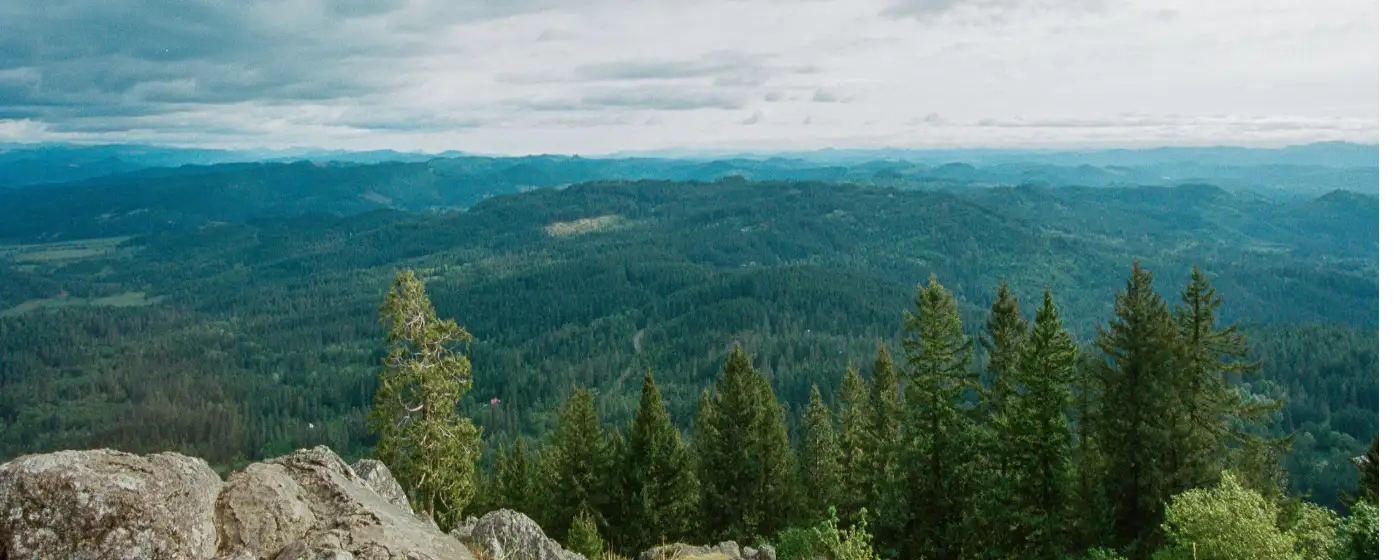
The city sits in the northern Willamette Valley, flat farmland stretching in every direction and the Cascade Range visible to the east on clear days. The Oregon coast is roughly an hour's drive west. That positioning matters practically: you can run an errand in Eugene, stop at a farm stand on the way home, and be back before dinner without it feeling like a production. The Long Tom River and the proximity of the Willamette River give the surrounding landscape a texture that flat-map descriptions miss.
What the Week Looks Like
Most working residents either commute south toward Eugene or work locally in education, corrections, or municipal roles. Remote workers have adopted Junction City steadily — the housing stock gives them space that comparable Eugene dollars don't. The most common occupational clusters among residents are sales and administrative support, office work, and transportation — a profile that skews toward the kinds of jobs that can be done from anywhere or managed on a predictable schedule.
A serious shopping trip means driving south into Eugene. The city has everyday retail covered, but the kind of errand that requires a specialty retailer or a larger selection will take you out of town — that's just the honest arithmetic of a city this size, and most residents build it into their week rather than fight it.
Seasonal Surprises Newcomers Don't Expect
August in Junction City means the Scandinavian Festival turns the small downtown into something unrecognizable. Crowds from across the region descend over four days, OR-99 through town slows considerably, and parking fills well before the main events — a problem locals solve by simply not driving. New residents who moved here for the quiet are often caught off guard the first year — not because it's unpleasant, but because nothing about the other 51 weeks prepares you for it. After that first August, most people plan around it and start to enjoy it.
The city's safety picture is meaningfully better than state averages: Junction City's crime data shows a violent crime rate of 1.7 per 1,000 residents and a property crime rate of 14.3 per 1,000 residents — well below Oregon's state violent rate of 3.3 per 1,000 and state property rate of 24.5 per 1,000.
The Junction City Housing Market Right Now
The typical home price in Junction City sits at $489,162 (Zillow Home Value Index, July 2026). That figure places the city noticeably below Eugene and makes it one of the more accessible entry points in Lane County for buyers who want a single-family home on a real lot. For a fuller comparison of costs across the area, see the Junction City cost of living page.
What the Housing Stock Actually Looks Like
Roughly 65% of the city's approximately 2,922 housing units are single-family detached homes — this is not a condo market. Large apartment complexes account for about 23% of the stock, with a small share of manufactured and mobile homes filling out the rest. The city has an ownership culture: most residents own their homes, and the sparse suburban character Niche describes is accurate on the ground.
The neighborhoods reflect that variety. The Reserve and Rolling Meadows skew toward newer construction and families with kids. Scandia Village and Farmview Manufactured Homes offer lower entry points. Downtown Junction City is the historic core, compact and walkable by Junction City standards. Some areas run above the city median; others are the most accessible in the market. The full breakdown lives on the best neighborhoods page.
Market Character
The city's Urban Growth Boundary is being formally expanded — the city has determined its current boundary doesn't provide enough land for 20-year residential and commercial needs, which signals that new development is coming. That tends to put modest upward pressure on prices in established neighborhoods while adding supply at the edges. Well-priced homes here don't sit long, but this is not a frenzied environment either; buyers typically have room to negotiate on condition and terms rather than simply waiving everything to compete. The effective property tax rate of 0.77% is among the lower rates in the region, which meaningfully affects the monthly cost of ownership relative to the purchase price.
Junction City Neighborhoods
Junction City has several distinct areas — each with its own character and appeal. Here’s a breakdown to help you narrow down where to focus your home search.
🏡 The Reserve
The Reserve skews toward newer construction and families with kids looking for larger lots and a clean suburban layout. It is one of the more recently developed pockets in the city, with the kind of housing stock that attracts buyers coming from Eugene who want more space for the money.
🏠 Rolling Meadows
Rolling Meadows has a settled residential character with single-family homes on generous lots, popular with parents who want quiet streets and proximity to schools. The neighborhood's name matches its feel — open, low-density, unhurried.
🌳 Scandia Village
Scandia Village is one of Junction City's manufactured home communities, offering an accessible entry point for buyers and retirees who want lower-maintenance living in a city with a strong ownership culture. The Scandinavian heritage the city wears is especially present in this neighborhood's name and character.
🏘 Downtown Junction City
The historic core of Junction City is compact and walkable by the city's standards, anchored by the Historic Train Depot and The Lee House Museum. It is the neighborhood most transformed during the annual Scandinavian Festival and the most pedestrian-accessible part of the city on an ordinary day.
🏔 West Side
The West Side is where West Kirk Park anchors neighborhood life, drawing families on weekday afternoons and weekend mornings. It has the feel of an established residential area that has been growing slowly and steadily rather than through any single development push.
🌆 Farmview Manufactured Homes
Farmview Manufactured Homes sits at the more accessible end of Junction City's housing spectrum, suited to buyers who want to own rather than rent and are willing to trade square footage options for a lower price point. It sits within the city's broader farmland context, and the agricultural surroundings are immediately visible.
Pros & Cons of Living in Junction City
The Pros
- Small-town charm with a strong sense of community and heritage
- Close proximity to Eugene for jobs and amenities
- Growing wine country with the Lower Long Tom AVA
- Lower cost of living than nearby Eugene
The Cons
- Limited local job base beyond agriculture and RV industry
- Crime rate somewhat above national average per NeighborhoodScout
- Fewer dining/cultural amenities in town, requiring a drive to Eugene
Getting Around & Commuting in Junction City
Junction City's location on OR-99 — the Pacific Highway — is the defining fact of daily mobility here. The interstate bypasses the city entirely, which is a large part of why downtown retains the scale it does, and why OR-99 carries essentially all of the through-traffic and local movement alike.
The Eugene Commute
The core commute is south: it is about 20 minutes to Eugene, OR under normal conditions. That distance puts the University of Oregon campus, Eugene's hospital system, and the bulk of the region's professional employment within a manageable daily drive. OR-99 is the primary route and it moves well outside of peak hours. During morning and afternoon rush, the corridor through the city and into Eugene slows, but not in the way a metro freeway does — the friction is real but not the defining feature of the commute.
OR-36, the Mapleton-Junction City Highway, connects the city westward toward the coast — useful for recreational driving and for residents who need to access communities in that direction. OR-99W and OR-99E diverge further south in the valley; most Junction City residents are on OR-99 proper for their daily travel.
Transit and Alternatives
Lane Transit District bus service connects Junction City to Eugene and surrounding communities. For residents who work in Eugene and prefer not to drive every day, that connection exists and is used. Most day-to-day errands within the city are a short drive; the downtown core is compact enough to manage on foot for basic needs, but the city is not designed around pedestrian access in the way a denser urban area would be.
Employers Worth Understanding
The largest local employers are the Junction City School District, the Oregon State Correctional Institution, the City of Junction City, and Lane County. Hanley Farm represents the agricultural employment that anchors the surrounding rural economy. For residents in sales, administrative, transportation, and office roles — the most common occupational clusters here — Eugene's job market is effectively the local job market, reachable in that 20-minute drive. Many residents who work remotely chose Junction City specifically because OR-99 gives them options without forcing a daily commute.
| Destination | Route | Typical Drive | Notes |
|---|---|---|---|
| Eugene (downtown) | OR-99 south | About 20 minutes | Primary employment corridor |
| Eugene Airport (EUG) | OR-99 south | ~8 miles | Nearest major airport |
| Corvallis | OR-99 north | ~45 minutes | OSU campus and hospital system |
| Oregon Coast | OR-36 west | ~60 minutes | Florence and coast access |
| Harrisburg | OR-99 north | ~10 minutes | Nearby small community |
| Elmira | OR-99W west | ~15 minutes | Wine country edge |
Eugene Airport sits roughly 8 miles south — closer than most residents in the metro itself. For frequent travelers, that proximity is one of the quiet advantages of Junction City that rarely makes the relocation brochure.
Schools in Junction City
Families relocating to Junction City have public, private, and higher-education options nearby. Here’s a quick overview.
🎓 School District
Junction City School District 69 serves K–12 students across Junction City and the surrounding area. Rated C+ (source: Niche.com).
🏆 Graduation Rate
The 4-year high-school graduation rate here is approximately 80.7%.
📚 Higher Education
Oregon’s public universities — the University of Oregon, Oregon State University, and Portland State University — offer four-year degrees statewide, with a network of 17 community colleges providing two-year and workforce programs.
🌐 Online Learning
Oregon State University Ecampus and Portland State University Online offer fully accredited online degrees for remote learners across the state.
Safety in Junction City
A quick look at how Junction City compares on the numbers that matter most when weighing a neighborhood or a move.
🛡 Violent Crime
Approximately 1.7 per 1,000 residents.
🔒 Property Crime
Approximately 14.3 per 1,000 residents.
Compared to the most recent national figures from the Bureau of Justice Statistics (2024), Junction City’s violent crime is below the national average (about 3.7 per 1,000), and property crime is below the national average (about 18.4 per 1,000).
Against Oregon as a whole, Junction City’s violent crime is roughly half the state average, and property crime is roughly half the state average (Bureau of Justice Statistics, Crime Known to Law Enforcement, 2024 (tables 2 and 3)).
Crime rates can vary a lot within a single city, so the citywide numbers above are only a starting point. Some neighborhoods in Junction City run well below these averages, while others run higher — the kind of block-by-block detail that matters most when you’re actually choosing where to live. The full guide below breaks it down neighborhood by neighborhood.
Working in Junction City
Junction City’s largest employers span several industries — here are some of the anchors of the local job market.
🎓 Junction City School District
Education
💼 Oregon State Correctional Institution
Corrections
🏛 City of Junction City
Municipal government
🏛 Lane County
Municipal government
💼 Hanley Farm
Agriculture
Parks & Recreation in Junction City
Some of the outdoor spaces that shape everyday life in Junction City.
🌱 West Kirk Park
Junction City residents don’t have to go far for green space — spots like West Kirk Park are part of everyday life here, whether that’s a morning walk, a weekend hike, or just somewhere to unwind outside. The full guide below covers more of what Junction City has to offer for parks and outdoor recreation.
Retiring in Junction City
Junction City draws retirees for its balance of amenities, outdoor access, and cost. Here’s what to weigh.
🌤 Climate
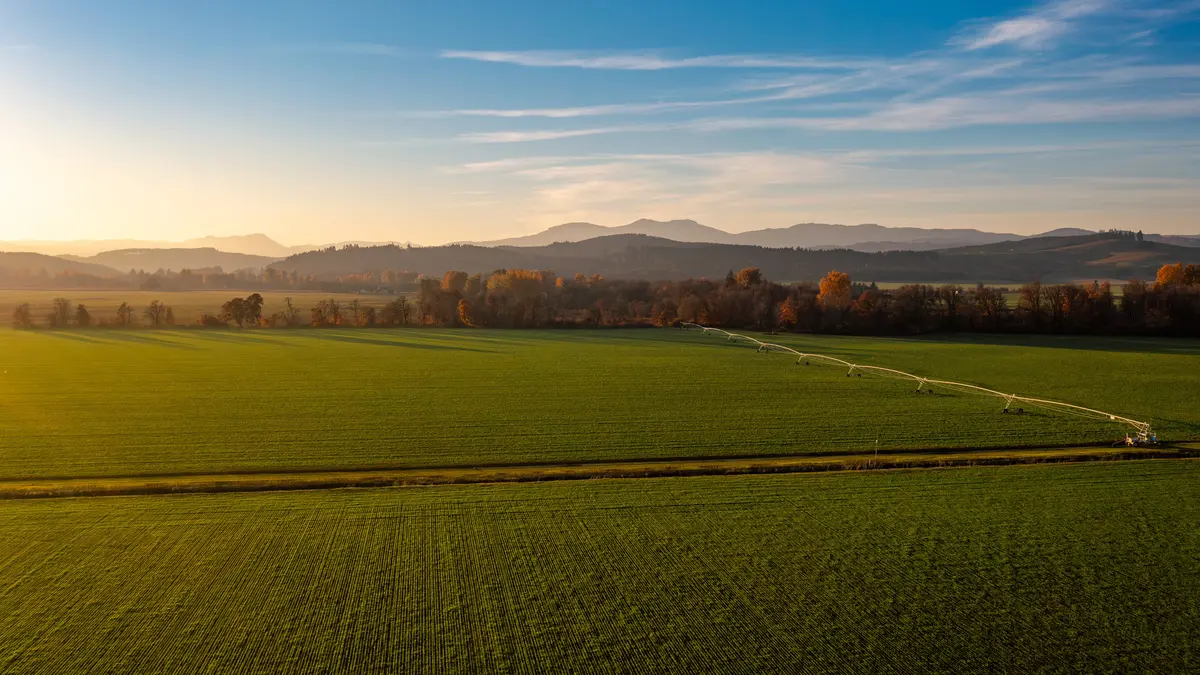
Junction City sits in the northern Willamette Valley with mild, wet winters and dry summers. The city averages 155 sunny days a year — less than Oregon's marketing suggests, but summers are genuinely warm and the surrounding farmland is at its best from June through October. Winter rain is steady rather than severe, and snow is rare.
🍴 Lifestyle
Daily life here runs at an unhurried pace, with farm stands, Willamette Valley wine country, and the Long Tom River corridor within easy reach. The Scandinavian Festival in August and the Yule Fest in December give the city a cultural calendar that punches above its population size. The Historic Train Depot and The Lee House Museum anchor a compact, walkable downtown for slower-paced afternoons.
🏚 55+ Communities
Scandia Village and Farmview Park offer manufactured and mobile home options scaled for retirees and those looking to downsize, with Upton's Trailer Park rounding out the smaller-scale options. These are modest communities rather than large amenity-heavy developments, which suits buyers who want lower maintenance costs and a quieter setting without a resort price tag.
✈ Getting Around
A car handles nearly all daily movement comfortably in Junction City. OR-99 connects the city to Eugene in about 20 minutes, and Eugene Airport is roughly 8 miles away — a genuine convenience for retirees who travel to see family. Lane Transit District buses offer a Eugene connection for those who prefer not to drive every trip.
🏛 Oregon Taxes for Retirees — What to Know
- Social Security is not taxed — Oregon does not tax Social Security or Railroad Retirement benefits. Any amount included in your federal adjusted gross income is subtracted back out on the Oregon return.
- But other retirement income IS taxed — This is the trade-off that surprises people moving from Washington or Texas. Pension distributions and 401(k)/IRA withdrawals are taxed as ordinary income at Oregon’s regular rates — there is no blanket retirement-income exclusion.
- Graduated income tax — Oregon has four brackets — 4.75%, 6.75%, 8.75% and 9.9%. The 4.75% rate covers the first $10,000 of taxable income for a single filer ($20,000 filing jointly); the 8.75% rate starts at $125,000 ($250,000 jointly); and the top 9.9% rate applies above $250,000 ($500,000 jointly).
- No sales tax — Oregon levies no general sales tax.
- Property taxes, with senior deferral — Oregon’s Senior and Disabled Property Tax Deferral lets qualifying homeowners have the state pay their county property taxes, with a lien recorded against the home. The 2026 household income limit is $70,000, and deferred balances accrue 6% simple interest — it defers the bill rather than forgiving it.
- Estate tax — the one to plan for — Oregon has its own estate tax with a $1 million filing threshold — far below the federal exemption, and NOT indexed for inflation, so it reaches more estates every year in real terms. Retirement accounts and a long-held home count toward the taxable estate, so estates that feel modest can cross the line without the owner expecting it.
- No inheritance tax — Oregon has no separate inheritance tax and no gift tax.
Tax laws change frequently and individual situations vary. This is general information, not tax advice — always consult a qualified Oregon tax professional or CPA for personalized retirement tax planning.
Weekends & Local Favorites in Junction City
Junction City's weekend life is grounded in the land around it and in a handful of genuinely good local spots that regulars know well. The agricultural economy is functional, not decorative — farm stands, U-pick operations, and the edge of Willamette Valley wine country are part of everyday life here, not day-trip novelties.
Food and Coffee
For burgers, Junkyard Extreme Burgers and Brats has earned a following that extends well beyond the city limits — it is the kind of place people from Eugene mention when Junction City comes up. Bugsy's and Max Porter's round out the casual dining options, while Tin Sing handles the Chinese food craving reliably. Beer Station is where people go when the goal is a low-key evening out. On the coffee side, Camas Country Bakery and Store is a genuine local institution — a bakery and market that has been part of the community fabric for years. Nina's Pony Espresso and Hillbilly Brews Espresso serve the drive-through espresso role that Oregonians expect, and Boba Potion has carved out a following for anyone who wants something different.
Outdoors and Farm Life
West Kirk Park is where families with kids end up on weekday afternoons and weekend mornings — it is the recreational anchor on the west side of town. Bush's Fern View Farms and Groundwork Organics represent the agricultural character of the surrounding area in a tangible way; buying produce here means actually meeting the people who grew it. The Long Tom River and the Willamette River corridor are within easy reach for anyone who wants to walk or fish without driving far.
Culture and Community
The Scandinavian Festival, held every August since 1961, is the headline — four days of traditional food, folk dancing, a Viking Village, and a civic pride that the city wears openly, drawing crowds from across the region to a downtown that looks nothing like it does the other fifty-one weeks of the year. The Yule Fest in December has expanded that cultural calendar into a second anchor event. The Historic Train Depot and The Lee House Museum give the downtown its historical grounding for anyone curious about how the city got here. The city's Open Spaces Master Plan, still in development as of early 2025, reflects an active civic investment in expanding what the parks system offers over the next decade.
What locals who move away tend to miss first isn't any single restaurant or trail — it is the pace. The ability to run into people you know at the coffee counter, to leave for Eugene when you need something the city doesn't have, and to come back to actual quiet. That combination is harder to find than the listing sheets suggest.
Local favorites in Junction City
Restaurants
- Junkyard Extreme Burgers and Brats
- Bugsy's
- Tin Sing
- Beer Station
- Max Porter's
Outdoors
- West Kirk Park
- Bush's Fern View Farms
- Groundwork Organics
Coffee
- Camas Country Bakery and Store
- Nina’s Pony Espresso
- Hillbilly Brews Espresso
- Boba Potion
Top Things Locals Say About Junction City
The best intel about a city comes from the people who actually live there. Here’s what Junction City residents say when newcomers ask the questions everyone’s thinking.
“I knew the commute to Eugene was short, but I didn't expect OR-99 to actually move that well most mornings — and I definitely didn't expect that the first August would basically shut down my neighborhood for a long weekend. The festival is genuinely fun once you know what you're walking into.”
— Recent Junction City home buyer
“What's the most surprising thing about living in Junction City?”
How quickly you stop thinking of Eugene as far away. The drive on OR-99 is short enough that you do it without planning — you just go when you need something. What catches people off guard is how little they end up going. Once you settle in, the farm stands, the local coffee spots, and the slower pace start to feel like enough for most of the week.
“What do locals love most about Junction City?”
The Scandinavian Festival is the obvious answer, and it's earned — watching a city this small fill its downtown every August with visitors from across the region is genuinely impressive. But the everyday version of it is the agricultural character: Willamette Valley wine country right at the edge, farm stands you can actually buy from, and the Long Tom River corridor if you want to get outside without driving anywhere significant.
“What should newcomers to Junction City know?”
OR-99 is doing almost all the work for this city's mobility — learn how it moves at different times of day before you lock in where you're living relative to where you're working. And budget one August weekend for the Scandinavian Festival traffic before you have somewhere important to be; the first year, a lot of newcomers don't see it coming. Also: serious shopping means a trip to Eugene, and building that into your week makes life easier than fighting it.
“How much do you need a car in Junction City?”
A car is essential for almost everything beyond the immediate downtown area. Everyday errands within the city are manageable and close together, but the city is designed around driving rather than walking or cycling. Lane Transit District buses connect Junction City to Eugene, which works for some commuters, but most residents drive for both local trips and the Eugene run. The one genuine exception is the compact downtown core, where a few blocks are genuinely navigable on foot.
Cities Near Junction City
Other communities near Junction City worth a look — each with its own character and price point.
| City | Distance | Best For | Vibe | Median Rent | Median Buy |
|---|---|---|---|---|---|
| Harrisburg | 8 mi | buyers wanting even smaller-town quiet | rural, tight-knit, agricultural | $1,350 | $400,561 |
| Eugene | 13 mi | careers, amenities, university life | urban, walkable, culturally active | $1,808 | $482,062 |
| Elmira | 14 mi | wine country edge, rural privacy | quiet, agricultural, scenic | $1,450 | $512,453 |
More Helpful Guides for Junction City
Going deeper on Junction City? Our blog series covers everything from first-time buying to retiring here — explore the guides below.
Local Expert Takeaway: Junction City rewards buyers who want space, lower prices than Eugene, and a community identity they can actually feel — but you go in with clear eyes about the school performance metrics, the limited local job market, and the fact that OR-99 is doing a lot of work for this city's daily mobility. The Scandinavian Festival alone tells you something important: a town of 7,256 that fills its downtown every August with crowds from across the region has a confidence about itself that most small cities never develop. If the Eugene commute fits your life and the agricultural surroundings appeal, this is a genuinely undervalued corner of the Willamette Valley.
Quick Takeaways & FAQs
✅ Junction City's typical home price of $489,162 (July 2026) sits noticeably below Eugene, making it one of the more accessible single-family markets in Lane County.
⚠️ The school district holds a C+ rating, according to Niche, and 2024-25 proficiency scores are below state averages — families prioritizing academics should review the full data before committing.
📍 The annual Scandinavian Festival, held every August since 1961, draws crowds from across the region over four days — new residents are often caught off guard by how completely it transforms the small downtown.
How far is Junction City from Eugene?
What are home prices like in Junction City, Oregon?
What is the Scandinavian Festival in Junction City?
Is Junction City, Oregon safe?
What are the schools like in Junction City, Oregon?
Helpful Links for Moving to Junction City
Moving to Oregon?
Tell us what you need help with and we'll connect you with local resources.
