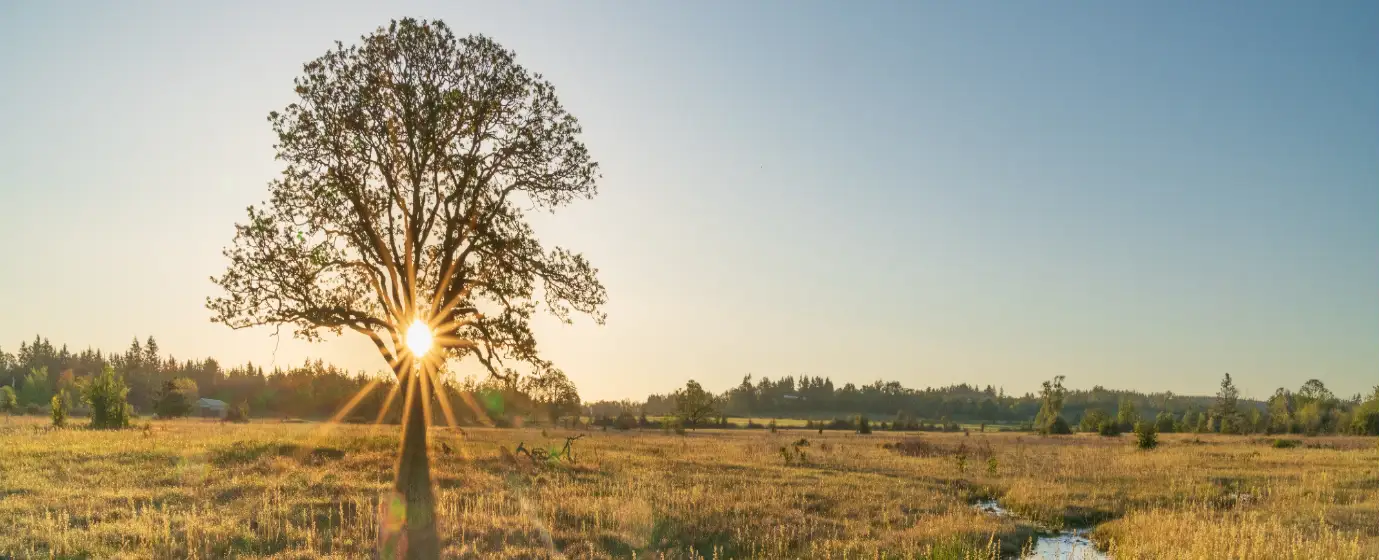
What Is Living in Stayton, Oregon Like?
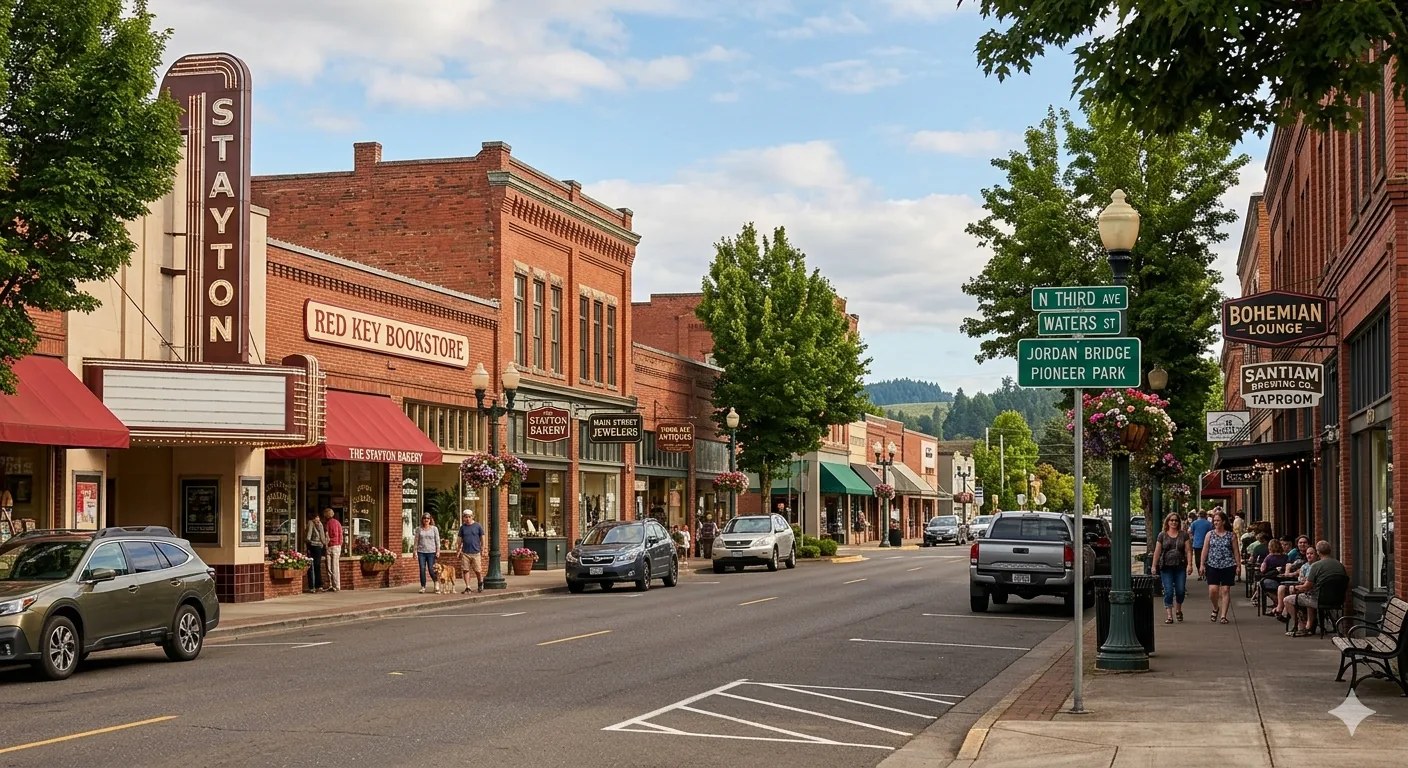
You've probably done the math on Salem and decided the price or the pace isn't quite right. Stayton keeps coming up — about 16 miles southeast along OR-22 (North Santiam Highway), tucked into the Willamette Valley foothills at the edge of the North Santiam River corridor. At 8,292 residents, it is genuinely small, which is either the point or the problem depending on what you're looking for. What surprises most people who visit before deciding: Stayton reads as a working agricultural town, not a bedroom suburb dressed up with coffee shops and murals — though the murals are actually there now, a 2025–26 Community Improvement Grant funded the "Flowing Through Time" series in Historic Downtown, celebrating Kalapuya heritage alongside the town's own history.
The economic backbone here is modest and locally rooted. The North Santiam School District is the largest single employer, followed closely by a major regional health system and the City of Stayton itself. Wilco, the agricultural cooperative, reflects what this part of Marion County has always been: farmland first, town second. The North Santiam School District 29J, with 2,078 students enrolled in 2025-26, holds a B- rating, according to Niche — an honest middle-of-the-road result that parents with school-age children will want to dig into before committing. Most households earning near the $78,268 median income are working somewhere other than Stayton's city limits; Salem is the economic hub, and OR-22 is the daily thread that connects the two.
Housing is the clearest reason people end up here. The typical Stayton home is noticeably less expensive than Salem, and substantially below what buyers face in the Portland metro. Day-to-day life has a rural pace — 155 sunny days a year keeps expectations honest about the Willamette Valley's gray winters — but the proximity to Silver Falls State Park, the North Santiam River waterfront, and the Santiam State Forest means weekends rarely feel lacking. Oregon has no sales tax, the effective property tax rate sits at approximately 0.79%, and Measure 50's assessed-value cap rewards buyers who stay put. For a fuller picture of what things cost here, see the cost of living page.
Whether you're considering a move or just researching the area, the sections below break down Stayton's neighborhoods, commute realities, housing market, local employers, and what daily life here actually looks like from the inside.
Stayton at a Glance
Looking to buy in Stayton? Estimate your payment.
Enter your numbers to see an estimated monthly mortgage payment.
Estimate only. Excludes HOA fees and mortgage insurance. The interest rate above is a starting point, not a quoted rate — replace it with your own to see real numbers. Insurance is a flat placeholder, not a Stayton quote.
Why Are People Moving to Stayton?
The people who choose Stayton are almost always making a deliberate trade: a quieter, smaller town in exchange for real affordability and access to the outdoors. They are not moving here by accident or because they couldn't find anything else.
The Price Reality
Stayton's typical home price of $471,759 (Zillow Home Value Index, July 2026) puts ownership within reach for households earning at or near the local median — something increasingly rare in most of western Oregon. For buyers priced out of the Salem market, Stayton is often the first place where a standard down payment and a conventional loan actually close the gap.
Oregon's Measure 50 adds a long-term dimension that buyers don't always catch on first pass. For homes built before 1996, annual assessed value growth is capped at 3%, meaning buyers who stay a decade or more often pay property taxes on assessed values well below what the market would otherwise demand — a meaningful structural advantage built into the purchase.
Who Actually Moves Here
The pattern is consistent: families with school-age children who want a real yard and a smaller school environment, remote workers who discovered during the past few years that they don't need to be near a Portland office, and people drawn from the Salem area who want to trade commute time for a different kind of life. A median age of 38.3 years reflects a working-age community, not a retiree enclave.
Retirees do settle here, but they buy into the general residential market — often single-level homes in areas like Heritage Oaks or Riverhaven — rather than a dedicated 55+ community, because none exists in Stayton. The retiring page covers what that actually looks like.
The Honest Tradeoffs
People move out of Stayton for predictable reasons: the commute on OR-22 wears on some households faster than expected, especially once kids are in activities that pull toward Salem multiple evenings a week. The school district's test-score profile — on 2024-25 state assessments, 28.6% of students reached math proficiency and 40.8% reached reading proficiency — is below the statewide average, which is a real consideration for parents. See the schools page for the full breakdown.
The town also has genuine economic limits. There are not many professional jobs inside Stayton's own boundaries, and anyone who needs access to a wide job market will be driving to Salem or beyond. That's a fact, not a complaint — but buyers who don't account for it early sometimes find themselves re-evaluating after a year.
What Daily Life Feels Like in Stayton
Six months in, most newcomers say the same thing: Stayton is smaller than it looked on the map. The city covers about 3.1 square miles, which means the coffee run, the grocery store, and the after-school pickup are all closer together than in any Salem neighborhood — but the options are more limited too.
The Rhythm of a Small Oregon Town
Weekday mornings in Stayton have a distinct character. OR-22 loads up quickly as residents head toward Salem, but within town, streets are quiet enough that you notice the difference between a school-day morning and a holiday. The Stayton Farmers Market brings the community together through the growing season, and Pioneer Park — which received outdoor recreation upgrades through the 2025-26 city grant program — is a genuine gathering spot on warm afternoons.
The downtown core along Third Avenue has enough on foot for daily basics, but a serious grocery run or a trip to a big-box retailer means driving out of town. That's the honest reality of a city this size, and buyers who come from mid-size cities sometimes underestimate it until they've lived through a few winter weeks when leaving feels like more of a commitment.
Community and Civic Life
Stayton punches above its weight in civic engagement for a city of 8,292. The Stayton Public Library anchors the downtown, Spotlight Community Theater draws local performers and audiences, and the Santiam Teen Center serves a visible role in youth programming. The "Flowing Through Time" mural series — installed downtown with city grant funding — signals a community that is deliberately investing in its identity, not just managing its maintenance budget.
The North Santiam River waterfront is the natural backdrop to daily life here. It is not a developed riverwalk in the Portland sense, but residents use the access corridors regularly, and the sound of the river is simply part of living in the eastern neighborhoods closest to it.
What Newcomers Don't Expect
The gray season lands harder here than the 155 sunny days a year figure implies. Willamette Valley winters run from November well into March, with overcast skies and persistent drizzle as the baseline. Longtime residents build routines around it — regular trips to Silver Falls State Park, which is accessible via OR-22 and draws more than a million visitors a year, or into the Santiam State Forest — rather than waiting for better weather. Newcomers from California or the Southwest consistently underestimate how much the reduced daylight affects daily mood before they've built those habits.
The Stayton Housing Market Right Now
Stayton's housing market is not fast-moving by Willamette Valley standards, but well-priced homes rarely sit. The typical home price of $471,759 (Zillow Home Value Index, July 2026) reflects a market that has grown steadily — the city's population increased from about 6,816 to 8,292 over the past 25 years — without the volatility that hit the Portland metro hard in 2022 and 2023.
What the Inventory Looks Like
Most of the housing stock is single-family detached homes on modest lots, with a meaningful share of older ranch-style construction mixed into newer subdivisions in areas like Heritage Oaks and Village Creek. True entry-level inventory — older homes needing some work — exists here in a way it simply doesn't in Salem or Silverton at this price point. Some areas cost more than others, and the neighborhoods closest to the river corridor and historic downtown tend to attract the most competitive offers; the neighborhoods page covers the character distinctions in detail.
The typical 2-bedroom rent ranges from $1,380 to $1,680, which keeps the rental market accessible relative to what the rest of Marion County commands. For renters watching the ownership market, that rent-to-own gap is narrower in Stayton than in most Oregon cities of comparable access to a metro.
The Tax Picture
The effective property tax rate of approximately 0.79% is notably low by national standards, and Measure 50's 3% assessed-value growth cap makes it lower still for buyers of pre-1996 homes who hold long-term. Oregon's absence of a state sales tax means that consumer purchases don't carry the added drag they do in neighboring states. The full tax picture — income, property, and sales — lives on the cost of living page.
Reading the Market
Stayton is not the frenzied market it was in 2021, but it is not a soft buyer's market either. Sellers of well-maintained single-family homes in established neighborhoods generally hold their price; buyers have the most room on older inventory or homes that have been sitting longer than the local average. Coming prepared matters — but the specific mechanics of making a competitive offer belong on the first-time homebuyer page.
Stayton Neighborhoods
Stayton has several distinct areas — each with its own character and appeal. Here’s a breakdown to help you narrow down where to focus your home search.
🏡 Downtown Stayton (Historic Downtown / 'Real Stayton')
The historic core along Third Avenue is where Stayton's civic life concentrates — the public library, the community theater, and the new 'Flowing Through Time' murals all anchor this walkable stretch. It suits buyers who want to feel connected to the community without driving to find it.
🏠 Westown
Westown occupies the western residential blocks and offers an established mix of single-family homes with a quieter, away-from-downtown feel. It appeals to buyers who want Stayton's pricing without the occasional foot traffic that comes with proximity to the commercial core.
🌳 Hollister Addition
Hollister Addition is an older residential neighborhood with modestly sized lots and a range of housing vintages, making it one of the more accessible entry points into Stayton's ownership market. It suits first-time buyers and those willing to trade some polish for location and value.
🏘 Heritage Oaks
Heritage Oaks draws families and buyers looking to move up with its newer single-family construction and more consistent street character. The area feels suburban in the best sense — spacious lots, quieter streets, and proximity to the school loop without the density of closer-in neighborhoods.
🏔 Riverhaven
Riverhaven sits near the North Santiam River corridor and appeals to buyers who want the natural backdrop as part of daily life rather than a weekend destination. The riverside orientation and the sound of the water make it one of Stayton's most distinctively local addresses.
🌆 Village Creek
Village Creek offers newer residential development with clean streetscapes and a neighborhood feel that suits growing families well. It is one of the more recent additions to Stayton's housing stock, which means less deferred maintenance and more consistent construction quality across the block.
Pros & Cons of Living in Stayton
The Pros
- More affordable housing than Salem or Portland metro while staying within commuting distance
- Tight-knit small-town community feel with a walkable historic downtown
- Easy access to the North Santiam River and Cascade recreation via Highway 22
- Low-key, family-oriented pace of life
The Cons
- Limited local professional job base, so many residents commute to Salem or beyond
- Fewer dining, shopping, and entertainment options than larger nearby cities
- Parts of the historic downtown are dated and some residents note a rising property-crime and drug concern
Getting Around & Commuting in Stayton
OR-22 (North Santiam Highway) is Stayton's lifeline to the rest of the region, and understanding it is probably the single most important thing a prospective buyer can do before choosing a neighborhood. Almost every commute, errand run, and weekend trip starts on this highway.
The Salem Commute
The drive to Salem is about 25 minutes under normal conditions — a figure that experienced OR-22 commuters will immediately qualify. The highway runs largely two lanes through agricultural land, and morning rush-hour slowdowns near the Sublimity–Stayton interchange are a known recurring issue. The merge and the single-lane sections heading northwest toward Salem can stack up fast on wet winter mornings when a single slow truck changes the pace of a dozen cars behind it.
If your work schedule is flexible — arriving before 7:30 a.m. or after the peak wave — the commute is genuinely fine. If you are locked into an 8:00 a.m. start in central Salem, build extra time into your mental model before you commit to a house in Stayton. This is the thing people most often say they wish someone had been blunter about.
Beyond Salem
Portland is roughly an hour to an hour and fifteen minutes depending on traffic and which part of the city you're heading to — workable for occasional trips, not for a daily commute. For Portland workers, Stayton only makes sense if work-from-home is at least three or four days a week. Oregon State University is approximately an hour's drive, and Chemeketa Community College is in Salem — both accessible for students or staff willing to treat the commute as part of the day.
Portland International Airport (PDX) is approximately 60 miles away, and Eugene Airport (EUG) is approximately 65 miles in the other direction — both are realistic options depending on where you're flying and which airline has direct routes to your destination.
Getting Around Within Stayton
Inside Stayton's 3.1 square miles, a car is practical for almost everything. The downtown core and the blocks immediately around it are manageable on foot once you're parked, but most errands — the hardware store, the grocery run, the school pickup loop — involve driving. Cycling is possible and a few residents use it for short trips, but the infrastructure is limited compared to what Salem or Corvallis offers. For anyone considering life here without a car, the honest answer is that OR-22 is not a pedestrian corridor and the surrounding road network reflects that.
Remote Work and Stayton
Remote work has genuinely changed who Stayton serves. A meaningful share of newer residents work fully or mostly from home, and the city's combination of lower housing costs and fast access to outdoor recreation makes that lifestyle viable in a way that Stayton's job base alone would never support. The infrastructure for remote work — reliable internet access at the residential level — is present, though it is worth confirming the specific service options at any property you're seriously considering.
Schools in Stayton
Families relocating to Stayton have public, private, and higher-education options nearby. Here’s a quick overview.
🎓 School District
North Santiam School District 29J serves K–12 students across Stayton and the surrounding area. Rated B- (source: Niche.com district profile, 2026).
🏆 Graduation Rate
The 4-year high-school graduation rate here is approximately 83.7%.
📚 Higher Education
Oregon’s public universities — the University of Oregon, Oregon State University, and Portland State University — offer four-year degrees statewide, with a network of 17 community colleges providing two-year and workforce programs.
🌐 Online Learning
Oregon State University Ecampus and Portland State University Online offer fully accredited online degrees for remote learners across the state.
Safety in Stayton
A quick look at how Stayton compares on the numbers that matter most when weighing a neighborhood or a move.
🛡 Violent Crime
Approximately 2.45 per 1,000 residents.
🔒 Property Crime
Approximately 22.54 per 1,000 residents.
Compared to the most recent national figures from the Bureau of Justice Statistics (2024), Stayton’s violent crime is below the national average (about 3.7 per 1,000), and property crime is above the national average (about 18.4 per 1,000).
Against Oregon as a whole, Stayton’s violent crime is roughly two-thirds of the state average, and property crime is about the same as the state average (Bureau of Justice Statistics, Crime Known to Law Enforcement, 2024 (tables 2 and 3)).
Crime rates can vary a lot within a single city, so the citywide numbers above are only a starting point. Some neighborhoods in Stayton run well below these averages, while others run higher — the kind of block-by-block detail that matters most when you’re actually choosing where to live. The full guide below breaks it down neighborhood by neighborhood.
Working in Stayton
Stayton’s largest employers span several industries — here are some of the anchors of the local job market.
🎓 North Santiam School District
Education
🏥 Santiam Hospital
Healthcare
🏛 City of Stayton
Municipal government
🏛 Marion County
Municipal government
💼 Wilco
Agricultural cooperative
Parks & Recreation in Stayton
Some of the outdoor spaces that shape everyday life in Stayton.
🌱 North Santiam River waterfront
Stayton residents don’t have to go far for green space — spots like North Santiam River waterfront are part of everyday life here, whether that’s a morning walk, a weekend hike, or just somewhere to unwind outside. The full guide below covers more of what Stayton has to offer for parks and outdoor recreation.
Retiring in Stayton
Stayton draws retirees for its balance of amenities, outdoor access, and cost. Here’s what to weigh.
🌤 Climate
Stayton sits in the Willamette Valley and shares its signature climate: mild, wet winters from November through March and warm, dry summers that stretch into September. The city averages 155 sunny days a year, which sets realistic expectations for retirees used to sunnier climates. The upside is that summers here are genuinely beautiful, and the valley's agricultural surroundings mean the air quality on a clear July morning is hard to match.
🍴 Lifestyle
Daily life for retirees in Stayton centers on the river corridor, the library, and the community anchors in downtown — the Farmers Market through the warm months, the Spotlight Community Theater for live performance, and a handful of local coffee spots and casual restaurants. Silver Falls State Park is nearby for those who want more sustained hiking. The pace is unhurried in a way that suits retirement well, though a serious cultural night out typically means a drive to Salem.
🏚 55+ Communities
There are no dedicated 55+ or active-adult communities in Stayton. Retirees who settle here buy into the general residential market, and single-level ranch homes in areas like Heritage Oaks and Riverhaven are the most common choices. That approach gives retirees full access to the same housing stock as everyone else in town, often at prices noticeably below what comparable homes command in Salem. The tradeoff is the absence of HOA-managed community amenities that purpose-built 55+ developments typically provide.
✈ Getting Around
A car is necessary for full independence in Stayton — most medical appointments, shopping trips, and social outings beyond the immediate downtown require driving. The drive to Salem takes about 25 minutes, which keeps specialists and larger facilities accessible. Portland International Airport (PDX) is approximately 60 miles away, and Eugene Airport (EUG) is approximately 65 miles in the other direction, offering reasonable options for retirees who travel regularly.
🏛 Oregon Taxes for Retirees — What to Know
- Social Security is not taxed — Oregon does not tax Social Security or Railroad Retirement benefits. Any amount included in your federal adjusted gross income is subtracted back out on the Oregon return.
- But other retirement income IS taxed — This is the trade-off that surprises people moving from Washington or Texas. Pension distributions and 401(k)/IRA withdrawals are taxed as ordinary income at Oregon’s regular rates — there is no blanket retirement-income exclusion.
- Graduated income tax — Oregon has four brackets — 4.75%, 6.75%, 8.75% and 9.9%. The 4.75% rate covers the first $10,000 of taxable income for a single filer ($20,000 filing jointly); the 8.75% rate starts at $125,000 ($250,000 jointly); and the top 9.9% rate applies above $250,000 ($500,000 jointly).
- No sales tax — Oregon levies no general sales tax.
- Property taxes, with senior deferral — Oregon’s Senior and Disabled Property Tax Deferral lets qualifying homeowners have the state pay their county property taxes, with a lien recorded against the home. The 2026 household income limit is $70,000, and deferred balances accrue 6% simple interest — it defers the bill rather than forgiving it.
- Estate tax — the one to plan for — Oregon has its own estate tax with a $1 million filing threshold — far below the federal exemption, and NOT indexed for inflation, so it reaches more estates every year in real terms. Retirement accounts and a long-held home count toward the taxable estate, so estates that feel modest can cross the line without the owner expecting it.
- No inheritance tax — Oregon has no separate inheritance tax and no gift tax.
Tax laws change frequently and individual situations vary. This is general information, not tax advice — always consult a qualified Oregon tax professional or CPA for personalized retirement tax planning.
Weekends & Local Favorites in Stayton
Stayton's weekend culture leans outdoors first, community second. That ordering matters: the town's best assets on a Saturday are not inside the city limits.
Silver Falls and the River
Silver Falls State Park is the undisputed weekend anchor for Stayton residents. Oregon's largest state park at over 9,000 acres, it draws more than a million visitors a year — but the practical reality is that Stayton is closer to the trailheads than most of those visitors, which means early starts beat the crowds. The Trail of Ten Falls is a 7.2-mile loop past ten waterfalls, including the 177-foot South Falls that hikers can walk behind. It does not get old. The park also offers more than 24 miles of walking trails, 14 miles of horse trails, and a 4-mile bike path.
Closer in, the North Santiam River waterfront pulls residents for walking, fishing, and the kind of afternoon that doesn't need a plan. The Santiam State Forest extends the options further east for anyone wanting longer trail mileage or a quieter weekday morning.
Food, Coffee, and the Farmers Market
Stayton's food and coffee scene is compact and loyal. Daily Buzz, Cuppa Joe, Kick Start Coffee, Canyon Coffee, and The Hub collectively keep the morning crowd sorted, and there's enough variety to have a regular spot rather than a default one. For food, Ixtapa Mexican Restaurant and Mashita Teriyaki Restaurant are reliable local standbys, while The Gingerbread House and Covered Bridge Cafe lean into the town's slower, community-table character. A&W Restaurant is the fast option when the drive-through makes more sense than a sit-down meal.
The Stayton Farmers Market runs through the warm months and is one of those places where the town's density works in its favor — you are likely to run into people you know, which is either appealing or not depending on what you're looking for in a town this size.
Arts and Community Gathering
Spotlight Community Theater brings live performance to a city that has no business supporting it at this population, and it does so reliably. The Santiam Teen Center runs programming that keeps younger residents engaged. The downtown murals — the "Flowing Through Time" series funded by the city's 2025-26 grant program — are worth a deliberate walk, both as public art and as an introduction to the Kalapuya history that shaped this part of the valley long before the town was platted.
The Stayton Public Library has earned consistent appreciation from residents as both a resource and a community space — the kind of library a small town builds a routine around rather than visiting for a single purpose.
Local favorites in Stayton
Restaurants
- A&W Restaurant
- Ixtapa Mexican Restaurant
- The Gingerbread House
- Covered Bridge Cafe
- Mashita Teriyaki Restaurant
Outdoors
- North Santiam River waterfront
- Silver Falls State Park (nearby)
- Santiam State Forest
Coffee
- Daily Buzz
- Cuppa Joe
- Kick Start Coffee
- Canyon Coffee
- The Hub
Farmers Markets
- Stayton Farmers Market
Top Things Locals Say About Stayton
The best intel about a city comes from the people who actually live there. Here’s what Stayton residents say when newcomers ask the questions everyone’s thinking.
“I knew the commute on OR-22 would be a factor, but I didn't understand it until I drove it on a wet Tuesday in November. Once we planned around that — leaving earlier, coming home later — the rest of Stayton made total sense for us.”
— Recent Stayton home buyer
“What's the most surprising thing about living in Stayton?”
How much Silver Falls becomes part of your regular life, not just a day trip. Most people think of it as a destination when they're deciding whether to move here, but once you live on OR-22 it becomes a Sunday-morning habit. The other surprise is how quickly the community feels knowable — you see the same people at the Farmers Market, at the library, at Spotlight shows. That's either wonderful or claustrophobic depending on your temperament.
“What do locals love most about Stayton?”
The combination of the river, the park access, and the genuine quiet. There's no traffic noise at 10 p.m. on a residential street here — that sounds minor until you've spent years in a larger city. The civic investment in downtown has also built real pride: the new murals, the theater, the library programming. It doesn't feel like a town that gave up on itself.
“What should newcomers to Stayton know?”
Build more time into OR-22 commutes than your GPS suggests, especially in winter and on the mornings when Sublimity–Stayton interchange traffic backs up. Also: a serious shopping run means driving to Salem, so learn to combine trips rather than making individual drives for individual errands. And winters here are genuinely gray — building outdoor routines early, rather than waiting for good weather, makes the difference between loving the place and slowly resenting it.
“How much do you need a car in Stayton?”
A car is essential for nearly everything beyond the immediate downtown blocks. Most errands — groceries, hardware, most medical appointments — require driving, and OR-22 is not a road you navigate on foot or by bike. Within the downtown core and a few adjacent blocks, walking works fine for coffee and local stops. For anything further, including Salem trips or Silver Falls runs, you are driving. There are rural transit options in Marion County for those who need them, but most households here operate with at least one vehicle.
Cities Near Stayton
Other communities near Stayton worth a look — each with its own character and price point.
| City | Distance | Best For | Vibe | Median Rent | Median Buy |
|---|---|---|---|---|---|
| Sublimity | 3 mi | Families wanting quiet acreage | Rural, unhurried, agricultural character | $1,400 | $576,724 |
| Aumsville | 5 mi | Value-focused buyers, small-town feel | Small, unpretentious, close-knit | $1,350 | $496,279 |
| Silverton | 10 mi | Arts lovers and walkable downtown | Artsy, historic, slightly more polished | $1,775 | $557,308 |
More Helpful Guides for Stayton
Going deeper on Stayton? Our blog series covers everything from first-time buying to retiring here — explore the guides below.
Local Expert Takeaway: Stayton works best for buyers who have done the OR-22 commute at least once at 7:45 on a weekday morning and still want to live here. The housing value is real, the river and Silver Falls are genuinely on your doorstep, and the community has the kind of civic investment — the Farmers Market, Spotlight Community Theater, the new downtown murals — that signals a town paying attention to itself. The catch is that Stayton is not a place that gets easier if your job, your kids' activities, or your social life are all anchored in Salem. Build the commute into your daily mental budget before you make an offer, not after.
Quick Takeaways & FAQs
✅ Stayton's typical home price of $471,759 (July 2026) offers genuine affordability compared to most of western Oregon, with a low effective property tax rate of approximately 0.79%.
⚠️ The OR-22 commute to Salem is about 25 minutes in ideal conditions, but morning slowdowns near the Sublimity–Stayton interchange are a known recurring issue — budget extra time on school and work mornings.
📍 Silver Falls State Park — Oregon's largest, with a 7.2-mile Trail of Ten Falls loop — is Stayton's most-used weekend amenity and one of the clearest geographic advantages of living here over nearby cities.
How far is Stayton from Salem, Oregon?
Is Stayton, Oregon a good place to raise a family?
What is the typical home price in Stayton, Oregon?
What are the best neighborhoods in Stayton?
Is Stayton, Oregon safe?
Helpful Links for Moving to Stayton
Moving to Oregon?
Tell us what you need help with and we'll connect you with local resources.
