
Most people who move to Stayton from Salem or the Portland metro say the same thing within a few months: the city feels smaller and more grounded than they expected — and they mean that as a compliment. Stayton sits along OR-22, the North Santiam Highway, where the Willamette Valley meets the foothills of the Cascades. It is not a bedroom suburb in the conventional sense. It has a historic commercial core, a working riverfront, a farmers market, and a population of 8,292 people who tend to know their neighbors by name. The city's central tension is simpler than most: do you want the walkable older character of the historic half of town, or the newer construction and quieter streets of the residential perimeter?
The economic backbone here is anchored by the North Santiam School District, Santiam Hospital, the City of Stayton, Marion County, and Wilco, the regional agricultural cooperative. The school district — with 2,078 students enrolled in 2025-26 — holds a B- rating, according to Niche, which places it solidly in the middle of the Oregon pack. The families who move here are often drawn by prices noticeably below Silverton and Sublimity, a pace of life that still feels rural without being remote, and easy access to Silver Falls State Park roughly 20 minutes away.
The typical home price in Stayton sits at $471,759 as of July 2026 — meaningfully below neighboring Silverton and Sublimity, and below what most comparable Willamette Valley towns command. That price point draws first-time buyers and families who have been priced out of Salem's tighter west-side neighborhoods. Renting is also an option, with a typical 2-bedroom running $1,380–$1,680 per month. The catch: the median household income of $78,268 falls short of what is needed to comfortably carry the typical home here, so buyers should stress-test their numbers carefully before falling in love with a specific street.
Whether you are considering a move or just researching the area, the sections below break down Stayton's eight neighborhoods, who each one suits, the honest trade-offs, where renters have the most options, and the most common mistakes buyers make before they have spent enough time here to know better.

The Stayton Reality
The divide in Stayton is not east versus west in the abstract — it is old town versus new build, and it runs roughly along the city's original grid. Historic Downtown and the neighborhoods immediately adjacent to it, including Hollister Addition and Riverhaven, carry the character of a town that has been here since 1866. The streets are narrower, the lots are smaller, the houses are older, and the on-foot access to the library, the farmers market, and the North Santiam River waterfront is genuine. If that is what you are looking for, you will not find it in Heritage Oaks or Green Acres Park, no matter how nice the floor plan is.
The newer neighborhoods on the city's perimeter — Heritage Oaks, Village Creek, Fern Ridge, Green Acres Park — were built outward from that original grid as Stayton grew. They offer newer construction, larger lots in some cases, and quieter residential streets, but most errands still require a car and the sense of being in a walkable town is largely absent. For commuters heading to Salem, OR-22 is the only route, and it carries all the traffic that implies — the stretch from Stayton toward Salem can back up during morning and evening rush hours, and there is no alternate corridor.
School boundaries within the North Santiam School District 29J are relatively uniform across the city, so chasing a specific attendance zone is less of a factor here than it would be in a larger district. What does matter is proximity to the activities your household actually uses: if the North Santiam River waterfront, Pioneer Park, and the Stayton Farmers Market are your weekend anchors, the older central neighborhoods put those within reach on foot. If Silver Falls State Park and Santiam State Forest are what brought you here, the eastern edges of town shave a few minutes off that drive.
Neighborhoods at a Glance
| Neighborhood | Best For | Vibe |
|---|---|---|
| Downtown Stayton | Walkable First-Time | Historic commercial core; 19th-century streetscape, cafés, library, farmers market all on foot |
| Westown | Families Value | Established northwest residential area with a neighborhood park and a mix of mid-century and ranch-style homes |
| Hollister Addition | First-Time Quiet | Pre-mid-century grid streets adjacent to the historic core; modest lots, mature trees, grounded feel |
| Heritage Oaks | Families School | Newer subdivision on the city's perimeter; cleaner construction, wider streets, quieter than downtown |
| Riverhaven | Nature Views | Adjacent to the 51-acre North Santiam riverfront preserve; the city's most scenically situated neighborhood |
| Village Creek | Families Nature | Residential plat on the city's eastern edge with easy access toward Silver Falls State Park |
| Fern Ridge | Renter Value | Mixed area with affordable housing stock and a significant newer multifamily development; close to parks and schools |
| Green Acres Park | Families Quiet | Quiet outer residential plat; newer homes, low traffic, car-dependent but peaceful |
Stayton typical home price: $471,759 (Zillow ZHVI, July 2026). Typical rent: $1,503/mo (Zillow ZORI, July 2026). Neighborhood tiers on this page are relative to these figures.
Best Neighborhood by Buyer Type
| Buyer Type | Best Neighborhood | Why |
|---|---|---|
| First-Time Buyer | Hollister Addition | Established grid, modest lot sizes, and proximity to downtown put the library and farmers market within reach without the premium setting of Riverhaven or the historic commercial core. |
| Luxury Buyer | Riverhaven | The city's most distinctive setting — adjacent to the preserved North Santiam riverfront — offers a sense of place that no other Stayton neighborhood can replicate. |
| Walkability Seeker | Downtown Stayton | The only neighborhood in Stayton where the library, cafés, the Stayton Farmers Market, and the river are genuinely reachable on foot. |
| Families with Kids | Heritage Oaks | Newer construction, wider residential streets, and a calmer environment suit households with school-age children who need space and a quieter block. |
| Commuters | Westown | Northwest Stayton puts you closer to OR-22 and cuts a few minutes off the trip toward Salem without sacrificing neighborhood park access. |
| Large-Lot Buyers | Green Acres Park | The outer perimeter of the city is where Stayton's newer, more spacious residential plats sit — quieter and less dense than the historic core. |
| Renters | Fern Ridge | The 72-unit income-restricted development here is the city's largest purpose-built rental stock, complemented by older rental homes throughout the area. |
Looking to buy in Stayton? Estimate your payment.
Enter your numbers to see an estimated monthly mortgage payment.
Estimate only. Excludes HOA fees and mortgage insurance. The interest rate above is a starting point, not a quoted rate — replace it with your own to see real numbers. Insurance is a flat placeholder, not a Stayton quote.
Most Popular Neighborhoods
Downtown Stayton (Historic Downtown / 'Real Stayton')
This is where Stayton started — platted in 1872, with surviving commercial buildings dating to 1885 and a streetscape that mixes 19th-century frame construction with two-story masonry storefronts. The Revitalize Downtown Stayton initiative reflects genuine civic investment in keeping the area vital, and it shows. The trade-off is older housing stock and smaller lots; buyers expecting newer mechanicals or open-plan layouts will find themselves compromising on one or the other.
Best for: Buyers who want on-foot access to the Stayton Farmers Market, Stayton Public Library, and the North Santiam River waterfront, and who can work with the character of a pre-1960 home.
Westown
Westown is the established residential area of northwest Stayton — distinct from the unincorporated community of West Stayton four miles to the west, a mix-up that trips up more than a few buyers doing online searches. Westown Park sits within the neighborhood and features a playground, half basketball court, horseshoe pit, and a paved pathway, making it a functional anchor for households with young children. The housing stock skews mid-century ranch, which means character but also means aging roofs, original windows, and deferred maintenance on some listings.
Best for: Families with young children who want a neighborhood park within walking distance and a genuine residential feel without paying for newer construction.
Hollister Addition
Named for Hollister Street, one of the original platted streets in Stayton's early residential grid, this neighborhood sits adjacent to the historic core and carries the same pre-mid-century bones. Lots are modest, mature trees are common, and the streets have the settled quality of a neighborhood that has not changed dramatically since the 1940s and 1950s. That stability is the draw — and the limitation, since buyers expecting the amenities of a newer subdivision will find the infrastructure aging at the same pace as the houses.
Best for: First-time buyers and those who value established neighborhood character over new construction, and who want proximity to downtown without venturing to the city's perimeter.
Heritage Oaks
Heritage Oaks is one of Stayton's newer subdivisions, built on the city's perimeter as growth pushed outward from the original grid. Construction here is cleaner and more recent than the historic core, with wider streets and layouts that feel more contemporary. Most daily errands still require a car from this location, and the neighborhood lacks the on-foot access to downtown's amenities that buyers sometimes assume comes with any Stayton address.
Best for: Families with school-age children who prioritize newer construction and quieter residential streets over walkable streets and proximity to downtown.
Riverhaven
No other neighborhood in Stayton has the setting that Riverhaven does. The 51-acre riverfront property bordering the North Santiam River and Reid Canal — preserved for public access in 2004 through a partnership between the Trust for Public Land and the City of Stayton — sits adjacent to this neighborhood, and that access is the whole argument for it. The North Santiam River carries Rainbow Trout, Cutthroat Trout, Winter Run Steelhead, and Spring Chinook Salmon, which means Riverhaven residents are a short walk from year-round fishing. When something comes available here, it tends to move — inventory is limited and the setting commands attention from buyers who have done their homework on the city.
Best for: Buyers who place a high value on natural setting and river access, and for whom a scenically distinctive address carries real weight in the decision.
Village Creek
Village Creek is a residential plat on the city's eastern edge, and its strongest selling point is directional: it puts residents closer to Silver Falls State Park, Oregon's largest state park at more than 9,000 acres with over 24 miles of walking trails, approximately 20 minutes away. The neighborhood itself is quiet and primarily residential, without the commercial or civic anchors of the historic core. Buyers should be honest with themselves about whether they will actually use that proximity to Silver Falls or whether it becomes background scenery after the first few months.
Best for: Outdoor-focused households — hikers, trail runners, anglers — for whom the eastern Cascade foothills access is a genuine daily consideration, not just a weekend aspiration.
Fern Ridge
Fern Ridge is two things at once, and buyers should understand the distinction. As a geographic area, it encompasses a mix of older residential homes and newer development. Within it sits a 72-unit affordable housing development built specifically to rehouse families and individuals displaced by the 2020 Beachie Creek wildfire, which destroyed an estimated 700 housing units across Marion County. That development is income-restricted and represents the city's most significant purpose-built rental stock. The area as a whole is close to parks and schools, which makes it practical for families at a range of income levels.
Best for: Renters seeking Stayton's most concentrated purpose-built rental supply, and buyers looking for entry into an established residential area close to schools and parks.
Green Acres Park
Green Acres Park sits at the outer edge of Stayton's residential footprint, which means newer homes, lower traffic, and a level of quiet that the historic neighborhoods simply cannot match. It also means that virtually every errand — groceries, the library, the farmers market — requires getting in a car, and the on-foot access that some buyers associate with small-town Oregon life is largely absent here. For households that work from home or whose daily routines center on the home itself, that compromise is entirely manageable.
Best for: Remote workers and households prioritizing newer construction, space, and quiet over proximity to Stayton's downtown amenities.
Common Mistakes Buyers Make in Stayton
Assuming Every Neighborhood Feels Like the Downtown
Buyers who visit Historic Downtown Stayton on a Saturday — farmers market running, the library busy, independent cafés open — sometimes assume that character extends across the city. It does not. Heritage Oaks, Green Acres Park, and Village Creek are conventional residential subdivisions where most errands require driving. Buying on the perimeter expecting a walkable small-town feel is one of the most consistent mismatches buyers report after six months here.
Confusing 'Westown' with West Stayton
This trips up buyers doing online research more often than agents like to admit. Westown is a neighborhood inside Stayton's city limits. West Stayton is a separate unincorporated community roughly four miles to the west, outside city limits and city services. Listings, driving directions, and community references to each can bleed together in search results, and a buyer who thinks they are purchasing in the Westown neighborhood may be looking at a property in a different jurisdiction with different services and school access. Always confirm the address is within Stayton city limits before proceeding.
Underestimating the OR-22 Commute
The drive to Salem takes about 25 minutes under normal conditions, and OR-22 is the only corridor. There is no meaningful alternate route when the highway backs up — and it does, particularly during morning and evening rush hours. Buyers who intend to commute daily to Salem and choose a neighborhood based purely on home size or lot depth without accounting for commute tolerance tend to reassess within a year. Add buffer time to any commute estimate before treating OR-22 as a manageable daily drive.
Chasing Square Footage Over Location
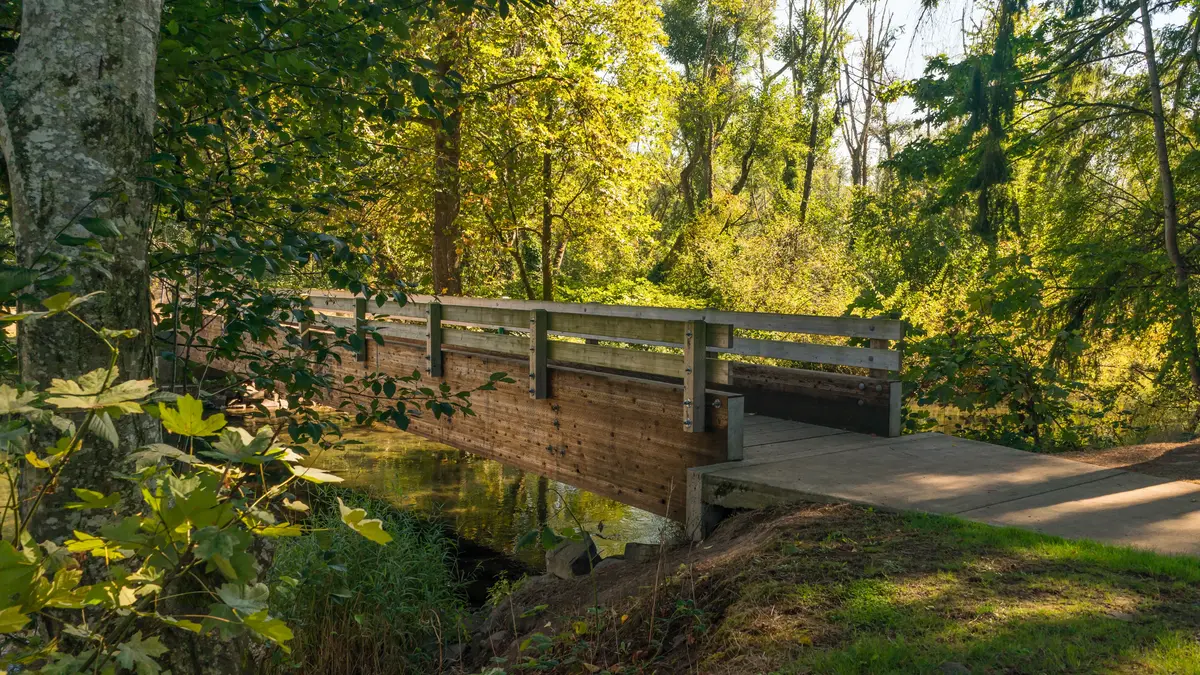
Stayton's newer perimeter subdivisions — Heritage Oaks, Green Acres Park — generally offer more square footage per dollar than the historic core. That arithmetic is real, but it comes at the cost of access to everything that makes Stayton worth choosing over a generic suburb: the riverfront, Pioneer Park with the Jordan Covered Bridge, the farmers market, the library. Buyers who optimize purely for interior square footage and end up in a neighborhood that requires driving to every civic amenity often find themselves wondering why they did not just buy in Salem instead.
Best Areas to Rent in Stayton
| Area | Ideal For | Trade-off |
|---|---|---|
| Downtown Stayton | Walkability Seekers | Older rental stock means charm but also aging mechanicals; on-foot access to the library and farmers market is the primary draw |
| Fern Ridge | Renters Value | The city's largest purpose-built rental supply, including the 72-unit income-restricted development; availability is limited by income qualification requirements |
| Westown | Families | Mid-century single-family rentals near Westown Park; fewer units available than in the downtown core, and turnover is low |
| Hollister Addition | Quiet Renters | Established grid streets and a settled residential feel; rental inventory is thin and competition for available units can be meaningful |
| Heritage Oaks / Green Acres Park | Commuters | Newer rental homes and duplexes on the perimeter; car-dependent for all errands, but quieter and with newer construction than the historic core |
Stayton's rental market is tight relative to its size — a city of 8,292 people does not generate the rental inventory of a mid-sized college town, and the typical 2-bedroom runs $1,380–$1,680 per month citywide. Renters willing to commit to a longer lease tend to have better luck than those searching month-to-month, and the Fern Ridge development's income-restricted units represent the only large-scale purpose-built rental supply in the city for qualifying households.
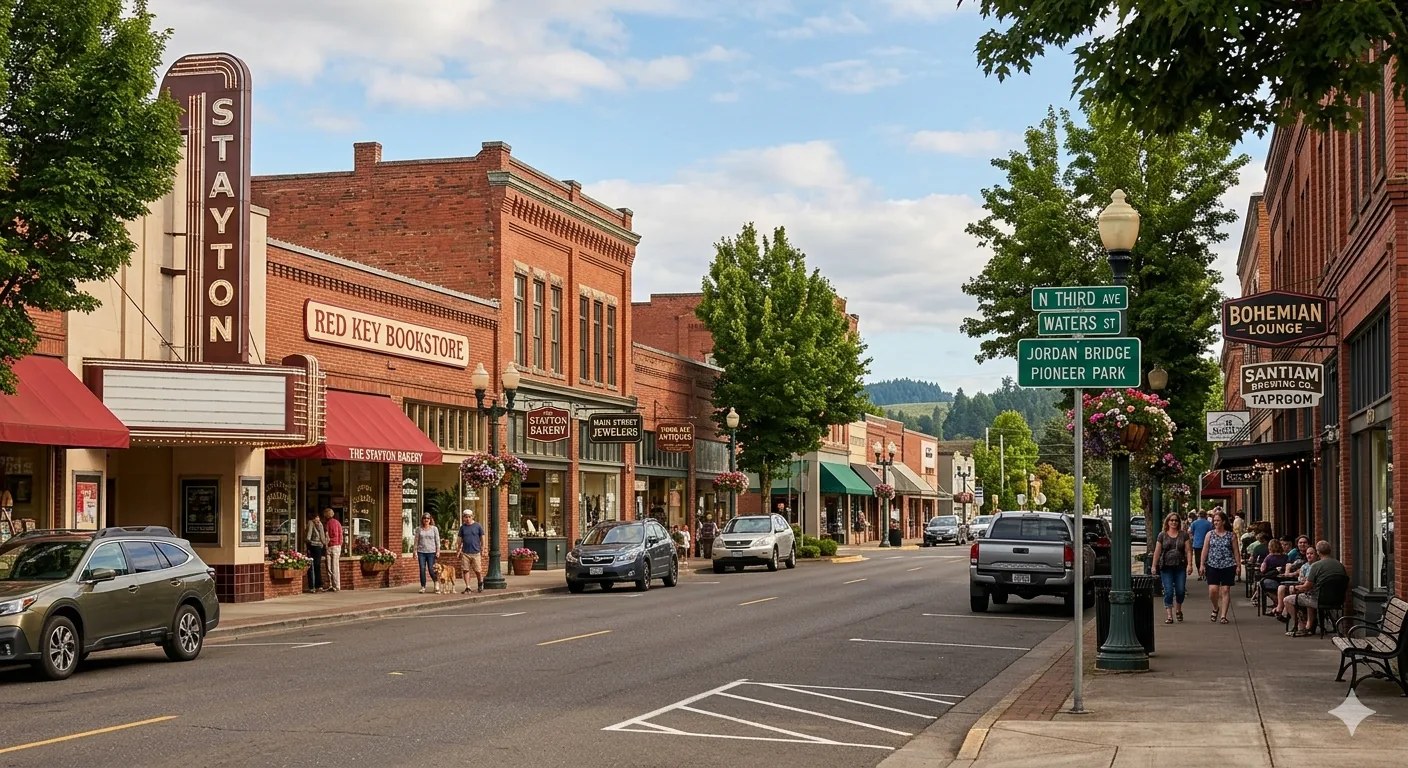
Local Expert Takeaway: Stayton rewards buyers who are honest about which version of the city they actually want to live in. If your mental image is Saturday mornings at the Stayton Farmers Market, a walk to the Stayton Public Library, and a short stroll to the North Santiam River waterfront, the historic neighborhoods — Downtown Stayton, Hollister Addition, Riverhaven — are the only ones that deliver it. If you want newer construction, more space, and a quieter residential street, the perimeter neighborhoods are real and fine choices — but build in the reality that OR-22 is your only route to Salem and that most errands will require the car. The buyers who struggle here are the ones who bought on the perimeter expecting the feel of the downtown, or who underestimated how much a daily OR-22 commute would shape their quality of life within a year.
Quick Takeaways & FAQs
✅ Stayton's typical home price of $471,759 (July 2026) sits noticeably below neighboring Silverton and Sublimity, making it one of the more accessible entry points in the mid-Willamette Valley.
⚠️ OR-22 is the only corridor to Salem, and the roughly 25-minute drive assumes clear conditions — buyers who commute daily should stress-test that drive during rush hours before committing to a perimeter neighborhood.
📍 The 51-acre North Santiam River preserve adjacent to Riverhaven was permanently protected for public access in 2004, giving that neighborhood a scenic anchor no other Stayton address can match.
Which Stayton neighborhood is best for first-time buyers?
Is Westown in Stayton the same as West Stayton?
What is the closest neighborhood to the North Santiam River waterfront?
Are there affordable rental options in Stayton?
How do Stayton's home prices compare to nearby towns?
Moving to Oregon?
Tell us what you need help with and we'll connect you with local resources.
