What Is Living in Monmouth, Oregon Like?
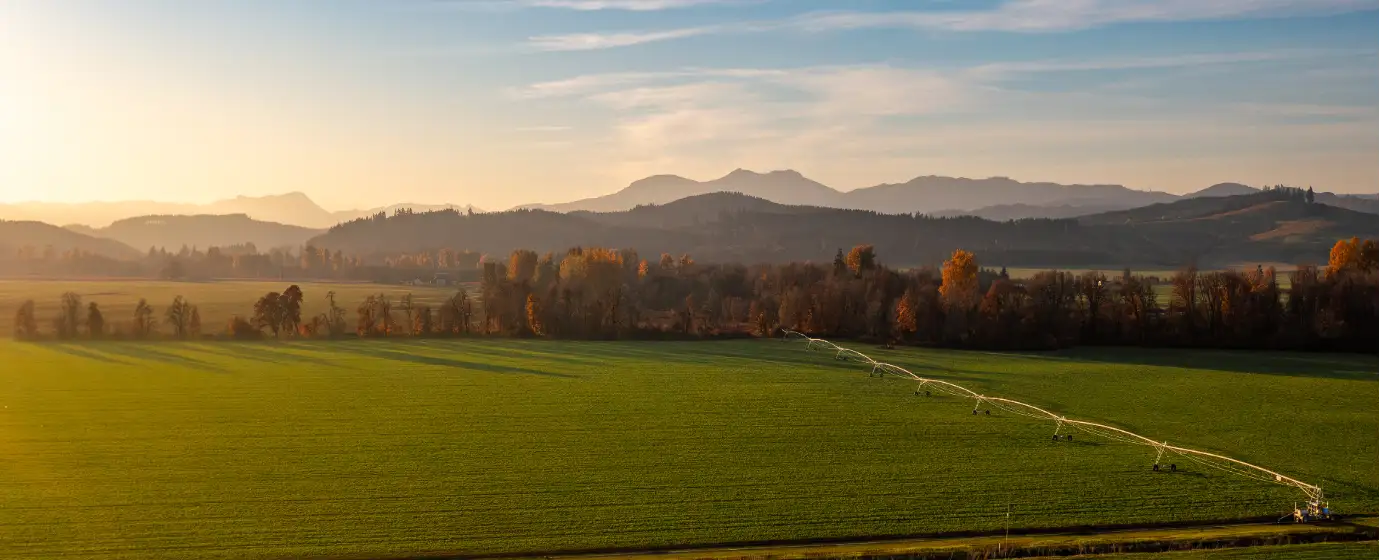
Maybe you've been priced out of Salem and someone told you Monmouth is worth a look. Maybe you took a job at Western Oregon University and are deciding whether to actually live here or commute. What surprises almost everyone who moves to Monmouth is how self-contained a city of 11,428 can feel — a genuine downtown, a pedestrian-scaled university campus woven right into the residential fabric, a fare-free trolley connecting you to a neighboring city, and home prices sitting noticeably below what Salem commands. Monmouth is about 12 miles southwest of Salem in Polk County's mid-Willamette Valley, founded in 1856 and still shaped by the institution it was essentially built to house: Western Oregon University.
WOU is the engine of this town in every practical sense. It is the dominant employer, the reason the coffee scene punches above a city this size, and the source of the steady foot traffic that keeps Historic Downtown Monmouth from going quiet. The Central School District 13J, with 2,951 students enrolled in 2025-26, serves the city's families, though the district holds a C- rating, according to Niche, and that reality is worth weighing seriously if school performance is a priority in your move. Beyond the university, Pacific Power, the City of Monmouth, and Polk County round out the institutional employer base. Many residents commute or work remotely — the employment picture here is thin outside of education and government.
Homes in Monmouth are priced at a typical $480,666 (Zillow Home Value Index, July 2026), making the city one of the more accessible entry points in the mid-Willamette Valley. Oregon's no-sales-tax environment helps day-to-day budgeting, and the city's own municipal electric distribution system — unusual for a city this size — means utility costs are managed locally rather than through a regional utility monopoly. Outdoors, you're roughly an hour from both the Pacific coast and the Cascade foothills, Ash Creek runs a natural greenway corridor through town, and the Willamette Valley wine country starts essentially at the edge of the city limits. Monmouth gets approximately 154 sunny days a year, which is on the lower end for those expecting Willamette Valley marketing to match Willamette Valley weather.
Whether you're considering a move or just researching the area, the sections below break down Monmouth's neighborhoods, housing market, commute patterns, local employers, and what daily life here genuinely looks like.
Monmouth at a Glance
Looking to buy in Monmouth? Estimate your payment.
Enter your numbers to see an estimated monthly mortgage payment.
Estimate only. Excludes HOA fees and mortgage insurance. The interest rate above is a starting point, not a quoted rate — replace it with your own to see real numbers. Insurance is a flat placeholder, not a Monmouth quote.
Why Are People Moving to Monmouth?
The case for Monmouth is easy to make on paper. The case against it is shorter but worth reading before you make an offer.
On the positive side: home prices well below Salem, a walkable university town core, a surprising amount of civic infrastructure for a city under 12,000, and a location that puts two interstates and the state capital within easy reach. People moving here from the Portland metro are often stunned by what their budget gets them. Parents of college students sometimes buy here rather than pay rent for four years — and end up staying.
Who Actually Moves Here
The largest group arriving with a clear plan is WOU-affiliated: faculty, staff, and graduate students looking to own rather than rent. Close behind are families priced out of Salem who don't need Salem's full amenity set to feel settled. Remote workers show up with increasing regularity — Monmouth's cost structure makes sense once your job doesn't require a commute, and the internet infrastructure is adequate for most remote roles.
Retirees considering Monmouth should know there are no dedicated 55+ or active-adult communities in the city. Those moving in that stage of life buy into the standard residential market, often targeting single-level homes in quieter pockets of the city. The lifestyle trade-offs for that group are covered in more depth on the retiring in Monmouth page.
The Honest Trade-Offs
The school district is the one thing that most changes the calculus for families with kids. Central School District 13J holds a C- rating, according to Niche, and on 2024-25 state assessments, 19% of students reached math proficiency and 32.3% reached reading proficiency. Those numbers are below state averages and below what many relocating families expect. Some parents drive to private schools in Salem or enroll in charter options — that's a real consideration, not a minor footnote.
Monmouth is also genuinely small. If you are moving from a city where a dozen restaurant options are within walking distance on a weeknight, the adjustment takes time. The dining and retail footprint is modest, and a serious shopping trip typically means a drive to Salem. That is not a criticism — it is just the actual texture of life here, and buyers who understand it going in tend to love the city for exactly what it is.
| Buyer Type | Best Fit? | Why |
|---|---|---|
| First-Time Buyers | Strong fit | Entry-level prices noticeably below Salem; manageable property tax rate of 0.82% |
| Salem Commuters | Good fit | about 20 minutes to Salem; lower home prices offset the daily drive |
| Families (school-focused) | Mixed fit | District rating warrants research; proximity to Salem private schools helps |
| WOU Faculty & Staff | Strong fit | Campus walkability; stable employer; community integration |
| Outdoor & Wine Country Lifestyle | Strong fit | Coast and Cascades within an hour; vineyards at the city's edge |
| Remote Workers Seeking Quiet | Good fit | Low cost base, manageable pace, adequate infrastructure |
| Buyers Seeking Urban Amenities | Weak fit | Limited dining and retail; Salem is the center of gravity for full-service living |
What Daily Life Feels Like in Monmouth
Monmouth covers 2.25 square miles of land. That compactness is not a limitation — it is the defining feature of daily life here. You can walk from the residential neighborhoods near the university to Historic Downtown Monmouth in under ten minutes. The WOU campus grounds blend into the city's street grid in a way that makes the city feel more active and populated than the raw numbers suggest.
The University Town Rhythm
Monmouth's calendar follows the academic year more than it follows any civic calendar. When WOU is in session, the coffee shops along Main Street are genuinely busy, foot traffic fills the downtown sidewalks, and the city has a low-grade energy that feels larger than 11,428. When the semester ends, things quiet considerably. Newcomers from non-university towns often find the early summer transition jarring — the city doesn't shut down, but it exhales visibly.
The Jensen Arctic Museum on the WOU campus is a genuine cultural anchor — a small but serious museum focused on Arctic exploration and indigenous Arctic cultures, and one of the more unexpected institutional resources a city this size offers.
Getting Around Town on Foot and by Trolley
For a small Oregon city, Monmouth has a transit story worth telling. A fare-free trolley service, operated by Cherriots, runs between downtown Monmouth, the WOU campus, and downtown Independence — a neighboring city under three miles away. The service averaged more than 11,000 rides per month in its first two years. It is not a commuter rail line; it is a neighborhood connector that makes the two cities function more like one place. Oregon secured continued funding through 2025 legislative action, and the service continues while long-term governance structures are being formalized.
Outside of the trolley corridor, most errands in Monmouth require a car. The city's density is low enough and the retail footprint concentrated enough that on-foot access to groceries or hardware means living close to the small downtown commercial core. Most residents drive for anything that can't be covered downtown.
What Surprises People After Six Months
The most consistent surprise longtime residents mention is how social the city becomes once you're embedded in it. WOU creates a ready-made community infrastructure — public lectures, sports events, cultural programs — that a city this size normally doesn't have. Newcomers who expected a sleepy small town and found an active civic calendar are usually the ones who stay. The ones who leave cite the school district, the limited dining scene, and the absence of big-box retail as the friction points that accumulate over time.
Safety statistics for Monmouth sit well below state and national benchmarks — the city records a violent crime rate of 1.29 per 1,000 residents and a property crime rate of 9.17 per 1,000 residents, compared to the Oregon state violent rate of 3.3 per 1,000 and the Oregon state property rate of 24.5 per 1,000. The full breakdown is on the Monmouth safety page.
The Monmouth Housing Market Right Now
Monmouth's typical home price sits at $480,666 (Zillow Home Value Index, July 2026) — a figure that looks different depending on where you're moving from. For buyers relocating from the Portland metro or the Bay Area, it is a significant relief. For buyers comparing it against smaller Polk County towns, it reflects the WOU premium that runs through Monmouth's market.
The effective property tax rate of 0.82% is on the lower end for the Willamette Valley, which meaningfully affects monthly carrying costs. Oregon's lack of a sales tax also factors into the overall cost picture in ways that take newcomers from other states a while to feel in their budget.
What the Market Actually Looks Like
Monmouth is a small market. Inventory turns over slowly in some price bands and quickly in others — well-priced homes in the WOU-adjacent neighborhoods draw attention from faculty, staff, and investor buyers simultaneously, which creates competition at specific price points. The broader Oregon housing market has stabilized after years of rapid appreciation, and Monmouth follows that pattern: this is not a frenetic market, but it is not a buyer's market in the traditional sense either.
Typical two-bedroom rents run $1,360–$1,650, with the city-wide typical rent sitting at $1,473 per month (Zillow, July 2026). Rental demand is steadied by the student and faculty population at WOU, which means the rental market rarely goes fully soft even when the for-sale side slows. The full rent and cost-of-living breakdown lives on the Monmouth cost-of-living page.
One Structural Quirk Worth Knowing
Monmouth operates its own municipal electric distribution system — unusual for a city this size. That means electric utility rates are set locally rather than by a regional utility, and historically that has meant competitive rates. It is a detail most buyers only discover after closing, but it is worth asking about during your due diligence.
Neighborhood character varies meaningfully across Monmouth's compact footprint — from the quieter, established blocks of Edwards Addition to the more investor-influenced streets around WOU. The Monmouth neighborhoods page covers each area in detail.
Monmouth Neighborhoods
Monmouth has several distinct areas — each with its own character and appeal. Here’s a breakdown to help you narrow down where to focus your home search.
🏡 Edwards Addition
One of Monmouth's more established residential pockets, Edwards Addition has a settled, tree-lined character that appeals to families and longer-term residents looking for a quieter street feel away from the university's immediate footprint.
🏠 Western Oregon University Area
The streets immediately surrounding WOU's 157-acre campus blend student rentals with faculty-owned bungalows and modest houses — highly walkable to the campus, downtown, and the trolley corridor, and the most active part of the city during the academic year.
🌳 Downtown / Historic Downtown Monmouth
The commercial and civic heart of the city, guided by the Monmouth Downtown Plan 2022–2042, with a walkable Main Street core, independent coffee shops, and the concentration of community life that makes the city feel larger than its population.
🏘 Ash Creek Corridor
Running along the Ash Creek Natural Area, this corridor offers the city's most distinctive outdoor connection — a non-motorized greenway linking Monmouth to Independence — and attracts buyers who want natural scenery built into their daily walk.
🏔 Monmouth Mobile Estates
An affordable manufactured-home community that represents one of the city's lowest entry points into homeownership, drawing buyers on tighter budgets who want to be part of Monmouth's community without stretching into the conventional single-family market.
🌆 Southeast Monmouth (Hwy 99W Corridor)
Straddling the 99W commercial corridor on Monmouth's southeast side, this area has more conventional suburban character with easier car access to the route toward Salem — a practical choice for daily commuters who prioritize a quick on-ramp to the highway over walkability.
Pros & Cons of Living in Monmouth
The Pros
- Home prices well below nearby Salem and Corvallis
- Small, walkable college-town feel anchored by Western Oregon University
- Easy access to Willamette Valley wine country and hop farms
- Short 15-20 minute commute to Salem's job market
The Cons
- Central School District ranks in the bottom tier of Oregon districts on test scores and graduation rate
- Local job market outside the university and school district is thin, pushing most professional workers to commute
- Overall crime index runs somewhat higher than the Oregon average
Getting Around & Commuting in Monmouth
Monmouth's geographic position shapes almost every commute decision a resident makes. The city sits in Polk County's mid-Willamette Valley, connected to the regional network primarily via 99W (Pacific Highway West), OR-51, and OR-194 (Monmouth Highway). These are two-lane rural corridors for significant stretches — not interstates — and the daily drive to Salem reflects that.
The Salem Commute
about 20 minutes to Salem is the standard measure under normal conditions, and it is reasonably accurate during off-peak hours. During weekday morning and evening commute windows, the stretch of 99W between Monmouth and Salem through Rickreall is the place where that estimate softens. There is no interstate bypass for this run — you are on the same state highway everyone else is using, and agricultural truck traffic adds an unpredictable variable during harvest season in fall.
Salem is where most Monmouth residents go for major medical appointments, courthouse business, larger grocery stores, and any retail that the local commercial footprint doesn't cover. Understanding that relationship — Monmouth as home base, Salem as the full-service anchor — is what separates buyers who adapt quickly from those who find the arrangement frustrating.
Portland, the Coast, and Points Beyond
Portland is reachable in roughly an hour to 90 minutes depending on traffic, with the drive routing through Salem and up the interstate corridor. It is a reasonable day-trip distance but not a practical daily commute for most people. Eugene Airport (EUG) is approximately 52 miles away and Portland International Airport (PDX) approximately 67 miles — both are viable depending on your carrier and destination. The Pacific coast and the Cascade Mountain foothills are each roughly an hour's drive, which is part of what draws outdoor-oriented buyers to the area.
Local Transit
The fare-free trolley service between downtown Monmouth, the WOU campus, and downtown Independence is the city's most significant transit asset. For car-free or car-light living, it meaningfully expands what's accessible on foot and by transit within the two-city corridor. Beyond the trolley, most daily errands in Monmouth require a car, and 99W is the arterial that connects residents to the broader region.
Remote Work Reality
A growing share of Monmouth's population works remotely. For that group, the commute calculus flips entirely: the city's cost structure, compact scale, and outdoor proximity become primary advantages rather than trade-offs. Many remote workers who land here stay because the lifestyle math works — lower housing costs, manageable pace, and weekend access to both the coast and wine country without the price tag of living closer to Portland.
Schools in Monmouth
Families relocating to Monmouth have public, private, and higher-education options nearby. Here’s a quick overview.
🎓 School District
Central School District 13J serves K–12 students across Monmouth and the surrounding area. Rated C- (source: Niche.com).
🏆 Graduation Rate
The 4-year high-school graduation rate here is approximately 77.3%.
📚 Higher Education
Oregon’s public universities — the University of Oregon, Oregon State University, and Portland State University — offer four-year degrees statewide, with a network of 17 community colleges providing two-year and workforce programs.
🌐 Online Learning
Oregon State University Ecampus and Portland State University Online offer fully accredited online degrees for remote learners across the state.
Safety in Monmouth
A quick look at how Monmouth compares on the numbers that matter most when weighing a neighborhood or a move.
🛡 Violent Crime
Approximately 1.29 per 1,000 residents.
🔒 Property Crime
Approximately 9.17 per 1,000 residents.
Compared to the most recent national figures from the Bureau of Justice Statistics (2024), Monmouth’s violent crime is below the national average (about 3.7 per 1,000), and property crime is below the national average (about 18.4 per 1,000).
Against Oregon as a whole, Monmouth’s violent crime is roughly a third of the state average, and property crime is roughly a third of the state average (Bureau of Justice Statistics, Crime Known to Law Enforcement, 2024 (tables 2 and 3)).
Crime rates can vary a lot within a single city, so the citywide numbers above are only a starting point. Some neighborhoods in Monmouth run well below these averages, while others run higher — the kind of block-by-block detail that matters most when you’re actually choosing where to live. The full guide below breaks it down neighborhood by neighborhood.
Working in Monmouth
Monmouth’s largest employers span several industries — here are some of the anchors of the local job market.
🎓 Western Oregon University
Education
🎓 Central School District
Education
🏛 City of Monmouth
Municipal government
🏛 Polk County
Municipal government
💼 Pacific Power
Utilities
Parks & Recreation in Monmouth
Some of the outdoor spaces that shape everyday life in Monmouth.
🌱 Monmouth City Park
Monmouth residents don’t have to go far for green space — spots like Monmouth City Park are part of everyday life here, whether that’s a morning walk, a weekend hike, or just somewhere to unwind outside. The full guide below covers more of what Monmouth has to offer for parks and outdoor recreation.

Retiring in Monmouth
Monmouth draws retirees for its balance of amenities, outdoor access, and cost. Here’s what to weigh.
🌤 Climate
Monmouth sits in the mid-Willamette Valley with mild, wet winters and warm, dry summers — the classic western Oregon pattern. The city averages 154 sunny days a year, which is lower than regional marketing often implies. Winters are grey and damp rather than cold in the mountain sense, with snow rare and short-lived.
🍴 Lifestyle
Western Oregon University keeps the cultural calendar active year-round with lectures, performances, and athletic events open to the community. The Jensen Arctic Museum on campus offers a surprisingly distinctive cultural resource. The Ash Creek Natural Area trail system and proximity to Willamette Valley wine country give outdoor- and leisure-oriented retirees a genuinely pleasant daily environment.
🏚 55+ Communities
There are no dedicated 55+ or active-adult communities in Monmouth. Retirees settling here buy into the general residential market, with single-level homes in quieter pockets of the city being the most common choice. The full picture for retirees — including healthcare access — is on the retiring in Monmouth page.
✈ Getting Around
A car is necessary for most daily errands and all regional travel. The fare-free trolley service connecting Monmouth and Independence is a genuine local transit asset for shorter trips. Eugene Airport (EUG) is approximately 52 miles away and Portland International Airport (PDX) approximately 67 miles, with Salem's regional airport offering additional options.
🏛 Oregon Taxes for Retirees — What to Know
- Social Security is not taxed — Oregon does not tax Social Security or Railroad Retirement benefits. Any amount included in your federal adjusted gross income is subtracted back out on the Oregon return.
- But other retirement income IS taxed — This is the trade-off that surprises people moving from Washington or Texas. Pension distributions and 401(k)/IRA withdrawals are taxed as ordinary income at Oregon’s regular rates — there is no blanket retirement-income exclusion.
- Graduated income tax — Oregon has four brackets — 4.75%, 6.75%, 8.75% and 9.9%. The 4.75% rate covers the first $10,000 of taxable income for a single filer ($20,000 filing jointly); the 8.75% rate starts at $125,000 ($250,000 jointly); and the top 9.9% rate applies above $250,000 ($500,000 jointly).
- No sales tax — Oregon levies no general sales tax.
- Property taxes, with senior deferral — Oregon’s Senior and Disabled Property Tax Deferral lets qualifying homeowners have the state pay their county property taxes, with a lien recorded against the home. The 2026 household income limit is $70,000, and deferred balances accrue 6% simple interest — it defers the bill rather than forgiving it.
- Estate tax — the one to plan for — Oregon has its own estate tax with a $1 million filing threshold — far below the federal exemption, and NOT indexed for inflation, so it reaches more estates every year in real terms. Retirement accounts and a long-held home count toward the taxable estate, so estates that feel modest can cross the line without the owner expecting it.
- No inheritance tax — Oregon has no separate inheritance tax and no gift tax.
Tax laws change frequently and individual situations vary. This is general information, not tax advice — always consult a qualified Oregon tax professional or CPA for personalized retirement tax planning.
Weekends & Local Favorites in Monmouth
Monmouth's weekend culture is built around the outdoors, the university, and a small but genuine independent food and coffee scene. The city is compact enough that locals tend to know each other at their regular spots — which is either appealing or claustrophobic, depending on what you're looking for.
Food & Drink
Grain Station Brew Works is the social anchor of the local food and drink scene — a brewpub that draws students, faculty, and longtime residents in the same room. Yeasty Beasty offers a different angle on the craft food conversation. Sing Fay Restaurant & Lounge has been a Monmouth institution for years and remains a reliable local fixture. Rookies Sports Tap Monmouth Bar is the go-to for game nights. The Sippery Coffee Co. rounds out the sit-down options with a more coffee-forward focus.
Coffee Culture
For a city under 12,000 people, Monmouth's coffee options are genuinely varied. Dutch Bros Coffee is the drive-through staple. Habebah Coffee & Mediterranean Cuisine brings a distinct identity to the scene that goes well beyond a standard café menu. Bugles Espresso, Luna's Cafe, and Sonny's Coffee and Plants each have their regulars, and the competition between independent coffee shops reflects the WOU population's appetite for a quality cup.
The Cultural Harvest Collective farmers market gives residents a local produce and artisan goods outlet worth building a weekend errand around during the season.
Outdoors
Monmouth City Park is the city's primary green-space gathering spot. The Ash Creek Natural Area and its trail system offer a genuine greenway — Ash Creek flows east toward the Willamette River at Independence, and the non-motorized corridor connecting the two cities via a pedestrian bridge is one of the more pleasant everyday outdoor assets in this part of the valley. The WOU campus grounds function as an informal park for much of the community.
Riverview Park in neighboring Independence sits just across the creek and is part of the same connected trail network. Beyond the immediate area, the Willamette Valley Scenic Bikeway draws cyclists through the wine country surrounding Monmouth, and nearby vineyards make for easy weekend excursions without a long drive. When the weekend calls for something bigger, the coast and the Cascades are both within reach in about an hour.
Local favorites in Monmouth
Restaurants
- Grain Station Brew Works
- Yeasty Beasty
- Sing Fay Restaurant & Lounge
- Rookies Sports Tap Monmouth Bar
- The Sippery Coffee Co.
Outdoors
- Monmouth City Park
- Western Oregon University campus grounds
- Ash Creek Natural Area
- Riverview Park (Independence, adjacent)
Coffee
- Dutch Bros Coffee
- Habebah Coffee & Mediterranean Cuisine
- Bugles Espresso
- Luna's Cafe
- Sonny's Coffee and Plants
Farmers Markets
- Cultural Harvest Collective
Top Things Locals Say About Monmouth
The best intel about a city comes from the people who actually live there. Here’s what Monmouth residents say when newcomers ask the questions everyone’s thinking.
“I knew it was a college town, but I didn't expect to feel so connected so quickly. Between the WOU events and running into the same people at the coffee shops and the farmers market, I felt like I actually lived somewhere within about three months — that surprised me.”
— Recent Monmouth home buyer
“What's the most surprising thing about living in Monmouth?”
Most people are surprised by how much the city offers for its size. The WOU campus makes the downtown feel alive — there are lectures, athletics, art shows — things you just don't expect in a city under 12,000. The Ash Creek trail corridor is another one: people discover it after a few months and suddenly their daily walk changes completely. The surprise is usually how quickly it starts to feel like enough.
“What do locals love most about Monmouth?”
The pace and the price. You can own a house here at a cost that would get you a small rental in Salem or something far out in the Portland suburbs. And the town doesn't feel like a compromise — the university gives it an energy that most small Oregon cities don't have. Locals also genuinely love the trolley. It sounds like a small thing but being able to get to Independence without moving your car matters more than people expect.
“What should newcomers to Monmouth know?”
Salem is your partner city — go in accepting that and the arrangement works well. A serious grocery run, a specialist appointment, most retail: you're driving to Salem. 99W through Rickreall is the only road there, and it slows down during morning commute hours and especially during fall harvest. Also, the city gets quieter than you'd expect once the WOU semester ends. If you arrive in summer thinking you have a read on the social pace, give it until September.
“How much do you need a car in Monmouth?”
For anything beyond the downtown core and the trolley corridor between Monmouth and Independence, you need a car. The city is compact enough that neighbors in the Edwards Addition or near the university can cover coffee and a few errands on foot, but grocery shopping, hardware, and most retail means driving. The trolley handles the Monmouth-Independence connection well, but beyond that corridor, you are driving — and most of those drives route through 99W toward Salem.
Cities Near Monmouth
Other communities near Monmouth worth a look — each with its own character and price point.
| City | Distance | Best For | Vibe | Median Rent | Median Buy |
|---|---|---|---|---|---|
| Independence | 2 mi | Families, walkers, Willamette River access | Small-town, river-connected, walkable | $1,945 | $430,520 |
| Dallas | 9 mi | Budget buyers, Polk County families | Quieter, county seat, suburban feel | $1,569 | $481,280 |
| Salem | 15 mi | Full-service amenities, employment hub | Urban, diverse, state-capital energy | $1,584 | $440,726 |
More Helpful Guides for Monmouth
Going deeper on Monmouth? Our blog series covers everything from first-time buying to retiring here — explore the guides below.
Local Expert Takeaway: Monmouth rewards buyers who go in clear-eyed: the school district scores are below average and that is not going to change quickly, but the housing prices are genuinely accessible, the WOU campus gives the city cultural infrastructure that most small towns can't match, and the fare-free trolley connecting you to Independence is the kind of small-city transit win that almost never happens in Oregon. If you're a remote worker, a WOU employee, or a Salem commuter who wants to own instead of rent, Monmouth's cost-to-lifestyle ratio is hard to beat in this part of the Willamette Valley. Go in knowing that Salem is your full-service partner city — about 20 minutes to Salem for the big grocery run, the specialist appointment, or the restaurant you've been thinking about — and the arrangement works well.
Quick Takeaways & FAQs
✅ Western Oregon University gives Monmouth the cultural energy and community infrastructure of a much larger city, including a free trolley, a free museum, and a steady calendar of public events.
⚠️ Central School District 13J holds a C- rating, according to Niche, and test score proficiency rates run well below state averages — a significant factor for families with school-age children.
📍 Monmouth operates its own municipal electric distribution system, a rarity for a city its size, which historically has meant locally competitive utility rates.
Is Monmouth, Oregon a good place to raise a family?
How far is Monmouth from Salem, and is the commute manageable?
What is the typical home price in Monmouth, Oregon?
Does Monmouth have public transit?
Is Monmouth safe to live in?
Helpful Links for Moving to Monmouth
Moving to Oregon?
Tell us what you need help with and we'll connect you with local resources.
