
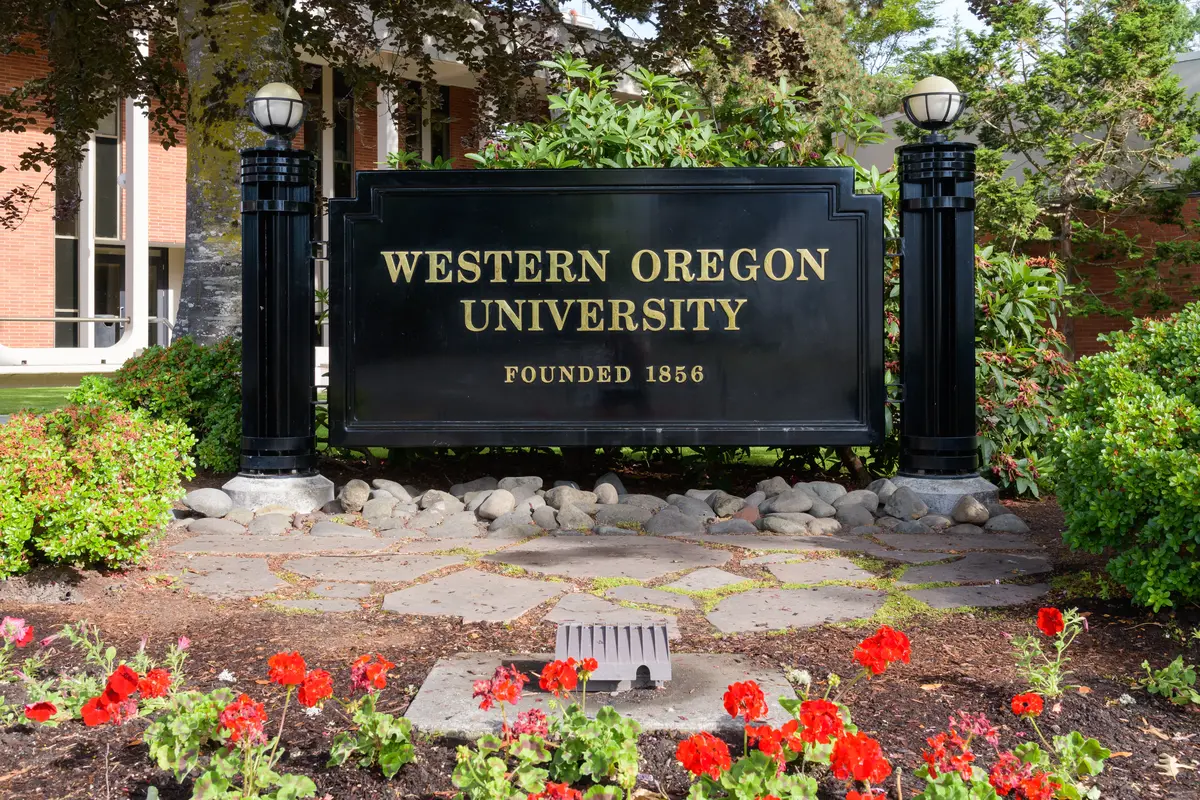
Maybe you've been watching Oregon's Willamette Valley from afar, priced out of Bend or put off by Portland's pace, and someone mentioned Monmouth almost as an afterthought. That's how a lot of retirees end up here — and most of them stay. Monmouth is a university town of 11,428 that sits on a compact grid between the Coast Range foothills and the Willamette River bottomland, connected to Salem by 99W and reachable from Portland in about an hour. What drives daily life here is the quiet rhythm of Western Oregon University — the campus sets the social calendar, moderates the noise level, and keeps the coffee shops and walkable blocks of Historic Downtown alive in a way small Willamette Valley towns rarely manage on their own.
The retirement case for Monmouth is grounded in affordability and community infrastructure rather than scenery or amenities. The typical home price sits at $480,666 (July 2026), well below what you'd pay in Salem's better neighborhoods and a fraction of what coastal Oregon commands. The city runs its own senior center, Western Oregon University has been a member of the Age-Friendly University Global Network, and the social fabric here — line dancing, painting classes, a pedestrian bridge to neighboring Independence for a longer walk — is genuinely more active than the city's size suggests. Major employers anchoring the local economy include Western Oregon University and the Central School District, which together keep the city stable and the rental market moving even when the broader market cools.
Oregon's tax picture for retirees is mixed but generally manageable at Monmouth's cost level. Social Security is fully exempt from state income tax — no income limit applies. The property tax rate runs approximately 0.82%, among the lower rates in the Willamette Valley, and Oregon's complete absence of a sales tax is a meaningful daily advantage on a fixed income. The catch is that pension income, IRA withdrawals, and 401(k) distributions are taxed at Oregon's graduated rates, which reach 9.9% at higher income levels. Winters bring more gray than Californians expect — Monmouth averages 154 sunny days a year — and the nearest airport with consistent regional service is Eugene Airport at about 52 miles. Neither is a dealbreaker, but both are realities to plan around.
The sections below cover healthcare access and honest distance-to-care realities, the full retiree tax and budget picture, walkability and senior community life, the downsizing inventory you'll actually find here, and a side-by-side look at how Monmouth stacks up against nearby retirement alternatives across the region.

Why Retirees Are Choosing Monmouth
Monmouth fits a specific kind of retiree: someone who wants a real town rather than a resort, values walkable errands and a genuine community center over square footage, and doesn't need an airport within thirty minutes. The combination of an affordable entry price — the typical home is $480,666 as of July 2026, see the full picture at cost of living in Monmouth — and a city-run senior center with substantive daily programming is unusual at this price point anywhere in Oregon.
The university presence is the factor most retirees don't anticipate but end up appreciating most. Western Oregon University has been a member of the Age-Friendly University Global Network, which means a genuine institutional commitment to lifelong learning, intergenerational programming, and inviting older adults to campus events. Retirees here talk about wandering into a theater production or an evening concert on the WOU campus the same way people in college towns elsewhere describe the library or the farmers market — it becomes part of the week.
That said, Monmouth is not the right fit for everyone. If specialist medical care needs to be within ten minutes rather than twenty, you'll want to be in Salem itself. If you depend on frequent air travel, the drive to Portland International Airport — about 67 miles — will add up. And if a robust 55+ community with poolside neighbors and organized fitness classes is what you're picturing, Monmouth doesn't have that infrastructure yet. What it has is a small, walkable city with a low cost of entry, a functioning senior center, and a pace of life that rewards people who already know themselves well enough to build their own routine.
Healthcare & Medical Access in Monmouth
The Closest Hospital
West Valley Hospital in Dallas — about 7 miles from central Monmouth — is the nearest hospital and the only hospital in Polk County. It's a nonprofit critical access facility operated by Salem Health, which gives it the backing of a regional health system even at its community size. Services include emergency care, inpatient medical-surgical units, outpatient services, rehabilitation, and maternity care. A completed expansion added 19 new licensed beds focused on swing-bed care, meaning patients who need additional recovery time after an acute event can remain in the facility rather than being transferred immediately — a meaningful detail for retirees managing post-surgical recovery closer to home.
When You Need More
For anything beyond what a community critical access hospital handles — cardiology, oncology, advanced imaging, neurology, elective surgery — Salem Hospital, which is Salem Health's main campus, is about 20 minutes from Monmouth. That drive is real and should be factored into your planning if you have existing conditions that require regular specialist visits. The route via 99W is generally straightforward, but a health event requiring urgent transport to a higher-level facility is not the same as a scheduled appointment, and retirees with complex needs should think through that reality before committing.
The Honest Assessment
For routine primary care, urgent care, and emergency stabilization, Monmouth's proximity to West Valley Hospital is adequate for most retirees in good baseline health. For specialty-dependent care — the kind where you're seeing a cardiologist or oncologist monthly — Salem is where you'll spend your medical time, and that commute is the practical trade-off of living here versus living in Salem itself. One assisted living facility, Heron Pointe Senior Living, operates within Monmouth's city limits, with independent and assisted living options; a much broader inventory of senior care facilities exists in the surrounding area.
The Retiree Budget in Monmouth
Oregon's Tax Picture
Oregon does not tax Social Security or Railroad Retirement benefits, full stop — the exemption applies regardless of how much other income you have. That's a clean advantage over states that phase out the exemption at higher income levels.
The less favorable side: pensions, traditional IRA withdrawals, and 401(k) distributions are taxed at Oregon's regular graduated state income tax rates, which top out at 9.9%. There is no broad retirement-income exclusion beyond Social Security. Oregon's small retirement income credit under ORS 316.157 — which had offered a modest 9% credit on eligible pension income for lower-income filers — is scheduled to sunset for tax years beginning January 1, 2026, after a 2025 legislative effort to extend it did not pass. Retirees whose income picture is anything other than straightforward should consult a tax professional about how these rules apply to their specific situation.
Property Tax and the Deferral Option
Monmouth's effective property tax rate runs approximately 0.82%, which is on the lower end for the Willamette Valley. Oregon also offers a property tax deferral program for homeowners 62 and older: the state pays your county property taxes directly, recording a lien at 6% simple interest that's repaid when you sell or pass the property. To qualify in 2025, household income must be no more than $60,000 and you must have occupied the home for at least five years. For retirees in that income range who want to stay in their home, it's a meaningful cash-flow tool.
No Sales Tax — and Why It Matters Day to Day
Oregon has no statewide sales tax. On a fixed income, that translates into real savings across groceries, clothing, household goods, and everything else you buy regularly. It's the daily cost-of-living advantage that doesn't show up in a home price comparison but accumulates meaningfully over months and years compared with a move from California, Washington, or any state with a sales tax above 5%.
Looking to buy in Monmouth? Estimate your payment.
Enter your numbers to see an estimated monthly mortgage payment.
Estimate only. Excludes HOA fees and mortgage insurance. The interest rate above is a starting point, not a quoted rate — replace it with your own to see real numbers. Insurance is a flat placeholder, not a Monmouth quote.
Walkability, Community & Staying Active in Monmouth
Getting Around on Foot
Monmouth's downtown grid is genuinely compact. The historic core, the WOU campus, Monmouth City Park, and the Ash Creek Natural Area form a walkable loop that many retirees cover without a car on pleasant-weather days — which, at 154 sunny days a year, is a reasonable portion of the calendar. The terrain is flat by Willamette Valley standards, which matters more than it might seem when you're talking about daily errands rather than recreational hiking.
The pedestrian bridge connecting Monmouth to neighboring Independence extends your on-foot range in a way that the official city limits don't suggest. Riverview Park in Independence is accessible this way, turning a walk into a practical link between two small towns. Most retirees here describe that loop as a daily option rather than an occasional outing.
The honest caveat: most shopping beyond the basics requires a car. A serious grocery run or a trip to a big-box store means driving — that's the reality of living in a city of 11,428, and it's worth building into your thinking if you're moving from a suburban area with a superstore on every corner.
The Senior Center
The Monmouth Senior Community Center is the social infrastructure anchor for retirees here, and it's more active than you might expect from a city this size. The city operates it, and general use carries no charge. Programming covers stretch exercise, line dancing, painting, crafts, support groups, karaoke, pinochle, board games, and a regular music jam. Monthly events include bingo, an ice cream social, and a movie matinee. Organized day trips and overnight excursions extend the reach significantly — past events have covered museums, beaches, plays, and cruises through partner organizations. On-site services include health clinics, medical equipment loan, library access, and agency referrals. The Friends of the Monmouth Senior Center, a nonprofit support organization, supports the center with an annual membership of $20.
The University Connection
Western Oregon University's commitment to its surrounding community extends meaningfully to older adults. Campus events — theater productions, concerts, lectures — are open to the community, and the university's Gerontology: Aging and Older Adulthood academic program reflects a genuine institutional investment in aging that shows up in how the campus relates to its neighbors. For a retiree who misses intellectual engagement and wants something beyond bingo, this is the specific reason Monmouth punches above its weight.
Right-Sizing: Downsizing in Monmouth
What the Inventory Looks Like
Monmouth's housing stock skews toward single-family homes built in the mid-twentieth century, many of them single-level bungalows and ranch styles in the Edwards Addition and Southeast Monmouth corridor. That legacy stock is genuinely useful for retirees looking for step-free living — older ranches without the open-concept sprawl of newer builds, on lots that don't require extensive upkeep. The WOU campus area and Downtown / Historic Downtown Monmouth neighborhoods also hold older, smaller homes that work well for a single occupant or a couple who wants proximity to walkable amenities over raw square footage.
Condos and patio homes exist in Monmouth but in limited numbers. This is not a market that has developed the dense low-maintenance adult-community inventory you'd find in a larger Salem-area suburb. Buyers looking specifically for a maintenance-free exterior, a homeowners association managing the yard, and neighbors in the same life stage will find a thinner selection here than they might want.
55+ Communities
No 55+ communities were found in Monmouth. One assisted living facility, Heron Pointe Senior Living, operates within the city — it offers independent and assisted living options — but it is not a 55+ homeownership community. Retirees looking for age-restricted active-adult communities with structured amenities will need to look toward Salem or the broader Polk and Marion County area, where the inventory is substantially deeper.
The Practical Approach
The most realistic downsizing path in Monmouth is finding a single-level home in the older residential neighborhoods, rather than waiting for purpose-built 55+ product that isn't here. For buyers coming from a larger equity market — California especially — the typical home price leaves real room to purchase outright or carry a minimal mortgage, which is the financial scenario that makes Monmouth's cost structure work best. For anyone whose downsizing plan depends specifically on 55+ community amenities, the better conversation is about what's available in Salem, and whether Monmouth's lower price point and smaller-town feel are worth the trade-off in senior-specific inventory.
Monmouth vs Nearby Retirement Destinations
| City | Cost vs Monmouth | Primary Hospital | Day-to-Day Errands | Senior Living Depth | Overall Retirement Fit |
|---|---|---|---|---|---|
| Monmouth | Anchor | West Valley Hospital (Dallas, ~7 mi) via Salem Health | Compact downtown walkable for basics; most shopping needs a car | One in-city assisted living; no 55+ communities; strong senior center | Value Walkable Best for: affordability, university energy, tight community feel |
| Independence | Somewhat lower | Same: West Valley Hospital (~7 mi) is the nearest county facility | Comparable small-town feel; most errands need a car | Thin; similar inventory constraints to Monmouth | Value Good for: buyers wanting slightly lower entry cost, riverfront character |
| Dallas | About the same | West Valley Hospital on-site — strongest proximity advantage in the region | Walkable historic core; most errands still need a car | Limited 55+ product; broader senior care options near the hospital | Quiet Best for: retirees who want the hospital within easy reach |
| Salem | Noticeably higher | Salem Hospital (Salem Health main campus) — full specialty depth, on-site | Stronger retail access; mixed walkability by neighborhood | Substantially deeper: multiple 55+ communities, CCRCs, and patio-home developments | Amenities Best for: specialist-dependent retirees and 55+ community seekers |
| Silverton | Pricier | Salem Hospital reachable in about 30 minutes; no in-town hospital | Walkable historic downtown; hilly terrain in some areas | Modest senior housing; Silver Falls State Park access is a major lifestyle draw | Nature Best for: retirees who want outdoor access and small-town character at a premium |
| McMinnville | Pricier | Willamette Valley Medical Center in-city; solid community-level care | Third Street corridor is genuinely walkable with dining and retail | Growing 55+ options; wine-country lifestyle appeal | Walkable Best for: retirees drawn to Willamette wine country and stronger retail walkability |
Salem suits retirees who need specialist care on a regular basis — the main Salem Health campus is in-city, and the 55+ and senior living inventory there is deeper by an order of magnitude. Independence offers a similar price point to Monmouth with a quieter, more rural feel, but doesn't add meaningful healthcare or senior community infrastructure. Dallas has the single strongest proximity argument for medical access — West Valley Hospital is right there — and the cost level is comparable, making it worth a serious look for buyers who expect frequent hospital visits. McMinnville and Silverton both cost more but deliver a stronger walkable-downtown experience and, in McMinnville's case, an in-city hospital. Monmouth earns its place on the list through affordability, the university social fabric, and a city-run senior center — not through specialist healthcare depth or 55+ community infrastructure, which is where Salem wins instead.

Local Expert Takeaway: Monmouth's retirement case rests on three things most small Willamette Valley towns can't offer together: a city-run senior center with real daily programming, a university that actively engages older adults through campus events and its Age-Friendly University commitment, and a home price point that lets many buyers from higher-cost markets purchase without stretching. The trade-off is thin 55+ community inventory and a 20-minute drive to Salem for specialty care. Retirees who already know they prefer a real town to a retirement campus — and who value walkable blocks and a built-in social infrastructure over granite countertops and a structured activity schedule — tend to find Monmouth fits better than they expected.
Quick Takeaways & FAQs
✅ Oregon fully exempts Social Security and Railroad Retirement from state income tax regardless of income level, which is a clean advantage for retirees whose primary income is Social Security.
⚠️ No 55+ communities exist within Monmouth itself, and the drive to Salem for specialist medical care is about 20 minutes — both are real constraints to weigh before committing.
📍 The Monmouth Senior Community Center is city-operated, free for general use, and runs an active calendar including organized day trips and overnight excursions — a meaningful resource for retirees who move here without an existing social network.
Is Monmouth, Oregon a good place to retire on a fixed income?
What hospital serves Monmouth, and how far is it?
Does Monmouth have a senior center or active adult programming?
Are there 55+ communities or retirement communities in Monmouth?
How does Oregon's property tax deferral program work for Monmouth retirees?
Moving to Oregon?
Tell us what you need help with and we'll connect you with local resources.
