
If you've been watching your California property tax bill creep up since you bought, or calculating how many years of rent you've handed over without owning anything, Monmouth, Oregon probably landed on your radar the same way it lands on most Californians' lists: someone mentioned it was genuinely affordable, and you were skeptical. The skepticism is reasonable. A city of 11,428 in the Willamette Valley, anchored almost entirely by Western Oregon University, Monmouth is not the Oregon most Californians picture when they imagine the Pacific Northwest. It is quieter, slower, and more self-contained than Portland or even Salem. That is, depending on what you want, either its greatest asset or its deal-breaker.
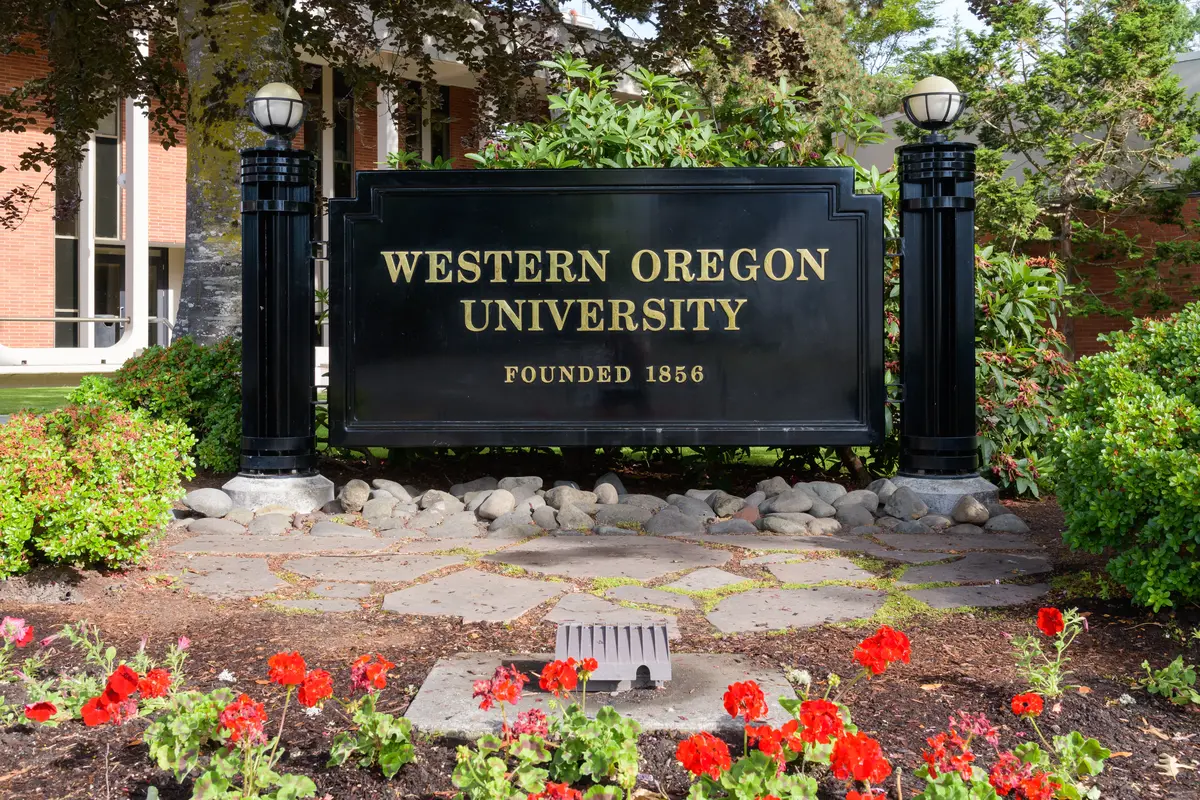
The economic backbone here is Western Oregon University, founded in 1856 — the oldest public university in Oregon. WOU's 157-acre campus defines the city's identity, its population rhythm, and its employer landscape. Beyond the university, the City of Monmouth, Polk County, and Pacific Power round out the major employers. Most residents with professional careers commute about 20 minutes to Salem for state government positions and private-sector work. California is already the single largest source of in-migrants to Oregon, accounting for roughly 22% of all inbound movers statewide, and Polk County's smaller, affordable cities have become a real destination for that wave.
The cost picture is the main event for anyone arriving from California. Monmouth's typical home value stood at $480,666 as of July 2026 — a figure that reads almost unreal if you've been shopping in most California markets. Oregon's complete absence of a sales tax is an immediate, tangible difference from California's statewide base sales tax rate of 7.25%. The full cost-of-living breakdown covers utilities, groceries, and transportation, but the headline is this: the structural cost of living here is meaningfully lower than virtually anywhere in California that has a comparable university presence or amenity level. The trade-off is that Monmouth is genuinely small, and the range of restaurants, retail, and entertainment reflects that.
Whether you're weighing the move seriously or still in the research phase, the sections below walk through the home price and tax comparison, the California-to-Oregon tax shift in full, the lifestyle adjustment, what California buyers find surprising after six months, and the honest case for and against making Monmouth your landing spot.

The Home Price Gap: What Your California Budget Buys Here
The single most disorienting part of shopping for a home in Monmouth after a California market is how much the numbers shift. Monmouth's typical home value was $480,666 as of July 2026. Compare that against California's statewide typical home value of $773,735 (Zillow ZHVI), and the gap is not marginal — it is structural.
What that gap means in practice: a buyer arriving with equity from a California sale often finds themselves in a position to purchase outright, or to carry a loan substantially smaller than anything they held before. Homes near the Western Oregon University campus tend toward older craftsman-era construction on generous lots. The Southeast Monmouth corridor along 99W carries more recent builds and higher density. Downtown and the Historic Downtown core offer walkable blocks with smaller footprints. None of these areas carry a price tag that would raise an eyebrow in most of California.
The honest counterpoint: Monmouth's neighborhoods are compact, and the city's inventory is limited by its size. You are not choosing among dozens of distinct submarkets the way you would in Sacramento or the Central Valley. The Edwards Addition and the Ash Creek Corridor offer the most established residential character, but the range of what's available at any given moment is genuinely narrow. Well-priced homes here do not sit long.
One figure worth holding: the median household income in Monmouth is $69,170, which falls noticeably below what a lender typically requires to carry the city's typical home price comfortably at current rates. That gap matters for buyers relying entirely on local income. For Californians arriving with sale proceeds or equity already in hand, the calculus looks very different.
| Market | Typical Home Value | Context |
|---|---|---|
| Monmouth, OR | $480,666 (July 2026) | Zillow ZHVI; entry point for the Willamette Valley |
| California (statewide) | California's statewide typical home value of $773,735 | Zillow ZHVI; statewide average across all markets |
| Independence, OR | Somewhat lower than Monmouth | Adjacent city; pedestrian bridge connection |
| Dallas, OR | About the same as Monmouth | Polk County seat, 15 minutes west |
| Salem, OR | Somewhat lower than Monmouth | Metro anchor; most Monmouth residents commute here |
The Oregon advantage compounds beyond purchase price. Insurance premiums and routine care costs tend to run noticeably below what you were paying in California, though you will drive farther for specialist care — the regional options here are a different scale than what a major California metro provides.
The Tax Shift: Oregon vs. California Side by Side
Taxes are where the California-to-Oregon move gets genuinely complicated, and where most relocation articles give you half the picture. Here is the full picture.
Sales Tax: Oregon's Clearest Win
Oregon has no state or local sales tax. None. California's statewide base sales tax rate of 7.25% is the highest in the country, and local additions push the combined average to roughly 8.99% in most California cities. For a household spending $40,000 a year on taxable goods, that difference is worth roughly $3,600 annually — real money that shows up immediately, in every transaction, without any tax planning required.
Property Tax: Better Than You Think for New Buyers
Monmouth's effective property tax rate is 0.82%. California's effective property tax rate of 0.71% sounds comparable — until you factor in how Proposition 13 works for new buyers. Long-time California homeowners carry assessed values locked to their purchase price decades ago, pulling the statewide average down. A new buyer in California is reassessed at their purchase price, and once local bonds and special assessments are added, the effective rate typically runs 1.1%–1.3% of what you actually paid. Monmouth's 0.82% rate is meaningfully lower than what you were paying as a California buyer at purchase — not the other way around.
Income Tax: Read This Carefully
California's top state income tax rate of 13.3% applies only to the highest earners (the Tax Foundation attributes this to the California Franchise Tax Board). Oregon's top marginal rate is 9.9%, reached for single filers earning over $125,000 or joint filers over $250,000. If you earn above those thresholds, the Oregon rate is lower — but Oregon's brackets compress faster than California's, which means middle-income earners can end up paying a higher effective Oregon income tax rate than they paid in California on that line alone.
Two Oregon-specific offsets matter here. First, Oregon has no sales tax, so the income-tax line does not stand alone — the combined burden for most households still favors Oregon. Second, Oregon allows residents to subtract a portion of federal income taxes paid from Oregon taxable income, which reduces the effective rate for low- and moderate-income taxpayers. This benefit phases out entirely for joint filers with federal adjusted gross income above $290,000.
| Tax Category | Oregon / Monmouth | California | Who Wins |
|---|---|---|---|
| Sales tax | None (0%) | California's statewide base sales tax rate of 7.25% (blended avg ~8.99%) | Oregon, decisively |
| Property tax (new buyer) | 0.82% effective rate | 1.1%–1.3% at purchase price (Prop 13 reassessment) | Oregon |
| Top income tax rate | 9.9% (over $125K single / $250K joint) | California's top state income tax rate of 13.3% | Oregon (high earners) |
| Mid-income income tax | Brackets compress fast | More gradual rate progression | California (mid-income earners, income tax line only) |
| Federal tax deduction | Partial subtraction allowed | No equivalent benefit | Oregon (moderate earners) |
| Social Security income | Not taxed at state level | Not taxed at state level | Even |
The bottom line for most California households moving to Monmouth: the combined tax picture improves, sometimes significantly. The income-tax nuance is real but rarely overrides the sales-tax and property-tax advantage in total household tax burden.
For a deeper look at how these interact with specific household income levels, the cost-of-living page carries the full breakdown.
What the Lifestyle Adjustment Actually Looks Like
Californians moving to Monmouth tend to underestimate two things: how much of their daily life was built around density, and how quickly they adjust. Monmouth has a population of 11,428. There is no freeway running through it. The commercial corridor along 99W (Pacific Highway West) handles most of the practical errands — grocery runs, hardware, fuel. For anything beyond the basics, Salem is about 20 minutes to Salem by way of OR-51 north, and that commute shapes how residents mentally organize their week.
What You Find Here
The Western Oregon University campus provides a cultural anchor that most towns this size don't have — lectures, performances, arts events, and the general energy of a college community. The Ash Creek Natural Area and Monmouth City Park give residents genuine green space within walking distance of most neighborhoods. The pedestrian bridge connecting Monmouth to Independence opens up Riverview Park and the Willamette River edge without needing a car.
The dining and coffee scene is real but appropriately scaled. The verified local spots — Grain Station Brew Works, Yeasty Beasty, Sing Fay Restaurant & Lounge, Rookies Sports Tap, The Sippery Coffee Co., Dutch Bros Coffee, Habebah Coffee & Mediterranean Cuisine, Bugles Espresso, Luna's Cafe, and Sonny's Coffee and Plants — cover a reasonable range for a city this size. The Cultural Harvest Collective farmers market brings produce and local vendors into the mix. What Monmouth does not have is the restaurant density, the retail range, or the entertainment infrastructure of even a mid-sized California city. That is not a complaint; it is simply accurate.
Geography as a Daily Asset
The Willamette Valley wine country is effectively in Monmouth's backyard. The Cascade Mountains and the Pacific Coast are each roughly an hour's drive. Portland is about an hour north. For a California buyer accustomed to paying heavily for proximity to outdoor recreation, Monmouth's position in the valley is a genuine draw — you are not paying a coastal or mountain premium to have those options within a realistic day-trip range.
The weather is the surprise most Californians don't fully price in. Monmouth averages 154 sunny days a year. That is a real number, not the inflated Pacific Northwest tourism figure. Gray, rainy stretches from November through March are long and persistent. If you moved from San Diego or the Central Valley, month three of your first Oregon winter is when most people either make peace with it or start reconsidering.
Looking to buy in Monmouth? Estimate your payment.
Enter your numbers to see an estimated monthly mortgage payment.
Estimate only. Excludes HOA fees and mortgage insurance. The interest rate above is a starting point, not a quoted rate — replace it with your own to see real numbers. Insurance is a flat placeholder, not a Monmouth quote.
What Californians Get Wrong About Monmouth Before They Arrive
The most common mistake California buyers make when evaluating Monmouth is treating it as a suburb. It is not. Monmouth is a self-contained small city whose daily rhythm runs on the academic calendar, not the commuter calendar. If Western Oregon University is on break, the city noticeably quiets. That is a feature for some residents and genuinely disorienting for others.
The Employment Picture
Western Oregon University is Monmouth's dominant employer by a wide margin. The Central School District and the City of Monmouth itself follow. Beyond those anchors, Monmouth's commercial and professional employment base is limited. Californians who assume they can replicate a Bay Area or Los Angeles career in Monmouth without commuting or remote work are going to find the local job market thin. Most residents with professional-track careers work remotely, or drive the about 20 minutes to Salem for state government positions and private-sector roles. That commute is the realistic employment picture here, and buyers should factor it into their decision rather than assume a local job market that does not exist at scale.
The School District
Central School District 13J serves Monmouth, with 2,951 students enrolled in 2025-26. The district holds a C- rating, according to Niche, and on 2024-25 state assessments, 19% of students reached math proficiency and 32.3% reached reading proficiency. California buyers arriving from well-resourced suburban districts often find this the hardest adjustment. The schools page covers this in full, including the district's active OSAA athletics programs and the community texture that surrounds them. The honest advice: go in with accurate expectations rather than assuming the WOU presence translates to district-level academic outcomes.
The "I Didn't Realize How Small It Is" Moment
Every California transplant who moves to Monmouth describes a version of the same moment — usually around month four — when they realize they have driven past the same three intersections every day for weeks, and that is simply the city. There is no undiscovered neighborhood, no emerging district, no corridor about to turn over. Monmouth is 11,428 people. The upside of that is that community here is not abstract. Neighbors know each other. The crime picture reflects it too — a violent crime rate of 1.29 per 1,000 residents sits well below both the Oregon state figure and the national figure, which is what small college towns in the Willamette Valley tend to produce.
The Honest Case For and Against Making This Move
Oregon ranked first nationwide for inbound movers in 2025, with California as the single largest source of those moves. Not all of them landed well. The ones that did tend to share a common trait: they were honest with themselves about what they were trading before they signed anything.
The Case For Monmouth
The home price advantage is real and durable. At $480,666 (July 2026 typical home value), Monmouth gives buyers who arrive with California equity a genuine chance to own outright, reduce their mortgage substantially, or redirect housing costs toward other financial goals. The property tax rate of 0.82% is lower than what new California buyers actually pay at purchase under Proposition 13 reassessment. Oregon's complete absence of a sales tax — against California's statewide base sales tax rate of 7.25% — saves a meaningful amount on everyday spending without requiring any action from you. The outdoor access, the valley setting, the low crime, and the university-town energy are genuine quality-of-life wins for the right buyer.
If you work remotely, Monmouth may be close to ideal. The cost structure drops dramatically, the community is tight-knit and navigable, and the geography gives you the kind of access to forests, coast, and mountains that would cost multiples in California.
The Case Against
If your career requires in-person work, Monmouth's local job market is thin. You are committing to a commute or a job change. The school district's performance figures are honest, and parents who need a higher-performing district should look at Salem or check nearby Polk County options before locking in a purchase. The retail and services infrastructure is limited — a serious shopping run means driving out of town, and anything beyond the local range means Salem or Portland.
People who move out of Monmouth after a year or two usually cite one of two reasons: they underestimated how much they relied on urban density, or they arrived without stable remote-work income and found the local job market genuinely difficult. Neither failure is unique to Monmouth, but both are more likely to surface here than in a larger Oregon city.
The full living-in-Monmouth guide and the first-time buyer page cover the buying process and employer landscape in more depth. If you're still weighing Monmouth against a Salem or Independence purchase, the neighborhoods page breaks down the distinct characters of each area.

Local Expert Takeaway: Monmouth is one of the genuinely affordable landing spots for California buyers who want Willamette Valley living without the Salem price floor — but it works best for remote workers or those already connected to WOU, the school district, or Polk County employment. Arrive with realistic expectations about the school district's performance, the limited local job market, and the 154 sunny days a year that define an Oregon winter. The tax picture — no sales tax, an 0.82% property rate, and a lower top income tax bracket than California — is as good as advertised. The lifestyle requires you to want the small-town version of the Pacific Northwest, not just a cheaper approximation of what you had.
Quick Takeaways & FAQs
✅ Oregon's complete absence of a sales tax saves most California households thousands of dollars annually compared with what they paid under California's statewide base sales tax rate of 7.25%.
⚠️ Central School District 13J holds a C- rating, according to Niche — parents arriving from high-performing California suburban districts should research this carefully before choosing a neighborhood.
📍 Monmouth is connected to the adjacent city of Independence by a pedestrian bridge over the Ash Creek and Rickreall area, giving residents walkable access to Riverview Park and the Willamette River edge without a car.
Is Monmouth, Oregon significantly cheaper than California for buying a home?
Does Oregon have lower property taxes than California for new buyers?
Will I pay more or less income tax in Oregon than in California?
What do California transplants find hardest about living in Monmouth?
Is Monmouth a good destination for remote workers moving from California?
Moving to Oregon?
Tell us what you need help with and we'll connect you with local resources.
