
Monmouth is the kind of place that genuinely surprises people who arrive expecting a sleepy mid-valley town. With 11,428 residents, it is one of the more tightly knit cities in Polk County — anchored on one end by a working university and on the other by a downtown of well-preserved 19th-century storefronts. What shapes the experience of living here is not a single dramatic divide, but a gradual shift: the closer you are to Western Oregon University and Historic Downtown, the more you can walk, bike, or simply wander. The further you move toward the 99W corridor or the outer residential edges, the more you need a car for nearly everything, and the quieter — and in some cases more affordable — life gets.
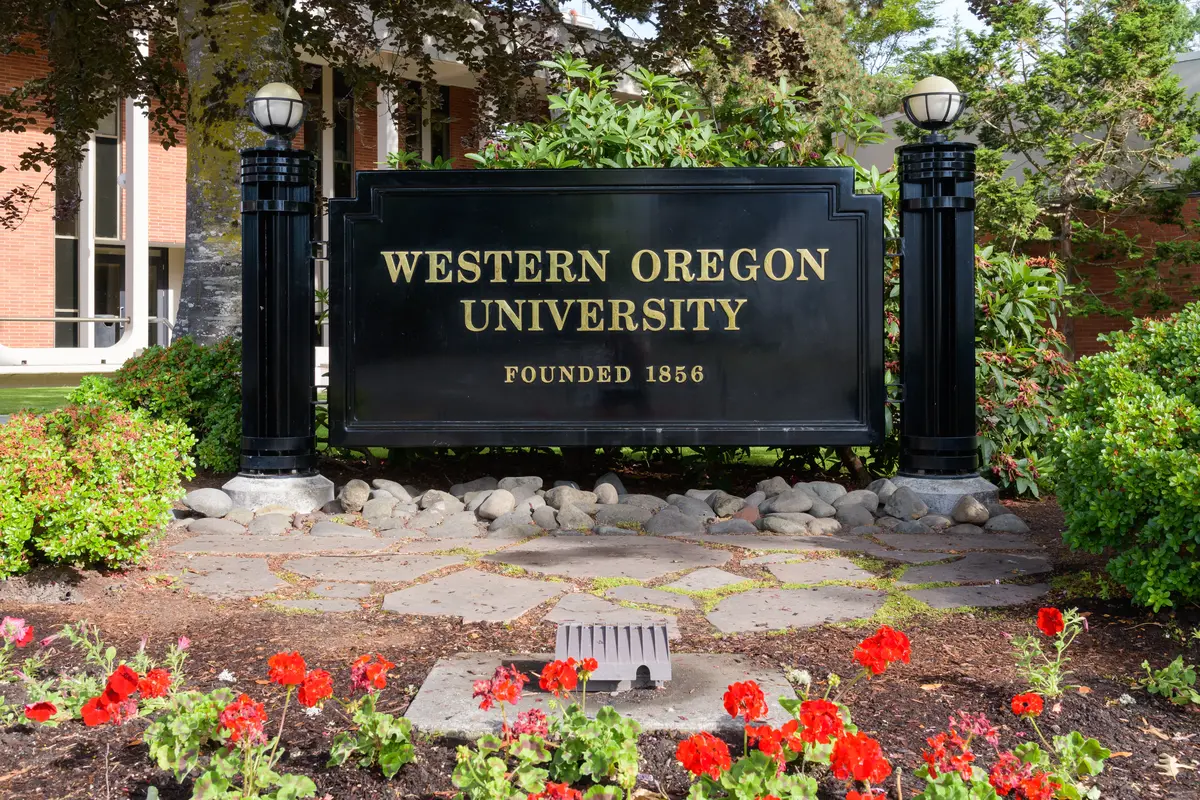
Western Oregon University is not just a landmark; it is the city's largest employer and the engine of its social calendar, drawing students, faculty, staff, and the families that support them. The Central School District 13J serves the city's families, with 2,951 students enrolled in 2025-26. The district holds a C- rating, according to Niche, which is something families weigh carefully before committing. Many households here are connected to the university, Polk County government, Pacific Power, or the school system — and a growing number work remotely and chose Monmouth for its relative quiet and its proximity to Salem, about 20 minutes away on a clear day via 99W.
The typical home price in Monmouth sits at $480,666 (Zillow Home Value Index, July 2026) — a figure that puts it roughly in line with Dallas and noticeably below Salem, though still above what the median household income of $69,170 can comfortably carry. The city has 154 sunny days a year, the Ash Creek Natural Area on its eastern edge, and the Monmouth–Independence Aquatic Center shared with its neighbor Independence just across the creek. Day-to-day life leans heavily on the university's facilities, the walkable core near campus, and a modest but real local food and coffee scene. A serious shopping run still means leaving town.
Whether you're considering a move or just researching the area, the sections below break down Monmouth's neighborhoods, what each one is actually like to live in, common mistakes buyers make, and where renters find the most options.

The Monmouth Reality
The single most important thing to understand about buying in Monmouth is that the city's walkable, connected core is genuinely small — and everything outside it shifts the daily experience considerably. The university-downtown corridor, running roughly between Western Oregon University's campus and the Historic Downtown storefronts along Monmouth Avenue, is where you can realistically live without a car for most daily errands. Step outside that zone and you are in a different city, one where nearly every trip requires driving.
99W cuts through the city's southeastern edge and carries most of the commercial traffic — gas stations, fast food, the kinds of businesses that follow a state highway. Neighborhoods adjacent to the corridor gain easy access to Salem and Corvallis, but they trade away the pedestrian character that makes the university core feel cohesive. Buyers who prioritize on-foot access to campus, coffee shops, or the farmers market should focus their search in the WOU Area, Downtown, or the adjacent parts of the Ash Creek Corridor. Buyers who prioritize newer construction, quieter streets, or lower entry points should look east and southeast.
School boundaries matter here less in a zoning sense than in a commute-to-campus sense: every neighborhood in Monmouth feeds the same Central School District 13J, so the school choice is really a question of which elementary school is closest, not which zone unlocks better ratings. What actually divides Monmouth is not the district line but the walk-to-campus line — and that line runs roughly along the outer edges of the WOU Area and Downtown, with everything beyond it requiring a vehicle for any real engagement with the city's social life.
Neighborhoods at a Glance
| Neighborhood | Best For | Vibe |
|---|---|---|
| Edwards Addition | Families First-Time | Planned community with front porches, pocket parks, and an active HOA — feels intentionally designed rather than organically grown |
| Western Oregon University Area | Walkable Renters | Dense, youthful, and car-optional — apartments and small homes within a short walk of campus buildings and downtown |
| Downtown / Historic Downtown Monmouth | Walkable Quiet | Late-19th-century architecture, self-guided walking tours, and the city's most concentrated on-foot access to shops and eateries |
| Ash Creek Corridor | Nature Quiet | Creekside residential character with planned trail access connecting Monmouth and Independence — quieter than the university core |
| Monmouth Mobile Estates | Value Renters | All-ages manufactured home community with a playground and a more affordable entry point into Monmouth living |
| Southeast Monmouth (Hwy 99W Corridor) | Commuters First-Time | Newer residential growth along the commercial highway strip — practical rather than scenic, with the best highway access in the city |
Monmouth typical home price: $480,666 (Zillow ZHVI, July 2026). Typical rent: $1,473/mo (Zillow ZORI, July 2026). Neighborhood tiers on this page are relative to these figures.
Best Neighborhood by Buyer Type
| Buyer Type | Best Neighborhood | Why |
|---|---|---|
| First-Time Buyer | Edwards Addition | Phased development means newer construction at a range of price points, with the structure of an HOA and pocket parks built in from the start. |
| Luxury Buyer | Downtown / Historic Downtown Monmouth | The East Main Street Historic Neighborhood contains architecturally significant homes dating to the 1860s, including one property on the National Register of Historic Places — the kind of character that cannot be replicated. |
| Walkability Seeker | Western Oregon University Area | Approximately 37.3% of residents here are college-enrolled, and the entire neighborhood sits within a short walk or bike ride of campus buildings, the downtown core, and independent coffee shops. |
| Families with Kids | Edwards Addition | Tree-lined streets, a community garden, rear-facing garages, and an active HOA create a neighborhood that functions the way planned family communities are supposed to. |
| Commuters | Southeast Monmouth (Hwy 99W Corridor) | Direct highway access makes the drive toward Salem or Corvallis as straightforward as it gets in a city this size. |
| Large-Lot Buyers | Ash Creek Corridor | The corridor's quieter residential character and proximity to the Ash Creek Natural Area attract buyers who want more space and a greener setting without fully leaving the city. |
| Renters | Western Oregon University Area | Most housing is renter-occupied, with the highest concentration of apartments and small homes available to rent anywhere in the city. |
Looking to buy in Monmouth? Estimate your payment.
Enter your numbers to see an estimated monthly mortgage payment.
Estimate only. Excludes HOA fees and mortgage insurance. The interest rate above is a starting point, not a quoted rate — replace it with your own to see real numbers. Insurance is a flat placeholder, not a Monmouth quote.
Most Popular Neighborhoods
Edwards Addition
Built on an 88-acre former grass seed field on the city's southeast side, Edwards Addition is Monmouth's most deliberately planned neighborhood — designed from the ground up with front porches, tree-lined streets, rear-facing garages, pocket parks, and a community garden. It has expanded through at least nine construction phases, meaning some streets are mature and established while others are still being built out, so the feel can vary considerably depending on which block you land on. The HOA brings structure and community events, which some buyers love and others find constraining. Best for: families with young children, first-time buyers who want newer construction with built-in neighborhood character.
Western Oregon University Area
This is the most renter-saturated part of Monmouth — most housing here is renter-occupied, and approximately 37.3% of residents are college-enrolled, a concentration higher than 98.9% of U.S. neighborhoods (NeighborhoodScout, January 2024). That statistic tells you most of what you need to know: the area is lively, transient by nature, and built for people who want to be close to campus buildings and downtown without a car. Owners who buy here are almost always investors or people genuinely comfortable with a university-adjacent lifestyle — expect noise, turnover, and a neighborhood that resets itself every August. Best for: renters, WOU faculty and staff, buyers looking for income property near campus.
Downtown / Historic Downtown Monmouth
The East Main Street Historic Neighborhood contains homes spanning eight architectural styles and dating from approximately 1865 to 1975, including the Strong House (built c. 1892), listed on the National Register of Historic Places — this is not a preserved-looking block, it is a genuinely historic one. The city offers three self-guided walking tours accessible via a free mobile app, and the downtown storefronts house a real mix of local shops and eateries. The trade-off is that historic character comes with historic maintenance: older mechanical systems, limited off-street parking, and the specific responsibility of owning a home that a preservation community watches closely. Best for: buyers who want architectural character, walkable streets, and a genuine sense of place over square footage.
Ash Creek Corridor
The corridor follows Ash Creek as it moves east toward the Willamette River and Independence, and the neighborhoods along it tend toward quieter residential streets with more green space than the university core. A trail master plan envisions a non-motorized corridor running parallel to the creek — worth knowing that as of the research available, full implementation of that trail network has not been confirmed, so buyers should not purchase expecting a completed greenway and should verify current conditions. The pedestrian connection toward Independence is the corridor's strongest selling point for cyclists and walkers who want to reach a neighboring city without driving. Best for: nature-oriented buyers, cyclists, residents who want quiet without being fully car-dependent.
Monmouth Mobile Estates
An all-ages manufactured home community with approximately 145 spaces, Monmouth Mobile Estates offers the city's most accessible entry point for buyers and renters who do not need a traditional stick-built home. The spacious courtyard layout and playground make it functional for families, and its location puts residents reasonably close to dining and everyday services. The honest constraint is that manufactured home communities involve lot rent on top of any home purchase cost, and financing options are more limited than for site-built homes — buyers new to this type of purchase should understand the structure before making an offer. Best for: value-conscious buyers, renters seeking lower monthly costs, residents comfortable with a manufactured home lifestyle.
Southeast Monmouth (Hwy 99W Corridor)
The southeast corridor is where Monmouth's newer residential growth has been absorbed — relatively recently built homes on streets that feed directly into the 99W commercial strip. For commuters heading toward Salem or Corvallis, this location minimizes time spent navigating the city before reaching the highway. The trade-off is straightforward: this part of Monmouth has little of the walkable character that defines the university core, the aesthetic is practical rather than distinctive, and the highway proximity means traffic noise is a real consideration on streets closest to 99W. Best for: commuters, buyers prioritizing newer construction and highway access over neighborhood character.
Common Mistakes Buyers Make in Monmouth
Treating the City as Uniform
Monmouth's small size makes buyers assume the whole city is basically the same. It is not. A home two blocks from the WOU campus puts you within walking distance of the Cultural Harvest Collective farmers market, independent coffee shops, and downtown — while a home near the 99W commercial strip puts you in a functionally different city where every errand involves driving. Ask specifically about the walk to campus and downtown, not just the address.
Buying Near 99W Without Accounting for Noise
Streets that sit closest to 99W carry real highway traffic, especially during peak commute hours toward Salem. Buyers drawn to the newer construction in Southeast Monmouth sometimes underestimate how much the corridor noise affects outdoor living — back yards facing the highway sound very different from back yards one block further in. Walk the property on a weekday morning before making an offer, not just on a Sunday afternoon.
Assuming the Ash Creek Trail Is Complete
The Ash Creek Trail master plan is a planning document, not a finished trail system. Buyers paying a premium for trail-adjacent properties in the Ash Creek Corridor should confirm current conditions directly with the city before assuming they are buying into a completed greenway network. The vision is real; the timeline for full implementation is not confirmed in publicly available sources.
Overlooking the School District Rating Before Committing
Every neighborhood in Monmouth feeds the same Central School District 13J, which holds a C- rating, according to Niche. There is no boundary strategy that unlocks a higher-rated district within city limits — the only way to access a different district is to buy in a different city. Families who move here specifically for the schools, rather than the university or affordability, often find this out after the fact. The Monmouth schools page covers the district in full detail.
Best Areas to Rent in Monmouth
| Area | Ideal For | Trade-off |
|---|---|---|
| Western Oregon University Area | Students, WOU faculty and staff, young professionals who want car-free daily access to campus and downtown | High turnover, noise during the academic year, and a neighborhood that resets every fall — not ideal for renters seeking a stable, quiet community |
| Downtown / Historic Downtown Monmouth | Renters who want walkable streets, architectural character, and proximity to the city's dining and coffee scene | Limited rental inventory compared to the university area; older buildings may mean older appliances and less efficient heating |
| Edwards Addition | Families with kids and renters who want a quieter, more planned residential environment with pocket parks and a community feel | Less walking distance to campus or downtown; a car is needed for most errands, and HOA rules apply to some rental units |
| Ash Creek Corridor | Renters who prioritize green space, creek access, and a quieter residential character over convenience to the commercial strip | Trail infrastructure is still being developed, and the area has fewer rental units available than the university core |
| Southeast Monmouth (Hwy 99W Corridor) | Commuters heading to Salem or Corvallis who want straightforward highway access and newer construction | Highway noise, limited walkability, and a commercial-strip character that feels less like a neighborhood and more like a transitional zone |
The city-wide typical rent and its source are shown in the caption below. Rental inventory in Monmouth is heavily concentrated near the WOU campus, which means availability tightens significantly each summer as students secure housing for the fall term — renters who wait until August will find the best units already taken.

Local Expert Takeaway: Monmouth works best for buyers and renters who align their location choice with how they actually plan to live. If you will walk to Western Oregon University, commute via 99W toward Salem, or want the specific character of a carefully planned street in Edwards Addition, the city delivers those things well. Where buyers go wrong is treating the whole city as interchangeable: the walkable university-downtown core and the 99W growth corridor are functionally different places, and the school district picture — Central School District 13J holds a C- rating, according to Niche — is the same regardless of which neighborhood you choose. The Ash Creek Corridor and the pedestrian connection toward Independence are genuine assets, but verify current trail conditions before paying for them.
Quick Takeaways & FAQs
✅ Edwards Addition is one of the few places in the mid-Willamette Valley where thoughtful residential planning — front porches, rear garages, pocket parks, a community garden — was actually built out at scale, across nine phases, on a single former grass seed field.
⚠️ The Central School District 13J holds a C- rating, according to Niche, and every Monmouth neighborhood feeds the same district — there is no boundary strategy within city limits that changes this equation.
📍 The Ash Creek Trail master plan envisions a non-motorized corridor connecting Monmouth and Independence, but implementation is not fully confirmed — buyers drawn to trail-adjacent properties should verify current conditions with the city before closing.
What is the most walkable neighborhood in Monmouth, Oregon?
Is Edwards Addition a good place to buy a home in Monmouth?
What neighborhood in Monmouth is best for renters?
How do home prices in Monmouth compare to nearby cities?
Does Monmouth have good trail access from its neighborhoods?
Moving to Oregon?
Tell us what you need help with and we'll connect you with local resources.
