
If you are moving to Monmouth with school-age children, the first thing to know is that the city shares its school district with its neighbor Independence — and that the two towns are more intertwined academically and athletically than most newcomers expect. Central School District 13J covers both communities, along with stretches of rural Polk County, drawing students from across the area into a system of three elementary schools, one middle school, and one high school. The district holds a C- rating, according to Niche, which puts families in a difficult position: the schools are genuinely the primary public option, and the rating reflects real academic challenges, even as pockets of the system are showing measurable progress.
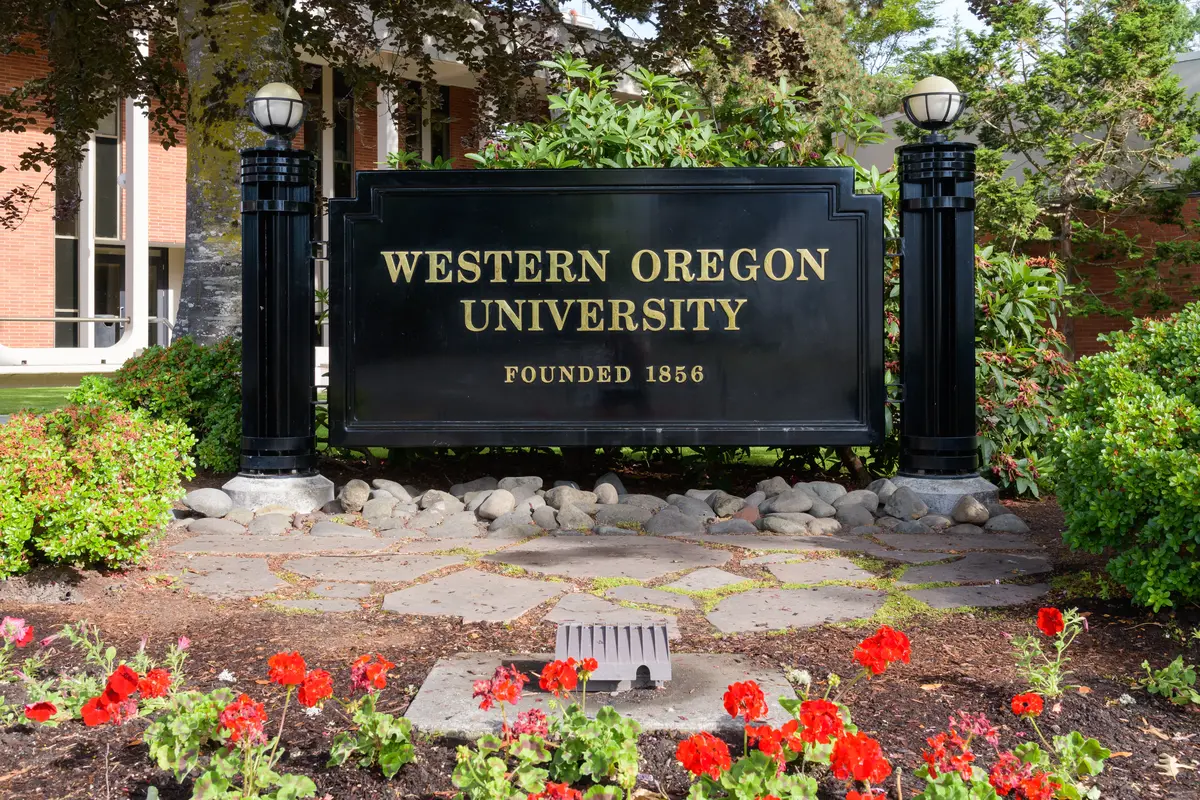
Western Oregon University sits at the center of Monmouth's identity, and its presence shapes the community around it in ways that ripple into the schools — a relatively educated parent population, cultural programming the university makes accessible, and a multilingual, internationally aware atmosphere. The district reflects the demographics of the broader community it serves: approximately 47% of students are Hispanic or Latino, and the district runs a dedicated Emergent Bilingual Program with its own director and specialist, focused on developing bilingualism and biliteracy across all grade levels. This is not a district that treats its multilingual students as an afterthought.
Cost of living is one of the more honest draws for families choosing Monmouth. The typical home price as of July 2026 sits at $480,666, which is meaningfully lower than what most Willamette Valley cities closer to Salem demand. That affordability buys a quieter, small-town experience — but it also means the school system operates in a funding environment that shows up in classroom ratios and test scores. Whether that trade-off works for your family depends largely on what you are coming from and what you are prioritizing.
This guide breaks down Central School District 13J's structure, its standout schools, academic performance, the district's bilingual programs, youth sports across Monmouth and Independence, and an honest assessment of who this district is and is not the right fit for.

Central School District 13J: The District at a Glance
Central School District 13J is a mid-sized rural district serving a genuinely diverse community across two cities. It is not a large system — but it covers more ground than many families expect, stretching from Monmouth and Independence into surrounding rural Polk County.
The district holds a C- rating, according to Niche, which is an honest reflection of where state-assessment scores currently sit. On 2024-25 state assessments, 19% of students reached math proficiency and 32.3% reached reading proficiency across the district. Those numbers trail both state and national averages, and there is no way to soften that without misleading the families who need to make real decisions.
What the aggregate figures do not capture is where the district is moving. Third-grade language arts scores rose four percentage points district-wide in 2024-25. That kind of incremental, measurable progress matters in a system navigating the post-pandemic recovery alongside real economic challenges — approximately 45% of students are economically disadvantaged and qualify for federal free and reduced-price meals.
| School | Grades | Mascot | Location |
|---|---|---|---|
| Ash Creek Elementary | K–5 | Eagles | Monmouth |
| Monmouth Elementary | K–5 | Dolphins | Monmouth |
| Independence Elementary | K–5 | — | Independence |
| Talmadge Middle School | 6–8 | — | Independence |
| Central High School | 9–12 | Panthers | Independence |
One detail worth knowing early: Central High School sits in Independence, not in Monmouth itself. If you are buying in Monmouth, your child's high school years will involve a short cross-town commute — something families rarely expect when they first see the district map.
The student-to-teacher ratio runs higher than the state average, ranging from roughly 19:1 to 22:1 depending on the source and the year. That context matters when weighing the classroom experience, especially at the elementary level. For the full picture on how the school funding environment connects to the broader cost of living in Monmouth, that page has the detail.
Standout Schools Worth Knowing
Monmouth Elementary — The District's Brightest Spot
Monmouth Elementary, whose students go by the Dolphins, is the highest-performing school in Central School District 13J by the measures that are publicly available. Its proficiency rates in both English Language Arts and Mathematics sat above district and state averages in 2024-25 — a meaningful distinction in a system where districtwide scores trail benchmarks.
The 2024-25 school year brought a particularly striking result at the elementary level: Monmouth Elementary improved 17 percentage points in third-grade language arts scores from the prior year. Along with Ash Creek Elementary, it met the district's own strategic goal for language arts achievement. For families with younger children, this is the kind of momentum worth paying attention to.
Ash Creek Elementary — Steady Progress in Monmouth
Ash Creek Elementary, home to the Eagles in blue and silver, serves grades K–5. It joined Monmouth Elementary in meeting the district's 2024-25 strategic goal for language arts achievement — a sign that the improvements at the elementary level are not confined to a single school.
Both Monmouth and Ash Creek are physically in Monmouth proper, which means families in most of the city's neighborhoods have walkable or very short-drive access to elementary schools that are performing above the district average. That geographic convenience is a real practical advantage in a town this size.
Central High School — The Panthers
Central High School, the Panthers in red, white, and black, runs active OSAA athletics programs across all three seasons and draws students from across both Monmouth and Independence. It sits in Independence rather than Monmouth, but it is the single high school destination for the entire district — students from both towns land here.
The high school's emphasis on biliteracy stands out at the program level. Staff participate in the Oregon State Seal of Biliteracy program, and the district's Emergent Bilingual emphasis continues through the secondary years. For families raising children in bilingual households, or who simply value genuine multilingual programming, this is an honest strength rather than a marketing line. Friday night football draws a real crowd from both cities, and the sense that Monmouth and Independence share a school — rather than merely sharing a district boundary — is something you feel at games.
The Emergent Bilingual Program: What Makes This District Different
Approximately 47% of students in Central School District 13J identify as Hispanic or Latino — a demographic reality that shapes everything from classroom instruction to parent communication to the district's strategic priorities. The response is not a supplemental program tucked into a corner of the school day. The district operates a formal Emergent Bilingual Program with a dedicated director and specialist, explicitly focused on developing bilingualism, biliteracy, and sociocultural competence.
For families arriving from districts where multilingual programming is either absent or siloed, the scale of this commitment is noticeable. The program runs districtwide, from the elementary schools through the high school, and the Oregon State Seal of Biliteracy work at Central High reflects how seriously the district treats this as an academic and life outcome rather than a remediation track.
For non-Spanish-speaking families, the practical implication is a school culture that treats two languages as the norm rather than the exception. Some families find that a genuine draw — exposure to a bilingual environment from kindergarten onward is something plenty of parents in more homogeneous districts actively seek and cannot find. Others find it an adjustment. It is worth visiting a school before assuming either experience.
The district's student population is also approximately 45% economically disadvantaged. That figure shapes resource allocation, classroom dynamics, and the community relationships the schools are navigating. It is not a disqualifier — many families find the diversity and the community investment genuinely enriching — but it is honest context that prospective families deserve to understand before committing to a neighborhood.
Looking to buy in Monmouth? Estimate your payment.
Enter your numbers to see an estimated monthly mortgage payment.
Estimate only. Excludes HOA fees and mortgage insurance. The interest rate above is a starting point, not a quoted rate — replace it with your own to see real numbers. Insurance is a flat placeholder, not a Monmouth quote.
Youth Sports and Kids Activities in Monmouth
The sports infrastructure for children in Monmouth runs jointly with Independence, and the two-city model means the overall offering is stronger than either city could sustain on its own. Central Youth Sports is the primary community athletics organization, based in Monmouth and serving both cities with competitive programs in football, basketball, baseball, softball, soccer, track, and volleyball.
The organization handles the bulk of what most families think of as rec-league youth sports — structured seasons, team formation, registration through a dedicated portal, and enough participation from both communities to field real competition across age groups. It is the first stop for most parents with kids between roughly six and fourteen.
The Monmouth-Independence Family YMCA
For younger children, the Monmouth-Independence Family YMCA, located in neighboring Independence, offers youth basketball leagues organized by grade band from kindergarten through 6th grade, swim lessons, and day camps. Registration runs at an accessible price point per seasonal sport, with income-based discounts available — a practical reality in a community where nearly half of students qualify for free and reduced-price lunch.
The YMCA's role matters most for families with kids in the kindergarten-through-elementary window who want an introduction to organized activity before the more competitive Central Youth Sports programs. The two organizations complement each other rather than compete.
Pop Warner Football
Mid-Valley Pop Warner draws players from Monmouth into a regional youth football league that reaches communities across the Willamette Valley. For families coming from larger metro areas with robust Pop Warner chapters, this regional model will feel familiar — and it gives Monmouth kids exposure to competition beyond just the immediate district pool.
OSAA Athletics at Central High School
Once students reach high school, they enter Central High School's full OSAA athletic slate. The Panthers field teams across all three seasons: fall brings football, volleyball, cross country, boys and girls soccer, golf, tennis, and cheerleading; winter covers basketball and wrestling; spring rounds out with baseball, softball, and track and field. Student-athletes register through the PowerSchool parent portal.
The community investment in high school athletics is real. A fall football game draws families from both Monmouth and Independence, and the shared loyalty across the two cities gives the Panthers a broader fan base than you might expect from a district this size. For a family relocating from a larger district, the scale will feel smaller — but the community texture around these games is genuinely warm in a way that larger programs sometimes lose.
For kids who want activities beyond sports, Western Oregon University's presence on the Monmouth side of the district creates occasional programming access — events, cultural activities, and performances that a purely rural community would not have. That is an ambient benefit rather than a formal program, but it is one families with arts-oriented children appreciate after a few months here.
What Six Months Here Will Teach You About the Schools
Parents who move to Monmouth from higher-rated districts — Salem, Corvallis, or west-side Portland suburbs — often go through a version of the same adjustment. The aggregate numbers they researched before moving look one way; the actual experience of their individual child's classroom looks another. Both things are true at the same time, and neither cancels the other out.
The classroom ratios are real. With student-to-teacher ratios running higher than the state average, elementary classrooms can feel crowded compared to what families coming from well-resourced suburban districts are used to. That gap shows up most noticeably at the elementary level, where smaller groups matter most for early literacy. If your child needs significant individualized attention, this is worth weighing honestly.
The other thing families do not always anticipate is how much the Monmouth-Independence joint identity shapes school life. Your children's friendships, their athletic teammates, their graduation class — all of it is built across both cities. If you are drawn to Monmouth specifically because of Western Oregon University or the downtown neighborhood character, you will still spend a meaningful amount of time in Independence for school-related activities. That is not a complaint most families have; it is just a reality that surprises some newcomers in the first semester.
For families coming from Oregon's larger metro areas, the lack of magnet programs, specialized academies, or private school alternatives within Monmouth itself is the practical reality. The nearest options require a drive — the neighborhood guide has more on how proximity to the main routes shapes daily logistics. The district is what it is, and families who thrive here tend to be the ones who engage directly — at school board meetings, at the elementary level parent nights, on the sidelines of Central Youth Sports — rather than waiting for the system to meet them.
Who This District Is Not the Right Fit For
Central School District 13J serves its community with genuine effort, and the bilingual programming and recent elementary gains are real. But honesty requires naming the families for whom this district is likely to frustrate more than it fulfills.
Families who are relocating specifically to access high-performing public schools — and who are weighing Monmouth against Salem or Corvallis neighborhoods where district ratings run significantly higher — should weigh the C- rating from Niche alongside the test score data carefully. On 2024-25 state assessments, 19% of students reached math proficiency and 32.3% reached reading proficiency. Those numbers are below what families moving from high-performing districts in California, Washington, or the Portland metro will be used to, and private alternatives in Monmouth itself are not a readily available substitute.
Families with children who have significant learning differences or who need intensive gifted programming should ask direct, specific questions about the district's capacity before assuming it exists. Resource constraints are real at a district this size with this demographic profile, and the answers may depend on which school and which staff are available in a given year.
Parents who want their child in a large, competitive high school environment with a wide range of electives, AP course depth, and extracurricular breadth will find Central High School's offering more limited than what they are accustomed to. It is a single high school serving a combined community of two towns — the programming reflects that scale.
None of this means Monmouth is the wrong choice. Many families who live here are entirely at peace with the schools because the affordability, the university environment, and the tight-knit community character are what they came for — and because they are investing time in their children's education in ways that supplement what the district provides. For families whose school district rating is the primary filter, though, this guide would be doing them a disservice by softening what the data says. The neighborhoods page and the cost-of-living breakdown are worth reading alongside this one to weigh the full picture.

Local Expert Takeaway: Central School District 13J is a small, genuinely diverse district doing incremental work in a challenging environment — the bilingual programming is a real district-wide commitment, Monmouth Elementary's recent language arts gains are measurable and meaningful, and Central Youth Sports gives kids in both Monmouth and Independence a real organized-athletics infrastructure. But the Niche C- rating and the state assessment scores are not noise; they reflect real classroom resource constraints and academic gaps that families moving from higher-rated districts should take seriously. The families who do best here are the ones who come in clear-eyed, get involved early — at Ash Creek or Monmouth Elementary, at Central Youth Sports registration, at a Panthers football game in the fall — and treat the university town atmosphere as a supplement to what the schools provide rather than a substitute for district-level performance.
Quick Takeaways & FAQs
✅ Monmouth Elementary is the district's strongest elementary school by publicly available measures, leading the district in proficiency rates and posting a 17-percentage-point gain in third-grade language arts in 2024-25.
⚠️ The district holds a C- rating according to Niche, with 19% math proficiency and 32.3% reading proficiency on 2024-25 state assessments — below state averages and an honest consideration for families prioritizing academics above all else.
📍 Central High School sits in neighboring Independence, not in Monmouth itself — something families buying on the Monmouth side of the district should factor into their daily logistics before making an offer.
What school district serves Monmouth, Oregon?
How is Central School District 13J rated?
What youth sports are available for kids in Monmouth?
Does Central School District have bilingual or English Language Learner programs?
Is Monmouth a good place to move with school-age children?
Moving to Oregon?
Tell us what you need help with and we'll connect you with local resources.
