
About Elizabeth
What West Linn Is — And What It Isn't
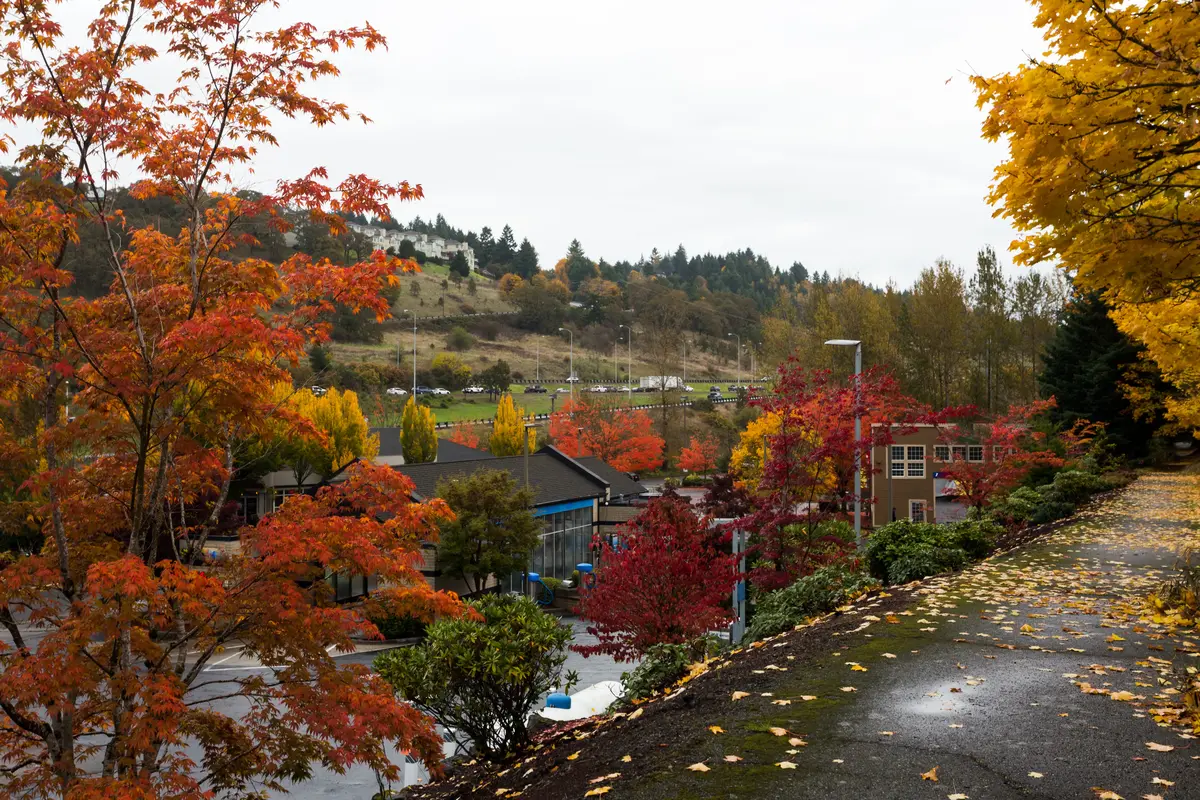
West Linn calls itself the city of hills, trees, and rivers, and that is not marketing — the Willamette River defines the city's eastern edge, the Tualatin runs along the south, and the topography in between is genuinely hilly. With roughly 27,601 residents spread across approximately 7.4 square miles of river bluffs and forested ridgelines, the city has almost nowhere left to grow outward. That geographic constraint matters to buyers: it keeps the neighborhood character stable, but it also keeps supply tight.
Most of my clients come here because they want the feel of a smaller community without giving up proximity to Portland. That trade works, up to a point. West Linn is about 15 miles south of downtown Portland, and most people drive — I'll get into the commute details in its own section, but the short answer is that this is a car-dependent city for most residents.
What surprises people after six months here is how little they actually leave. The 600-plus acres of parkland, the Historic Willamette District as a genuine gathering place, the Willamette Falls viewpoint — residents end up using the city more than they expected. The flip side is that anyone who moved here assuming quick access to urban density will find the reverse: this is a place that rewards people who want to slow down, not speed up.
West Linn is among the safer communities in the metro, carrying a violent crime rate of 0.6 per 1,000 residents and a property crime rate of 7.8 per 1,000 residents. For context, the Oregon state averages run at 3.3 violent and 24.5 property per 1,000, and national figures sit at 3.7 violent and 18.4 property per 1,000. That safety profile is real and consistent, and I hear it cited by almost every family I work with here.
West Linn Neighborhoods: Which One Is Actually Right for You
Historic Willamette District
This is the neighborhood that converts skeptics. Turn-of-the-century Victorians and Craftsman bungalows, 38 officially designated historic properties, most built between 1890 and 1920 with their original architectural bones still intact. The Wednesdays in Willamette Summer Street Market brings local artisans, produce, and live music through the warm months. Home prices here run below the city-wide typical — which surprises buyers who assume historic character commands a premium — largely because the lots are smaller and the houses need more maintenance than newer construction. If on-foot access to coffee shops and restaurants matters to you, this is the only neighborhood in West Linn that delivers it.
Bolton and Sunset
Both sit below the city-wide typical price, which makes them the entry point into West Linn for buyers who want the school district and the community without the hillside premium. Bolton in particular has a quieter, cul-de-sac character with mature trees and less through traffic. Sunset offers solid value for families with school-age children who don't need a specific neighborhood aesthetic. These are the neighborhoods I show first to buyers who are stretching to make the numbers work.
Robinwood and Hidden Springs
These are the neighborhoods I'd call West Linn's workhorse middle — established, well-kept, and genuinely livable without being flashy. Robinwood's dead-end streets and dense canopy appeal to buyers who want privacy without the elevation of the ridge neighborhoods. Hidden Springs sits higher, with newer construction and trail access that connects to the broader park network. Both attract parents with school-age children who want a quieter setting than the historic district but more neighborhood feel than the ridge.
Rosemont Summit
If you want a hillside setting with modern construction and a strong sense of community, Rosemont Summit is worth a serious look. The elevation gives some homes genuine views, and the trail access is excellent. It draws a lot of buyers who have moved here from out of state and want something that feels built rather than inherited.
Skyline Ridge (including Barrington Heights and Tanner Basin)
This is West Linn's highest-price tier, and it earns it. Estate-scale properties, panoramic Cascade views on clear days, and a sense of separation from the rest of the city. Buyers here are generally not commuting daily — they have the flexibility that comes with that price point. I'd be honest with anyone who tours here: the roads in and out are winding, and if you're doing a daily round trip to Portland, that gets old faster than the views do.
Marylhurst
Marylhurst sits at the city-wide typical price — it's the neighborhood where you get the most West Linn for the money without going below the baseline. River adjacency, some genuinely striking lots, and a quieter atmosphere than the ridge neighborhoods. It tends to attract buyers who have done the research and know exactly what they want.
Best for: The neighborhood question is the most important one I help buyers answer. The Historic Willamette District suits buyers who want walkable streets and older character. Bolton and Sunset suit buyers prioritizing value in the district. Skyline Ridge suits buyers who want scale and views. Get the neighborhood right first, then find the house.

Schools in the West Linn-Wilsonville School District
The West Linn-Wilsonville School District is the primary reason many families choose this city, and it's worth looking carefully at what the numbers actually say rather than relying on general reputation. The district serves 8,617 students enrolled in 2025-26 across seven primary schools, three middle schools, three high schools, and one charter school — spanning 42 square miles in the south Portland metro area.
The figures the Oregon Department of Education publishes show real performance. On 2024-25 state assessments, 49.3% of students reached math proficiency and 59.8% reached reading proficiency — according to figures the Oregon Department of Education publishes. Those numbers track above many Oregon districts and reflect a community that invests heavily in education, but they are not perfect scores, and I'd rather a buyer know that before they arrive than feel misled after.
West Linn High School's Class of 2025 posted a 97.5% four-year graduation rate, according to the Oregon Department of Education, against a statewide average of approximately 83%. That gap is meaningful. The district also supports active OSAA athletics programs, and Friday night football at West Linn High draws the community in the way that only small-city high school sports can.
School boundaries matter here in a practical way: a specific address determines which elementary school a child attends, and those assignments are not always obvious from the neighborhood name. My strong advice — confirm the assigned school for any address you're serious about directly with the district, and review the data the Oregon Department of Education publishes yourself. I can help you find the right questions to ask, but the district is the authoritative source on boundaries.
Looking to buy in West Linn? Estimate your payment.
Enter your numbers to see an estimated monthly mortgage payment.
Estimate only. Excludes HOA fees and mortgage insurance. The interest rate above is a starting point, not a quoted rate — replace it with your own to see real numbers. Insurance is a flat placeholder, not a West Linn quote.
The Commute Reality
I want to be direct about this because it affects where in West Linn you should buy: this is a car-dependent city. Most residents commute by car via I-205 or OR-43, and the drive to Portland runs about 25 minutes to Portland under normal conditions. Rush hour extends that — the hills and river crossings create predictable bottlenecks, and anyone who has driven OR-43 on a weekday morning knows that the canyon stretch can compress unpredictably.
TriMet's Route 35 (Macadam/Greeley) provides bus service to Portland, and it's a real option for buyers who want to leave the car behind occasionally. What it isn't is a comprehensive transit network. As of August 2026, TriMet reduced regional service, and the Line 153 Stafford/Salamo connector was eliminated. West Linn is not the city for buyers who need robust transit — that is a straightforward fact, not a criticism.
Portland International Airport is about 20 miles out, which is a meaningful commute if you travel frequently for work. It's manageable, but if you're flying every week, the drive adds up in a way that matters to daily life planning.
Where you buy inside West Linn affects your commute experience more than most buyers realize before they move. The neighborhoods closer to OR-43 give you more flexibility on how you reach Portland; the ridge neighborhoods sit higher and farther from the main corridors. I always ask buyers how they'll get to work before we start touring — the answer shapes which neighborhoods we look at first.
West Linn vs Nearby Cities
| City | Typical Home Price | Typical Rent | Cost vs West Linn |
|---|---|---|---|
| West Linn (this city) | $779,602 | $2,376/mo | — |
| Lake Oswego | $889,944 | $2,209/mo | 14% higher |
| Oregon City | $605,330 | $1,955/mo | 22% lower |
| Tualatin | $635,314 | $1,890/mo | 19% lower |
Source — home prices: Zillow ZHVI, July 2026; rent: Zillow ZORI, July 2026. Nearby-city figures are the same series, refreshed together.
The comparison I have most often is West Linn versus Lake Oswego. They are adjacent, they share a general demographic profile, and buyers frequently tour both in the same week. The honest difference is price and character: Lake Oswego runs somewhat higher than West Linn's typical home price, and it offers more walkable retail and a more developed commercial core. West Linn trades some of that polish for more green space, more topographic drama, and — for many buyers — a community that feels a bit less self-conscious about its own affluence. Some buyers tour Lake Oswego and feel at home there; others tour West Linn and never look back. I've worked with both types and I can help you figure out which one you are before you've made an offer.
Oregon City sits just across the river and runs noticeably lower than West Linn in typical home price. It has its own historic character — the end of the Oregon Trail carries real weight there — and the school district situation is different. For buyers who are genuinely budget-constrained but want the general area, Oregon City deserves serious consideration. The community feel is different, and the commute dynamics are comparable.
Tualatin comes up for buyers who need access to the southwest metro corridor or who work in Wilsonville. It also runs noticeably lower in typical home price than West Linn. Tualatin is flatter, more suburban in feel, and less constrained by geography — which means it has more new construction and more retail density than West Linn. For some buyers, those are advantages. For buyers who want the hills and the rivers and the historic district, Tualatin doesn't scratch that itch.
Wilsonville is the other anchor of the school district, which surprises some buyers — they assume the district is West Linn's alone. Wilsonville has a more corporate, planned-community character and attracts buyers who prioritize modern construction and ease of access to the I-5 corridor. It's a different lifestyle than West Linn, even under the same school district umbrella.
What Your Money Buys — and What the Numbers Don't Show
The typical home price in West Linn is $779,602 (Zillow Home Value Index, July 2026). That figure anchors the conversation, but it doesn't tell you the full story of what you're actually getting for it. West Linn's geography — rivers, ridgelines, constrained supply — means that the gap between neighborhoods at that price point is wider than in most cities. A buyer at the city-wide typical could be in a Craftsman bungalow in the Historic Willamette District, a comfortable ranch in Bolton, or a hillside home in Hidden Springs. Those are genuinely different lives.
The affordability picture is honest but challenging: the median household income in West Linn stands at $146,507, and that income level is below what is needed to carry the typical home here — by a meaningful margin. Most buyers I work with in this city are either dual-income households, bringing equity from a prior home sale, or both. If you're arriving from out of state without an Oregon home to sell, the down payment math deserves a careful look with a lender before we start touring.
The effective property tax rate runs approximately 0.98%, which is relatively modest for a community with this level of public services. Oregon has no sales tax, which factors into the broader cost-of-living picture for buyers arriving from states where they're used to paying it.
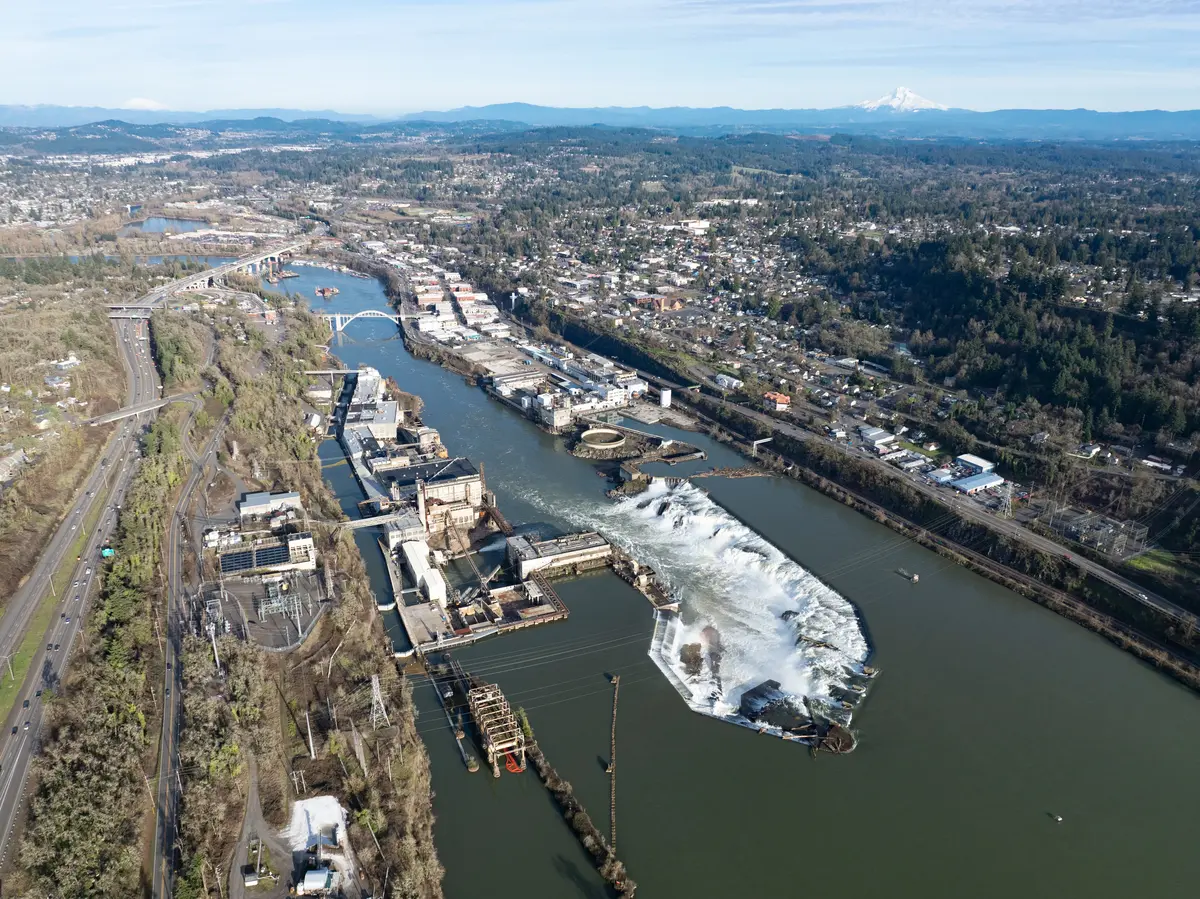
What the $779,602 figure most clearly doesn't show is the waterfront opportunity ahead. In November 2025, the West Linn City Council unanimously adopted the Waterfront Community Vision Plan — a long-term roadmap for revitalizing the city's approximately 275-acre Willamette River waterfront, including the Willamette Falls Intertribal Public Access Project developed with the Willamette Falls Trust. Willamette Falls is the second-largest waterfall by volume in North America and has been largely inaccessible for decades. Buyers who understand that this asset exists and what the city has committed to doing with it are making a more informed long-term decision than buyers who are only looking at the current price. The plan earned a Good Governance Award from the League of Oregon Cities in April 2026 — the community process behind it was genuine.
Typical two-bedroom rents run in the $2,190–$2,660 range, which keeps West Linn competitive for renters in the south metro area. For buyers weighing rent-versus-own math, that context matters.
Final Advice From Elizabeth
Quick Takeaways & FAQs
✅ West Linn carries a violent crime rate of 0.6 per 1,000 residents — well below both state and national averages — making it among the safer communities in the Portland Metro.
⚠️ The typical home price of $779,602 (July 2026) sits above what the city's median household income can comfortably carry, so most buyers arrive with equity from a prior sale or a dual income.
📍 The Historic Willamette District's 38 designated historic properties — most built between 1890 and 1920 — give West Linn one of the only genuinely walkable, character-rich downtowns in the south metro.
What is the commute from West Linn to Portland really like?
How are the West Linn-Wilsonville schools, honestly?
Which West Linn neighborhood is right for my family?
What does the typical home price actually get you in West Linn?
How does West Linn compare to Lake Oswego for a buyer deciding between the two?
What surprises people after they move to West Linn?
Is West Linn a good city for someone moving from out of state?
What is the biggest mistake buyers make when purchasing in West Linn?
Moving to Oregon?
Tell us what you need help with and we'll connect you with local resources.
