
West Linn earns its local nickname — the city of hills, trees, and rivers — honestly. With 27,601 residents spread across steep, forested ridges that tumble down to the Willamette and Tualatin Rivers, the city is physically divided in ways that most relocation spreadsheets never capture. You can buy two homes at the same price, a mile apart, and end up in completely different daily lives: one where you walk to a farmers market on a summer evening, and another where every errand starts with a five-minute descent down a winding hillside road.
What keeps drawing buyers here — despite a typical home price of $779,602 (July 2026) that sits well above what the median household income can carry — is a combination of school quality, safety, and physical beauty that is genuinely hard to replicate in the Portland metro at any price. The West Linn-Wilsonville School District holds an A rating, according to Niche, and serves all eight neighborhoods. The city's position about 25 minutes to Portland via I-205 and OR-43 makes it viable for downtown commuters, while its Clackamas County address keeps property taxes among the more manageable in the region at an effective rate of approximately 0.98%.
The lifestyle pitch is real, but so are the trade-offs. Car dependence is a fact of life outside the Historic Willamette District. The hills that produce those Cascade views also produce ice-slicked streets in January and steep driveways that age less gracefully than their owners. And the housing inventory in the most sought-after enclaves — Skyline Ridge, Marylhurst, Hidden Springs — is thin enough that buyers sometimes wait months for the right listing. For a broader look at cost of living in West Linn, including rent ranges and tax comparisons with nearby cities, that page covers the full picture.
Whether you are relocating from out of state, moving up from Oregon City, or trying to choose between West Linn and Lake Oswego, the sections below break down each of the city's eight neighborhoods by character, trade-offs, and who each area actually suits.
The West Linn Reality
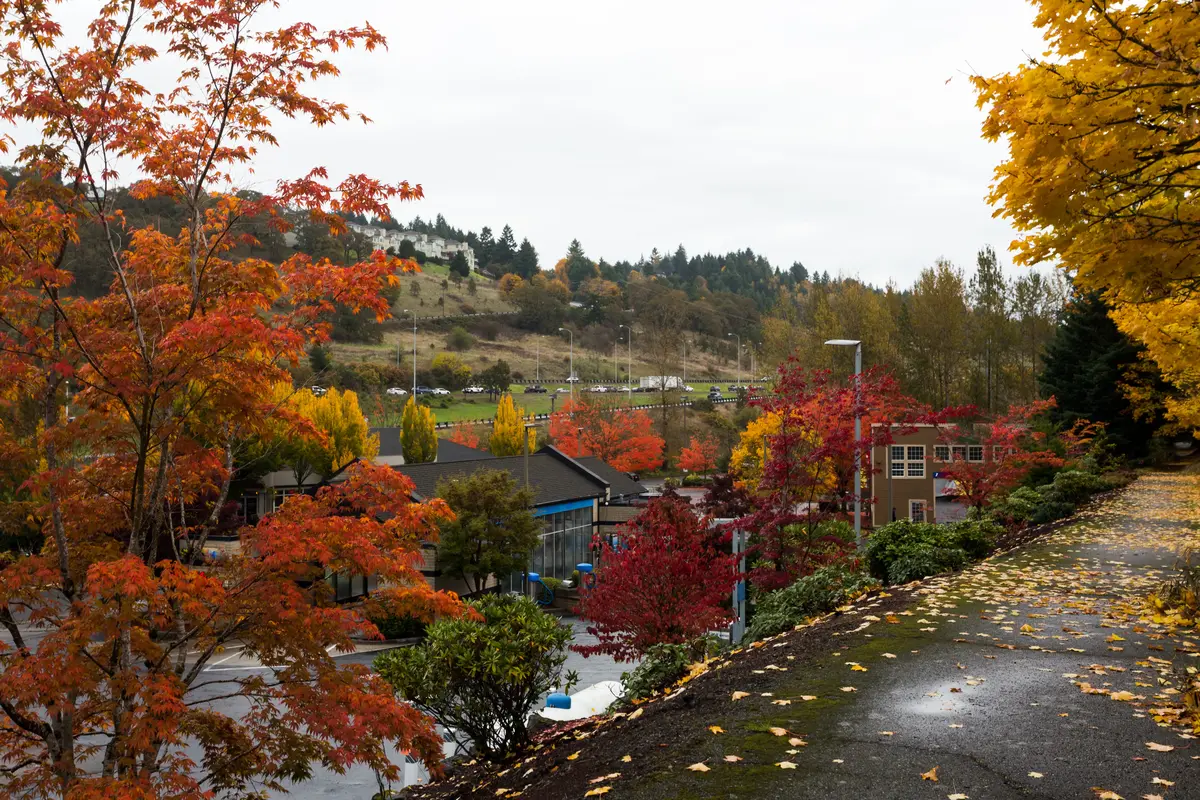
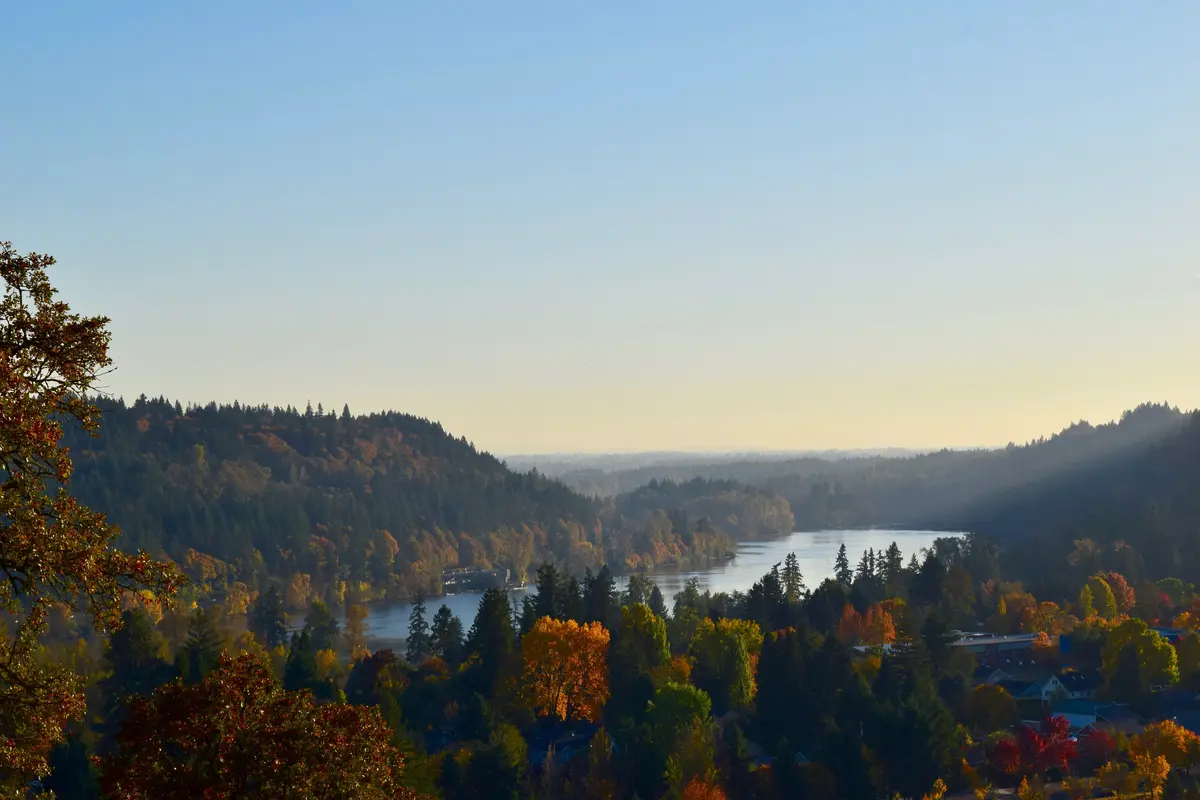
The single most important thing to understand about West Linn's geography is the lowland-versus-hillside divide. The city's river-adjacent neighborhoods — Willamette, Bolton, Robinwood, and Sunset — sit at lower elevations along OR-43 and closer to I-205, which means shorter, more predictable commutes, genuine walkability in some pockets, and housing stock that skews older and more affordable relative to the city median. The hillside neighborhoods — Hidden Springs, Rosemont Summit, Skyline Ridge, and Marylhurst — offer territorial views, larger lots, and a quieter residential character, but they trade convenience for that privacy. Every errand, school pickup, and dinner out begins with a drive.
School boundaries matter less here than in many Portland-area cities, because the West Linn-Wilsonville School District serves every neighborhood with the same A-rated umbrella, with 8,617 students enrolled in 2025-26. What varies is which elementary school your address feeds, and parents who have researched this city know that elementary boundaries can shift. Buying based on a specific elementary assignment without verifying the current boundary map is a mistake buyers make more often than agents like to admit.
The commute corridor is OR-43, which threads through the lowland neighborhoods and connects to I-205 for the run north toward Portland. Buyers who land on the hillside and assume the commute mirrors the lowland experience are often surprised. Getting from a Marylhurst or Skyline Ridge address down to OR-43 in morning traffic adds real minutes — and in an Oregon winter, icy hillside roads occasionally add a lot more than minutes.
Neighborhoods at a Glance
| Neighborhood | Best For | Vibe |
|---|---|---|
| Willamette (Historic Willamette District) | Walkable First-Time | Pedestrian-friendly historic village with Victorian and Craftsman architecture; the closest thing to a true downtown West Linn has |
| Bolton | Nature Families | Riverside and park-adjacent; quiet, established, with immediate trail access to Mary S. Young State Park |
| Robinwood | Families Commuters | Unpretentious and community-minded; OR-43 access keeps the commute manageable and the neighborhood center draws regulars |
| Hidden Springs | School Quiet | Established hillside neighborhood with an on-site elementary school, mature trees, and Mt. Hood views from the upper lots |
| Rosemont Summit | Privacy Families | Entirely single-family, low-density, centered on two nature parks; one of the most unhurried pockets in the city |
| Sunset | Value Nature | Mid-century character, below-median pricing, and proximity to Camassia Natural Area; the city's best entry-level option with real neighborhood feel |
| Skyline Ridge (incl. Barrington Heights / Tanner Basin) | Luxury Views | West Linn's prestige enclave — gated streets, sweeping territorial views, and a market so thin that listings draw immediate attention |
| Marylhurst | Views Quiet | Ridge-top seclusion above the Willamette River, bordered by Lake Oswego, with low turnover and a mix of mid-century and custom builds |
West Linn typical home price: $779,602 (Zillow ZHVI, July 2026). Typical rent: $2,376/mo (Zillow ZORI, July 2026). Neighborhood tiers on this page are relative to these figures.
Best Neighborhood by Buyer Type
| Buyer Type | Best Neighborhood | Why |
|---|---|---|
| First-Time Buyer | Willamette or Sunset | Both neighborhoods price below the city median — the most realistic entry points for buyers stretching to get into West Linn. |
| Luxury Buyer | Skyline Ridge (incl. Barrington Heights) | The gated Le Chevalier community and sweeping territorial views make this the city's clear prestige address, with listings that come to market rarely enough to create genuine competition. |
| Walkability Seeker | Willamette (Historic Willamette District) | The only neighborhood in West Linn where you can walk to coffee, a meal, a summer farmers market, and the river without getting in a car. |
| Families with Kids | Hidden Springs | Having Hidden Springs Elementary School within the neighborhood boundary removes one logistical variable that matters a great deal on school-day mornings. |
| Commuters | Bolton or Robinwood | Both neighborhoods sit close to OR-43 and I-205 access, keeping the run toward Portland as short as West Linn allows. |
| Large-Lot Buyers | Rosemont Summit | A neighborhood of entirely single-family homes on generous lots, built around two nature parks, with no attached or multifamily housing to speak of. |
| Renters | Robinwood or Sunset | These neighborhoods hold the largest share of the city's rental housing stock — the realistic places to land before buying, with the added benefit of community infrastructure already in place. |
Looking to buy in West Linn? Estimate your payment.
Enter your numbers to see an estimated monthly mortgage payment.
Estimate only. Excludes HOA fees and mortgage insurance. The interest rate above is a starting point, not a quoted rate — replace it with your own to see real numbers. Insurance is a flat placeholder, not a West Linn quote.
Most Popular Neighborhoods
1. Willamette (Historic Willamette District)
No other neighborhood in West Linn gives you the ability to walk out your door and feel like you are somewhere, rather than driving to somewhere. About 12 blocks of Victorian, Queen Anne, Craftsman, Colonial Revival, and Stick-style homes — most built between 1895 and 1929 — make up the largest concentration of historic residential architecture in the city. The trade-off is real: exterior changes require design-review approval from the City, which adds time and expense to any renovation, and the historic character that draws buyers can make modern updates genuinely complicated. Prices here run below the city median, which is one reason it consistently draws first-time buyers who might be priced out of the hillside neighborhoods.
Best for: Buyers who want the closest thing to urban walkability West Linn offers, first-time buyers, and anyone drawn to architecturally significant older homes.
2. Bolton
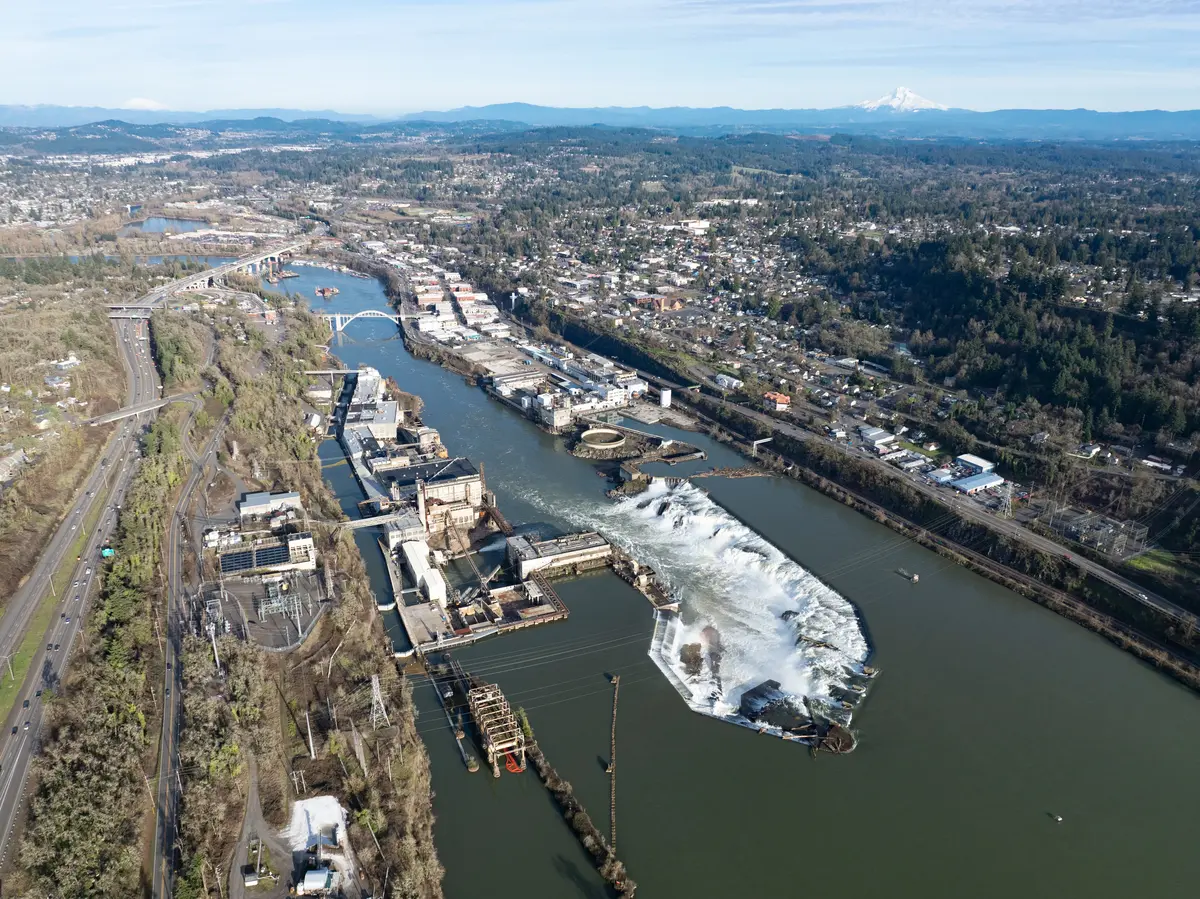
Bolton sits at the foot of Willamette Falls — one of the largest waterfalls in the Pacific Northwest by volume — and the neighborhood's riverside position defines daily life here in the most literal way. Mary S. Young State Park borders the neighborhood to the north, and Burnside Park anchors its center, making trail access effortless. The trade-off is that Bolton's riverside topography and older housing stock mean buyers need to look carefully at flood-zone maps and home conditions — some of the most characterful properties here also carry the most deferred maintenance. Prices run below the city median, and I-205 access keeps the commute viable.
Best for: Nature-first buyers, hikers, and households who want parkland as a backyard rather than a weekend destination.
3. Robinwood
Robinwood is the neighborhood most likely to surprise buyers who expect West Linn to feel uniformly upscale. The Robinwood Station community center — a converted firehouse — anchors a genuinely active neighborhood association culture with local events that residents actually show up for. The neighborhood has Cedaroak Boat Ramp Park (on the Willamette) and Robinwood Park, which includes a spray park and a small skate area. The honest trade-off: the state highway carries real traffic through the neighborhood, and the stretch closest to the road trades some of the quiet that defines other West Linn addresses. A 2025 historic property survey of approximately 620 pre-1975 structures here signals that development pressure is being watched carefully.
Best for: Commuters, community-minded buyers, and families who want neighborhood infrastructure without hillside isolation.
4. Hidden Springs
Hidden Springs is where West Linn's hillside character really settles in — mature landscaping, a mix of architectural styles across several decades of construction, and Mt. Hood views from the upper lots that remind you why people pay a premium to live on a ridge. Having Hidden Springs Elementary School inside the neighborhood boundary is the detail parents mention first, because it changes morning logistics in a meaningful way. The downside is what the topography costs: the same terrain that limits infill development also limits your ability to walk anywhere, and hillside roads ice differently than flatland streets when temperatures drop. There is no tier shift from the city median listed here, so say nothing about cost — the lot sizes and the setting speak for themselves.
Best for: Families with school-age children, buyers seeking a rooted, established neighborhood feel, and anyone who wants views without paying for the prestige label.
5. Rosemont Summit
Rosemont Summit is as close as West Linn gets to a neighborhood designed for people who want to be left alone in the best possible way. Roughly 600 residential units, all single-family, built around Sahallie Illahee Park and Ibach Nature Park, with Mt. Hood views from some streets — it is genuinely uncrowded in a city where most neighborhoods feel built out. The honest limitation is that Rosemont Summit's central location does not make it central to much: without a commercial anchor or a walkable core, daily conveniences require a drive in every direction. Buyers who expect the neighborhood's parks to substitute for proximity to services tend to adjust their expectations after the first few months.
Best for: Buyers who prioritize space, privacy, and park adjacency over walkability or convenience.
6. Sunset
Sunset is the neighborhood that rewards buyers who do their homework. Mid-century ramblers, split-levels, cottages, and contemporary homes on mature, tree-covered lots sit within reach of the Camassia Natural Area and the Willamette Falls viewpoint — two of West Linn's best outdoor assets. Sunset Park and the West Linn Adult Community Center give the neighborhood genuine gathering infrastructure. Prices run below the city median, making this the most realistic combination of character, nature access, and relative value in West Linn. The trade-off is that the housing stock is genuinely mixed — condition and style vary block by block, and buyers need an inspection strategy rather than assumptions.
Best for: Value-conscious buyers, nature lovers, and buyers who want character without the historic-district design-review process.
7. Skyline Ridge (incl. Barrington Heights / Tanner Basin area)
This is where West Linn's prestige market lives. Barrington Heights features upscale federal, colonial, and traditional-style homes on wide, tree-lined streets with sweeping territorial views, including the gated Le Chevalier community. Skyline Ridge proper is the city's smallest neighborhood by population — a private enclave of newer homes around Skyline Ridge Park where listings come to market so rarely that buyers who want in often have to wait. The limitation is isolation: this corner of West Linn sits near the Lake Oswego city line and demands a car for essentially everything, including the commute toward Portland. The thin inventory means that when something does list, it draws immediate, competitive attention — rarely the conditions where a buyer has time to reconsider.
Best for: Luxury buyers, buyers seeking maximum privacy and territorial views, and households where car dependence is not a constraint.
8. Marylhurst
Marylhurst occupies a 171-acre ridge in the northwest portion of West Linn, averaging around 550 feet of elevation above the Willamette River below. Bordered by Lake Oswego to the north, the neighborhood mixes split-levels and mid-century modern homes with larger custom builds, and Arbor and Robinwood Creeks run through it. Prices sit at the city median. What the data cannot capture is how rarely homes here actually list — low residential turnover means buyers watching Marylhurst sometimes track it for a long time before the right property appears. The former Marylhurst University campus, which closed in 2018, remains a reference point for the neighborhood's geography but is no longer an active institution.
Best for: Buyers who want ridge-top seclusion, river views, and proximity to Lake Oswego without paying Lake Oswego prices.
Common Mistakes Buyers Make in West Linn
Treating the city as one uniform market. The lowland-hillside divide is real and consequential. Buyers who tour a Willamette District bungalow and a Barrington Heights colonial in the same afternoon are not comparing similar properties in the same neighborhood context — they are comparing two different daily lives, two different commute profiles, and two different maintenance realities. Assuming the city is homogeneous is the single most common mistake buyers from outside the metro make, and agents who work the whole city will tell you it costs people offers on homes that were never the right fit.
Missing the traffic reality in Robinwood. Robinwood's appeal is real — community center, boat ramp, reasonable entry pricing — but the stretch of the neighborhood closest to the main highway carries consistent traffic noise that buyers who toured on a weekend morning sometimes only notice after they move in. The rule here is simple: if you are sensitive to road noise, visit the specific street on a weekday commute morning before making an offer, not after.
Chasing square footage over school boundary on the hillside. A larger home in an adjacent district boundary zone might feel like a bargain, and school boundary maps in the West Linn-Wilsonville District are less complicated than in some metro districts — but they are not static. Buyers who purchase based on a specific elementary assignment without pulling the current boundary map from the district and confirming it applies to their address have occasionally found themselves in a different school zone than they expected. The district holds an A rating, according to Niche, across the board, but individual school assignments still matter to families with established preferences.
Underestimating hillside winters. Buyers who move to Hidden Springs, Rosemont Summit, or Marylhurst after years on Portland's flatlands are sometimes caught off guard by what a West Linn ice event means on a steep residential street. The city averages 144 sunny days a year — Oregon winters are wet and occasionally frozen — and hillside driveways that look manageable in September become a genuine logistical problem in January. Budgeting for all-weather tires and asking current residents about their street's maintenance history are not optional steps for hillside buyers.
Best Areas to Rent in West Linn
| Area | Ideal For | Trade-off |
|---|---|---|
| Willamette (Historic Willamette District) | Walkability seekers | Limited rental inventory in a neighborhood that skews owner-occupied; when units appear, they go quickly |
| Robinwood | Commuters Renters | The largest share of West Linn's rental stock is here, but highway traffic means some units face road noise |
| Sunset | Value-focused renters | More rental options than the hillside neighborhoods, with character housing stock — but condition varies significantly unit to unit |
| Bolton | Nature lovers | Excellent park and trail access; older housing stock means some rentals need a careful eye on condition before signing |
| Marylhurst / Hillside areas | Renters seeking quiet | Low inventory and high turnover reluctance; when units appear here they tend to price toward the top of the city's typical rent range |
West Linn's rental market is tight by design: this is a high-ownership city, and the typical citywide rent of $2,376 per month reflects a market with limited supply and consistent demand. Renters who need flexibility before buying should look at Robinwood and Sunset first — those two neighborhoods hold the most inventory and offer the most realistic path to establishing a foothold before committing to a purchase in a market where the typical home price exceeds what the median household income can carry.
Local Expert Takeaway: West Linn is a city where geography does most of the neighborhood-sorting for you. If you need to commute and value convenience, the state highway corridor — Willamette, Robinwood, Bolton — is where you belong. If you want views, privacy, and space, and a car is no hardship, the hillside neighborhoods deliver something genuinely rare in the Portland metro. The mistake most buyers make is not choosing wrong between those two worlds — it is assuming they can split the difference. You mostly cannot. Identify which trade-off you can live with before you start booking showings, and the rest of the search in West Linn tends to move quickly.
Quick Takeaways & FAQs
✅ The West Linn-Wilsonville School District holds an A rating according to Niche and serves every neighborhood in the city — no boundary shopping required to access the district's top-tier performance.
⚠️ West Linn's hillside neighborhoods deliver extraordinary views and privacy, but car dependence is total and winter road conditions on steep residential streets genuinely catch buyers from flatter cities off guard.
📍 The Historic Willamette District is the only neighborhood in West Linn where you can walk to coffee, a meal, and the river on the same outing — every other neighborhood in the city is built around a car.
Which West Linn neighborhood is most affordable for first-time buyers?
Is it worth buying in West Linn if I have a daily commute to Portland?
What is the best West Linn neighborhood for families with school-age children?
Which West Linn neighborhood has the best access to parks and trails?
Are there rentals available in West Linn, or is it primarily an ownership market?
Moving to Oregon?
Tell us what you need help with and we'll connect you with local resources.
