
Plenty of retirees arrive in West Linn expecting a quiet suburb and find something more layered: a city of 27,601 people perched above the Willamette River, defined by steep wooded ridgelines, a genuinely historic small-town core, and home prices that put it firmly in the upper tier of the Portland metro. The typical home was $779,602 in July 2026 — a figure that reflects the city's consistent desirability and its scarcity of starter inventory. If you are coming in with substantial equity from a California or out-of-state sale, the numbers often pencil. If you are stretching, they frequently do not.
What draws retirees here is a combination of safety, natural beauty, and a community that still feels like a real town rather than a highway interchange with houses attached. OR-43 and I-205 connect the city to Portland in about 25 minutes, which matters when your specialist appointments are at a major medical center downtown. The West Linn-Wilsonville School District — which holds an A rating, according to Niche — is a reason many retirees choose this city when grandchildren are already enrolled here. The community is well-resourced, politically engaged, and has a culture that values the outdoors in a practical, everyday sense rather than a weekend-hobby sense.
Oregon's tax structure has a few retirement-specific quirks worth understanding before you commit. Social Security is untaxed at the state level — a genuine advantage. Pension, IRA, and 401(k) income is taxed at Oregon's standard graduated rates, which reach up to 9.9%, so retirees with significant investment income pay real state income tax. The absence of a sales tax eases daily spending considerably. On the property side, the effective tax rate here runs approximately 0.98%, and there is a deferral program for qualifying homeowners over 62 that can meaningfully reduce cash-flow pressure during the years you most need it.
Whether you are weighing West Linn against Lake Oswego, Oregon City, or something farther afield, the sections below cover healthcare access, the retiree budget, walkability, downsizing options, and an honest side-by-side with nearby retirement destinations — so you can make the comparison with real information rather than marketing language.
Why Retirees Are Choosing West Linn
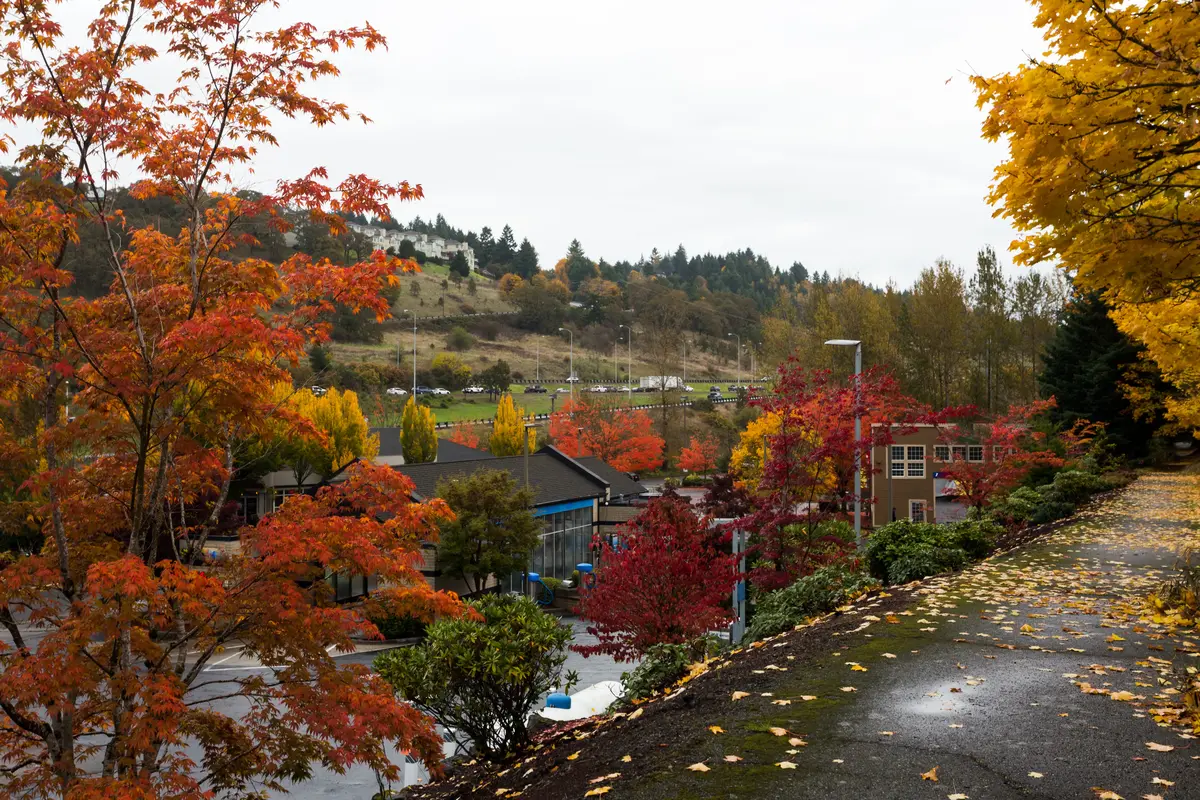
West Linn fits a specific kind of retiree well: someone who wants low crime, strong civic infrastructure, genuine access to nature, and a town that operates at a human scale — without sacrificing proximity to a major city when they need it. The city consistently draws people who are done with urban density but not ready to trade convenience for acreage. The Willamette River corridor, Mary S. Young State Park, and the Historic Willamette District give daily life a texture that most suburbs simply cannot manufacture.
The honest case against it is the price. The typical home of $779,602 (July 2026) means retirees downsizing from a larger property need to be bringing real equity to the table — and even then, the single-level and low-maintenance inventory that retirees typically want is in short supply relative to demand. Daily expenses here run noticeably above what you would find in Oregon City or Tualatin, and retirees on a fixed income without significant home equity will feel that gap in the grocery store, in utility bills, and in the general cost baseline of an affluent community.
Who should look elsewhere: retirees who need robust public transit, those who want a walkable urban grid for daily errands, or anyone whose budget requires a lower entry price. Oregon City sits just a few miles away and is noticeably more affordable. The trade-off is that West Linn's safety profile, school district quality, and overall amenity depth are difficult to replicate at a lower price point in this part of the state. For the retiree who has done the math and the fit is right, it tends to hold up well over time.
Healthcare & Medical Access in West Linn
The closest hospital to West Linn is Legacy Willamette Falls Medical Center in Oregon City, roughly 3 miles away. For most acute needs — a fall, a cardiac event, a surgical procedure — that proximity is reassuring. The drive is short enough that a 911 response can reach a major hospital quickly, which matters more in retirement than it does at 40.
The honest limitation is specialty depth. A community-scale facility handles primary acute care competently, but retirees managing complex chronic conditions — oncology, advanced cardiac surgery, neurology — will typically be referred to Portland's major medical campuses. The drive into Portland is about 25 minutes under normal conditions, and OR-43 along the river is the most direct corridor. That is a manageable distance for scheduled appointments, but it is worth factoring in before you commit if you already have ongoing specialist relationships you want to maintain.
Within Clackamas County, affiliated medical offices and clinics extend specialist access beyond the hospital campus itself, which means not every cardiology or orthopedics visit requires going all the way into the city. Primary care providers, urgent care, and outpatient services are reasonably accessible for a city this size. Dental and optometry practices are present locally. The picture is one of solid community-level access with a clear referral pathway to urban tertiary care — honest and sufficient for most retirees, limiting only for those whose health situation is already complex.
West Linn also has Tanner Spring Assisted Living and Memory Care within city limits — a dedicated facility offering assisted living and memory care with around-the-clock caregiver availability. It is not a 55+ independent living community, but it is the city's own dedicated senior care option for residents or family members who eventually need that level of support.

The Retiree Budget in West Linn
Oregon's most retiree-friendly tax feature is straightforward: Social Security benefits are not taxed at the state level, regardless of income. For retirees who rely heavily on Social Security, that is a meaningful structural advantage over states that do tax it.
The more complicated picture is everything else. Pension income, IRA withdrawals, and 401(k) distributions are taxed under Oregon's standard graduated schedule, which starts at 4.75% and reaches up to 9.9% at the top bracket. There is no broad exclusion for retirement accounts, so retirees drawing significantly from investment portfolios will pay real state income tax. Oregon's tax landscape for retirement income is genuinely mixed — the Social Security exemption is a real win; the income tax on distributions is a real cost. Anyone making decisions based on the tax angle should work through their specific income mix with a CPA rather than relying on the headline Social Security exemption alone.
Two structural offsets are worth knowing. Oregon has no sales tax, which reduces the friction on everyday spending in a way that compounds over years of fixed-income budgeting — groceries, clothing, home goods, and restaurant meals are all purchased without state tax added. And Oregon's property tax deferral program allows homeowners who are 62 or older, have owned and occupied the home for at least five years, and have household income at or below $60,000 to defer county property taxes until the home is sold, with the state advancing the payments in the meantime. For retirees in that income band who are asset-rich but cash-flow constrained, the deferral can make staying in place significantly more manageable.
The effective property tax rate in West Linn runs approximately 0.98% — below the national average, which provides some buffer on an ongoing annual basis. Day-to-day costs here run noticeably higher than in neighboring Oregon City or Tualatin, reflecting the city's affluent character. Retirees comparing monthly budgets with those communities will find a measurable gap across housing and daily expenses alike. The question is whether the West Linn lifestyle offset — the safety, the parks, the town character — is worth the premium for your specific situation. For many who have the equity, it is. For those who do not, the full cost-of-living breakdown is worth reviewing before you decide.
Looking to buy in West Linn? Estimate your payment.
Enter your numbers to see an estimated monthly mortgage payment.
Estimate only. Excludes HOA fees and mortgage insurance. The interest rate above is a starting point, not a quoted rate — replace it with your own to see real numbers. Insurance is a flat placeholder, not a West Linn quote.
Walkability, Community & Staying Active in West Linn
West Linn is not a city where most retirees will live car-free. The terrain is hilly, the residential neighborhoods are spread across ridgelines, and public transit use is minimal across the population. Retirees who picture themselves walking to the grocery store, the pharmacy, and the coffee shop most days of the week should understand that this is possible in one specific pocket of the city — and much less realistic everywhere else.
That pocket is the Historic Willamette District. The commercial strip along the river is the city's most pedestrian-friendly stretch, with independent shops, casual dining, and the Wednesdays In Willamette Summer Street Market all reachable on foot for residents living nearby. It is a genuine small-town main street, not a manufactured lifestyle district, and it functions as the social center of gravity for the people who live within easy distance of it. The Willamette Coffee House and Lark Café are the places you see the same faces every morning. Lil' Cooperstown Bar & Grill, J. Willys Public House and Eatery, and Nineteen33 are where the neighborhood gathers for a casual dinner. The farmers market runs through the warm months and is a legitimate community gathering point, not a tourist attraction.
For active retirees, the outdoor access is genuinely strong. Mary S. Young State Park offers trail walking through old-growth forest along the river. Camassia Natural Area is a rare native oak woodland with accessible paths. The Willamette Falls viewpoint connects you to one of the defining natural features of this part of Oregon. More than 58 documented hiking and walking routes exist in the broader West Linn area — most of them low-cost or free, and many manageable at a moderate fitness level. This is where the city earns its retirement credibility for people who want to stay physically active without driving to a gym every day.
The community fabric is tighter than the population size suggests. West Linn runs on neighbor engagement — school events, local athletics, civic meetings, and seasonal community gatherings give retirees with grandchildren in the West Linn-Wilsonville district a natural entry point into the social fabric. If your grandchildren are Lions fans at West Linn High School, you will find the community absorbs you fairly quickly. Volunteering opportunities through the city and local nonprofits extend that engagement for retirees whose social life does not revolve around school events.
Right-Sizing: Downsizing in West Linn
The downsizing picture in West Linn requires honesty upfront: the city was built largely on hillside lots, and single-level homes represent a minority of the available inventory. Ranch-style homes and patio homes exist, but they are competed for — retirees looking specifically for no-stairs living will find the search narrower than in cities built on flatter ground.
No 55+ communities were found in West Linn. That is a real gap compared with Lake Oswego or Wilsonville, both of which have dedicated independent living and continuing-care communities that allow retirees to scale their level of support over time without relocating. In West Linn, the dedicated senior care option within city limits is Tanner Spring Assisted Living and Memory Care — a well-regarded facility offering assisted living and memory care, but not an independent-living or active-adult community.
The realistic downsizing path in West Linn for most retirees is selling a larger family home and moving into a smaller single-family home, a townhome, or a condo. Condos exist but are not abundant. The Marylhurst and Historic Willamette neighborhoods tend to have more modest footprints and older housing stock, which sometimes translates to single-level or more manageable layouts, though not systematically. Retirees who want true lock-and-leave convenience with minimal exterior maintenance will find the inventory thin.
If the 55+ community model is important to you — amenities, social programming, a built-in peer group, and the option to transition to higher-care levels without leaving the facility — Wilsonville and Lake Oswego are the natural nearby alternatives. Both are within a reasonable drive, and both have meaningful independent living and continuing-care infrastructure that West Linn simply does not yet replicate. The decision comes down to whether you prioritize West Linn's specific community character and river setting enough to accept the limitations in dedicated senior housing inventory, or whether the broader senior living ecosystem in a neighboring city is the better long-term fit.
West Linn vs Nearby Retirement Destinations
| City | Cost vs West Linn | Primary Hospital | Walkability | Senior Living Depth | Overall Retirement Fit |
|---|---|---|---|---|---|
| West Linn | — | Legacy Willamette Falls Medical Center (Oregon City, ~3 mi) | Limited citywide; Historic Willamette District walkable | Thin — no 55+ communities; one assisted living/memory care facility | Strong for equity-rich retirees valuing safety, nature, and town character |
| Lake Oswego | Somewhat higher | Legacy Meridian Park Medical Center (Tualatin) | Stronger pedestrian core; lake-oriented downtown | Good — multiple senior living and independent living options | Excellent overall; better senior housing infrastructure, higher price floor |
| Oregon City | Noticeably lower | Legacy Willamette Falls Medical Center (same facility, closer) | Limited; older downtown grid | Moderate — some senior apartment options | Good budget fit; fewer amenities, but same hospital proximity |
| Tualatin | Noticeably lower | Legacy Meridian Park Medical Center (in city) | Car-dependent; suburban layout | Moderate — some senior housing in the broader area | Value-oriented; hospital in-city is a real advantage |
| Wilsonville | Noticeably lower | Kaiser Permanente and Providence facilities nearby | Limited; newer suburban layout | Strong — dedicated 55+ and continuing-care communities present | Practical choice for retirees prioritizing senior housing options and lower costs |
| Portland (inner SE/SW) | Varies widely; overlaps with West Linn at upper end | Multiple major medical centers | Genuinely walkable neighborhoods available | Extensive — broad range of senior living types | Best for retirees who need specialist-level care access and prefer urban living |
Oregon City is the most direct value alternative — same hospital proximity, noticeably lower cost of entry, and far less competition for downsized inventory. The trade-off is that it lacks West Linn's overall amenity and safety profile, and the community feel is different in ways that matter to retirees who weigh those factors heavily.
Lake Oswego is the natural comparison for retirees who want similar community quality and are less price-sensitive: the senior living infrastructure is meaningfully deeper, and the lakefront downtown gives it a stronger walkable core. Wilsonville is the practical pick for retirees who specifically need 55+ community options and want to lower their monthly cost baseline without leaving the Willamette Valley corridor. Portland's inner neighborhoods offer the broadest healthcare access and the best walkability in the region — the right answer for retirees who genuinely want to park the car most days.
West Linn holds its own strongest position for retirees who come in with equity, want a real town rather than a suburb, and are willing to accept a car-dependent lifestyle in exchange for exceptional safety, parks access, and a community that feels meaningfully connected.
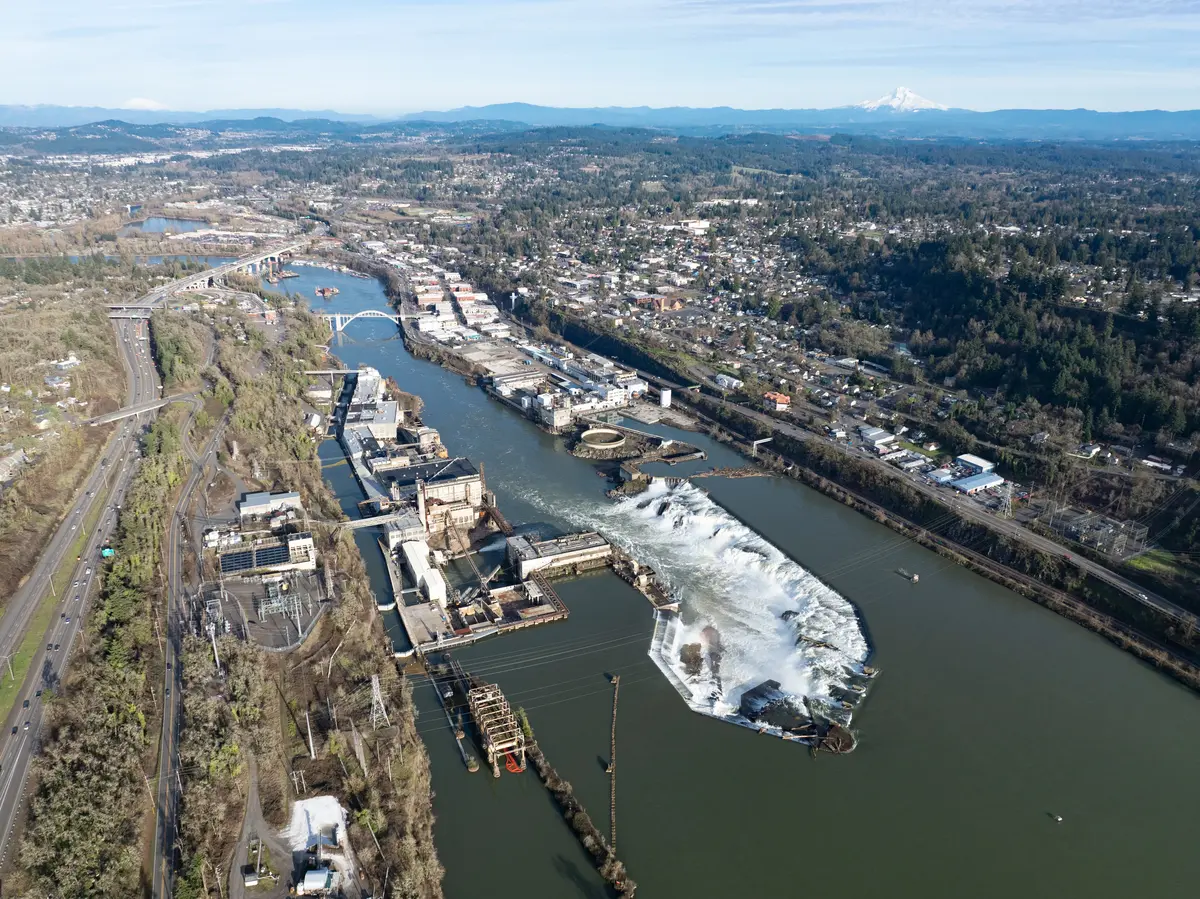
Local Expert Takeaway: West Linn is genuinely one of the stronger retirement settings in the Portland metro — but it earns that reputation on specific terms. The safety profile, the river access, Mary S. Young State Park, and the Historic Willamette District's small-town social life are real and durable advantages. The gaps are equally real: no 55+ communities, limited single-level inventory, daily costs that run noticeably above neighboring communities, and a car-dependent layout outside the Willamette District. Retirees who arrive with substantial equity and want a community rather than a development tend to settle here and stay. Those who need dedicated senior housing infrastructure, robust walkability, or a lower cost floor are better served by Wilsonville or Oregon City before they are better served by West Linn.
Quick Takeaways & FAQs
✅ Oregon exempts Social Security from state income tax entirely — a genuine budget advantage for retirees whose income is primarily Social Security-based.
⚠️ No 55+ communities exist within West Linn city limits, and single-level home inventory is genuinely thin given the city's hillside terrain — retirees who need those housing types will find the search harder here than in Wilsonville or Lake Oswego.
📍 The Historic Willamette District is the city's most walkable pocket — the Wednesdays In Willamette Summer Street Market, independent cafés, and casual dining are all reachable on foot for residents who live nearby.
Is West Linn a good place to retire on a fixed income?
What hospital serves West Linn retirees?
Are there 55+ communities or active adult communities in West Linn?
Does Oregon tax retirement income like pensions and IRA withdrawals?
Is West Linn walkable enough for retirement without a car?
Moving to Oregon?
Tell us what you need help with and we'll connect you with local resources.
