
Southern Oregon · Best Places to Retire · 2026
Best Places to Retire in Southern Oregon: Every City Ranked
Cities ranked on a weighted composite of healthcare access, walkability, affordability, climate, and overall quality of life.
Cities ranked on a weighted composite of healthcare access, walkability, affordability, climate, and overall quality of life.
Southern Oregon doesn't ask you to compromise the way many retirement regions do. The Rogue Valley corridor, anchored by I-5 and flanked by the Siskiyou and Cascade ranges, offers a genuine spread of retirement options: small historic towns, a regional medical hub, agricultural communities, and one of the sunniest high-desert cities in the state. What ties these places together is the climate — the sun here is a real differentiator from northern Oregon, the kind of thing transplants notice immediately and never want to give up. What separates them is everything else: the cost of a house, how close a hospital is, and whether you can walk to lunch.
The honest spread across this region runs from working-class affordability in communities where home prices follow local wages, to resort-adjacent prices in towns where the lifestyle draws buyers from across the country. Healthcare access is a real differentiator — some cities have a full hospital within walking distance while others rely on a short drive to a regional medical center. Walkability follows a similar pattern: a few downtowns are genuinely pedestrian-friendly, while others are car-dependent regardless of how pleasant the scenery is. The sections below break down each city on all of these dimensions so you can match the place to the retirement you're actually planning.
Each city is scored 1-10 on every dimension below against a fixed statewide scale — never against the other cities in this region — then combined into one weighted Composite score out of 10.
Ranked by overall composite score. Click any city to jump to the full breakdown.
| # | City | Composite | Healthcare | Walkability | Median Price |
|---|---|---|---|---|---|
| 1 | Medford Jackson County | 8.3/10 | 10 | 6 | $412,596 |
| 2 | Grants Pass Josephine County | 8.0/10 | 8 | 8 | $404,270 |
| 3 | Ashland Jackson County | 7.8/10 | 10 | 6 | $559,336 |
| 4 | Klamath Falls Klamath County | 7.7/10 | 8 | 6 | $310,786 |
| 5 | Roseburg Douglas County | 7.5/10 | 8 | 6 | $368,343 |
| 6 | Central Point Jackson County | 6.1/10 | 6 | 2 | $423,657 |
| 7 | Jacksonville Jackson County | 5.4/10 | 6 | 4 | $612,322 |
#1 Top Overall · Jackson County
Best for retirees who want in-town hospital care and full urban services
Medford is where the rest of Southern Oregon goes for serious medical care, and that fact alone makes it the most practical retirement base in the region. With I-5, OR-99, OR-62, and OR-238 all converging here, it's the area's transit spine — connecting you to Ashland, Jacksonville, and the coast without committing you to isolation. The typical home price of $412,596 keeps it accessible relative to what you'd pay in Ashland or Jacksonville, and the sheer size of the city means restaurants, services, and cultural programming you'd have to drive to from smaller towns are simply part of daily life here.
The trade-off is that Medford is a functioning regional city, not a quiet retreat — traffic and commercial sprawl are real, and most errands still require a car despite the city's size. Buyers who want excellent healthcare in-town, a genuine variety of amenities, and prices well below what a scenic small-town address commands tend to find Medford the most straightforward answer in Southern Oregon.

#2 Top Walkability · Josephine County
Best for retirees who want a walkable downtown with hospital access nearby
Grants Pass earns its reputation as one of Southern Oregon's most livable retirement options on the strength of two things most retirees prioritize: a genuinely walkable historic downtown and a hospital right in town. The Rogue River runs through it, the climate is among the sunniest in western Oregon, and the pace feels distinctly different from the Medford metro — smaller, more self-contained, easier to navigate on foot. A typical home price of $404,270 and access to I-5, US-199, OR-99, and OR-238 make it both affordable and connected without requiring you to be in the thick of a larger city.
The quality-of-life amenity count is more modest than Ashland's cultural density, so buyers who want a packed calendar of performing arts and festivals may find it quieter than expected. But for retirees who want a real walkable downtown, solid hospital access, great weather, and room left in the budget, Grants Pass is one of the most balanced options this region offers.

#3 Top Healthcare · Jackson County
Best for retirees who treat arts, culture, and outdoor trails as essentials
Ashland is the cultural outlier in Southern Oregon — a small city with a quality-of-life density that rivals places twice its size. The Oregon Shakespeare Festival, a walkable historic downtown, proximity to the Siskiyou Mountains, and exceptional sunshine have made it a genuine destination for retirees who treat lifestyle as a non-negotiable. A local hospital keeps healthcare access strong, and Medford's regional medical infrastructure is a short drive away on I-5 or OR-99. The typical home price of $559,336 reflects all of that — this is the most lifestyle-premium address in Southern Oregon, and the price says so plainly.
Mountain Meadows is the established 55+ community here, well-regarded among buyers specifically looking for that structure. Buyers moving from higher-cost metro areas often find Ashland's prices reasonable by comparison, but anyone coming from Roseburg or Klamath Falls will feel the gap immediately. It suits retirees who genuinely use arts, independent dining, and outdoor trails as their primary social infrastructure.

#4 Top Affordability · Klamath County
Best for retirees who want maximum sunshine and genuine affordability
Klamath Falls sits outside the Rogue Valley geography that defines much of this region — it's a high-desert city on the eastern slope of the Cascades, connected by US-97, OR-39, OR-66, and OR-140, and it gets more sun than almost any other city in Oregon. That solar advantage is real and significant: a state famous for grey skies rarely produces a city with this kind of sunshine, and it is a meaningful quality-of-life fact. A regional medical center is right in town. And the typical home price of $310,786 reflects a working local economy rather than lifestyle demand — a structurally different price level driven by local wages, not by migration or amenity premiums.
No 55+ communities were found in Klamath Falls. The amenity and dining scene is honest rather than rich, and buyers expecting the cultural variety of Ashland or the Rogue Valley bustle of Medford will need to recalibrate. It suits retirees who prioritize sunshine, low cost, in-town medical access, and a quieter pace over a curated lifestyle scene.
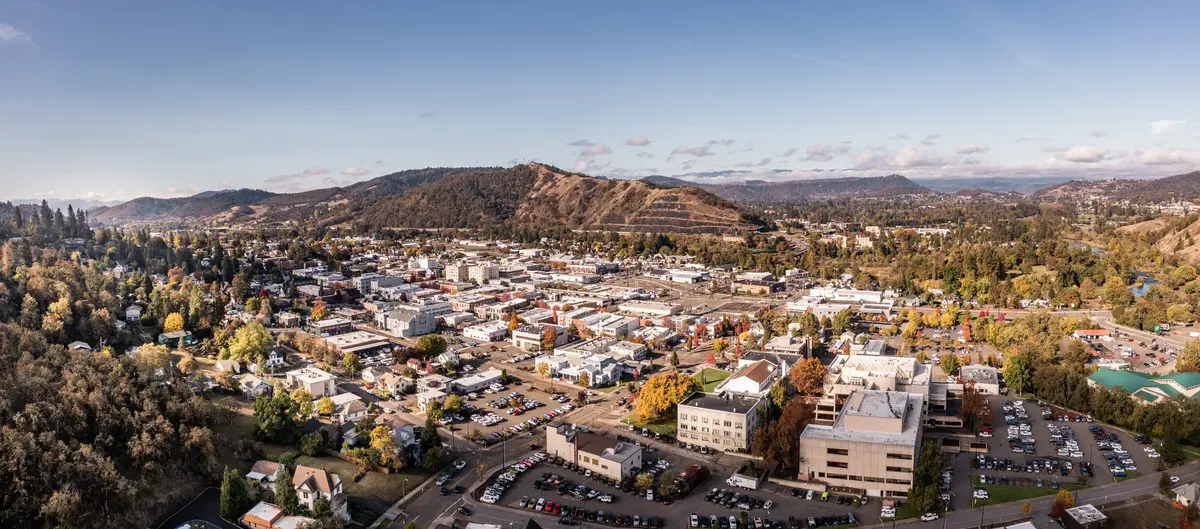
#5 Umpqua Valley Town · Douglas County
Best for retirees who want affordability and in-town medical care in a quieter setting
Roseburg sits at the northern end of this region in the Umpqua Valley, connected by I-5, OR-99, and OR-138 into the canyon country to the east. A regional medical center is right in town, the downtown is walkable within its modest scale, and the climate delivers more sun than most of western Oregon — meaningfully more than what you'd get in the Willamette Valley. The typical home price of $368,343 reflects an economy built around timber, agriculture, and healthcare rather than lifestyle migration, which is exactly what keeps it accessible.
Rose Village is the established 55+ option for buyers who want that kind of community. The honest limitation is that Roseburg's amenity count — dining, landmarks, cultural programming — is solid without being exceptional, and buyers who want a richer day-to-day lifestyle spread will find the Rogue Valley cities offer more. It suits retirees who want real affordability, in-town hospital access, and a slower tempo without giving up Pacific Northwest scenery.
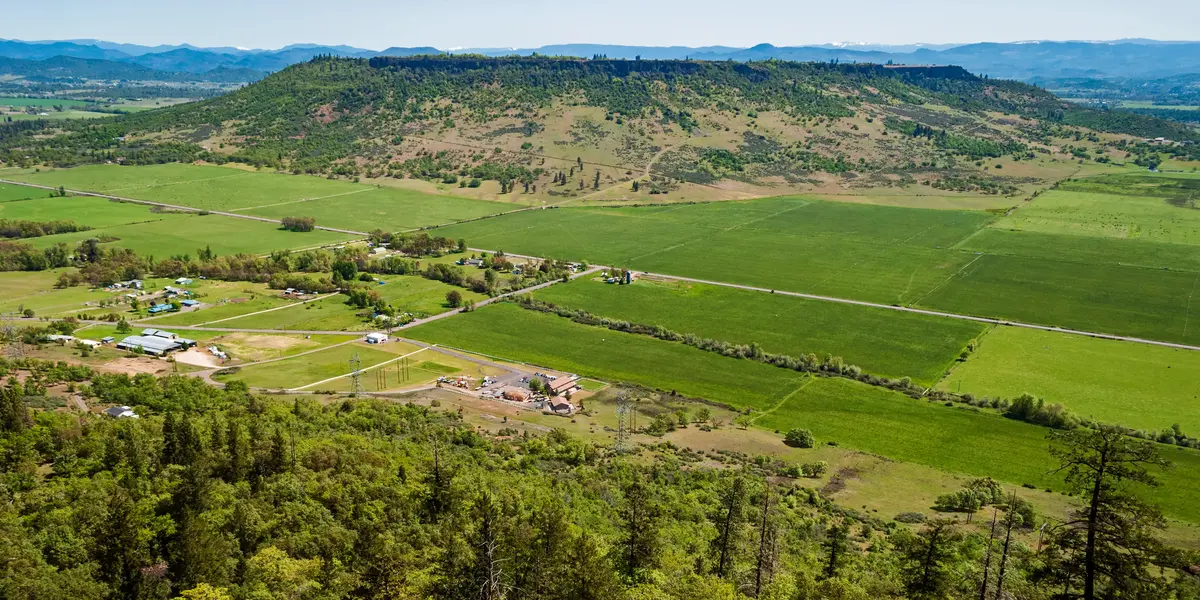
#6 Rogue Valley Suburb · Jackson County
Best for retirees who want suburban Jackson County at a lower price point
Central Point sits within the Jackson County metro — close enough to Medford that its hospital and commercial infrastructure are genuinely accessible, but priced as a suburban community rather than a city with its own downtown energy. With I-5 and OR-99 running through it and Medford's medical center only a short drive away, it punches above its weight on regional connectivity. The typical home price of $423,657 reflects suburban Jackson County demand: noticeably below what you'd pay in Ashland or Jacksonville, in a community that trades on proximity rather than standalone character.
No 55+ communities were found in Central Point. A car is essential here — this is not a place where daily life happens on foot, and buyers who picture retirement as walkable errands and café mornings will be disappointed. It tends to suit retirees who want a lower price point within striking distance of Medford's services, are comfortable being car-dependent, and don't need the town itself to generate their social life.
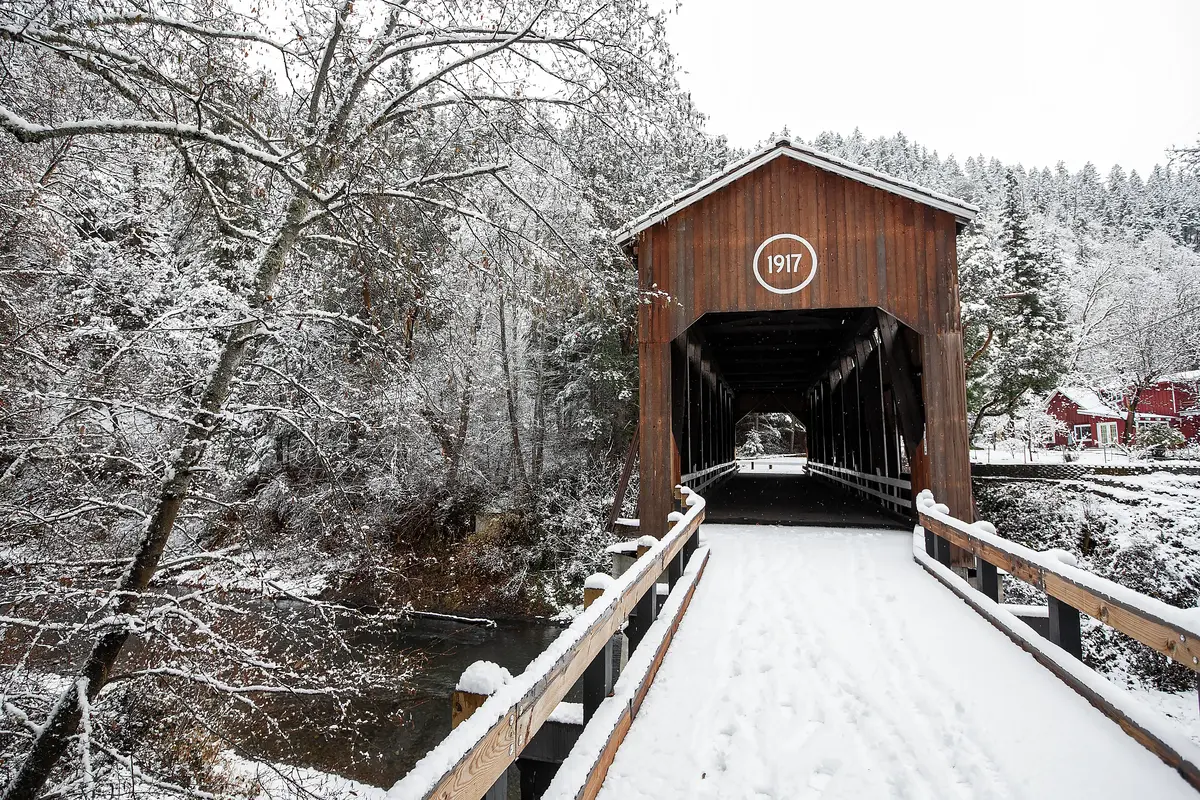
#7 Historic Landmark Town · Jackson County
Best for retirees who prioritize historic character above all else
Jacksonville is Oregon's only National Historic Landmark city, and that status shapes everything about it — the architecture, the scale, the property values, and the kind of buyer it draws. OR-238 is the main road in and out, and Medford's regional medical infrastructure is a short drive away, which matters because there is no local hospital. The climate is exceptional, with sunshine levels that make it one of the most pleasant spots in the state. The typical home price of $612,322 reflects both the historic character and the relatively constrained housing supply of a very small town — resort-adjacent demand in a place with little room left to build.
No 55+ communities were found in Jacksonville. The walkability within the historic core is real but limited by the town's size — you can stroll to dinner, but you cannot run most of life's errands on foot. It suits retirees who specifically want the historic-town aesthetic, are financially comfortable absorbing a premium price, and plan to use Medford for medical care and serious shopping rather than expecting those services close to home.
Southern Oregon's sunniest cities aren't automatically its best retirement fit — healthcare access and walkability vary sharply from one town to the next, and getting those two right matters more in retirement than almost any other factor.
Tell us what you need help with and we'll connect you with local resources.
